Kingsley Tjungurrayi
Kingsley Tjungurrayi was a Pintupi artist and one of the original group of Aboriginal men who began painting at Papunya in 1971, helping establish what would become the internationally recognised Western Desert Art movement. Although his painting career appears to have been brief, his surviving works form part of the earliest chapter in the history of contemporary Aboriginal Australian art.
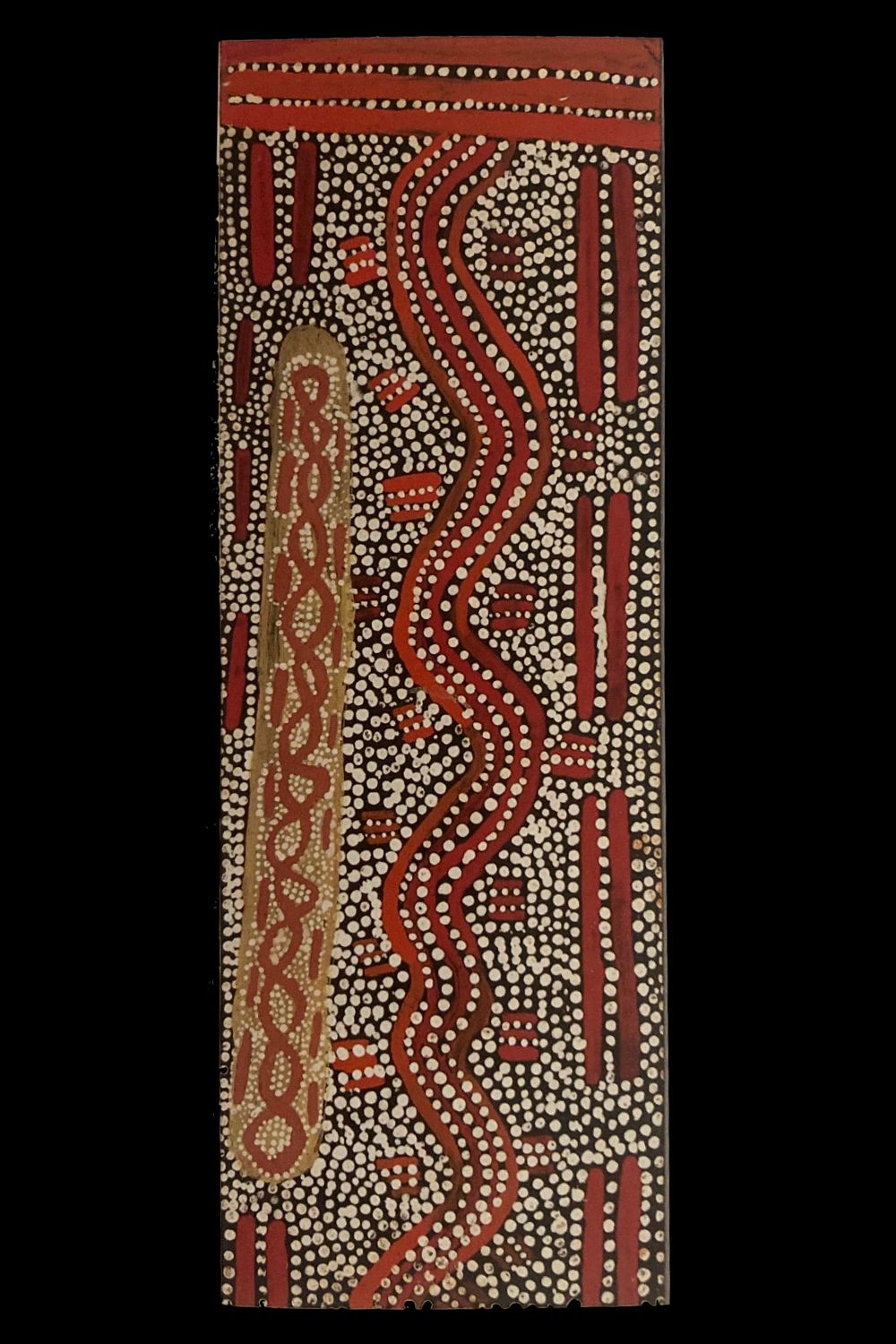
Unlike prolific Papunya artists such as Johnny Warangkula, Mick Namarari and Billy Stockman, Kingsley Tjungurrayi produced relatively few documented paintings. He is more comparable to artists such as Nosepeg Tjupurrula, Old Tutuma Tjapangati, Don Ellis Tjapanangka and Charlie Egalie Tjapaltjarri, whose known bodies of work are also comparatively small. As a result, authenticated works by Kingsley are rarely seen in museums or on the art market. The small number of surviving Papunya Boards is historically significant because they document the experimental period when ceremonial designs were first adapted to acrylic paint on composition board.
Early Papunya Artist
Kingsley was among the original painters who worked with schoolteacher Geoffrey Bardon at Papunya during 1971. These pioneering artists transformed traditional designs previously created in body painting, ground mosaics and ceremony into a new portable art form that became known as Papunya Art.
Historical records also indicate that Kingsley played an active role within the Papunya community during this formative period, serving on the community council alongside several other early Papunya artists.
Painting Style
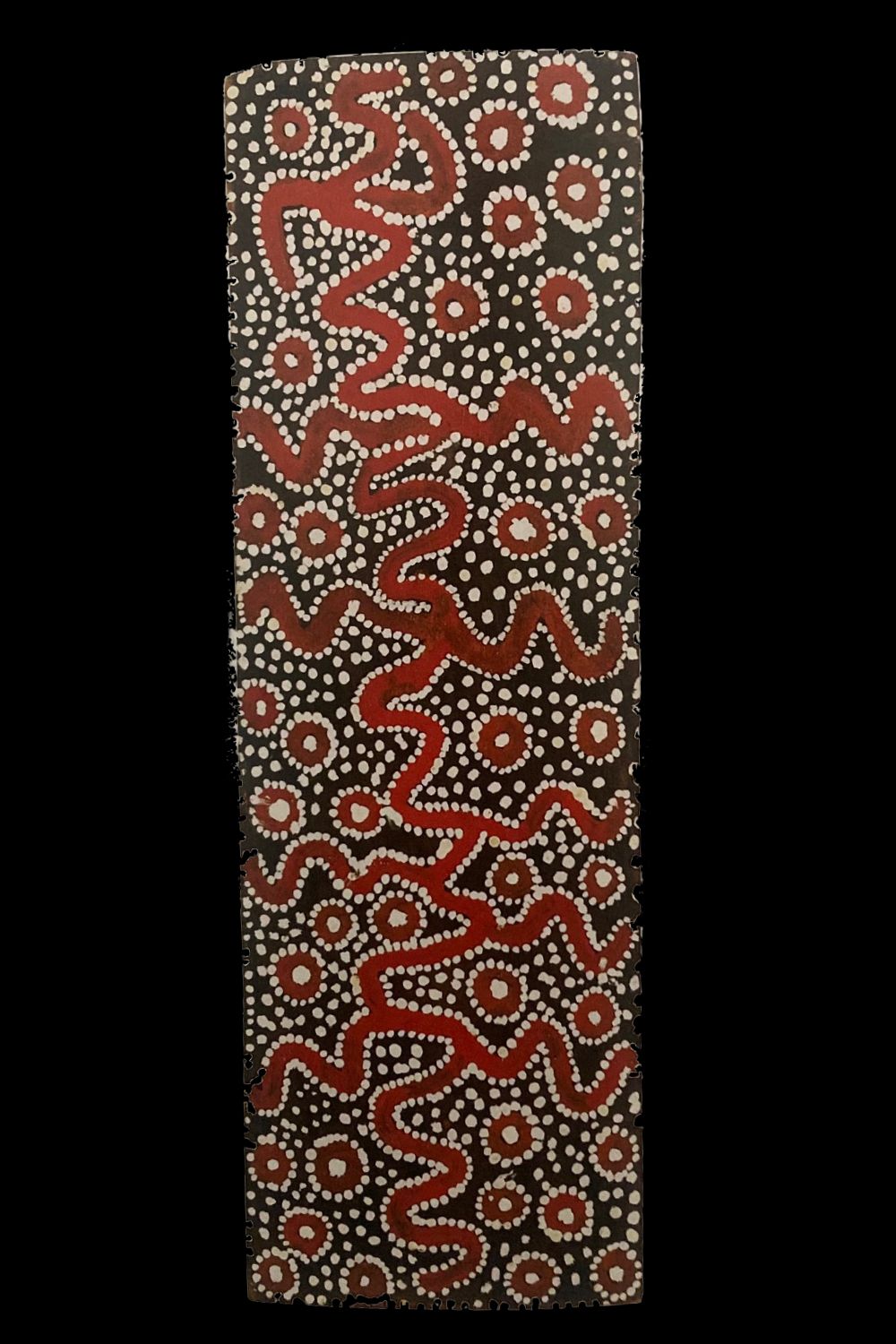
Because so few securely attributed works by Kingsley Tjungurrayi survive from the early Papunya period, it is difficult to define a consistent personal style with complete confidence. The small body of known paintings suggests an artist whose approach varied according to the subject being depicted, while still displaying several recurring characteristics.
His paintings commonly feature:
- bold travelling lines that provide the primary structure of the composition
- concentric circles representing important ceremonial sites
- evenly applied white dotting that unifies the surface without obscuring the underlying design
- restrained palettes of red, white, black and ochre
- carefully balanced compositions with a strong sense of rhythm and order.
Rather than relying on dense fields of dots, Kingsley’s early works retain the bold graphic quality that characterises many of the first Papunya Boards. Their emphasis on strong linear forms, clear symbolic imagery and disciplined composition gives them a distinctive visual clarity that reflects the formative years of the Western Desert painting movement.
Kingsley Tjungurrayi Artwork Value
Because so few authenticated works are known, Kingsley Tjungurrayi paintings are seldom offered for sale. When genuine early Papunya Boards by the artist do appear, their historical significance generally attracts strong interest from collectors specialising in the origins of Western Desert Art.
If you own a painting by Kingsley Tjungurrayi and would like to know more about its authenticity, history or current market value, feel free to contact me. I am always interested in examining early Papunya paintings and may be interested in purchasing significant works.
All images in this article are for educational purposes only.
This site may contain copyrighted material the use of which was not specified by the copyright owner.