Old Tutuma Tjapangati
Southern Pintupi
Wirrilinya, southwest of Lake Hopkins
Haasts Bluff / Papunya
Papunya Art / Western Desert Art
Founding Papunya painter
Painting on composition board
Old Tutuma Tjapangati (also recorded as Old Tutama Tjapangati) was one of the founding artists of the Papunya painting movement and a senior Pintupi ceremonial leader whose cultural authority helped shape the earliest years of contemporary Aboriginal art. Although his painting career was relatively brief and only a small number of works are known today, his surviving paintings are historically important because they preserve one of the closest visual links between traditional ceremonial designs and the first Papunya Boards.
Born around 1909 at Wirrilinya, southwest of Lake Hopkins on the Western Australia–Northern Territory border, Tutuma spent much of his early life living a traditional nomadic lifestyle on Pintupi Country before moving east during the 1940s. He eventually settled at Papunya in 1960, where he became one of the respected senior custodians who participated in Geoffrey Bardon’s painting project beginning in 1971.
Old Tutuma is one of a number of historically important, but comparatively little-known, Papunya artists. Like Tommy Lowry Tjapaltjarri, George Tjangala and Dinny Nolan Tjampitjinpa, his contribution to the birth of the Western Desert Art movement has often been overshadowed by more widely recognised pioneers such as Tim Leura, Johnny Warangkula Tjupurrula and Uta Uta Tjangala.
If you own a painting by Old Tutuma Tjapangati and are thinking about selling it, or would simply like an opinion on its current market value, please feel free to contact me. I actively purchase early Papunya Boards and significant works from the formative years of the Western Desert Art movement.
Biography
Old Tutuma Tjapangati belonged to the Southern Pintupi people and was recognised as an important ceremonial elder long before he became an artist. Unlike many younger Papunya painters, his reputation rested primarily on his extensive knowledge of Tjukurrpa (Dreaming), ceremony and Country.
Around 1943, after hearing reports of government ration depots, Tutuma travelled hundreds of kilometres east to Haasts Bluff. He later worked as a cameleer and maintained strong connections with his traditional homelands before relocating permanently to Papunya in 1960.
By the time Geoffrey Bardon encouraged Aboriginal men to paint in 1971, Tutuma was already regarded as one of the senior Pintupi leaders living at Papunya. His participation gave the emerging movement cultural authority, as only senior custodians possessed the knowledge and permission to depict many ancestral narratives.
Old Tutuma Tjapangati’s Painting Style
Because comparatively few paintings by Old Tutuma Tjapangati survive, it is difficult to define a consistent personal style with certainty. Nevertheless, his known works display several distinctive characteristics that set them apart from many later Western Desert paintings.
His paintings typically feature:
- large ceremonial symbols arranged in open compositions
- bold concentric circles and parallel bars
- restrained palettes of black, white, ochre and earth reds
- relatively little decorative dotting
- strong use of negative space
- imagery derived directly from ceremonial body painting and ground designs.
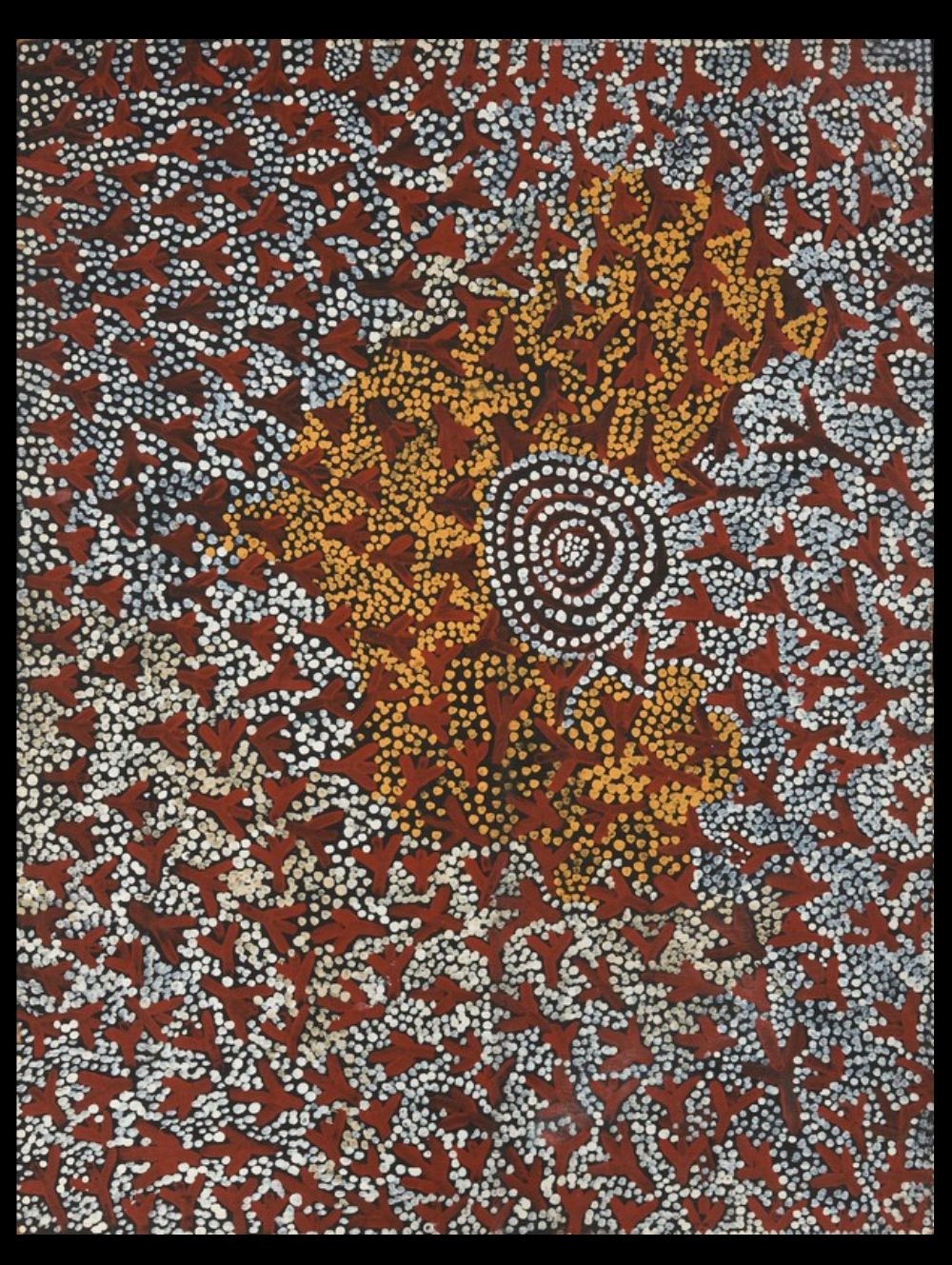
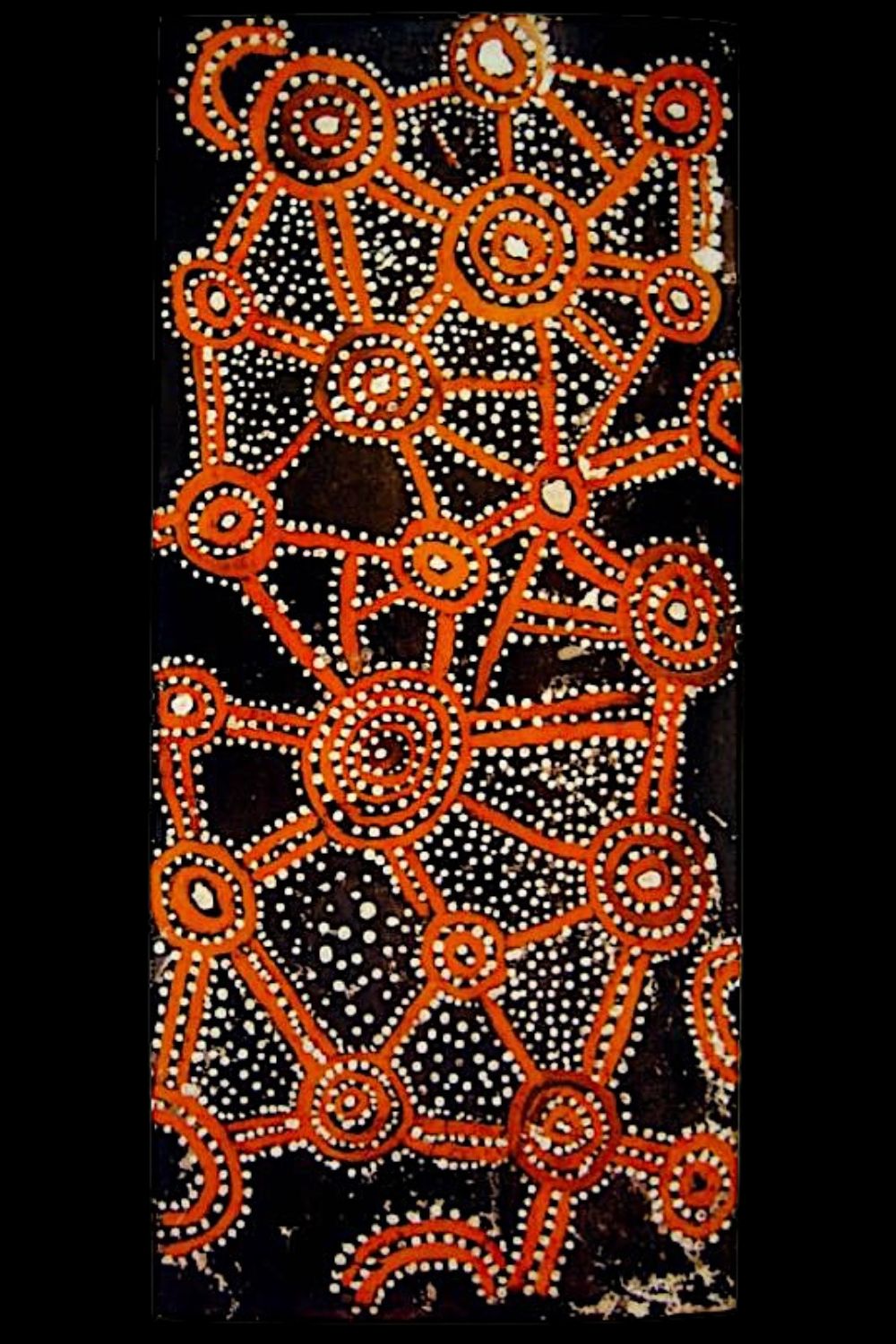
Unlike many Papunya artists who gradually developed increasingly intricate dotted compositions during the 1970s, Tutuma’s paintings retain the direct visual language of ceremony. Their bold graphic forms closely resemble traditional designs applied to the body or created on the ground during important rituals.
The National Gallery of Victoria has observed that his paintings preserve an exceptional sense of immediacy and ritual purpose, reflecting the direct transfer of ceremonial iconography onto composition board rather than adapting it into a more decorative style.
Given his limited surviving oeuvre, however, any stylistic assessment should be treated with caution.
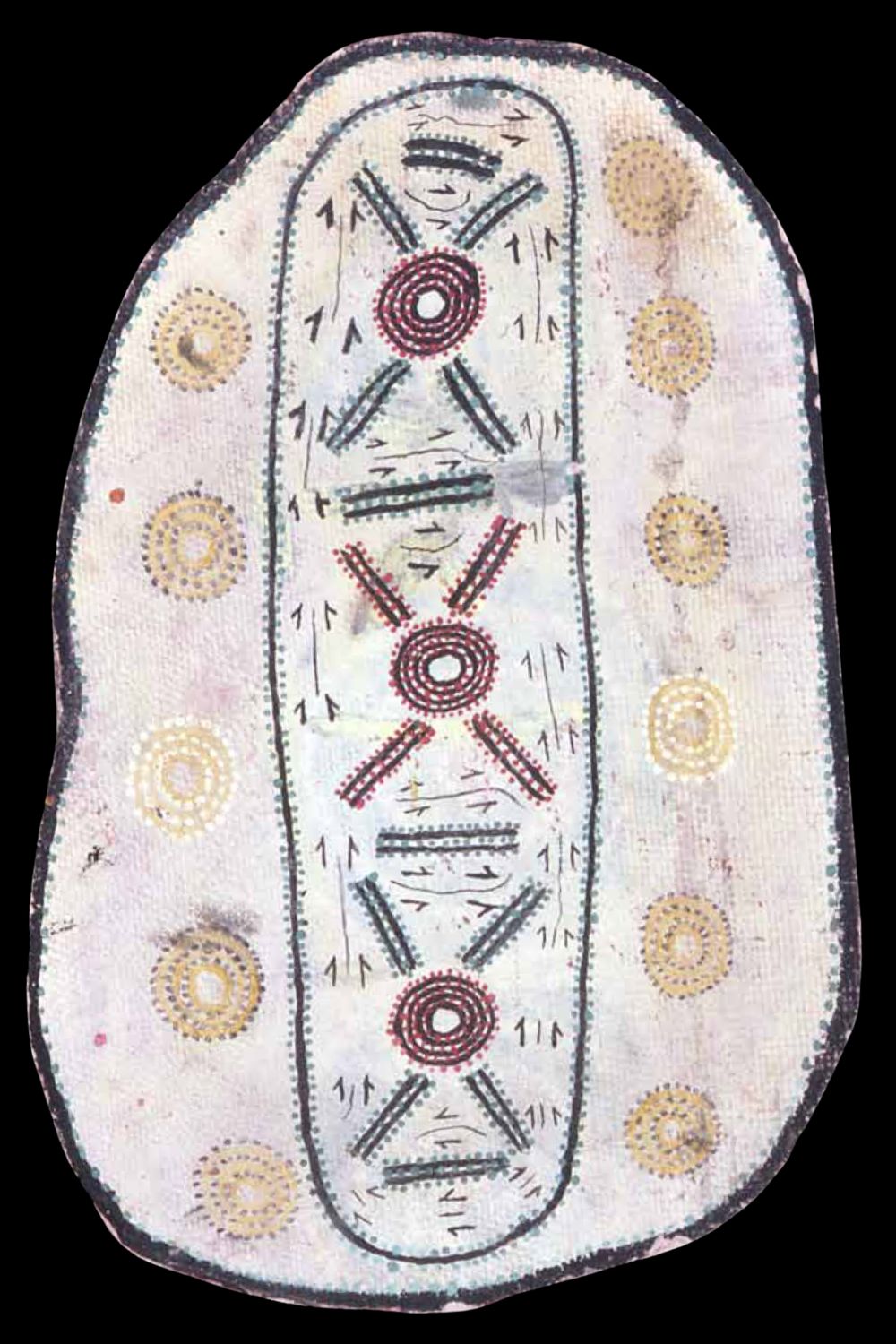
Fire Sticks, Spears and Stars at Night
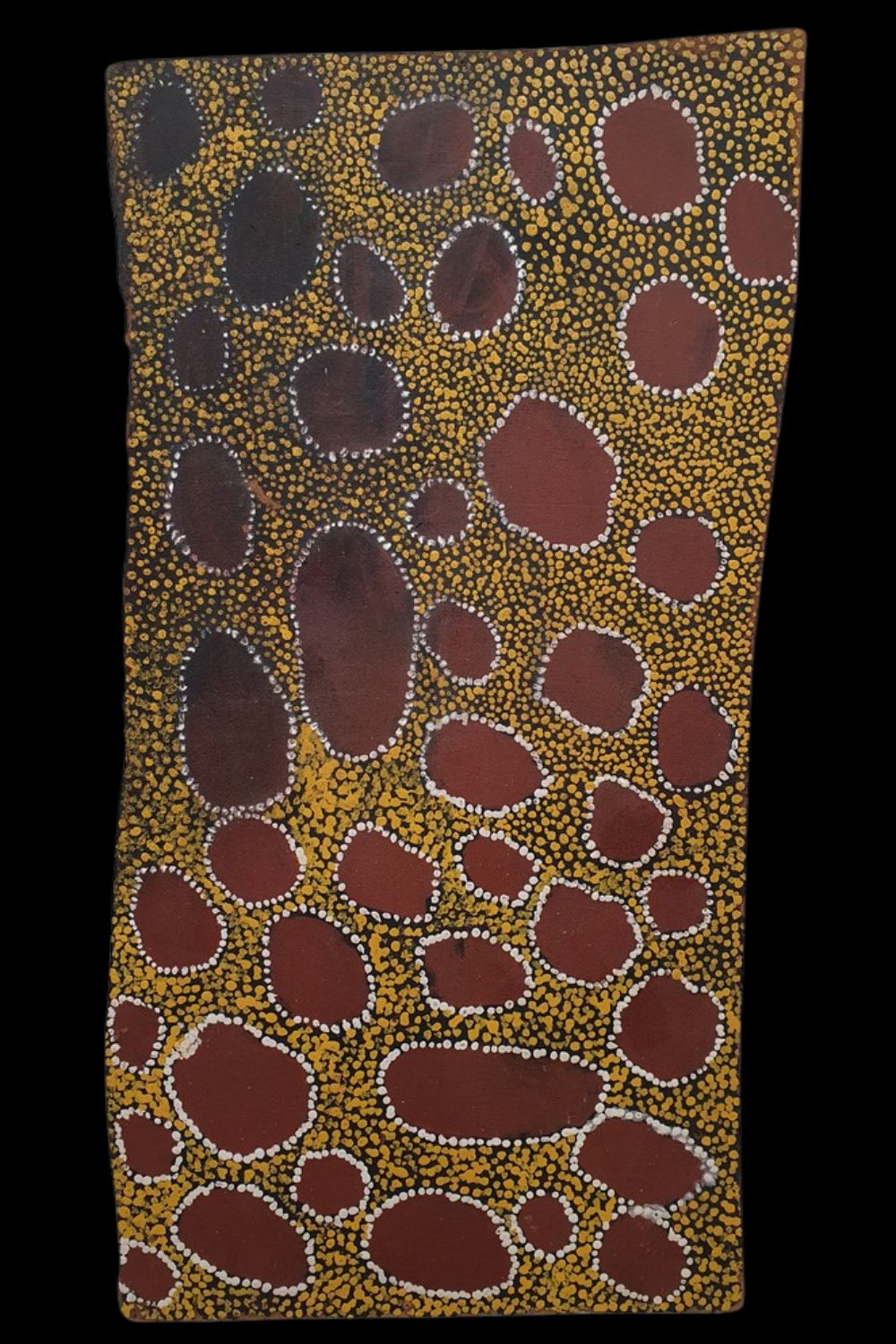
Old Tutuma’s best-known painting is Fire Sticks, Spears and Stars at Night, now held by the Australian Museum as part of the Papunya Permanent Collection.
The composition depicts ceremonial activity taking place at night, with large circles representing campfires, parallel lines symbolising spears, and smaller dotted circles representing stars. Geoffrey Bardon noted that the elongated format of the board resembles a ceremonial tjuringa, further reinforcing the close relationship between the painting and traditional ceremonial practice.
Like several early Papunya Boards, the attribution of this work was debated for many years before later research confirmed Tutuma as the artist.
Historical Importance
Although Old Tutuma Tjapangati produced far fewer paintings than many of his contemporaries, his contribution to Australian art is significant.
He belonged to the first generation of Papunya painters who transformed ancient ceremonial knowledge into portable acrylic paintings. His works demonstrate that the earliest Papunya Boards were not simply decorative paintings but direct continuations of traditional ceremonial practice.
As a senior Pintupi elder, Tutuma helped establish the cultural foundations upon which the Western Desert Art movement developed. His surviving paintings provide valuable evidence of the transition from ephemeral body painting and ground designs to permanent works that would ultimately gain international recognition.
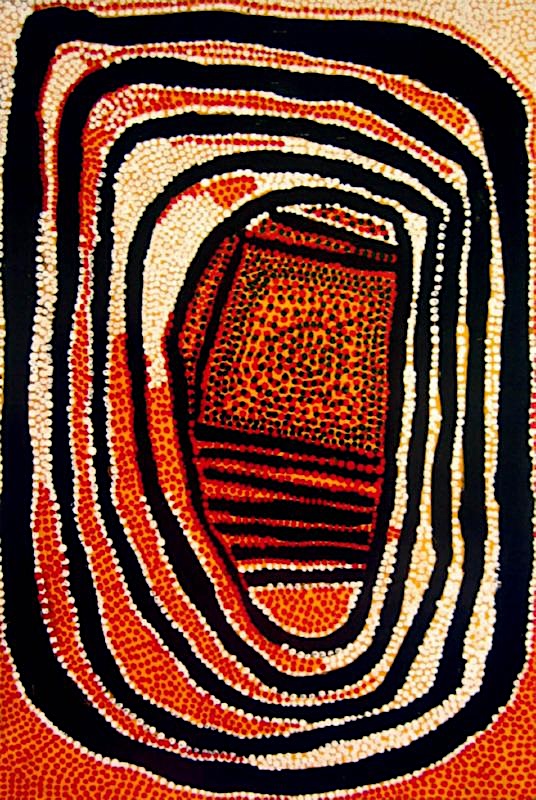
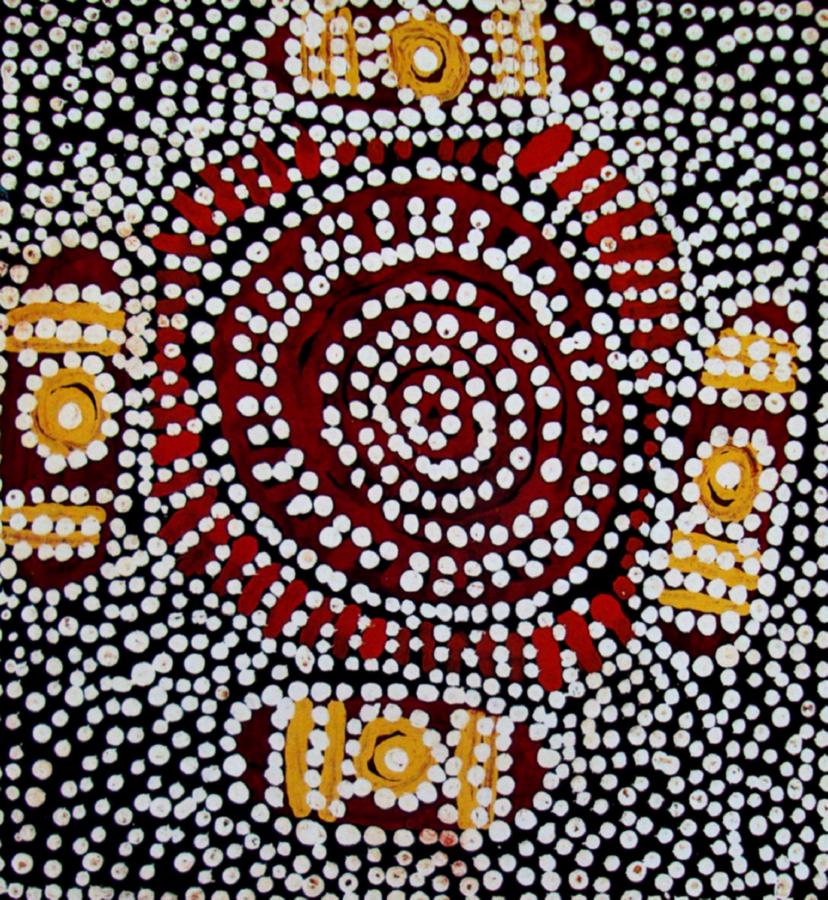
Old Tutuma Tjapangati Paintings for Sale and Value
Paintings by Old Tutuma Tjapangati rarely appear on the market because his documented body of work is comparatively small. Most known paintings were produced during the formative years of the Papunya movement, making them highly significant to collectors of early Papunya Boards and Western Desert Art.
The value of an Old Tutuma Tjapangati painting depends principally on its authenticity, provenance, condition and historical importance. Works dating from the early 1970s, particularly those supported by original Papunya documentation or published in museum collections, are especially sought after because of their rarity and their association with the birth of contemporary Aboriginal art.
If you own a painting by Old Tutuma Tjapangati or would like to know its current market value, please feel free to contact me. I am always interested in purchasing early Papunya Boards and can provide an honest assessment based on the artwork’s provenance, condition and collecting history.
All images in this article are for educational purposes only.
This site may contain copyrighted material the use of which was not specified by the copyright owner.