Turkey Tolson: Straightening spears
c. 1942–2001
Pintupi
Kintore / Western Desert
Papunya / Kintore
Papunya Art / Pintupi Art / Western Desert Art
Papunya Tula Artists
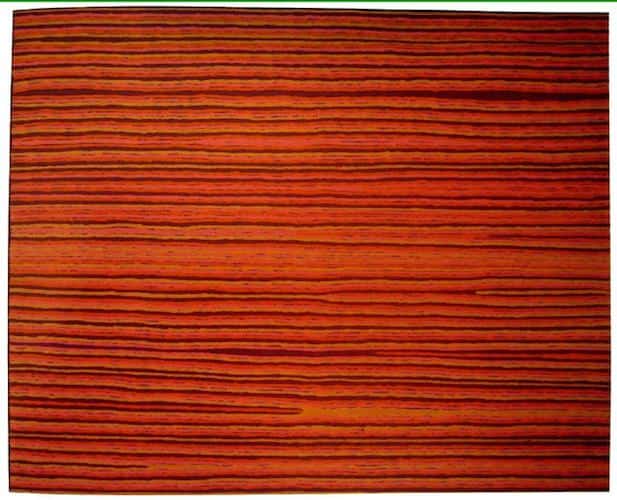
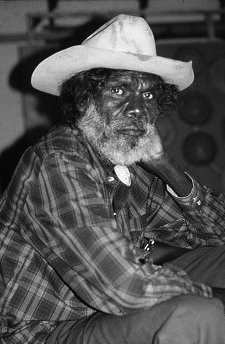
Turkey Tolson Tjupurrula (c.1942–2001), also spelled Turkey Tolsen, transformed one of the oldest ceremonial traditions of Western Desert Art into one of the most refined abstract styles in Australian art. While many early Papunya painters became known for paintings filled with concentric circles, tracks and ceremonial symbols, Tolson gradually stripped these elements away until little remained beyond shimmering horizontal bands of colour. Drawing on deep Pintupi ceremonial knowledge, he demonstrated that Country could be communicated through rhythm, repetition and movement rather than descriptive imagery.
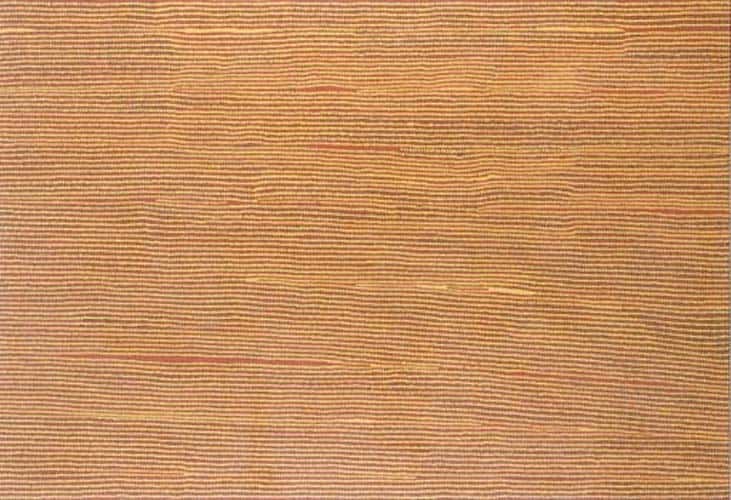
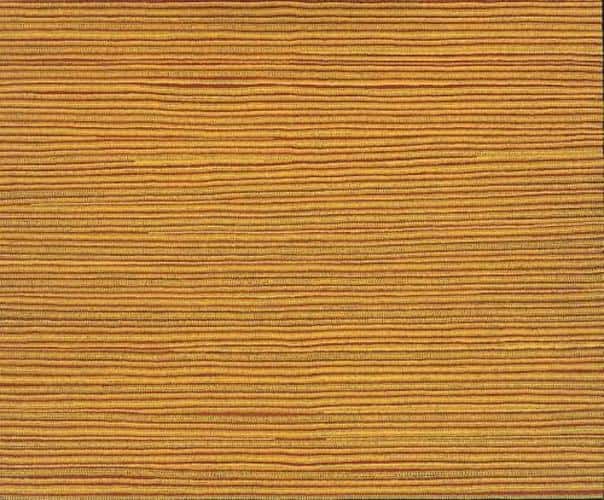
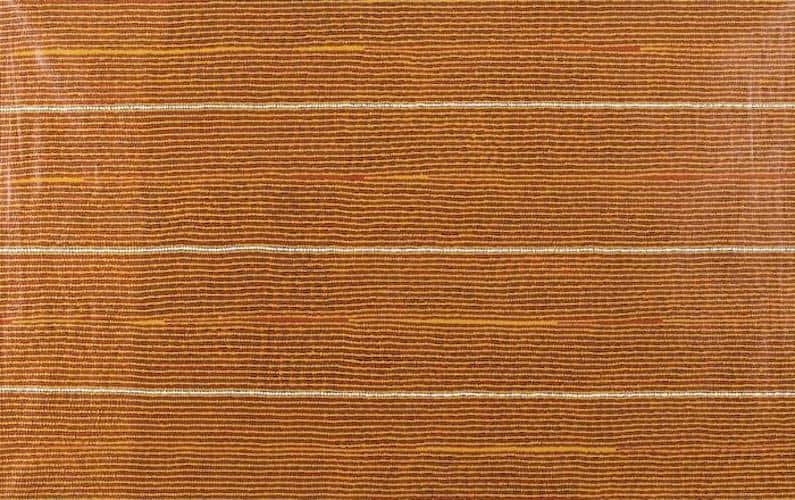
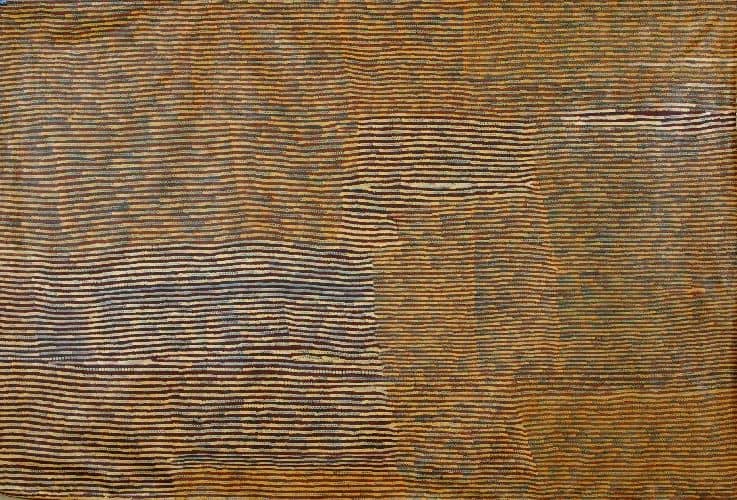
Around 1990 he introduced the Straightening Spears series, a body of work he returned to repeatedly throughout the final decade of his life. Auction catalogues consistently describe this theme as his defining artistic achievement, noting that it became his leitmotif and the subject through which he explored increasingly refined forms of abstraction. This movement towards radical simplification also characterised the mature work of other Pintupi painters associated with Kintore Art, including George Tjungurrayi, Warlimpirrnga Tjapaltjarri and Ronnie Tjampitjinpa, although each developed a distinctly individual visual language.
Although one of the younger artists involved in the Papunya art movement, Tolson became one of its most respected leaders. He served as Chairman of Papunya Tula Artists from 1985 to 1995, the longest-serving chairman in the company’s history, during a period that coincided with the return of many Pintupi families to their traditional Country around Kintore. His paintings are now represented in Australia’s leading public collections and are widely regarded as among the finest achievements of late twentieth-century Aboriginal art.
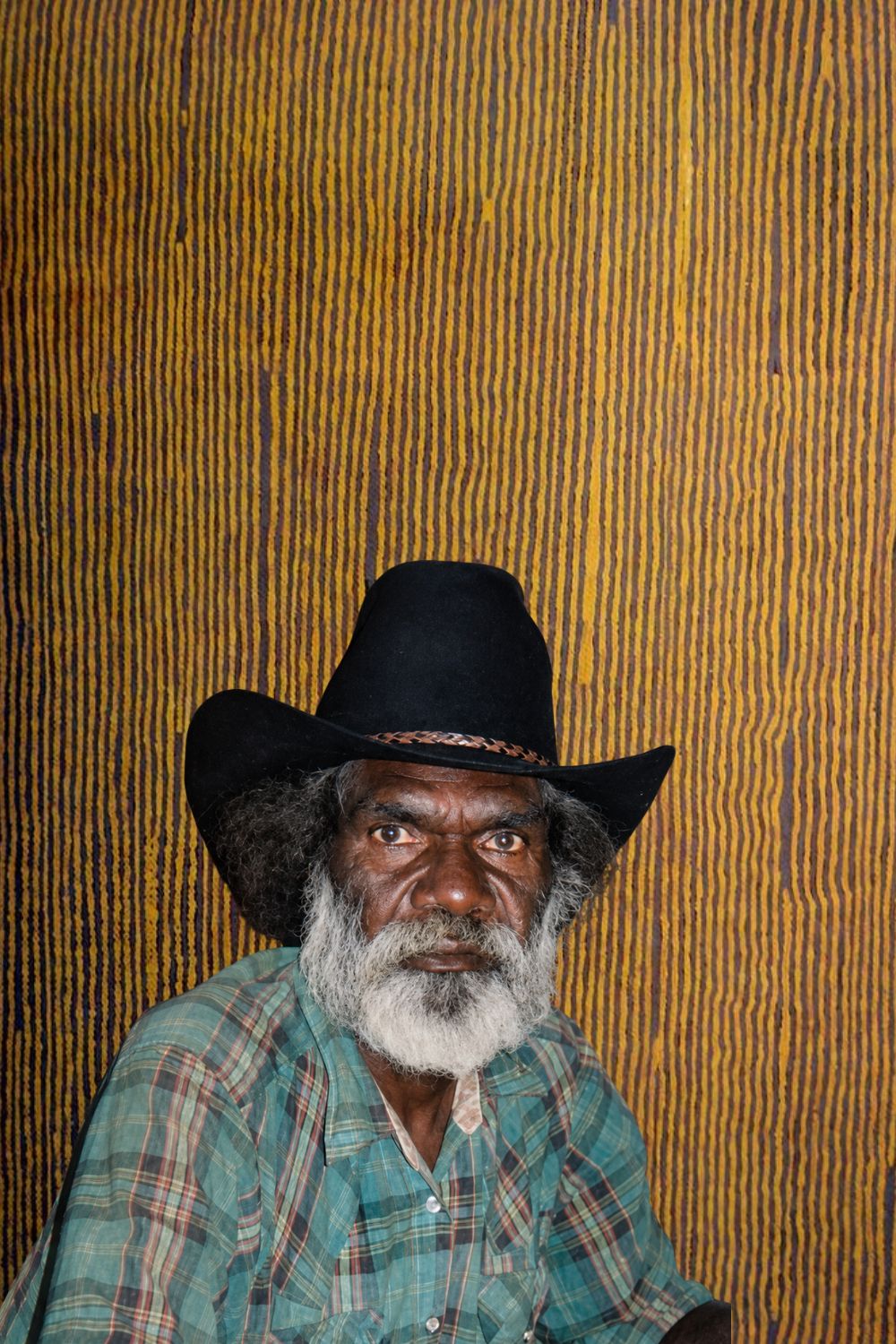
Interested in what a Turkey Tolson painting is worth? Read my complete guide to Turkey Tolson Tjupurrula painting values, auction results and price history.
Early life
Turkey Tolson Tjupurrula was born around 1942 near Haasts Bluff in the Northern Territory and belonged to the Pintupi language group. His ancestral Country lay around Kintore and the Western Desert, where he acquired the ceremonial knowledge that would later underpin his paintings.
Like many Pintupi people of his generation, he experienced both traditional desert life and the profound changes brought by government settlements. Before becoming a full-time artist he worked as a stockman, labourer and community worker. His name first appears among the shareholders of Papunya Tula Artists in 1973, placing him within the pioneering generation that followed Geoffrey Bardon’s introduction of acrylic painting only two years earlier.
The early paintings
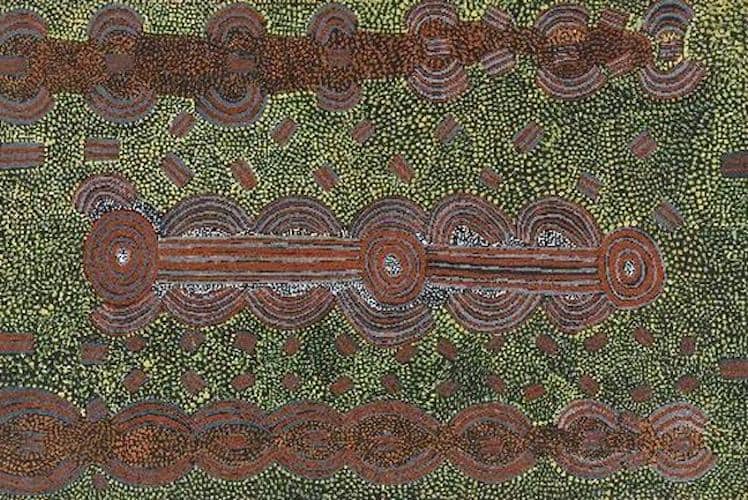
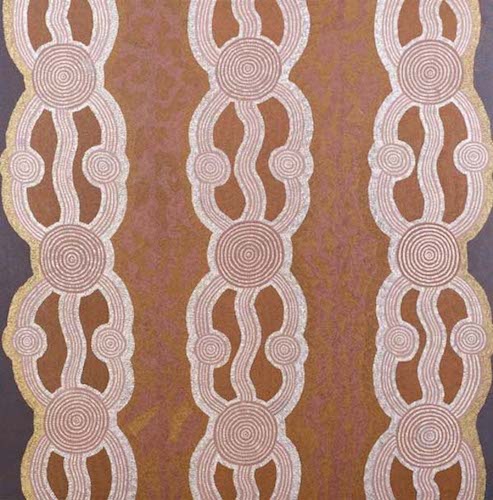
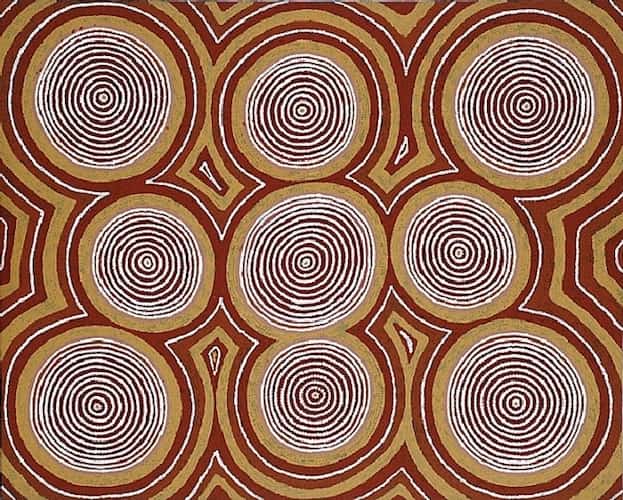
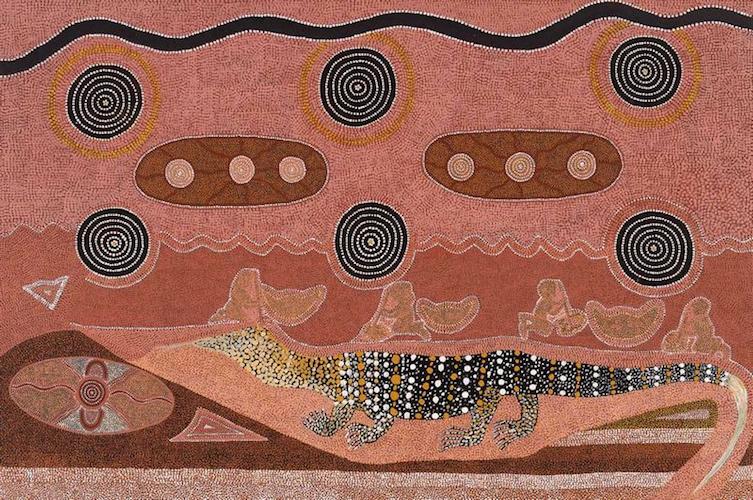
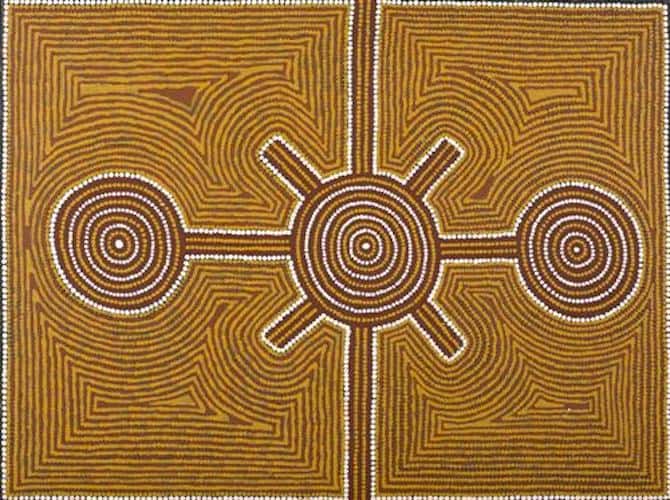
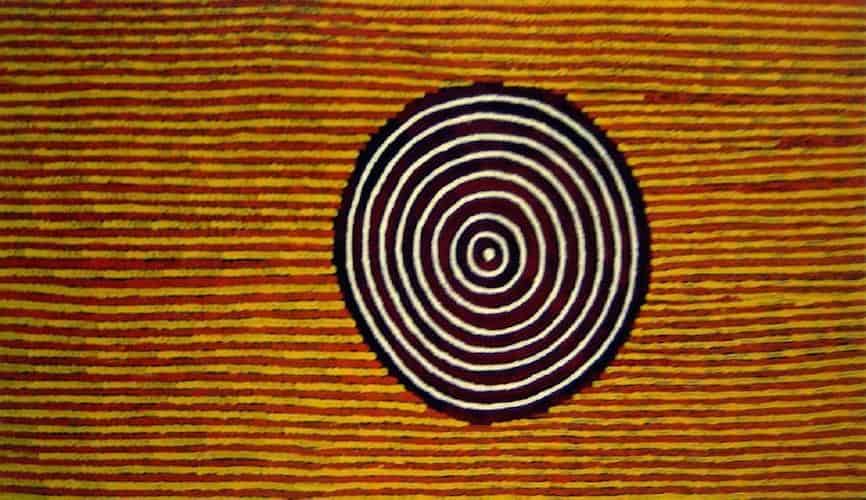
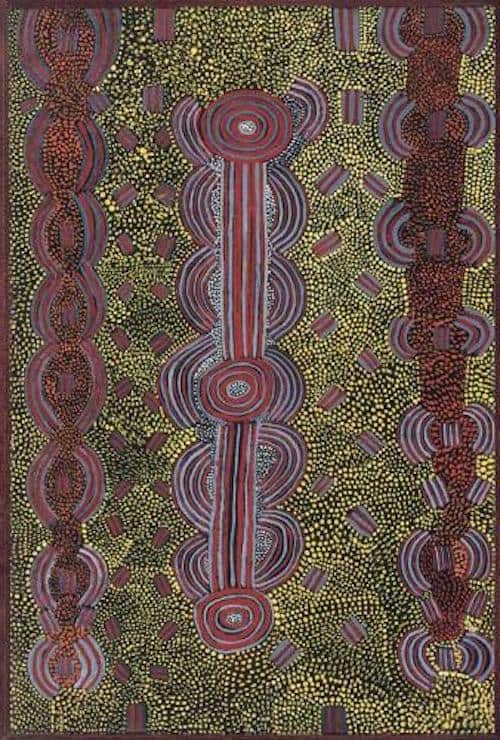
Turkey Tolson Tjupurrula’s earliest paintings belong firmly within the classical Papunya style. During the 1970s and early 1980s he painted using the established visual language of concentric circles, travelling lines and dense dotting that characterised the first generation of Western Desert painters. Works depicting Kamparrarrpa, Putja Rockhole, Perentie Dreaming and other ancestral places demonstrate a thorough command of Pintupi iconography and reveal an artist deeply grounded in traditional ceremonial knowledge.
Unlike some of the senior founders of the Papunya movement like Walter Tjampitjinpa and Mick Wallankarri , Tolson was still a young man with significant family, ceremonial and community responsibilities. As a result, he painted less prolifically than contemporaries such as Kaapa Tjampitjinpa, Johnny Warangkula Tjupurrula and Clifford Possum Tjapaltjarri during the movement’s formative years. Rather than seeking immediate innovation, his early paintings reflect a careful mastery of the established Papunya tradition, laying the foundations for the highly individual style that would later define his career.
The 1980s proved to be an important decade in his artistic development. In 1983 he travelled to Paris with Joseph Jurra Tjapaltjarri to participate in the landmark Peintres Aborigènes d’Australie exhibition, where the artists created ceremonial sand paintings for European audiences. During the same period he also explored media beyond acrylic painting, producing prints for the celebrated Utopia Suite and experimenting with multicolour woodblock prints. These projects broadened his artistic experience while his paintings gradually became more refined and increasingly personal.
Reinventing Pintupi abstraction: Straightening spears
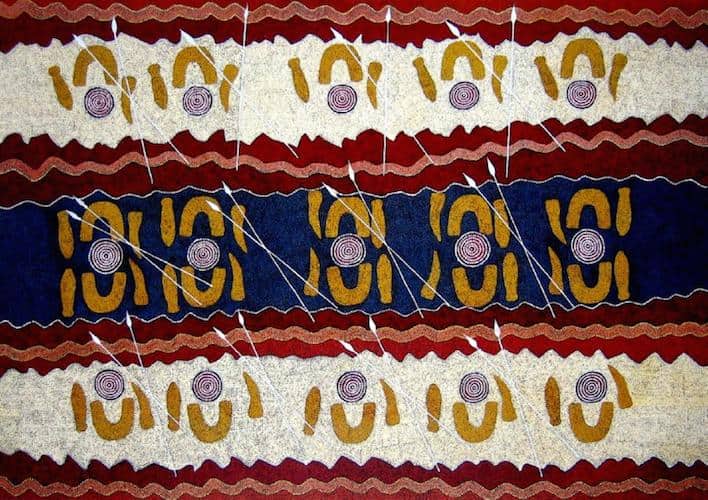
Around 1990 Tolson embarked on one of the most remarkable stylistic transformations in Aboriginal art. Following the death of his father and the inheritance of greater ceremonial responsibilities, he increasingly concentrated on a single ritual action rather than depicting entire Dreaming narratives. Instead of representing camps, ancestors and journeys, he focused on the ceremonial preparation of hunting spears.
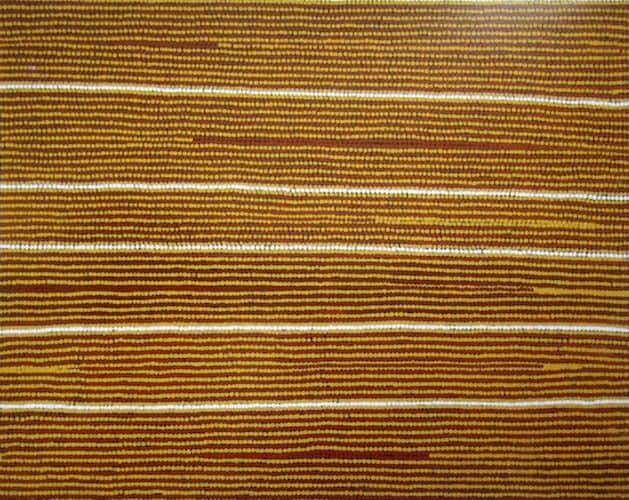
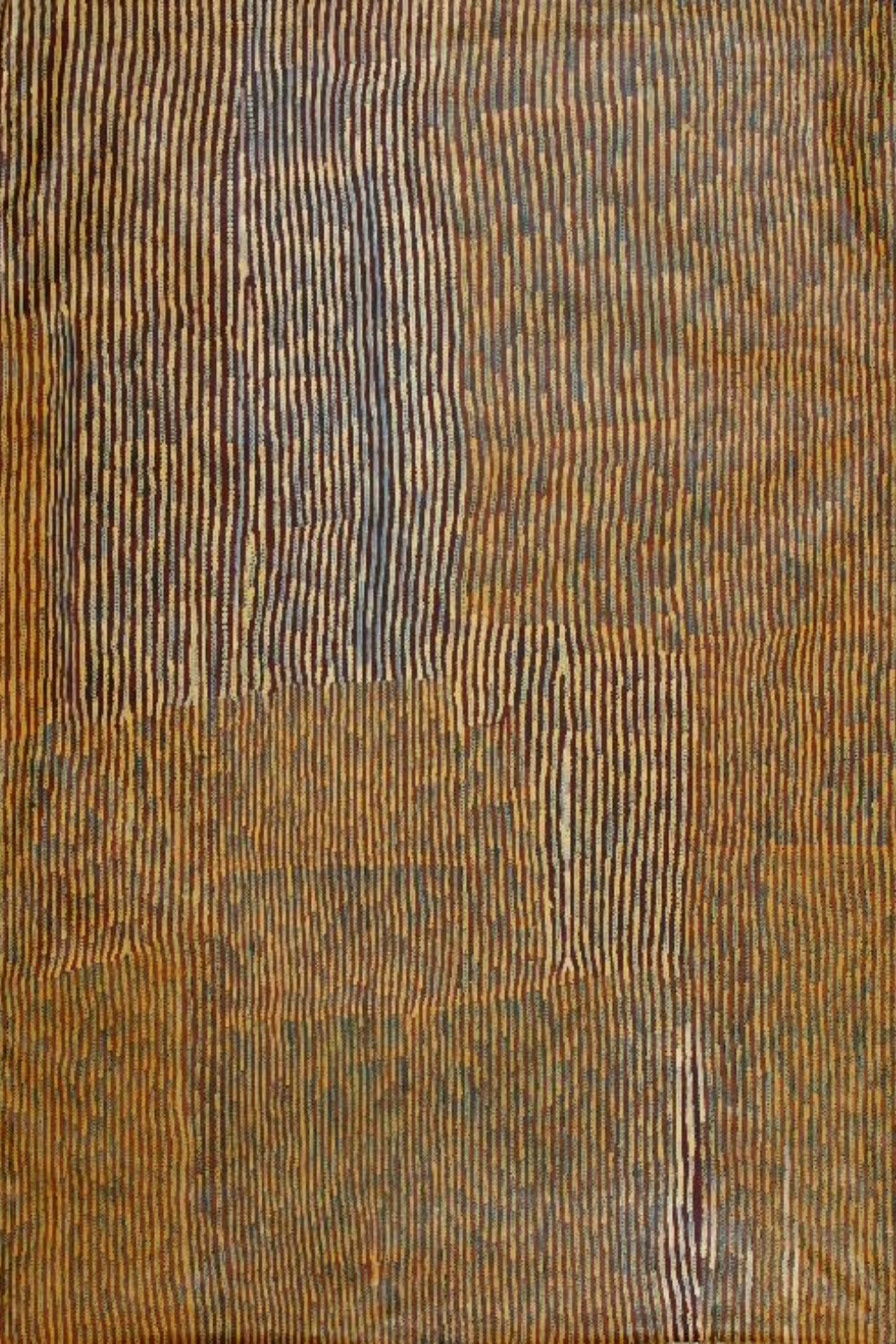
According to Papunya Tula documentation, the paintings depict an ancestral episode at Illyingaugau near the secret cave site of Mitukatjirri. A group of men heated wooden spears over a fire before carefully straightening them while preparing for a possible confrontation with men from the Tjikari region. The parallel bands represent the spears themselves.
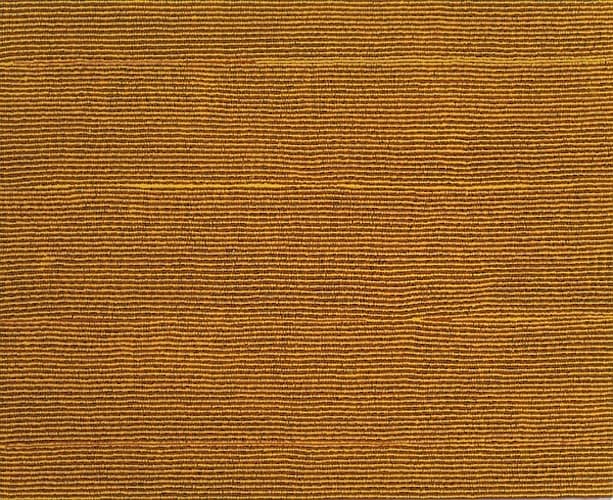
Rather than illustrating the ceremony literally, Tolson reduced it to its essential visual rhythm. Thousands of meticulously placed dots form shimmering horizontal bands that seem to move as the viewer walks before them. Auction specialists have observed that the subtle modulation of colour evokes both the heat rising from the fire and the immense distances of the Western Desert.
Art historian Wally Caruana described these paintings as creating “an atmospheric effect of heat rising from the fires in which the spears are straightened”. He argued that the shimmering surfaces also reflect “the powers of the ancestral creator beings latent in the landscape”, transforming what appears to be a minimalist composition into a profound expression of Country and ceremony
Painting style
Turkey Tolson’s mature paintings are among the most recognisable works produced by Papunya Tula Artists.
They are characterised by:
- long horizontal bands extending across the entire canvas
- exceptionally fine and consistent dotting
- restrained palettes dominated by ochres, reds, whites and blacks
- subtle variations in the width and rhythm of each band
- optical vibration that changes as the viewer moves
- an extraordinary balance between precision and spontaneity
Although frequently described as striped paintings, their structure is far more complex. Hetti Perkins and Hannah Fink observed that the dotted bands are not painted as continuous lines but are constructed section by section. The resulting irregularities suggest “the imperfect lines of the spears themselves”, while allowing light to penetrate the surface and creating shifting depths that evoke the contours of Country.
This disciplined repetition creates paintings that appear simultaneously still and alive, balancing ceremonial meaning with a sophisticated understanding of colour, rhythm and optical perception.

Further Reading
Turkey Tolson Tjupurrula’s career has been examined in major museum catalogues, exhibition publications and scholarly studies of the Papunya Tula movement. While no single monograph has been devoted exclusively to his work, the publications below provide the most authoritative discussions of his life, painting style and artistic significance. Many are also cited in the provenance notes and catalogue essays accompanying his most important paintings.
Perkins, Hetti and Hannah Fink (eds.). Papunya Tula: Genesis and Genius. Art Gallery of New South Wales in association with Papunya Tula Artists, Sydney, 2000.
The essential reference on Turkey Tolson Tjupurrula and the single most important publication for understanding his work. Produced to accompany the landmark exhibition at the Art Gallery of New South Wales, it reproduces many of his finest paintings, traces the development of the Straightening Spears series and contains insightful essays on the evolution of Papunya Tula painting. Frequently cited in auction catalogues and museum publications.
Morphy, Howard. Aboriginal Art. Phaidon Press, London, 1998.
One of the most influential scholarly studies of Australian Aboriginal art. Morphy discusses Turkey Tolson’s Straightening Spears at Illyingaugau as a significant departure from the underlying geometric structures that characterise many Papunya paintings, highlighting the originality of his minimalist linear compositions.
Caruana, Wally. Aboriginal Art. Thames & Hudson, revised editions.
Caruana places Turkey Tolson within the broader history of Western Desert painting and provides one of the most perceptive interpretations of the Straightening Spears series. He explains how the shimmering bands evoke heat rising from the fires used to straighten the spears while simultaneously expressing the ancestral powers embedded within Country. His writing remains essential for understanding the relationship between abstraction, ceremony and landscape.
Kennedy, Brian et al.Developing the Collection: Acquisitions 2001–2004. National Gallery of Australia, Canberra, 2004.
Documents the National Gallery of Australia’s acquisition of one of Turkey Tolson’s important late Straightening Spearspaintings. The accompanying catalogue entry explains the significance of the series and is regularly cited in later auction catalogues discussing his mature work.
König, Kasper, Emily Joyce Evans and Falk Wolf (eds.).Remembering Forward: Australian Aboriginal Painting Since 1960.Paul Holberton Publishing, London, 2010.
A major international exhibition catalogue produced for Museum Ludwig, Cologne. It reproduces one of Turkey Tolson’s important Straightening Spears paintings and places his work within the international history of post-1960 Australian Aboriginal art.
Bardon, Geoffrey and James Bardon. Papunya: A Place Made After the Story. Miegunyah Press, Melbourne, 2004.
The definitive account of the origins of the Papunya painting movement. Although centred on the movement’s formative years, it illustrates one of Turkey Tolson’s earliest known boards and provides invaluable context for his emergence as one of the younger founding Papunya Tula artists.
Steele, James. Mr Sandman Bring Me a Dream. Papunya Tula Artists Pty Ltd and Aboriginal Arts Agency Pty Ltd, 1981.
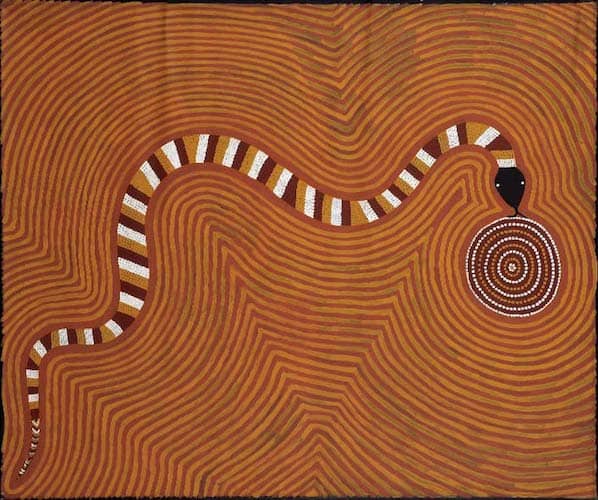
An important early exhibition catalogue documenting the international touring exhibition of Papunya Tula paintings. It reproduces one of Turkey Tolson’s early Brown Snake Dreaming paintings and records his emergence as one of the movement’s most promising younger artists.
Maughan, Janet. Dot and Circle. Royal Melbourne Institute of Technology, Melbourne, 1986.
An early academic study of the Western Desert movement that reproduces one of Turkey Tolson’s Brown Snake Dreamingpaintings and examines the symbolism and stylistic development of Papunya artists during the first fifteen years of the movement.
National Museum of Australia
Papunya Tula: Out of the Australian Desert. National Museum of Australia, Canberra, 2010.
This important exhibition catalogue surveys the history of Papunya Tula Artists and includes Turkey Tolson among the movement’s leading painters. It is frequently referenced in later catalogue essays discussing his artistic importance and legacy.
Museum Collections
The following museums hold important works by Turkey Tolson Tjupurrula and provide collection notes, catalogue essays or online collection records:
- National Gallery of Australia
- National Gallery of Victoria
- Art Gallery of South Australia
- Art Gallery of Western Australia
- Queensland Art Gallery | Gallery of Modern Art
- National Museum of Australia
- National Museum of Ethnology, Osaka, Japan
Exhibition Catalogues
Several exhibition catalogues contain valuable essays and high-quality reproductions of Turkey Tolson’s paintings, including:
- Papunya Tula: Genesis and Genius (Art Gallery of New South Wales, 2000)
- Desert Dreaming: The Arthur Papadimitriou Collection (Benalla Art Gallery, 2001–2003)
- Papunya Tula: Out of the Australian Desert (National Museum of Australia, 2010)
- Remembering Forward: Australian Aboriginal Painting Since 1960 (Museum Ludwig, Cologne, 2010)
General Aboriginal Art References
Readers seeking broader context may also consult:
- Wally Caruana, Aboriginal Art.
- Howard Morphy, Aboriginal Art.
- Vivien Johnson, Lives of the Papunya Tula Artists.
- Susan McCulloch, McCulloch’s Contemporary Aboriginal Art: The Complete Guide.
Together these publications place Turkey Tolson Tjupurrula among the most important innovators of the Western Desert movement. They document his evolution from one of the younger Papunya painters of the early 1970s to the creator of the celebrated Straightening Spears series, now regarded as one of the defining achievements of contemporary Australian Aboriginal art.
His artworks feature in many landmark exhibitions. These include
Contemporary Australian Art 1981 at the Pacific Asia Museum in Los Angeles,
Contemporary Australian Art 1981 at the Pacific Asia Museum in Los Angeles
The Face of the Centre at the National Gallery of Victoria in 1985
Papunya Tula: Genesis and Genius at the Art Gallery of NSW in 2000
Other Aboriginal Art and Artists

All images in this article are for educational purposes only.
This site may contain copyrighted material the use of which was not specified by the copyright owner.
Turkey Tolson Images
The following images of the Artworks of Turkey Tolsen are not a complete list of his works. They do however give a good idea of the style and variety of this Aboriginal Artist.