Patrick Mung Mung: Biography and Painting style
1944–
Gija
Yunurr (Spring Creek) / Ngarrgoorroon / Purnululu / Texas Downs
Warmun, East Kimberley
Warmun / East Kimberley Art
Warmun Art Centre
Natural earth pigments and ochre on canvas
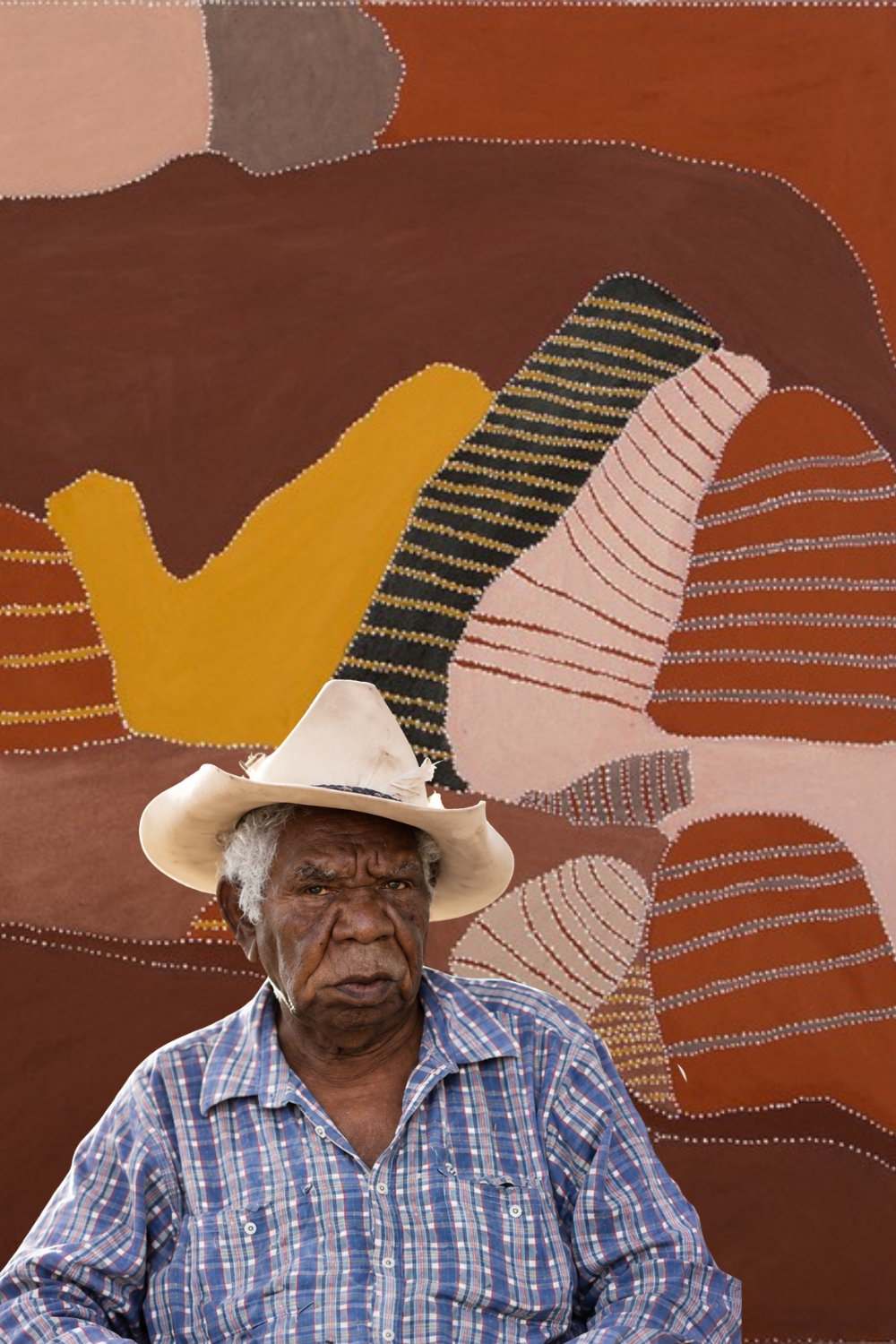
Patrick Mung Mung is a senior Gija artist and cultural leader from Warmun in the East Kimberley. The son of senior Gija leader and artist George Mung Mung, he began painting in 1991 after a lifetime spent travelling and working across the Country that became the principal subject of his art.
His paintings are deeply connected with Yunurr (Spring Creek), Texas Downs, Ngarrgoorroon and Purnululu. These are places associated with his birth and childhood, his years as a stockman, his family and Gija cultural knowledge.
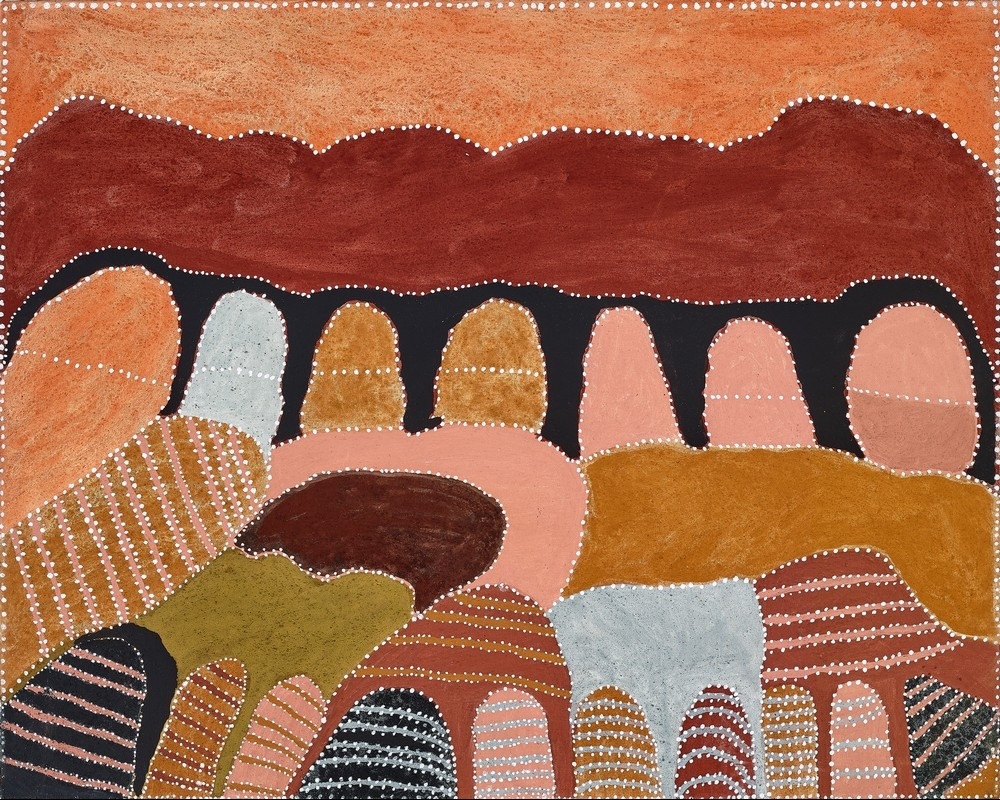
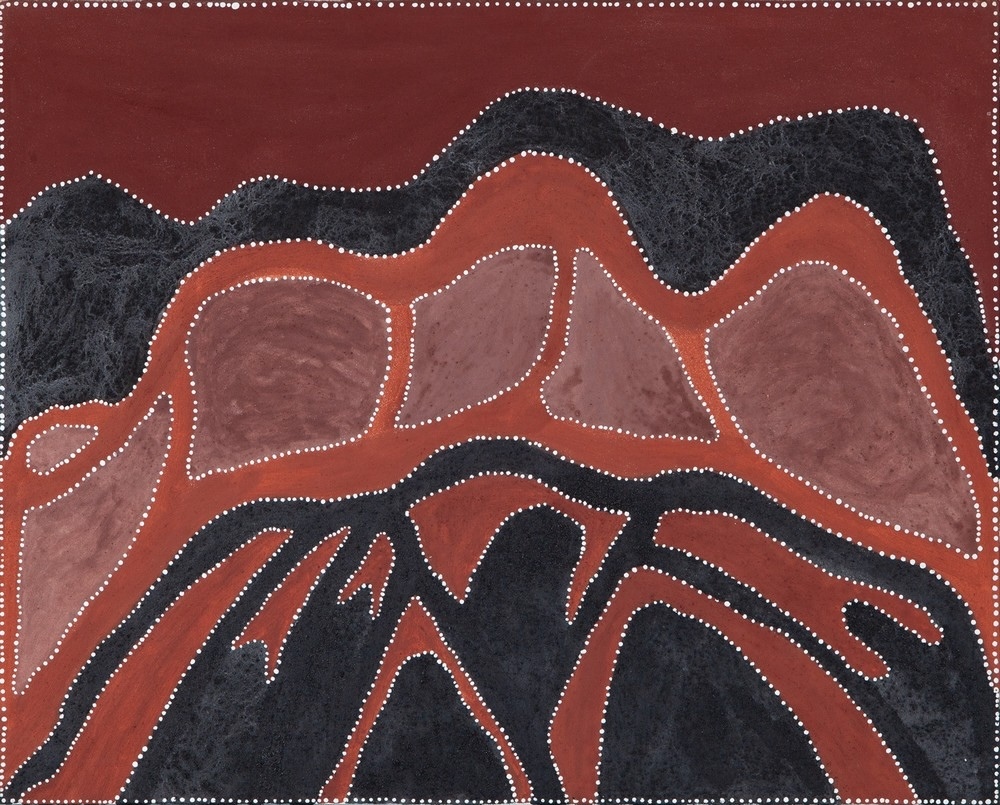
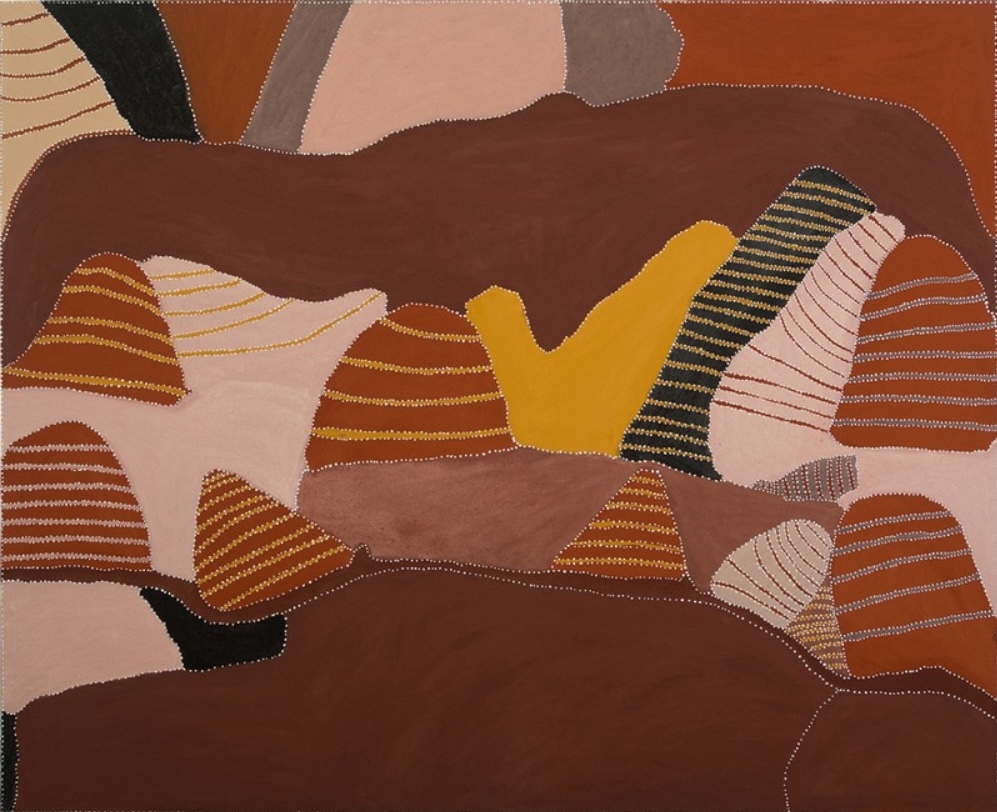
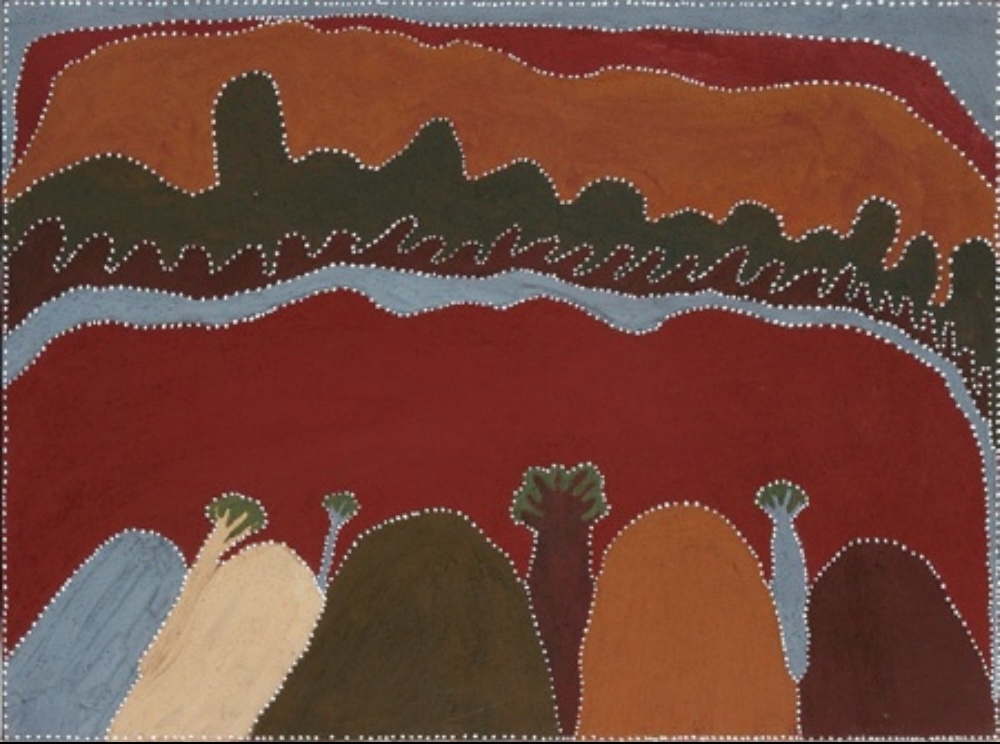
Working principally with natural earth pigments, Patrick developed a distinctive interpretation of the Warmun ochre painting tradition. Broad fields of red, brown, yellow, pink and black are divided by waterways, ridges and brilliant white dotted lines. His paintings of Purnululu are particularly recognisable, reducing the ranges to rhythmic areas of ochre surrounded by bright white dotting.
Patrick’s work developed within the Warmun tradition associated with artists including Rover Thomas and Paddy Jaminji, while becoming recognisably his own.
Patrick Mung Mung Biography and Painting Career
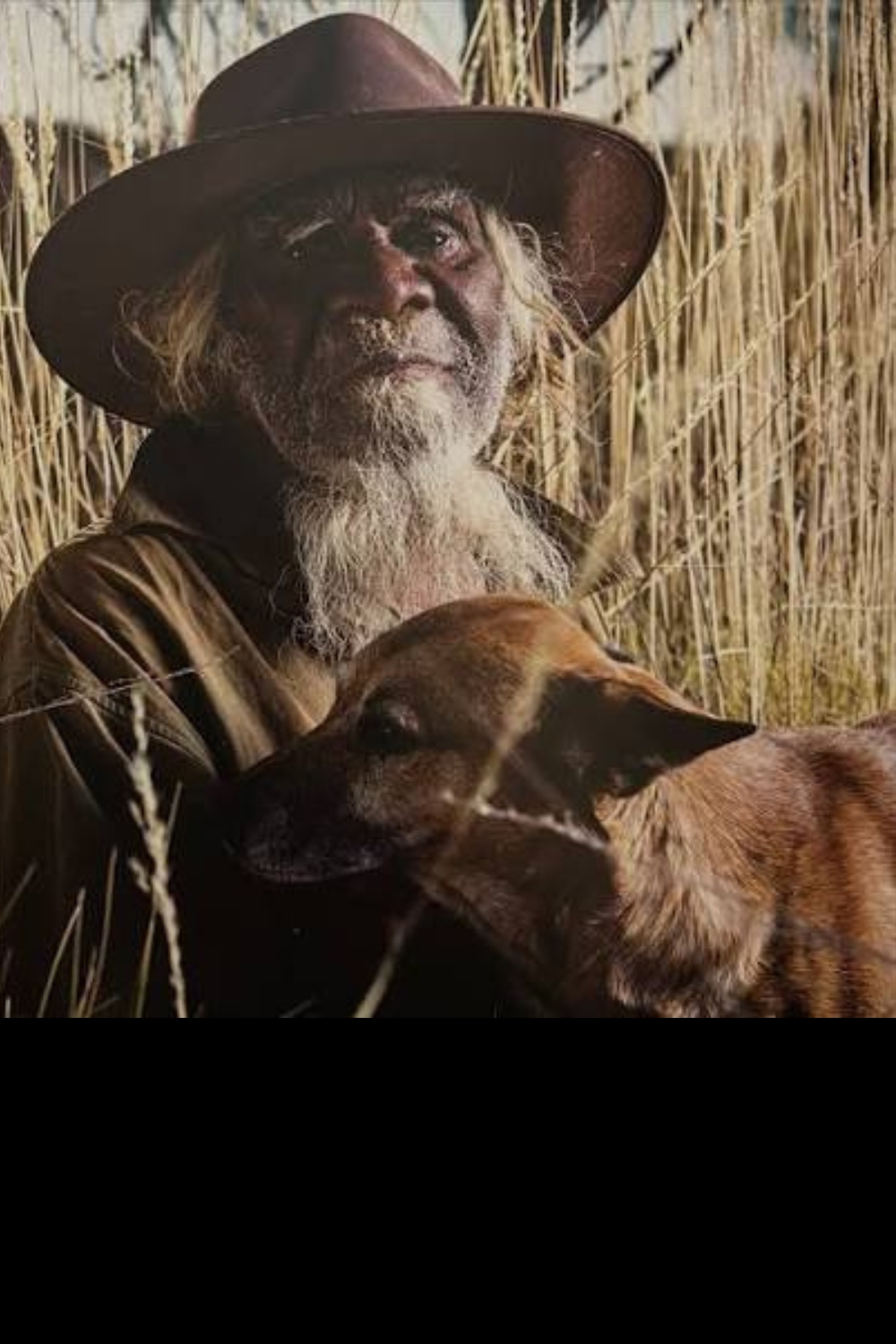
Patrick Mung Mung was born at Yunurr, or Spring Creek, in the East Kimberley. Published sources disagree over his birth year, giving either 1944 or 1948.
Patrick described Yunurr as his daam, or home. As a small child he was carried across the river from Spring Creek to Texas Downs Station, where he grew up, while continuing to return to visit his Spring Creek family.
He spent much of his adult life working as a stockman, riding and walking across Gija Country and developing an intimate knowledge of its rivers, hills, waterholes and seasonal changes. He worked for many years at Texas Downs and neighbouring stations and was among the last stockmen to leave Texas Downs when the station closed in the 1970s.
Patrick’s father, George Mung Mung, was an important Gija leader, artist and cultural teacher. Following George’s death in 1991, Patrick accompanied his father’s carving Mary of Warmun to Canberra for the exhibition Aboriginal Art and Spirituality at the High Court of Australia. This period marked Patrick taking on greater responsibilities as a senior artist, Law and culture man.
Patrick also began painting in 1991. His Dark country near Texas Station, dated that year, was acquired by the National Gallery of Victoria in 1991, placing his work in a major public collection at the beginning of his painting career.
In 1998 Patrick was instrumental in establishing the artist-and-community-owned Warmun Art Centre. His cultural work has extended beyond painting: he has also led Gija performances of Gurirr Gurirr throughout Australia and internationally, including in France and Canada.
What Did Patrick Mung Mung Paint?
Patrick Mung Mung principally paints Gija Country.
Across his work appear Yunurr, Texas Downs, Ngarrgoorroon, Purnululu, Jarlarloo, Snake Creek, Red Butte, Stony Creek and other named places connected with family, cultural knowledge and his working life.
These relationships are specific. Yunurr is his birthplace and childhood home. Texas Downs is where he grew up and worked as a stockman. Ngarrgoorroon, north of Purnululu, is identified in documentation accompanying his paintings as his family’s Country.
Purnululu, the Bungle Bungle ranges, has an especially important place in his work. Documentation associated with Patrick’s paintings identifies it as the Country of his grandfather and great-grandfather. He returned to Purnululu repeatedly throughout his career, developing one of his most recognisable bodies of work around its ranges, gorges and associated places.
His paintings therefore form a personal geography of Gija Country in which family history, ancestral knowledge, stockman memories and particular places are brought together.
Yunurr and Purnululu
Yunurr lies across the river from Texas Downs and is described as yawal yawal, or black-soil Country. During the wet season the ground becomes thick and boggy, and the Country contains a spring and large black stones known as jewidirrin.
At Nawkarlwin, in Purnululu, Patrick recalled sandy hill Country where old people once lived. Brown frogs buried themselves in the sand there, and people working at Texas Downs would travel into Purnululu to dig for them and cook them in the coals.
Patrick also recalled older people living independently in the gorge until access to their refuge was revealed and they were removed to Turkey Creek. His paintings can therefore preserve historical memory and lived experience alongside cultural knowledge of Country.
Country and Ochre
Patrick’s relationship with Country also extends to his painting materials.
A Warmun Art Centre certificate for a painting of Gardoorlunlin–Texas identifies the place as his mother’s and grandmother’s Country and records that good red ochre comes from there.
This connection between subject and material is fundamental to his work. Country is not simply represented through colour: the earth itself can become part of the painting.
Patrick Mung Mung’s Painting Style
Patrick Mung Mung belongs to the Warmun ochre painting tradition, but developed a visual language distinctly his own.
His work was influenced by the generation of Warmun painters that included Rover Thomas and Paddy Jaminji, particularly in its direct composition and use of natural earth pigments. Patrick, however, developed his own way of organising Country through large irregular fields of colour, simplified landforms, waterways and rhythmic white mark-making.
Rather than constructing a conventional landscape with foreground, distance and horizon, he frequently combines different viewpoints. A hill may appear frontally while the surrounding Country is seen as though from above. Waterways divide areas of colour while dotted lines trace boundaries and surround individual forms.
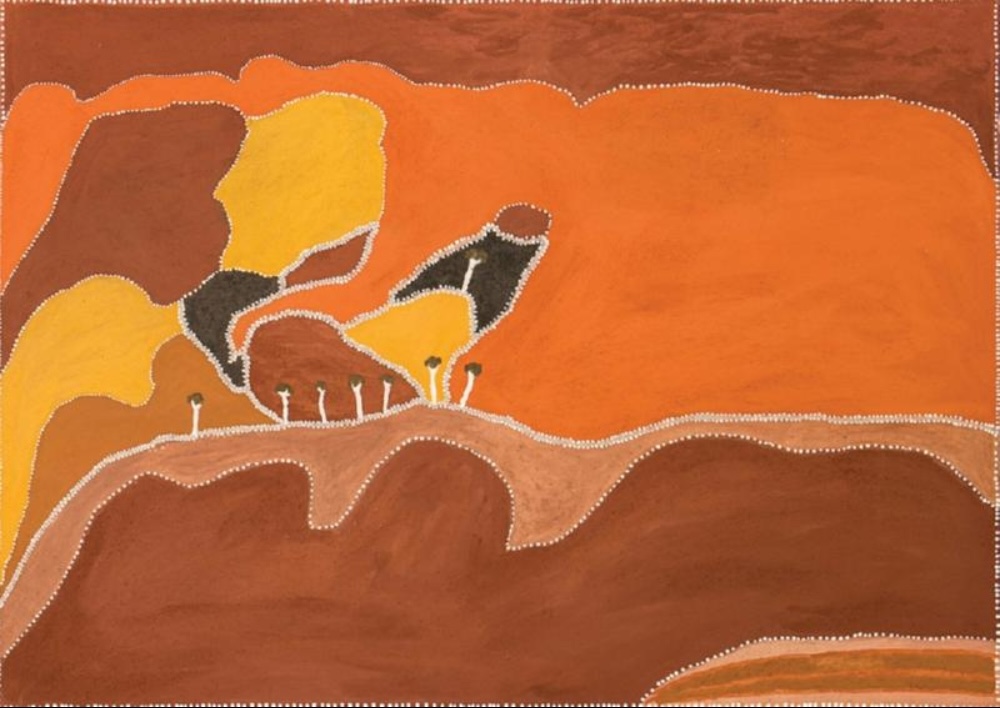
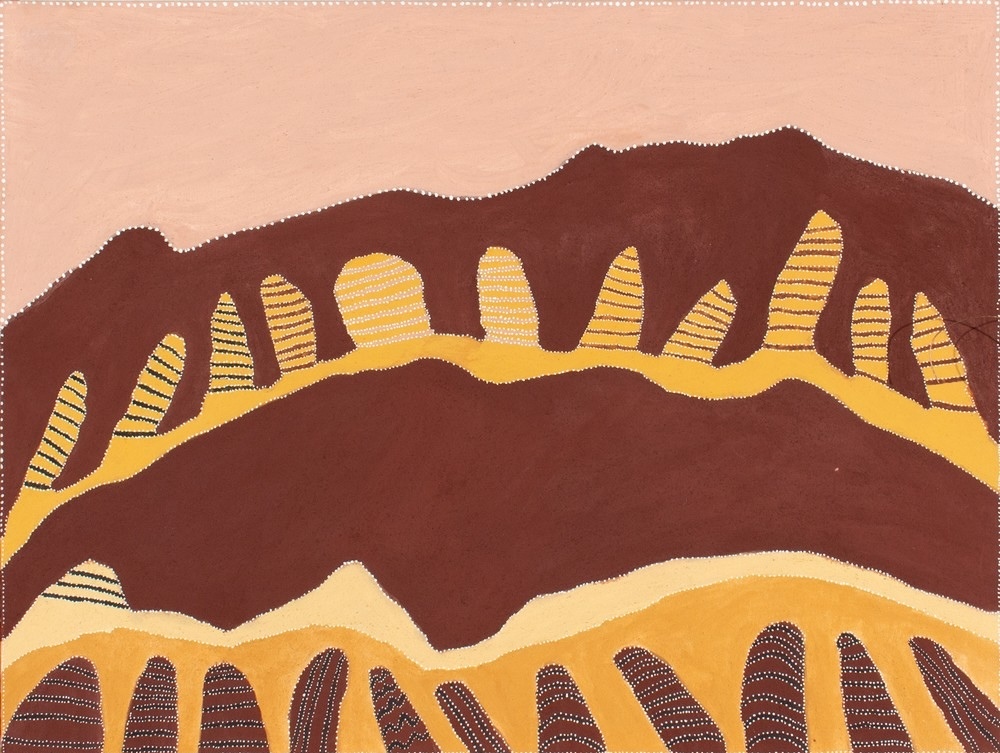
His treatment of Purnululu became particularly distinctive. Rounded and vertical landforms are reduced to broad areas of pastel-coloured ochre, frequently enclosed or divided by brilliant white dotted lines. Warmun Art Centre has identified this combination of pastel ochres and rings of bright white dotting as characteristic of Patrick’s work.
The dots generally operate structurally rather than covering the entire surface. They can articulate the edge of a hill, follow a watercourse or separate neighbouring areas of Country.
Other paintings are more restrained, reducing complicated Country to large fields of red, brown, yellow and black. In some works blue represents rivers and waterholes, creating a striking contrast with the surrounding earth pigments.
Despite their apparent abstraction, Patrick’s paintings remain connected with particular named places.
Patrick Mung Mung Value and Auction results
Works Offered at Auction: 42
Sale Rate: 71%
Highest Sale: $14,000 AUD
Median Sale Price: $3,250 AUD
Why Is Patrick Mung Mung Important?
Patrick Mung Mung occupies an important position in Warmun and East Kimberley art because his career connects successive generations of Gija cultural and artistic practice.
The son of George Mung Mung, he began painting within the artistic environment shaped by the earlier Warmun generation while developing an individual way of representing his own Country.
The depth of knowledge behind those paintings is particularly important. Before becoming an artist, Patrick had spent decades walking, riding and working through the Country he later painted. His works preserve connections between birthplace, stockman life, family Country, ancestral knowledge and historical memory.
Patrick also contributed directly to the continuation of the Warmun movement through his role in establishing Warmun Art Centre in 1998. His cultural responsibilities extend beyond painting to Law, teaching and performances of Gurirr Gurirr.
In 2012 he won the Bankwest Contemporary Art Prize for a major painting of Purnululu.
Patrick Mung Mung’s achievement lies in transforming a lifetime’s knowledge of Gija Country into a highly individual form of Warmun painting—using natural ochre, simplified landforms, multiple perspectives and rhythmic white mark-making to express Country through family, culture and lived experience.
Patrick Mung Mung in Major Public Collections
Patrick Mung Mung’s work is represented in major Australian collections including:
- National Gallery of Victoria, Melbourne
- Art Gallery of New South Wales, Sydney
- Art Gallery of Western Australia, Perth
- Australian Parliament House Art Collection, Canberra
The National Gallery of Victoria holds Dark country near Texas Station from 1991, the year Patrick began painting. Significantly, the gallery acquired the work that same year.
Further Reading
Judith Ryan and Kim Akerman (eds.), Images of Power: Aboriginal Art of the Kimberley, National Gallery of Victoria, 1993.
An important museum study of Kimberley art. Ryan’s discussion of the East Kimberley aesthetic provides valuable context for George Mung Mung and the first generation of Warmun painters.
Warmun Art Centre — Community Collection.
Essential for understanding George as one of the founders of the Warmun movement and for placing painting and sculpture within the wider history of Gija ceremony, education and cultural transmission.
Art Gallery of Western Australia — Desert River Sea: Portraits of the Kimberley.
Places George among the early master painters whose work established the Warmun painting tradition.
National Gallery of Victoria — George Mung Mung Collection.
The NGV collection provides important examples of George’s development from works on wood to major late ochre paintings on canvas.
Rosemary Crumlin, Aboriginal Art and Spirituality, 1991.
Important for understanding Mary of Warmun and George’s distinctive expression of the two-way relationship between Gija cultural knowledge and Christian spirituality.
Waringarri Aboriginal Arts documentation.
Original certificates and annotated diagrams associated with paintings such as Echidna and Hunter preserve unusually detailed information about George’s Country, subjects and imagery
All images featured in this article are presented strictly for educational and informational purposes.
This website may include copyrighted material for which specific authorization has not been obtained from the copyright owner.
All such images are presumed to be the intellectual property of the respective artist or their estate, and are used in accordance with principles of fair dealing or fair use under applicable copyright law.