
Henoch Raberaba: Hermannsburg Artist
DRAFT
Henoch Raberaba is one of the most important second-generation artists of the Hermannsburg School. A Western Arrernte (Aranda) man from Ntaria (Hermannsburg), he was Albert Namatjira’s tribal brother, the elder brother of fellow painter Herbert Raberaba, and a contemporary of leading Hermannsburg artists including Walter Ebatarinja and the Otto Pareroultja. Among the earliest Aboriginal artists to adopt the distinctive Central Australian watercolour style, Raberaba helped transform what began as Albert Namatjira’s personal success into a thriving artistic movement. Although less widely known than Namatjira, he was one of the Hermannsburg School’s leading painters during the late 1940s and 1950s, producing luminous landscapes of Central Australia’s mountain ranges, river gums and dry creek beds that are now represented in major Australian public collections.Henoch Raberaba was born on 16 July 1914 at Ntaria (Hermannsburg Mission) in Central Australia. He was a Western Arrernte man who spent almost his entire life within the Hermannsburg community.
Biography
Before becoming an artist, Raberaba worked as a stockman and made carved wooden artefacts for sale to tourists, much like many Aboriginal men living at the mission during the 1930s. These carvings were often sold through the Hermannsburg Mission and provided an important source of income.
His life changed through his close relationship with Albert Namatjira. The two men were recognised as tribal brothers under Western Arrernte kinship, and had known one another long before either achieved recognition as artists. When Albert began developing his remarkable watercolour technique under the guidance of Rex Battarbee, Henoch closely observed his progress.
In 1946 Raberaba accompanied Albert on painting excursions through the MacDonnell and James Ranges. Inspired by Albert’s success, he quickly mastered the demanding watercolour technique and became one of the strongest painters of the emerging Hermannsburg School. Contemporary accounts suggest that during 1947 he actually sold more paintings than any other Hermannsburg artist, illustrating how rapidly his reputation grew.
Henoch was also the elder brother of Herbert Raberaba, ensuring the Raberaba family became one of the important artistic dynasties of the Hermannsburg School.
He continued painting throughout the 1950s and 1960s before his death in 1975.
Henoch Raberaba and the Hermannsburg School
Henoch Raberaba belonged to the first generation of artists who followed Albert Namatjira.
While Albert remained the movement’s most celebrated figure, Raberaba helped demonstrate that the Hermannsburg School was becoming a genuine artistic movement rather than the achievement of a single individual.
He regularly painted alongside artists including:
- Albert Namatjira
- Otto Pareroultja
- Edwin Pareroultja
- Reuben Pareroultja
- Richard Moketarinja
- Walter Ebatarinja
- Enos Namatjira
- Ewald Namatjira
These artists frequently travelled together through Central Australia, painting many of the same mountain ranges and river systems while each developing recognisable individual styles.
Rabberaba was also an early member of the Hermannsburg Arts and Crafts Committee, established to supervise the marketing and sale of Hermannsburg paintings. This committee played an important role in protecting artists from exploitation and helped establish a consistent commercial market for Aboriginal watercolours.
Henoch Raberaba’s Painting Style
Henoch Raberaba remained faithful to the naturalistic tradition established by Albert Namatjira while developing a distinctive style of his own.
His paintings are characterised by:
- finely observed Central Australian landscapes
- graceful ghost gums with carefully modelled trunks
- rocky quartzite mountain ranges
- dry creek beds winding through the foreground
- subtle atmospheric perspective
- soft blue, mauve and violet distant hills
- balanced compositions with strong depth
- delicate transparent watercolour washes
Compared with Albert Namatjira’s often dramatic contrasts of light and shadow, Raberaba’s paintings generally possess a quieter and more restrained atmosphere. His subtle handling of colour creates a remarkable sense of distance and the dry clarity of Central Australia’s desert light.
Like many Hermannsburg artists, he frequently revisited the same locations, demonstrating how changing light, season and viewpoint could transform familiar landscapes.
Subjects
Henoch Raberaba painted many of the iconic landscapes surrounding Hermannsburg, including:
- Mount Hermannsburg
- the MacDonnell Ranges
- the James Ranges
- river red gums
- ghost gums
- dry creek systems
- rocky gorges
- desert valleys
These subjects were not selected simply because they were visually appealing. They represented the artist’s own Country and reflected a profound familiarity developed through a lifetime spent travelling the region.
Public Collections
Henoch Raberaba’s paintings are represented in numerous important Australian collections, including:
- Art Gallery of South Australia
- Queensland Art Gallery | Gallery of Modern Art
- Araluen Arts Centre
- National Museum of Australia
- several regional galleries and university collections
His work has also appeared in exhibitions examining the development of the Hermannsburg School and the legacy of Albert Namatjira.
Henoch Raberaba Paintings for Sale
Henoch Raberaba’s paintings appear periodically on the secondary market but are considerably less common than those by Albert Namatjira.
Collectors generally place the greatest value on works that have:
- early dates from the 1940s or 1950s
- strong provenance
- original mission or gallery labels
- excellent condition
- classic Hermannsburg subjects
- exhibition or publication history
Because many Hermannsburg artists painted similar landscapes, authenticity, provenance and individual quality are particularly important when assessing any painting.
Henoch Raberaba Artwork Value
The value of Henoch Raberaba’s paintings varies according to several factors, including size, condition, provenance, subject matter and rarity.
Well-preserved watercolours with documented exhibition history or original Hermannsburg provenance generally attract the strongest collector interest and sell for upto $700. As appreciation for the wider Hermannsburg School continues to grow, Raberaba’s work is increasingly recognised for its historical importance and artistic quality rather than simply as an extension of Albert Namatjira’s legacy.
If you own a painting by Henoch Raberaba and would like to know its value or are considering selling it, feel free to contact me. Please include clear photographs of the front and back, the dimensions, and any known provenance or exhibition history.
Legacy
Henoch Raberaba occupies an important place in the history of Australian Aboriginal art. As Albert Namatjira’s tribal brother, one of his earliest painting companions and a leading member of the second generation of Hermannsburg artists, he helped establish the Hermannsburg School as one of Australia’s most influential landscape painting traditions.
His paintings demonstrate that the movement’s success rested not on one extraordinary artist alone, but on an interconnected community of Western Arrernte painters whose shared knowledge of Country and mastery of watercolour created one of the defining schools of twentieth-century Australian art.
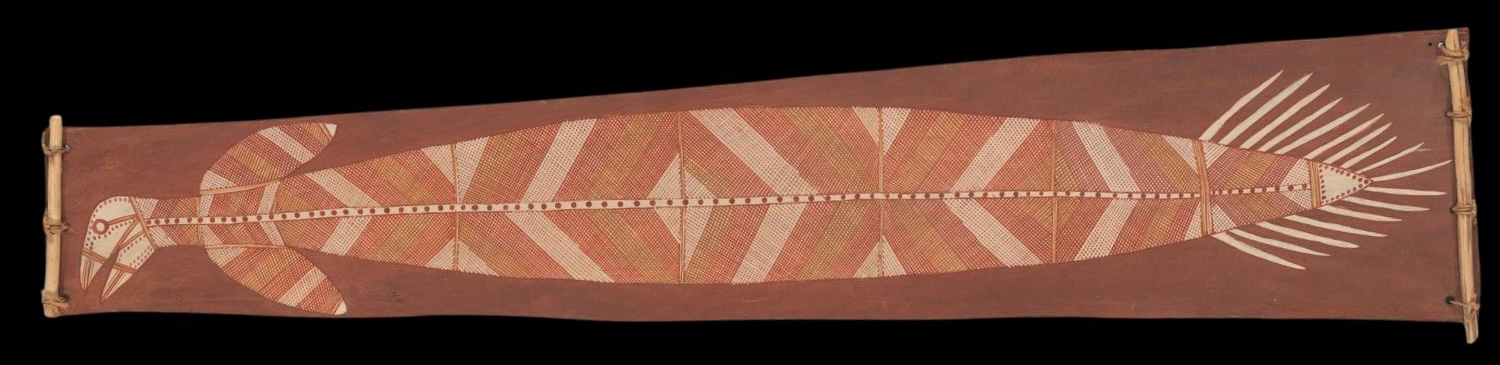
David Milaybuma Paintings for Sale
David Milaybuma’s bark paintings appear only occasionally on the secondary market. Collectors generally place the greatest value on works with:
- documented Maningrida or early gallery provenance
- finely executed rarrk
- large, well-preserved sheets of bark
- important ancestral subjects such as Ngalyod or Namangwari
- exhibition or publication history
- excellent structural condition.
Because Milaybuma was both an accomplished artist and a respected cultural authority, authenticated examples remain highly sought after by collectors of Arnhem Land bark paintings.
David Milaybuma Artwork Value
The value of David Milaybuma’s paintings depends on size, condition, subject matter, provenance and exhibition history.
Smaller bark paintings and works on paper generally sell for several hundred dollars, while larger, high-quality bark paintings with strong provenance and important ancestral subjects command $1000 – $3000. His finest works have achieved several thousand dollars at public auction, with documented examples attracting consistent interest from collectors of early Arnhem Land bark painting.
If you own a painting by David Milaybuma and would like to know its value or are considering selling it, please feel free to contact me. Include clear photographs of the front and back, the dimensions, and any known provenance or purchase history.
All images in this article are for educational purposes only.
This site may contain copyrighted material the use of which was not specified by the copyright owner.