George Mung Mung: Biography and Painting style
c.1921–1991
Gija
Warmun / Turkey Creek, East Kimberley
Warmun Art / East Kimberley Art
Waringarri Aboriginal Arts
Natural earth pigments, painting and sculpture
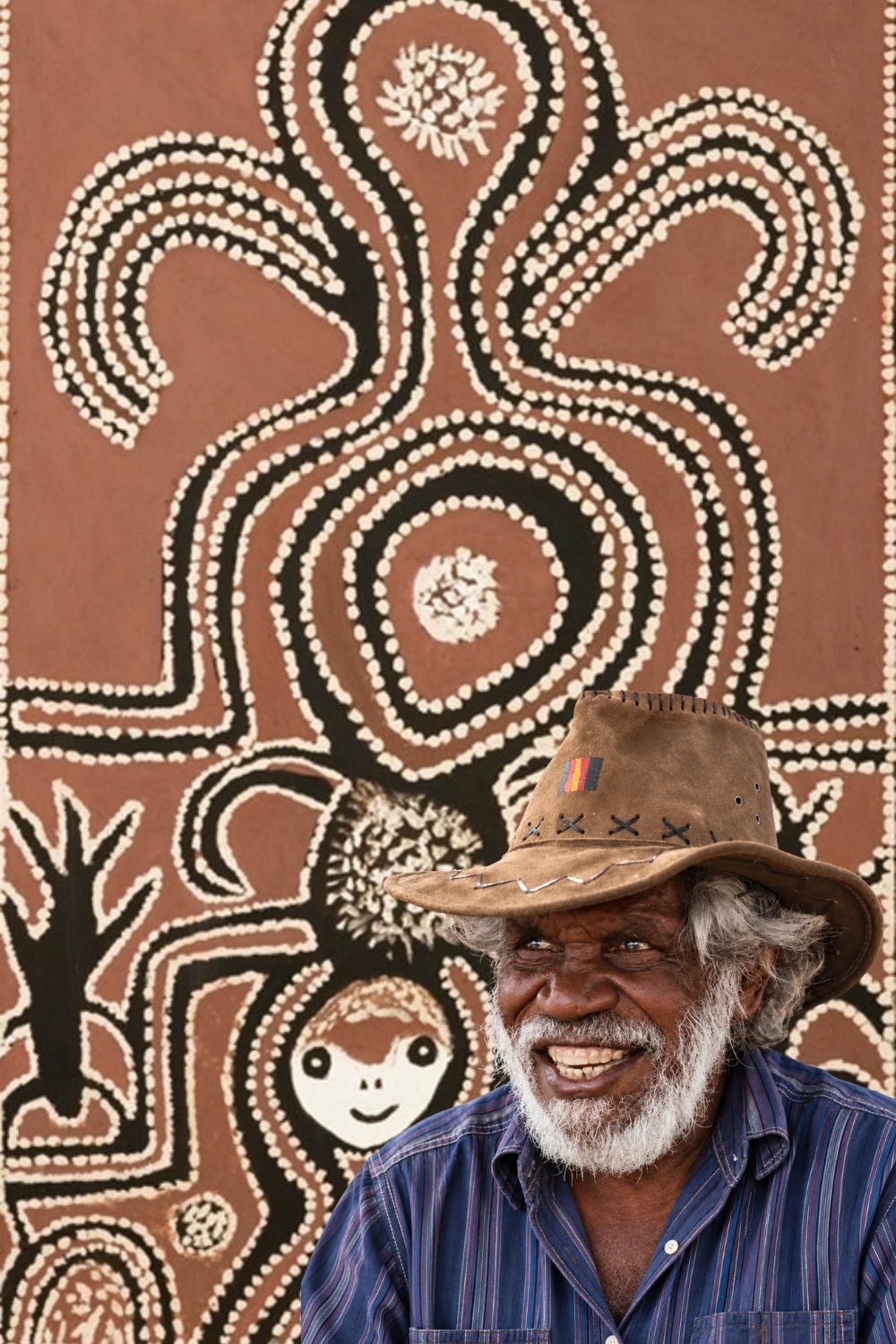
George Mung Mung (c.1921–1991) was a senior Gija Lawman, songman, teacher, painter and sculptor and one of the founding figures of the East Kimberley art movement in Warmun.
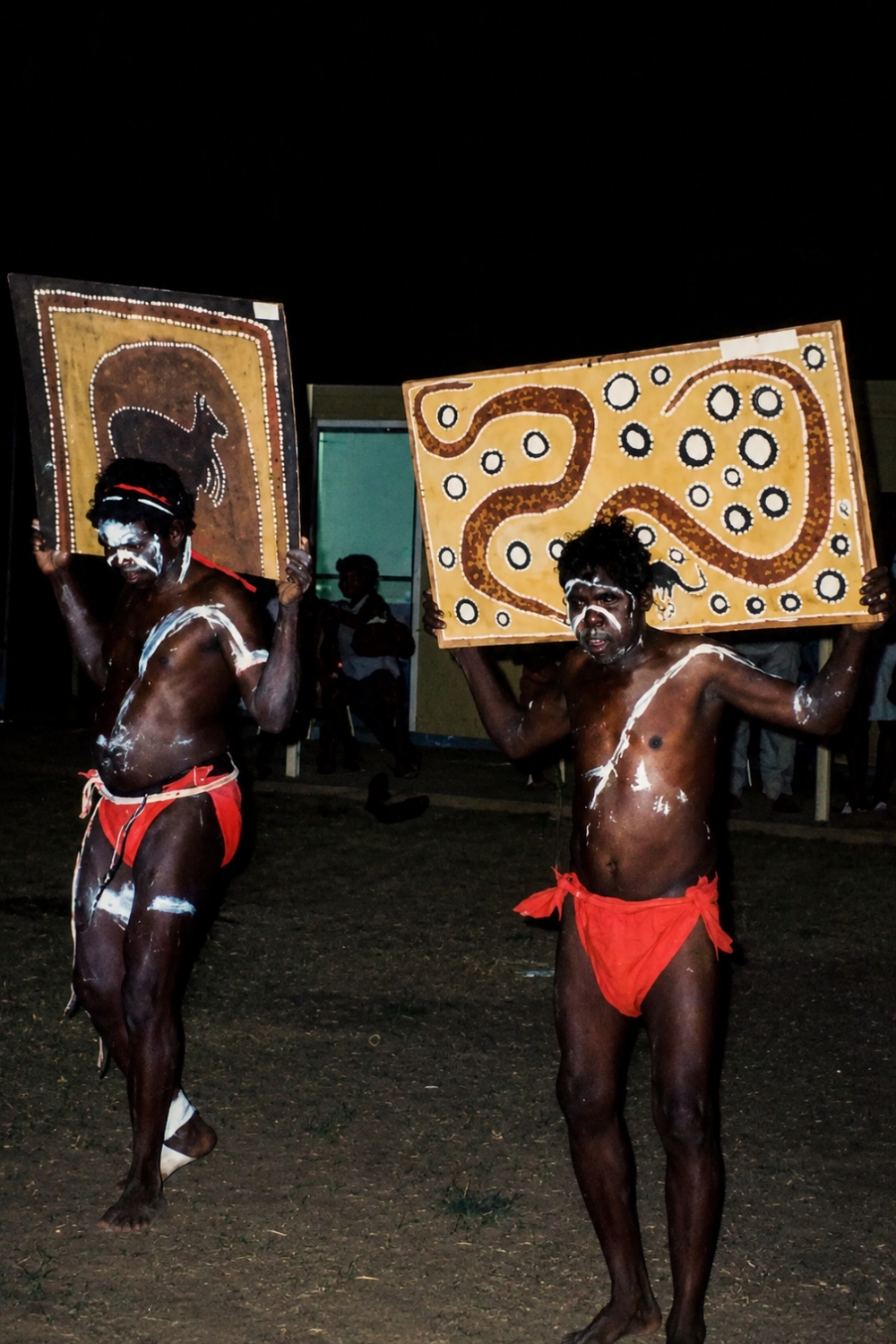
His importance can be seen in the beginnings of Gurirr Gurirr, the ceremonial cycle from which some of the earliest Warmun paintings emerged. Rover Thomas received the dream revelation. Paddy Jaminji, a senior Gija ritual leader, was principally responsible for painting the boards used in the early performances. George Mung Mung was one of the songmen who helped turn Rover’s revelation into performed ceremony. George also painted early dancing boards as the ceremony developed.
That role reveals something fundamental about his life. George repeatedly helped turn cultural knowledge into forms through which it could be performed, taught and seen.
As a songman he helped give ceremonial form to Gurirr Gurirr. As a senior man at Warmun he helped establish two-way education in which Gija children could learn their own language, Law and Country alongside Western subjects. As an artist he transformed knowledge of Country into paintings and sculpture.
When painting at Warmun moved from ceremonial boards and community teaching into galleries during the 1980s, George was therefore not a newcomer to art. He was a senior cultural authority whose painting grew from knowledge and responsibilities he already held.
The Art Gallery of Western Australia places George among the early master painters who established the Warmun tradition. His work belongs at the point where ceremony, education and painting came together to create one of the most important Aboriginal art movements of the late twentieth century.
George Mung Mung Biography
George Mung Mung was born around 1921 at Turkey Creek, now Warmun, in the East Kimberley region of Western Australia. His father, Yalanga, belonged to Kurlungurru Country and worked as a police tracker at Turkey Creek.
George spent many years working as a stockman and drover across the East Kimberley. By the time he returned to live more permanently at Warmun during the late 1960s and 1970s, he was a senior man with substantial cultural responsibilities.
He was a songman and cultural teacher with deep knowledge of Gija Country and Law. Fellow Warmun elder and artist Hector Jandany later remembered him as a “two-way man” and as a man with profound knowledge of the Dreaming. The description reflects George’s role in maintaining Gija knowledge while the Warmun community increasingly engaged with schools, churches and other outside institutions.
George was closely involved in the development of Gurirr Gurirr, also written Goorirr Goorirr or Krill Krill. The ceremonial cycle developed after Rover Thomas experienced a sequence of dreams following a death in the aftermath of Cyclone Tracy in 1974. Rover’s revelation provided its journey, places and events, while senior Gija people helped develop these into performed ceremony.
These paintings were initially part of performance rather than works intended for gallery walls. George was therefore present at a crucial point in the development of Warmun art: when ceremony was becoming image.
George also played an important role in education. In 1979 he, Hector Jandany and Queenie McKenzie were among the senior Warmun people involved in establishing Ngalangangpum School, where Western subjects could be taught alongside Gija language, Law, Country and cultural knowledge. Painting and sculpture were among the means used to pass that knowledge to younger generations.
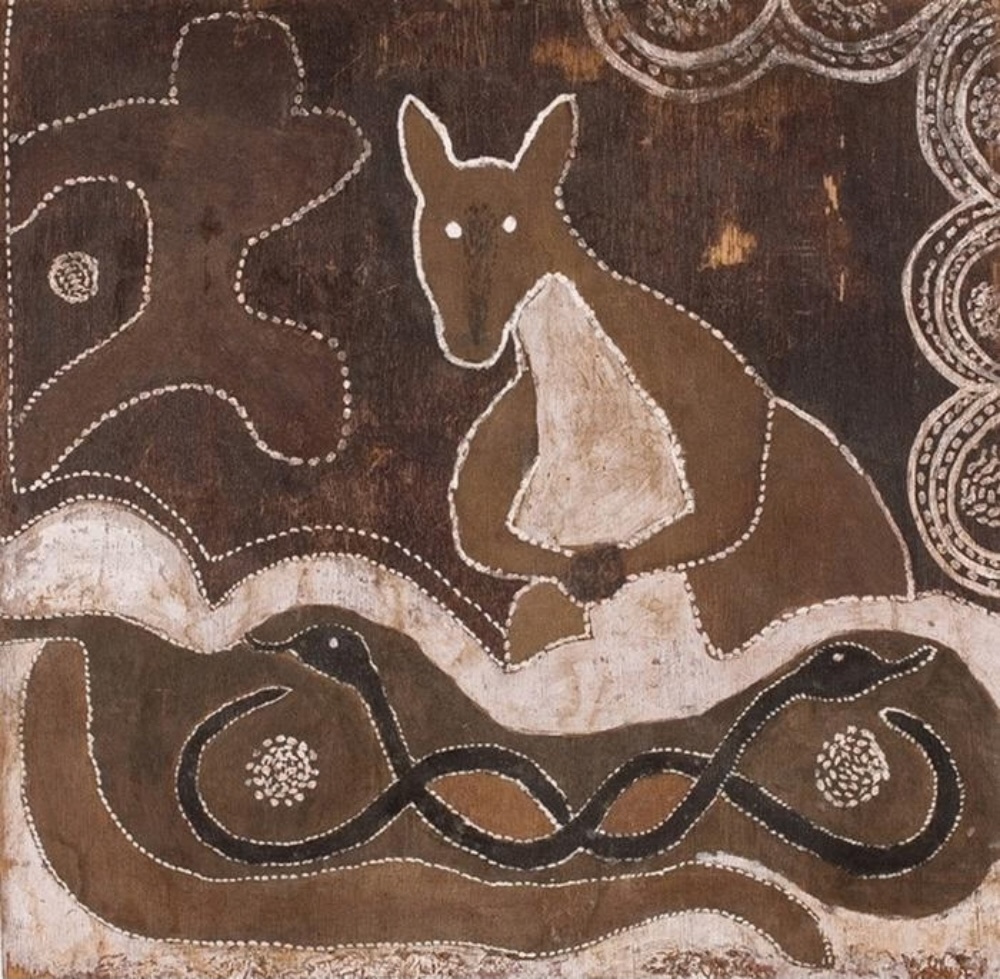
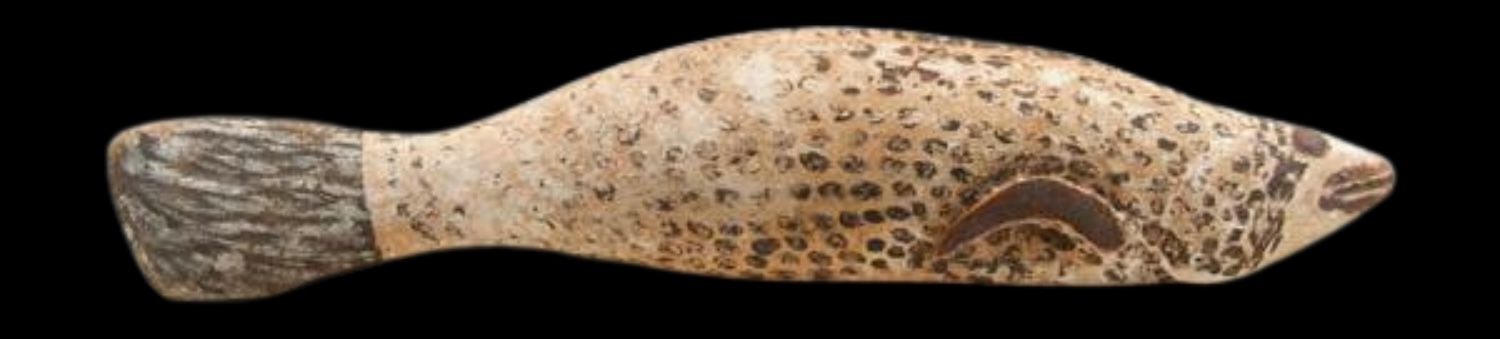
His artistic practice already extended beyond painting. Surviving works attributed to the 1970s include a carved and ochre-painted Barramundi ceremonial fish and a decorated cottonwood coolamon; later works include painted ceremonial fish and carved Creator Snakes.
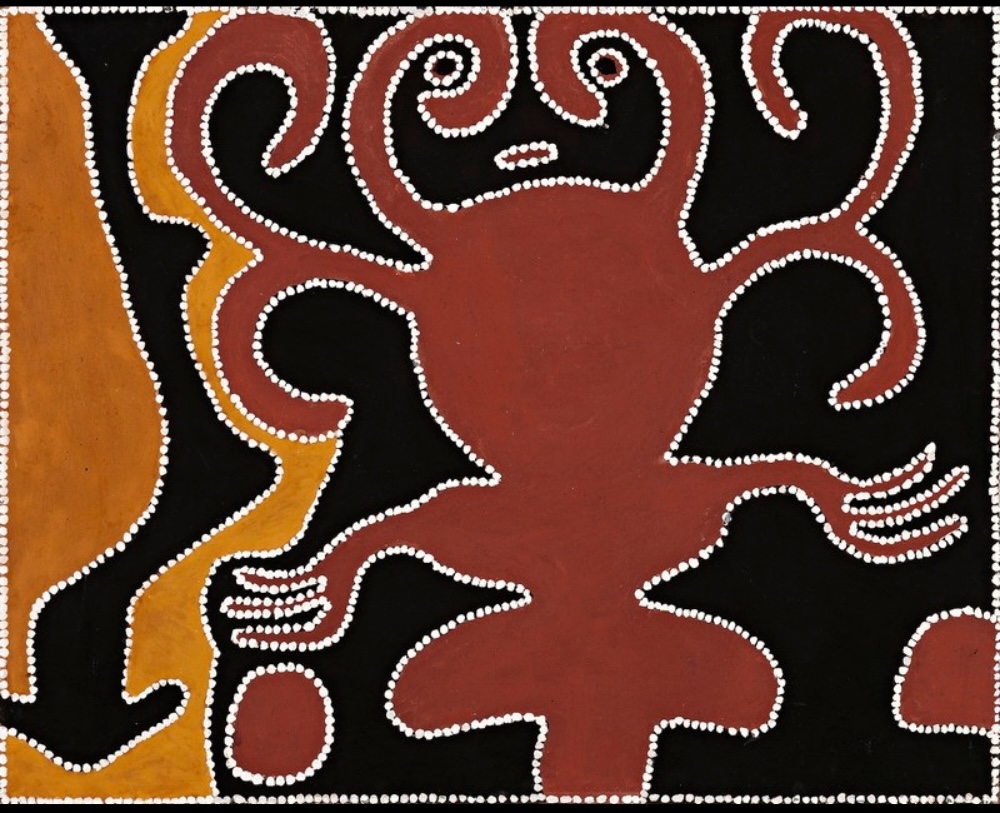
By the early 1980s George was increasingly producing independent paintings. Waringarri Aboriginal Arts in Kununurra became important in facilitating and documenting his career, and many surviving works retain Waringarri catalogue numbers and certificates.
George also painted at Frog Hollow near Turkey Creek, where documented works include Wudalwudal (The Dreamtime Woman) and Ngarrgooroon Country.
As Warmun painting entered galleries and public collections during the 1980s, George was not beginning a new cultural practice. His paintings grew from the same Country, ceremony and cultural responsibilities that had shaped his earlier life.
Warmun Art Centre includes George with Rover Thomas, Paddy Jaminji, Hector Jandany, Jack Britten and Queenie McKenzie among the founders of the Warmun art movement.
George Mung Mung Painting Style and Subjects
George Mung Mung was a storyteller in both song and paint. His paintings tell stories through Country.
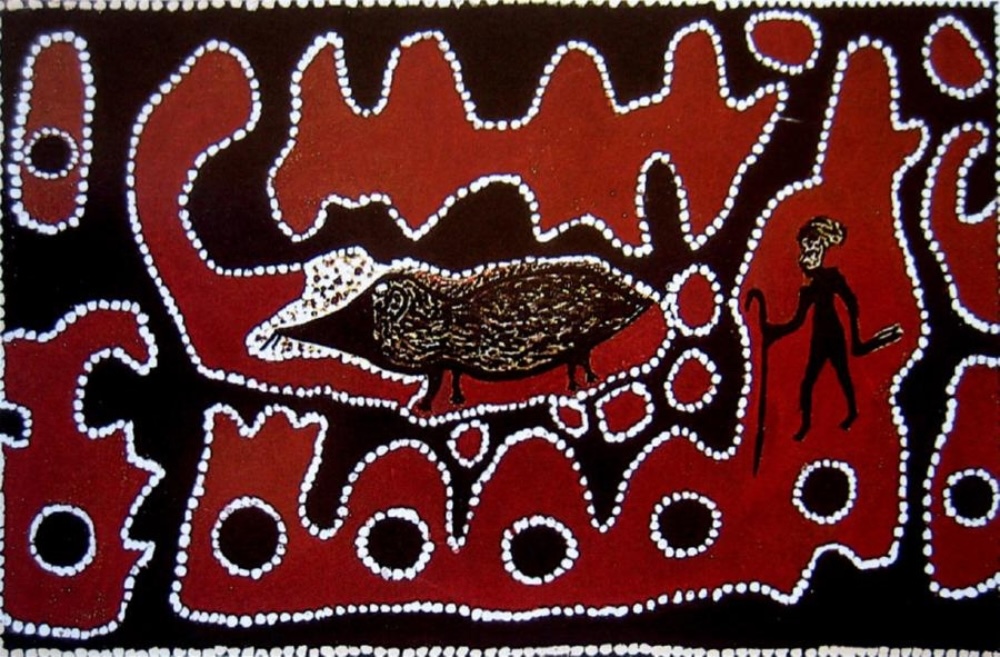
Other titles such as Water Dreaming, Jirling the Hunter, Lankerrji – Death Adder Snake, Echidna and Hunter and Wudalwudal (The Dreamtime Woman) make the narrative element more explicit. Country and story are rarely separate in his paintings.
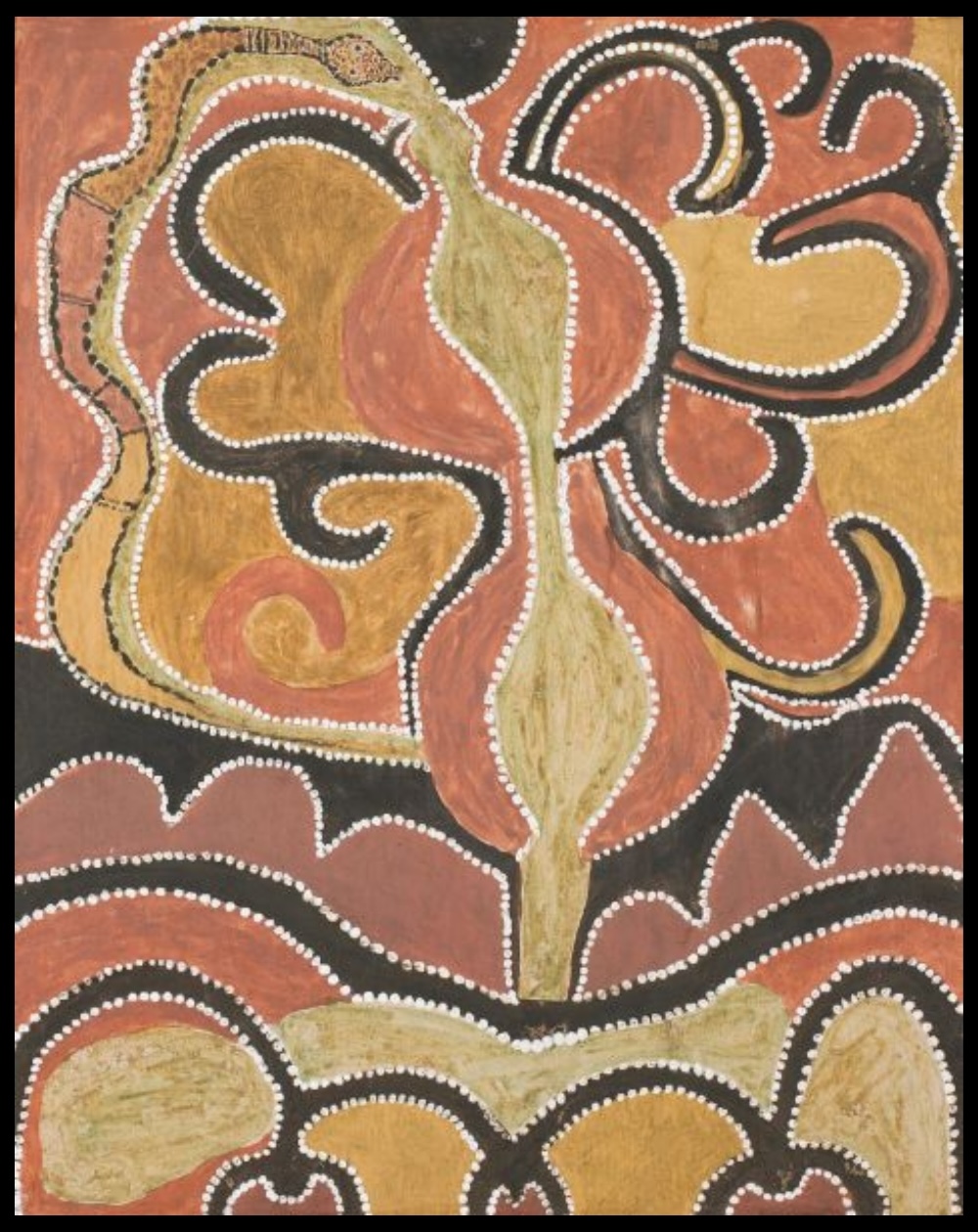
Berlanyji Country (1990), for example, depicts Country around McKenzie Spring, south of Turkey Creek. Waringarri documentation identifies hills called Marli, an area called Deroorji or Black Rocks, and the Rainbow Snake Goorlabal, who emerged there in the Dreamtime. The painting describes a physical place while simultaneously revealing its ancestral story.
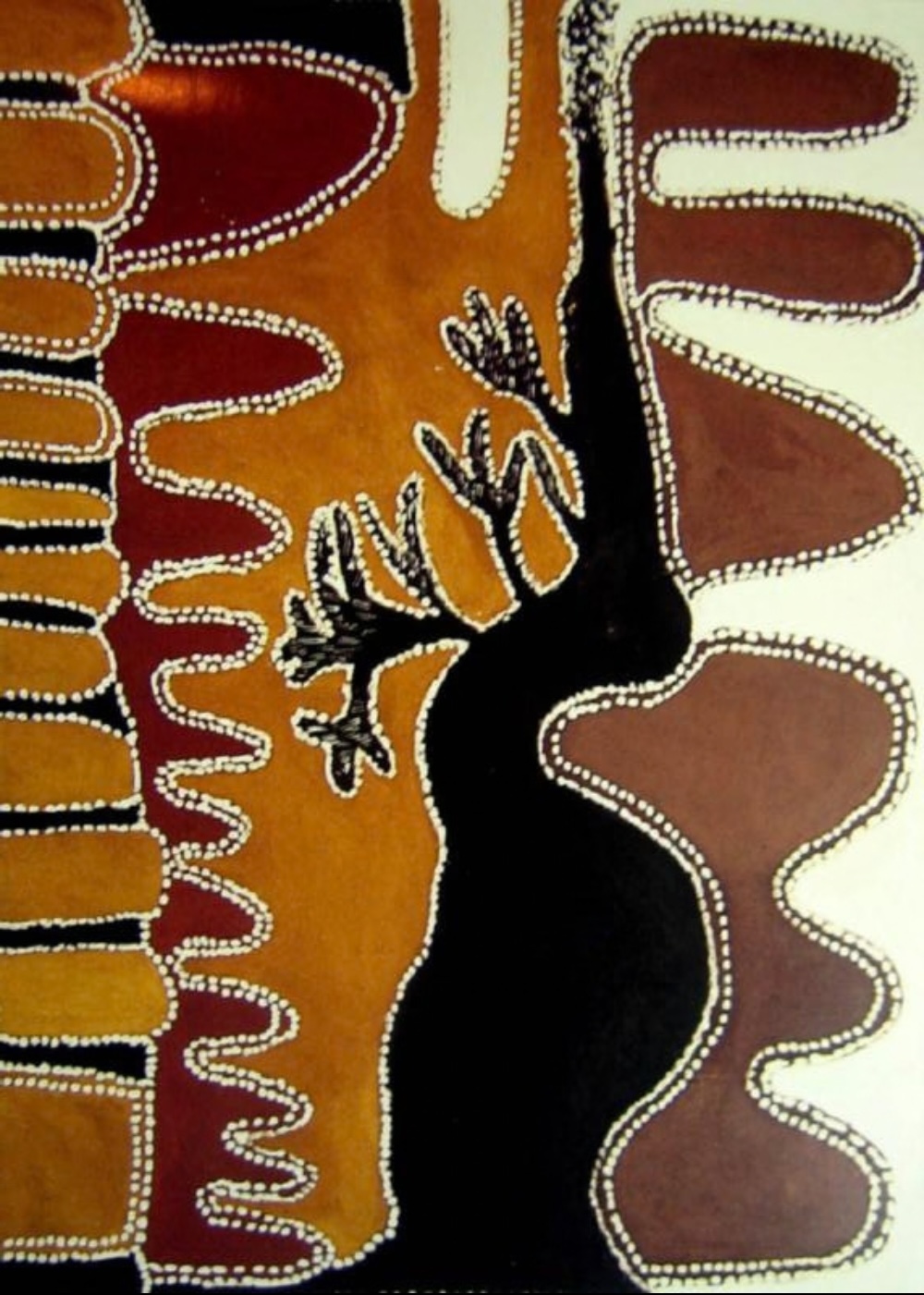
George did not need conventional perspective to tell these stories. He could combine different viewpoints within a single composition, showing waterholes from above while hills, animals and people appear laterally. In Frog Hollow Near Turkey Creek, flowing water, hills and limestone ridges share the pictorial space with a Rainbow Serpent.
His paintings could also be strongly figurative. In Wudalwudal (The Dreamtime Woman), a monumental ancestral female figure dominates the composition, while other works contain hunters, kangaroos, echidnas and snakes.
Natural earth pigments dominate his work, particularly red and brown ochres, black and white. Recorded paintings also incorporate bush gum, natural and synthetic binders, pencil and crayon on supports ranging from wood and plywood to linen, canvas and Coolamon.
The materials and formats changed, but George remained fundamentally a storyteller. In song he told stories through performance; in paint he made those stories visible through Country.
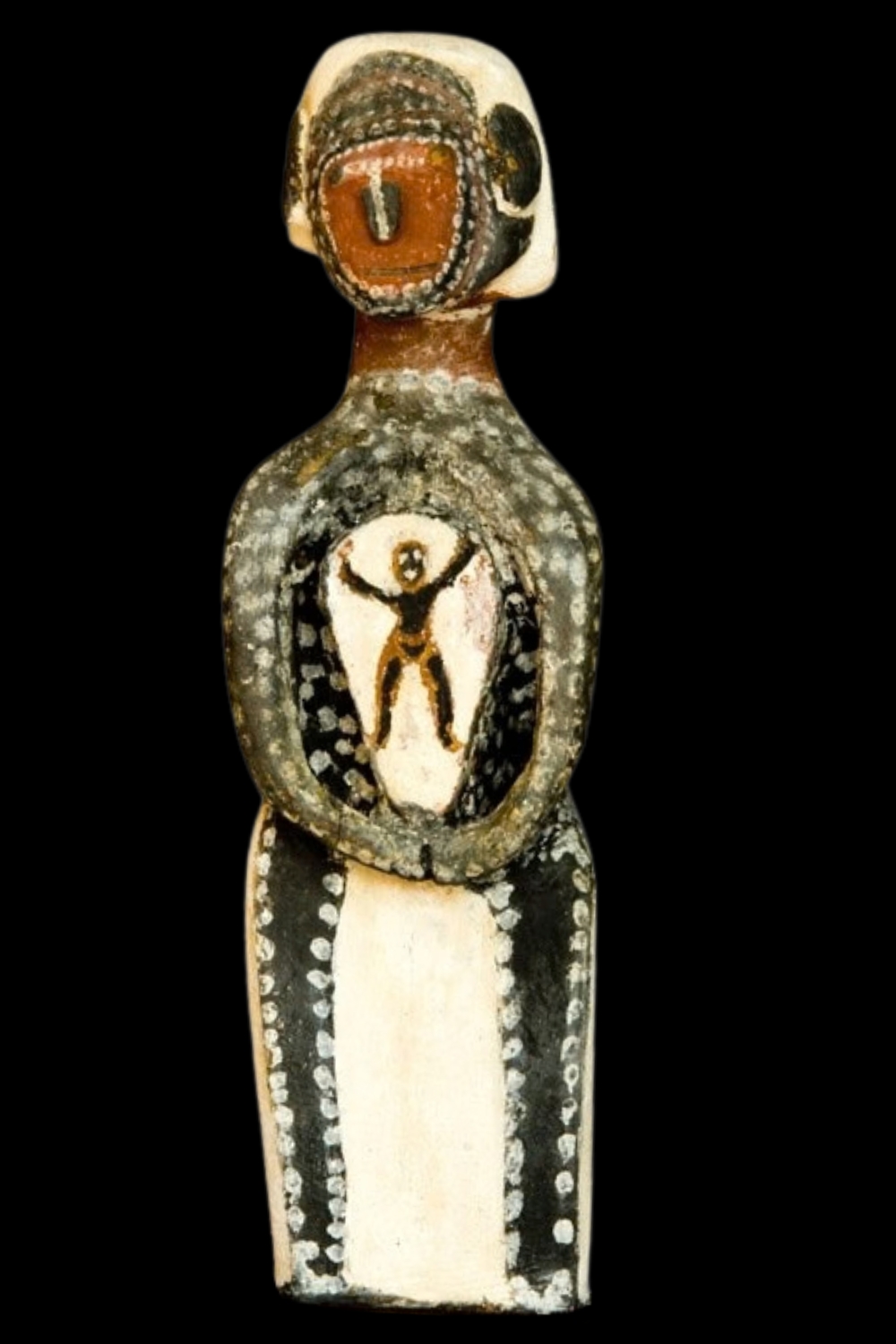
George Mung Mung Sculpture
George Mung Mung also produced painted ceremonial fish, decorated wooden objects and carved Creator Snakes, using local ochres and wood sourced from the Bungle Bungle Range.
His best-known sculpture is Mary of Warmun (Pregnant Mary), carved in 1983. According to art historian Rosemary Crumlin, it was created after dogs broke a plaster statue of the Virgin Mary at Warmun. George responded:
“I’ll make you a Mary that will never break.”
George carved a pregnant female figure whose body-paint designs, Crumlin noted, were associated with young unmarried Warmun women. Her shield-like womb contains the unborn Christ child. George explained:
“The spirit of the little baby comes in a dream to his mother.”
Crumlin described the work as expressing the “deep ‘two-way’ spirituality of the Warmun Community.” Reproduced in the Australian edition of the Catechism of the Catholic Church in 1994, Mary of Warmun gave a Christian story a distinctly local form through wood, ochre and Gija cultural expression.
George Mung Mung Value and Auction results
Works Offered at Auction: 34
Sale Rate: 47%
Highest Sale: $29,000 AUD
Median Sale Price: $5,500 AUD
Why Is George Mung Mung Important?
George Mung Mung’s importance extends far beyond his role as an early Warmun painter. He was a senior Gija Lawman and songman who helped develop Gurirr Gurirr from Rover Thomas’s revelation into performed ceremony, a teacher involved in two-way education at Warmun, and a painter and sculptor who made Country and cultural knowledge visible through image and object. When Warmun painting emerged as a major contemporary art movement during the 1980s, George brought decades of cultural knowledge and responsibility to it. Warmun Art Centre identifies him among the founders of the movement, while the Art Gallery of Western Australia places him among its early master painters.
Hector Jandany’s description of George as a “two-way man” perhaps best explains his significance. He moved between Gija knowledge and Western education, ceremony and painting, Aboriginal spirituality and Christianity, and community cultural practice and the gallery without separating his art from the cultural authority behind it. His son Patrick Mung Mung later became an important Warmun painter and inherited senior cultural responsibilities, while Freddie Timms was his son-in-law. George therefore connects the ceremonial beginnings of Warmun painting with the generations that followed: painting was not the beginning of his cultural practice, but one of the ways he made knowledge visible.
George Mung Mung in Major Public Collections
George Mung Mung’s paintings and sculptures are represented in major Australian public collections, reflecting his importance within the first generation of Warmun artists.
- National Gallery of Victoria (NGV) — Seven works, including Water Dreaming (c.1984), Jirling the Hunter(1989), Lagoowany Country (1990), Mudgod Dreaming (1990), Doolngayim Country and Niyiliyiliny Country. One of the Water Dreaming works was presented to the NGV by George Mung Mung in 1990.
- National Gallery of Australia (NGA) — Binoowoon Country (1990).
- Warmun Community Collection — Early paintings, sculptures and cultural objects associated with George Mung Mung, preserved within the community where the Warmun art movement developed.
Further Reading
Judith Ryan and Kim Akerman (eds.), Images of Power: Aboriginal Art of the Kimberley, National Gallery of Victoria, 1993.
An important museum study of Kimberley art. Ryan’s discussion of the East Kimberley aesthetic provides valuable context for George Mung Mung and the first generation of Warmun painters.
Warmun Art Centre — Community Collection.
Essential for understanding George as one of the founders of the Warmun movement and for placing painting and sculpture within the wider history of Gija ceremony, education and cultural transmission.
Art Gallery of Western Australia — Desert River Sea: Portraits of the Kimberley.
Places George among the early master painters whose work established the Warmun painting tradition.
National Gallery of Victoria — George Mung Mung Collection.
The NGV collection provides important examples of George’s development from works on wood to major late ochre paintings on canvas.
Rosemary Crumlin, Aboriginal Art and Spirituality, 1991.
Important for understanding Mary of Warmun and George’s distinctive expression of the two-way relationship between Gija cultural knowledge and Christian spirituality.
Waringarri Aboriginal Arts documentation.
Original certificates and annotated diagrams associated with paintings such as Echidna and Hunter preserve unusually detailed information about George’s Country, subjects and imagery
All images featured in this article are presented strictly for educational and informational purposes.
This website may include copyrighted material for which specific authorization has not been obtained from the copyright owner.
All such images are presumed to be the intellectual property of the respective artist or their estate, and are used in accordance with principles of fair dealing or fair use under applicable copyright law.