Jackie Madagarlgarl
Jackie Madagarlgarl (c. 1930–2000), also recorded as Jacky Madagarlgarl, was an Aboriginal bark painter from Gunbalanya (Oenpelli Art) in western Arnhem Land. Working in one of Australia’s oldest continuing painting traditions, he is best known for his finely executed Aboriginal bark paintings of spirit beings and native animals, distinguished by intricate cross-hatched rarrk, geometric body designs and carefully balanced compositions.
Unlike Yirawala, John Marwurndjul or Lofty Nadjamerrek relatively little has been published about his life, his paintings are recognised for their distinctive style and remain sought after by collectors of traditional Arnhem Land bark paintings.
If you own a painting by Jackie Madagarlgarl and would like to know its value or are considering selling it, I would be happy to help. Please send clear photographs of the front and back of the bark, together with its dimensions and any known provenance or purchase history. I regularly assess Aboriginal bark paintings and may also be interested in purchasing suitable examples.
Early Life
Very little biographical information about Jackie Madagarlgarl has been published. Publicly available sources consistently identify him as originating from Gunbalanya (Oenpelli) in western Arnhem Land and record his dates as approximately 1930–2000.
Unlike many better-documented Arnhem Land artists, details such as his clan, language group, artistic training and family relationships have not been widely published. As a result, much of what is known about his career comes from documented artworks rather than biographical records.
Artistic Career
Jackie Madagarlgarl belonged to the established western Arnhem Land bark painting tradition centred on Gunbalanya. His surviving works suggest he was active during the 1960’s and 1970’s, when bark painting was increasingly collected by museums, galleries and private collectors throughout Australia.
His paintings frequently depict important ancestral beings and animals associated with western Arnhem Land traditions. Recorded subjects include:
- Namarrkon (Lightning Man)
- Mimi spirits (or humans misdescribed as Mimi spirits)
- crocodiles
- echidnas
- emus
- sea turtles
- fish and birds
Many of these subjects are rendered using the X-ray style for which western Arnhem Land is internationally recognised.
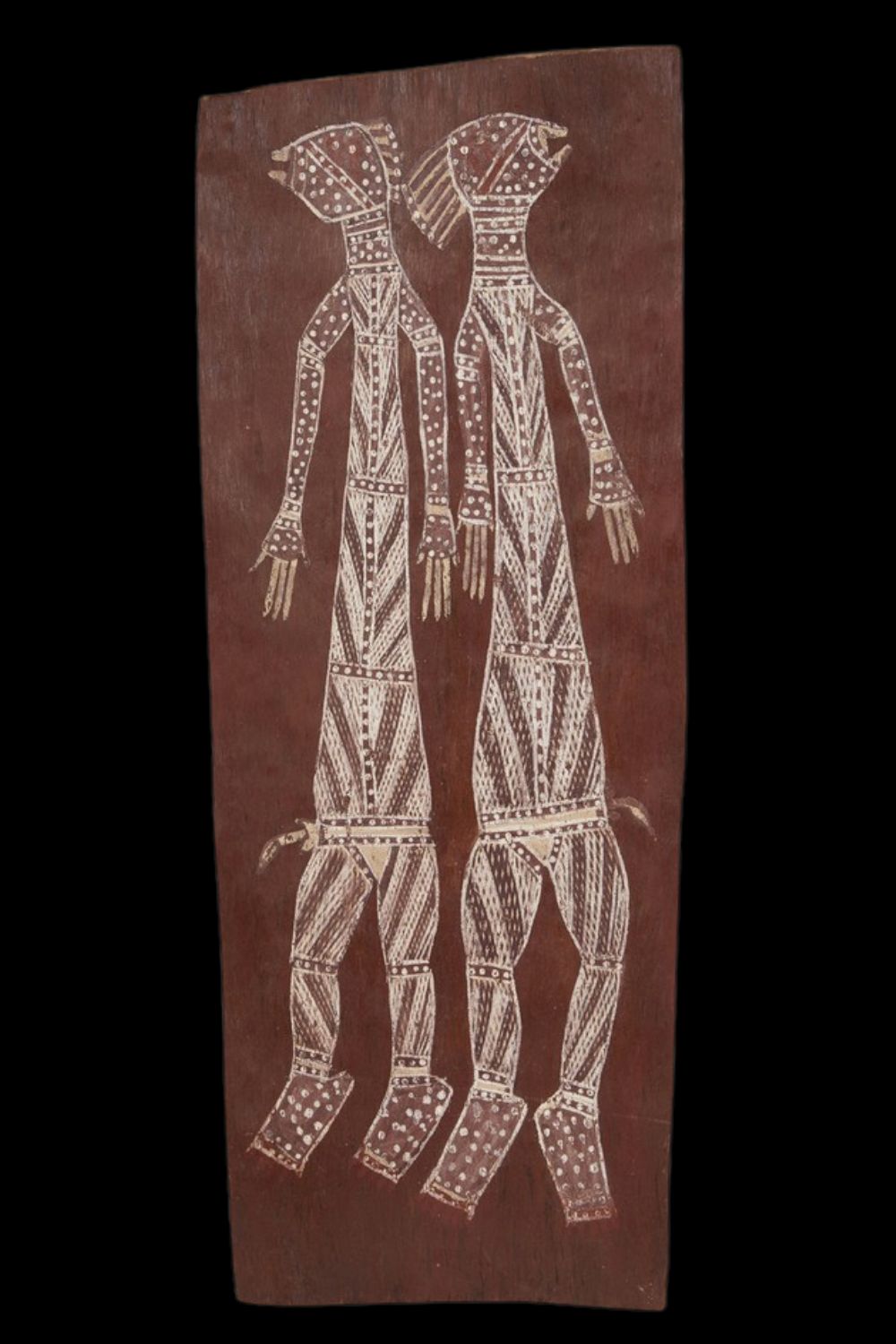
Jackie Madagarlgarl’s Painting Style
Jackie Madagarlgarl developed a highly distinctive approach to western Arnhem Land bark painting that differs from many of his Gunbalanya contemporaries.
His paintings are characterised by:
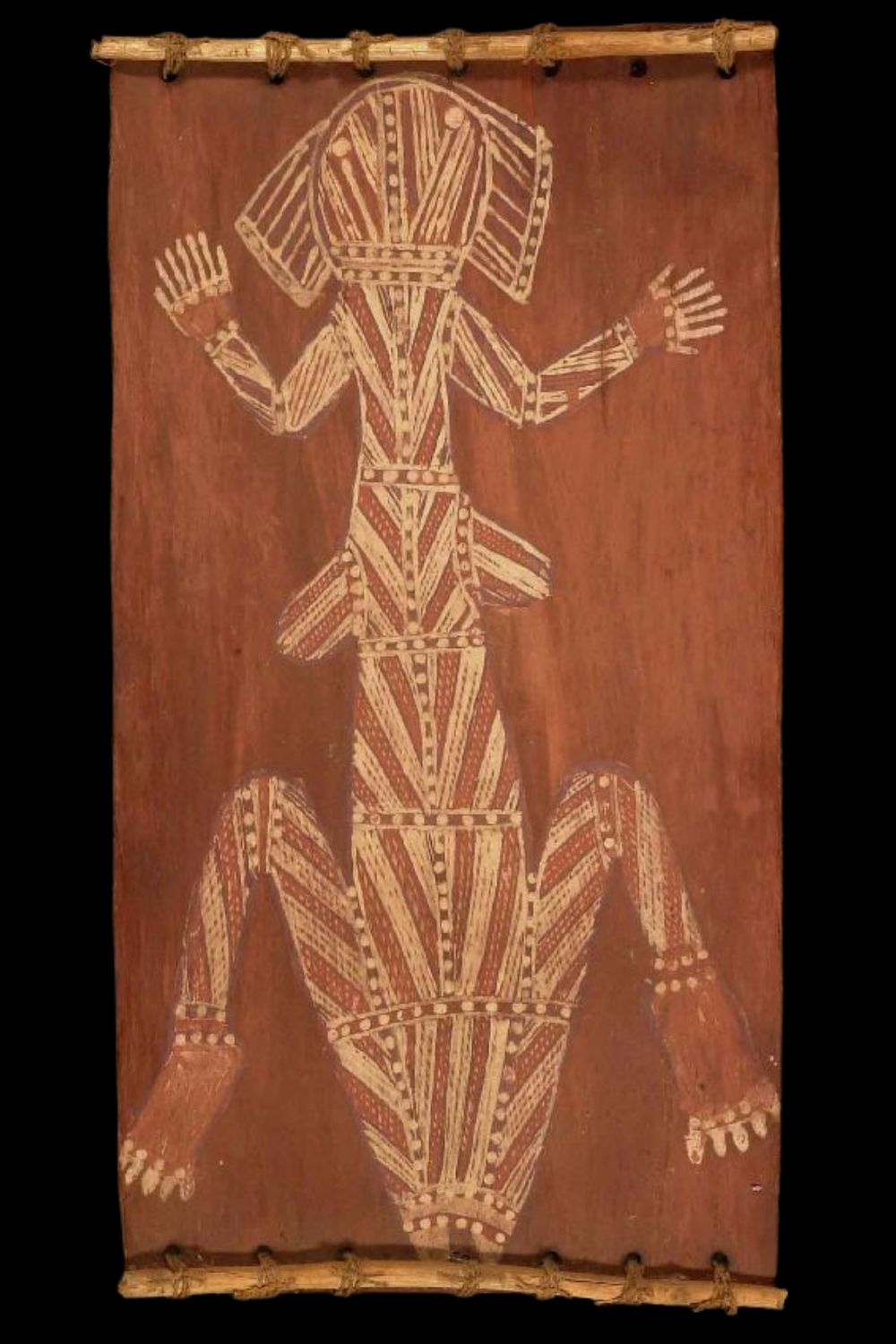
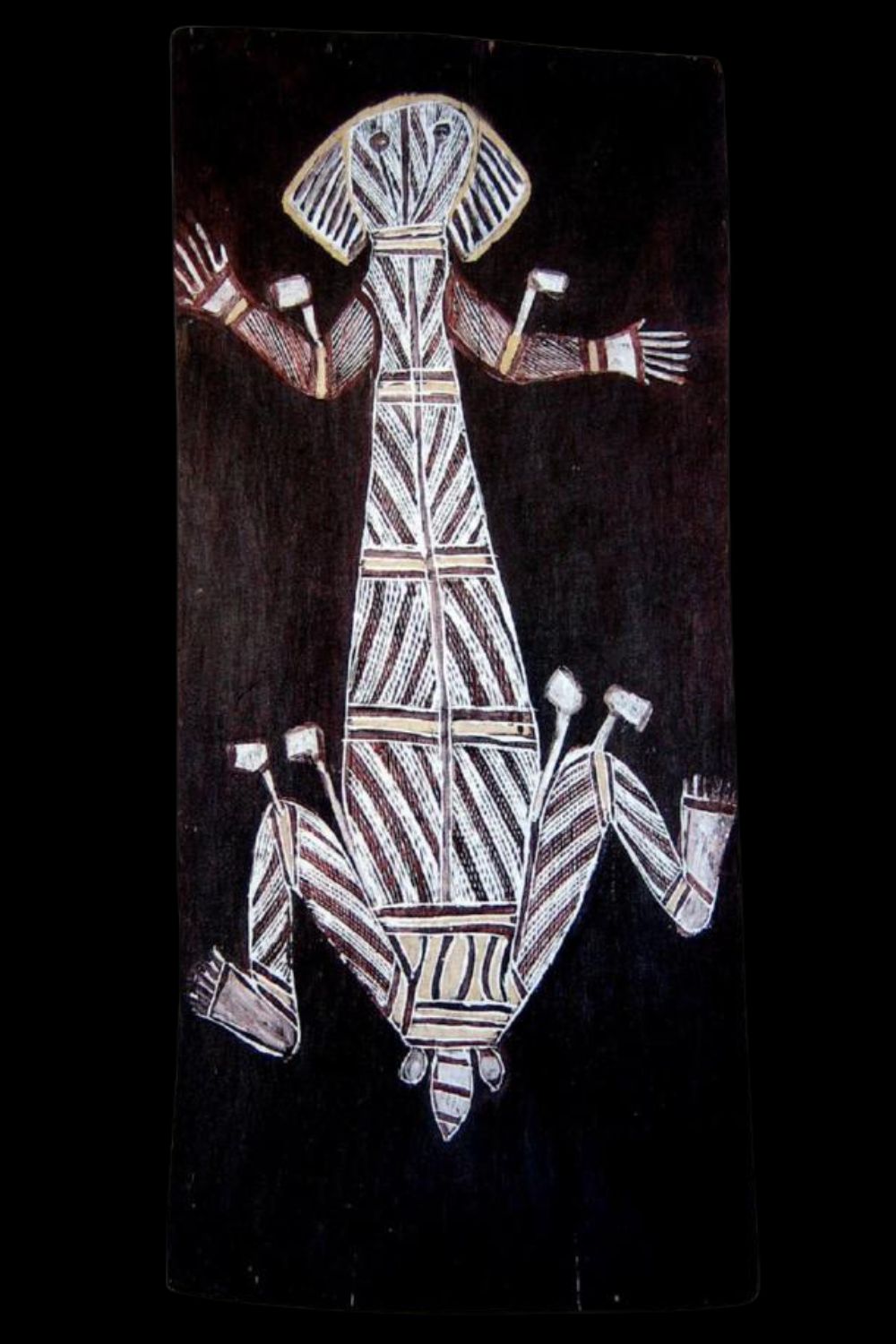
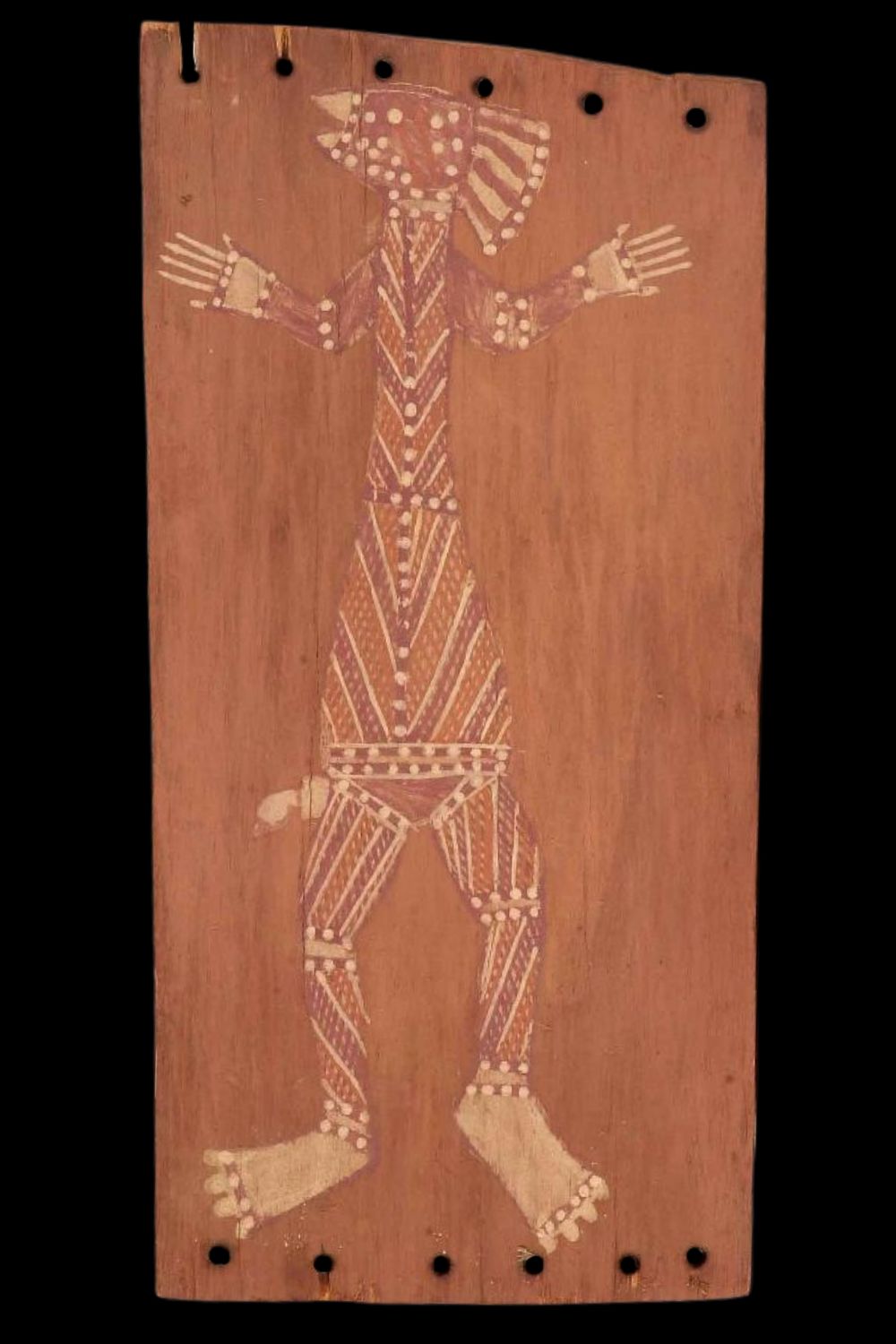
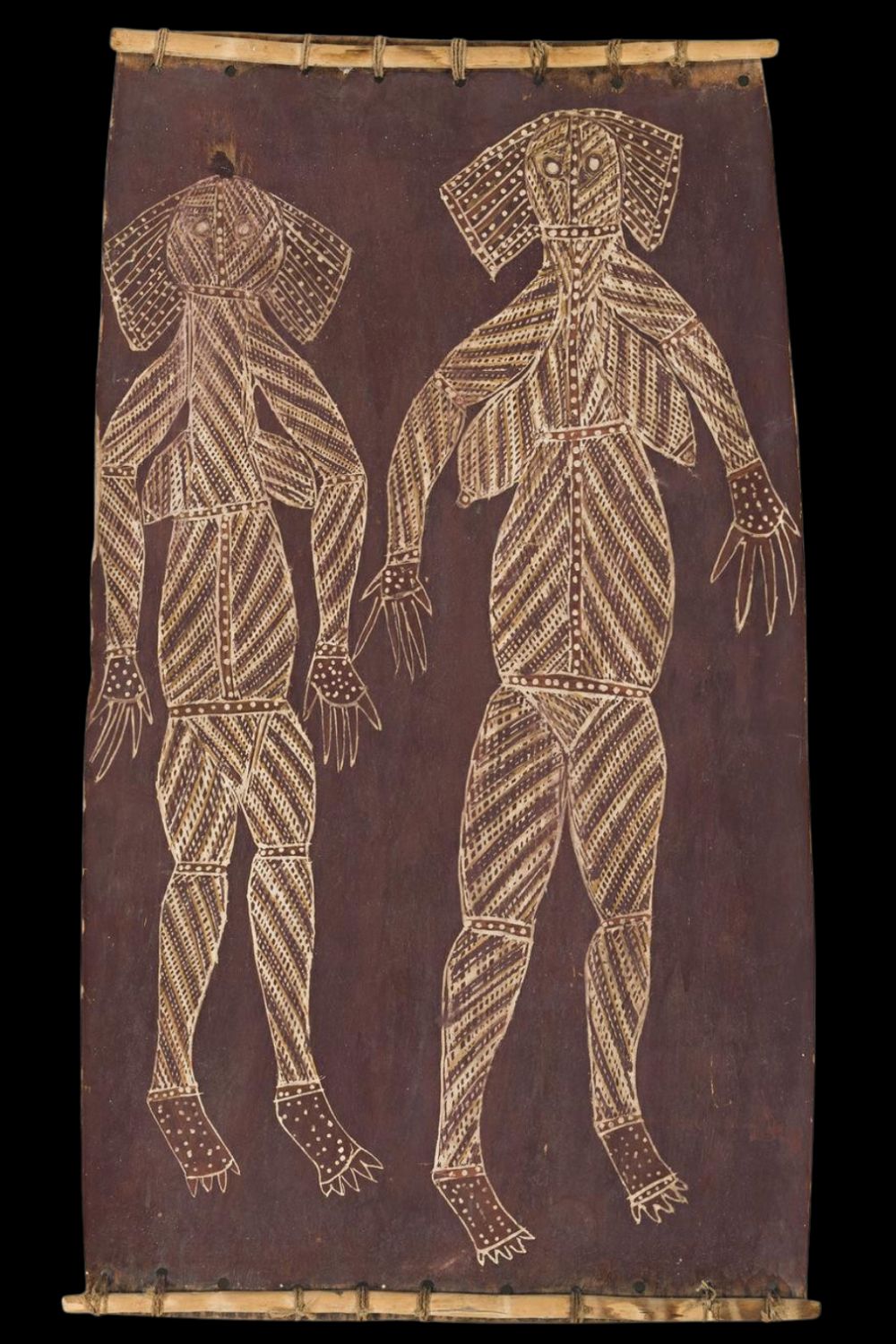
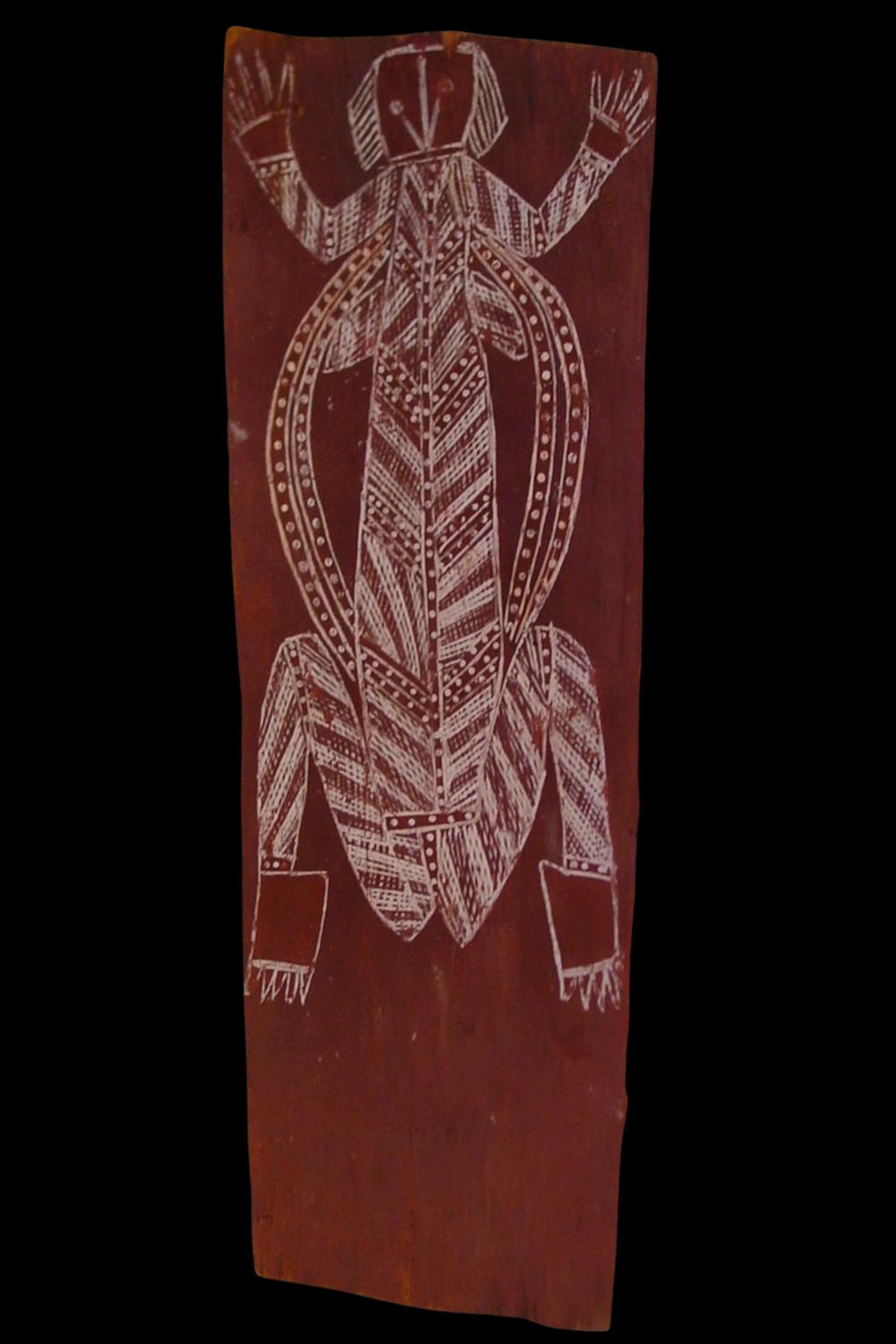
- Cross-hatched rarrk rather than long bands of parallel rarrk. Instead of filling figures with continuous parallel cross-hatching, Jackie typically divides the body into geometric panels filled with tightly executed cross-hatched rarrk. This treatment closely resembles the decorative patterning associated with Mardayin (often spelt Mardayanor Mardigan) ceremonial designs.
- Dot bands separating sections of the body. The limbs and torso are frequently divided into compartments by narrow horizontal bands, many of which are emphasised with rows of evenly spaced white dots. These dotted bands create a strong rhythmic structure throughout the figure.
- Stocky, elongated spirit figures. Although several works are catalogued as depicting Mimi spirits, Jackie’s figures differ noticeably from the extremely slender, elongated Mimi commonly painted by artists such as Lofty Nadjamerrek. His figures generally have long torsos but comparatively short, broad legs, giving them a more substantial, almost robust appearance.
- Distinctive treatment of the hair. One of Jackie’s most recognisable features is his depiction of hair as parallel linear strands enclosed within broad, geometric headdresses. In several paintings these strands terminate in a squared or boxed form, a treatment that is uncommon among western Arnhem Land painters.
- Detailed depiction of the eyes. Rather than simply showing the eyes, Jackie frequently extends the design to include the optic nerves, creating a more anatomically detailed representation. This emphasis on internal structure echoes the broader Arnhem Land tradition of revealing features that are normally hidden.
- Unusually positioned female anatomy. In paintings of female spirit figures, the breasts are consistently placed lower on the torso than would be expected anatomically. This appears to be a recurring stylistic convention in his work rather than an attempt at naturalistic representation.
- Symmetrical, highly ordered compositions. His figures are typically shown frontally with arms raised or extended and the body divided into balanced geometric compartments. The careful symmetry reinforces the ceremonial character of the images.
Taken together, these features make Jackie Madagarlgarl’s paintings readily recognisable. While firmly rooted in the Gunbalanya bark painting tradition, his combination of compartmentalised cross-hatched rarrk, dotted dividing bands, distinctive hairstyles and robust spirit figures gives his work a visual identity that is quite different from artists such as Lofty Nadjamerrek or Dick Nguleingulei Murrumurru. One point of caution is that several figures identified in auction records as “Mimi spirits” do not conform to the exceptionally thin-bodied Mimi figures more commonly represented in western Arnhem Land art, suggesting that these catalogue titles should not necessarily be accepted uncritically without supporting documentation.
Jackie Madagarlgarl Paintings for Sale and Artwork Value
Jackie Madagarlgarl’s paintings appear only occasionally on the secondary market, making authenticated examples relatively uncommon.
Collectors generally place the greatest value on paintings with:
- Spirit figures
- good structural condition
- strong compositions
- recognisable ceremonial subjects
Because relatively little has been published about the artist, provenance and authenticity are particularly important when assessing individual works.
The value of Jackie Madagarlgarl’s paintings depends on size, condition, subject matter, provenance and exhibition history. Based on recent auction results, animal subjects such as fish, turtles or emus typically sell for around AUD $200–500, while his more distinctive spirit figures generally achieve AUD $600–1,200. Exceptional works with strong provenance or exhibition history may command higher prices.
Although his paintings are less frequently encountered than those of internationally recognised Gunbalanya artists such as Yirawala, Peter Marralwanga or John Mawurndjul, Jackie Madagarlgarl’s distinctive style and limited recorded output continue to attract collectors of traditional Arnhem Land bark paintings.
All images in this article are for educational purposes only.
This site may contain copyrighted material the use of which was not specified by the copyright owner.