
Maggie Watson Napangardi: Biography and painting style
c. 1920s–2004
Warlpiri
Mina Mina / Janyinki, women’s ceremonial Country
Yuendumu
Warlpiri Art / Western Desert Art
Warlukurlangu Artists
Painting on canvas
Maggie Watson Napangardi (c.1920s–2004) was a senior Warlpiri artist and one of the pioneering Warlpiri women painters of Yuendumu. Beginning to paint when she was already around 60 years old, she became one of the leading Warlpiri women artists to emerge during the 1980s and 1990s. She is particularly renowned for paintings associated with Mina Mina, an important area of women’s ceremonial Country far west of Yuendumu.
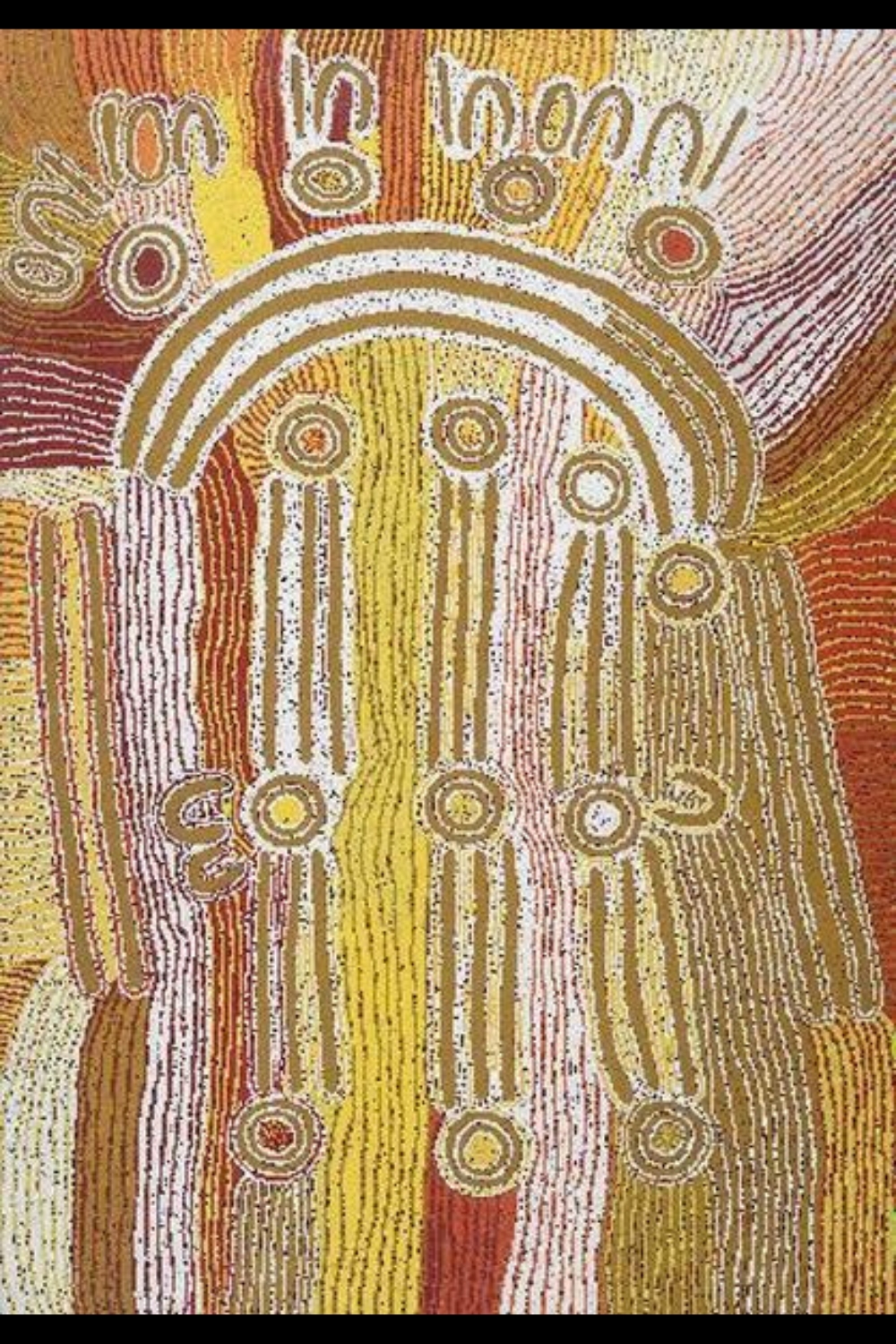
Her Western Desert paintings transform ancestral journeys, women’s ceremony, digging sticks, hair-string, waterholes, bush foods and ngalyipi (snake vine) into dense fields of dots, lines, circles and repeated patterns. Although highly abstract to an outside viewer, these compositions developed from a much older Warlpiri visual tradition connecting design with Country, ceremony, song and ancestral narrative.
Maggie was the elder sister of Judy Watson Napangardi and closely related through Warlpiri kinship to Dorothy Napangardi. All three became celebrated interpreters of women’s Country associated with Mina Mina while developing strikingly different individual styles.
For those wishing to research the value of Maggie Watson Napangardi’s paintings in greater detail, including documented auction results and past sale prices, please visit Maggie Watson Napangardi Value and Auction Results.
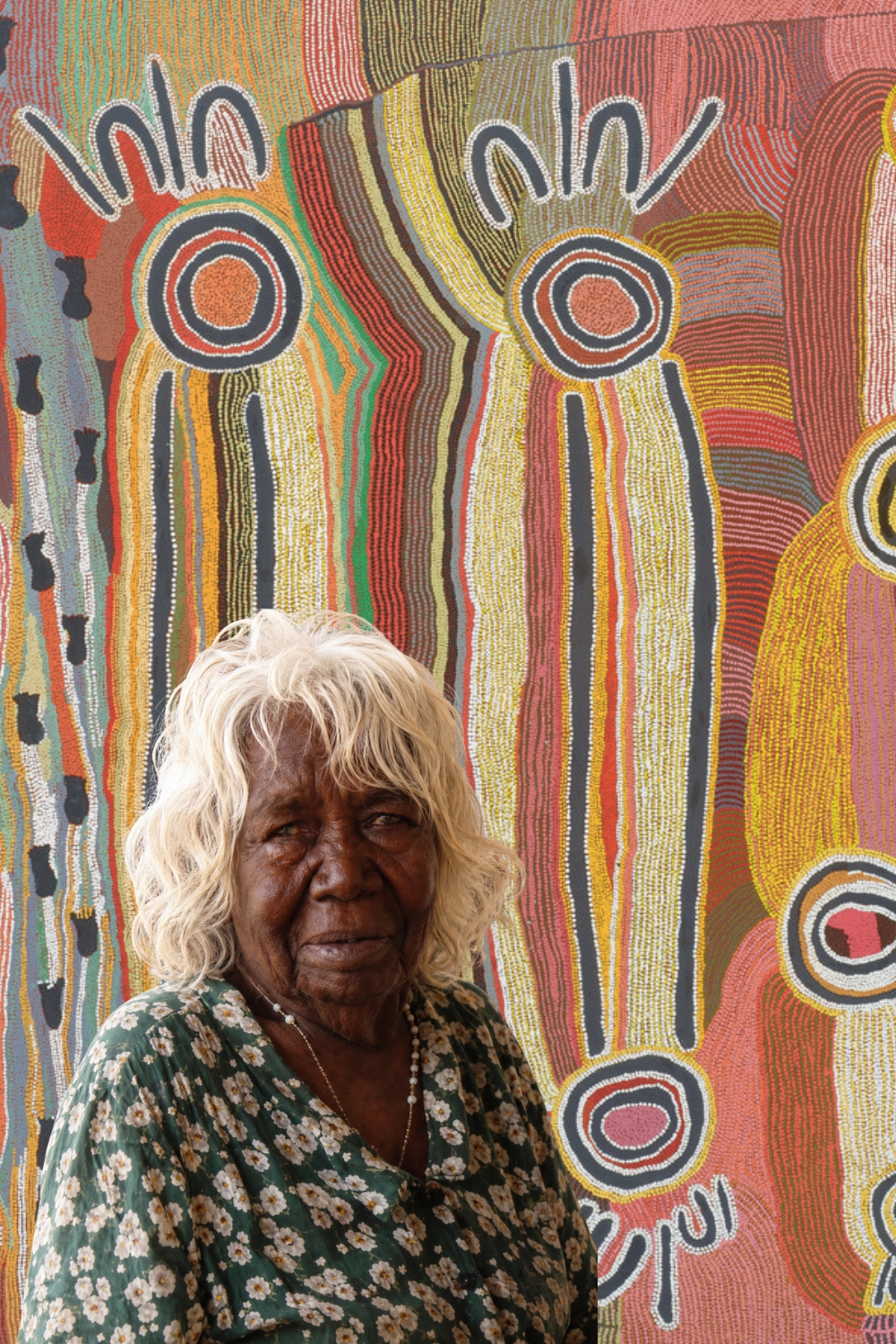
Maggie Watson Napangardi Biography
Maggie Watson Napangardi was born during the 1920s, although published sources differ over her exact birth date. She belonged to a generation whose knowledge of Warlpiri Country and ceremony was established long before acrylic painting became an important form of Aboriginal artistic expression.
She eventually lived at Yuendumu, approximately 290 kilometres northwest of Alice Springs. During the 1980s Yuendumu developed into one of the most important centres of contemporary Warlpiri painting.
Maggie began painting at around 60 years of age during the formative years of the Yuendumu acrylic movement. Although the Western Desert acrylic movement established at Papunya in 1971 had initially been dominated by men, Warlpiri women maintained extensive visual traditions of their own through ceremonial body painting, ground designs and other forms associated with song, dance, Country and ancestral narratives.
During the 1980s senior women at Yuendumu increasingly began transferring appropriate elements of this visual knowledge onto permanent surfaces. Anthropologist Françoise Dussart, who conducted extensive research with Warlpiri women at Yuendumu, is credited in documentation associated with Maggie’s paintings with encouraging women to extend their painting repertoire onto canvas.
Warlukurlangu Artists was established at Yuendumu in 1985, and Maggie became closely associated with the emerging art centre. Surviving works provide a chronology of her early development: Digging Stick Story dates from 1986, Women’s Digging Stick Dreaming from 1987, followed by numerous documented Warlukurlangu paintings from the late 1980s and early 1990s.
Maggie was never especially prolific, but became a leading figure among the senior Yuendumu women whose emergence challenged the earlier dominance of male acrylic painters in Central Desert art. By the 1990s she was producing increasingly ambitious paintings of women’s Country and ceremony, culminating in monumental works associated particularly with Mina Mina.
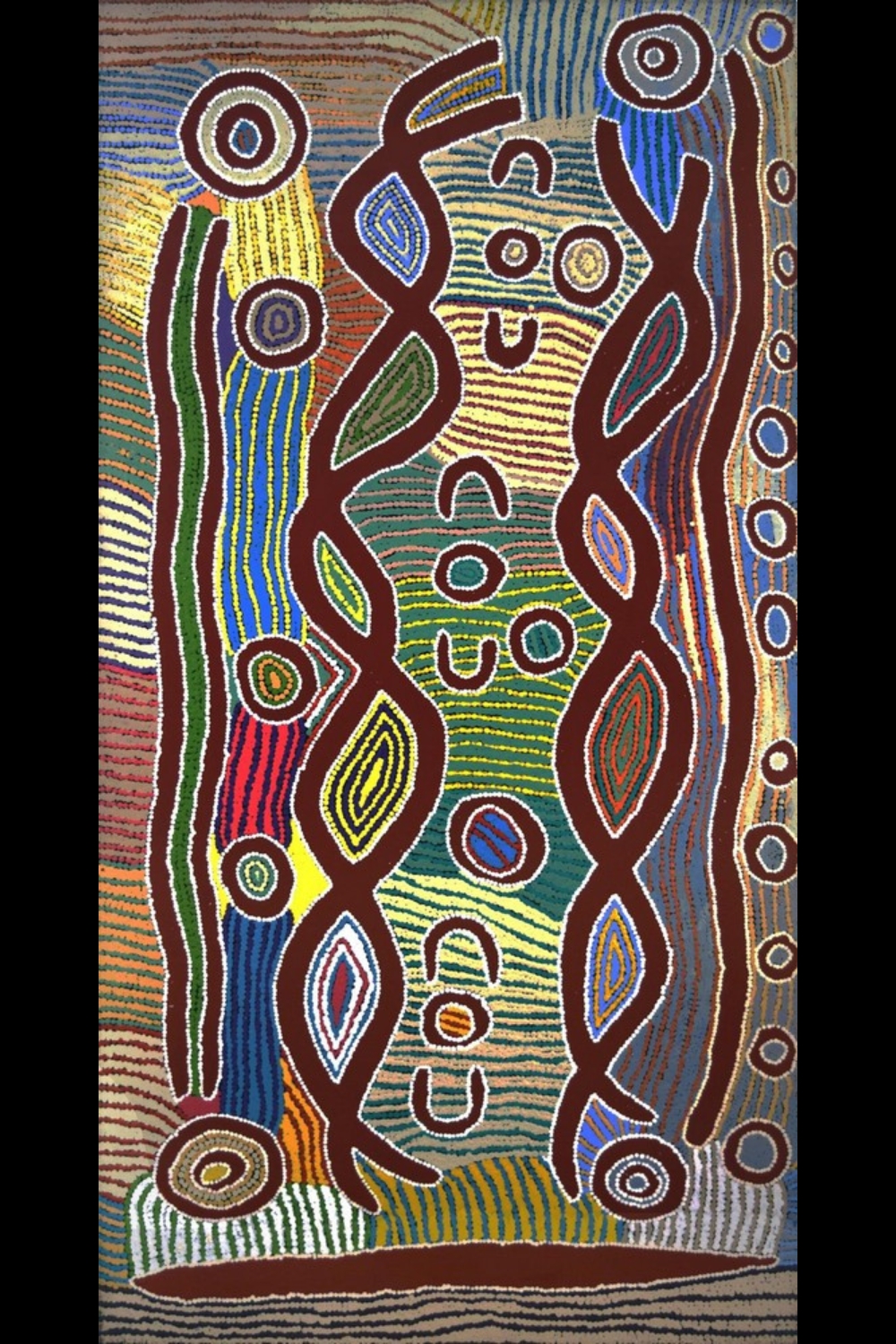
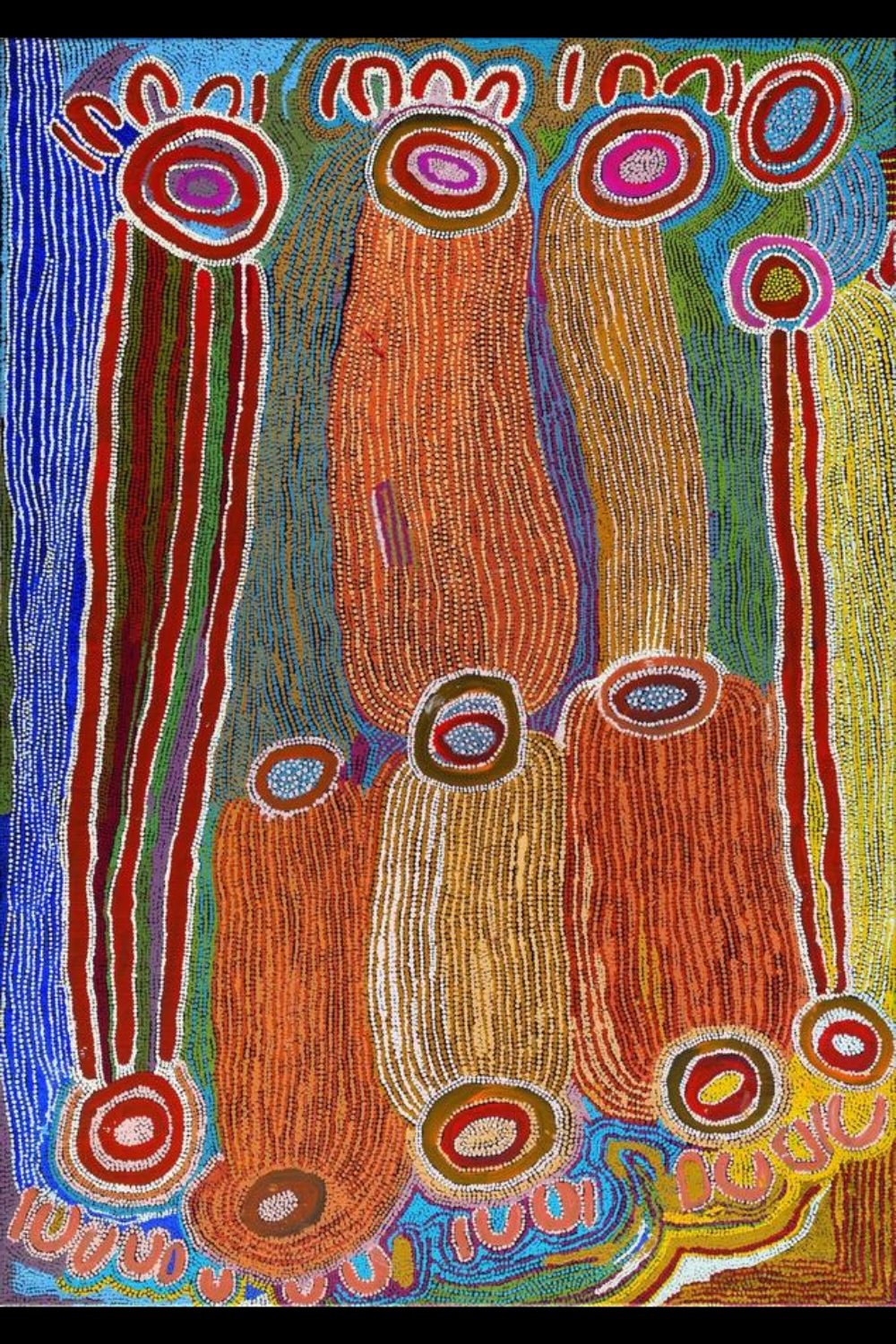
What Did Maggie Watson Napangardi Paint?
Maggie Watson Napangardi painted Warlpiri women’s Country and the ancestral journeys and ceremonies connected with it. Her best-known works concern Mina Mina, although her paintings also refer to Janyinki, Purturlu (Mt Theo), digging sticks, ngalyipi, hair-string, waterholes and bush foods.
These paintings are not literal maps or illustrations of a single story. They bring together places, ancestral movement, plants, water and ceremony within a larger network of Warlpiri Country.
Mina Mina and the Ancestral Women
Mina Mina, far west of Yuendumu, is particularly important to Napangardi and Napanangka women. Its narratives concern ancestral women who travelled across Country gathering food and plants, dancing and performing ceremonies.
A central event is the emergence from the ground of karlangu, or digging sticks, which the women carry on their journey. Desert oaks at Mina Mina are associated with these digging sticks and the ancestral women themselves.
The women travelled east through successive waterholes and ceremonial places, with one documented painting describing their journey toward Alcoota. Janyinki, identified in documentation as Maggie’s Country, forms part of this wider ceremonial geography, while other paintings refer to Purturlu (Mt Theo).
Maggie’s Mina Mina paintings therefore do not depict one isolated place. They evoke an interconnected network of Country, ancestral journeys and ceremonial relationships.
What Do the Symbols in Maggie Watson Napangardi’s Paintings Mean?
There is no simple dictionary for interpreting the symbols in Maggie Watson Napangardi’s paintings. Their meaning depends upon the particular Country, ancestral narrative and ceremonial context represented.
In one documented Mushroom Dreaming, concentric circles represent bush mushrooms and straight lines represent digging sticks. In a Karntakurlangu Jukurrpa, circles instead represent waterholes, while parallel dotted bands representhair-string beltsworn by the ancestral women. Curving lines in other paintings can represent ngalyipi, or snake vine.
This demonstrates an important principle when interpreting Western Desert art: a circle does not always mean a waterhole, and a line does not always represent a journey. The same graphic form can carry different meanings according to context.
These motifs also connect ceremony with everyday knowledge of Country. Ngalyipi could be made into shoulder straps for carrying food and water, while hair-string had practical and ceremonial uses. Maggie also painted bush mushrooms, native truffles, bush potatoes and bush plums.
What can appear to an outside viewer as abstract pattern therefore represents a much richer visual language connecting Country, ancestral journeys, women’s activities, food gathering and ceremony.
Maggie Watson Napangardi’s Painting Style
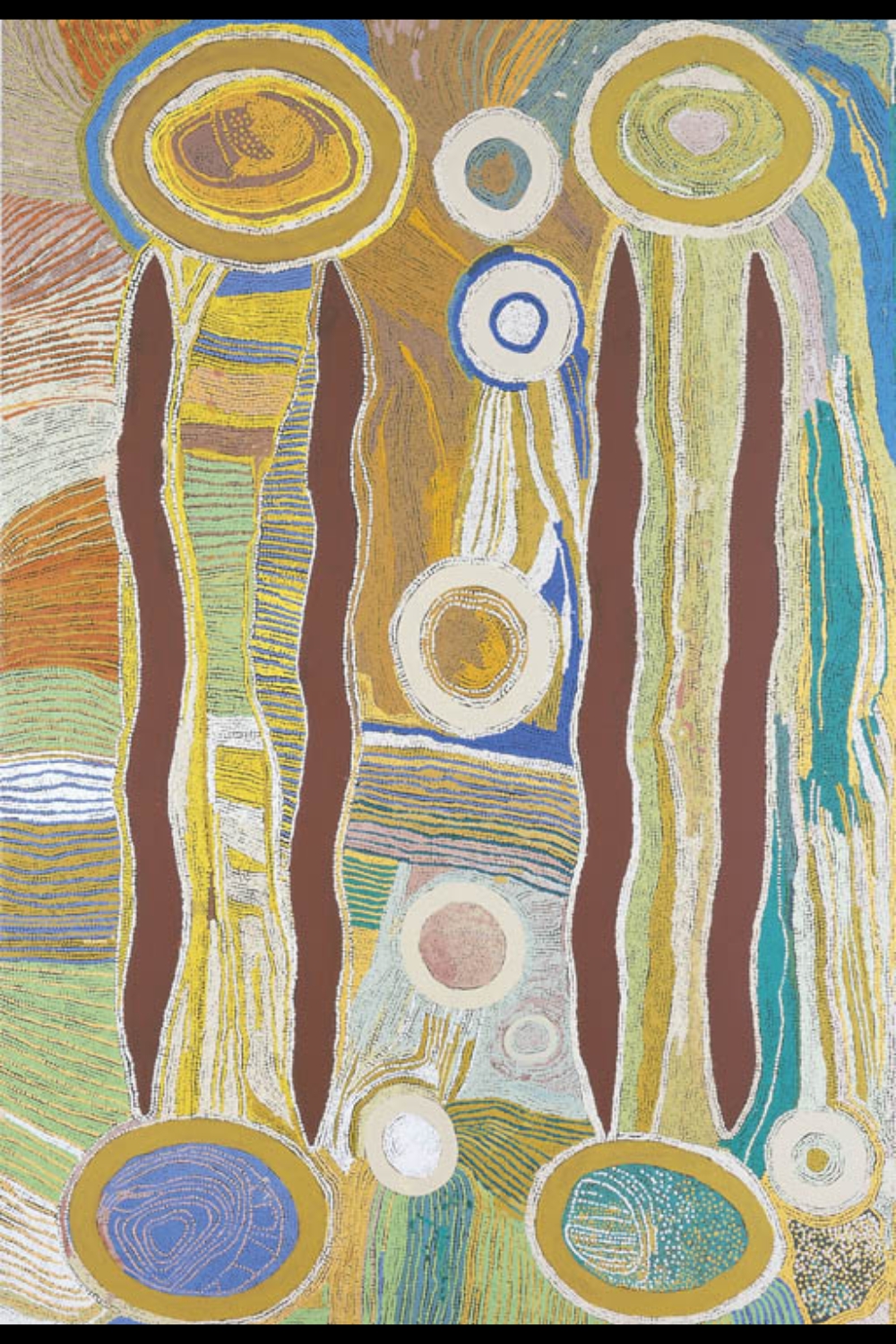
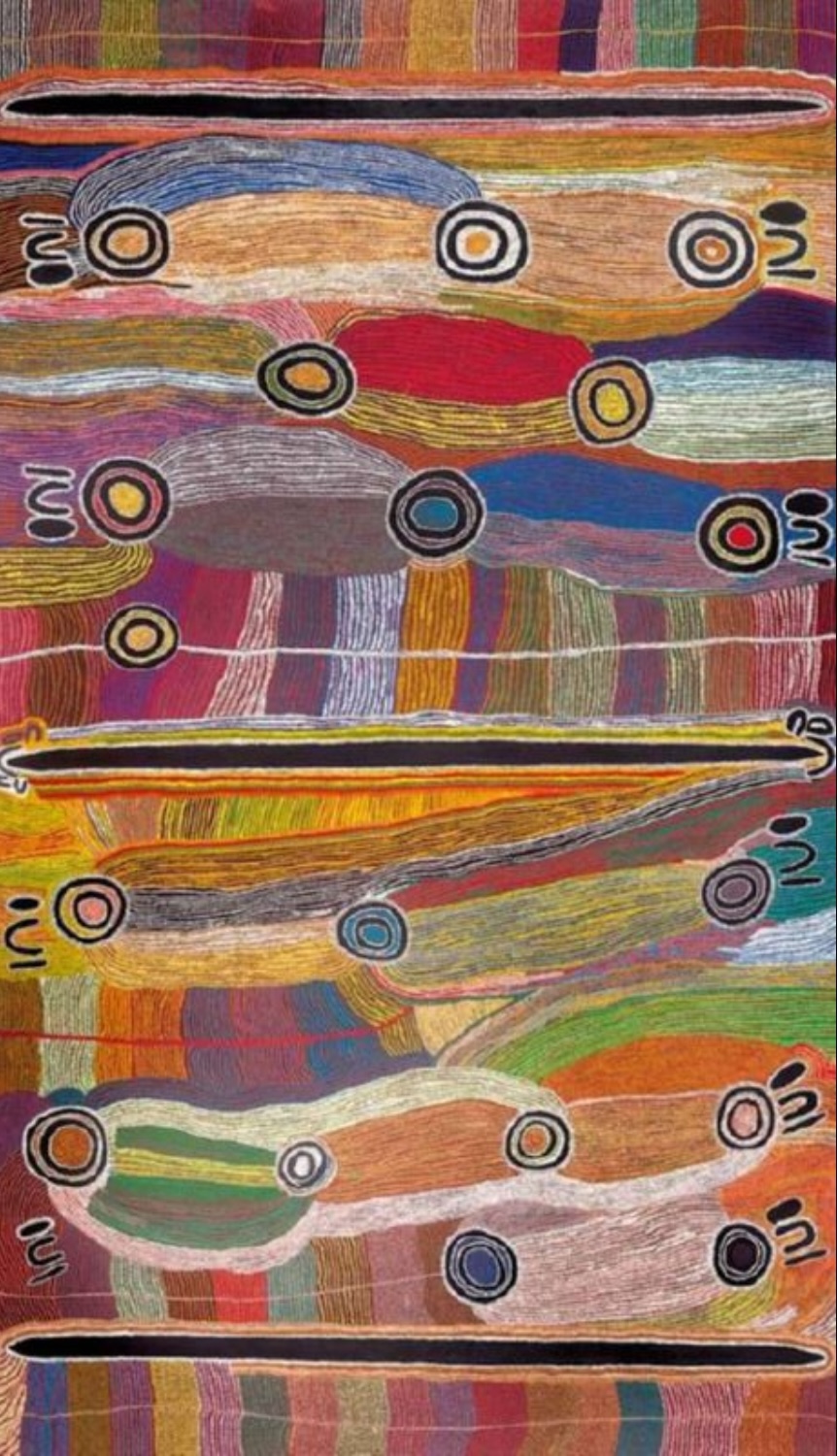
Maggie’s paintings are particularly recognisable for their density, colour and rhythmic repetition.
Her mature work combines fine dotting, repeated straight and curving lines, concentric forms and layered bands of pattern. These elements are carefully organised across the canvas, often using a considerably broader palette than that associated with some Western Desert painting traditions.
Auction commentary on a major 1997 Digging Sticks painting praised Maggie’sprecision of line, balanced composition and meticulous application. It also noted her sophisticated use of colour, including subtle pastel shades such as light blues and soft yellows.
At a distance, the mature paintings can appear remarkably abstract. Viewed closely, however, their surfaces break apart into thousands of individual dots, lines and culturally meaningful forms.
This produces an important tension between symbol and overall visual field. The individual elements remain connected with Country and ancestral narrative, while their repetition creates a larger composition with its own rhythm and movement.
The visual principles underlying these paintings also predate acrylic painting. Warlpiri designs could traditionally be produced on bodies, in the ground and on ceremonial objects, where they operated together with song, dance and performance. Canvas provided a permanent and portable surface for the development of selected elements of this much older visual tradition.
Why Is Maggie Watson Napangardi Important?
Maggie Watson Napangardi occupies an important position in contemporary Warlpiri art. She belonged to the pioneering generation of senior women who established acrylic painting at Yuendumu during the 1980s, bringing aspects of women’s ceremonial visual traditions into a new and permanent medium.
Her artistic importance became particularly evident during the mid-1990s, when she produced some of her largest and most ambitious paintings. Major works from 1995–1997 include Mina Mina Dreaming, Digging Stick Dreaming, Women’s Dreaming and Digging Sticks. The monumental Wititji (Hair String), 1997 in the National Gallery of Victoria measures approximately 365 × 173 cm.
At this scale, Maggie’s meticulous dots, lines and repeated motifs become immersive fields of colour, pattern and movement. Her paintings remain grounded in Warlpiri Country, ancestral narratives and women’s ceremony while possessing the visual power of monumental contemporary abstraction.
Because Maggie was not a prolific painter and appears to have worked slowly and meticulously, major paintings of this scale are rare. Her achievement was not simply to preserve older imagery, but to develop a distinctive contemporary visual language through which Warlpiri cultural knowledge and individual artistic innovation could coexist.
Major Exhibitions and Museum Collections
Maggie’s paintings were exhibited nationally and internationally from the formative years of the Yuendumu painting movement.
Her work appeared in exhibitions in Australia, the United States and Europe. Women’s Dreaming, 1996, for example, formed part of the important Colin and Elizabeth Laverty Collection and was exhibited at the Museum of Contemporary Art, Sydney in 1998. Other works were exhibited in Chicago, Austria and Spain.
Her work is represented in important public collections including:
- National Gallery of Australia, Canberra
- National Gallery of Victoria, Melbourne
- Art Gallery of Western Australia, Perth
- Musée du quai Branly, Paris
The monumental Wititji (Hair String), 1997 in the National Gallery of Victoria is particularly important in demonstrating the scale and ambition reached by Maggie during her mature period.
Further Reading
Françoise Dussart, “Women’s Acrylic Paintings from Yuendumu,” in Margie West (ed.), The Inspired Dream: Life as Art in Aboriginal Australia, Queensland Art Gallery, 1988.
Christine Nicholls, “The Three Napangardis: To the Memory of Maggie Napangardi Watson,” in Judith Ryan (ed.), Colour Power: Aboriginal Art Post 1984, National Gallery of Victoria, 2004.
Hetti Perkins, Aboriginal Women’s Exhibition, Art Gallery of New South Wales, Sydney, 1991.
Wally Caruana, Aboriginal Art, Thames & Hudson, revised editions.
National Gallery of Victoria, Colour Power: Aboriginal Art Post 1984.
All images featured in this article are presented strictly for educational and informational purposes.
This website may include copyrighted material for which specific authorization has not been obtained from the copyright owner.
All such images are presumed to be the intellectual property of the respective artist or their estate, and are used in accordance with principles of fair dealing or fair use under applicable copyright law.