Tommy McRae : Pioneer Aboriginal Artist
Tommy McRae (c.1835–1901), also recorded as Tommy Barnes, Yackaduna and Warra-euea, was one of the most important nineteenth-century figures in Aboriginal Art History. Together with William Barak, he was among the most prolific named Aboriginal artists known from the period.
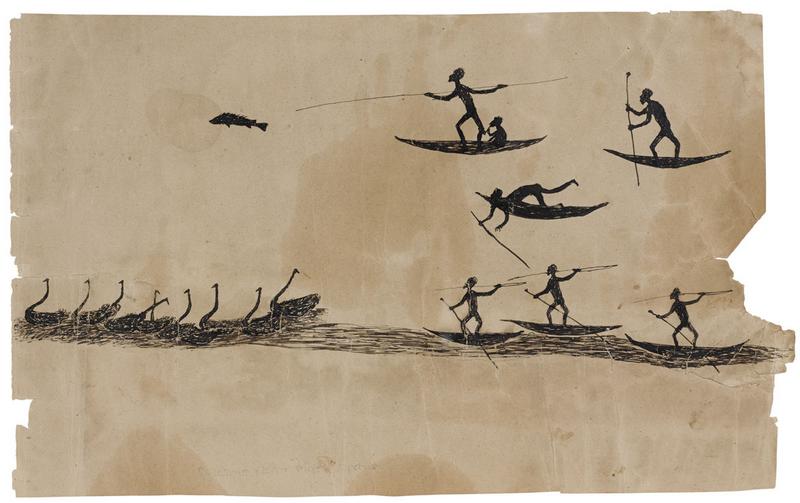
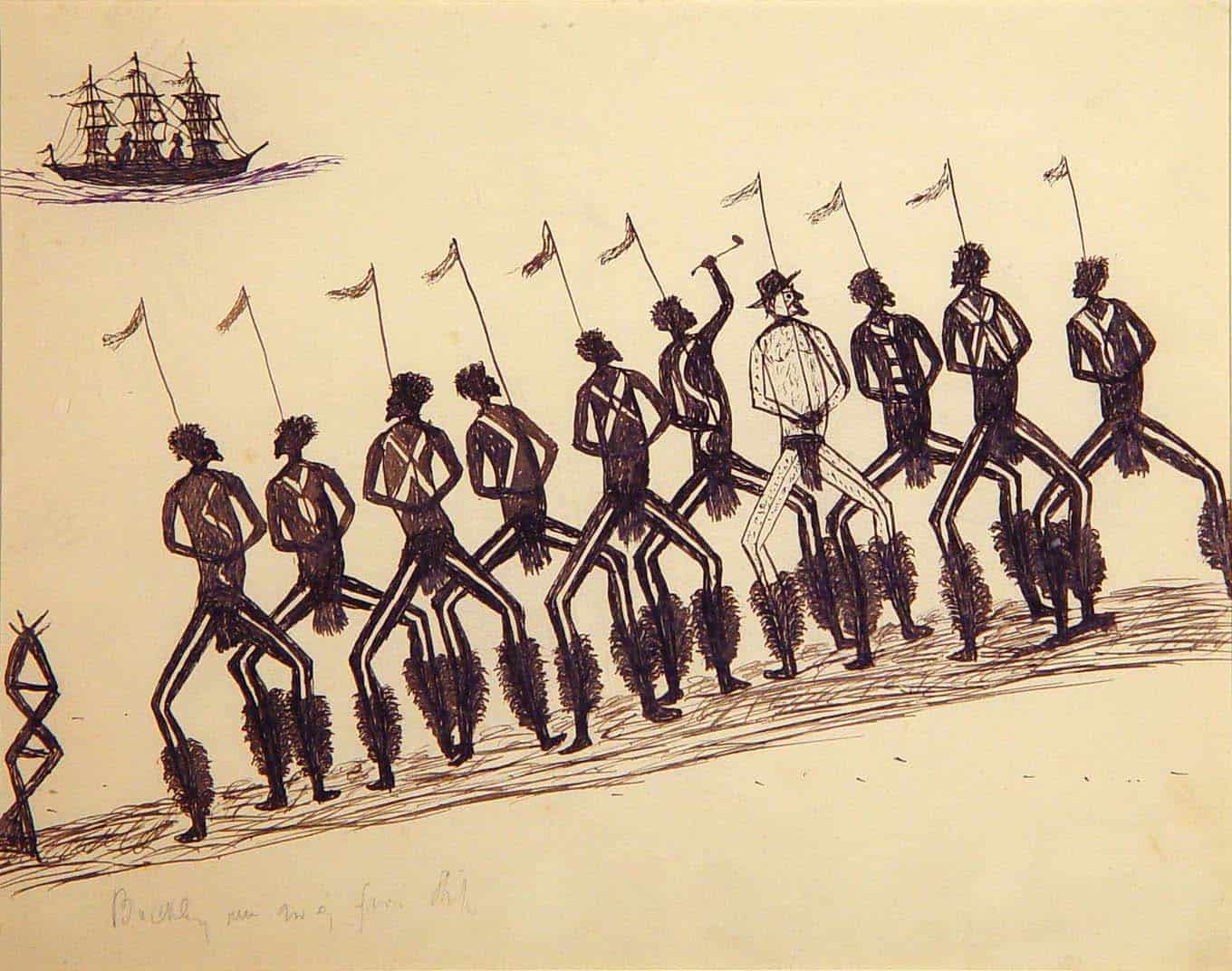
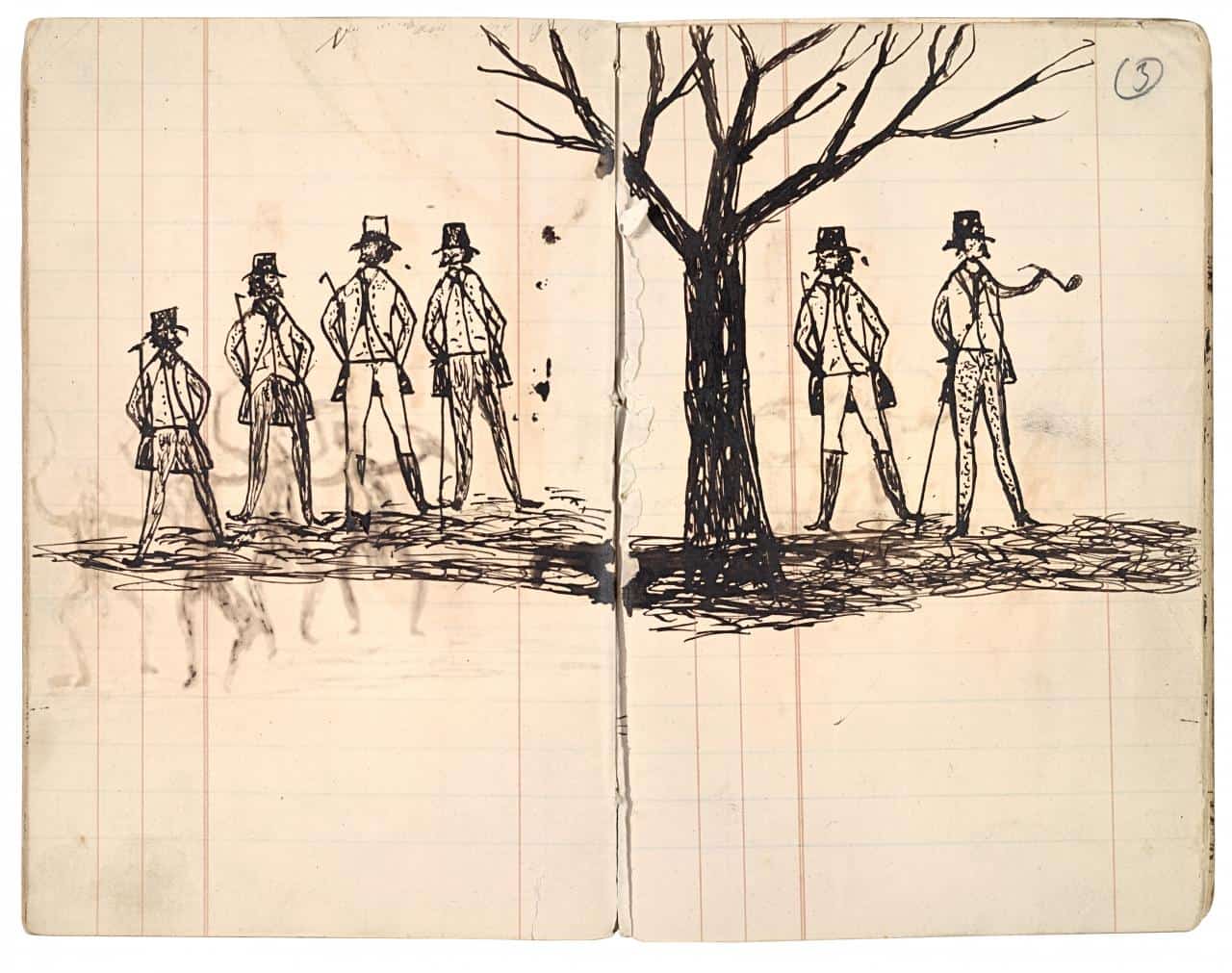
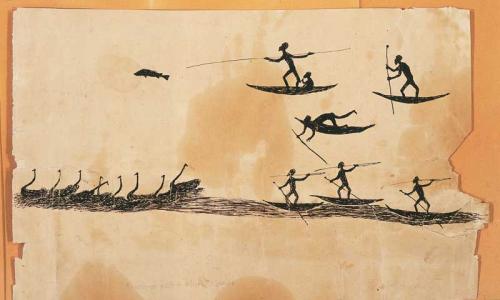
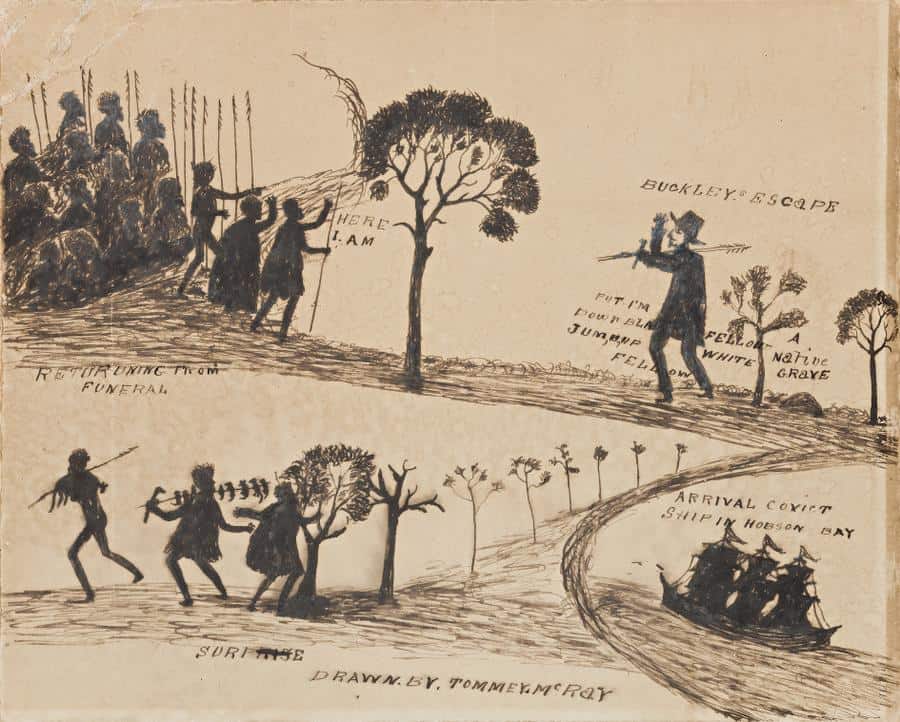
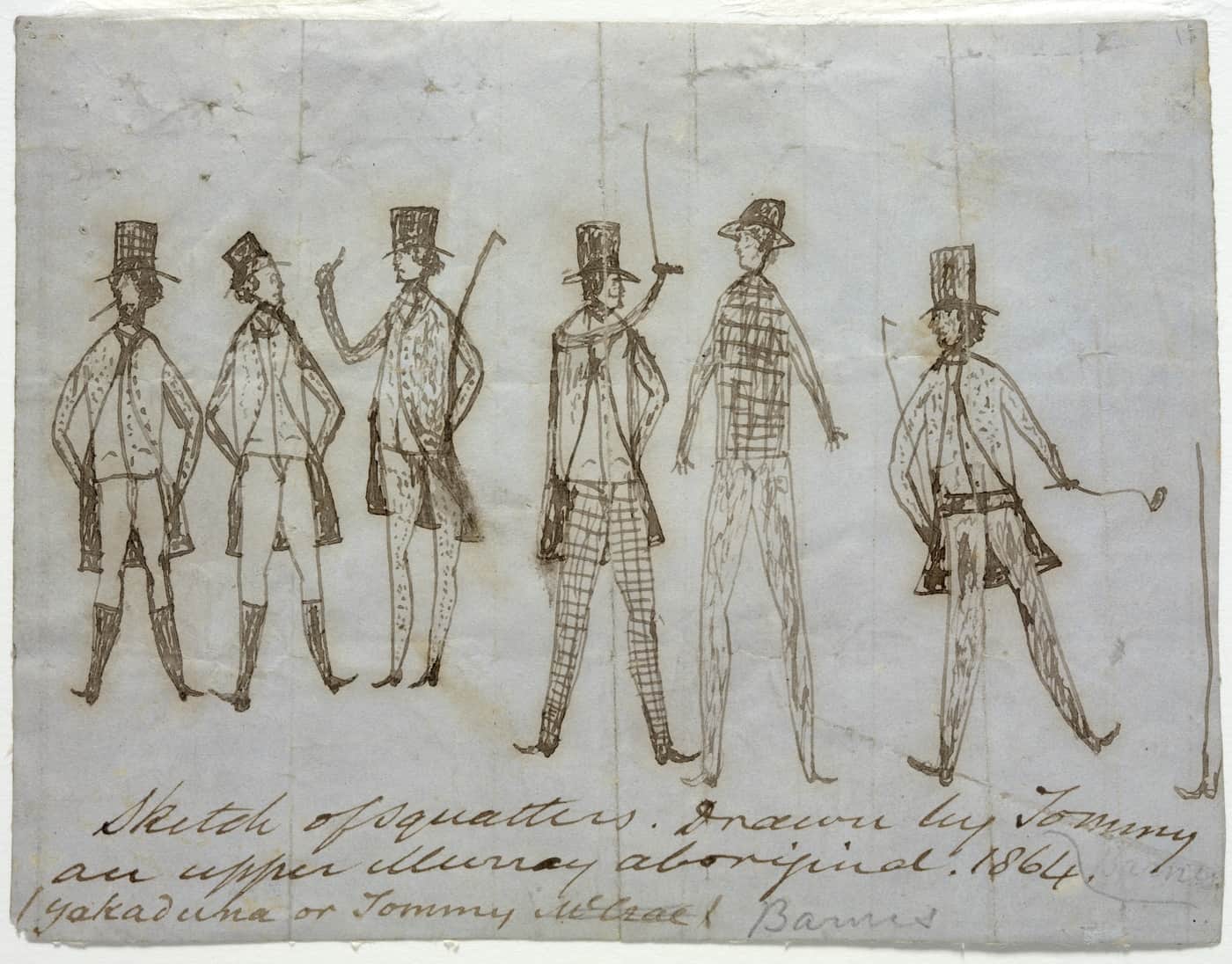
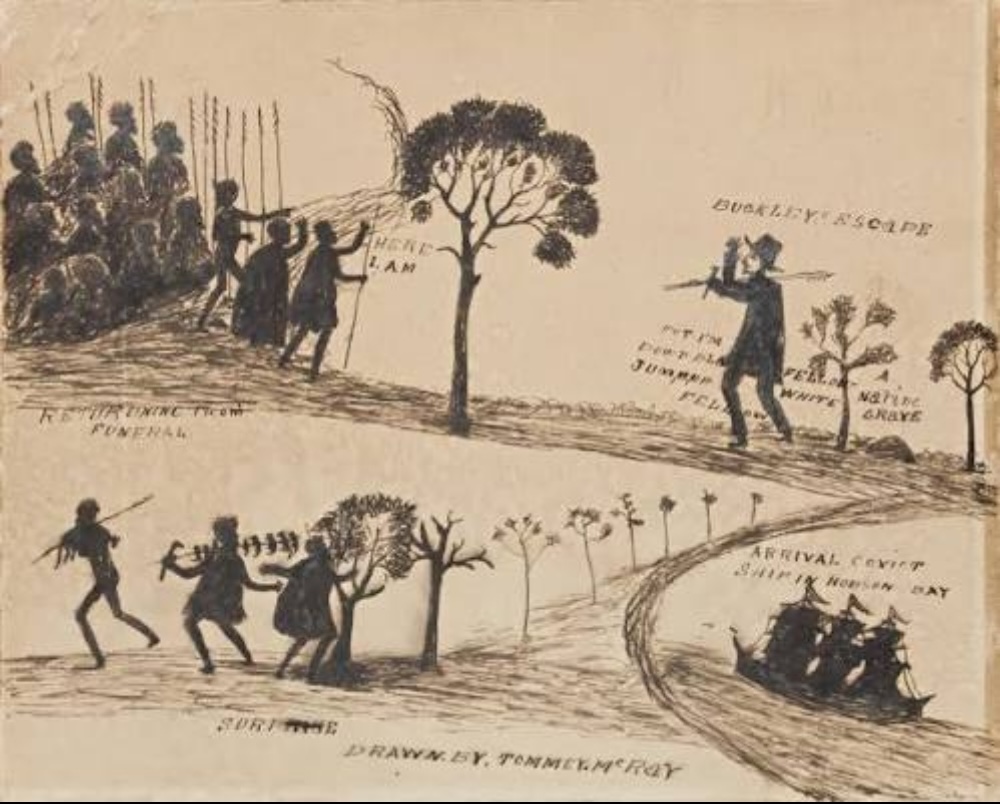
Living in the Upper Murray during profound colonial change, McRae created distinctive pen-and-ink drawings of ceremony, hunting, fishing and fighting. He also depicted European settlers, pastoral life, Chinese people and episodes from colonial history, including the story of William Buckley.
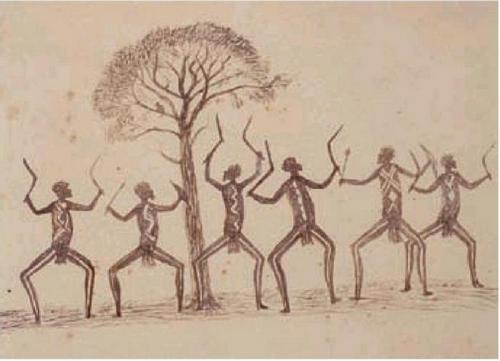
Already drawing by the early 1860s, McRae developed an immediately recognisable style of dark silhouettes, rhythmic groups of figures and extraordinary economy of line. He produced individual drawings and complete sketchbooks, worked with patrons and sold his art directly to people who sought him out.
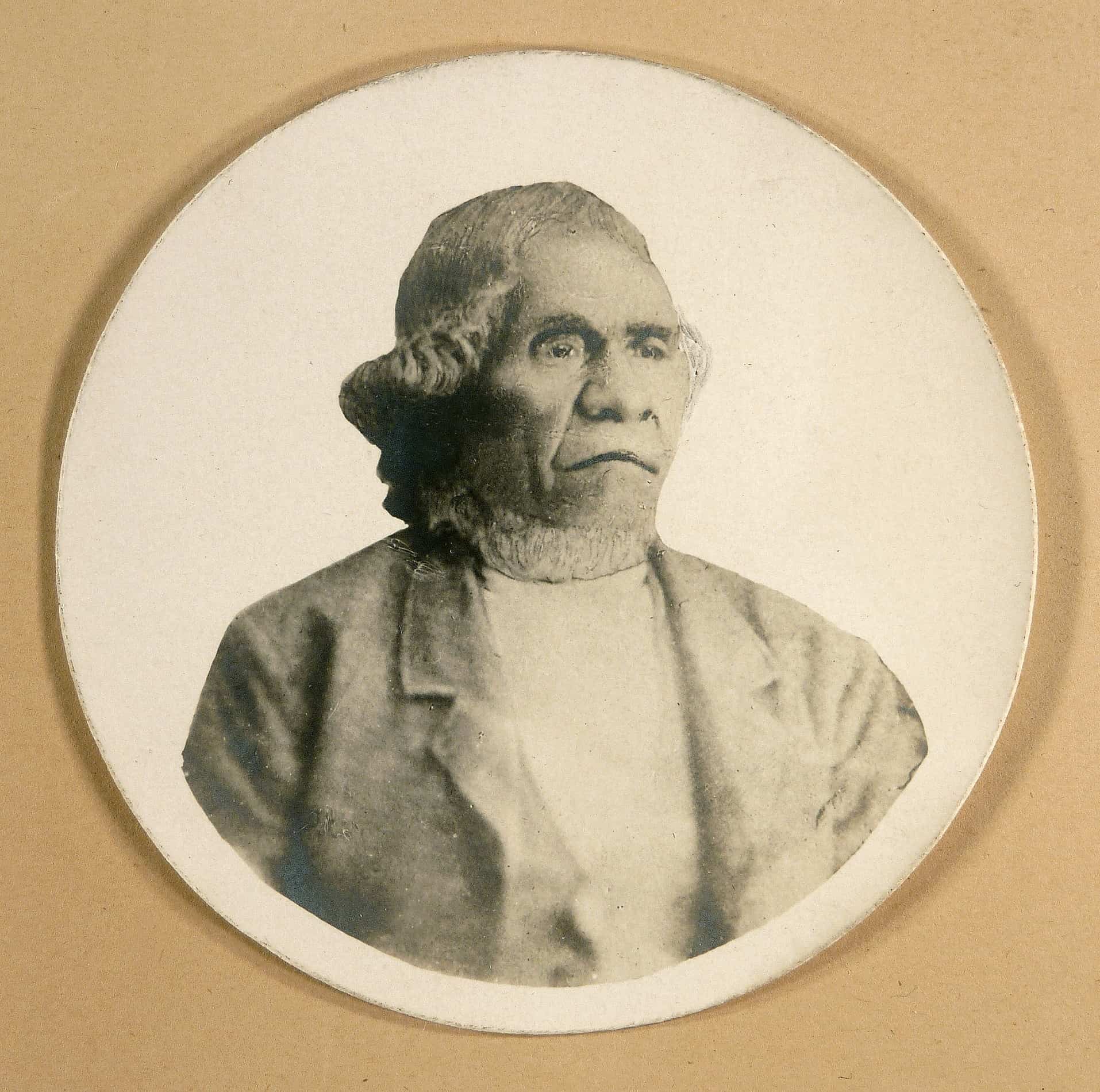
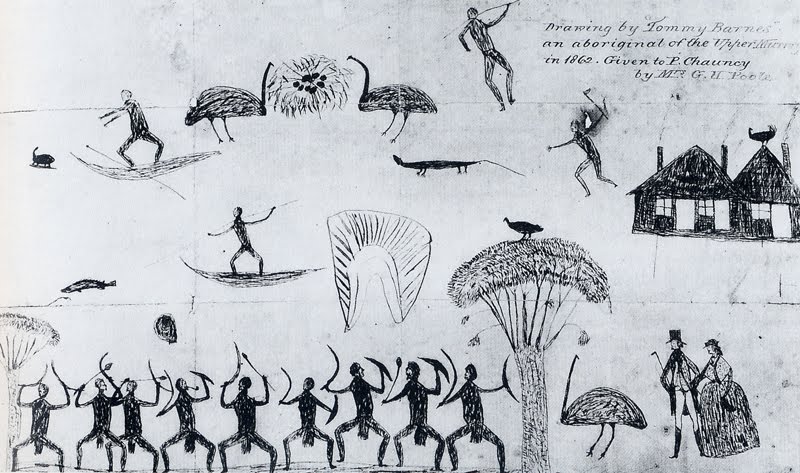
Tommy McRae was also known as Tommy Barnes
Tommy McRae Biography
Tommy McRae was born around 1835 and spent his life in the Upper Murray region of south-eastern Australia.
His precise cultural affiliation has been interpreted differently by scholars. Andrew Sayers described him as probably Kwatkwat, while other scholarship has proposed Wiradjuri connections. His Aboriginal names have variously been recorded as Yackaduna and Warra-euea. Given these differences in the historical record, McRae can be associated confidently with the Upper Murray without presenting one cultural attribution as uncontested.
McRae was born as European pastoral settlement was transforming the region. As a young man he entered the pastoral economy, working as a labourer, drover and stockman. He worked at Brocklesby Station near Corowa and was later associated with pastoral properties around Barnawartha and the Upper Murray.
The discovery of early drawings attributed to “Tommy Barnes” has substantially changed our understanding of the length of McRae’s artistic career.
Between 1861 and 1864, sculptor Theresa Walker collected drawings at Barnawartha attributed to an Aboriginal artist called Tommy Barnes. Carol Cooper and James Urry later connected these works with McRae through documentary evidence, names and similarities in drawing style. Most significantly, an 1864 drawing carries the identification “Yakaduna — Tommy Barnes”, linking Barnes with a name subsequently associated with McRae.
The origin of the Barnes surname remains uncertain. Sayers suggested that McRae may have taken it from an employer, possibly pastoralist David Barnes. What the surviving drawings establish more securely is that McRae was already an accomplished artist by the early 1860s.
By the mid-1860s McRae had formed an association with Roderick Kilborn, a Canadian-born telegraph master and vigneron at Wahgunyah who became an important patron. Kilborn commissioned drawings and preserved significant groups of McRae’s work, including a notebook dating from 1875.
McRae later lived with his family near Lake Moodemere outside Wahgunyah. Government records from 1885 list McRae, his wife Lily, four children and other family members living there.
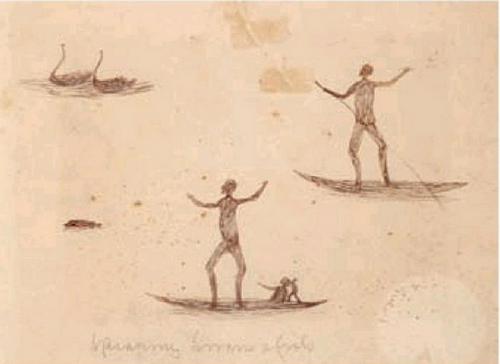
He maintained considerable economic independence. McRae fished for Murray cod, raised poultry and sold drawings, while his family produced possum-skin rugs. By the 1880s his sketchbooks were sufficiently well known for an 1888 newspaper account to describe them as “much sought after” and report that their sale formed a significant part of his income.
Kilborn was not his only patron. George McMahon, a customs officer at Albury, acquired drawings directly from McRae, while an 1881 sketchbook was acquired at Wahgunyah by Richard Lucas for his brother Thomas. Such provenances reveal a local market for McRae’s work during his lifetime.
His independence nevertheless existed within an increasingly intrusive colonial system. Between 1890 and 1897 McRae’s children were removed under government regulations and sent to Aboriginal reserves despite attempts by Kilborn to intervene.
McRae continued producing and selling drawings into the final years of his life. He died on 15 October 1901, leaving an artistic record extending across approximately four decades.
Tommy McRae Art Style and Subjects
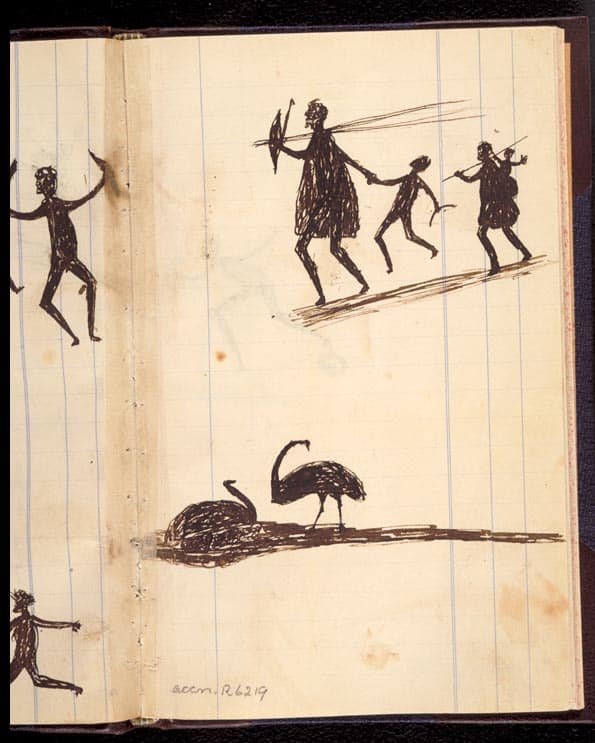
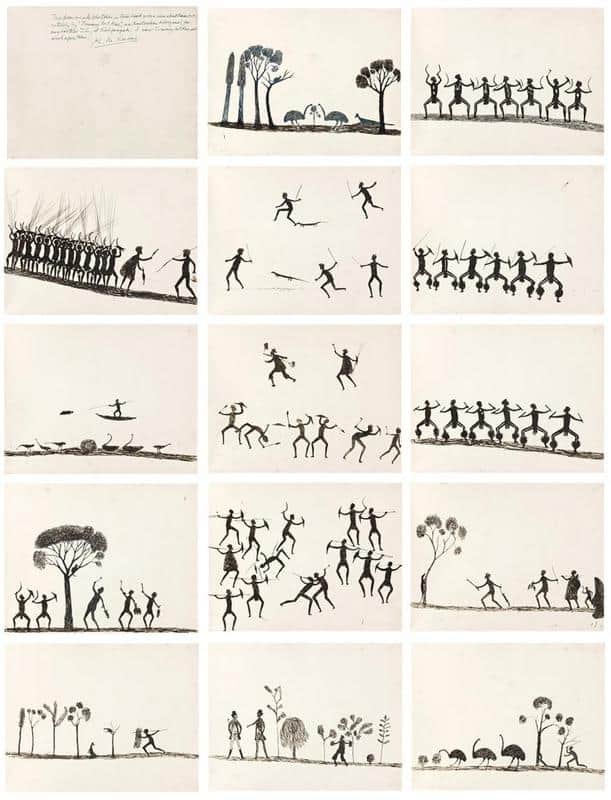
Tommy McRae worked predominantly with pen and ink on paper. Individual sheets survive, but the sketchbook was particularly important to his practice. At least ten sketchbooks are known to have survived into the twenty-first century, many now held in public collections.
McRae’s mature style depended upon extreme economy.
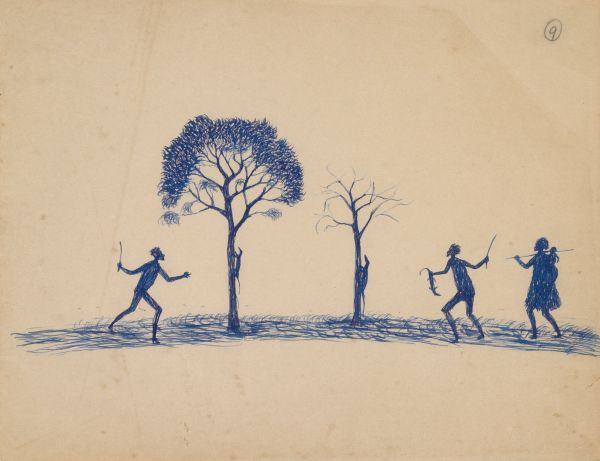
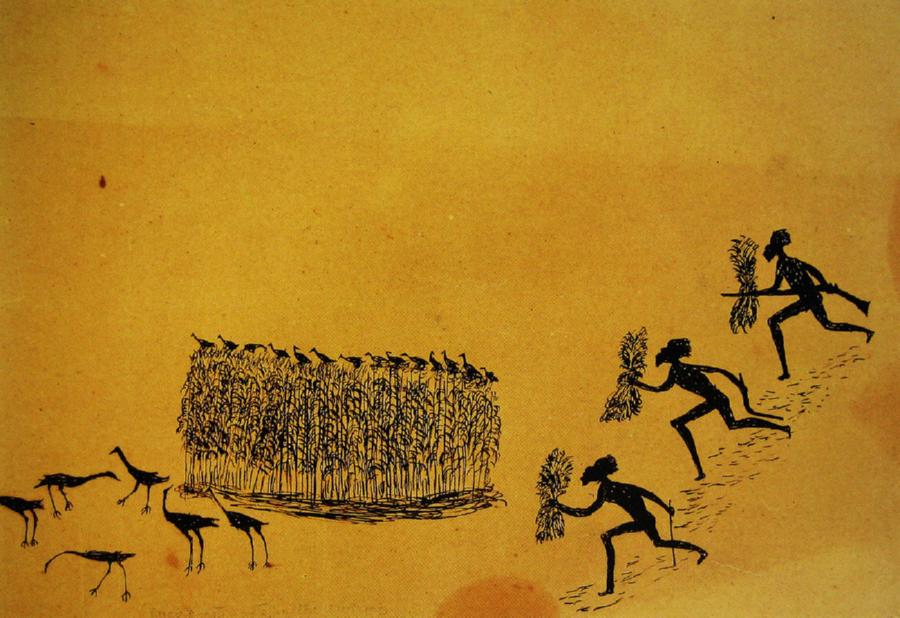
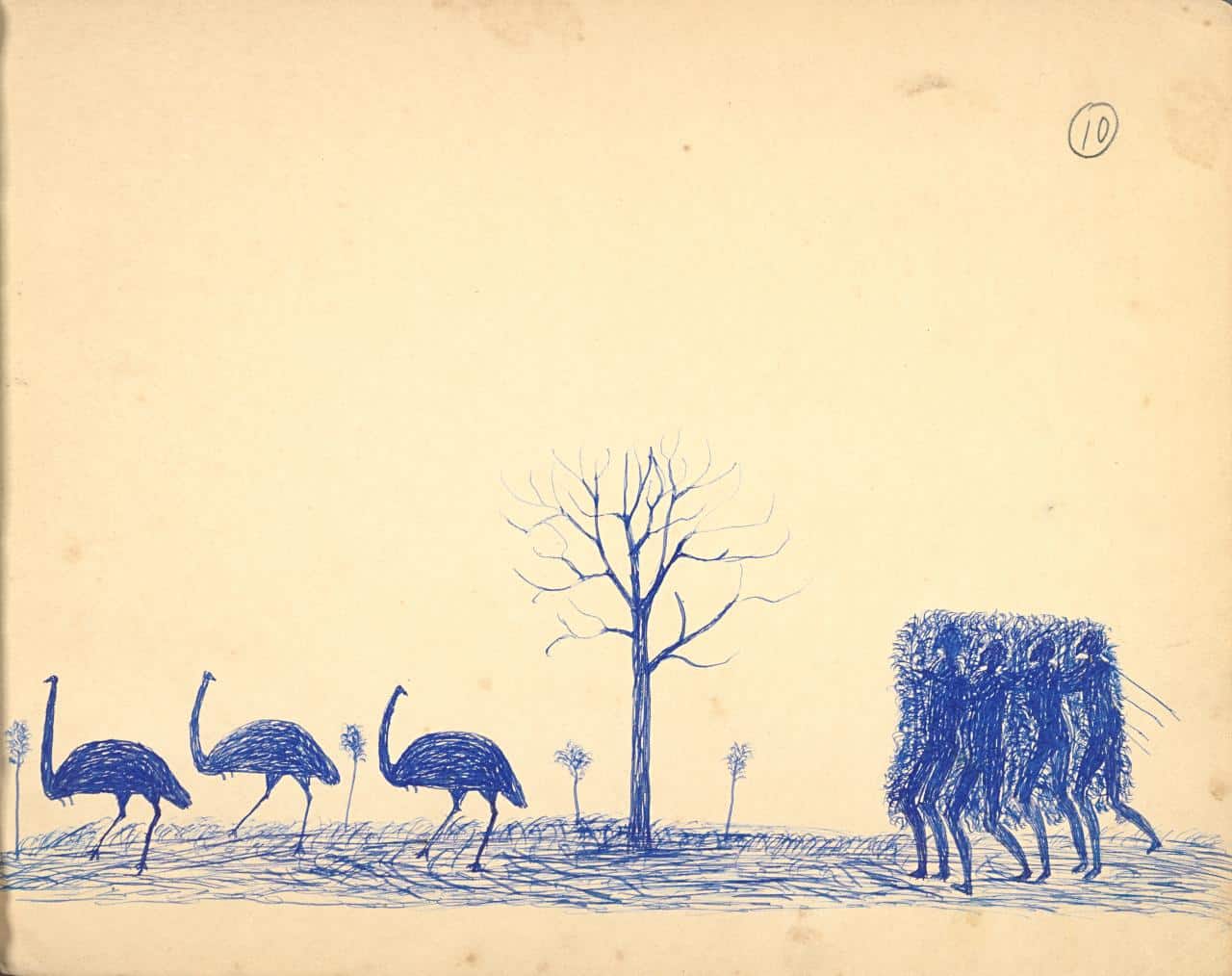
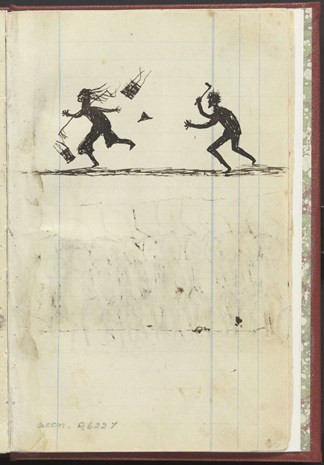
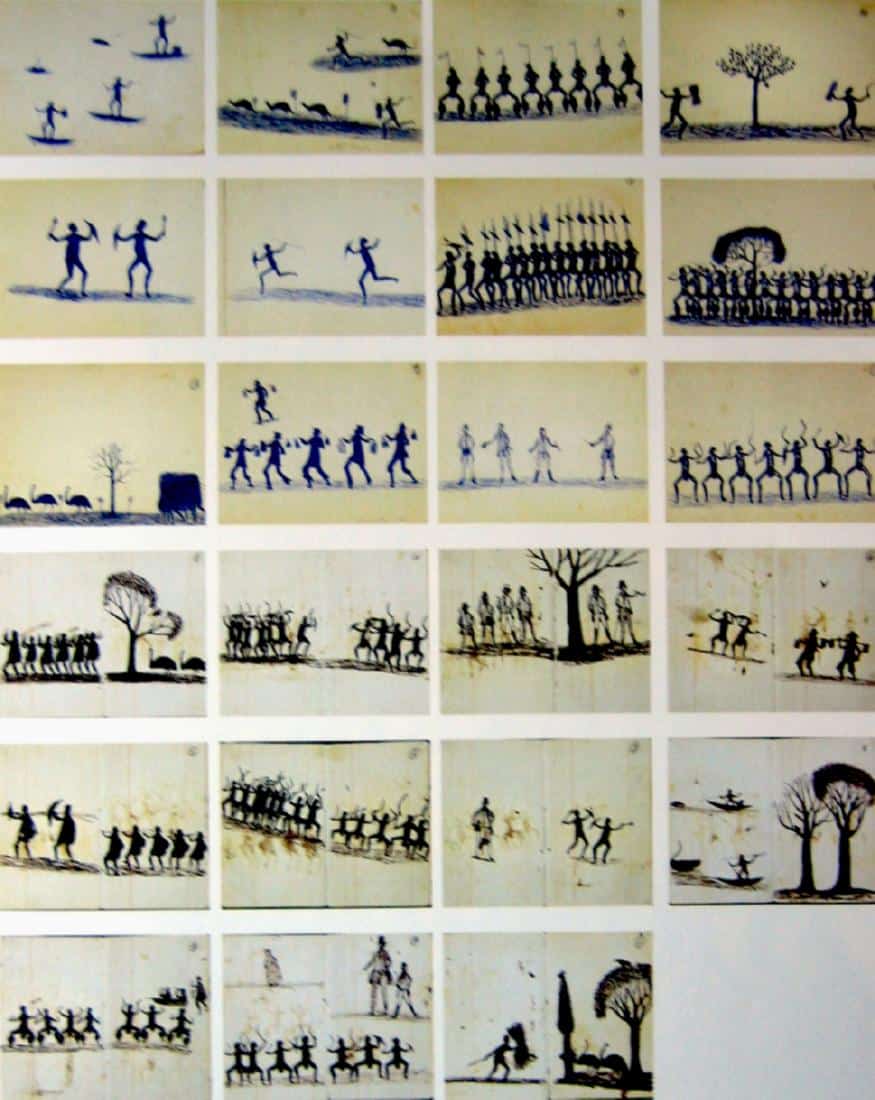
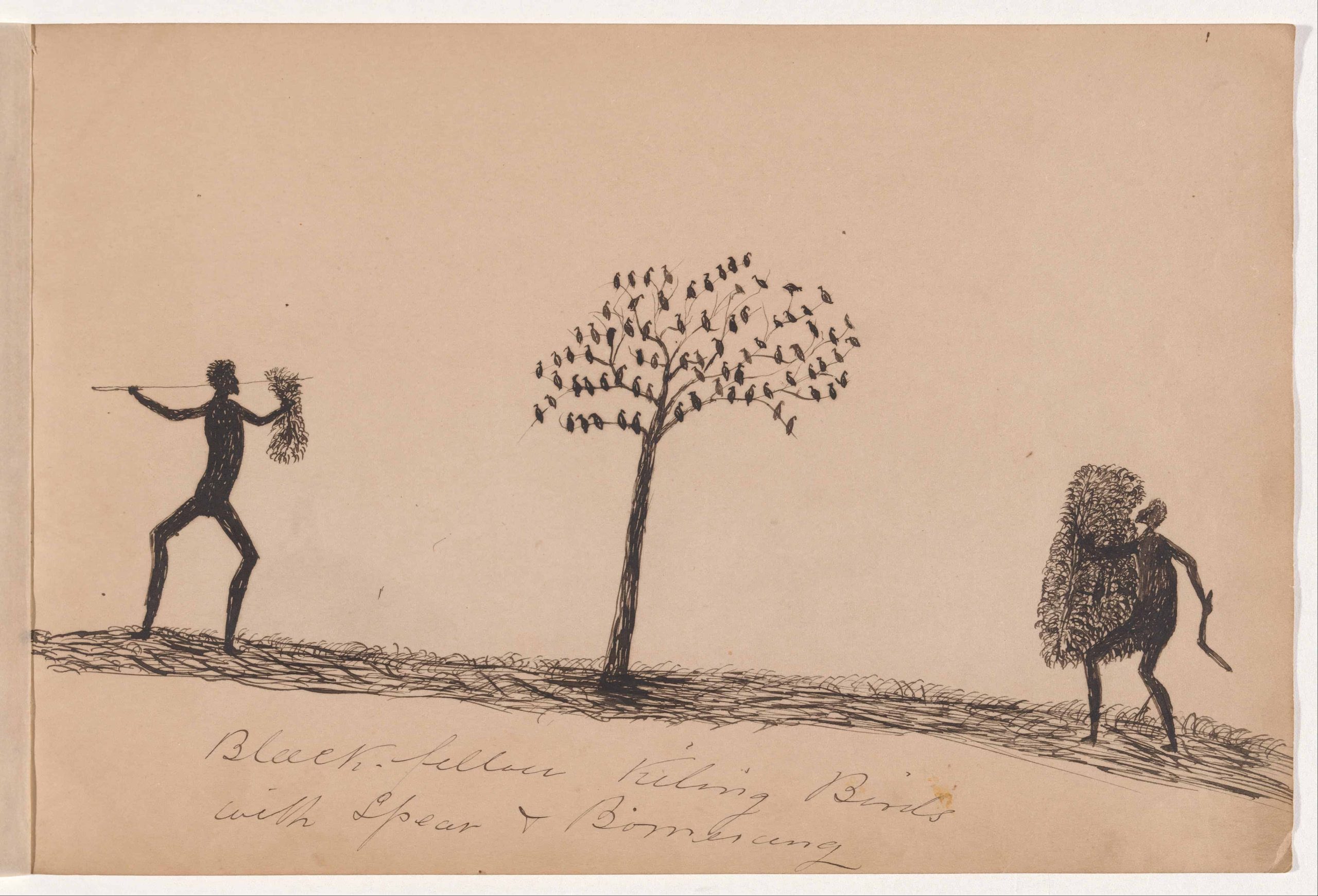
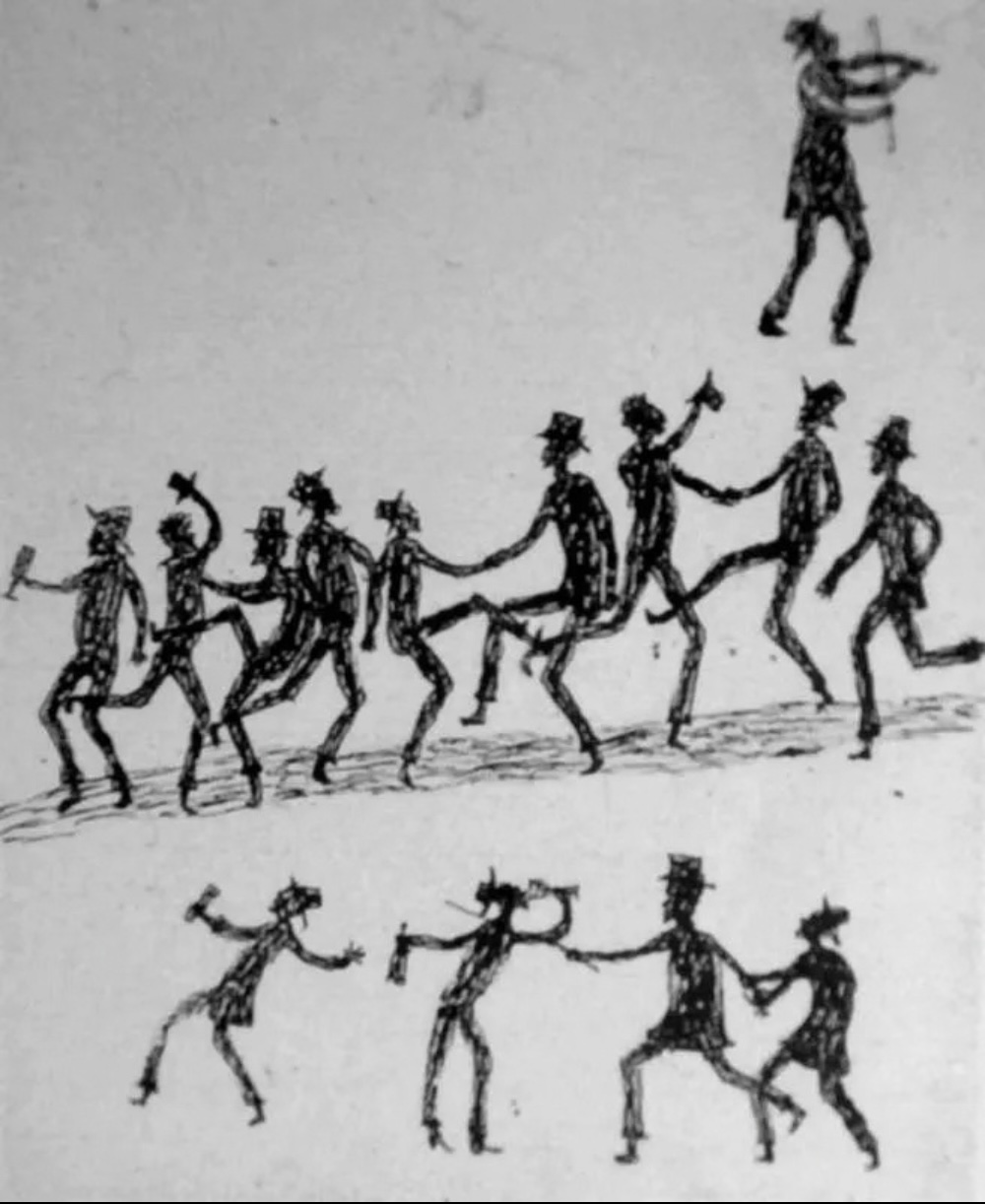
Dark silhouetted figures, sparse vegetation and large areas of untouched paper create scenes that are visually simple but highly animated. With remarkably few marks he could establish movement, individual gesture, narrative and spatial relationships.
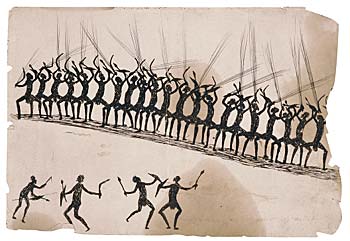
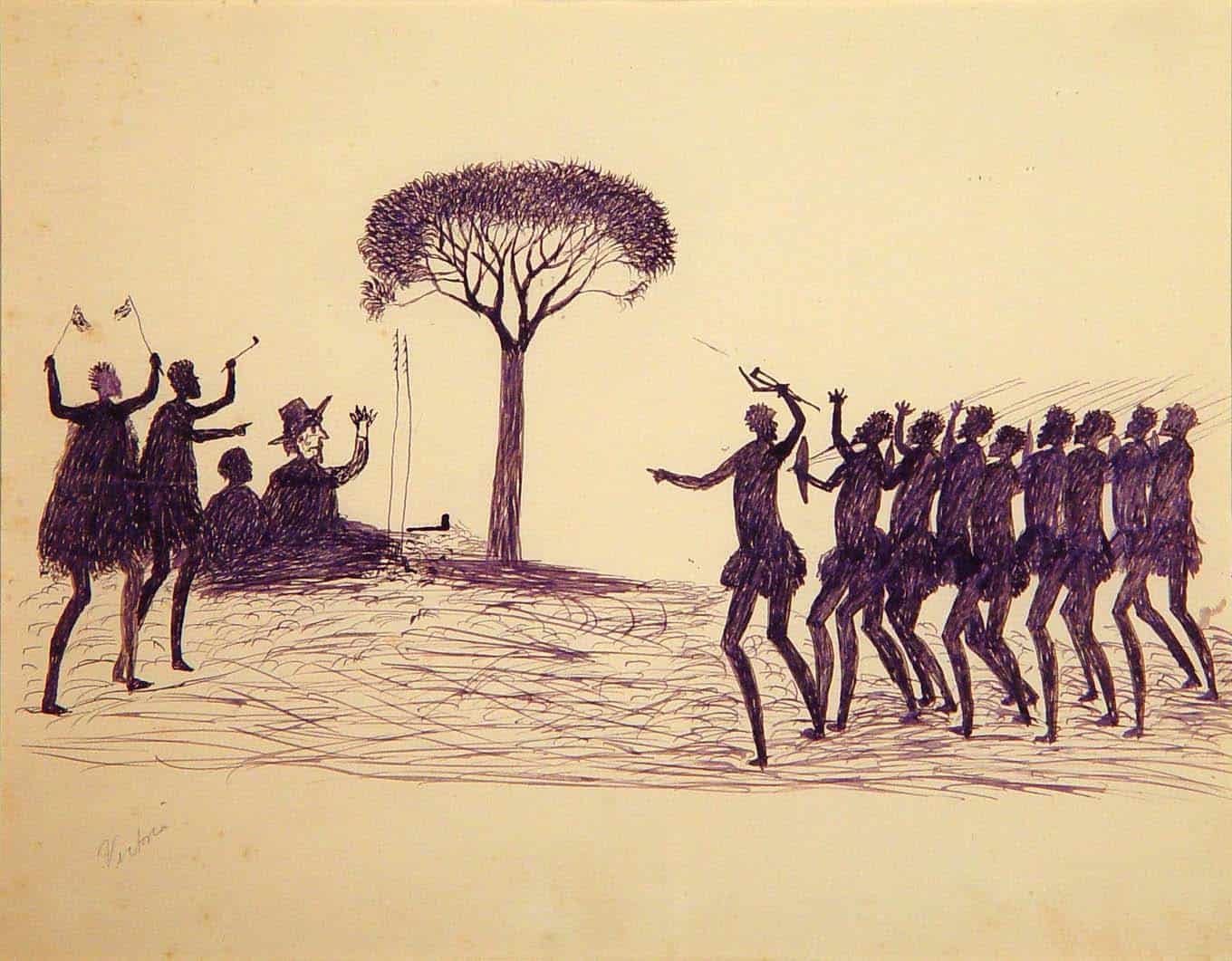
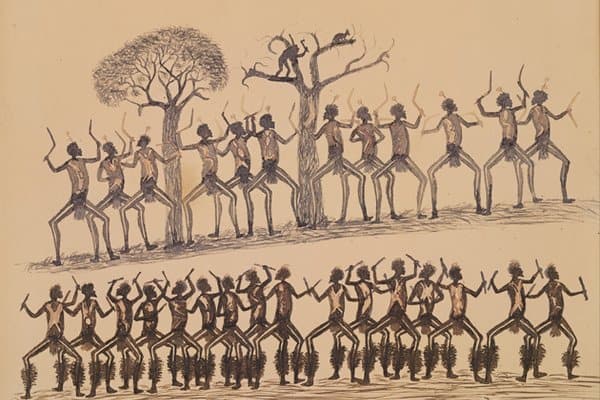
Human figures frequently appear individually or in long rhythmic groups. Trees, vegetation or a simple ground line may be sufficient to establish place, while spears, clubs, shields, boomerangs and changes in posture reveal the action taking place

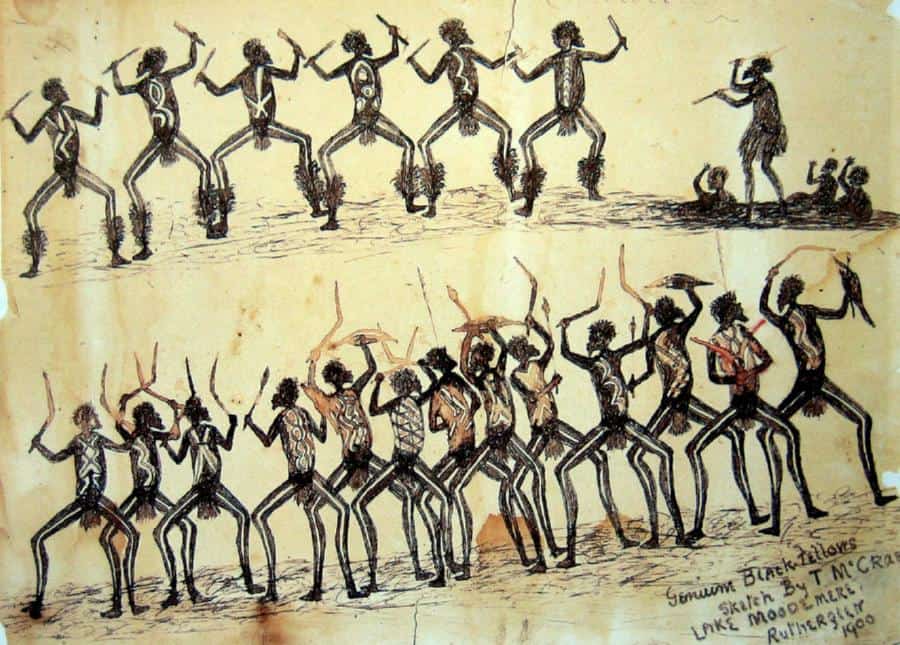
Ceremony and Body Painting
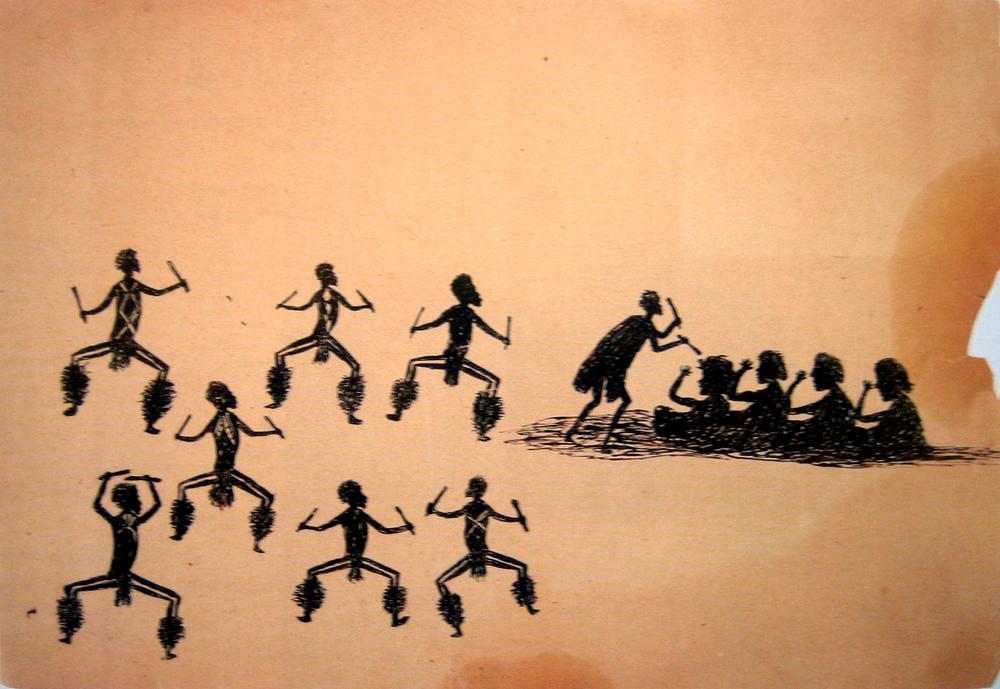
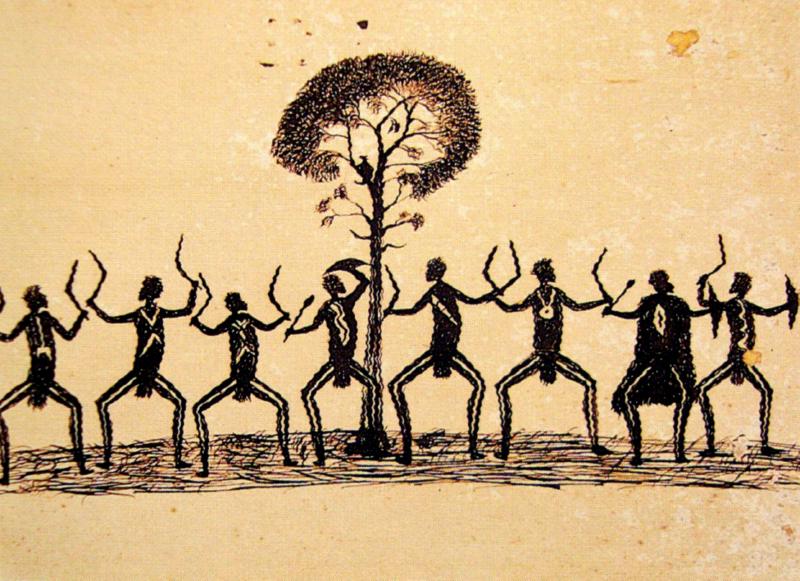
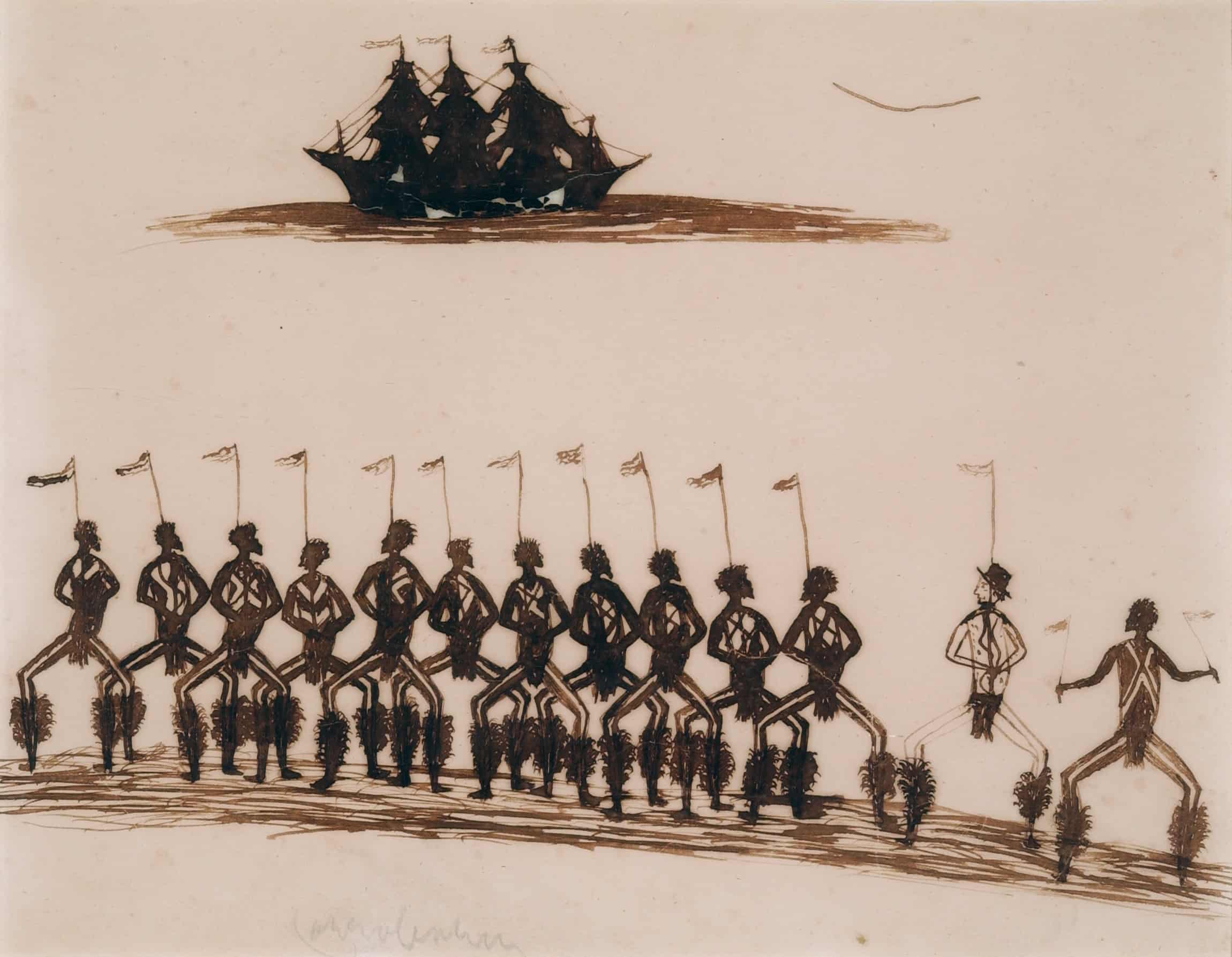
Ceremony was one of McRae’s most persistent subjects.
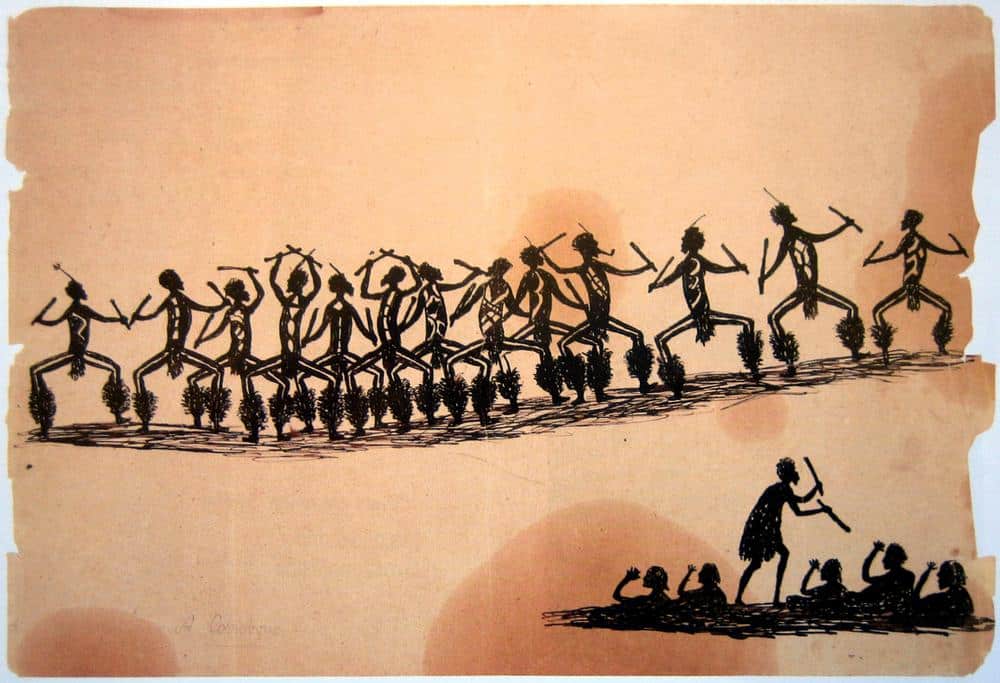
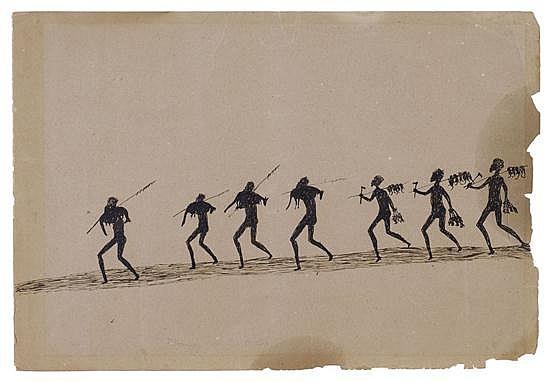
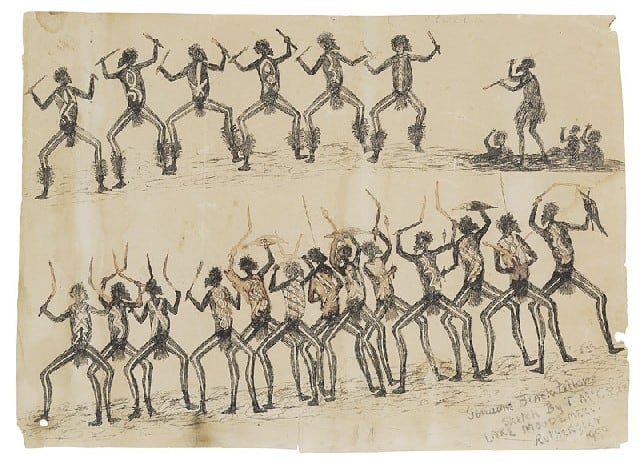
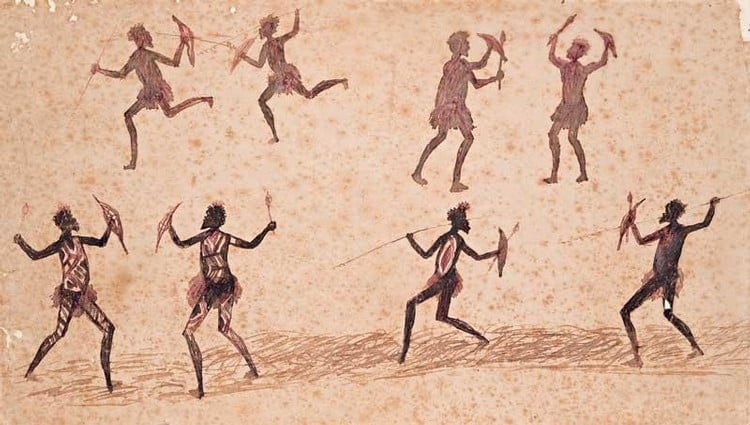
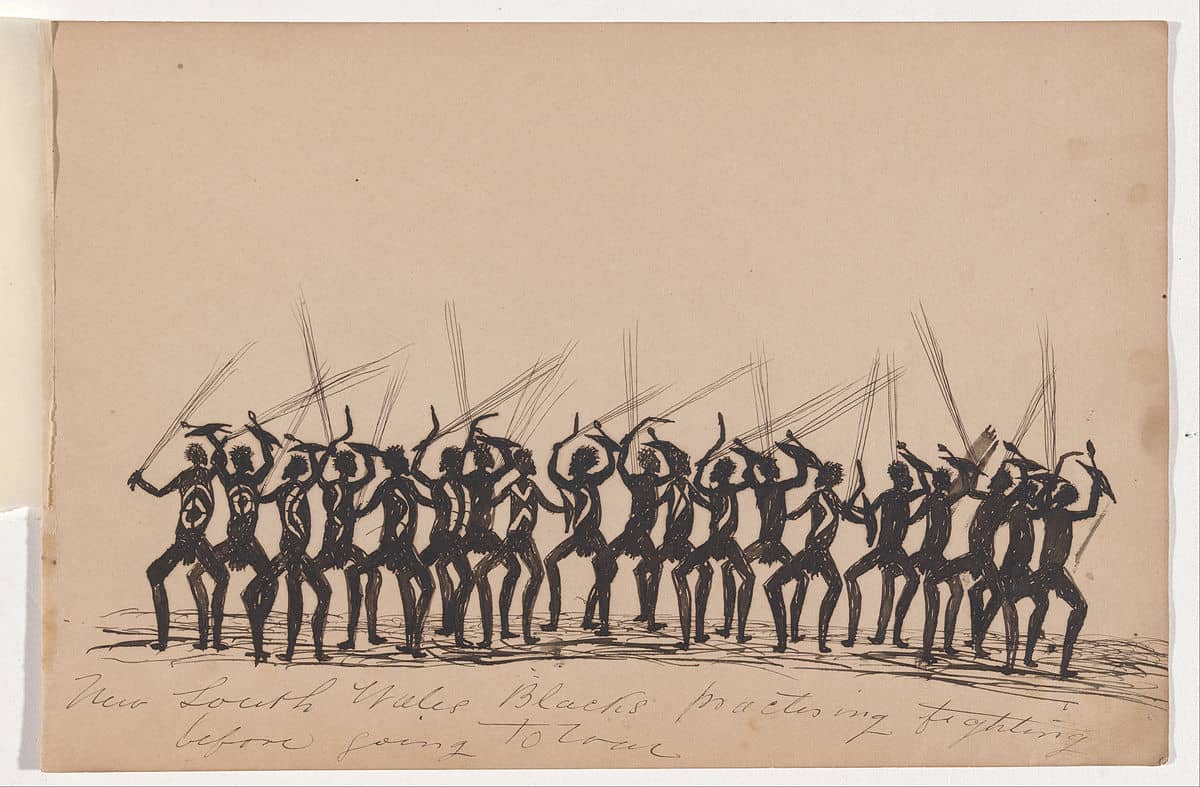
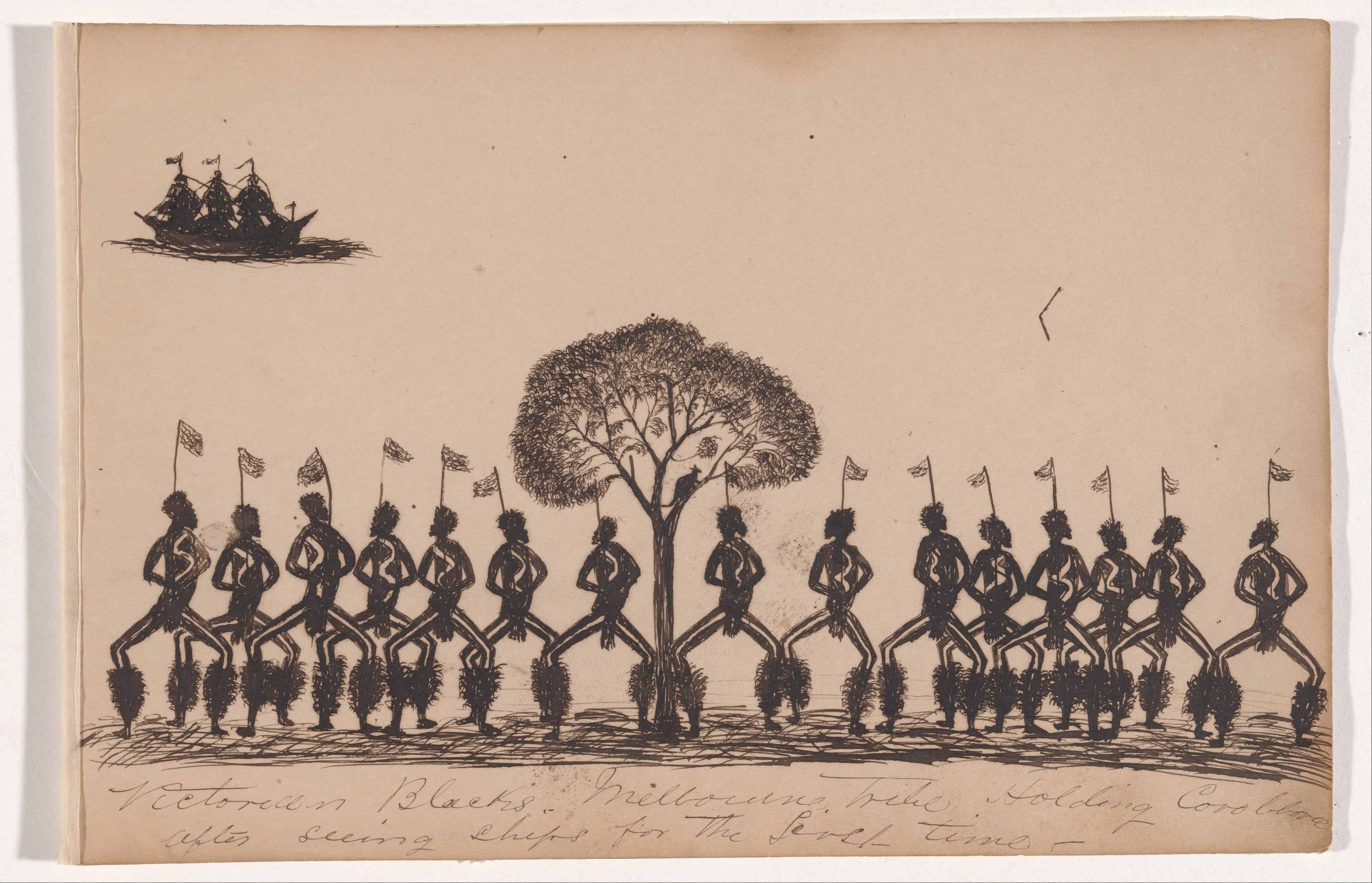
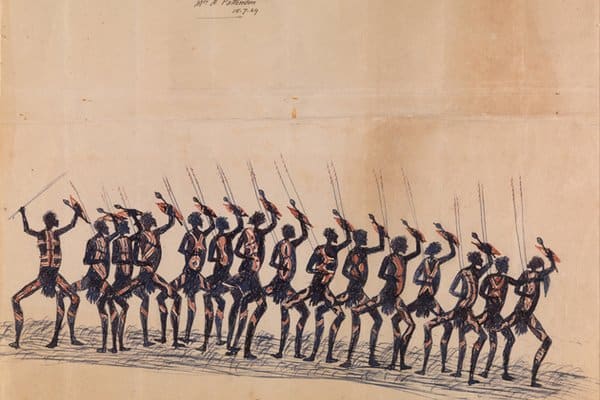
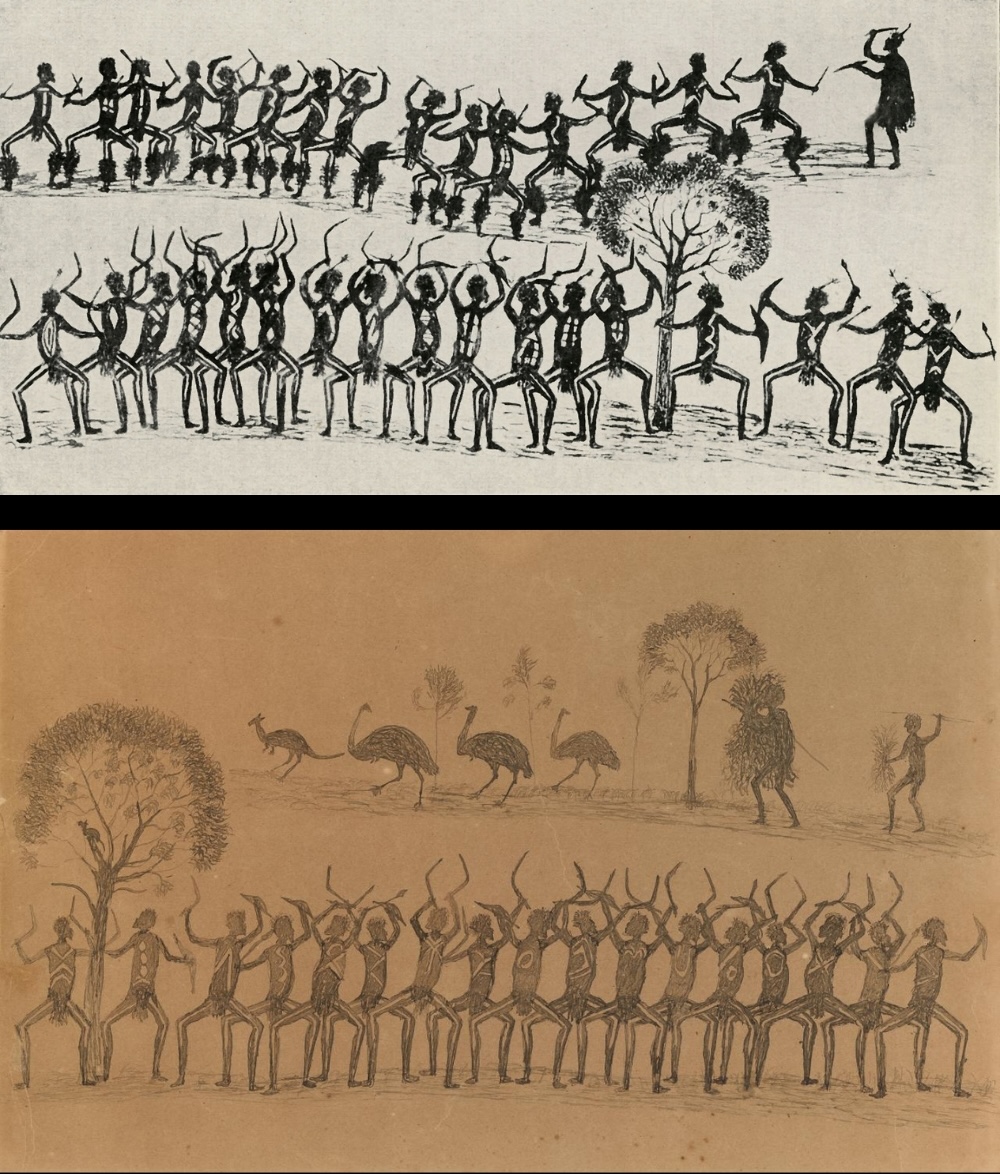
Groups of dancers extend rhythmically across the page, their bent legs, raised arms and ceremonial objects creating a sense of collective movement. Yet individual participants remain distinct.
McRae sometimes opened areas within his dark silhouettes to record painted designs across torsos, arms and legs. Weapons, body decoration and differences in posture distinguish individuals while repeated figures create the larger rhythm of the ceremony.
The result demonstrates how much information McRae could convey with apparently simple means.
Hunting, Fishing and Country
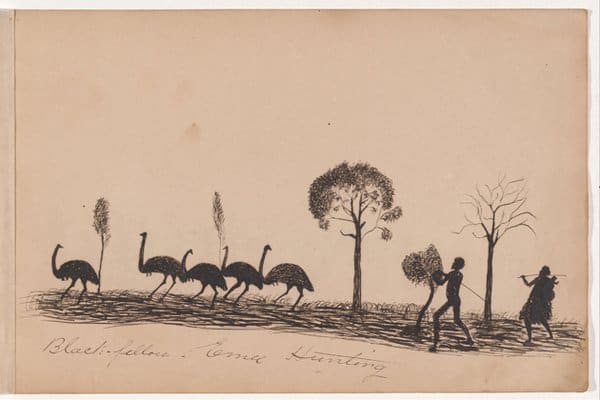
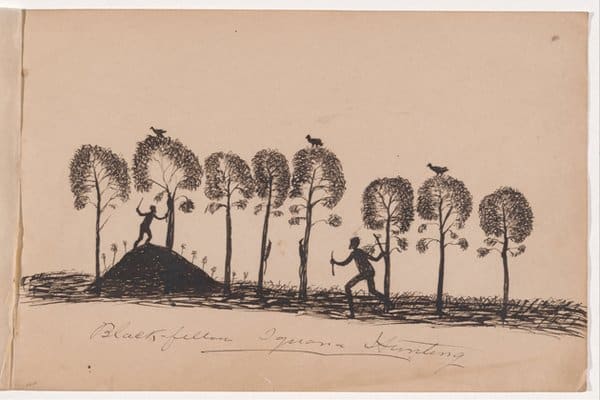
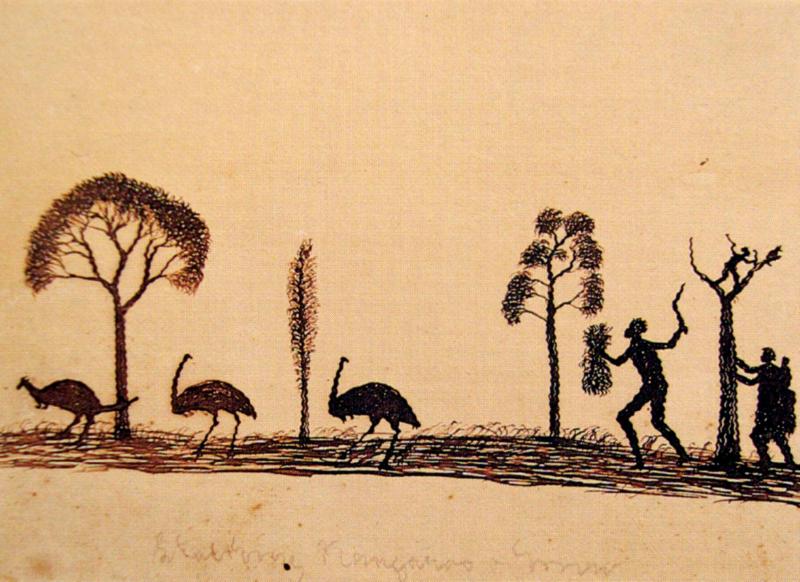
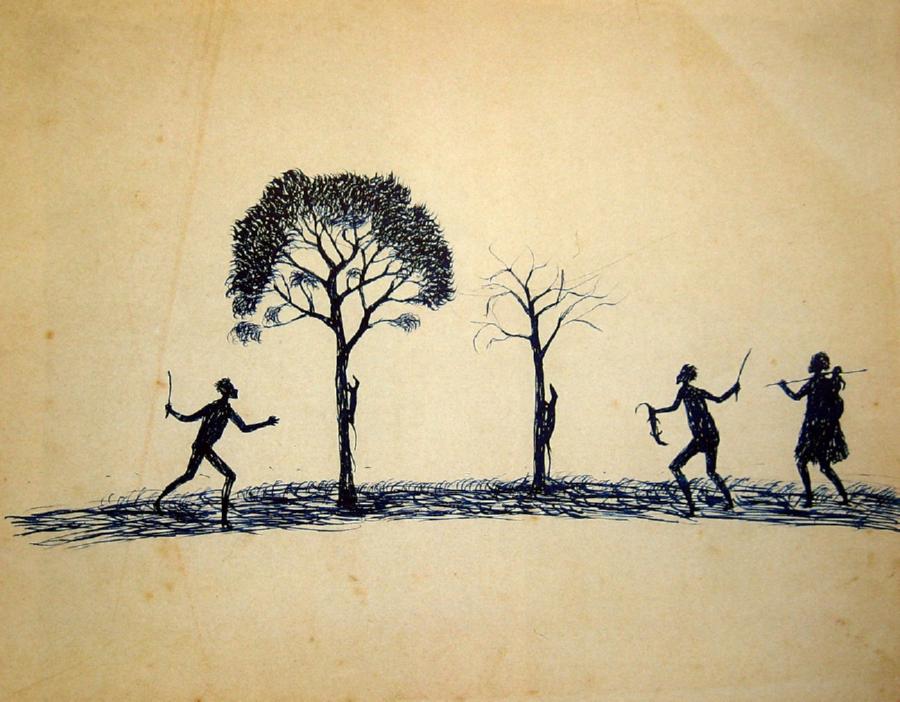
Hunting was another major theme.
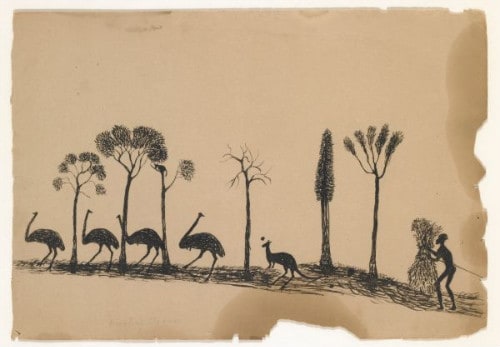
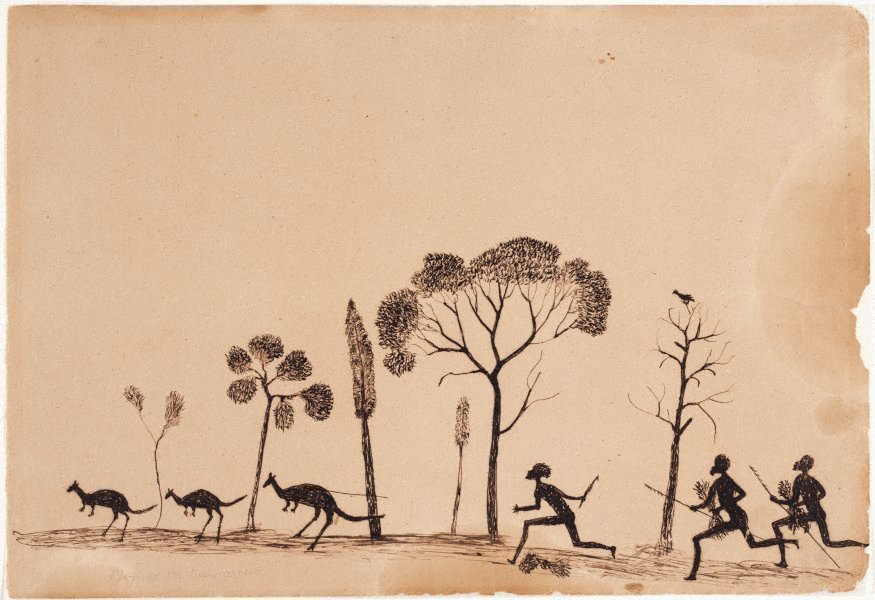
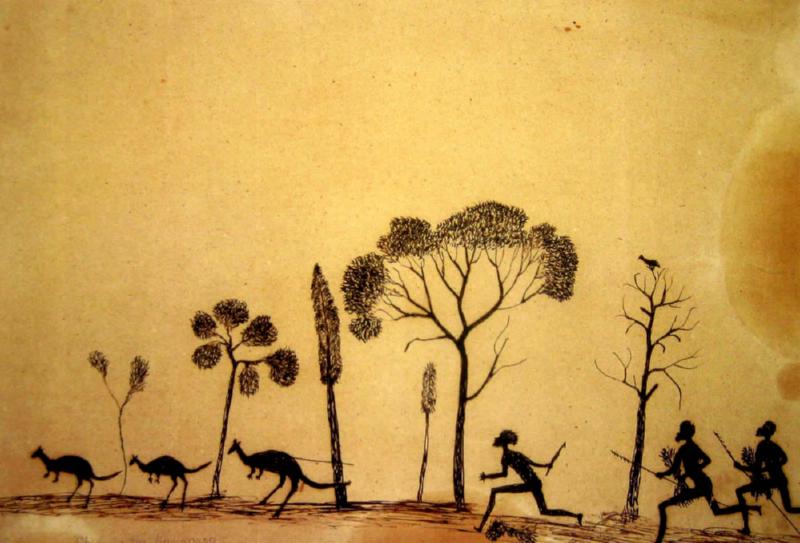
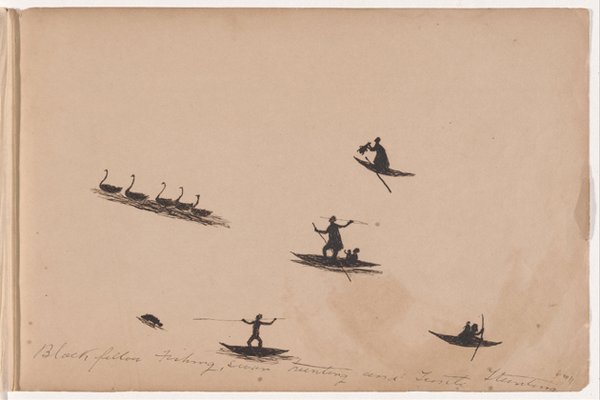
McRae drew people stalking and spearing kangaroos and emus, hunting other animals, fishing and returning with their catch. Some compositions depend upon the visual tension between hunter and prey, with a stalking figure approaching an animal that appears unaware of what is about to happen.
Country is usually indicated sparingly.
Rather than constructing a conventional European landscape, McRae might use several carefully observed trees, vegetation, water or a ground line. These elements establish the setting while keeping people, animals and narrative action at the centre of the composition.
Fighting and Warfare
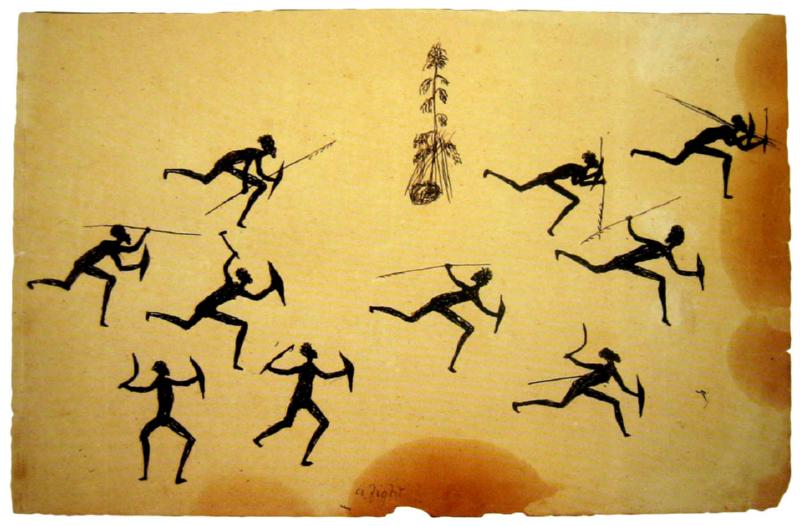
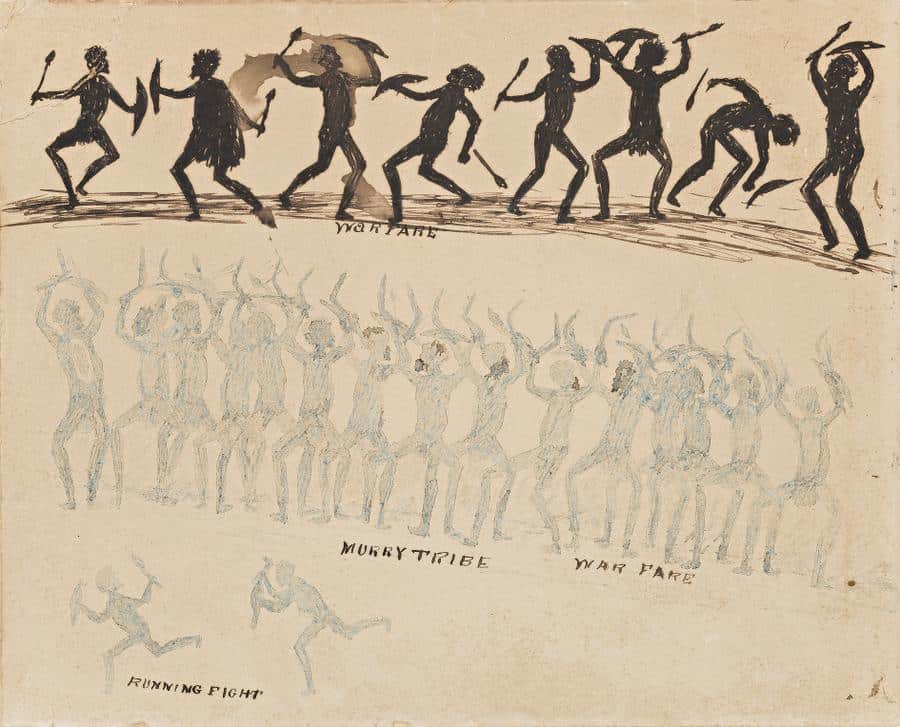
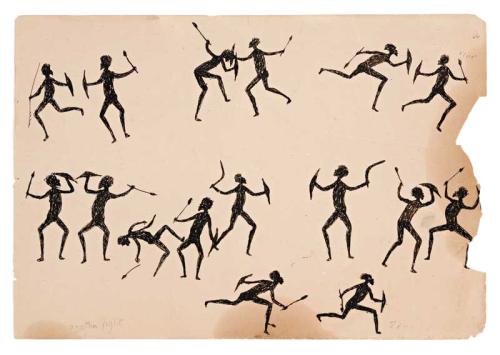
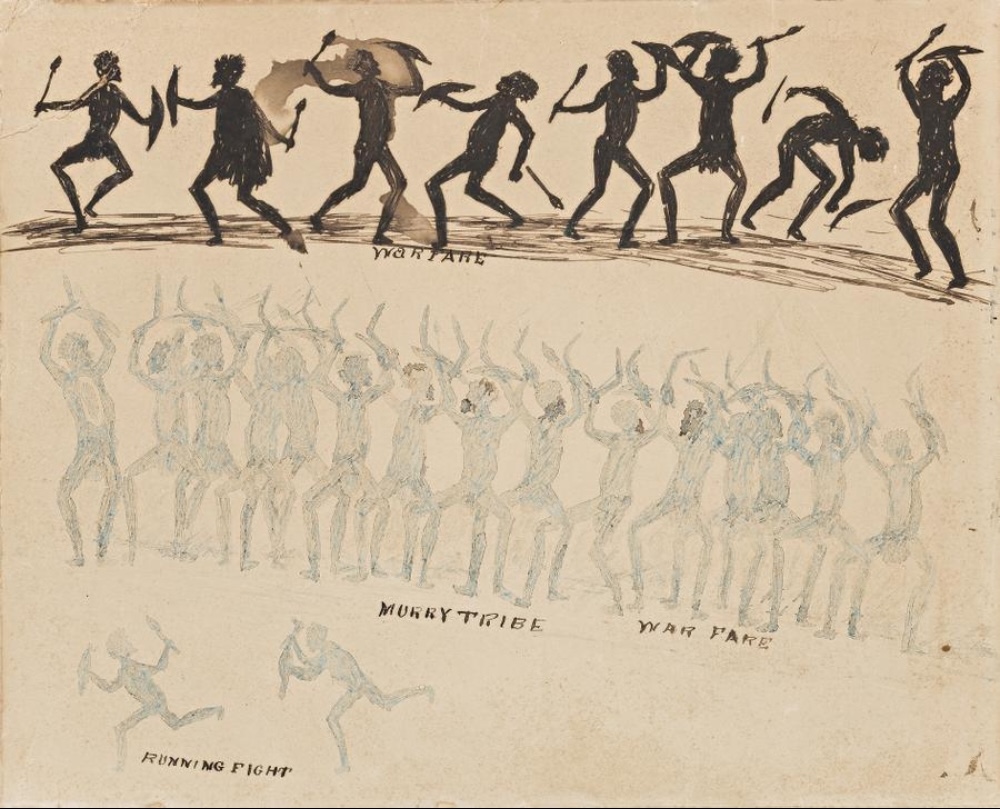
Fighting and warfare produced some of McRae’s most animated drawings.
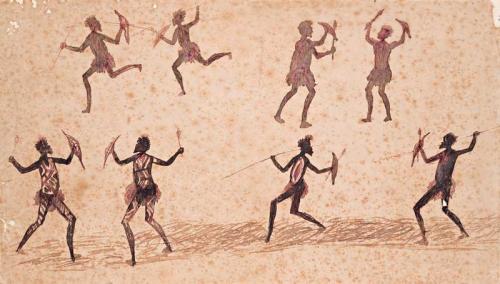
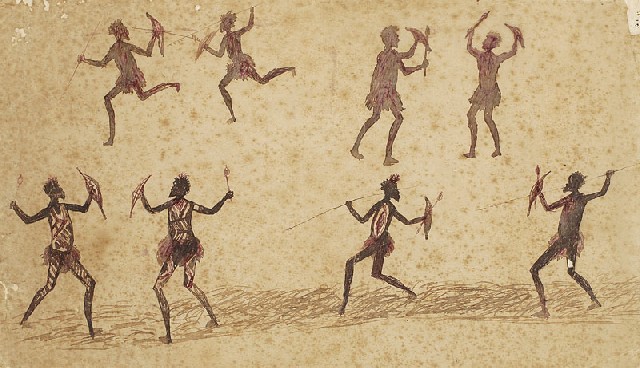
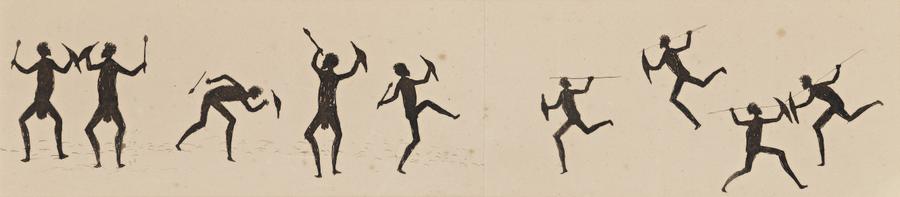
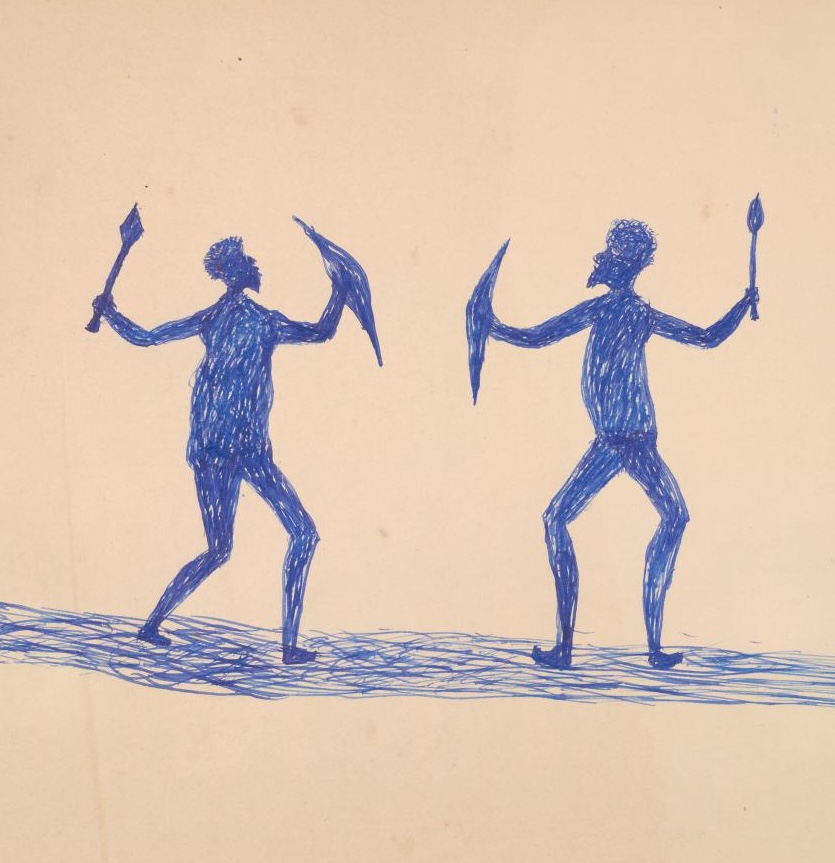
Works such as Duellers, Murray Tribe Warfare and One Tribe Defeated by the Other show individuals or groups armed with spears, shields, boomerangs and clubs. Small differences in posture and gesture make the action immediately understandable.
McRae sometimes recorded painted designs on the bodies of fighters and suggested decoration on their shields.
Andrew Sayers interpreted McRae’s repeated return to ceremony, hunting and fighting as more than the reuse of successful subjects. He saw these recurring themes as an expression of continuing cultural identity and allegiance.
A Changing Colonial World
McRae also drew the changing society around him.
European settlers, pastoralists, horses and Chinese people appear alongside Aboriginal subjects. His drawings therefore combine cultural memory with observation of contemporary nineteenth-century life.
This reversal of viewpoint is important. Much nineteenth-century Australian imagery represents Aboriginal people through European eyes; in McRae’s drawings an Aboriginal artist is also observing and representing the newcomers.
His depictions of Chinese people are especially interesting in this respect. Chinese migration transformed parts of Victoria during and after the gold rushes, and McRae incorporated these new arrivals into his visual account of life in the region.
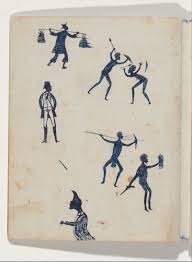
His sketchbooks could range widely across subjects. Ceremony, hunting and fighting appear alongside ships, settlers and encounters between Aboriginal people and newcomers.
William Buckley
McRae’s drawings concerning William Buckley provide one of the clearest examples of his perspective on colonial history.
Buckley was an escaped British convict who lived for more than thirty years among Aboriginal people around Port Phillip before re-entering European colonial society in 1835.
European accounts commonly made Buckley’s eventual return to settler society the culmination of his extraordinary story. McRae shifted the emphasis.
His drawings concentrate instead upon Buckley’s encounters with Aboriginal people and his incorporation into their world. In Buckley’s Escape, different moments in the story unfold across the composition.
McRae was therefore not simply illustrating a European colonial legend. He represented the story from a perspective in which Aboriginal society occupies the centre of the narrative.
Tommy McRae Artwork Values
Works Offered at Auction: 39
Sale Rate: 72%
Highest Sale: $65,000 AUD
Median Sale Price: $26,000 AUD
For individual artworks sizes provenance and details please see the Tommy McRae Page (not yet constructed)
Why Is Tommy McRae Important?
Tommy McRae is important not simply because he was one of Australia’s earliest named Aboriginal artists working on paper, but because his drawings provide Aboriginal authorship of nineteenth-century Australian history.
Like Mickey of Ulladulla, McRae created images from within Aboriginal experience at a time when most published representations of Aboriginal people were produced by Europeans. Ceremony, hunting, fishing and warfare coexist in his work with squatters, horses, Chinese immigrants and episodes from colonial history.
The paper, pens and ink he used were introduced materials, but not the beginning of Aboriginal visual culture. Recent scholarship places McRae within longer south-eastern Aboriginal traditions of line, design and visual storytelling.
McRae was also recognised as an artist during his lifetime. He developed a distinctive style, produced complete sketchbooks and sold directly to people who sought him out. By the 1880s his sketchbooks were described as “much sought after” and their sale contributed to his income.
His career provides an important early chapter in the longer history of Aboriginal artists working with introduced paper-based media, decades before Albert Namatjira achieved national recognition through watercolour.
Most importantly, McRae was not simply a subject within the colonial record. He was one of its authors.
Instead of Europeans simply looking at Aboriginal people, Tommy McRae was also looking back.
Tommy McRae in Public Collections
Tommy McRae’s drawings are preserved in many of Australia’s major national, state and cultural collections. Particularly important are the surviving sketchbooks and groups of related drawings, which allow his work to be understood across sequences rather than only as individual images. Together these collections document the remarkable breadth of his subjects—from ceremony, hunting and warfare to pastoralists, Chinese people and the changing colonial world of the Upper Murray.
Public collections holding works by Tommy McRae include:
- National Gallery of Victoria, Melbourne — 28 works are currently catalogued online, including the 1875 Roderick Kilborn notebook, a c.1891 sketchbook, Ceremony; Hunting emu, Chinesemen, hunting scenes, ceremonies, fighting figures and drawings of squatters.
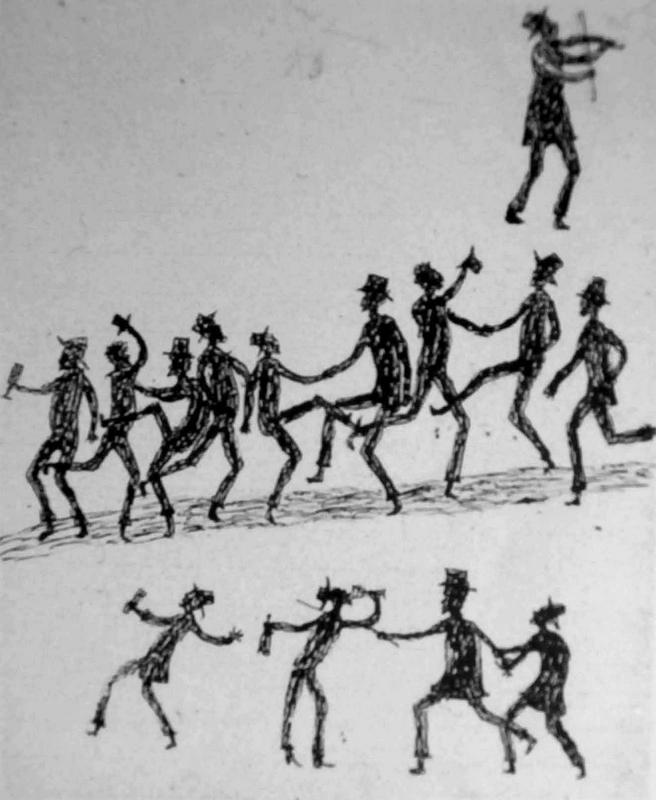
- National Gallery of Australia, Canberra — drawings and sketchbook material, including Drunken revellers. The NGA has continued to develop its McRae holdings, including the acquisition of three significant drawings in 2016–17.
- National Museum of Australia, Canberra — including Buckley’s Escape and Murray Tribal Warfare.
- South Australian Museum, Adelaide — Echukia Tribe Corrobery Oldin Times, a black-ink drawing of ten Aboriginal men dressed for ceremony and carrying spears and shields, from the Una Sybella Teague Collection.
- Art Gallery of New South Wales, Sydney — including Spearing the kangaroo, c.1880s–90s.
- State Library Victoria, Melbourne — drawings and sketchbook material by McRae.
- Koorie Heritage Trust, Melbourne — McRae drawings form part of its Picture Collection of historic and contemporary Koorie art.
- Potter Museum of Art, University of Melbourne — Before the Fight – A War Dance, c.1890, acquired for the University Art Collection in 2024
Further Reading
Andrew Sayers, Aboriginal Artists of the Nineteenth Century, Oxford University Press in association with the National Gallery of Australia, 1994.
Judith Ryan, Tommy McRae: Aboriginal Artist, National Gallery of Victoria, Melbourne, 1994.
Andrew Sayers, Australian Art, Oxford University Press, 2001, particularly p. 74.
Tommy McRae images
The following images are not the complete known work by this artist but give a good idea of his style.