Why Are Papunya Boards Historically Important?
Papunya Boards are historically important because they represent the beginning of the contemporary Western Desert Art movement. Created primarily during 1971 and 1972, they are the earliest portable paintings produced at Papunya and record the moment when ancient ceremonial traditions were first expressed on permanent surfaces using acrylic paint. Few Australian artworks can be linked so directly to the birth of an entirely new artistic movement.
Before Papunya Boards were created, Western Desert artistic traditions were expressed mainly through ceremonial body painting, sand mosaics, carved sacred objects and other temporary forms associated with ceremony. While these traditions had existed for countless generations, they were not intended to become permanent works of art. Papunya Boards marked the first time many of these visual traditions were adapted into portable paintings that could survive beyond the ceremony itself.
The paintings also changed the way Aboriginal art was understood by the wider Australian community. They demonstrated that the symbolic imagery of the Western Desert was part of a sophisticated visual language connected to Country, ancestral law and cultural knowledge. In doing so, Papunya Boards helped establish Aboriginal art as one of Australia’s major artistic traditions rather than simply an object of anthropological interest.
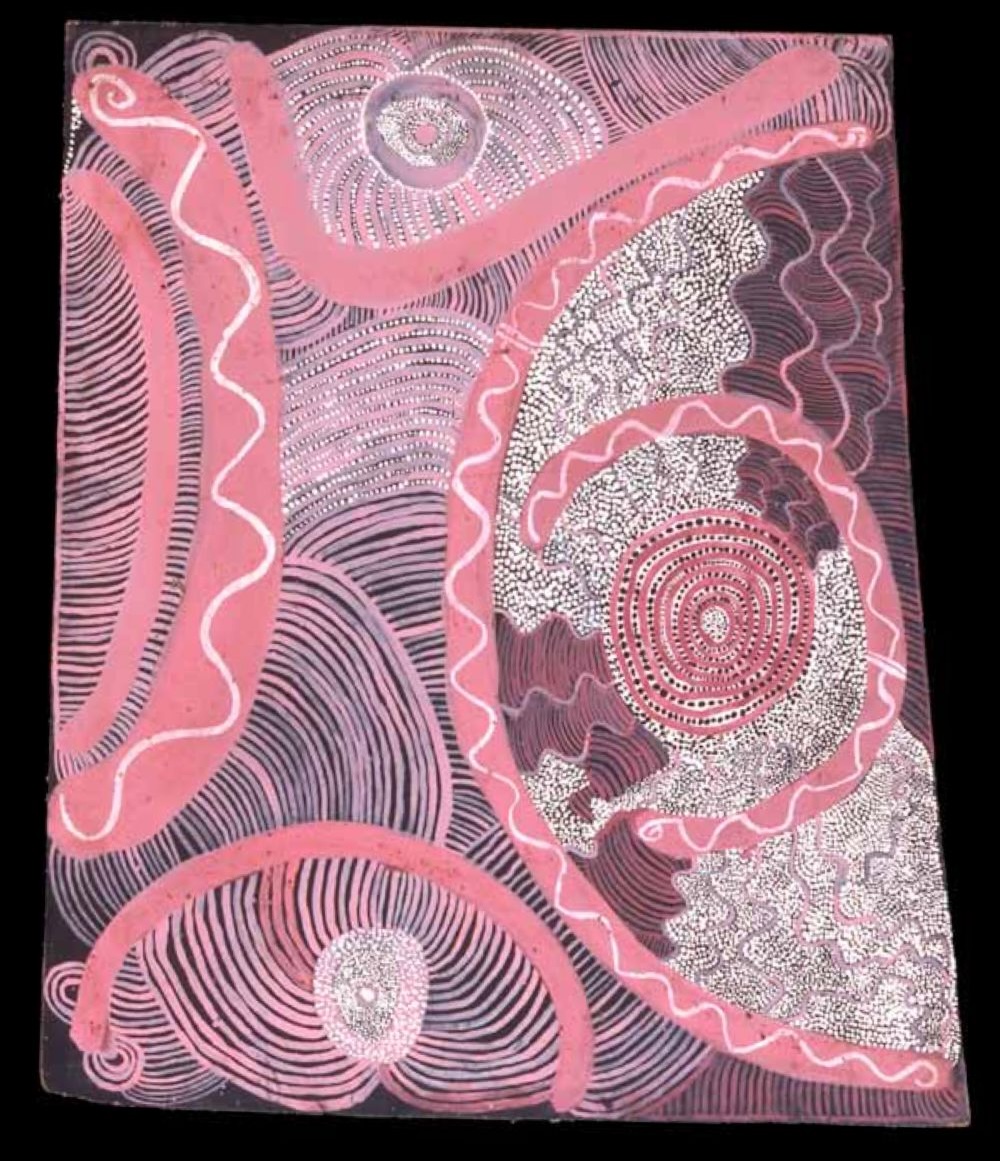
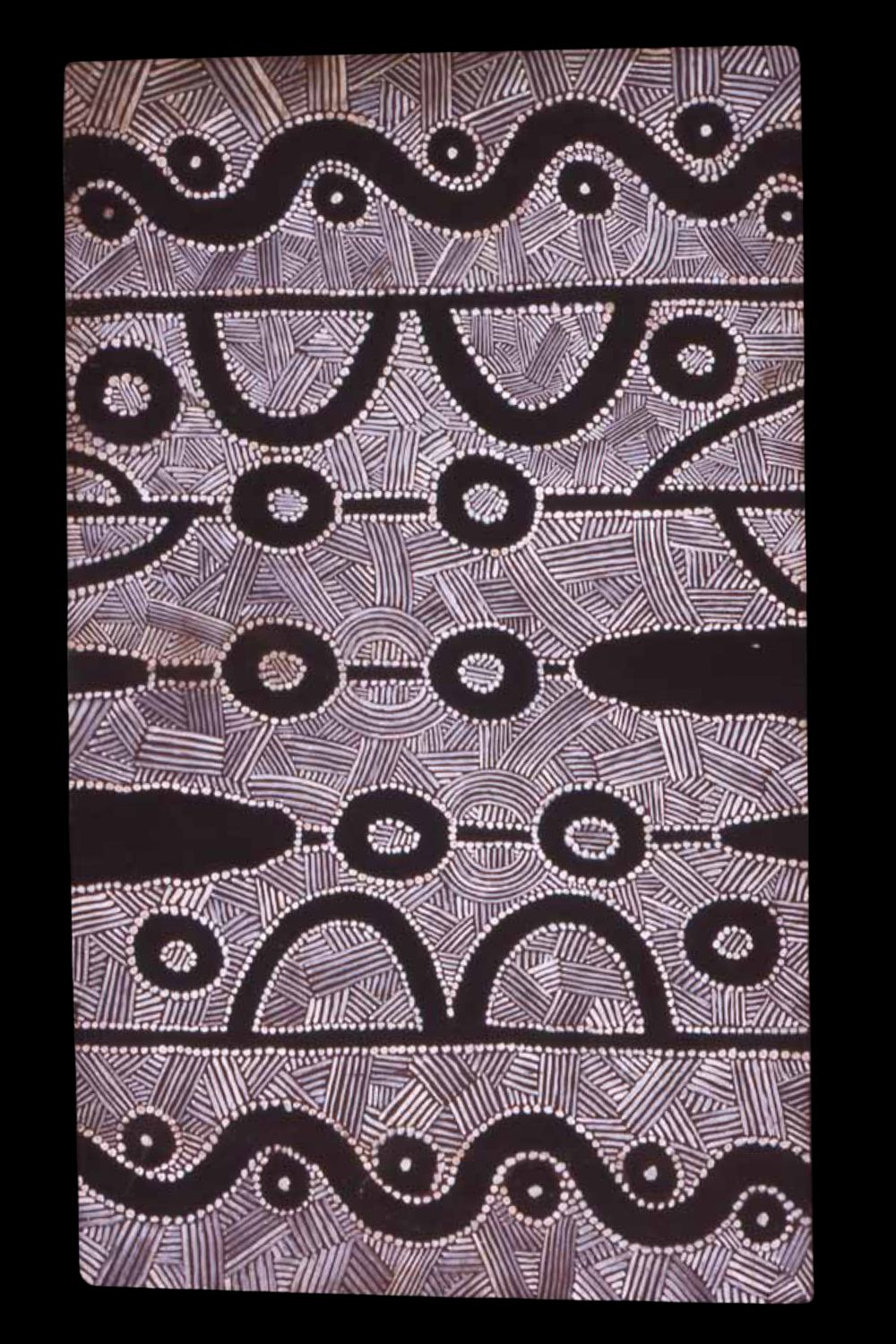
Their historical importance extends well beyond the settlement of Papunya. The success of these early paintings encouraged artists throughout Central Australia to begin painting with acrylics, leading to the development of regional painting movements across communities including Yuendumu, Balgo, Utopia, Kintore and Kiwirrkurra. What began on a handful of composition boards grew into the internationally recognised movement now known as Western Desert Art.
Papunya Boards are also historically significant because relatively few were produced. Within only a few years, artists had largely replaced composition board with canvas, making the board paintings a brief but defining phase in the movement’s development. Each surviving board therefore represents an irreplaceable record of those formative years.
Today, many of the finest Papunya Boards are preserved in museums, public galleries and important private collections. They are valued not simply for their artistic qualities but because they document one of the most important developments in Australian cultural history—the emergence of contemporary Western Desert painting from one of the world’s oldest continuing artistic traditions.
Continue reading:
All images in this article are for educational purposes only.
This site may contain copyrighted material the use of which was not specified by the copyright owner.