Who Painted the First Papunya Boards
DRAFT
The first Papunya Boards were painted by a remarkable group of senior Aboriginal men living at Papunya in the Northern Territory during 1971 and 1972. Although they came from different language groups and brought their own Dreaming stories, ceremonial traditions and artistic approaches, together they created the first portable paintings of what would become the contemporary Western Desert Art movement.
Kaapa Mbitjana Tjampitjinpa is widely regarded as one of the founders of the Papunya painting movement. His 1971 success in winning the Caltex Art Award in Alice Springs brought unprecedented public attention to contemporary Aboriginal painting and demonstrated that Western Desert art could be recognised alongside mainstream Australian art.
Around 40 Aboriginal artists are known to have painted Papunya Boards between 1971 and 1972. Some became leading figures whose paintings defined the emerging Western Desert art movement, while others created only a handful of works, making their surviving paintings exceptionally rare today.
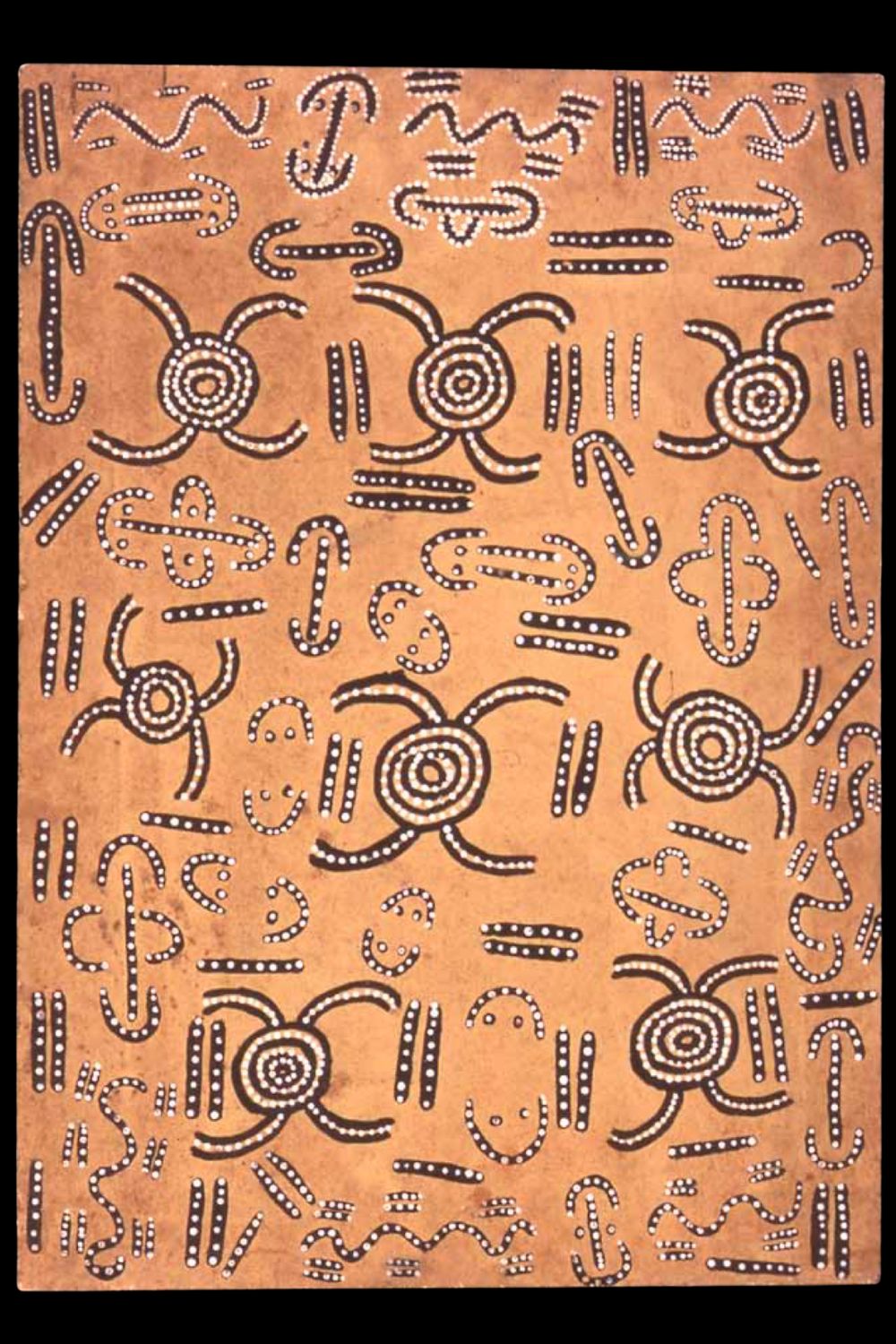
Johnny Warangkula Tjupurrula
Johnny Warangkula Tjupurrula became one of the movement’s most innovative painters. His remarkable Water Dreaming paintings introduced flowing paint surfaces and atmospheric dotting that would profoundly influence the development of later Western Desert painting.
Clifford Possum Tjapaltjarri
Clifford Possum Tjapaltjarri was one of the original Papunya painters and later became one of Australia’s most celebrated Aboriginal artists. His complex ceremonial paintings and exceptional artistic ability helped establish the reputation of the Papunya movement both nationally and internationally.
Tim Leura Tjapaltjarri
Tim Leura Tjapaltjarri was one of the movement’s finest painters. His works combined precise ceremonial linework with sophisticated composition and later incorporated some of the most accomplished dot painting of the early Papunya period.
Anatjari Tjakamarra
Anatjari Tjakamarra was among the earliest Papunya artists and produced some of the movement’s most important early board paintings. His restrained compositions and strong ceremonial imagery make his works highly regarded by collectors and museums today.
Uta Uta Tjangala
Shorty Lungkata Tjungurrayi
Shorty Lungkata Tjungurrayi was a Pintupi artist and one of the original Papunya painters who helped establish the contemporary Western Desert art movement. He painted ancestral Dreaming stories onto the early Papunya Boards during 1971–1972 and later became renowned for his bold, minimalist compositions depicting Tingari journeys and the spiritual landscape of his Country.
Mick Namarari Tjapaltjarri
Mick Namarari Tjapaltjarri developed a quieter and more contemplative approach than many of his contemporaries. His subtle compositions and extraordinary sense of space would later influence generations of Western Desert artists.
Old Walter Tjampitjinpa
Old Walter Tjampitjinpa was one of the original Papunya painters and a senior Pintupi lawman whose deep ceremonial knowledge influenced the development of the early Western Desert art movement. Renowned for his Water and Rain Dreaming paintings, he became an important mentor to younger artists, including David Corby Tjapaltjarri, and his distinctive style is evident in many of the earliest Papunya Boards.
Long Jack Phillipus Tjakamarra
Long Jack Phillipus Tjakamarra was one of the original Papunya painters and a senior custodian of Western Desert cultural traditions. His firsthand knowledge of Dreaming stories makes his interpretation of early Papunya Boards particularly valuable.
Charlie Tjungurrayi
Charlie Tjungurrayi was one of the original Papunya painters and an important member of the early Western Desert art movement. A Pintupi artist, he painted ancestral Dreaming stories connected to his Country and was among the first generation of Aboriginal artists to transfer ceremonial designs onto composition boards at Papunya during 1971–1972.
Billy Stockman Tjapaltjarri
Billy Stockman Tjapaltjarri was one of the founding Papunya painters and a key figure in the birth of the contemporary Western Desert art movement. Best known for assisting with the famous Honey Ant Dreaming mural at Papunya in 1971, he painted his own Dreaming stories on the early Papunya Boards and later became a respected senior artist whose cultural knowledge helped identify and interpret many of the movement’s earliest paintings.
Old Mick Wallankarri Tjakamarra
Old Mick Wallankarri Tjakamarra was one of the original Papunya painters and a senior custodian of Western Desert ceremonial traditions. A respected Tjakamarra elder, he painted ancestral Dreaming stories onto the early Papunya Boards during 1971–1972, contributing to the foundations of the contemporary Western Desert art movement and preserving important cultural knowledge through painting.
Timmy Payungka Tjapangati
Timmy Payungka Tjapangati was a Pintupi artist and one of the original Papunya painters who participated in the formative years of the Western Desert art movement. He painted his ancestral Dreaming stories onto the early Papunya Boards during 1971–1972 and later became recognised for his powerful depictions of Tingari narratives and their connections to Country.
Other Papunya board painters
Legacy
The approximately 40 artists who painted Papunya Boards between 1971 and 1972 laid the foundations of the contemporary Western Desert art movement. Although their styles differed, together they transformed ancient ceremonial traditions into one of Australia’s most important artistic movements. Today, the surviving Papunya Boards are regarded as among the most historically significant works in Aboriginal Australian art and remain highly sought after by museums and collectors worldwide.
Continue reading:
- What are Papunya Boards
- When were Papunya Boards painted?
- Why were Papunya Boards painted on board?
- Why are Papunya Boards historically important?
- How much are Papunya Boards worth
- How do you identify a Papunya Board
- What do Papunya Boards Depict?
- Where are most of the Important Papunya Boards today?
All images in this article are for educational purposes only.
This site may contain copyrighted material the use of which was not specified by the copyright owner.