Why Were Papunya Boards Painted on Board?
Papunya Boards were painted on composition board, Chipboard, Masonite and other building materials because these were the most practical and readily available painting surfaces at Papunya during the early years of the movement. When Aboriginal artists first began painting with acrylics in 1971, professional artists’ canvases were not available in this area and expensive and difficult to obtain in the remote Central Australian settlement.
Instead of waiting for specialised art materials, the artists used whatever flat surfaces could be sourced locally. Offcuts of composition board, sheets of hardboard and other building products provided inexpensive, durable supports that accepted acrylic paint well. These materials made it possible for artists to begin producing portable paintings immediately.
The choice of board was therefore one of practicality rather than artistic preference. The significance of the paintings lay in the cultural knowledge they contained, not in the material on which they were painted. The boards simply provided a permanent surface onto which traditional ceremonial imagery could be transferred.
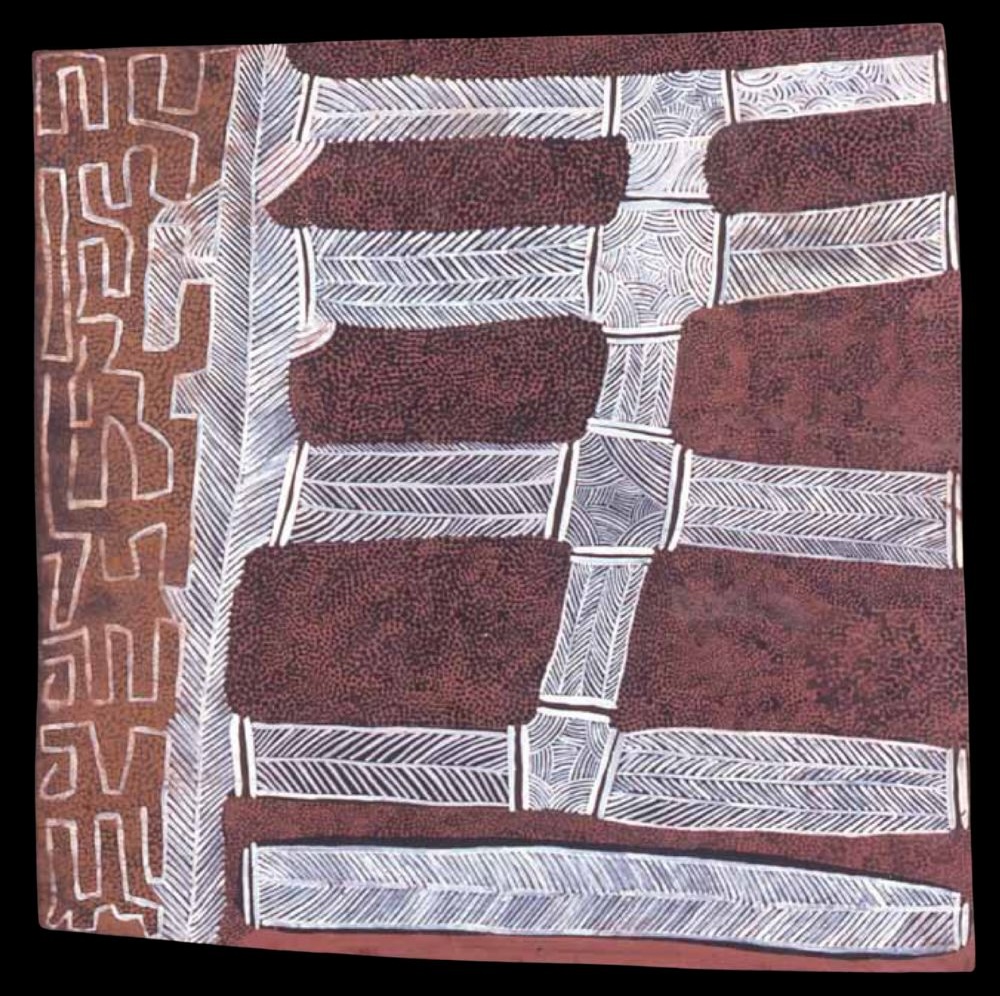
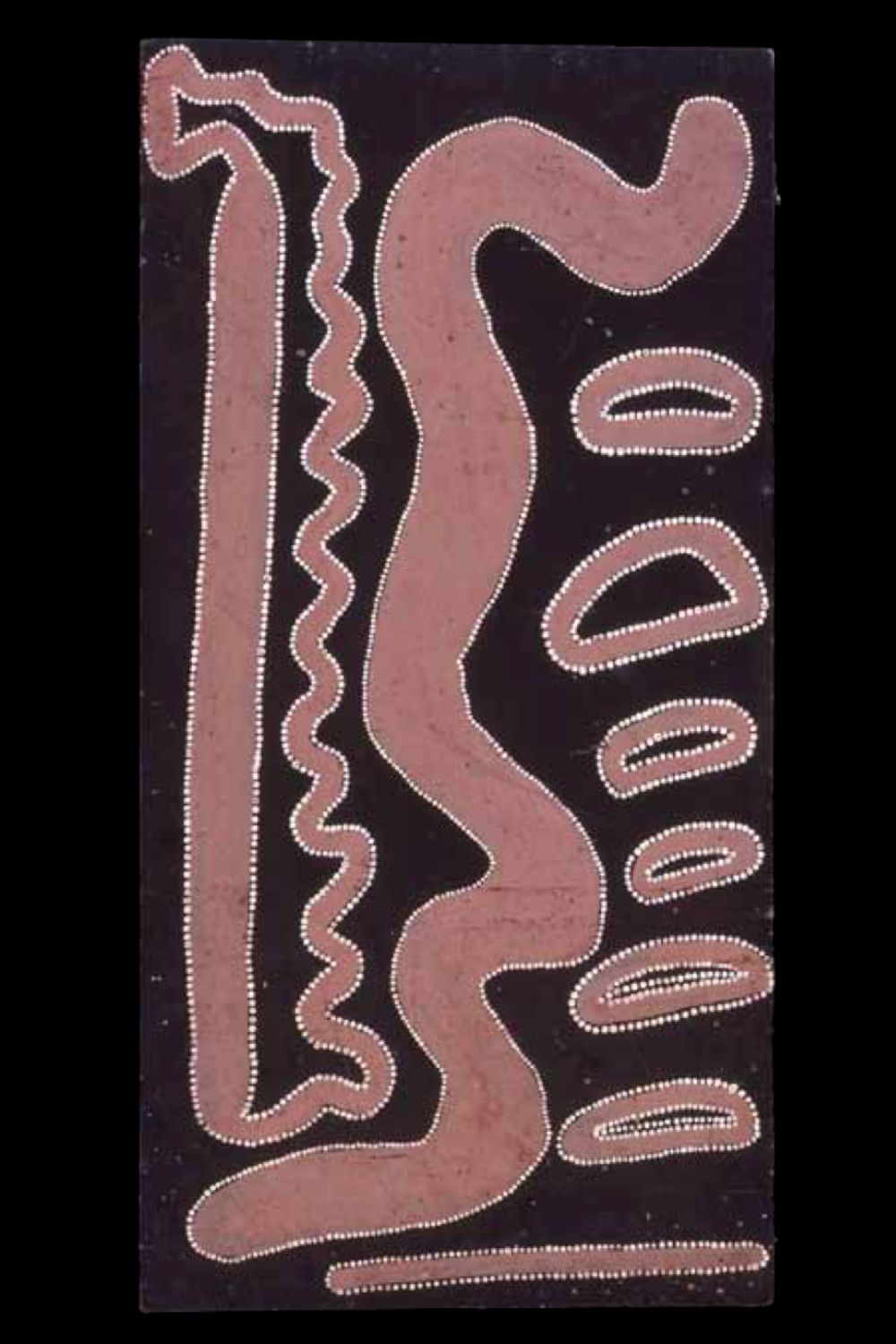
Composition board also offered advantages for the first generation of Papunya artists. Its rigid surface was easy to paint on, it did not require stretching like canvas, and it could be cut into manageable sizes. The relatively small dimensions of many early Papunya Boards reflect both the size of the available building materials and the experimental nature of the movement.
As interest in the paintings grew, artists increasingly adopted stretched canvas. Canvas was lighter, easier to transport, available in larger sizes and more suitable for galleries and exhibitions. By the mid-1970s it had largely replaced composition board as the preferred painting surface throughout the Western Desert Art.
Today, the use of composition board and hardboard has become one of the defining characteristics of the earliest Papunya paintings. Although the artists later embraced canvas, the simple building materials used during 1971 and 1972 have become an important part of the identity of genuine Papunya Boards and serve as a reminder of the humble beginnings of one of Australia’s greatest artistic movements.
Continue reading:
All images in this article are for educational purposes only.
This site may contain copyrighted material the use of which was not specified by the copyright owner.