Where Are the Most Important Papunya Boards Today?
Many of the world’s most important Papunya Boards are preserved in Australian museums, public galleries, universities and major private collections. Because relatively few boards were produced during the formative years of the movement, institutions have worked to preserve these historically significant paintings for future generations rather than allowing them to disappear into private hands.
One of the largest and most important collections is held by the National Museum of Australia in Canberra. The Museum cares for more than 200 Papunya paintings and artefacts, including one of the world’s most significant collections of early Papunya Art. Many of these paintings were originally acquired by the Aboriginal Arts Board during the 1970s before being transferred to the Museum in 1990, where they continue to document the birth of contemporary Western Desert painting.
Another collection of exceptional importance is the Papunya Permanent Collection at the Australian Museum in Sydney. Consisting of 94 early paintings, the collection was preserved as a single archive to document the earliest years of the Papunya movement. It records the transition from paintings on composition board and other building materials to the larger canvases that followed and is regarded as one of the most important research collections of early Western Desert Art.ks, making their surviving paintings exceptionally rare today.
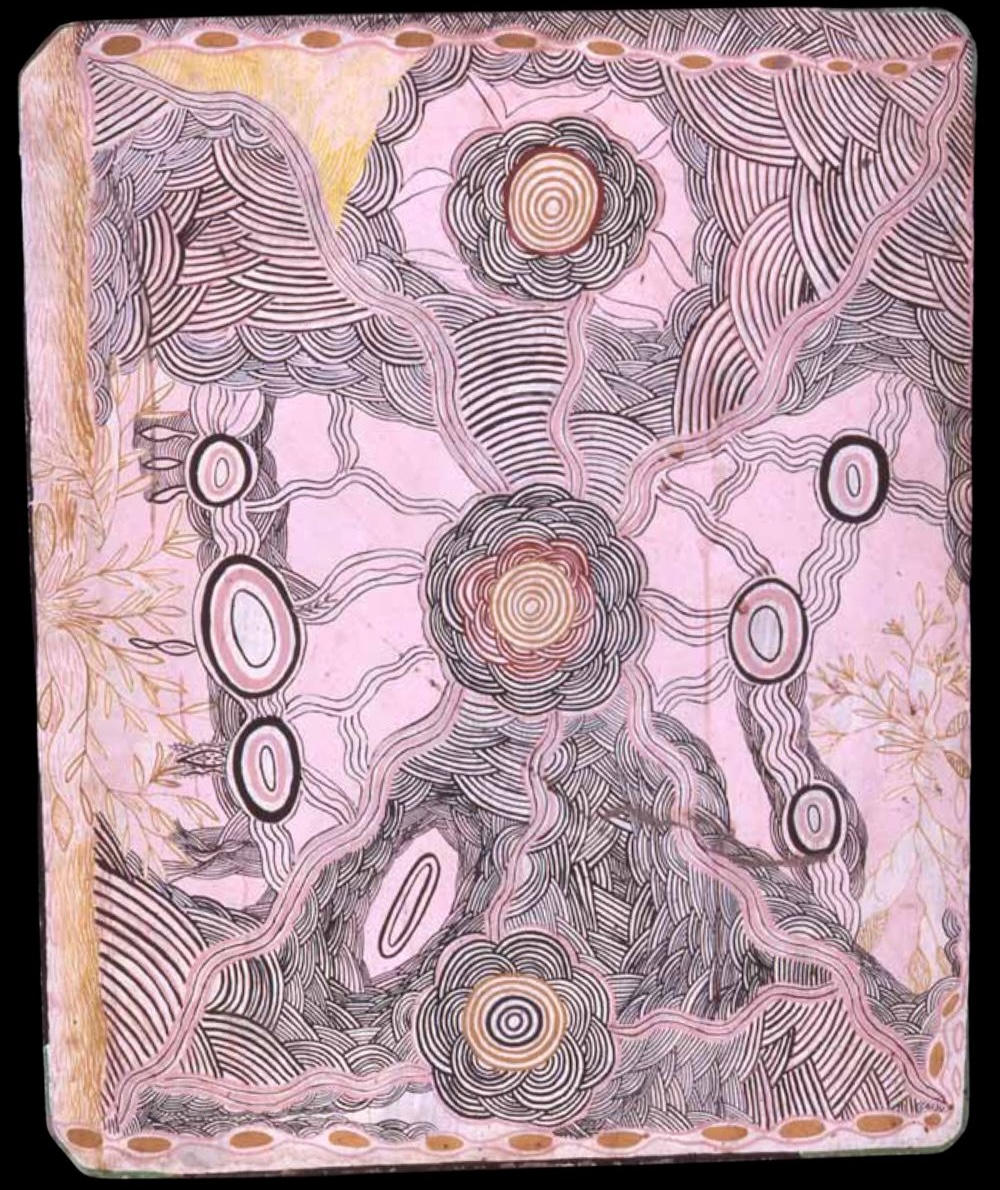
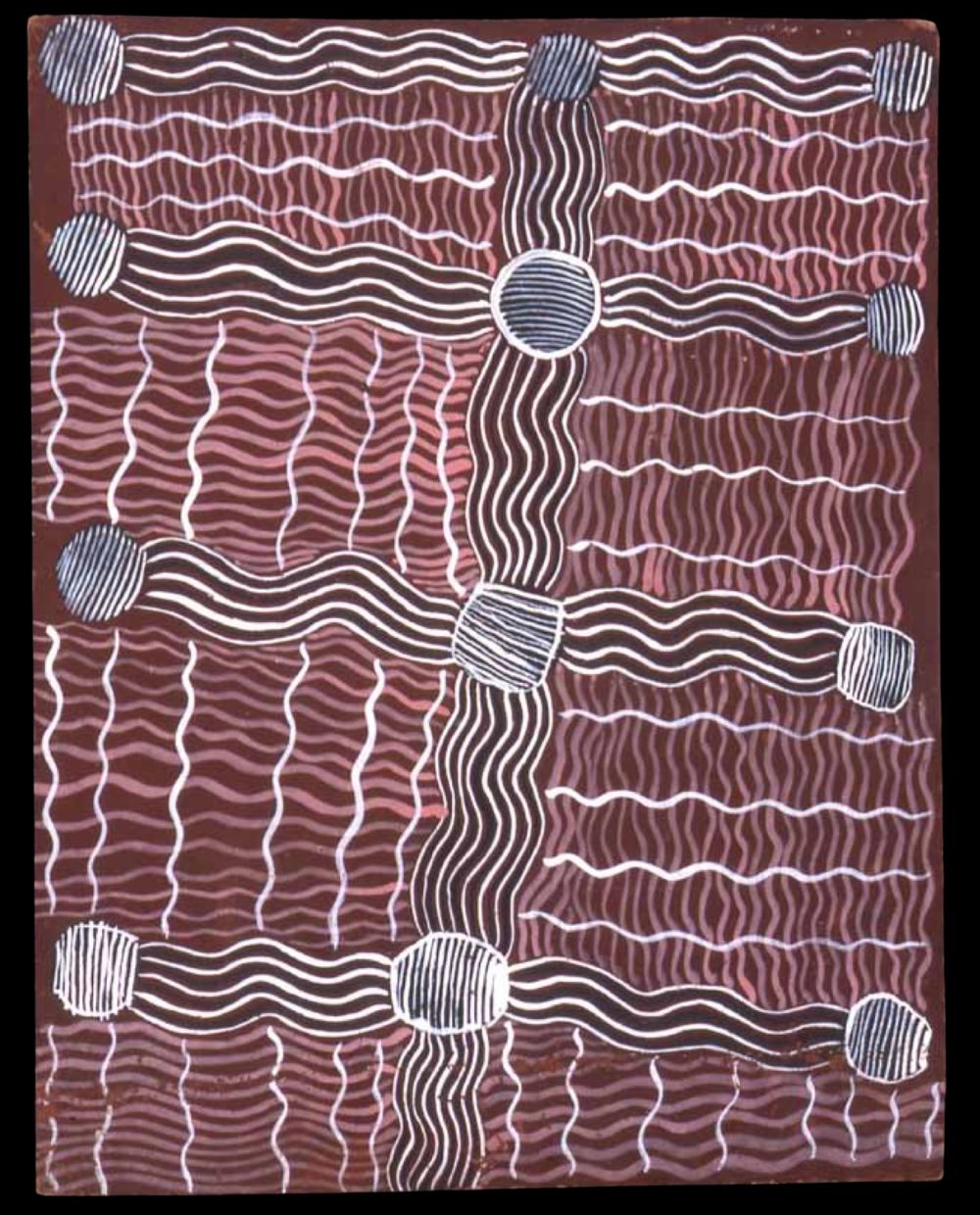
The Flinders University Museum of Art in Adelaide also holds one of Australia’s finest collections of early Papunya Boards. Acquired largely in 1980, the collection contains more than one hundred nationally significant board paintings by many of the movement’s pioneering artists, making it an invaluable resource for researchers and historians of Aboriginal art.
Important Papunya Boards are also held by major state galleries, university museums and significant private collections throughout Australia. Institutions such as the National Gallery of Australia, the National Gallery of Victoria and the Art Gallery of New South Wales include important early Papunya paintings within their broader collections of Aboriginal Australian art, while internationally significant examples have entered museums and private collections overseas.
Because so many of the finest Papunya Boards are now held permanently by public institutions, relatively few become available on the open market. This scarcity contributes significantly to their desirability among collectors and helps explain why important examples continue to achieve strong prices when they do appear for sale.
For anyone interested in the origins of contemporary Western Desert Art, these museum collections provide an unparalleled opportunity to study the paintings that transformed Australian art. They preserve not only remarkable works by pioneering Aboriginal artists but also the story of one of the most important artistic movements of the twentieth century.
Continue reading:
All images in this article are for educational purposes only.
This site may contain copyrighted material the use of which was not specified by the copyright owner.