What Do Papunya Boards Depict?
Papunya Boards depict Dreaming stories, ancestral journeys and Country. Rather than painting landscapes in a European sense, the artists recorded places, ceremonies and ancestral events that are central to Aboriginal cultural life. Every genuine Papunya Board represents a particular Dreaming for which the artist held cultural rights and responsibilities.
One of the most common subjects found in the earliest Papunya Boards is the Water Dreaming associated with Kalipinypa, one of the most important ceremonial water sites in Pintupi Country. Paintings by Walter Tjampitjinpa and Johnny Warangkula Tjupurrula show waterholes, rain, clouds, lightning and water flowing across the desert after heavy storms. Concentric circles often represent waterholes, while flowing lines depict rainwater moving through the landscape.
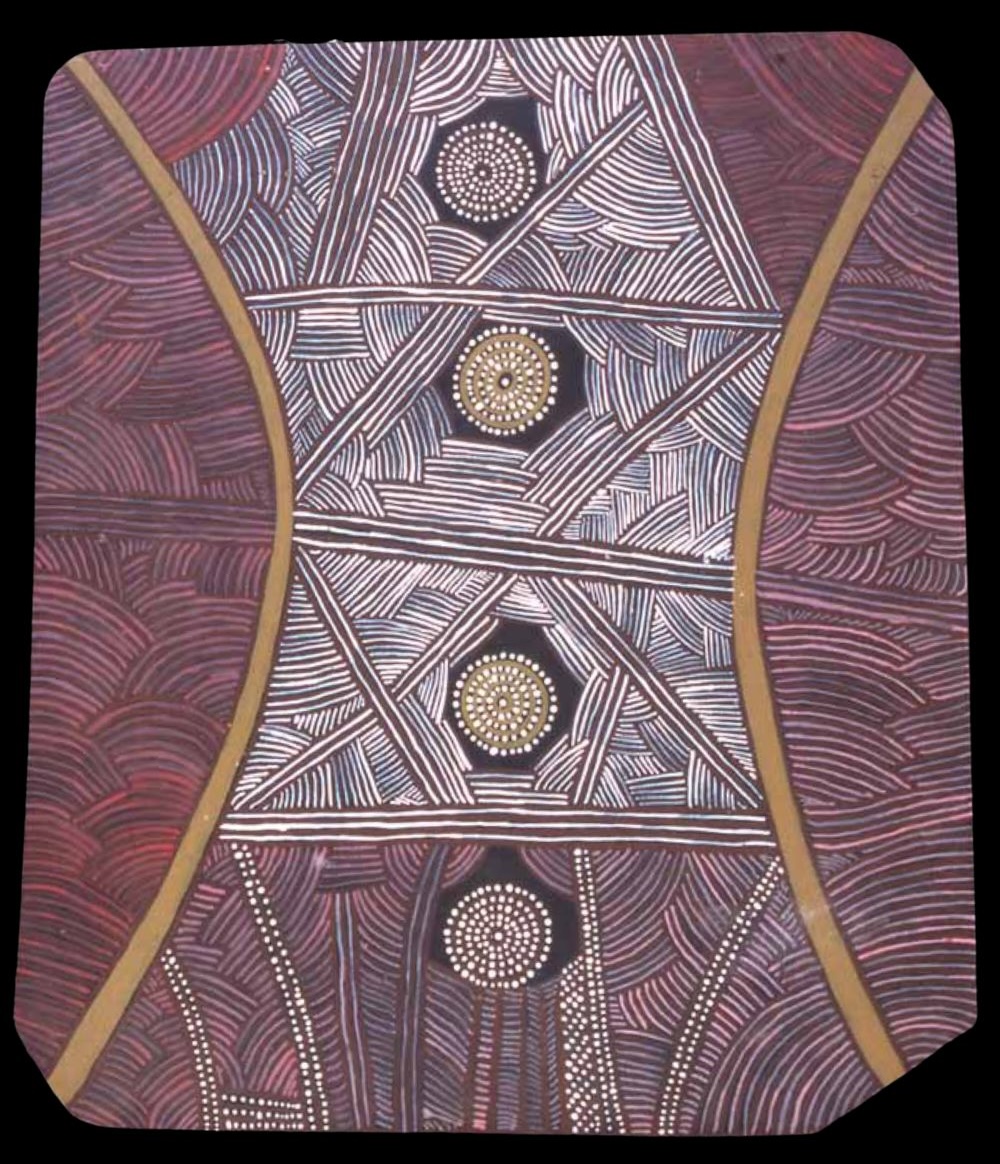
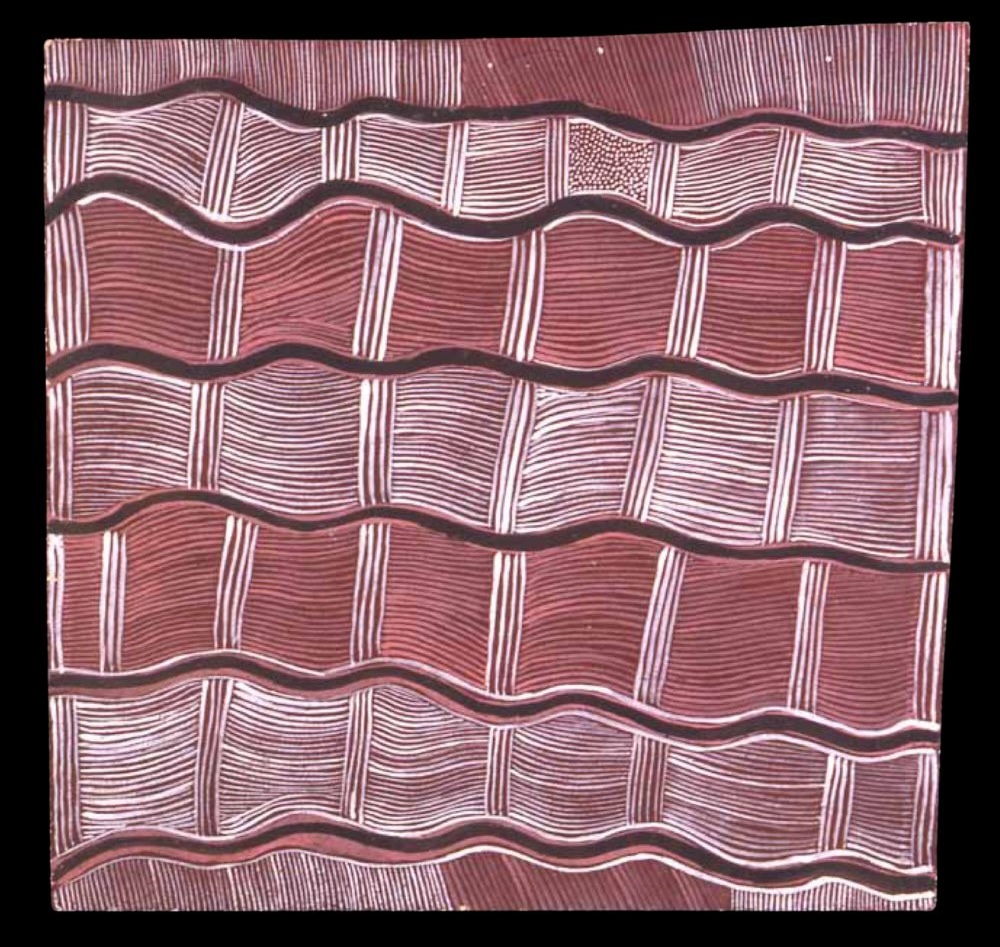
Another major subject is the Tingari Dreaming. Tingari paintings record the journeys of ancestral men who travelled across the Western Desert performing ceremonies, creating sacred sites and passing on cultural law. Many Tingari paintings depict camps, ceremonial gathering places and the routes travelled between them rather than a literal map of the landscape.
The Honey Ant Dreaming is another important theme. Closely associated with the country around Papunya and the Ehrenberg Range, these paintings tell the story of the Honey Ant Ancestors whose travels helped shape the landscape. Honey Ant Dreaming also holds special significance because it was the subject chosen for the famous Honey Ant mural painted on the Papunya School in 1971, widely regarded as the beginning of the Papunya painting movement.
Other Dreamings commonly depicted on Papunya Boards include:
- Water Dreaming
- Rain Dreaming
- Spider Dreaming
- Snake Dreaming
- Carpet Snake Dreaming
- Possum Dreaming
- Honey Ant Dreaming
- Goanna Dreaming
- Emu Dreaming
- Bush Turkey Dreaming
- Women’s Dreaming
- Ancestral Women’s Dreaming
- Yumari Dreaming
- Wallaby Dreaming
- Wind Dreaming
- Tingari Dreaming
Each Dreaming belongs to particular people and places. The same subject may therefore be painted differently by different artists depending on their cultural responsibilities and the Country to which the story belongs.
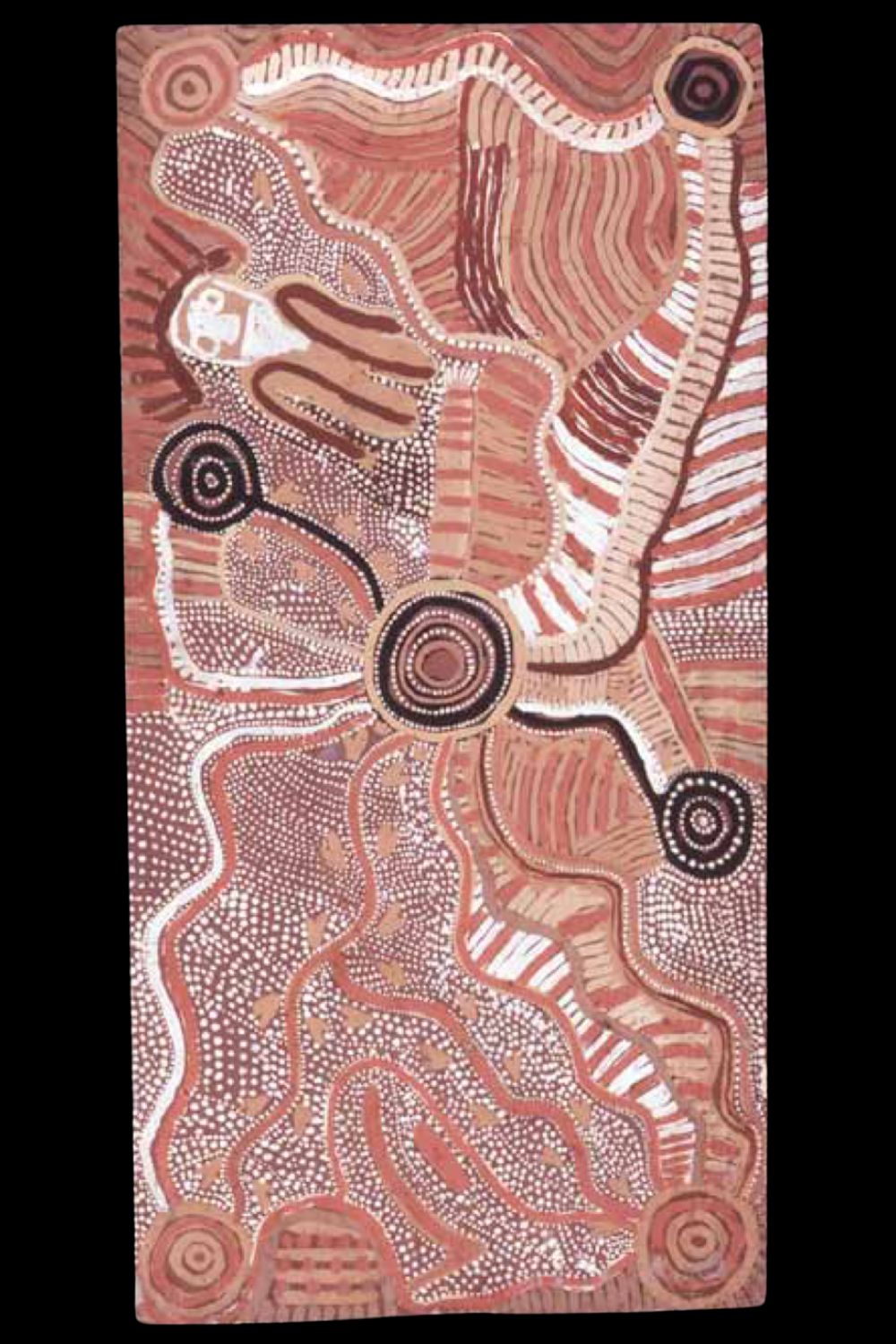
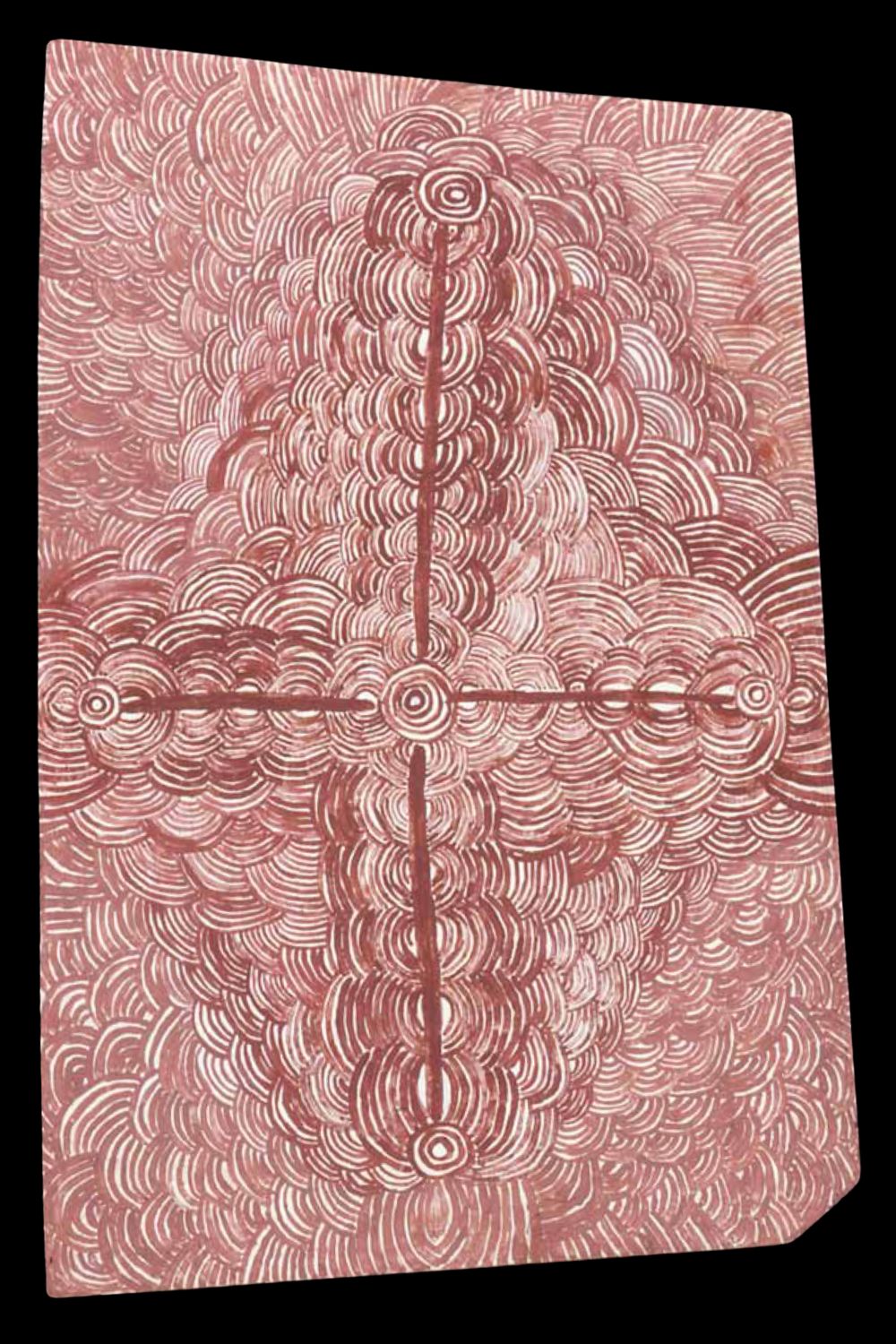
Although Papunya Boards make use of circles, lines, footprints and other symbols, these should not be interpreted in isolation. Their meaning depends on the Dreaming being depicted. A circle may represent a waterhole in one painting, a ceremonial site in another, or a campsite in a third. Understanding a Papunya Board therefore requires knowledge of the story as well as the symbols.
The artists were also careful to protect sacred knowledge. Ceremonial designs were adapted for public viewing, with restricted details omitted or altered. As a result, Papunya Boards should not be viewed simply as illustrations of Dreaming stories but as culturally appropriate public expressions of much deeper traditions.
Together, these paintings reveal that Papunya Boards were never intended as decorative designs. They are visual records of Country, ancestral law, ceremony and identity, preserving stories that have been maintained for countless generations while marking the beginning of the contemporary Western Desert Art movement.
Continue reading:
- What are Papunya Boards
- When were Papunya Boards painted?
- Why were Papunya Boards painted on board?
- Why are Papunya Boards historically important?
- How much are Papunya Boards worth
- How do you identify a Papunya Board
- Who painted the first Papunya Boards?
- Where are most of the Important Papunya Boards today?
All images in this article are for educational purposes only.
This site may contain copyrighted material the use of which was not specified by the copyright owner.