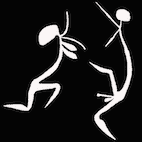
Tiwi Art – Ceremony, Identity, and Ancestral Design
Tiwi Islands art is one of the most distinctive aboriginal art styles in aboriginal art, renowned for its bold geometric ochre designs, monumental Pukumani poles, and deep ceremonial significance. Created by Tiwi artists from Bathurst and Melville Islands north of Darwin, Tiwi art remains inseparable from ceremony, ancestral law, and community identity.
Unlike the symbolic iconography of Western Desert painting, Tiwi art employs a unique abstract visual language known as jilamara. The circles, dots, lines, and geometric motifs found in Tiwi painting are not maps of waterholes or Dreaming tracks, but ceremonial body-paint and mortuary designs connected to mourning, kinship, and ancestral authority. These striking ochre patterns make Tiwi art visually and culturally distinct from all other major Aboriginal art traditions in Australia.
At the centre of Tiwi culture is the Pukumani ceremony, a complex mortuary ritual that gives rise to tutini (grave posts), Aboriginal bark paintings, ceremonial sculpture, and painted tungas (bark baskets). Rather than depicting stories through figurative imagery, Tiwi artists communicate ceremony and identity through repeated geometric design using natural ochres in white, red, yellow, and black.
This guide explores Tiwi bark paintings, sculpture, jilamara designs, and the work of important Tiwi artists including Cardo Kerinauia, Declan Apuatimi, and Tommy Mungatopi, while examining the ceremonial traditions that continue to shape this remarkable art movement. It also helps collectors identify authentic older works and better understand issues of age, provenance, rarity, and value.
Tiwi Symbols, Jilamara, and Ceremonial Design
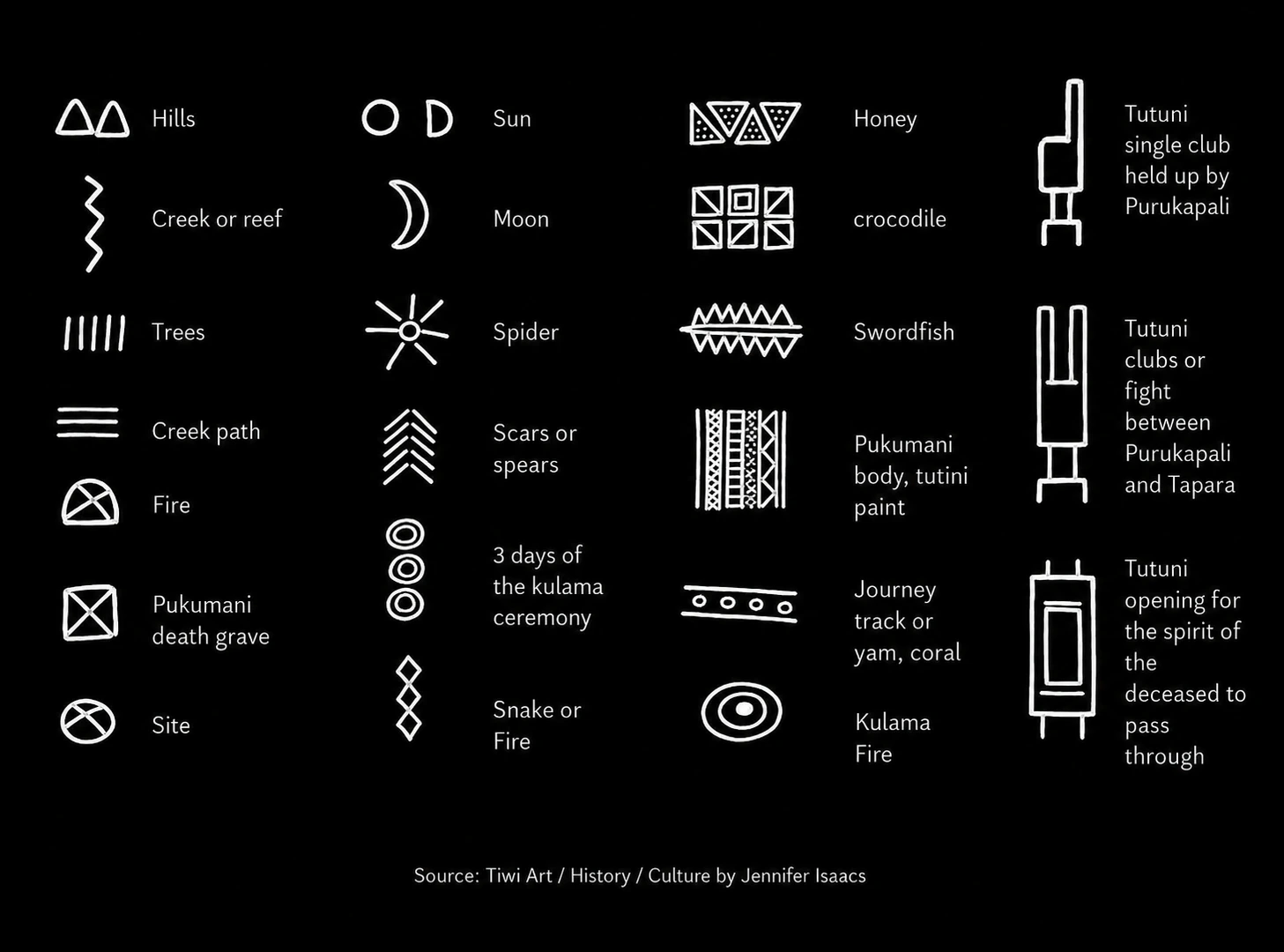
The abstract patterns used throughout Tiwi Islands art are collectively known as jilamara, a Tiwi term referring to ceremonial body-paint and design traditions. Unlike the landscape symbolism associated with many forms of Aboriginal Art Symbols and Western Desert painting, Tiwi motifs are associated with ceremony, identity, mourning practices, kinship systems, and ancestral authority.
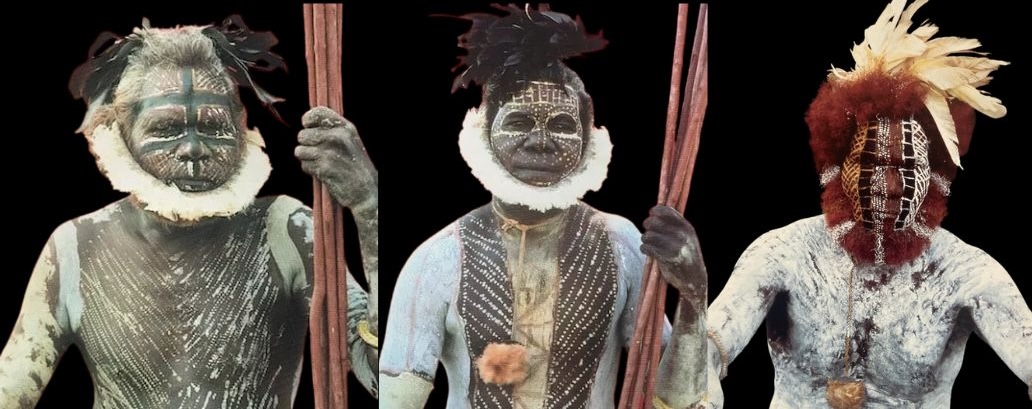
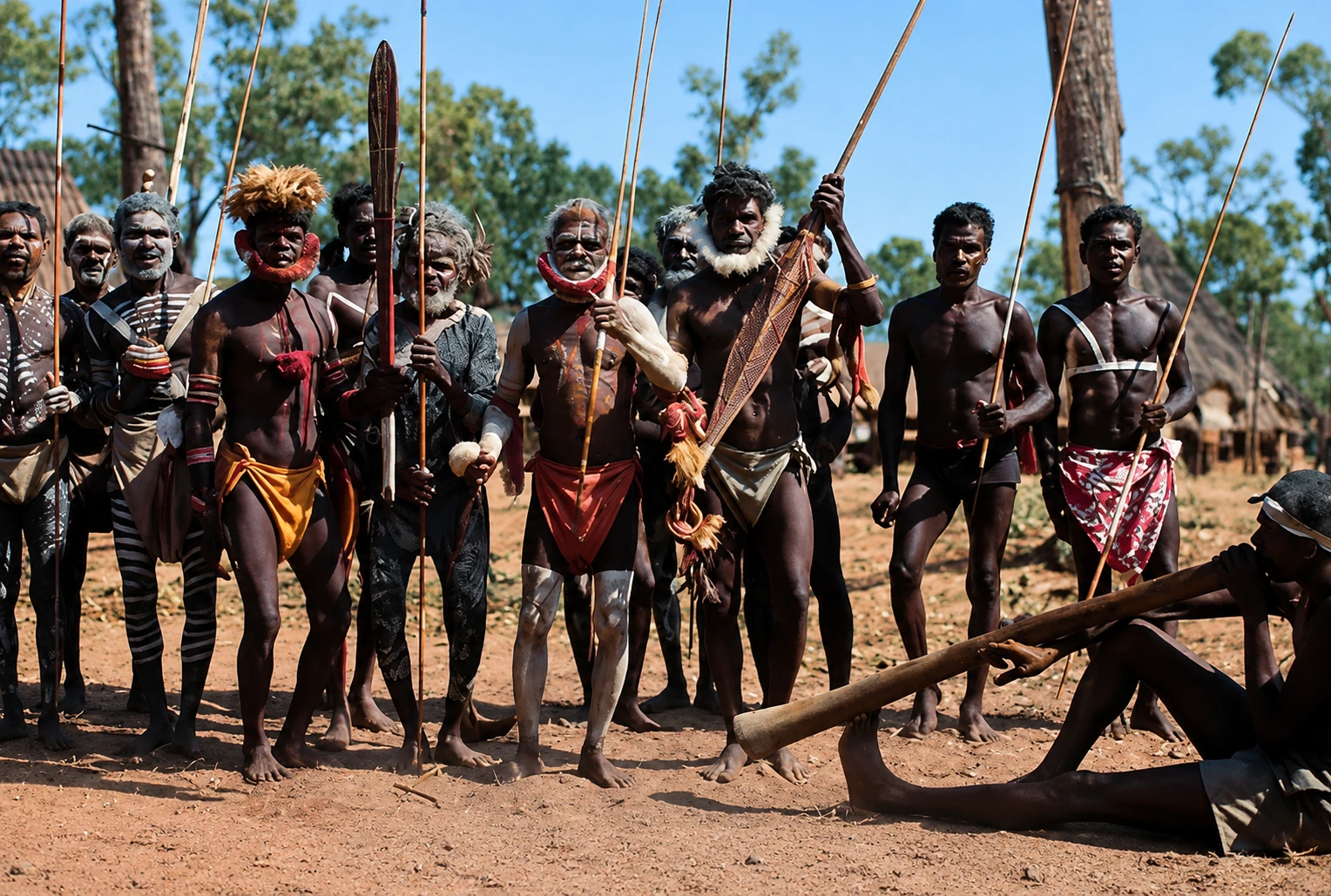
Common Tiwi motifs include circles, dots, combed linework, and repeated geometric bands painted in natural ochres across bark paintings, tutini poles, sculpture, ceremonial objects, and the bodies of dancers participating in ritual performance. These designs originate from body painting used during important ceremonies such as the Pukumani mortuary ritual and the Kulama initiation ceremony, where the human body itself becomes a ceremonial surface carrying ancestral and social meaning.
The geometric body designs painted onto Tiwi dancers are not merely decorative but function as expressions of identity, spiritual protection, ceremonial responsibility, and connection to ancestral law. Many of the same patterns later appear on bark paintings, sculpture, and tutini poles, linking contemporary Tiwi art directly back to ceremonial practice.
The power of Tiwi art lies not in narrative storytelling, but in rhythm, repetition, and ceremonial presence. Through these highly structured abstract surfaces, Tiwi artists communicate cultural identity and spiritual continuity while maintaining one of the most visually unified artistic traditions in Aboriginal Australia.
Tiwi Art objects
Tiwi Figurative Sculpture
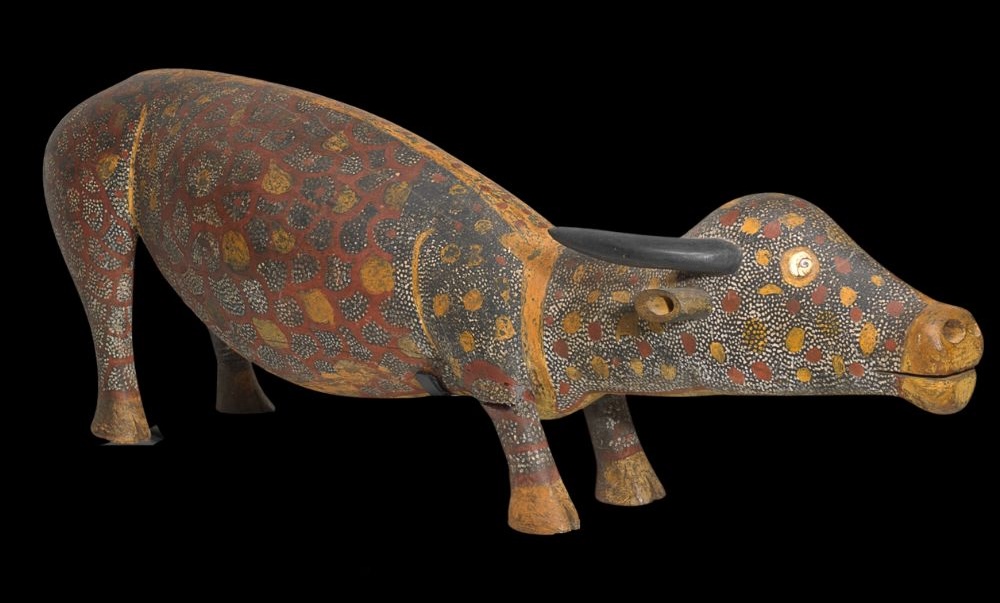
Figurative sculpture in Tiwi art emerged as a distinctive and dynamic form in the 1960s at Paru, a small village on Melville Island opposite the Bathurst Island Mission. Paru artists, particularly members of the Mandimbula family, became pioneers in this innovation. The first known figure, carved by Cardo Kerinauia, was sold to the mission—marking the beginning of a flourishing local art movement.
Though not strictly ceremonial, these early sculptures drew deeply on Tiwi visual language. They featured ochre-painted designs directly inspired by body painting and Pukumani symbolism—imbuing the works with spiritual resonance. As anthropologists and collectors arrived, the figurative works were embraced not only for their aesthetic value but also for their ethnographic significance.
The sculptures often depict ancestral figures, totems, or ceremonial beings, rendered in stylised form. Some speculate that small figures may once have been placed near graves to divert spirits—though this theory remains largely anecdotal.
Today, Tiwi figurative sculpture is celebrated internationally as a unique strand of contemporary Indigenous art. Whether carved from ironwood or painted with ochres, each figure remains a powerful extension of Tiwi identity, shaped by deep-rooted knowledge and evolving artistic vision.
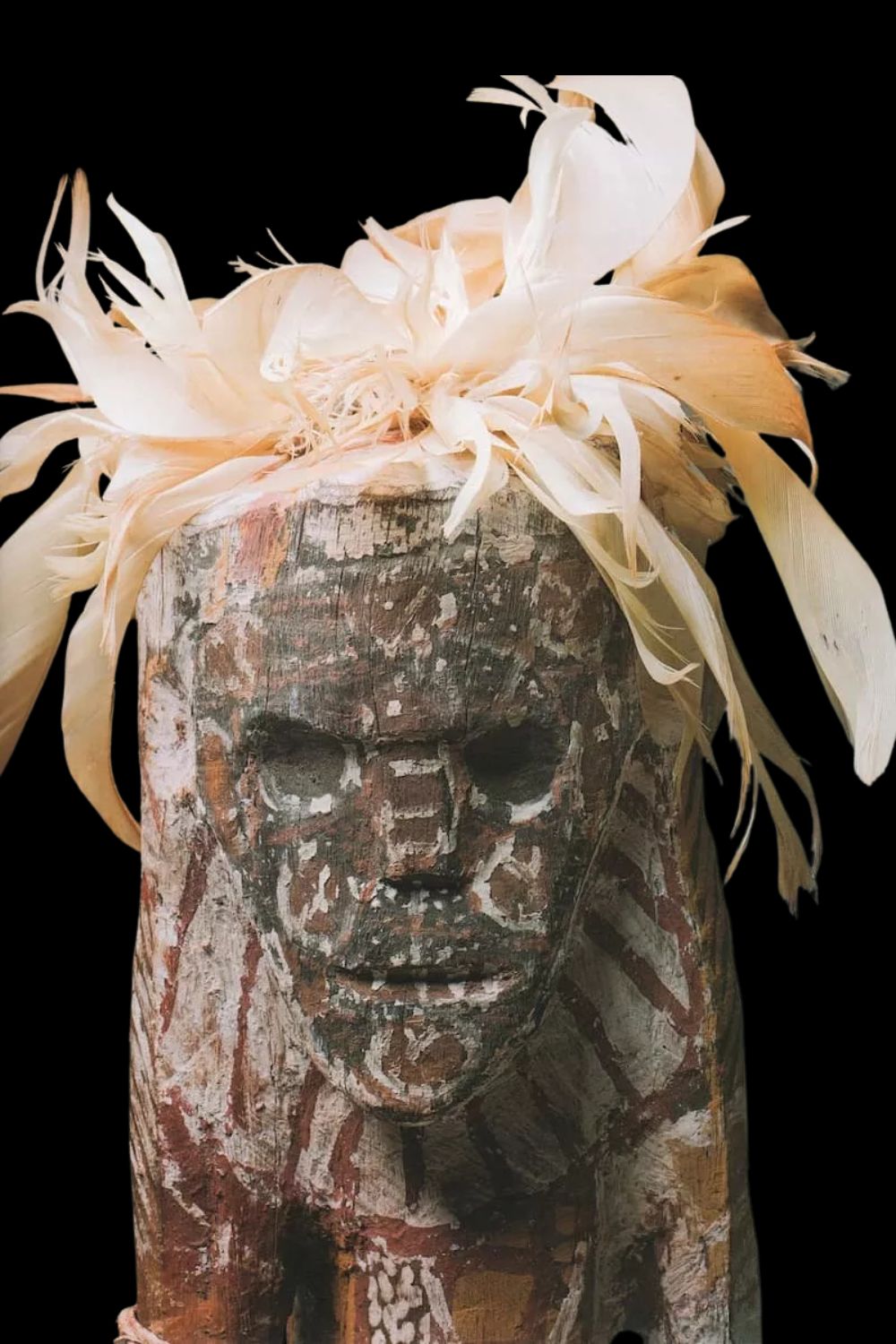
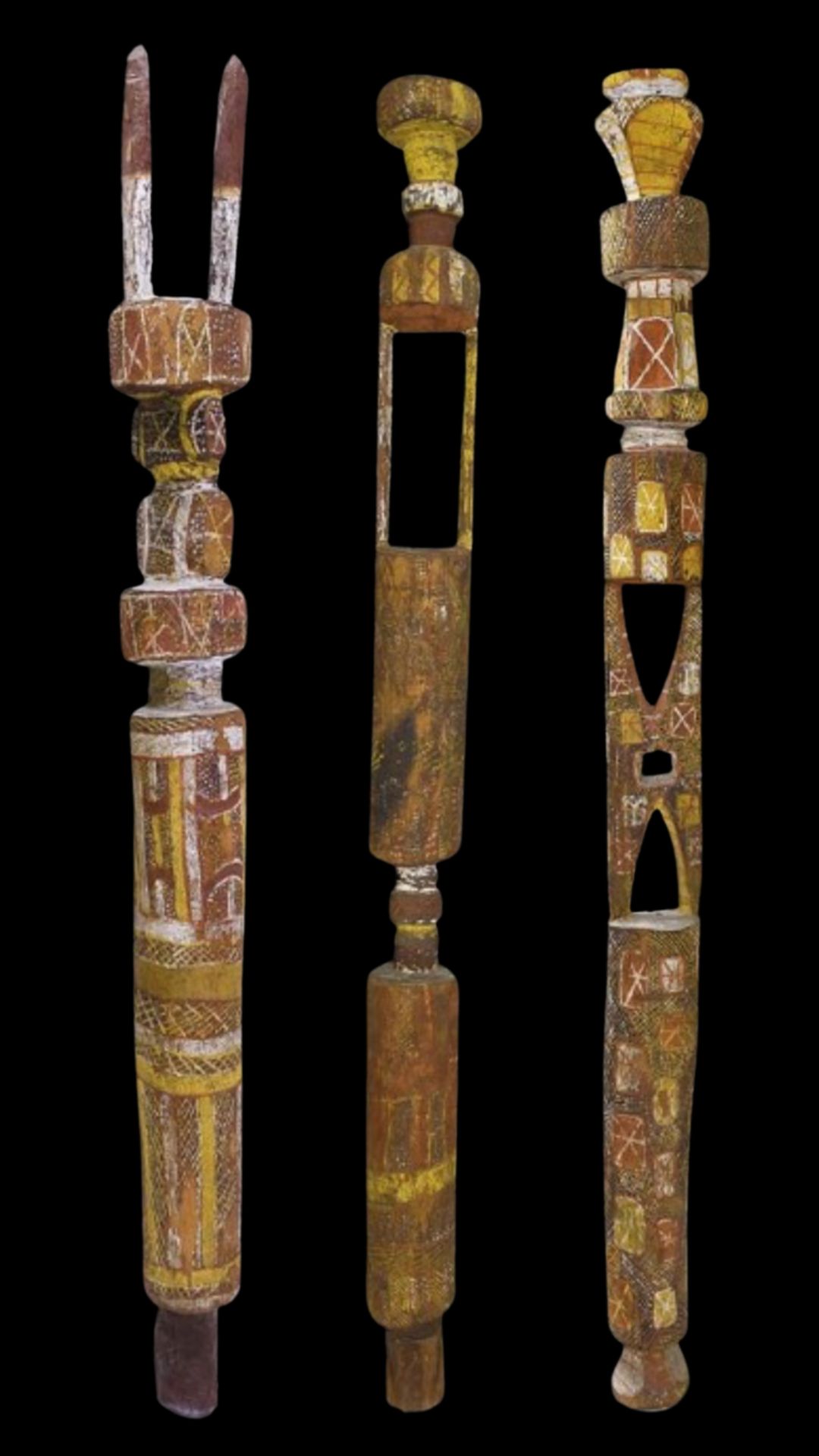
Tutini (Pukumani Poles)
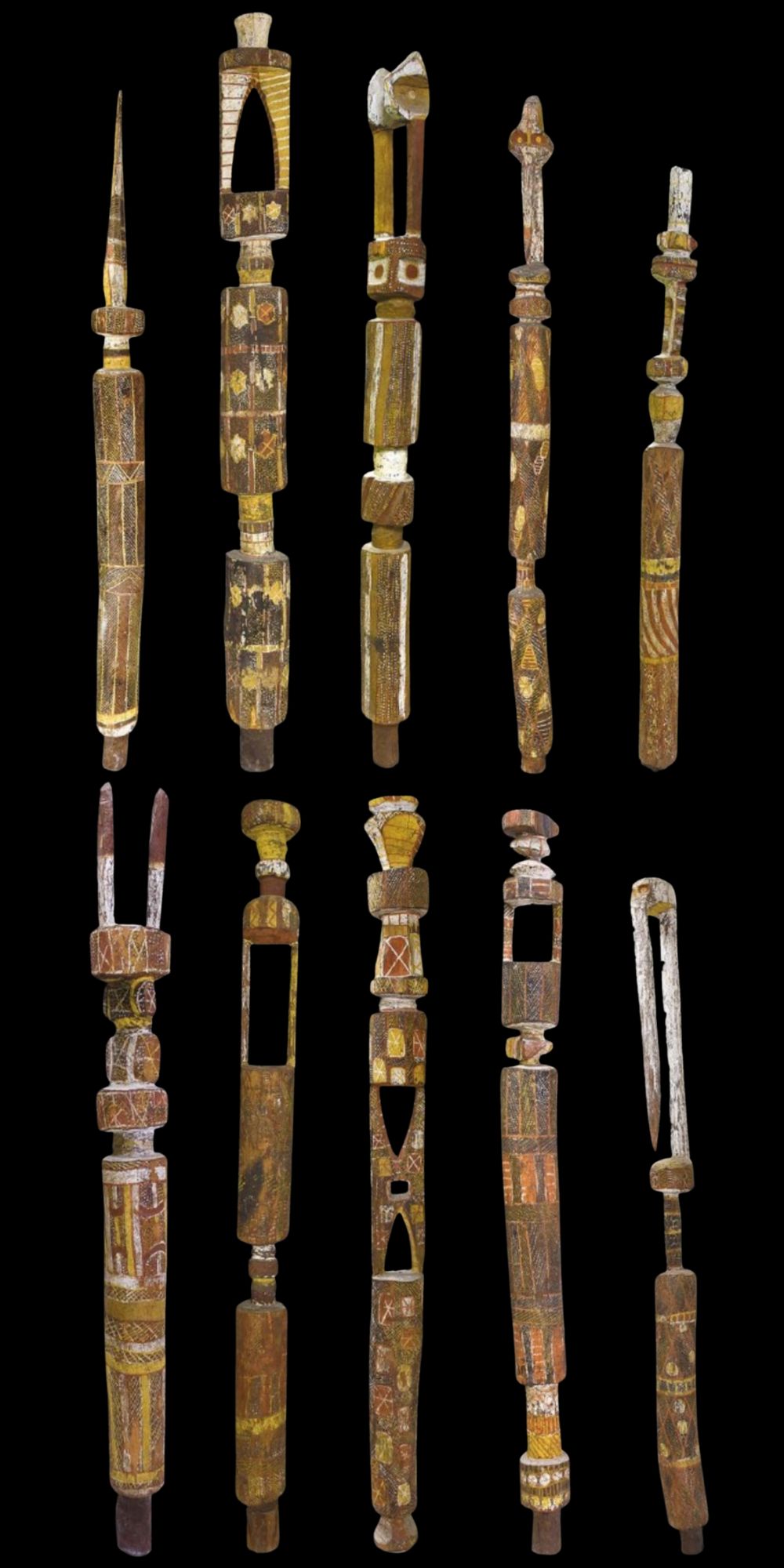
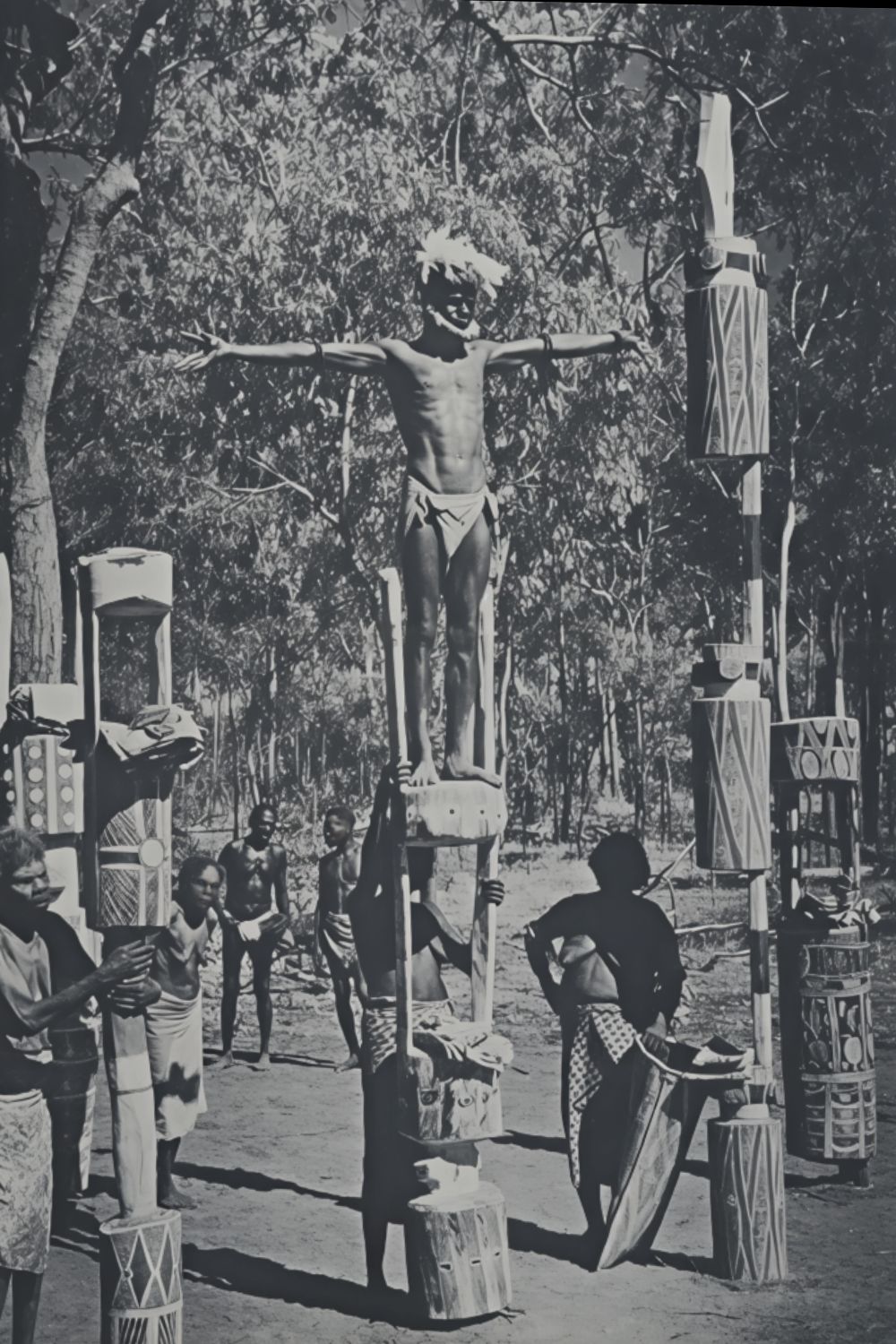
Among the most powerful and iconic forms of Tiwi art, Tutini—or Pukumani poles—are sculptural masterpieces created for the Tiwi Islands’ elaborate mortuary rituals. These towering, painted carvings are made to honour the deceased during the Pukumani ceremony, a sacred event involving dance, song, and complex social responsibilities.
Carved from local ironwood (Erythrophleum chlorostachys), each tutini is deeply symbolic. According to Tiwi elder Paddy Freddy, “Pukumani decorations on posts represent people.” Poles with arms signify men; those with a head alone represent women. Their forms, colours, and motifs are not mere decoration—they are spiritual markers of identity, clan, and connection to Country.
The origins of this tradition trace back to Tiwi creation stories. When Wai-ai broke the ancestral law, causing the death of her son Jinaini, his father, Purukaparli, introduced death to the world and created the first Pukumani ceremony. With the help of Tokwampini, the Man-Bird, he carved the first tutini and established the funerary practices still observed today.
After a death, relatives gather to prepare the burial, carve the tutini, and make ceremonial objects. Those participating enter a state of Pukumani—marked by strict taboos and spiritual obligations. Once the ceremony concludes, the poles are left to weather and return to the earth, completing the cycle of life, death, and ancestral renewal.
Today, tutini are celebrated as exceptional examples of contemporary Indigenous sculpture, housed in major collections worldwide, yet always rooted in ceremonial practice.
Tiwi Bark Paintings
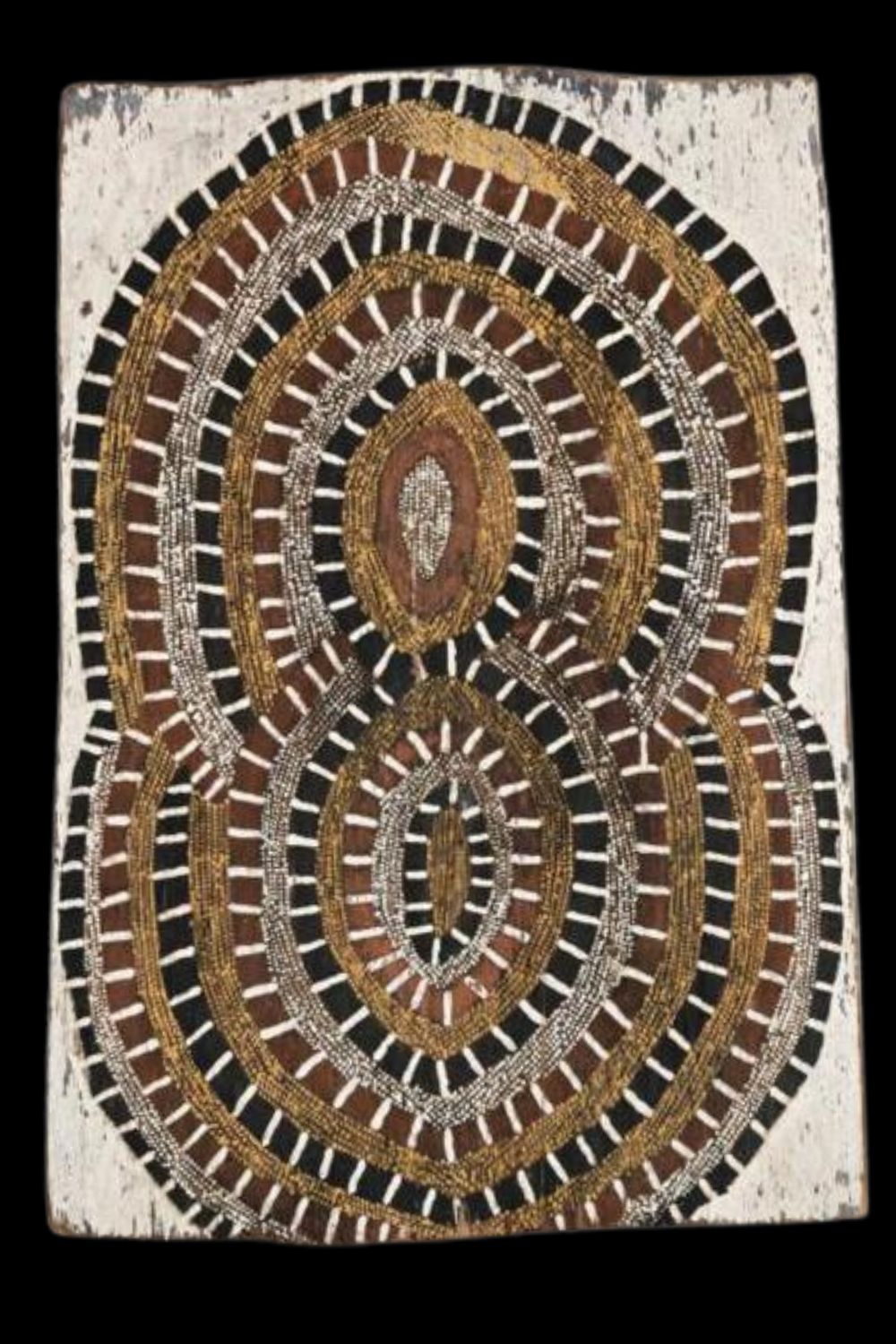
Tiwi bark paintings, especially those created during the 1960s, represent a powerful and now rare expression of Pukumani ceremonial design. Painted primarily on stringybark without supporting frame sticks, these early works are deeply connected to ancestral law and are among the most sought-after in Australian Aboriginal art.
Two of the most significant early Tiwi bark painters were Ali Mungatopi and Deaf Tommy Mungatopi, artists known for their masterful command of Jilamara—a Tiwi term meaning “design,” “paint,” or “decoration.” While both artists also produced sculpture, their greatest legacy lies in their ochre-painted bark works, which remain prized by collectors and institutions.
Tiwi artists apply natural ochres in symbolic patterning:
-
Kurluwukari (circles)
-
Pwanga (dots)
-
Marlipinyini (lines)
These elements combine to form Jilamara, a visual language traditionally used for body painting and the decoration of Pukumani poles (Tutini)—markers of mourning and identity.
Bark paintings that depict sacred skin group designs are especially valued for their cultural and ceremonial significance. Works with early collection dates and strong provenance are extremely rare and highly collectible.
Tiwi Spears and Clubs
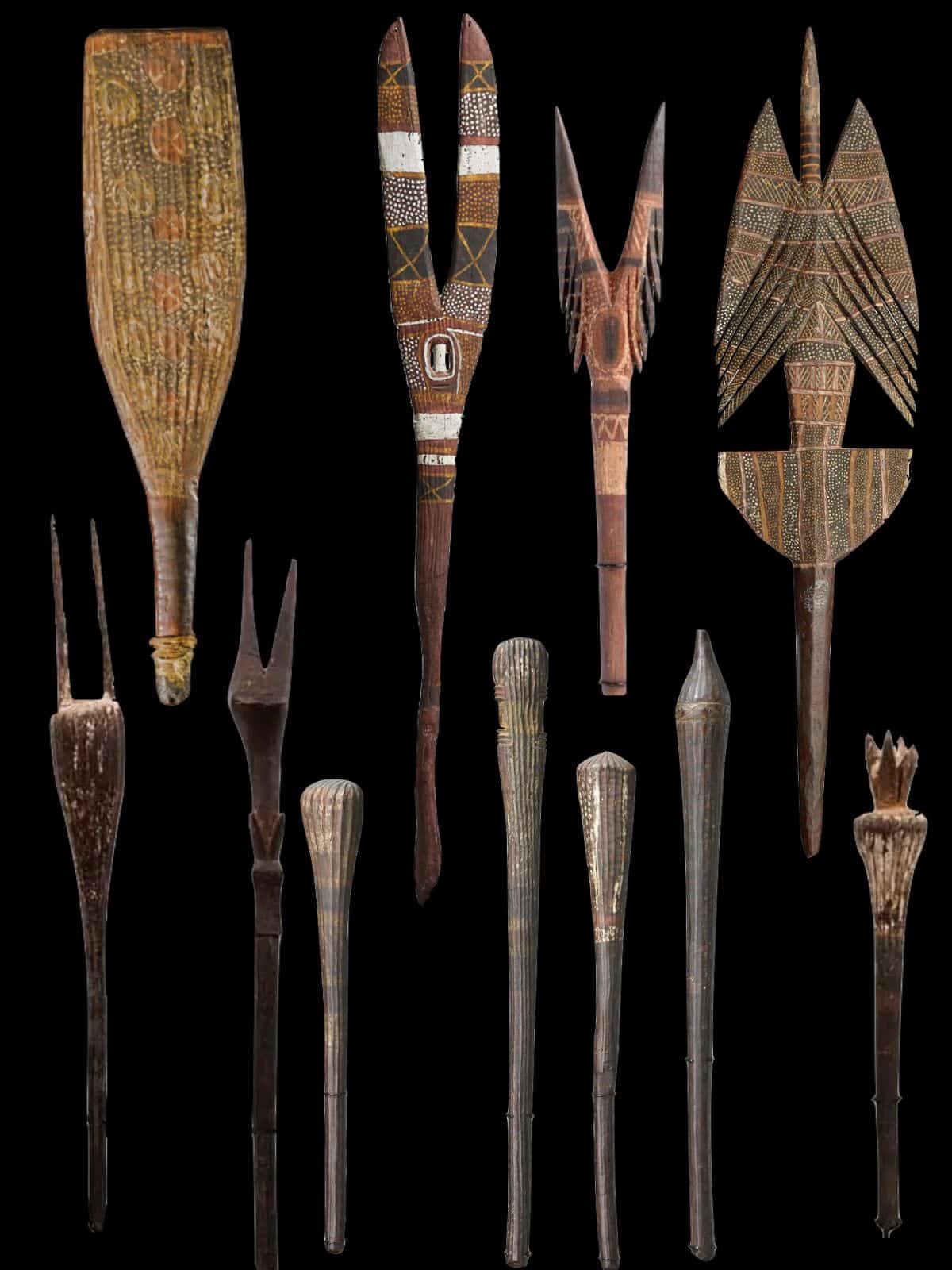
The spears and clubs of the Tiwi people are among the most distinctive sculptural forms in Australian Indigenous art, embodying both practical function and ceremonial symbolism. Unlike mainland traditions, Tiwi culture developed without the use of spear throwers—an insight that led early anthropologist Herbert Basedow to recognise the Tiwi as a unique cultural group.
Tiwi spears range from simple hardwood hunting tools to highly ceremonial works, carved and painted with precision. Ceremonial spears, often towering in length, feature barbs numbering from ten to thirty, with shafts grooved, bound in human-hair string, and painted with natural ochres. Double-barbed spears (arawunikiri) are considered female; single-barbed (tunkaringa) are male—reinforcing Tiwi cosmology through design.
These spears are integral to Pukumani ceremonies, where they are held aloft, thrust into fire, or symbolically pointed toward graves to signify the finality of death. Once utilitarian weapons, they have evolved into sculptural masterpieces, maintaining ceremonial meaning while gaining recognition in fine art collections worldwide.
Tiwi clubs are equally diverse—from hand-thrown weapons to elaborately painted ceremonial forms with pointed, grooved, or spiked heads. Some clubs echo the legendary battle between Purukapali and Tapara—the mythological origin of death in Tiwi lore. Their forms, echoed in the forked tops of Pukumani poles, continue to carry ancestral weight.
The Tiwi were one of the few Aboriginal Cultures not to use Aboriginal Shields
Tungas (Tiwi Bark Baskets)
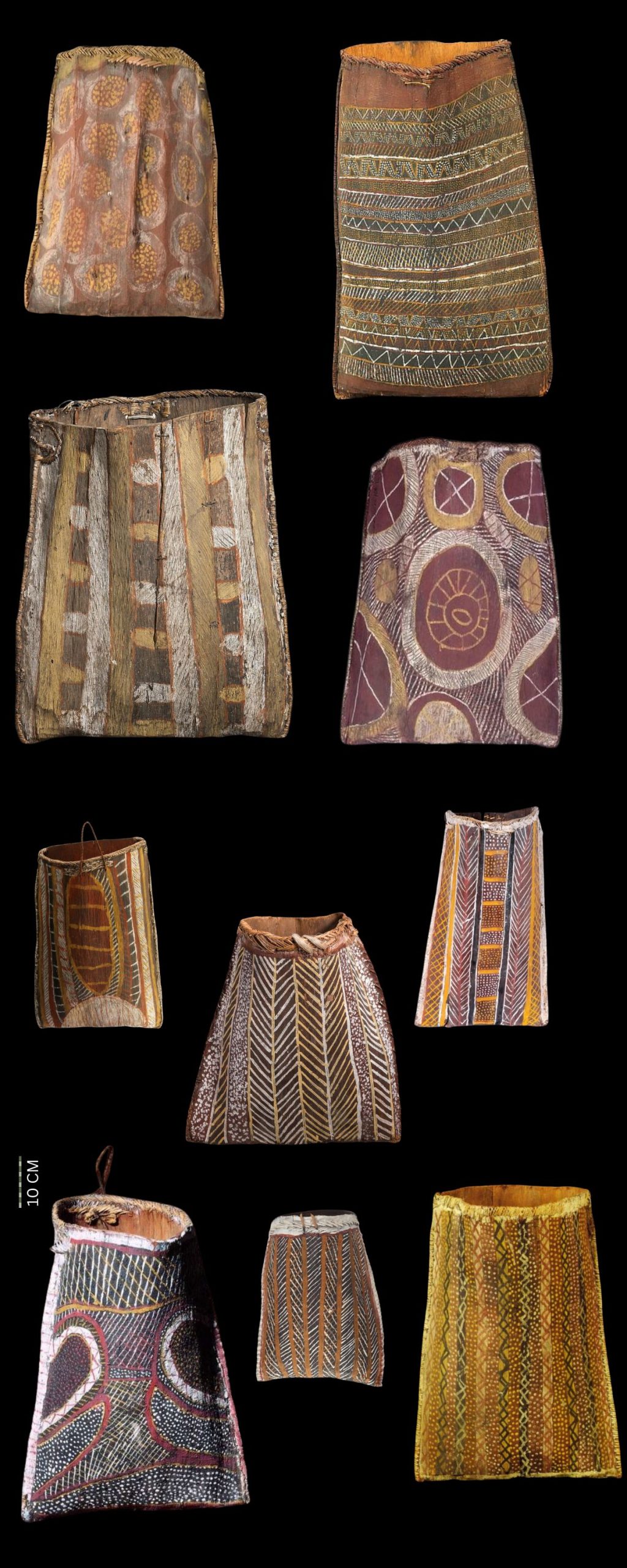
Tungas are large, folded bark baskets that stand as a powerful symbol of Tiwi art, tradition, and ceremonial life. Crafted from the bark of Eucalyptus tetrodonta, each tunga is expertly stripped, softened by fire, folded, and stitched using cane or vine bindings. Painted with natural ochres in bold, geometric designs, tungas are entirely unique in the context of Indigenous Australian art—immediately recognisable by their scale, form, and visual rhythm.
These remarkable objects are deeply embedded in Tiwi cosmology, appearing in the creation stories of Murtankala and Pwanga, the ancestral spider-woman and first maker of tungas. Spiders are still seen as spiritual guardians of these baskets, and tungas remain a key component of the Pukumani ceremony, the sacred mourning ritual that defines Tiwi death customs. During these ceremonies, tungas are used to carry ceremonial items and gifts for workers, and are often placed atop carved tutini (Pukumani poles) as a final act of spiritual closure.
First documented by European anthropologists in the early 1900s, tungas continue to be made today with minimal change in technique—highlighting the extraordinary continuity of Tiwi craftsmanship. Their painted surfaces range from fine stripes and dots to interlaced patterns, often differing on each side, with scratched-through ochre creating striking textural contrasts.
Old Tungas along with other forms of Aboriginal baskets are collectible works of contemporary Tiwi art, held in major institutions and sought after by private collectors worldwide.
Evolution of Tiwi Art
Tiwi art continues to thrive as a vibrant and evolving cultural force. While deeply rooted in ceremonial traditions such as Pukumani and Kulama, Tiwi artists today work across a broad spectrum of media—adapting ancient forms into contemporary expression.
From the 1970s onwards, Tiwi communities embraced new materials and techniques. Artists began creating works on paper and canvas, exploring screen printing, ceramics, and textiles, often through collaborative art centres like Jilamara Arts, Tiwi Design, and Munupi Arts. These forms have found audiences worldwide, celebrated for their bold design, dynamic composition, and cultural integrity.
While these newer practices are rich and important, the focus of this article remains on the traditional roots of Tiwi art—particularly sculpture, bark painting, tutini (Pukumani poles), and ceremonial objects that have defined Tiwi aesthetics for generations.
All images featured in this article are presented strictly for educational and informational purposes.
This website may include copyrighted material for which specific authorization has not been obtained from the copyright owner.
All such images are presumed to be the intellectual property of the respective artist or their estate, and are used in accordance with principles of fair dealing or fair use under applicable copyright law.
Pioneer Tiwi Artists
I have individual artist profiles for many of these pioneering artists along with examples of their works. Just link through for more details of any artist of interest.
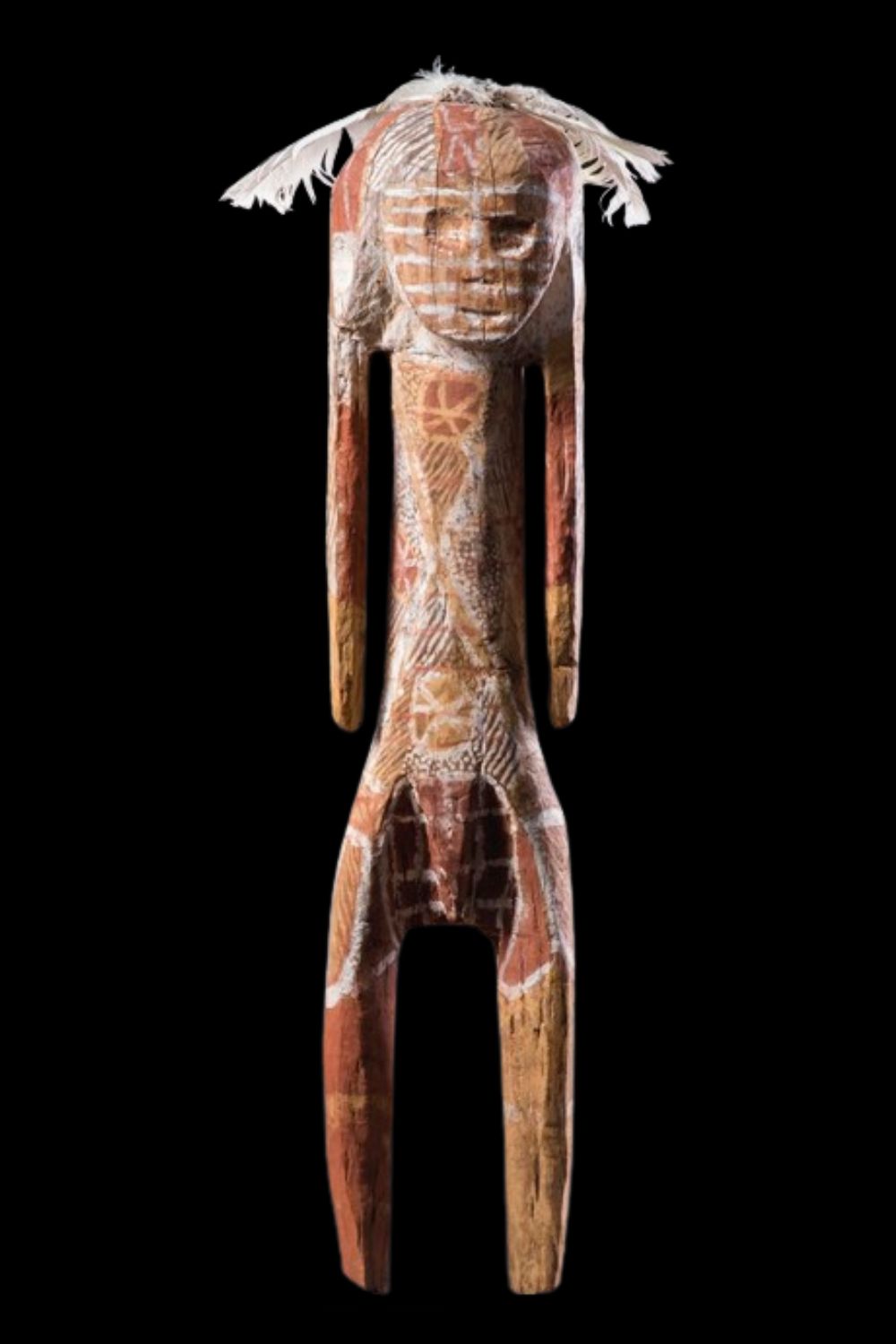
Enraeld Munkara Tipungaleralumi Djulabinyanna
Enraeld Munkara Tipungaleralumi Djulabinyanna carved highly distinctive Tiwi Islands sculptures with broad bulbous heads and arms emerging directly from the upper body. His figures often feature pronounced negative space between the legs, echoing the open forms of Tiwi tutini (Pukumani poles). Painted with traditional jilamara ceremonial designs, his carvings possess a powerful geometric simplicity and strong sculptural presence rooted in Tiwi mortuary traditions.
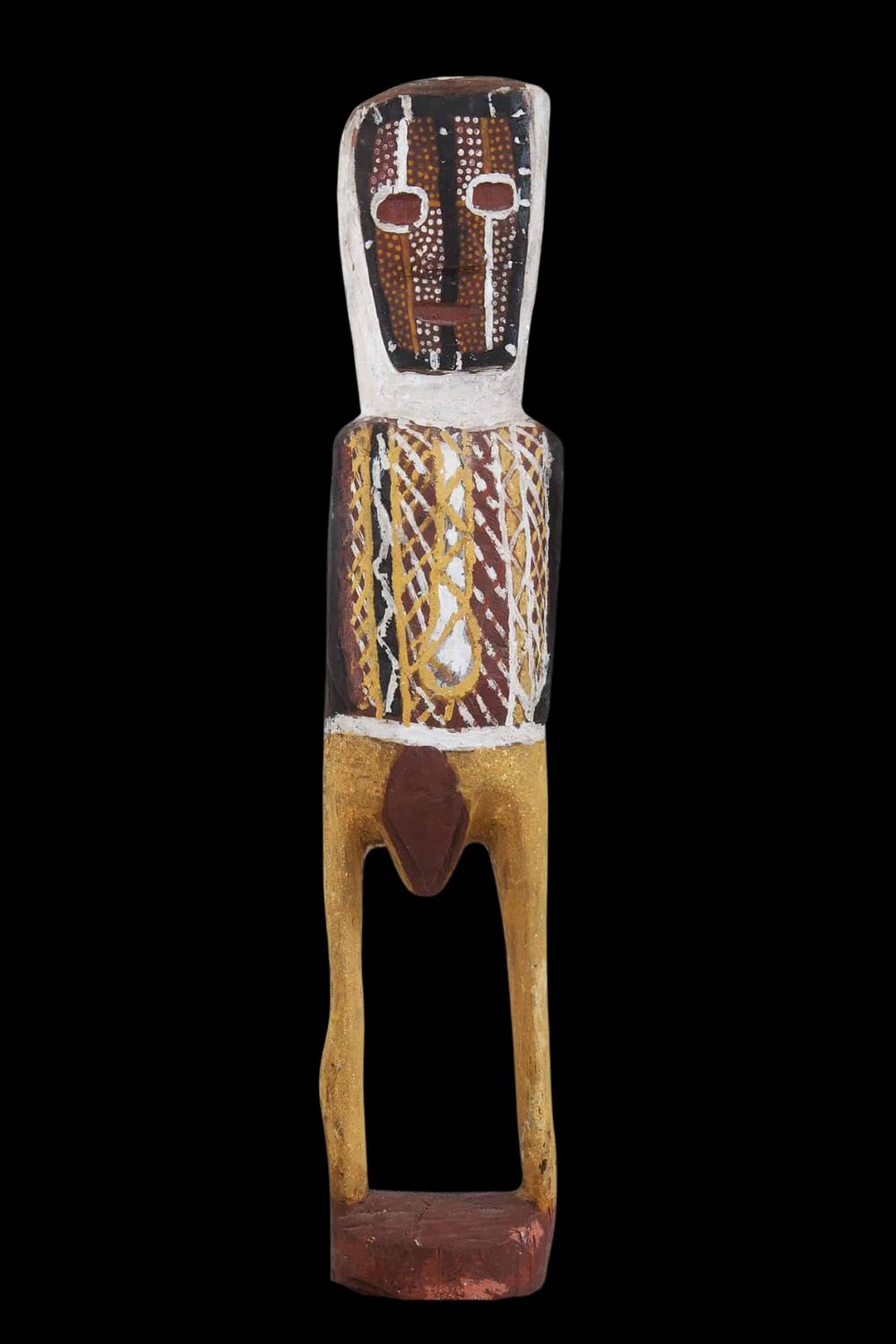
Paddy Henry Ripijingimpi
The sculptures of Paddy Henry Ripijingimpi are characterised by their bold, block-like forms and strongly simplified carving style. His figures typically feature incised eyes and mouths, while the painted jilamara designs are often executed with remarkable precision and refinement. The sex of the figures is usually clearly defined, reflecting their connection to Tiwi ceremonial traditions. In addition to figurative sculpture, Paddy also carved distinctive Pukumani poles and seabirds, the latter especially noted for their finely painted geometric surface designs.
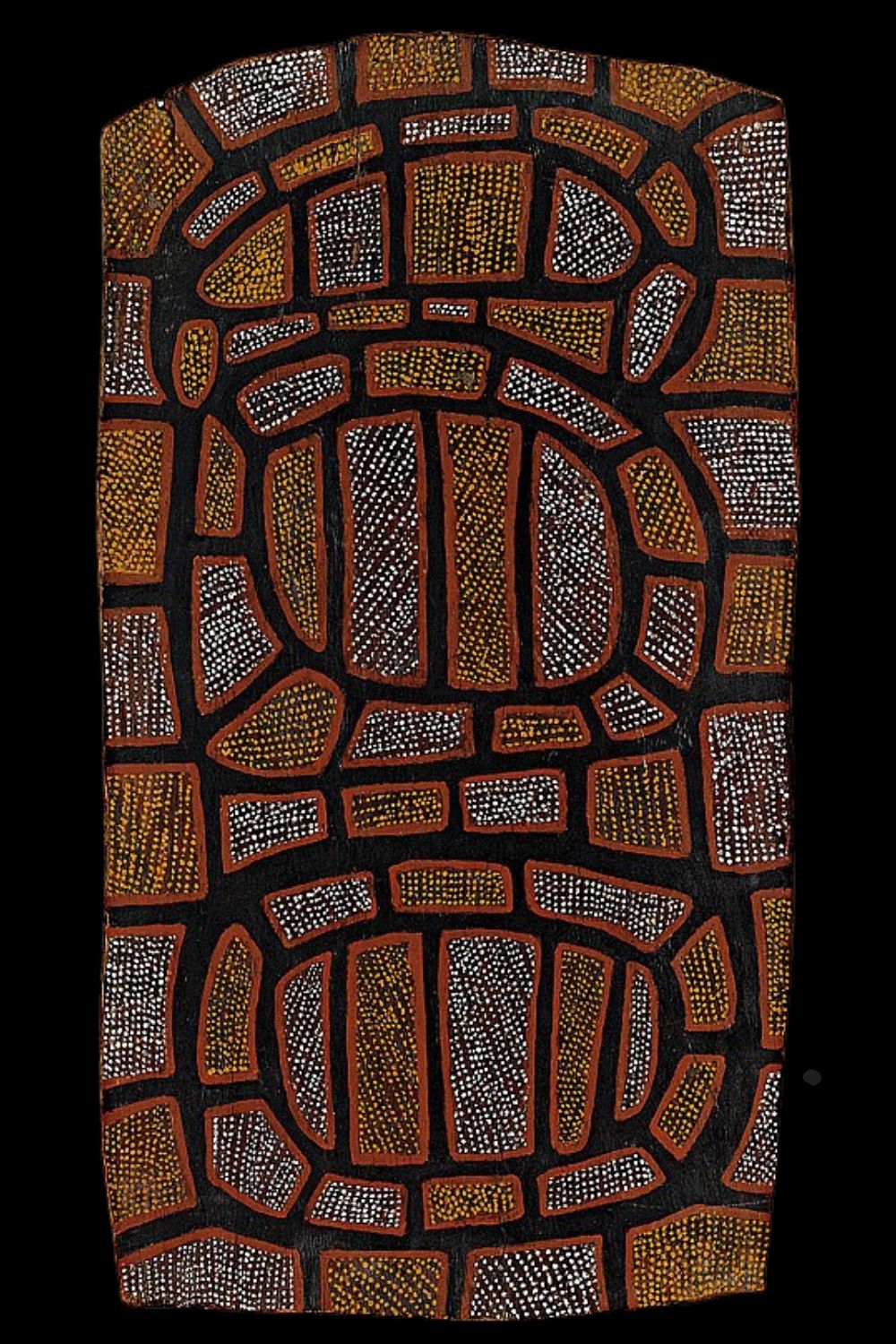
Ali Mungatopi
Unlike many Tiwi Islands artists, Ali Mungatopi is best known for his bark paintings rather than sculpture or Pukumani poles. His works frequently depict traditional jilamara designs derived from ceremonial body painting used on initiates during Tiwi ritual practice. Because of their strong connection to ceremonial design traditions, early bark paintings by Ali Mungatopi are highly sought after by collectors of Tiwi Art.
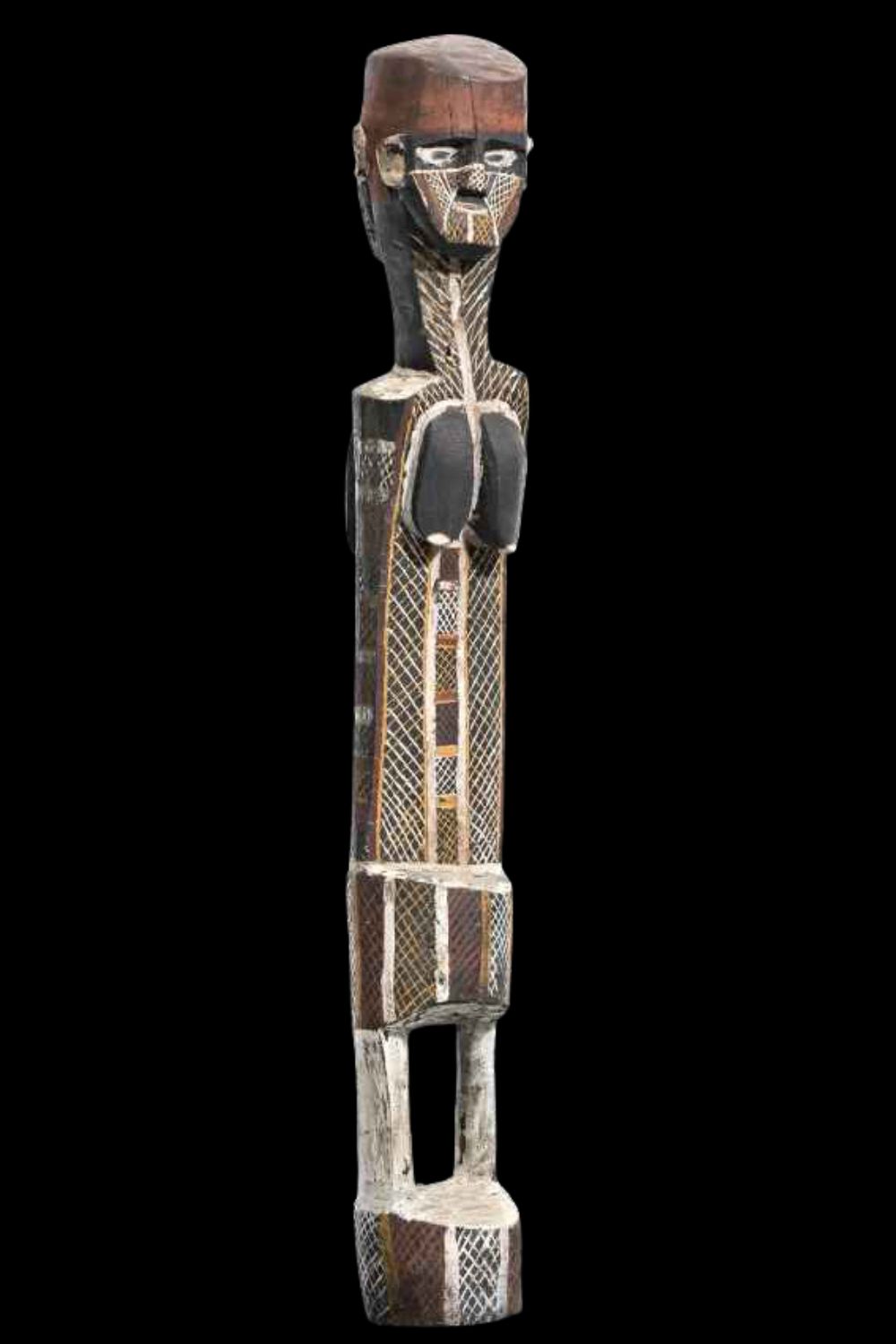
Mick Aruni
Mick Aruni produced carved and painted figures as well as a small number of bark paintings. His earlier sculptures typically show clearly defined male and female characteristics, while later works appear more simplified, possibly reflecting mission influence or changing market preferences. Early figures often feature arms carved free from the body and are painted with finely executed jilamara ceremonial designs. Aruni also carved birds and distinctive sculptures incorporating birds positioned above the head.
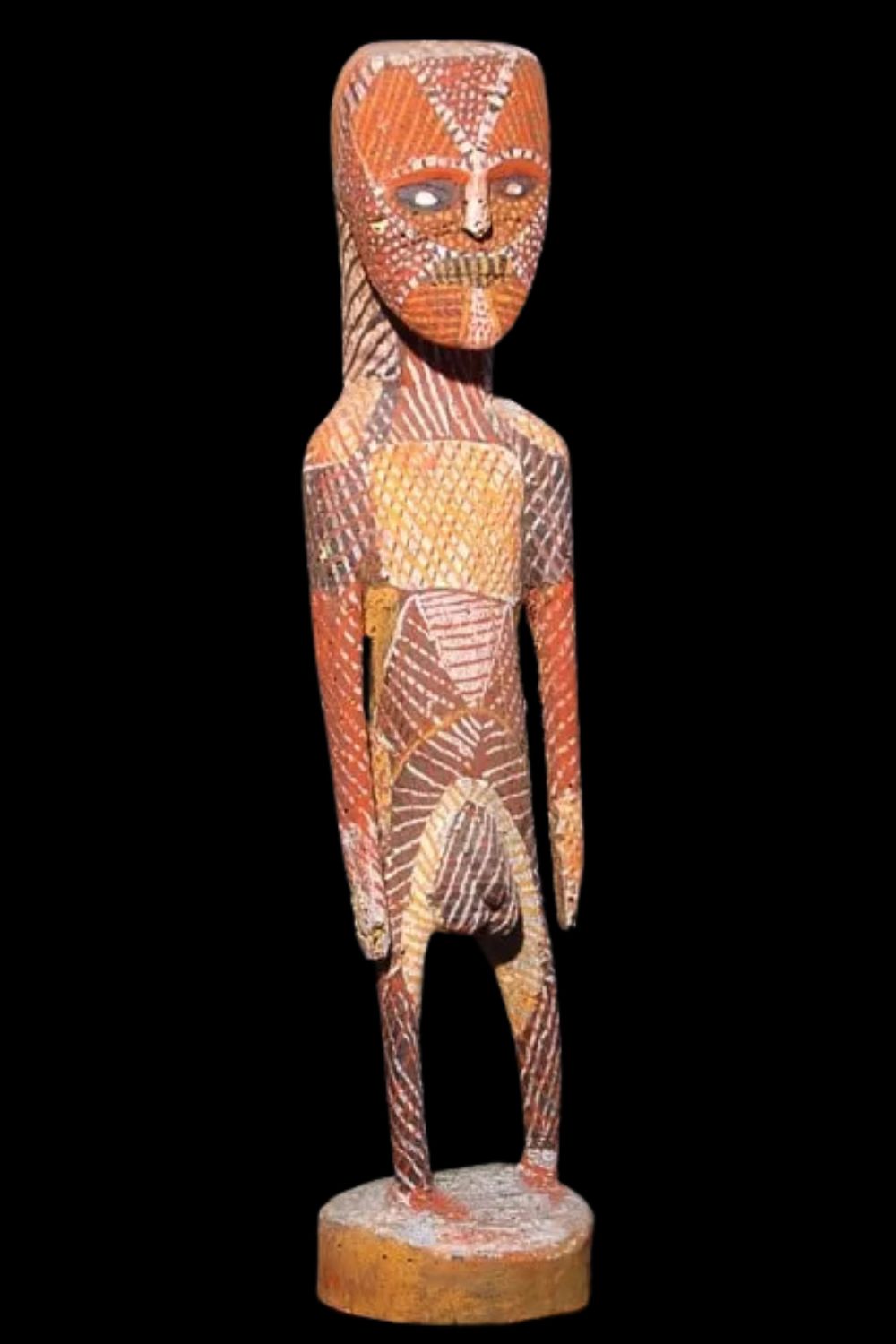
Cardo Kerinauia
The sculptures of Cardo Kerinauia are distinguished by their strong figurative clarity and finely painted jilamara body designs. His figures typically have arms carved free from the body and clearly defined male and female characteristics. Broad shoulders tapering to a narrow waist give the sculptures a powerful sculptural balance, while the dense ceremonial surface painting reflects the body-paint traditions associated with Tiwi ritual practice.
Tommy Mungatopi
The bark paintings of Tommy Mungatopi are instantly recognisable for their highly ordered rows of dots applied using a pwoja comb, allowing multiple dots to be placed simultaneously with remarkable precision. He frequently painted against black or white backgrounds, creating strong visual contrast and intensifying the brilliance of the natural ochres. His coral-inspired jilamara designs are regarded among the finest examples of Tiwi bark painting and remain highly sought after by collectors of early Tiwi Art.
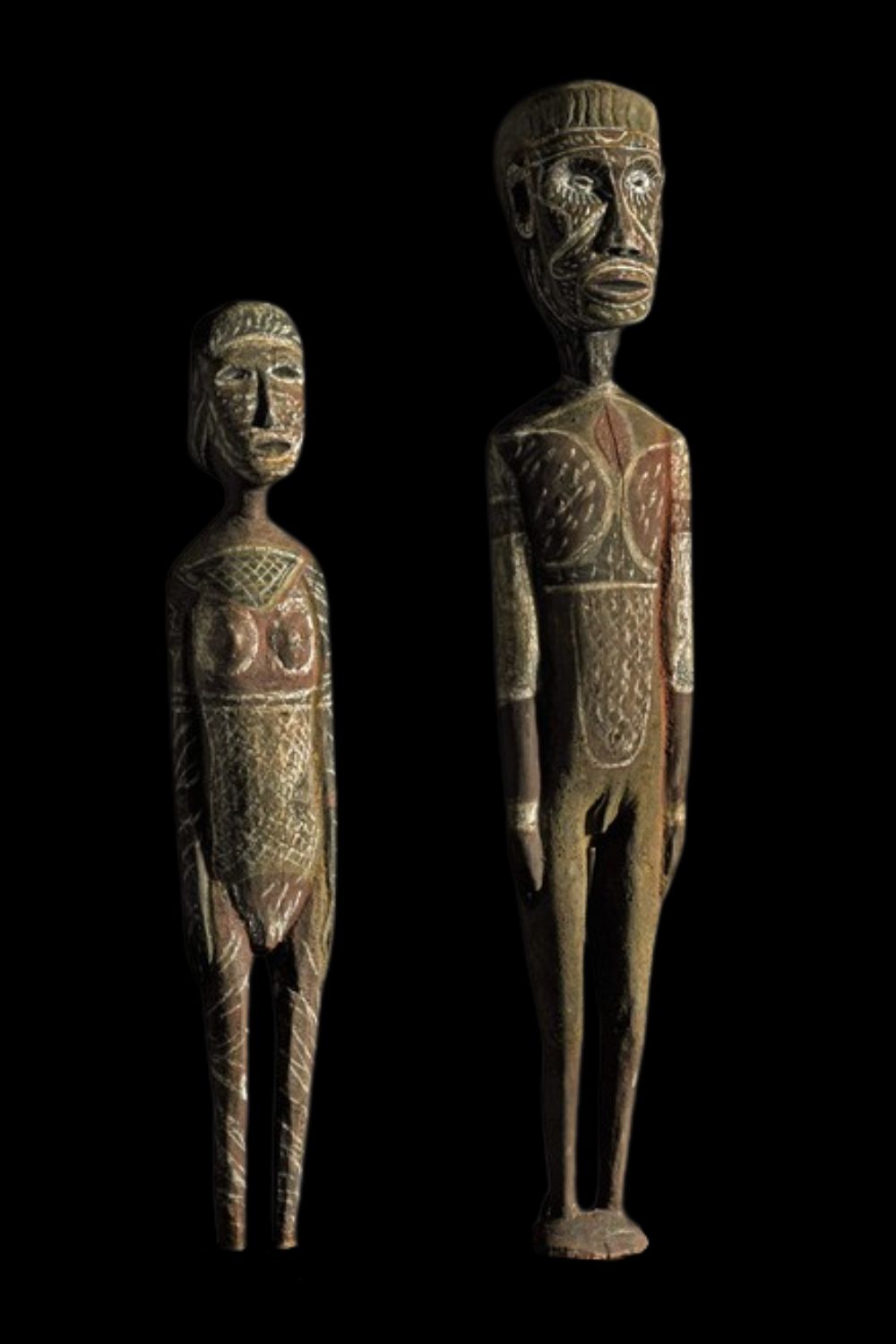
Benedict Munkara
The sculptures of Benedict Munkara are distinguished by their oversized heads set upon comparatively naturalistic bodies, creating a striking sculptural contrast unique within Tiwi Islands art. Although he produced relatively few carvings, the known examples are notable for their refined execution, strong ceremonial surface designs, and highly individual sculptural presence.
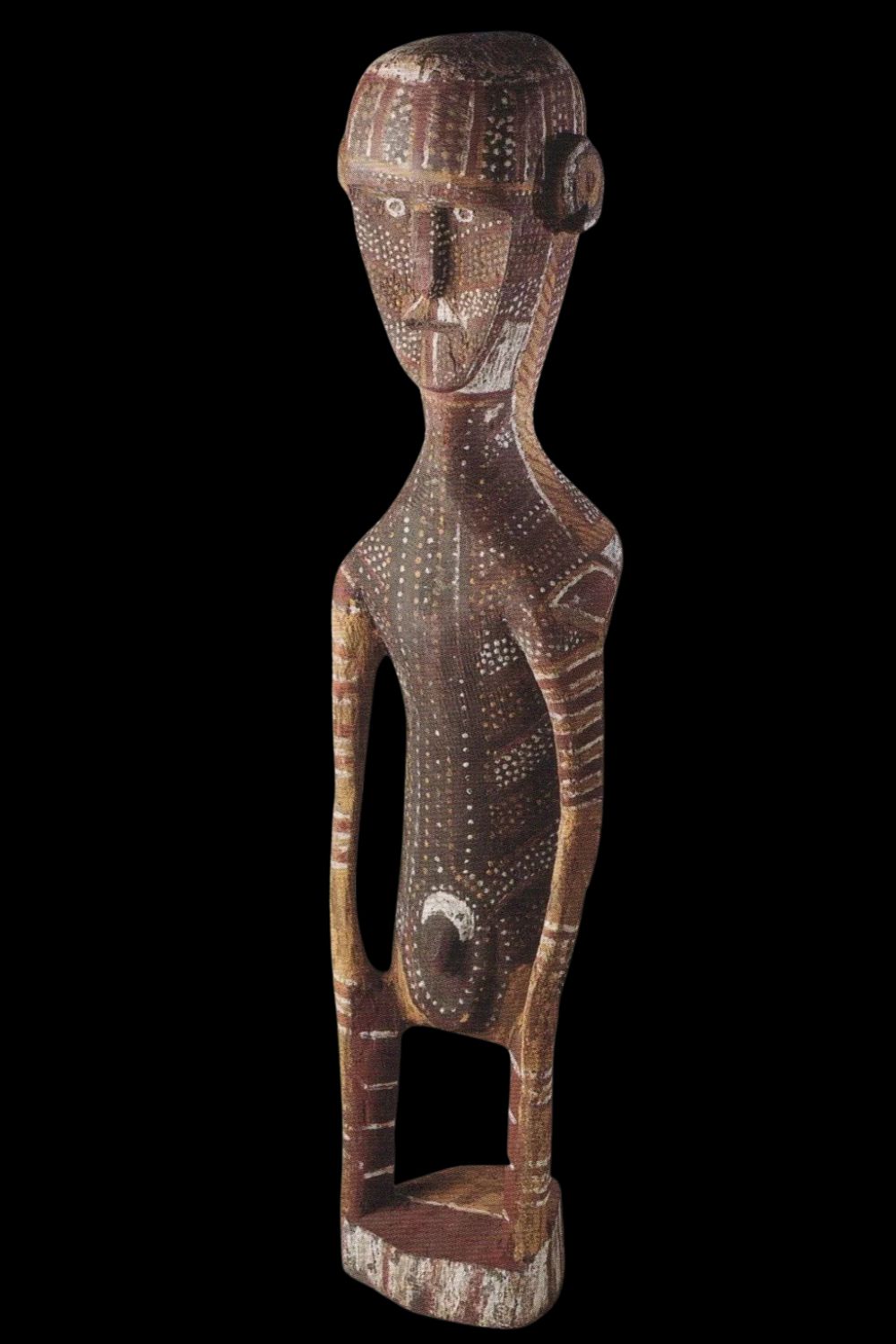
Jerry Kerinauia Wainyingabunga
Jerry Kerinauia Wainyingabunga is best known for his distinctive carvings of pelicans, which remain among the most recognisable bird sculptures produced within Tiwi Islands art. In addition to these works, he also created human figures and unusual figurative bark paintings incorporating traditional jilamara ceremonial designs.
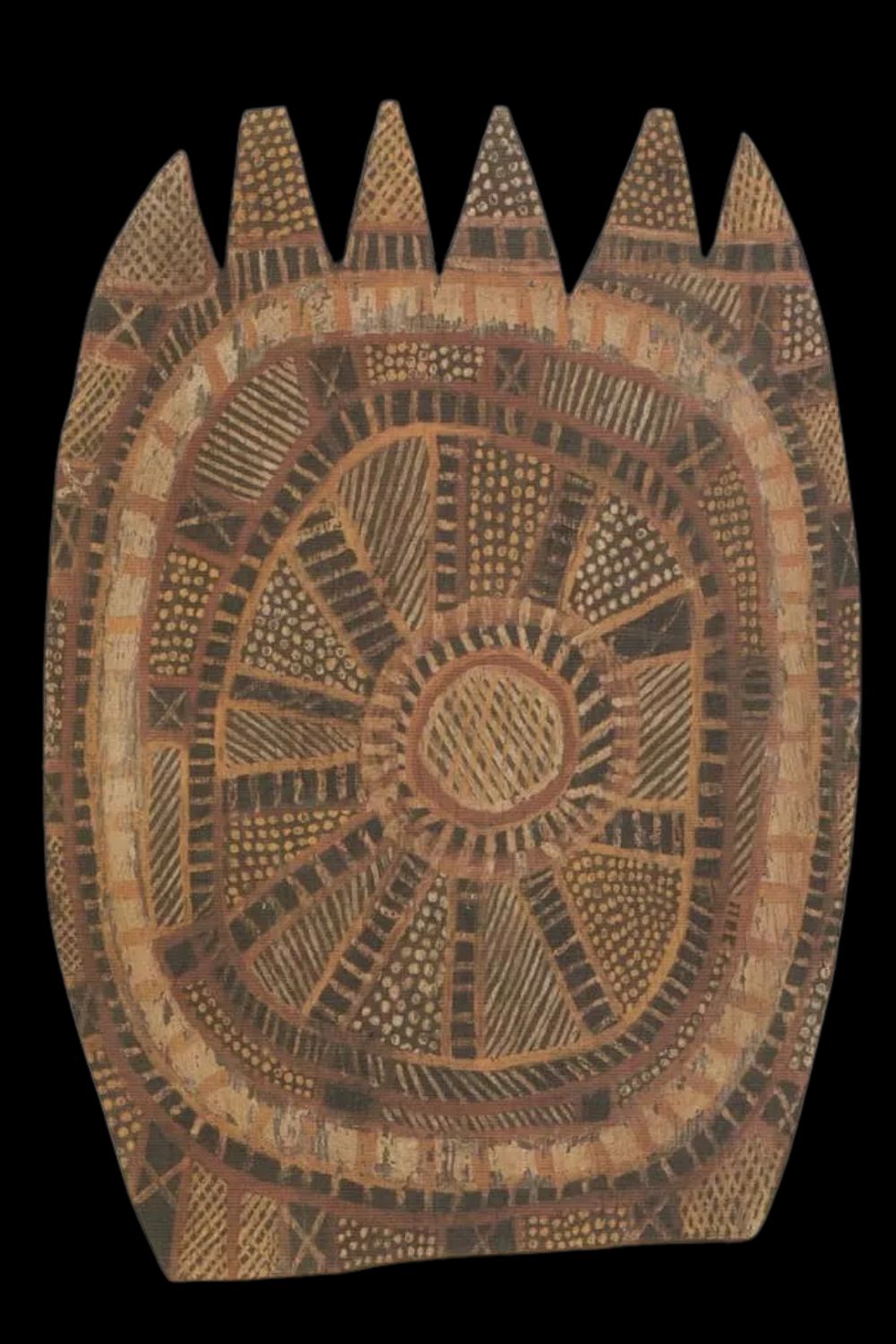
Black Joe Womadiemeri
Black Joe Womadiemeri was particularly renowned for his finely carved ceremonial spears, regarded among the strongest examples of Tiwi weapon sculpture. In addition to his carving, he also produced bark paintings decorated with traditional jilamara designs derived from Tiwi ceremonial body painting traditions.
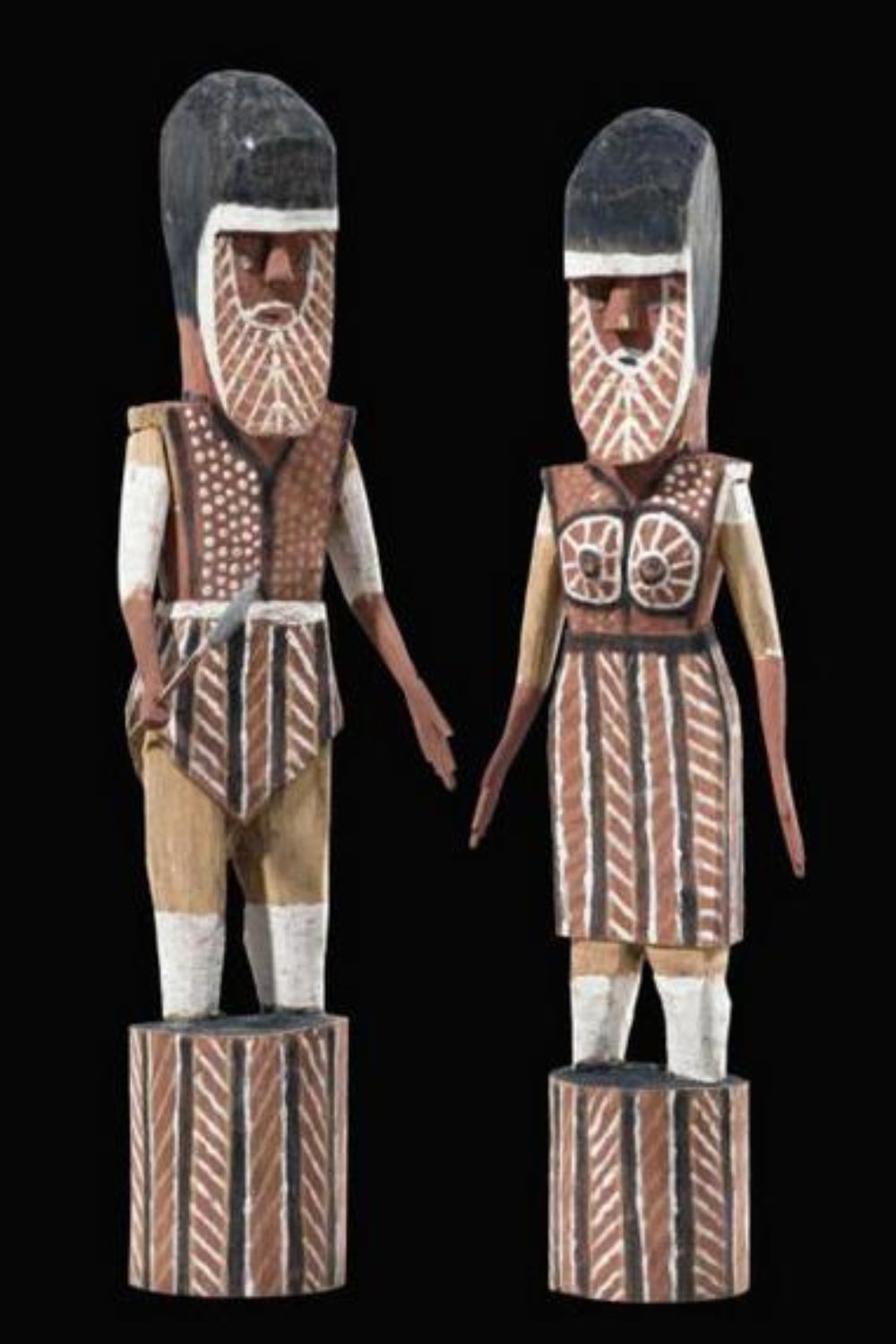
Mani Luki Wommatakimmi
Mani Luki Wommatakimmi was a prolific and highly skilled Tiwi carver whose distinctive sculptures are immediately recognisable within Tiwi Islands art. Nicknamed “Harry Carpenter” for his woodworking ability, he developed a highly individual sculptural style and occasionally used nails to attach the arms of his figures, creating works with a strong assembled and architectural character.
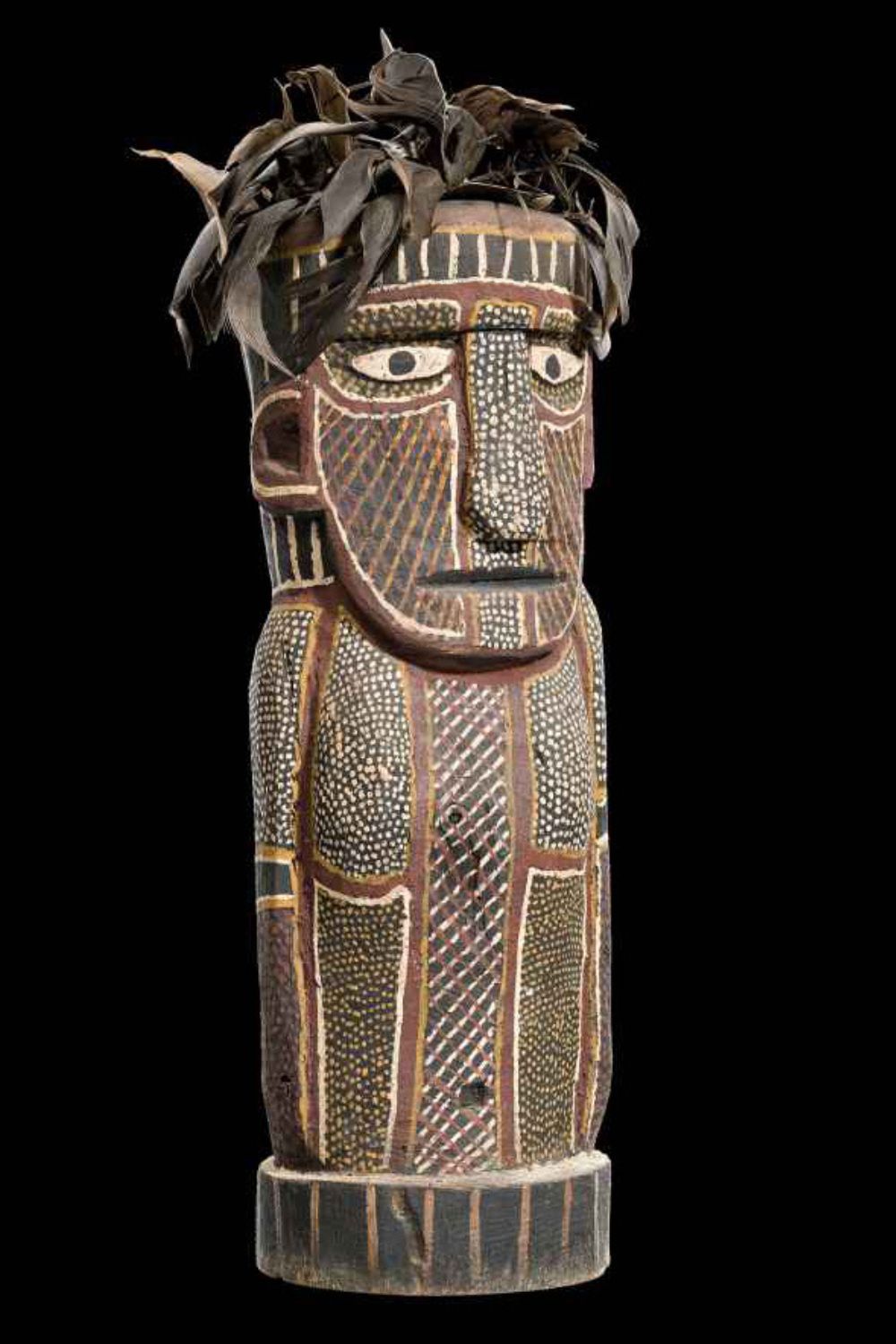
Declan Apuatimi
The sculptures of Declan Apuatimi are typically carved from dense ironwood and are distinguished by large heads often approaching the scale of the body itself. His figures are painted with jilamara designs associated with Pukumani ceremony and frequently feature distinctive almond-shaped white eyes with black pupils. In addition to human figures, Declan also carved birds, usually painted with restrained white bodies contrasted by elaborately decorated wings incorporating traditional Tiwi ceremonial motifs derived from body-paint designs.
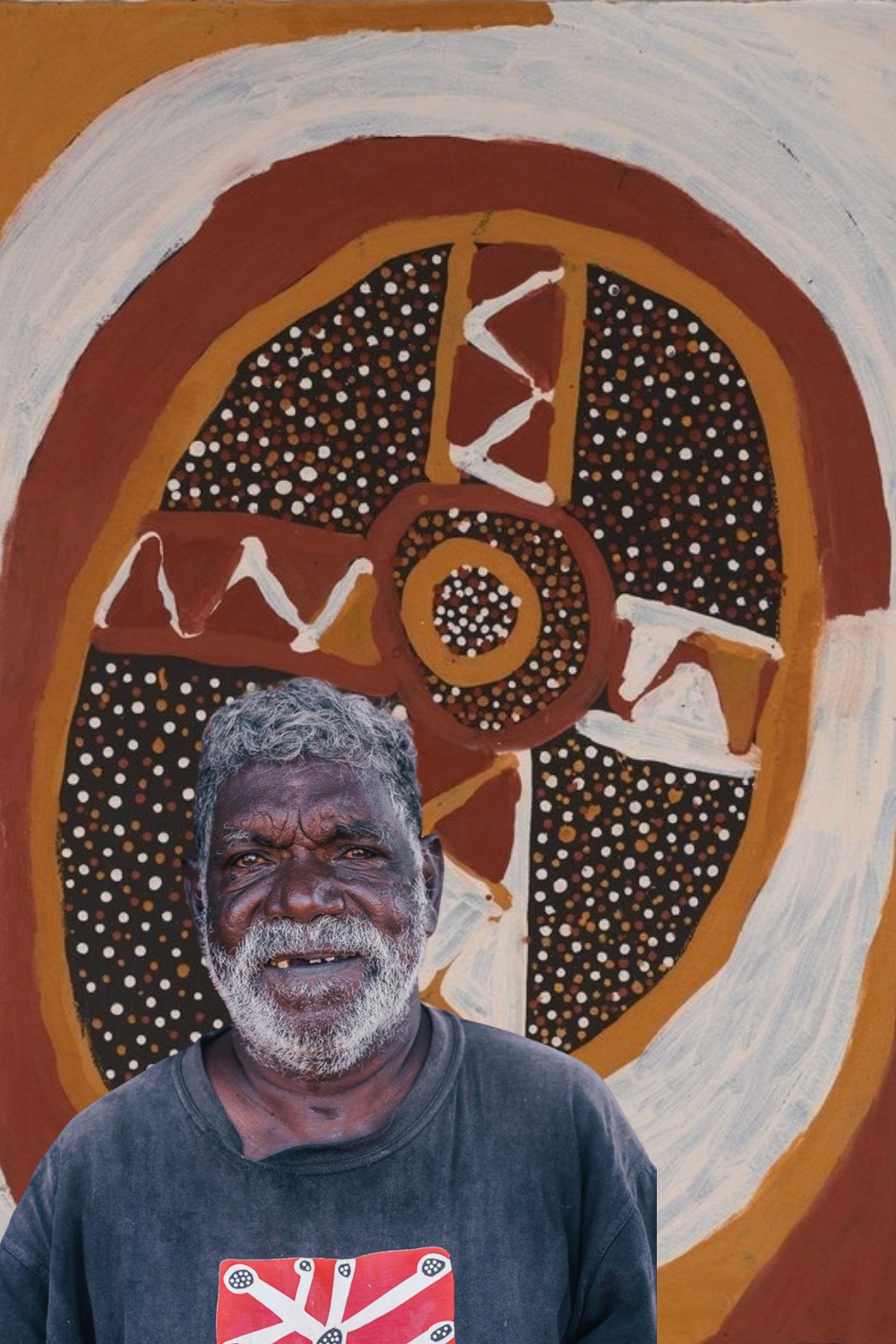
Timothy Cook
Timothy Cook (born 1958) is a senior Tiwi artist from Melville Island whose distinctive paintings transform parlingarri jilamara—old Tiwi ceremonial designs—into bold contemporary compositions. Working at Jilamara Arts and Crafts Association in Milikapiti, Cook uses natural earth pigments and recurring circles, dots and sweeping lines to explore subjects including Kulama, the Tiwi coming-of-age ceremony, Japarra (the moon) and Japalinga (the stars). His mature paintings are particularly recognised for their monumental circular forms, combining inherited Tiwi cultural knowledge with an unmistakably individual gestural style. Winner of the 2012 Telstra National Aboriginal and Torres Strait Islander Art Award, Cook is represented in major Australian and international collections.
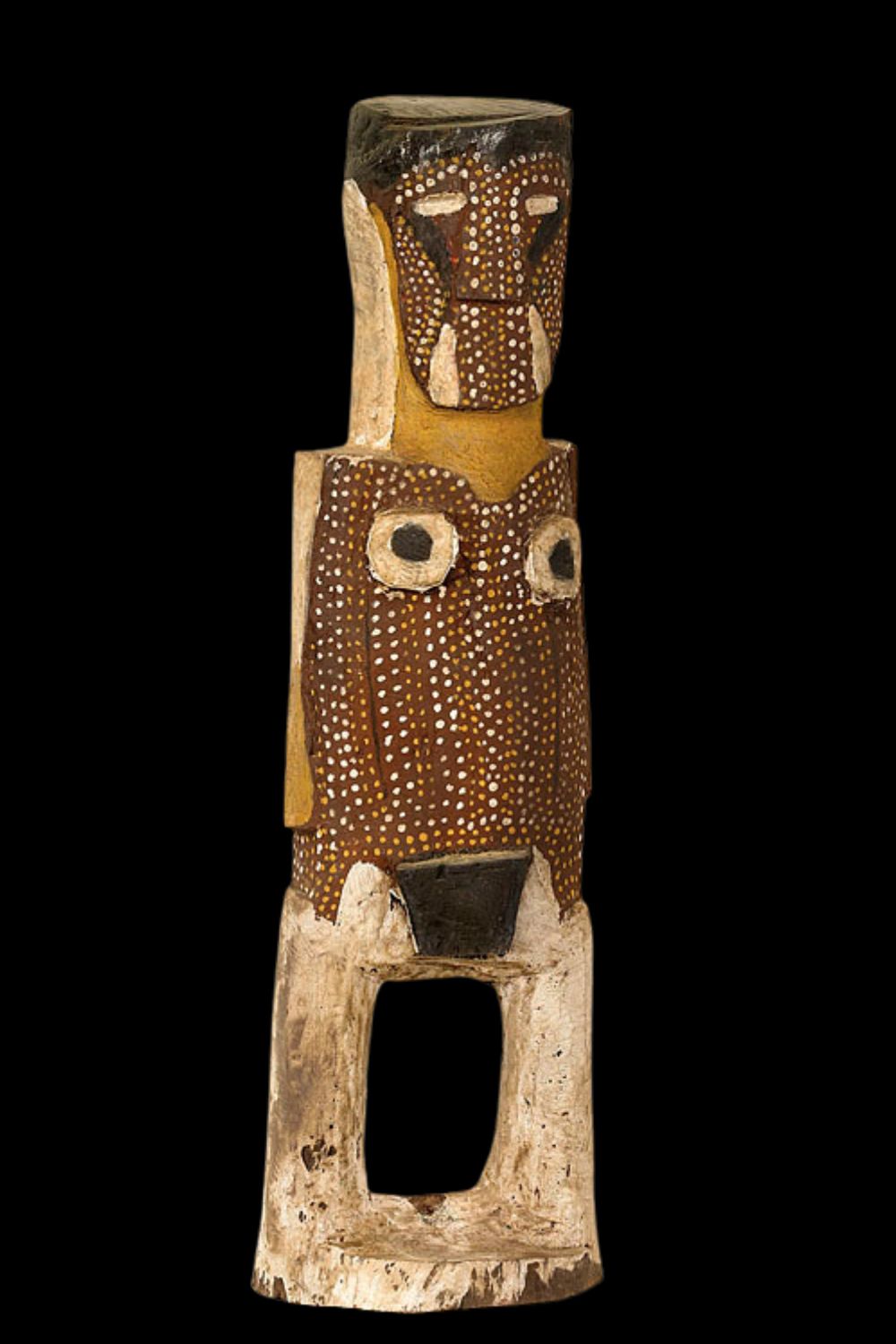
Kitty Kantilla
The sculptures of Kitty Kantilla are characterised by their bold block-like forms and highly individual carving style. Her figures often feature strong broad noses, sometimes approaching a hexagonal shape, while the painted surfaces are composed of dense dotting and large areas of solid ochre colour. Earlier figures typically display clearly defined male and female characteristics. In addition to figurative sculpture, Kitty also produced Pukumani poles and distinctive carved seabirds decorated with traditional jilamara designs.
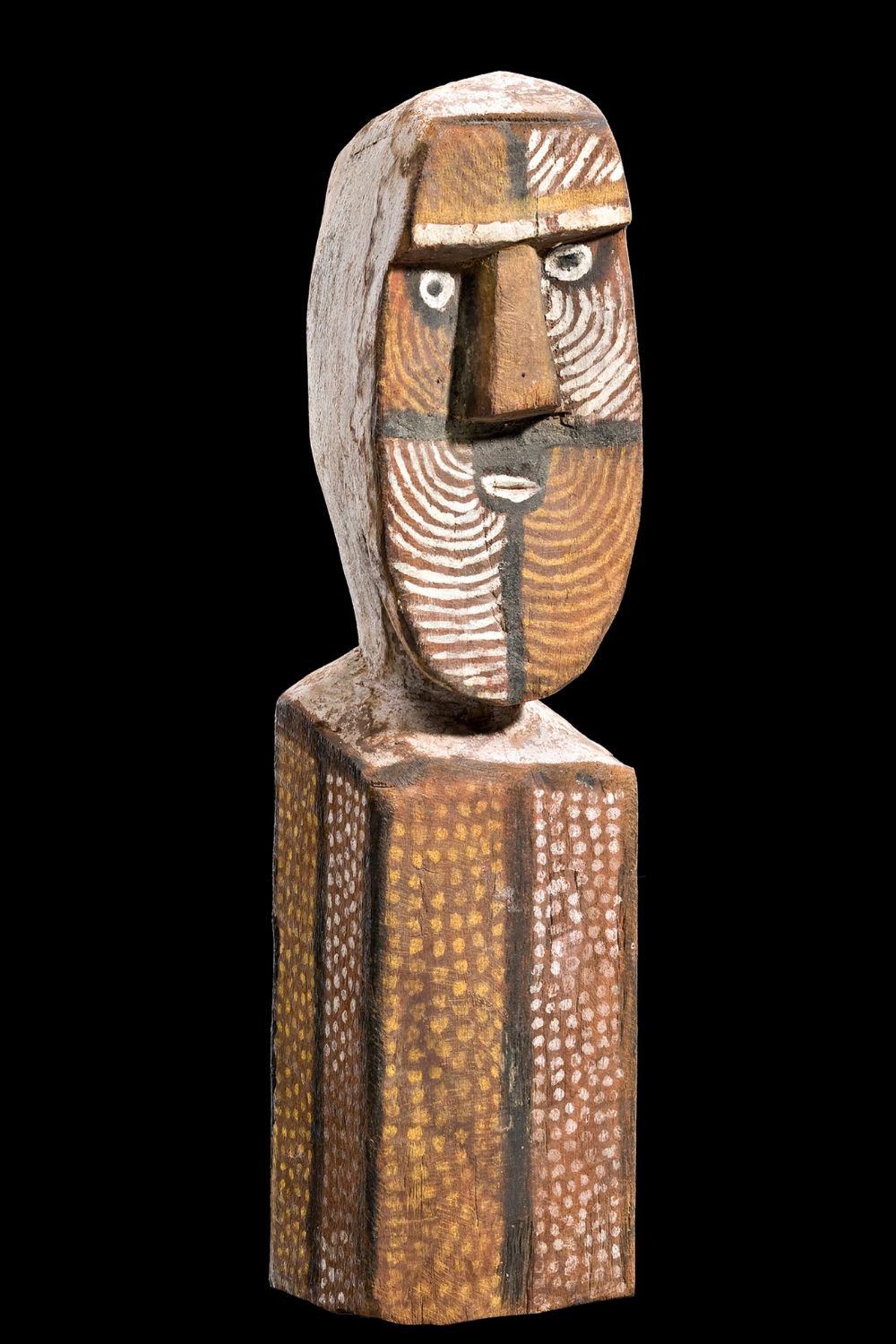
Mickey Geranium Warlapinni
Mickey Geranium Warlapinni was an early Tiwi Islands sculptor and bark painter whose surviving works are now extremely rare. Very few examples are known, but those that do appear are highly valued for their early collection dates and their importance within the development of early Tiwi Art.