How Do You Identify a Papunya Board?
A genuine Papunya Board is identified by a combination of place, period, material, artist and provenance. While the paintings may appear similar to later Western Desert artworks, authentic Papunya Boards were produced at Papunya during the movement’s formative years, primarily between 1971 and 1973, and painted on composition board, chipboard or other building materials and not on canvas.
The first step is to examine the Label. Each painting should have a label and a number on the back. The label system changed over time and the label should be consistent with the year of manufacture.
Genuine Papunya Boards are painted on rigid board rather than stretched canvas. The reverse of the painting often reveals the type of board used and may should retain old labels, inscriptions or catalogue numbers that help establish its history.
Next, consider whether the artwork is consistent with the artist and their known dreamings and style at that period. Most early boards are attributed to pioneering painters such as Kaapa Mbitjana Tjampitjinpa, Johnny Warangkula Tjupurrula, Clifford Possum Tjapaltjarri, Tim Leura Tjapaltjarri, Uta Uta Tjangala and other members of the original Papunya painting group. While early boards are often not signed the information on the back especially the catalog number must be consistent with the artist claimed.
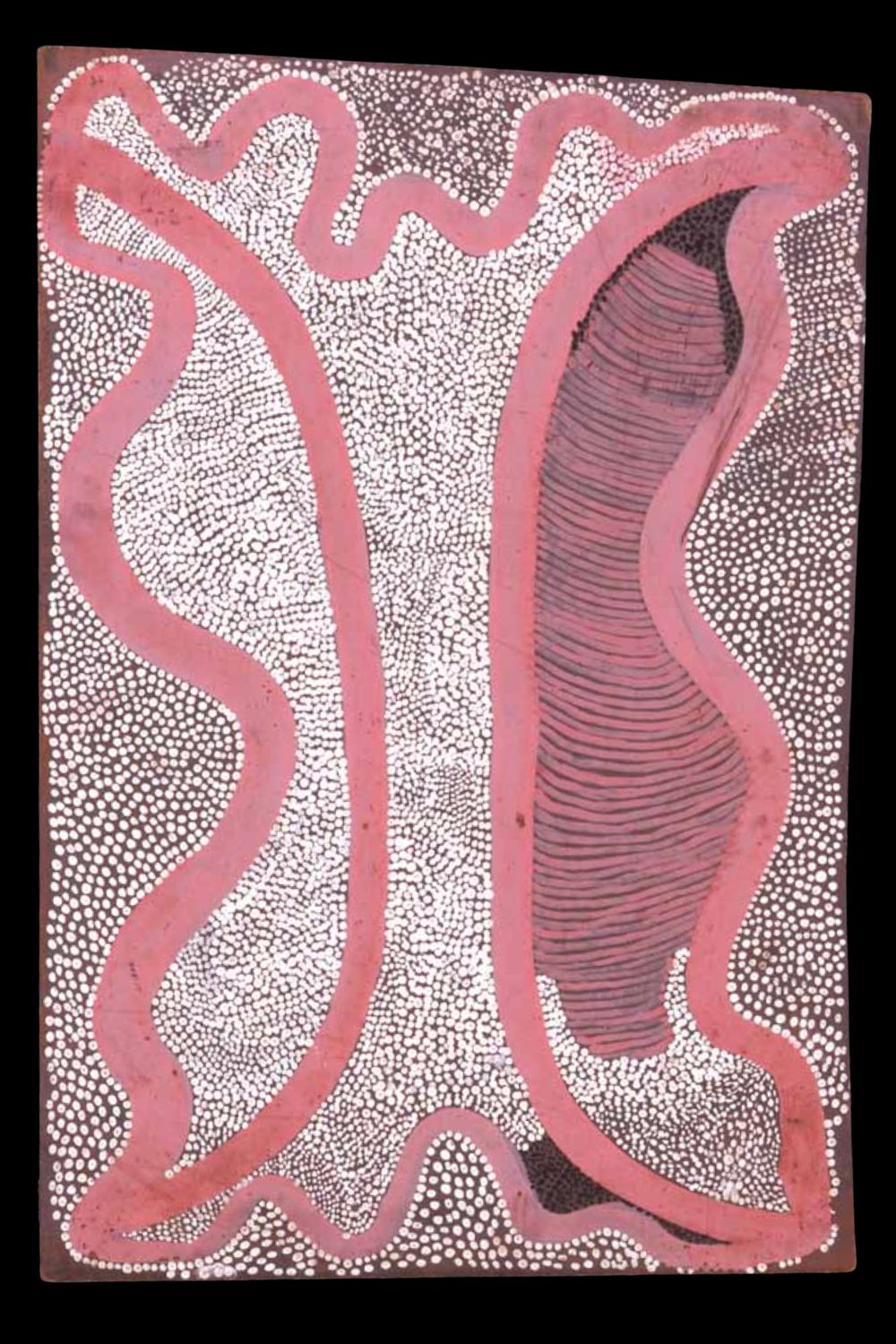
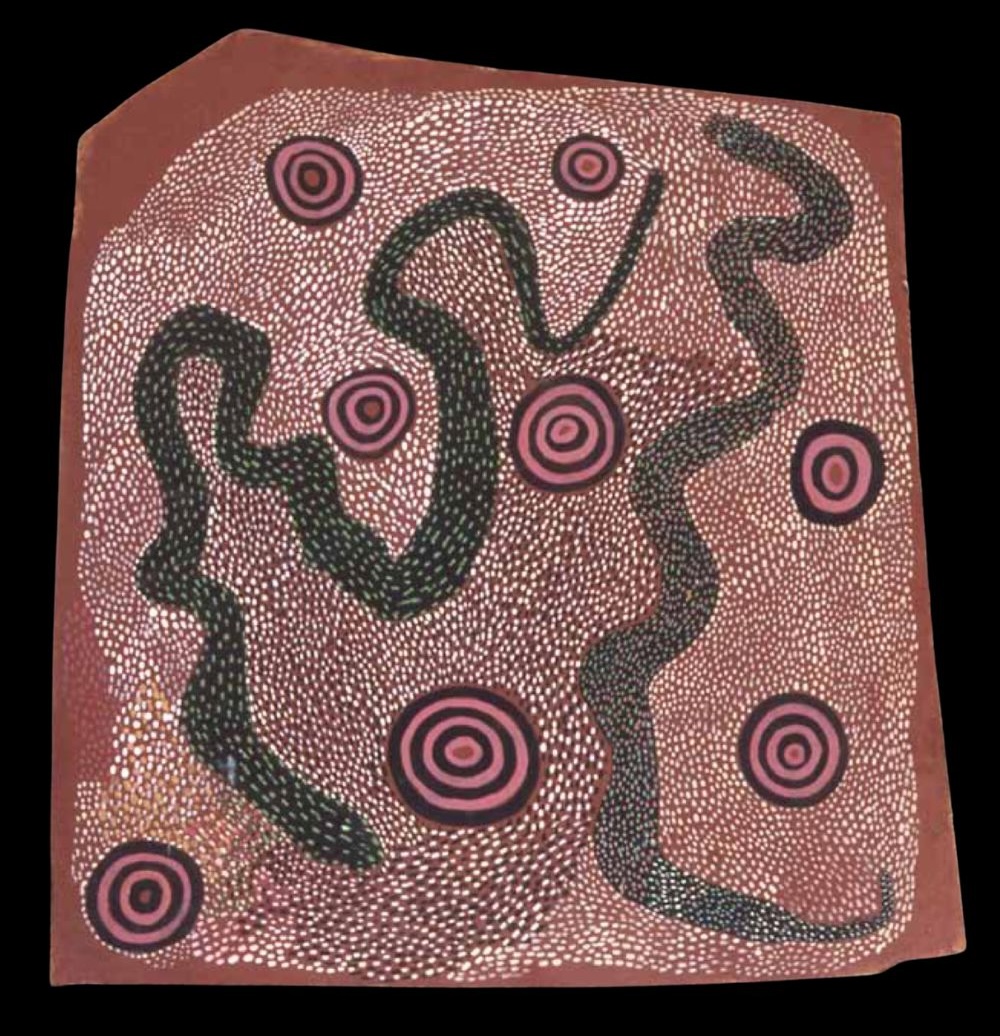
Provenance can be just as important as the painting itself. Original purchase receipts, gallery labels, exhibition records, collection history and even handwritten notes on the reverse can help establish authenticity. Early Papunya labels or documentation may significantly strengthen identification.
The style of the painting may also provide clues, but it should never be used on its own. Early Papunya Boards often differ markedly from the dense dot paintings many people associate with Aboriginal art. Some feature bold linear ceremonial designs, others highly symmetrical compositions, while later examples begin to incorporate more extensive dotting. Because styles varied considerably between artists, appearance alone is rarely enough to confirm authenticity.
Artists name and the spelling of those names also varied over time so the name used should be consistent with the year of production
Correctly identifying a Papunya Board requires experience and should always consider the painting as a whole rather than relying on a single feature. The support, materials, artist, provenance, date and historical context all contribute to an accurate identification.
If you believe you own a Papunya Board, I am happy to provide an initial assessment from photographs. Please send clear images of the front, back and label and catalog numbers, together with the dimensions and any information about where the painting came from. Even if it appears modest or is unsigned, it may prove to be an important early work.
Continue reading:
- What are Papunya Boards
- When were Papunya Boards painted?
- Why were Papunya Boards painted on board?
- Why are Papunya Boards historically important?
- How much are Papunya Boards worth
- Who painted the first Papunya Boards?
- What do Papunya Boards Depict?
- Where are most of the Important Papunya Boards today?
All images in this article are for educational purposes only.
This site may contain copyrighted material the use of which was not specified by the copyright owner.