Carrolup Art: The Story of the Noongar Children Who Changed Australian Art
Carrolup Art refers to a remarkable body of landscape drawings created by Noongar children at the Carrolup Native Settlement near Katanning in Western Australia during the 1940s. Today these works are recognised among the most significant Aboriginal artworks produced in twentieth-century Australia, combining extraordinary artistic achievement with one of the most powerful stories in Australian history.
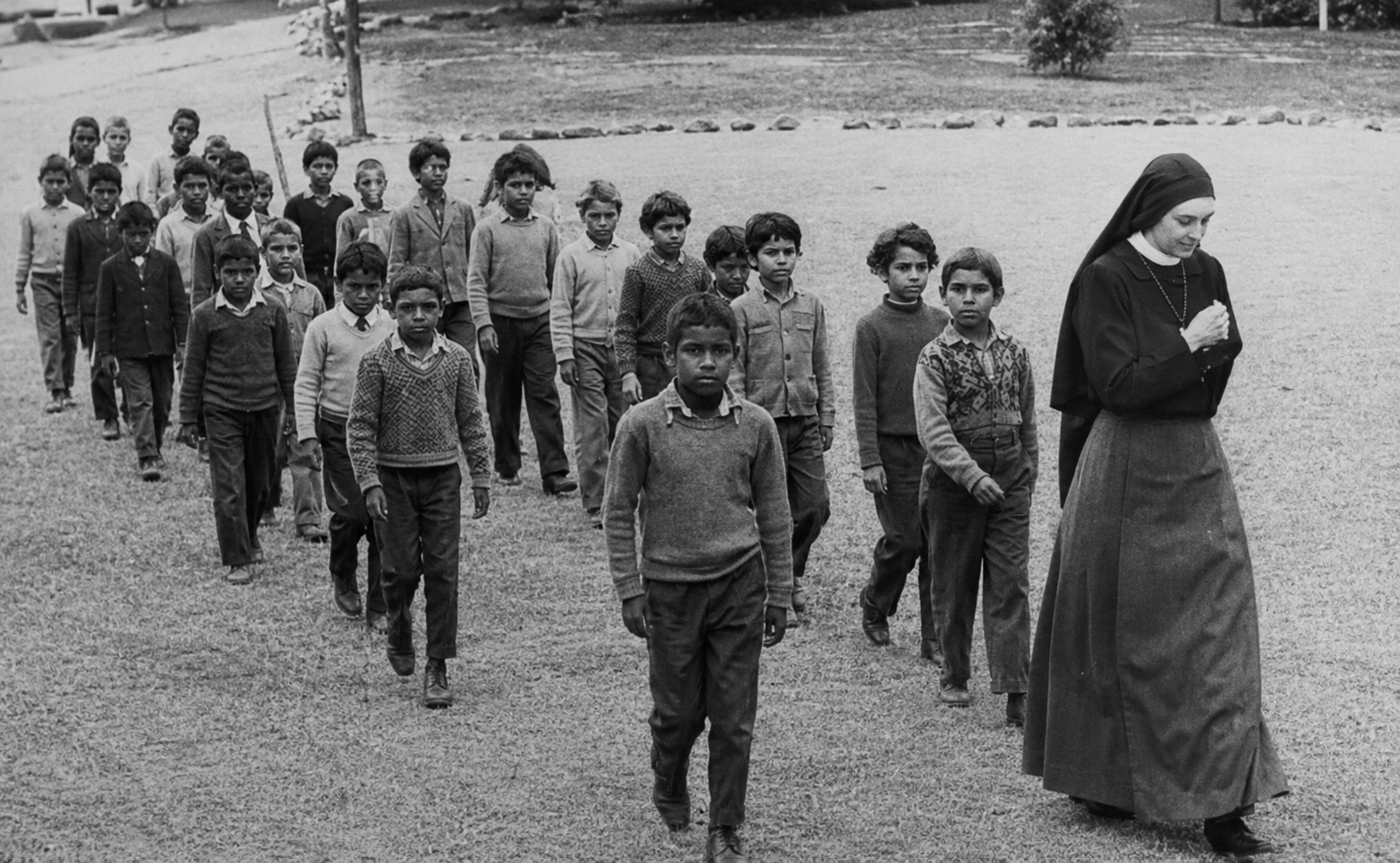
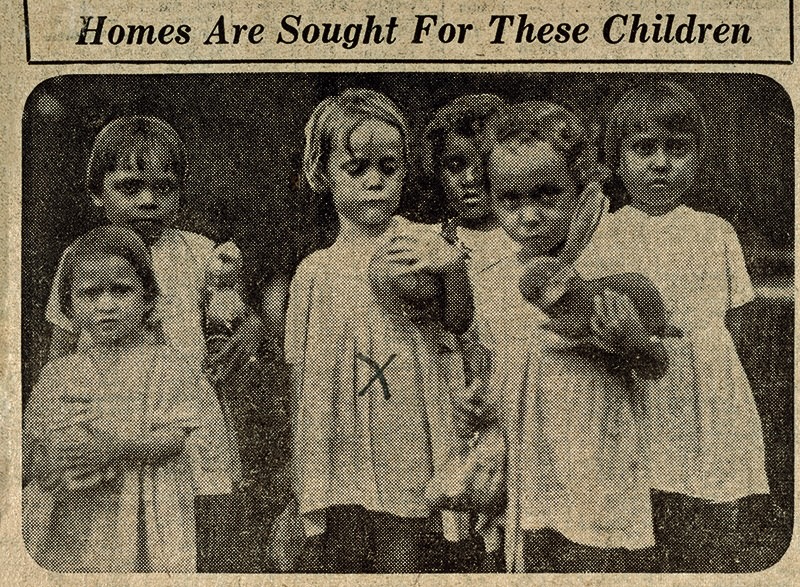
The artists were not professional painters. They were Aboriginal children, many of whom had been separated from their families under government policies that contributed to what is now known as the Stolen Generations. Removed from parents, communities, language, and traditional life, these children nevertheless produced drawings of extraordinary beauty and emotional depth.
What makes Carrolup Art so important is that it transformed personal experiences of separation and loss into enduring expressions of connection to Country. Through landscapes filled with towering eucalyptus trees, distant hills, glowing horizons, and dramatic skies, the children revealed a relationship with Noongar Country that survived despite physical removal from it.
Today Carrolup Aboriginal Art Style stands as both an artistic achievement and a an important chapter in Aboriginal Art History. It is a story of resilience, cultural continuity, and the enduring connection between Noongar people and Country.
What Is Carrolup Art?
Carrolup Art emerged at the Carrolup Native Settlement, approximately 30 kilometres north-west of Katanning in south-west Western Australia. During the 1940s a group of Aboriginal children developed an extraordinary drawing tradition that attracted national and international attention.
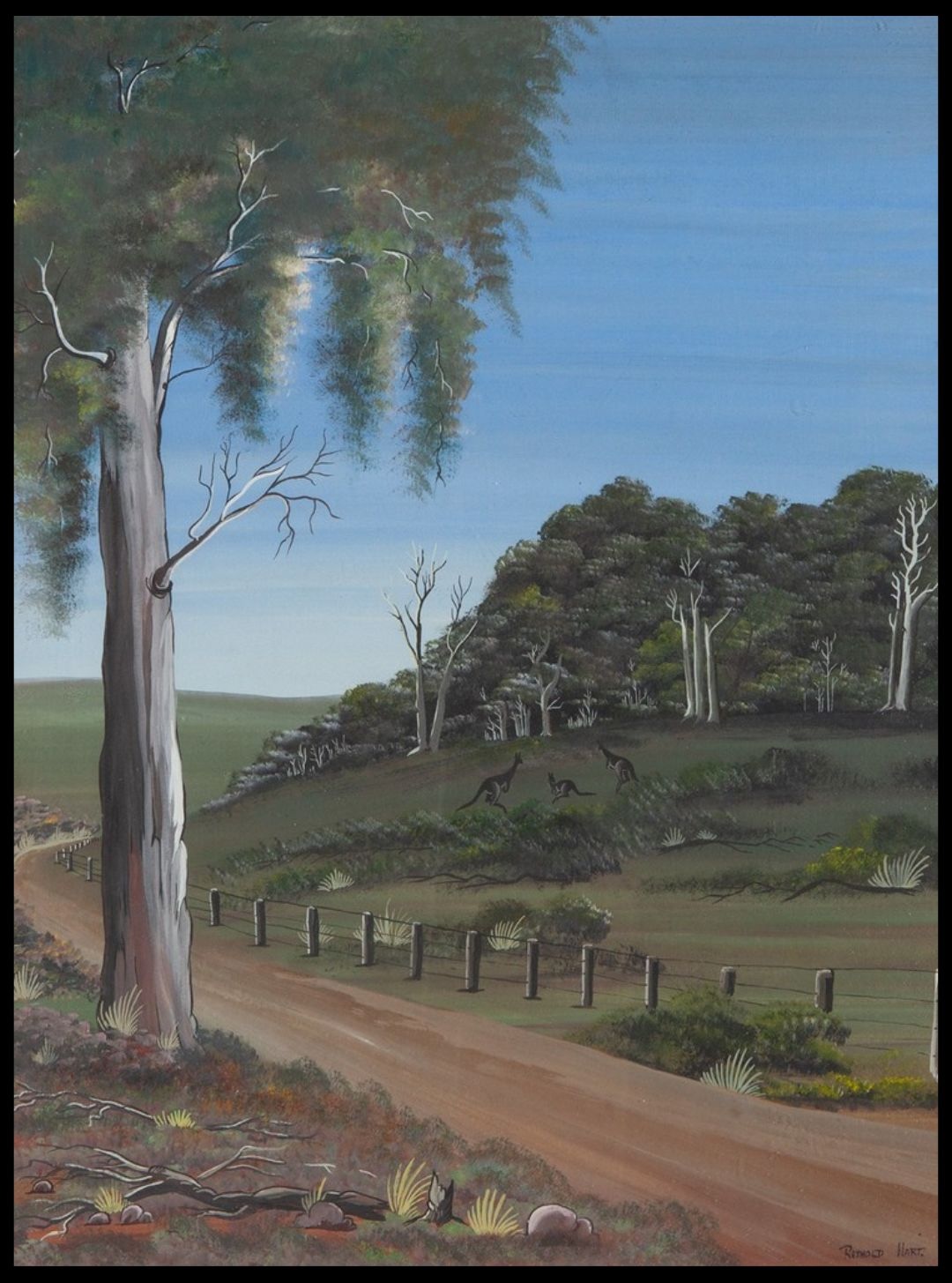
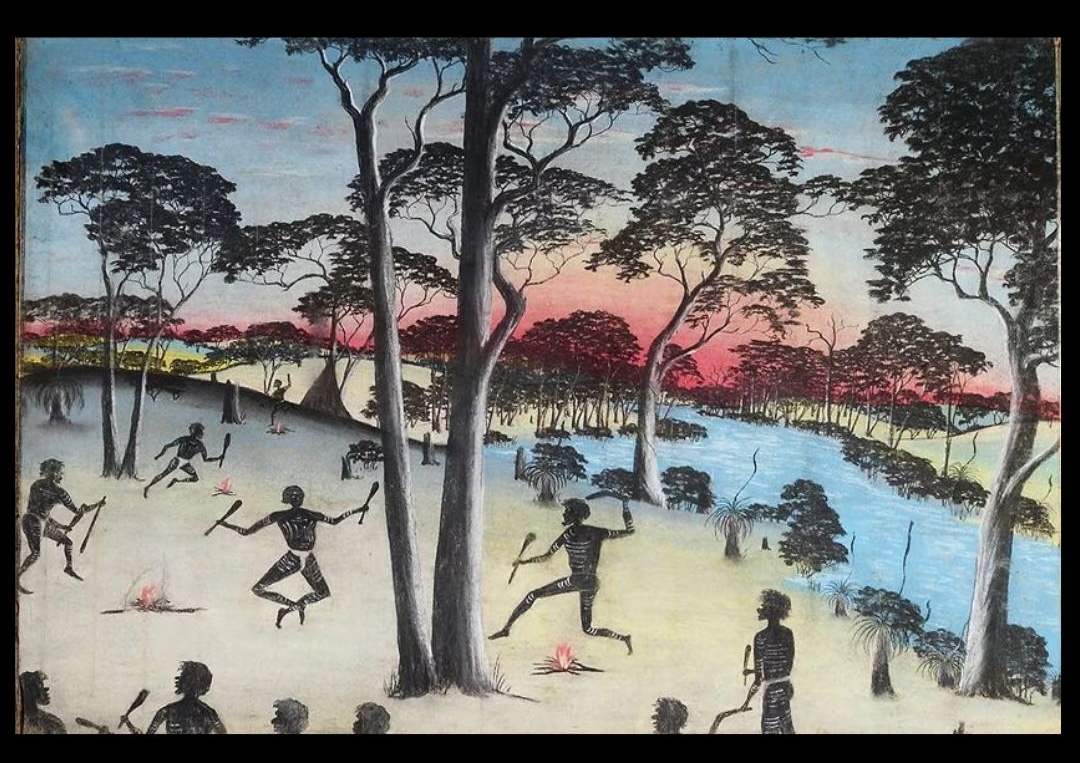
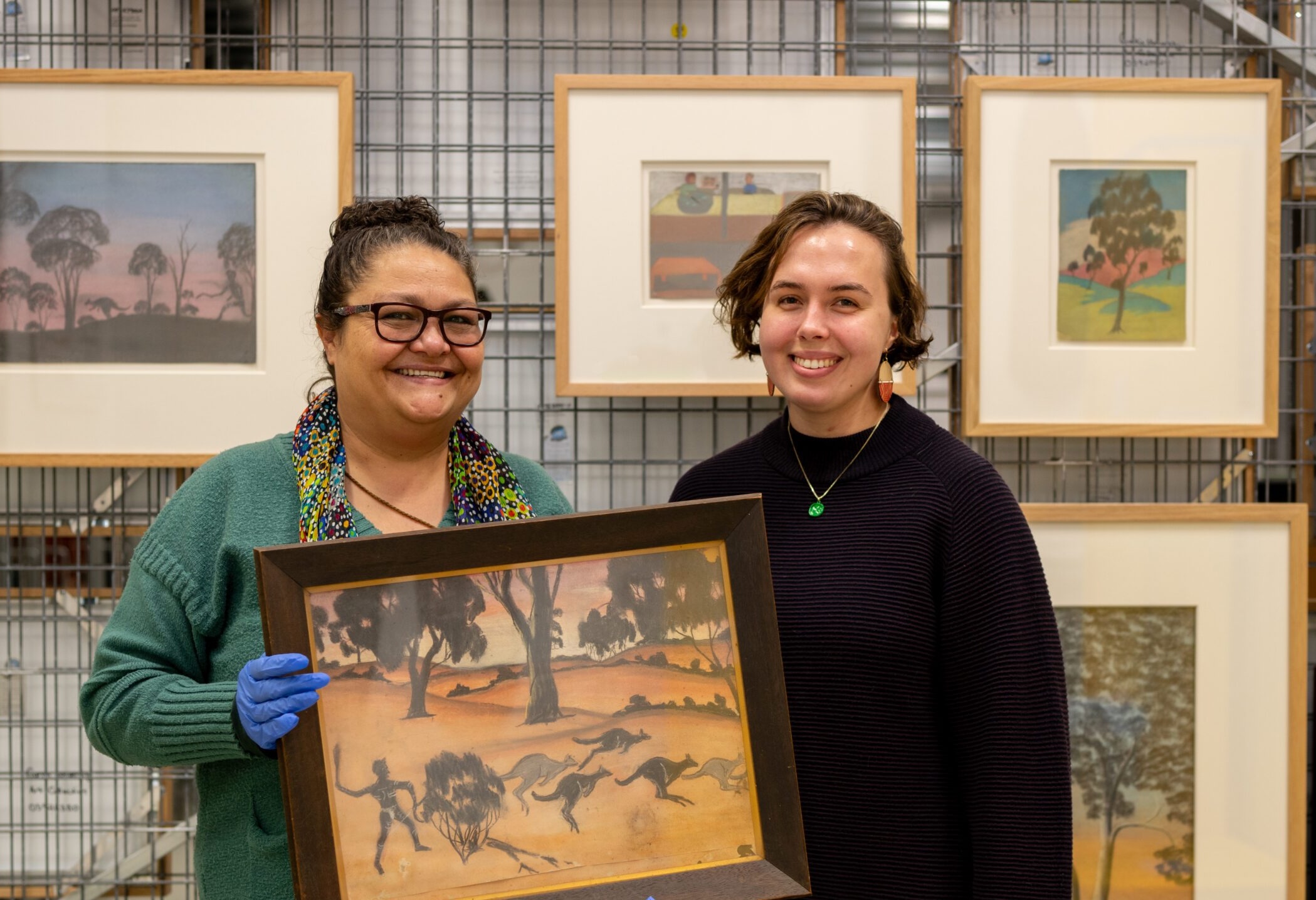
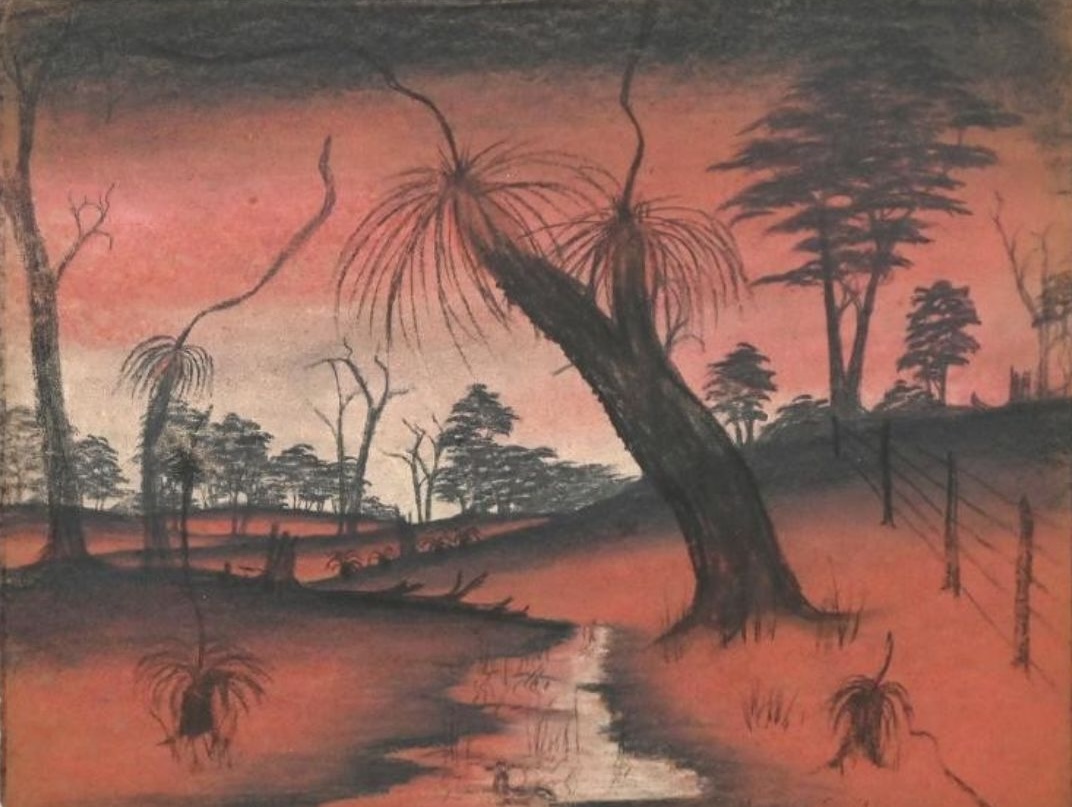
The children created atmospheric landscape drawings using pencil, charcoal, pastel, and coloured crayons. Their works became instantly recognisable through the use of silhouetted trees, glowing sunsets, misty horizons, and expansive views of the south-west landscape.
Unlike most Aboriginal art traditions, Carrolup Art did not depict Dreaming figures, ceremonial designs, or traditional symbols. Instead, the artists expressed their connection to Country through landscape itself. The result was a uniquely Noongar artistic movement unlike any other in Australia.
The Children Behind Carrolup Art
The story of Carrolup Art cannot be separated from the children who created it.
Almost all of the artists were Noongar children from south-west Western Australia. Many had been removed from their mothers, fathers, and extended families while still very young. Some were taken as babies or toddlers. They arrived at Carrolup carrying experiences of separation and loss that no child should have to endure.
These children were living within an institution that formed part of a broader system designed to control Aboriginal lives. Yet despite these circumstances, they produced artworks that would eventually be admired throughout Australia, Britain, and Europe.
The tragedy of Carrolup is that these children were separated from the people who loved them. The achievement of Carrolup Art is that their connection to Country survived.
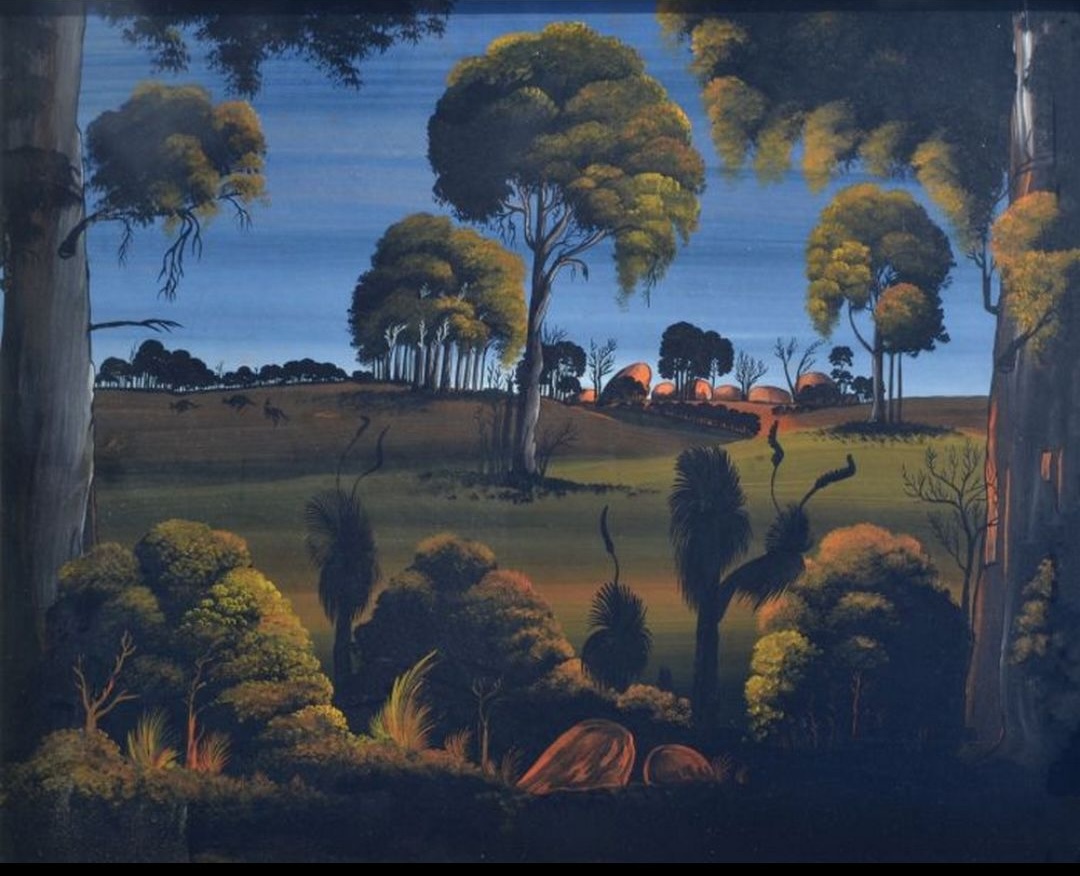
The Meaning of Carrolup Art
At its deepest level, Carrolup Art is about connection to Country.
Country in Aboriginal culture is far more than land or landscape. It encompasses ancestry, identity, belonging, memory, family, and spiritual connection. Although many of the Carrolup children had been physically removed from their homes and communities, their art and souls repeatedly returned to the landscapes of Noongar Country.
The silhouetted trees, distant hills, rivers, and glowing horizons that appear throughout Carrolup Art can be understood as expressions of memory belonging and longing to be home back on country. These works are not simply landscape drawings. They are visual statements that connection to Country endured despite separation from family and traditional homelands.
This is what makes Carrolup Art so moving. The children had been removed from Country, but Country remained part of who they were.
The Major Artists of the Carrolup School
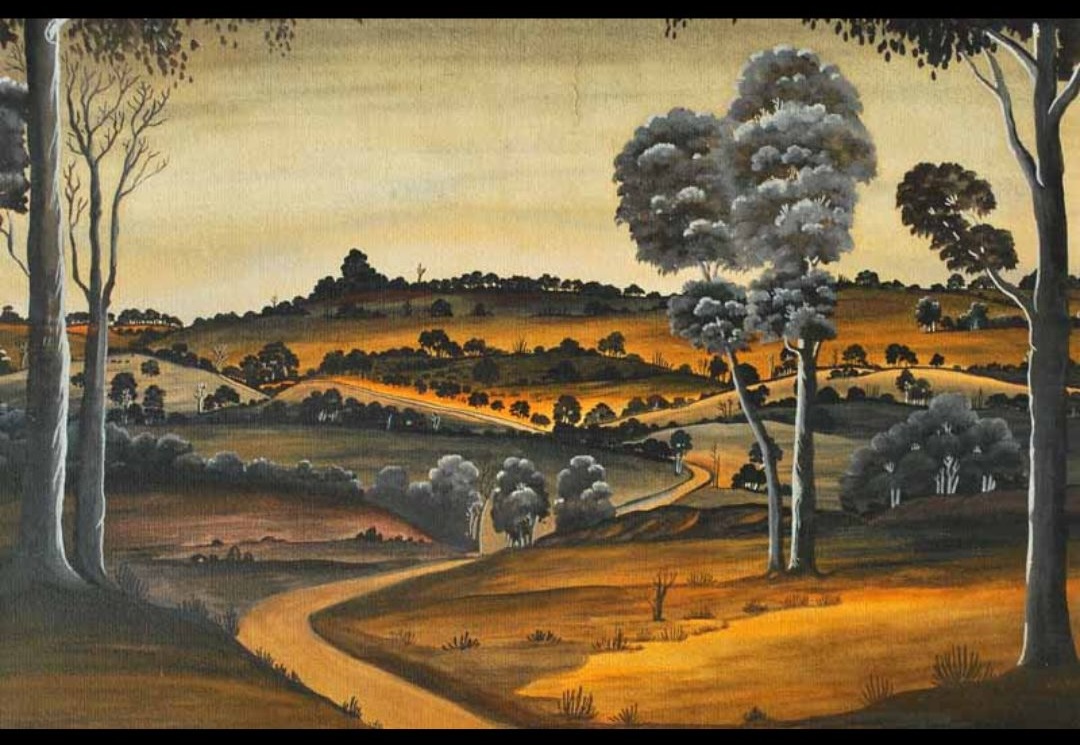
Reynold Hart (1938–1981)
Reynold Hart is widely regarded as the most accomplished and influential artist to emerge from the Carrolup School. Removed from his family as a young child and taken to the Carrolup Native Settlement, Hart displayed an extraordinary artistic talent that quickly distinguished him from his peers. His drawings are characterised by dramatic silhouetted eucalyptus trees, luminous horizons, and a remarkable ability to create atmosphere and emotional depth. Even as a child, Hart demonstrated a sophisticated understanding of composition, perspective, and landscape that rivalled many adult artists. Unlike most of the Carrolup children, he continued painting throughout his adult life, developing a successful career as a Noongar landscape artist. Today his surviving Carrolup drawings are among the most sought-after works associated with the movement and are increasingly recognised as some of the finest artworks produced by any of the Carrolup children.
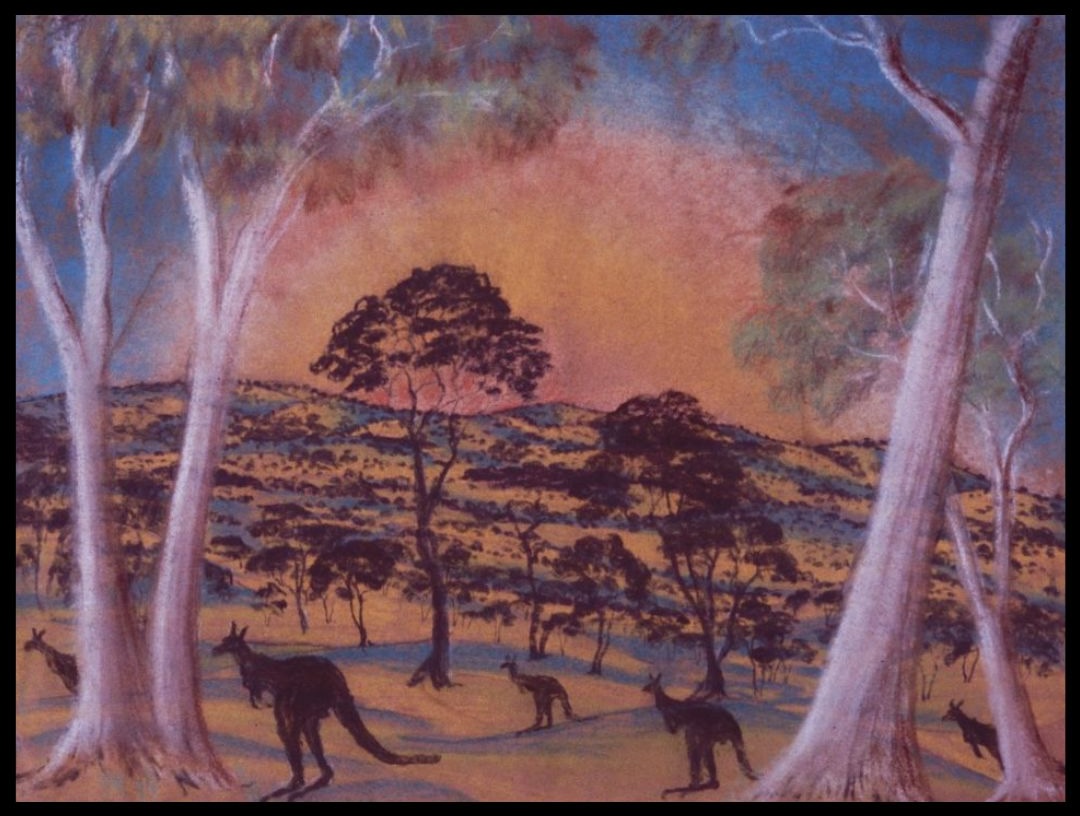
Parnell Dempster
Parnell Dempster produced some of the most visually striking and emotionally resonant drawings associated with Carrolup Art. His works are notable for their strong contrasts between dark foreground forms and glowing skies, creating landscapes that possess both grandeur and intimacy. Like many of the Carrolup artists, Dempster repeatedly returned to themes of landscape and Country, transforming familiar elements of the south-west environment into powerful expressions of memory and belonging. His drawings reveal a natural sensitivity to light, atmosphere, and spatial depth, qualities that helped establish the reputation of the Carrolup children beyond Western Australia. Today Dempster is recognised as one of the major artistic voices of the Carrolup movement and an important figure in the history of Noongar art.
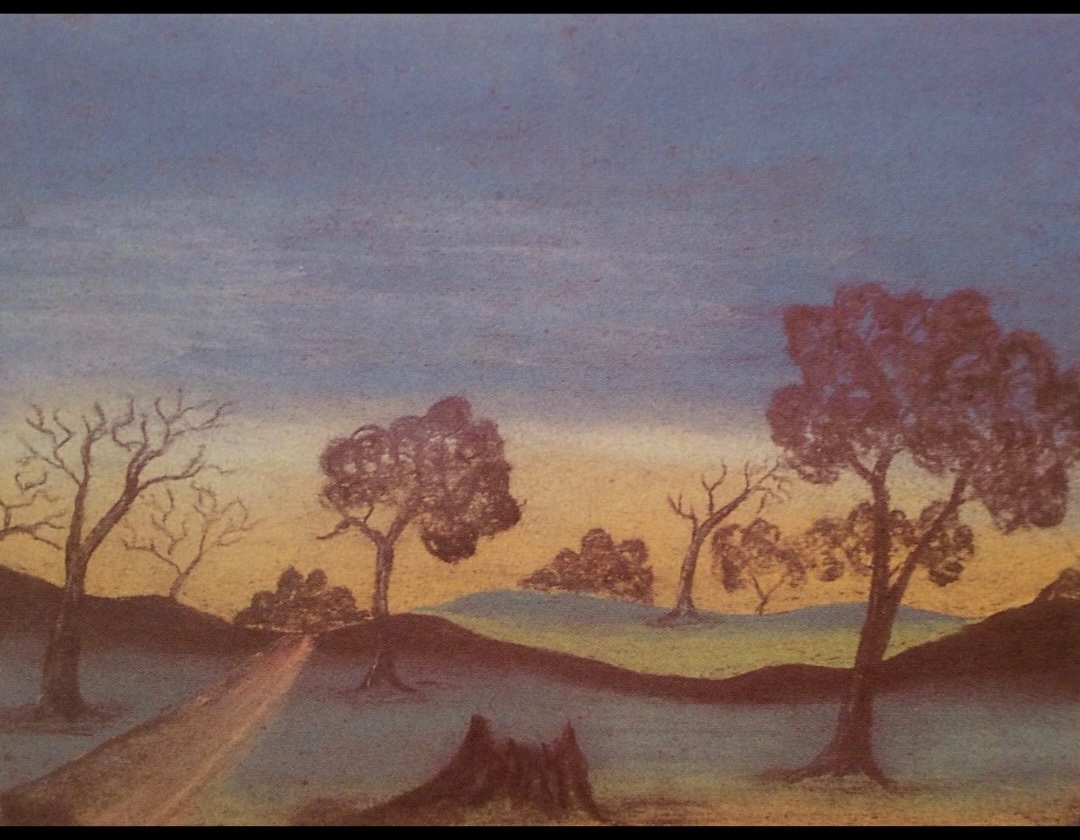
Claude Kelly
Claude Kelly was among the leading artistic talents of the Carrolup School and played an important role in establishing the movement’s distinctive visual identity. His drawings display a mature understanding of perspective and composition, often combining expansive landscapes with carefully observed natural detail. Kelly possessed a remarkable ability to create a sense of distance and atmosphere through subtle tonal variation, drawing viewers into landscapes that appear both real and deeply remembered. His works exemplify the qualities that made Carrolup Art internationally admired and continue to be valued for their artistic sophistication and historical significance. Today Kelly’s drawings remain important examples of the creative achievements of the Carrolup children.
The Lost Carrolup Collection and Its Return Home
The largest surviving collection of Carrolup Art is the Herbert Mayer Collection, comprising more than one hundred drawings created by the Carrolup children during the late 1940s. These works form the most important surviving record of the artistic movement and are now recognised as one of the most significant collections of Aboriginal art associated with the Stolen Generations.
After attracting attention in Australia, Britain, and Europe during the 1950s, many of the drawings entered the possession of American philanthropist Herbert Mayer. The collection was eventually donated to Colgate University in New York State, where it remained largely forgotten for more than fifty years. During this period many people assumed the artworks had been lost.
The drawings were rediscovered in the early twenty-first century, leading to one of the most remarkable stories in Australian art history. In 2013, after extensive consultation with Noongar Elders and community representatives, the collection was returned to Western Australia. Today the artworks are cared for by Curtin University and form the foundation of the Carrolup Centre for Truth-telling.
The return of the collection represented far more than the repatriation of artworks. The children who created the drawings had themselves been removed from family, community, and Country. Decades later, their art also completed a journey home. The collection’s return reunited these extraordinary works with the Noongar Country and communities from which they originated, making it one of the most important cultural repatriations in Australian history.
Why Carrolup Art Is Important
Carrolup Art occupies a unique place within Australian history. It is one of the most important artistic legacies associated with the Stolen Generations and one of the earliest internationally recognised bodies of Aboriginal art.
The drawings emerged during a period when Aboriginal people were often viewed through discriminatory and paternalistic attitudes. The Carrolup children challenged these assumptions through the quality of their work. Audiences in Australia, Britain, and overseas encountered drawings that demonstrated extraordinary creativity, technical ability, intelligence, and emotional depth. For many non-Indigenous viewers, the Carrolup artists became some of the first Aboriginal artists whose individual talents were widely recognised and celebrated.
The children should never have needed to prove their humanity. Yet their art helped many people see Aboriginal children not as subjects of government policy but as gifted individuals with rich cultural identities, personal histories, and profound connections to Country.
Carrolup Art also preserves the voices and experiences of Noongar children whose lives were shaped by policies of removal and separation. The drawings stand as both artworks and historical testimony, providing insight into one of the most difficult chapters in Australian history through the eyes of the children who lived it.
Most importantly, Carrolup Art demonstrates the enduring connection between Aboriginal people and Country. The children who created these drawings were separated from family and community, yet through their art they showed that cultural identity, memory, and belonging could survive even the most difficult circumstances.
For this reason, Carrolup Art remains one of the most moving and significant chapters in Aboriginal Australian art. It is a story of loss and resilience, of children whose connection to Country endured despite separation, and of artworks that changed how many people understood Aboriginal Australians and their humanity.
Where Can You See Carrolup Art Today?
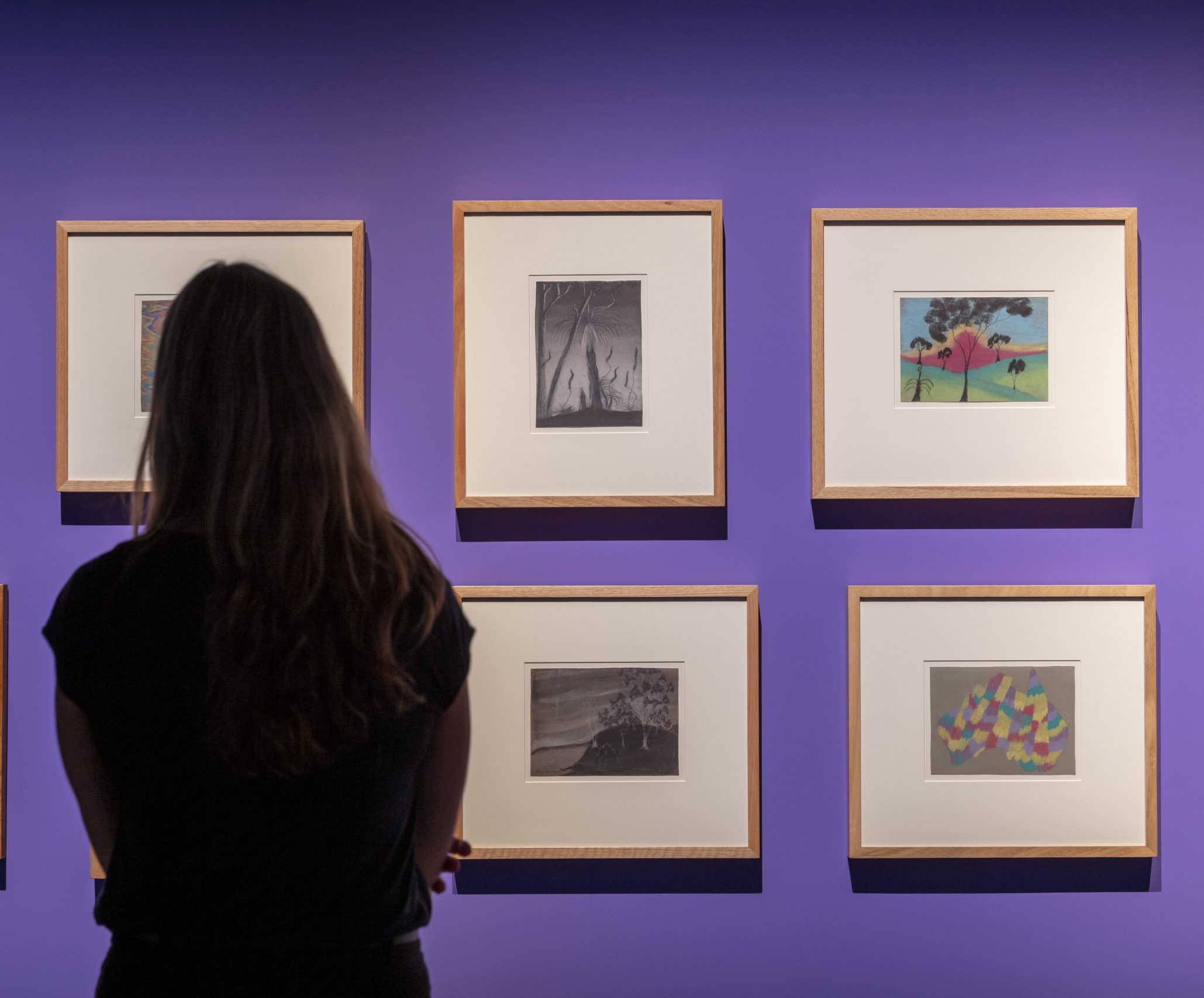
Today the most important collection of Carrolup Art is held by the Carrolup Centre for Truth-telling at Curtin University in Western Australia. The centre cares for the renowned Herbert Mayer Collection, which was returned to Noongar Country in 2013 after spending more than fifty years in the United States. Carrolup artworks are also occasionally displayed in major exhibitions and museums, allowing new generations to learn about the extraordinary achievements of the Noongar children who created these remarkable drawings during the 1940s.
Frequently Asked Questions About Carrolup Art
What is Carrolup Art?
Carrolup Art refers to a remarkable collection of landscape drawings created by Noongar children at the Carrolup Native Settlement in Western Australia during the 1940s. Today these works are recognised among the most important Aboriginal artworks produced in twentieth-century Australia.
Who created Carrolup Art?
Carrolup Art was created by Noongar children living at the Carrolup Native Settlement. Many had been separated from their families under government policies now associated with the Stolen Generations. Among the best-known artists are Reynold Hart, Parnell Dempster, and Claude Kelly.
Why is Carrolup Art important?
Carrolup Art is important because it combines exceptional artistic achievement with a powerful historical story. The drawings preserve the experiences of Aboriginal children affected by removal policies while demonstrating resilience, creativity, and an enduring connection to Country.
What makes Carrolup Art different from other Aboriginal art styles?
Unlike many Aboriginal art traditions that use ceremonial designs, ancestral figures, or symbolic imagery, Carrolup artists primarily expressed their connection to Country through atmospheric landscape drawings featuring trees, rivers, hills, and dramatic skies.
What materials did the Carrolup artists use?
The children typically worked with pencil, charcoal, pastel, and coloured crayons. These simple materials allowed them to create highly sophisticated landscapes with remarkable atmosphere and emotional depth.
Who was Reynold Hart?
Reynold Hart is widely regarded as the most accomplished artist to emerge from the Carrolup School. He continued painting throughout his adult life and is recognised as one of the most significant Noongar landscape artists of the twentieth century.
What happened to the Carrolup drawings?
Many Carrolup drawings left Australia during the 1950s and eventually became part of the Herbert Mayer Collection in the United States. After being rediscovered, the collection was returned to Western Australia in 2013.
Where can you see Carrolup Art today?
The most important collection of Carrolup Art is held by the Carrolup Centre for Truth-telling at Curtin University in Western Australia. Carrolup artworks are also occasionally displayed in museums and special exhibitions.
Is Carrolup Art connected to the Stolen Generations?
Yes. Many of the children who created Carrolup Art had been separated from their families under government policies that contributed to what is now known as the Stolen Generations. Their artworks provide an important insight into this period of Australian history.
Why do so many Carrolup artworks feature trees?
The distinctive eucalyptus trees that appear throughout Carrolup Art are part of the south-west Western Australian landscape familiar to the children. They also contribute to the atmospheric quality that has become one of the defining characteristics of the movement.