How Much Are Papunya Boards Worth?
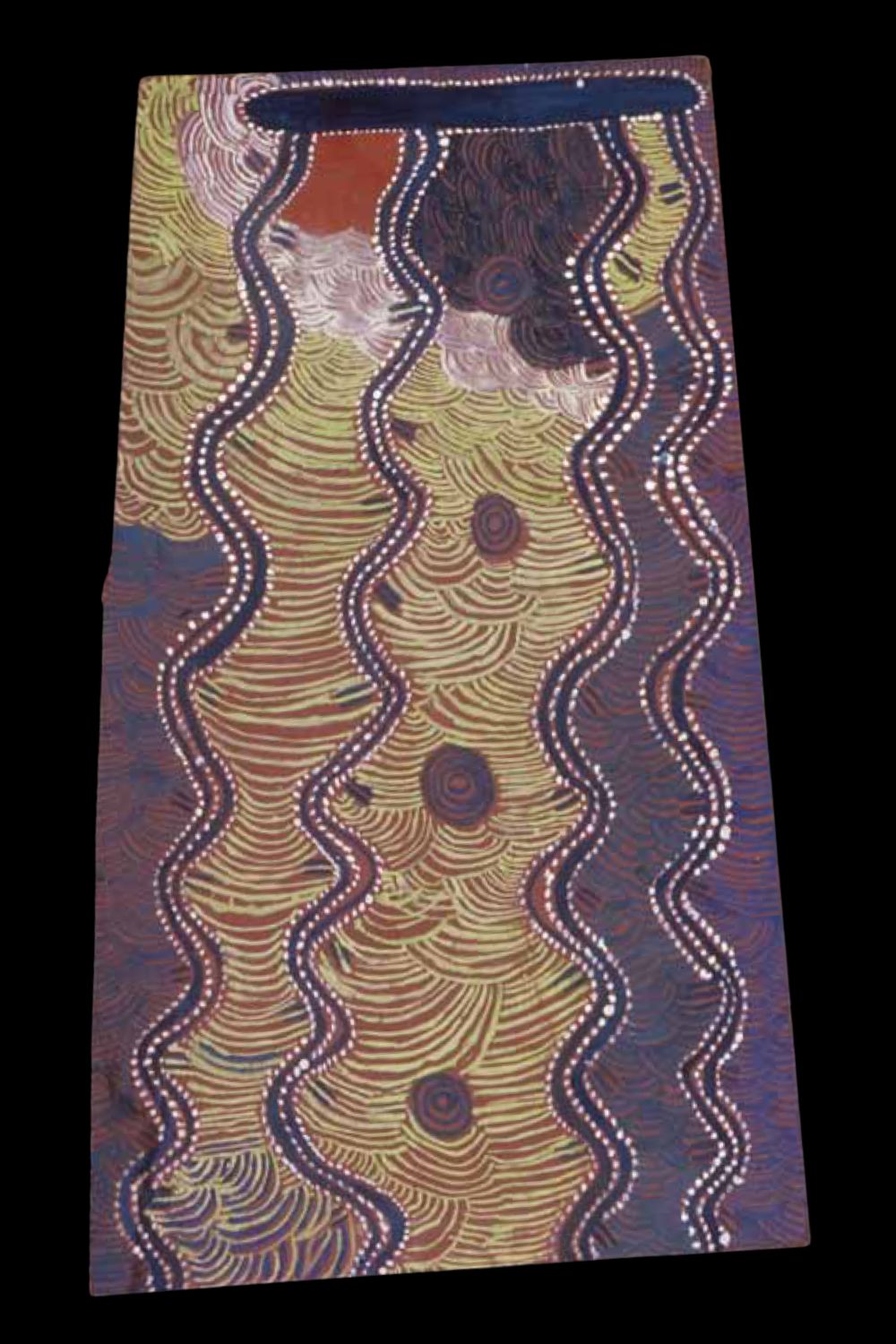
Original Papunya Boards are among the most desirable works of Aboriginal art because they combine exceptional historical importance with genuine rarity. Created primarily during 1971 and 1973, these early paintings mark the beginning of the contemporary Western Desert Art movement and represent one of the defining moments in Australian art history. As a result, museums, public galleries and private collectors actively seek authentic examples.
There is no fixed value for a Papunya Board. Prices can range from under $10,000 for lesser examples to more than $250,000 for masterpieces by important artists with outstanding provenance. The finest boards rarely come onto the market, and when they do, competition among collectors can be intense.
The best way to estimate the value of a Papunya Board is to compare it with similar works that have previously sold at auction. Throughout this website I have included auction records for many early Papunya Boards, but the most accurate comparison is usually by artist. For example, if your painting is by Anatjari Tjakamarra, visit my Anatjari Tjakamarra Artwork Values page to see previous auction sales, the year each painting was created and the approximate value range achieved.
Aboriginal art is a way for artists to connect with the ancestral power of Country , a Dreaming or songline (spiritual history and origin of becoming). It forms part of a cultural system of belief ceremony, social structure custom, and tradition through which ancestrally derived knowledge is maintained and transmitted across generations.
When Aboriginal people speak of “connection to Country,” the meaning often extends far beyond attachment to land itself. It refers to a living connection with the ancestral power believed to reside within that Country — its sacred sites, ancestral beings, waterholes, and Dreaming tracks.
In this sense, Aboriginal art is not simply representation or decoration. It is part of an ongoing cultural process that affirms identity, law, spirituality, and ancestral presence through connection to the power embedded within Country itself.
Aboriginal art is the visual expression of the Dreaming (Dream Time) (Tjukurrpa) (songline)—a vast multicultural system of ancestral knowledge, law, spirituality, and connection to Country that has existed continuously for more than 50,000 years. Far more than decorative painting, Aboriginal art functions as a visual expression that records ancestral journeys, maps sacred sites, and explains the relationships between people, land, ceremony, other moieties and powerful spiritual beings such as the Rainbow Serpent, Mimih spirits, and Wandjina.
Before diving into the complexity of understanding the meaning of aboriginal art lets start not with the image opposite but something simpler
Artist
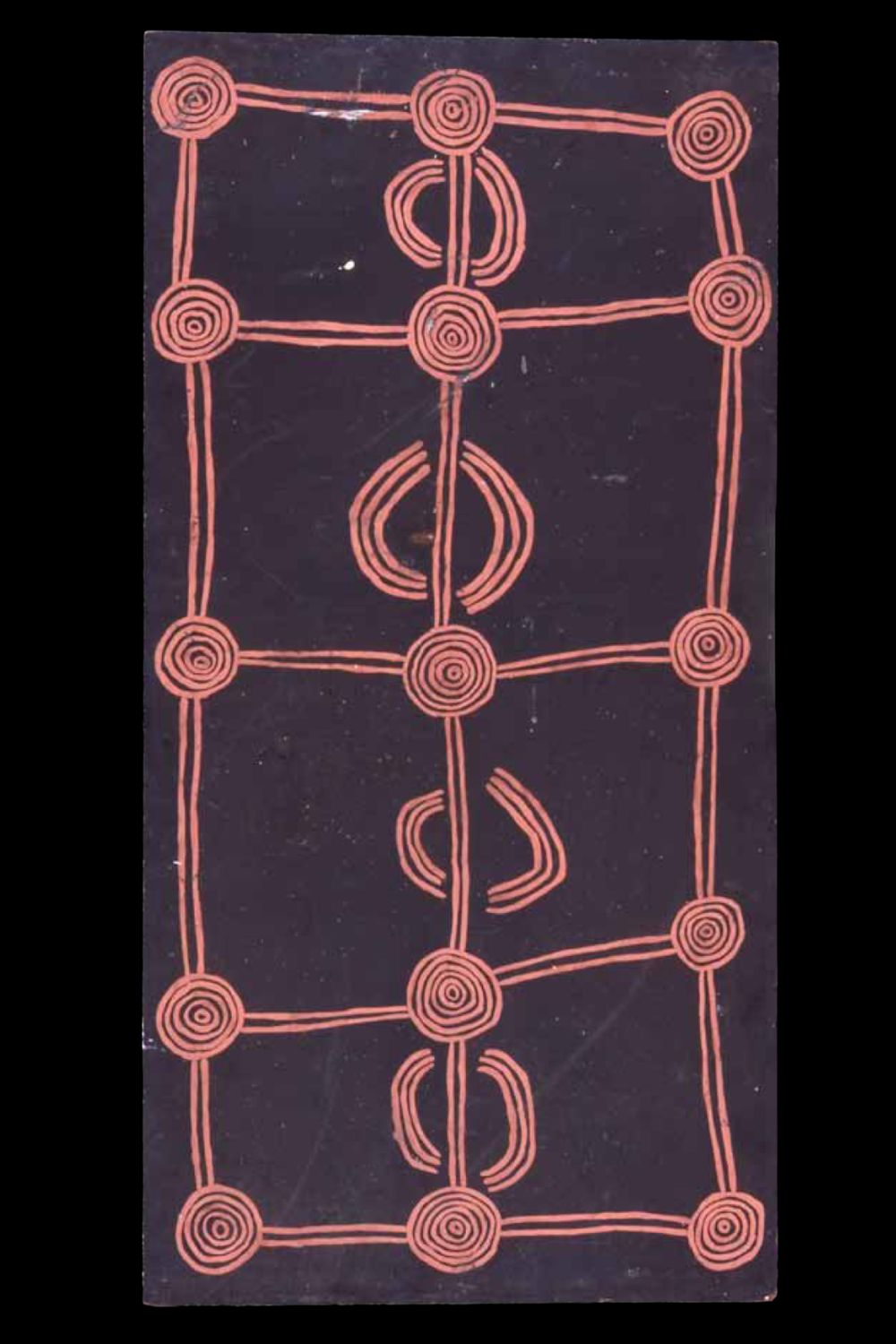
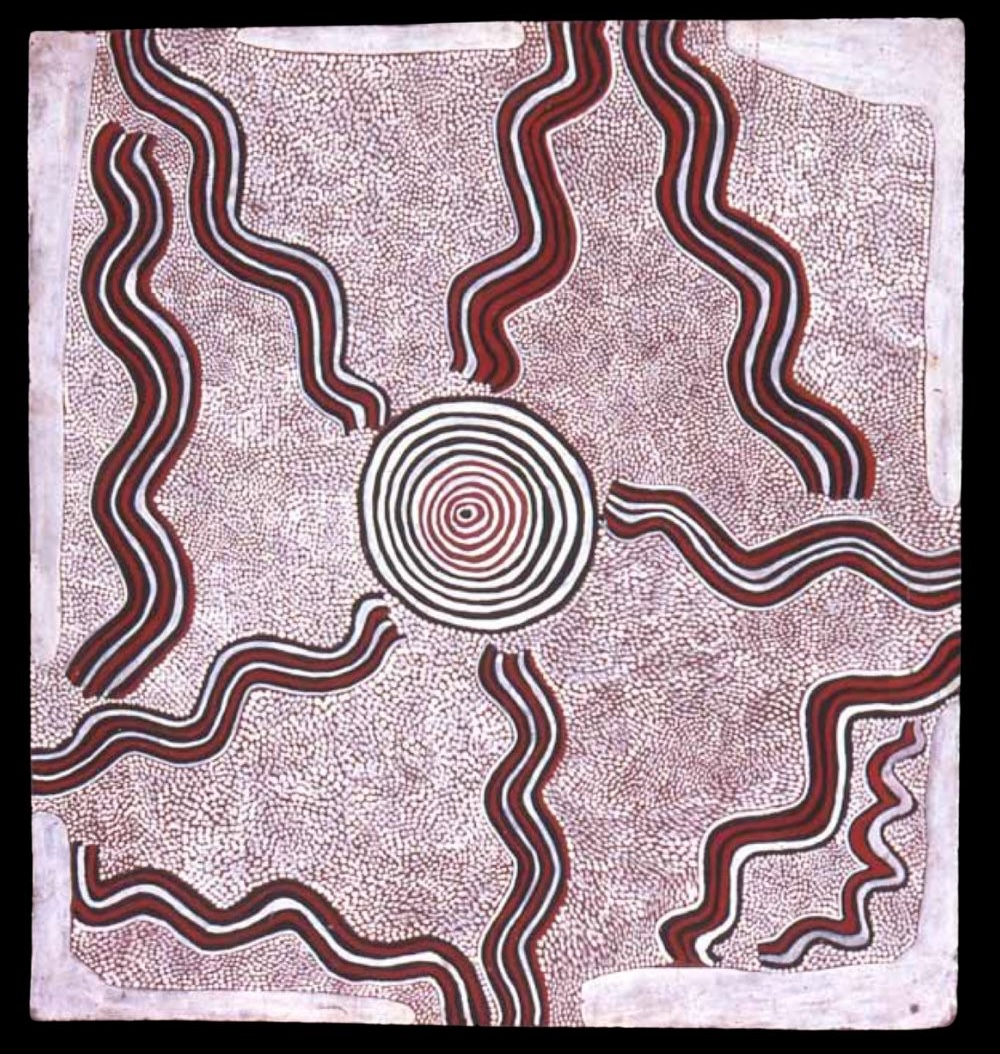
The artist is usually the single most important factor affecting value. Works by pioneering painters such as Kaapa Mbitjana Tjampitjinpa, Johnny Warangkula Tjupurrula, Clifford Possum Tjapaltjarri, Anatjari Tjakamarra, Tim Leura Tjapaltjarri and other founding members of the Papunya movement generally command the highest prices.
Historical Importance
Collectors are not simply buying an Aboriginal painting; they are acquiring a work created during the formative years of one of Australia’s most important artistic movements. A genuine Papunya Board is a surviving record of the birth of contemporary Western Desert painting, giving it historical significance that extends well beyond its artistic qualities.
Provenance
Original gallery labels, purchase receipts, exhibition history, published references and documented ownership can significantly increase value. Strong provenance confirms authenticity and provides confidence that the painting has been correctly attributed.
Date
Boards painted during the formative years of 1971 and 1972, with a small number continuing into 1973, are generally the most sought after. These paintings document the earliest stage of the movement before artists largely transitioned to canvas.
Condition
Condition also influences value. Paint loss, restoration, water damage, structural problems with the board and poor conservation may reduce the selling price. Nevertheless, historically important Papunya Boards often remain highly desirable despite condition issues because surviving examples are comparatively rare.
Rarity and Quality
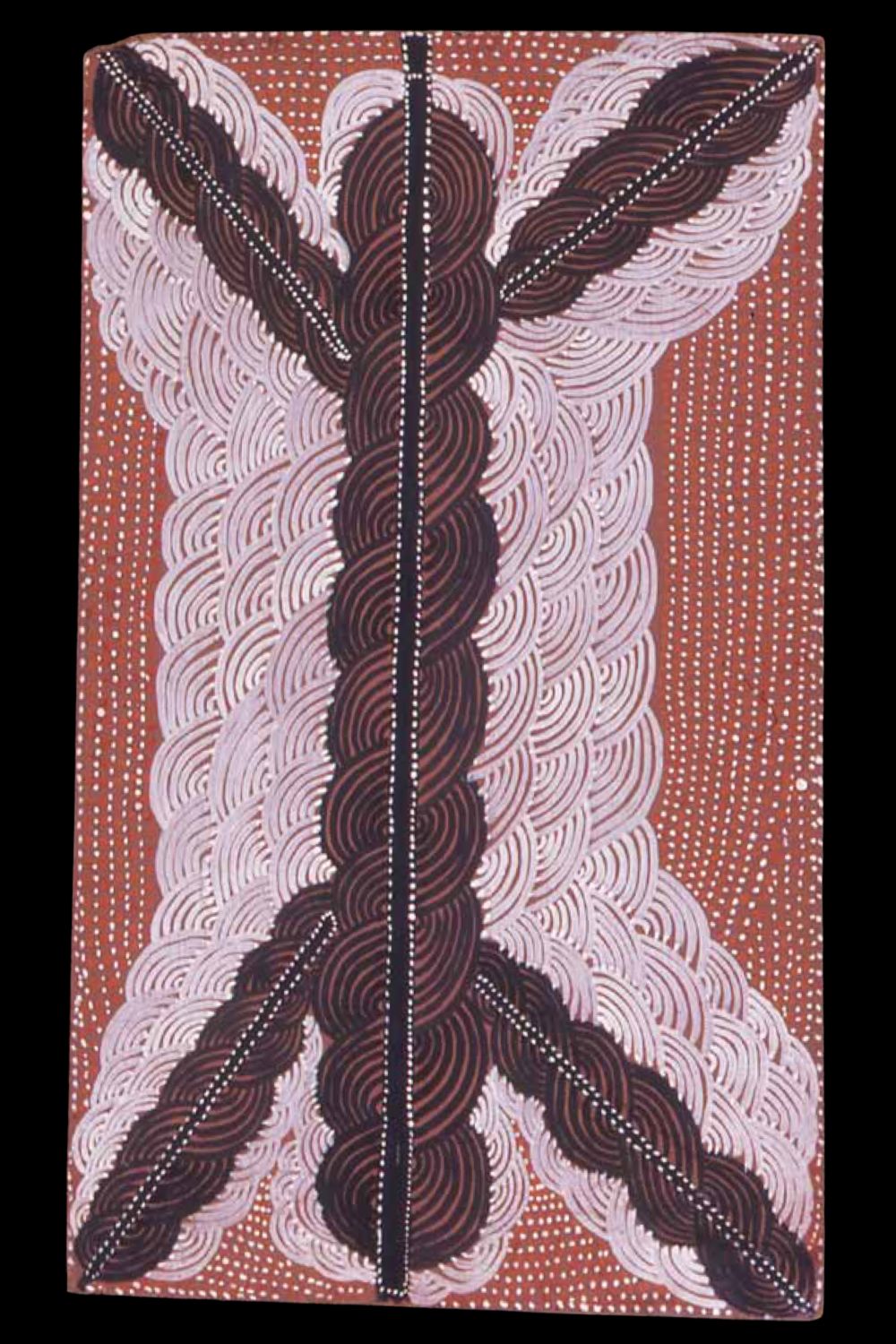
The rarity of the artist, the importance of the Dreaming, the visual quality of the painting and its place within the artist’s career all contribute to value. It is not unusual for a small, modest-looking Papunya Board painted on inexpensive composition board to be worth substantially more than a much larger later canvas.
How Can I Find Out What My Papunya Board Is Worth?
Every Papunya Board should be assessed individually. Two paintings by the same artist may differ enormously in value depending on their provenance, condition, date, subject matter and historical importance.
If you would like an informed opinion, I am happy to provide an initial assessment from photographs. Please email clear images of the front, back and edges of the painting, together with its dimensions and any information you have about its history or provenance.
I will provide my opinion of its likely market value and, where appropriate, may also make an offer to purchase it outright.
Continue reading:
- What are Papunya Boards
- When were Papunya Boards painted?
- Why were Papunya Boards painted on board?
- Why are Papunya Boards historically important?
- How do you identify a Papunya Board
- Who painted the first Papunya Boards?
- What do Papunya Boards Depict?
- Where are most of the Important Papunya Boards today?
All images in this article are for educational purposes only.
This site may contain copyrighted material the use of which was not specified by the copyright owner.