Why Do Aboriginal Artists Use Dots?
Aboriginal artists use dots for far more than decoration. Depending on the artist, community, and story being told, fields of dots may represent rain, bush foods, sand, different landforms, or the surface of Country. They can distinguish features of the landscape, create movement and atmosphere, help protect culturally restricted knowledge, and contribute to the distinctive visual language of Aboriginal Dot Art.
Rather than being interpreted one by one, dots are generally intended to work collectively. Like brushstrokes in a painting or words in a sentence, their significance comes from the complete composition and the story the artist wishes to convey. Working together with Aboriginal Art Symbols such as concentric circles, travelling lines, and animal tracks, fields of dots create symbolic representations of Country, Dreaming Stories, and ancestral journeys.
Understanding why Aboriginal artists use dots also explains the development of Western Desert Art and the Papunya movement, where traditional ceremonial designs were adapted to composition boards and canvas during the early 1970s. Today, Aboriginal Dot Art remains one of the world’s most recognisable artistic traditions, combining ancient cultural knowledge with one of the most distinctive visual languages in contemporary art.
Dots often Represent Rain
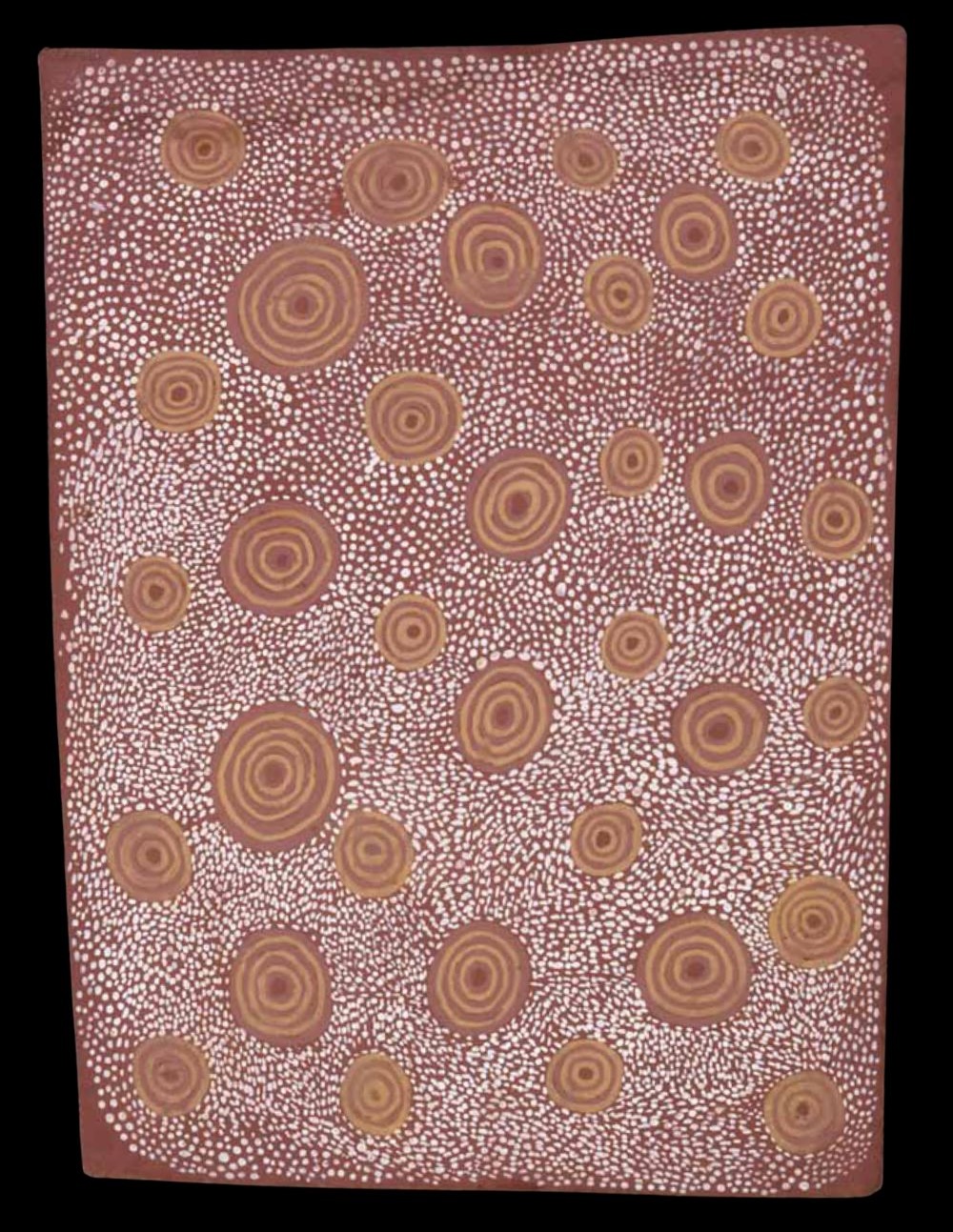
One of the earliest and most expressive uses of dotting appears in the paintings of Johnny Warrangkula Tjupurrula and other Rain Dreaming artists, where thousands of small dots evoke falling rain and the renewal of the desert after seasonal storms. Here, the dots are far more than decoration—they communicate the life-giving power of water and the transformation of Country.
Rain is also represented with dots in other Aboriginal traditions. In many Wandjina paintings from the Kimberley, the bodies of the Wandjina ancestral beings are filled with dots symbolising their rain-bringing power and their connection with seasonal renewal.
Dots Can Representedible seeds, fruits and other bush foods
In Western Desert Art, small dots can represent edible seeds, fruits, or other bush foods found within the landscape. These areas of dotting help identify places where food is gathered and reinforce the close relationship between people and Country.
Dots Can Represent Sand and Different Land Surfaces
Dots are often used to represent the ground itself. Large areas of a painting may be covered with dots to suggest sand, earth, or the surface of Country viewed from above.
Artists also vary the colour, size, spacing, and density of dots to distinguish different landforms. A sandy plain may be painted with one style of dotting, while a rocky ridge, mountain, or stony creek bed is rendered with another. Rather than relying on realistic perspective or shading, these subtle changes allow the viewer to recognise different types of Country while preserving the symbolic nature of the painting.
Dots Create Movement and Atmosphere
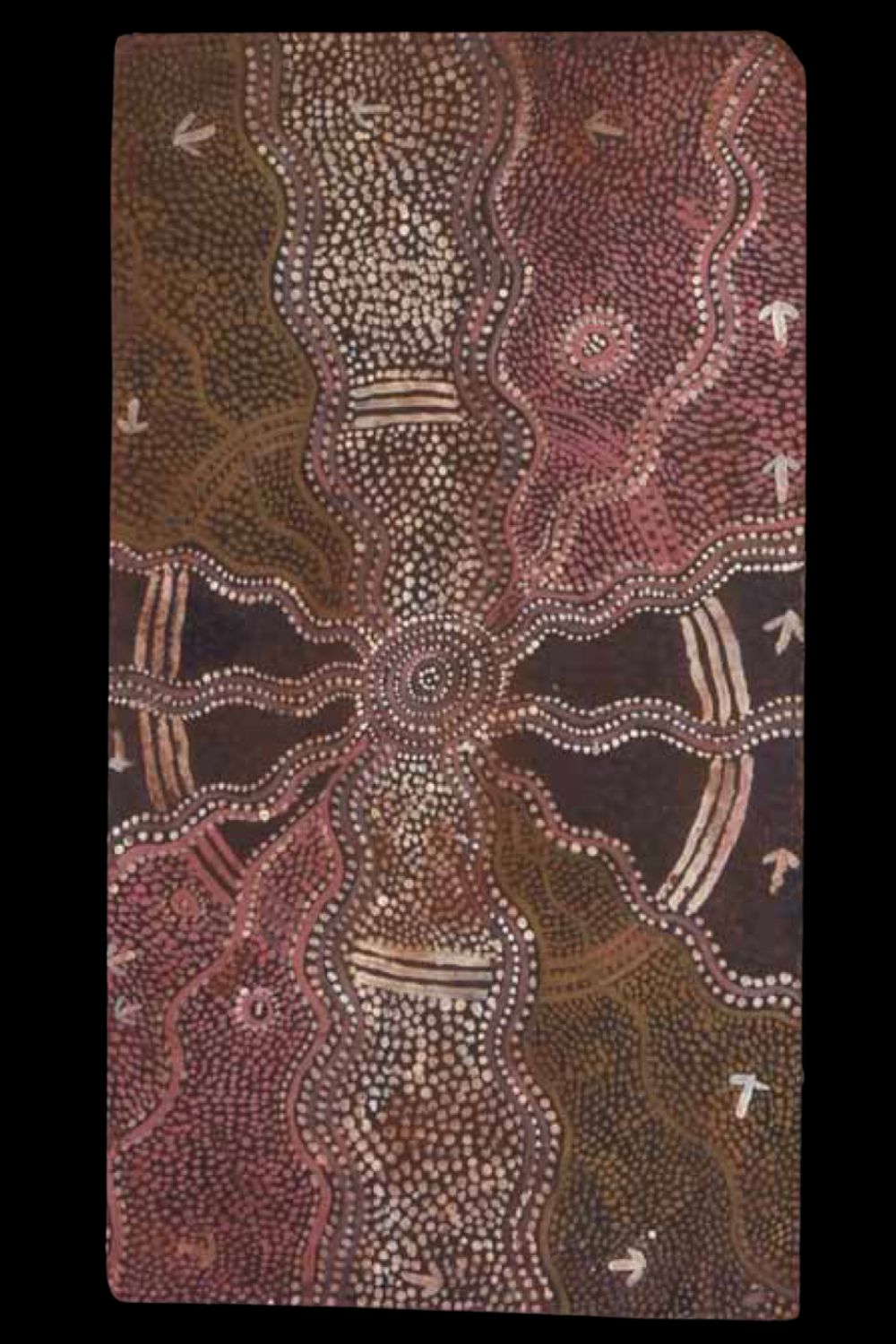
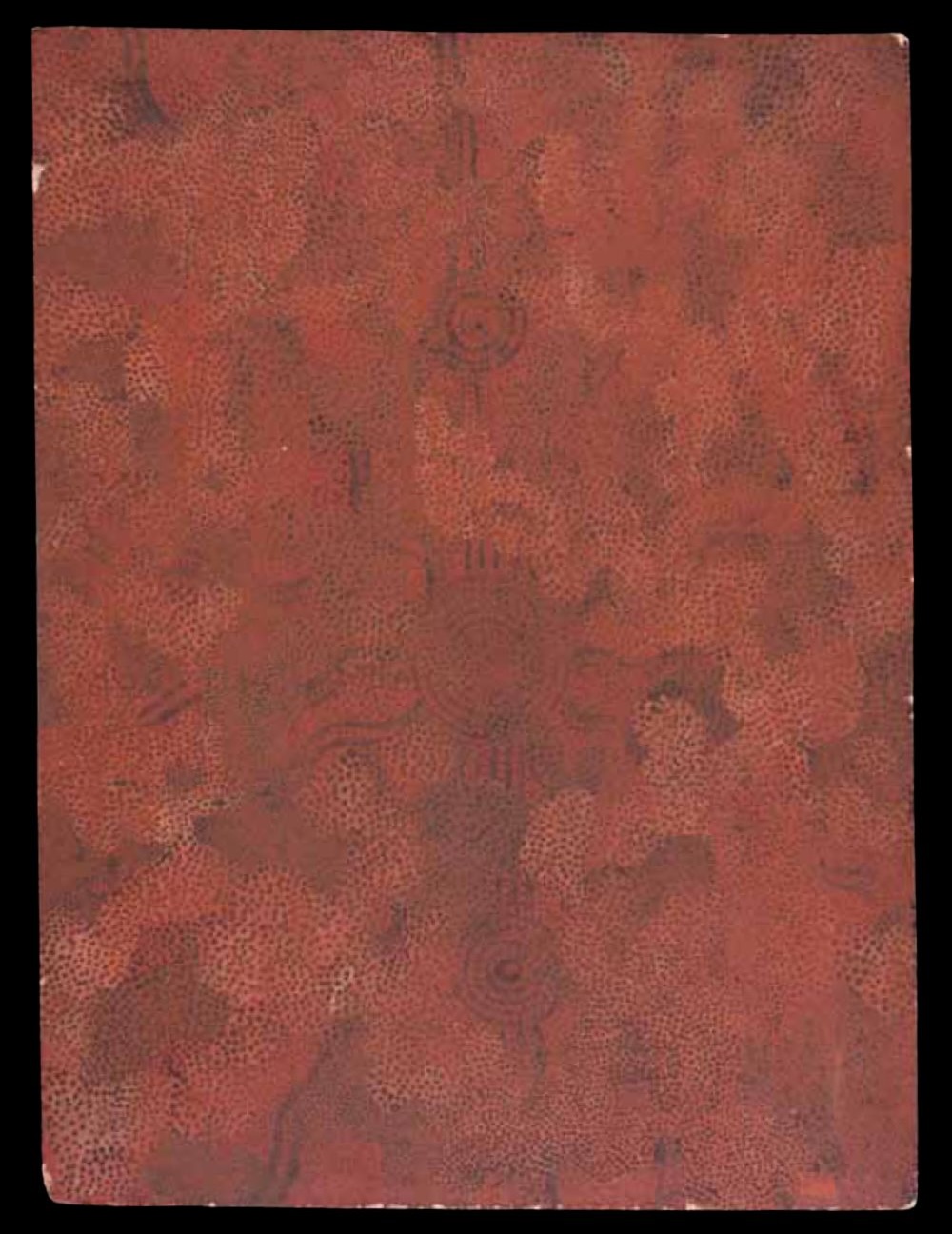
Dots also create visual energy. Variations in colour, size, spacing, and density produce shimmering surfaces that suggest heat, wind, flowing water, vegetation, and changing light. Some artists use dense fields of tiny dots to create a sense of vibration, while others employ larger dots to emphasise rhythm and movement across the composition.
Artists such as Mick Namarari Tjapaltjarri refined this approach, using subtle variations in dotting to create extraordinary depth and atmosphere while maintaining a strong connection to Country.
Dots Can Protect Cultural Knowledge
After about 1974, artists working within the Papunya movement became increasingly concerned that some ceremonial designs revealed too much culturally restricted knowledge. Rather than abandoning these important stories, they began applying denser fields of dots to veil sensitive details while allowing the broader narrative to remain visible.
Lines of Dots
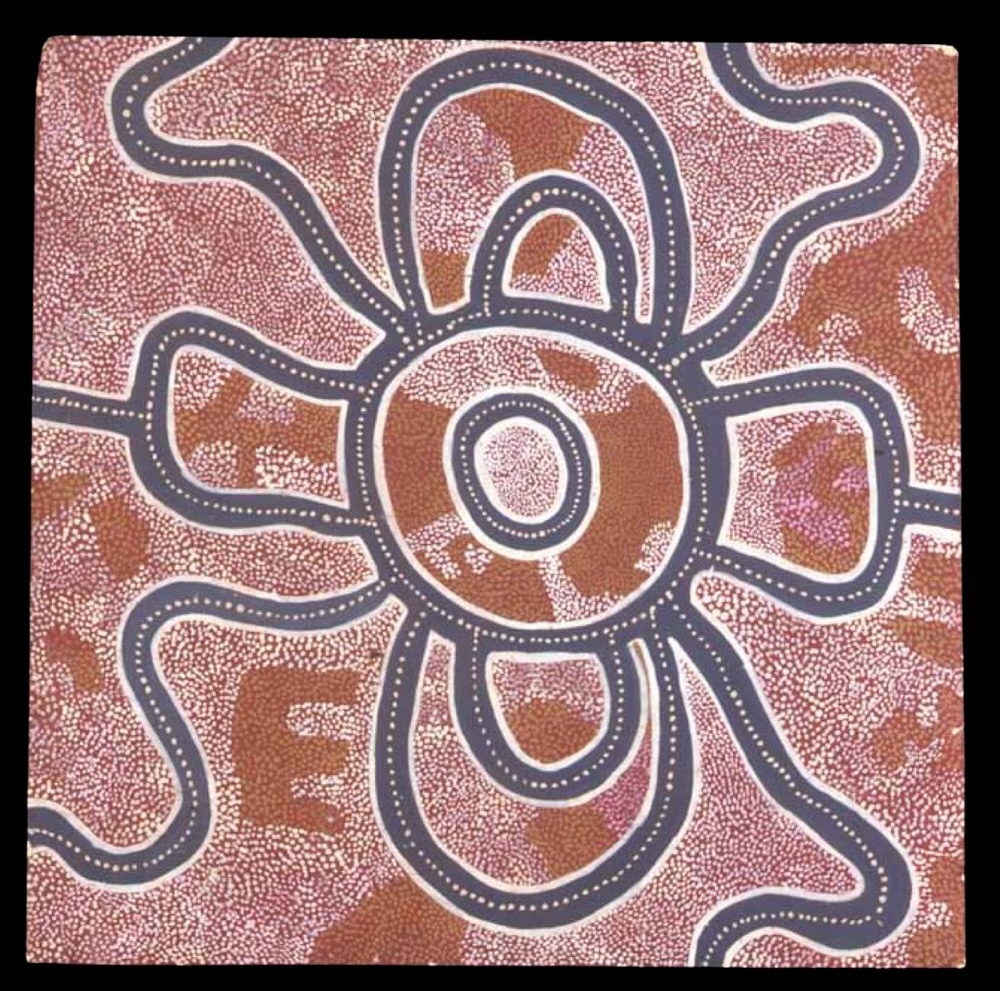
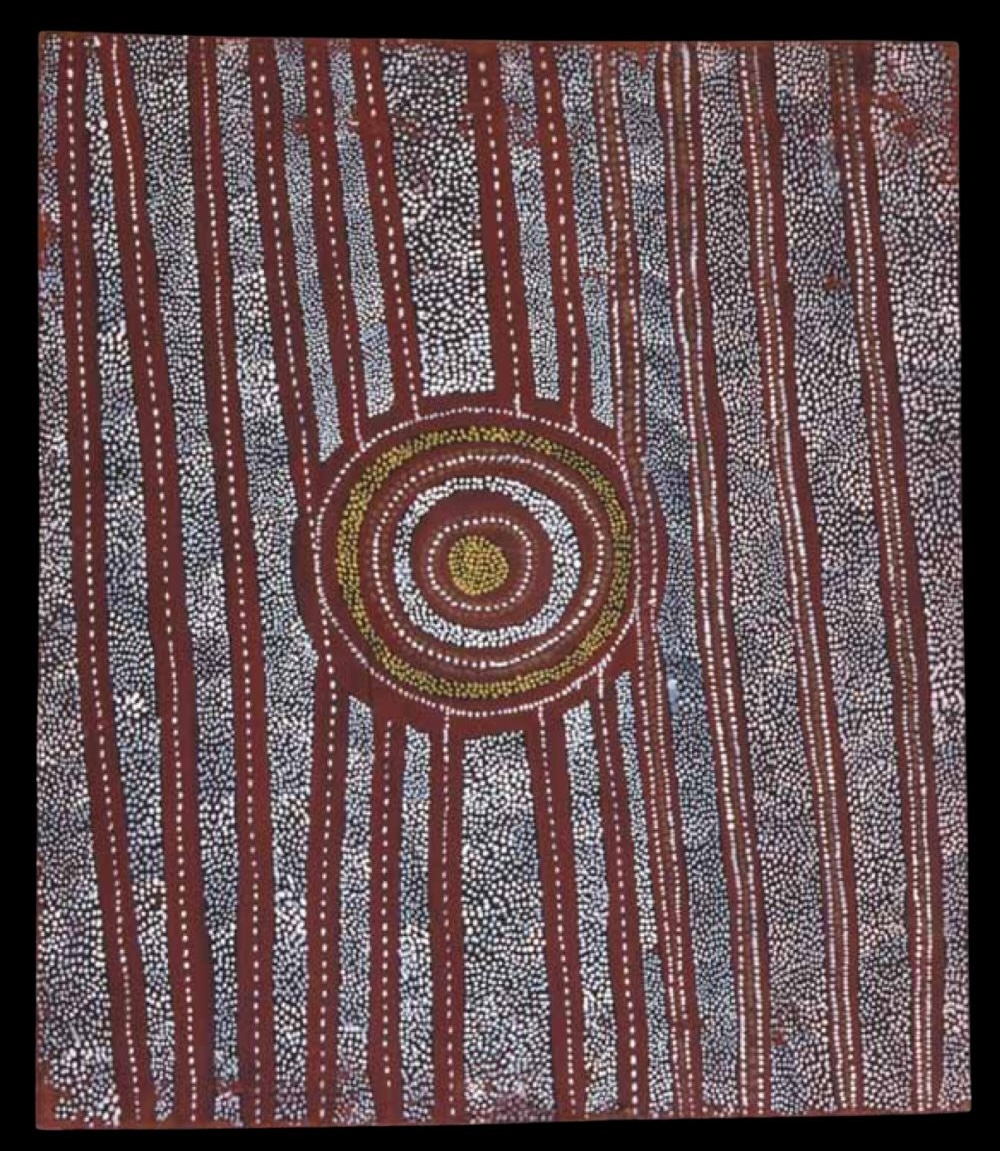
Dots are not always scattered across a painting. Artists frequently arrange them into lines that perform much the same function as painted lines, outlining symbols, defining pathways, or emphasising important features.
As Aboriginal Dot Art developed, many artists replaced solid painted lines with carefully placed rows of dots. A pattern that might have been represented with continuous lines on an early Papunya Board could later be expressed using dotted lines, creating a softer visual effect while adding texture and movement.
Dots Can Be Decorative
Although Aboriginal Dot Art is deeply symbolic, dots are also used for their visual qualities. Artists carefully balance colour, rhythm, contrast, and texture to create paintings that are both culturally meaningful and aesthetically powerful. The decorative beauty of the dots does not replace their meaning—it enhances the overall impact of the artwork.
Do the Dots Always Have a Meaning?
Individual dots are rarely intended to be interpreted on their own. Instead, they combine to form fields of dots that collectively depict Country and the stories connected to it. Depending on the artist and the painting, these fields of dots may represent rain, sand, bush foods, different land surfaces, or simply define the character of the landscape.
Like individual brushstrokes in a painting or letters in a sentence, a single dot has little meaning by itself. It is the collective field of dots, working together with circles, lines, tracks, colour, and composition, that creates the image the artist wishes to convey.
Aboriginal Dot Art is therefore read as a complete visual language rather than as a collection of individual symbols. The meaning lies in the relationships between all the elements of the painting, not in each dot viewed in isolation.
All images in this article are for educational purposes only.
This site may contain copyrighted material the use of which was not specified by the copyright owner.