Aboriginal Rock Art
Australia contains some of the world’s oldest and most important Aboriginal rock art, with sacred cave paintings and engravings created across the continent for tens of thousands of years. From the spectacular Wandjina ancestors and Gwion Gwion spirit figures of Kimberley Rock Art to the sophisticated X-ray paintings of Arnhem Land Rock Art, these extraordinary galleries preserve Dreamtime stories, ceremonial law, hunting traditions, and spiritual connections to Country stretching back into the Ice Age.
Australian Aboriginal rock art is not a single artistic tradition but a vast network of regional styles that developed across Australia over millennia. More than fifteen major traditions emerged across the continent, each with its own sacred imagery, symbolism, and cultural meaning. Arnhem Land Rock Art is renowned for highly sophisticated X-ray depictions showing the internal anatomy and spiritual essence of fish, turtles, crocodiles, kangaroos, and ancestral beings, while Kimberley Rock Art is famous for dynamic Gwion Gwion figures and ancient Wandjina paintings that remain central to Aboriginal culture today. In northern Queensland, Quinkan Rock Art preserves remarkable spirit figures and ceremonial scenes, while Central Australian Rock Art contains ancient engravings, ceremonial symbols, and sacred motifs associated with Dreaming tracks and ancestral landscapes.
Major Aboriginal Rock Art Traditions
Researcher Mike Donaldson recognises eighteen major Aboriginal rock art provinces across Australia. These regions range from painted cave galleries to vast petroglyph landscapes and are distributed across every part of the continent, reflecting the immense diversity of Aboriginal artistic and ceremonial traditions. This article covers the most recognised styles.
Aboriginal Rock Art Provinces after Mike Donaldson
Kimberley Rock Art
Kimberley Rock Art preserves one of the world’s longest and most visually distinctive rock art sequences. The region is renowned for its monumental Wandjina figures and the elegant Gwion Gwion Art tradition, formerly known as Bradshaw paintings. These ochre galleries, painted across sandstone escarpments and rock shelters of the north-west Kimberley, remain among the most recognisable forms of Aboriginal cave painting in Australia.
Rock painting in the Kimberley began at least 35,000 years ago with hand stencils, early animal imagery, and irregular infill figures dating back to the Pleistocene. Over millennia, successive artistic traditions developed across the region before the emergence of the powerful Wandjina imagery associated with the Worrorra, Ngarinyin, and Wunambal peoples.
Unlike many prehistoric rock art traditions elsewhere in the world, parts of Kimberley painting culture survive within continuing ceremonial practice today. Wandjina figures are still regarded as potent rainmaking beings linked to ritual knowledge, seasonal renewal, and clan-based traditions, while certain galleries continue to be maintained and repainted by traditional custodians.
Separate articles explore Kimberley Rock Art, Gwion Gwion Art, and Wandjina Art in greater detail.
Arnhem Land Rock Art
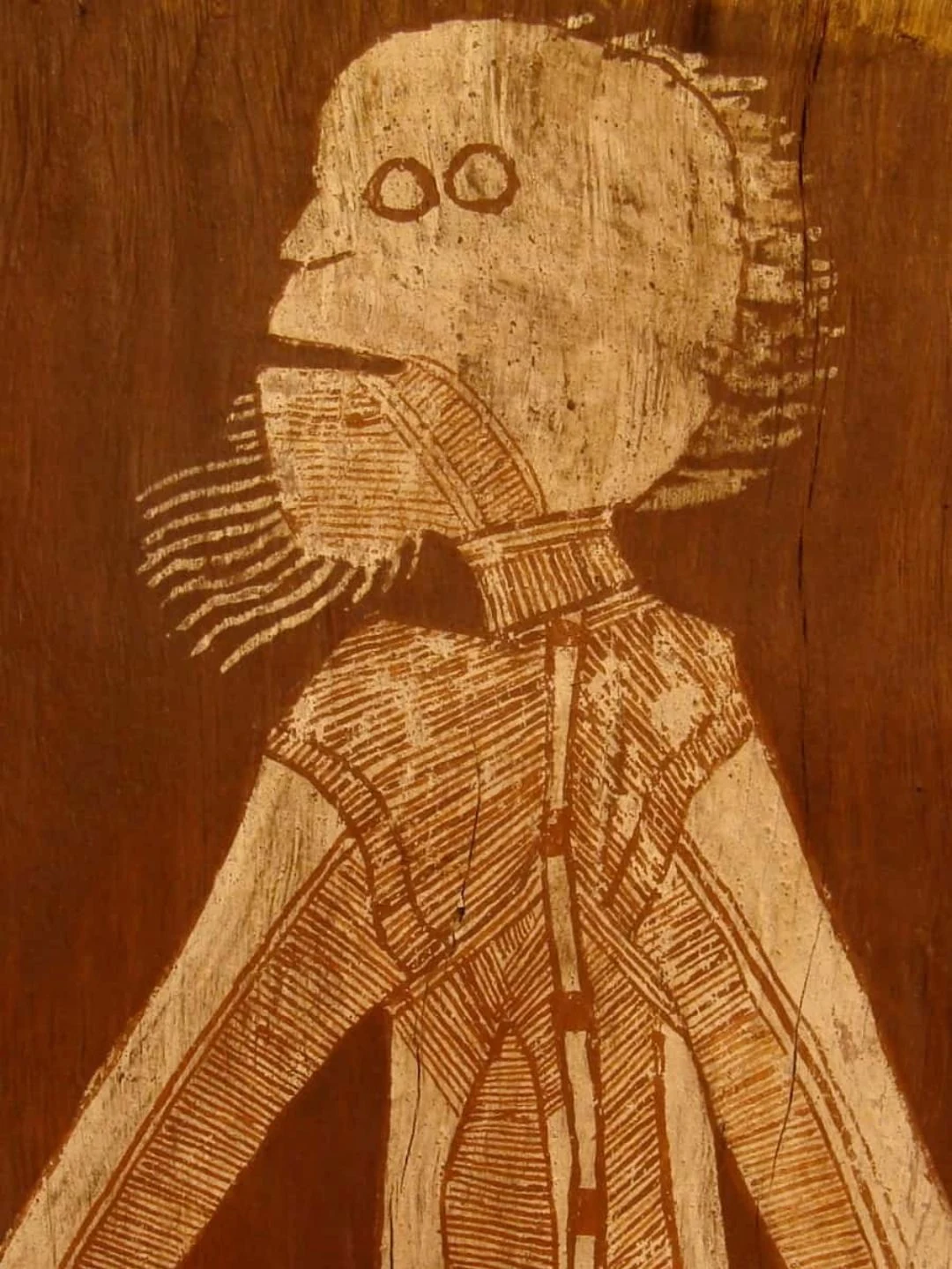
Arnhem Land Rock Art is one of the world’s great rock art traditions and is especially famous for its sophisticated X-ray paintings showing the internal anatomy and spiritual essence of fish, turtles, crocodiles, kangaroos, and ancestral beings. The region is also renowned for elegant Mimih spirit figures and dynamic ceremonial imagery painted across the sandstone escarpments of western Arnhem Land and Kakadu.
These well-known Aboriginal X-ray Art and Mimih paintings form only part of a far older and more complex sequence of Aboriginal rock art stretching back at least 25,000 years. The earliest Arnhem Land paintings include large naturalistic animals and ancient figurative imagery dating back into the Ice Age. Over thousands of years, artistic traditions evolved to include Yam Figures, Dynamic Figures, ceremonial scenes, contact art, and depictions of Macassan sailing vessels and European steamships following contact with outsiders.
Unlike many ancient rock art traditions elsewhere in the world, Arnhem Land rock art remains closely connected to living Aboriginal culture today. Many sacred sites continue to hold ceremonial significance, while X-ray imagery and ancestral spirit figures later became central to the development of Oenpelli Art traditions associated with artists such as Yirawala, Lofty Bardayal Nadjamerrek, and Mick Kubarkku.
Separate articles explore Arnhem Land Rock Art, Aboriginal X-Ray Art, and Mimih Spirits in greater detail.
Western Desert and Central Desert Rock Art
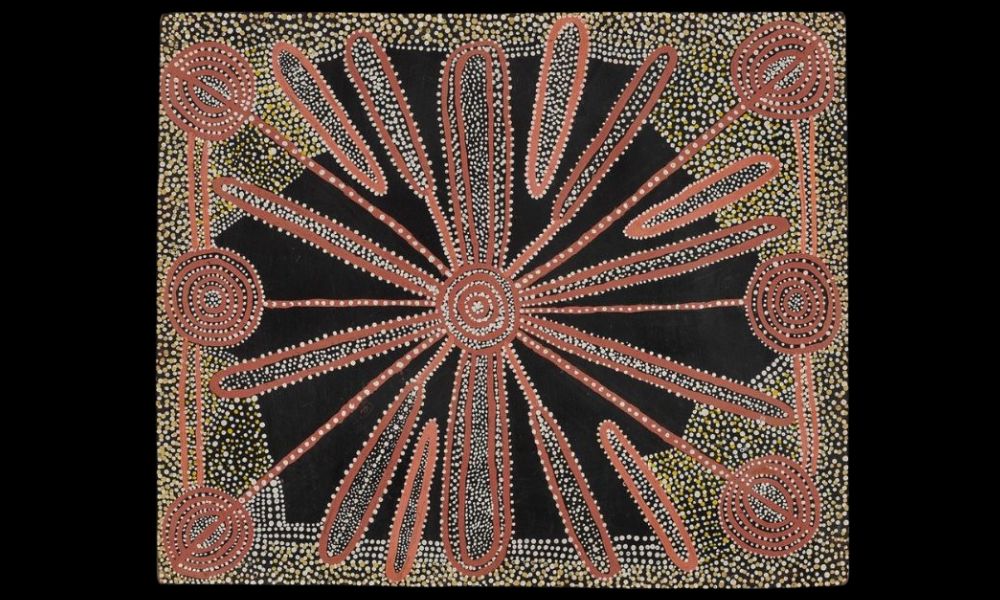
Western Desert and Central Australian Rock Art preserve some of Australia’s most symbolically complex ceremonial traditions. Unlike the figurative spirit imagery of Arnhem Land and the Kimberley, much desert rock art uses circles, tracks, lines, and geometric motifs associated with songlines, ritual knowledge, and the journeys of ancestral Alcheringa beings.
The central deserts are especially known for sacred stone tjuringa (or churinga), engraved oval stones used in ceremony and connected to clan-based traditions. Many motifs found in desert cave paintings and rock engravings closely resemble those carved onto tjuringa, reflecting related ceremonial narratives and sacred sites.
Much Western Desert rock art occurs around caves, rock holes, and sandstone shelters associated with initiation rituals and ceremonial pathways. Many of these symbolic forms later became widely recognised through contemporary Aboriginal dot painting traditions that emerged from Papunya during the 1970s.
Separate articles explore Central Australian Rock Art, Western Desert Art, and Aboriginal Art Symbols in greater detail.
Quinkan Rock Art
Quinkan Rock Art is one of the most distinctive and mysterious Aboriginal rock art traditions in Australia. Found among the sandstone escarpments and rock shelters of Cape York Peninsula in far north Queensland, Quinkan Country is especially famous for its animated spirit figures, dynamic ceremonial scenes, and finely painted anthropomorphic beings known as Quinkans.
More than 1,000 rock art sites have been identified throughout the region, many containing remarkably preserved paintings created over thousands of years. Most Quinkan paintings are executed in red ochre with minimal use of secondary colours, creating elegant figures defined by flowing outlines, elongated forms, and delicate internal detail. Although many of the surviving paintings are believed to date from around 5,000 years ago, Aboriginal occupation of the region extends back more than 37,000 years.
Much of the deeper ceremonial meaning associated with Quinkan rock art was disrupted following European settlement during the Cape York gold rushes of the 1870s. As a result, the original significance of some spirit figures and ceremonial scenes is no longer fully understood. Modern knowledge of Quinkan rock art owes much to the pioneering work of explorer and researcher Percy Trezise, whose recordings helped bring international attention to the extraordinary cave painting traditions of Cape York.
Separate articles explore Quinkan Rock Art and the spirit figures of Cape York in greater detail.
Carnarvon Gorge Rock Art
Carnarvon Gorge Rock Art preserves some of Australia’s finest stencil and engraving traditions. Located within the sandstone escarpments of central Queensland, the gorge contains hundreds of Aboriginal rock art sites featuring hand stencils, weapons, painted net motifs, and ceremonial imagery associated with long-standing cultural traditions.
Many stencil images were created by placing hands, boomerangs, or shields against rock surfaces before spraying ochre pigment around them by mouth. These negative stencils preserve striking records of ritual activity and human presence extending back thousands of years. Carnarvon Gorge is widely regarded as containing some of the best preserved stencil galleries in Australia.
The gorge also contains painted figures, engraved motifs, and symbolic imagery associated with ceremonial landscapes and rock shelters used over millennia. Aboriginal occupation of the Carnarvon region extends back at least 19,000 years, making it one of Australia’s oldest surviving cultural landscapes.
Separate articles explore Carnarvon Gorge Rock Art and Australian stencil art traditions in greater detail.
Murujuga Rock Art (Burrup Peninsula Petroglyphs)
Pilbara Rock Art preserves one of the world’s largest concentrations of Aboriginal petroglyphs. Across Murujuga and the wider Pilbara region of Western Australia, Aboriginal artists created more than a million engraved images by hammering through the dark iron-oxide surface of rock to expose the lighter stone beneath. These vast open-air galleries extend across rugged coastal and desert landscapes.
The engravings depict animals, human figures, tracks, spirit beings, and geometric motifs associated with ceremonial life and everyday survival. Many images represent marine creatures and hunted animals, while others relate to songlines and ritual traditions. Some Pilbara petroglyphs may preserve depictions of extinct fauna, including Tasmanian Tigers and Ice Age megafauna no longer found in the region.
Aboriginal occupation of the Pilbara extends back more than 41,000 years, and some engravings may be over 30,000 years old, making them among the oldest surviving rock carvings on earth.
Separate articles explore Murujuga Rock Art (Burrup Peninsula Petroglyphs), and Aboriginal engraving traditions in greater detail.
Tasmanian Rock Art
Tasmanian Rock Art preserves one of the oldest and rarest Aboriginal engraving traditions in Australia. More than sixty Aboriginal rock marking sites have been recorded across Tasmania, containing engravings and paintings created on sandstone, granite, and limestone surfaces over many thousands of years. Although related to broader Australian Aboriginal rock art traditions, Tasmanian rock markings developed distinctive local forms that are now considered internationally significant.
Most Tasmanian engravings consist of circles, concentric rings, cupules, dotted patterns, grooves, and linear motifs pecked or ground into rock surfaces. Some sites also contain bird tracks, human-like figures, and hand motifs. Painted rock markings were created using ochre pigments mixed with water, fat, blood, or saliva and applied by hand, brush, or stencil techniques.
Many Tasmanian rock art sites occur near coastlines, water sources, and rock shelters associated with ancient Aboriginal occupation and ceremonial activity. The exact meanings of many markings have been lost through time, but they likely related to ceremony, territorial boundaries, Dreaming stories, sacred places, and communication across the landscape. Today these fragile engravings and paintings remain among the most important surviving expressions of Tasmanian Aboriginal cultural heritage.
Sydney Basin Rock Art
Sydney Basin Rock Art preserves one of Australia’s largest and most distinctive traditions of Aboriginal sandstone engraving. Found across the sandstone plateaus surrounding Sydney and the Central Coast, these ancient petroglyphs depict ancestral beings, spirit figures, kangaroos, fish, whales, footprints, and ceremonial imagery carved directly into exposed rock surfaces.
Unlike the painted cave traditions of Arnhem Land and the Kimberley, Sydney Basin rock art is dominated by engraved silhouette figures created by pecking and grooving into sandstone platforms. Many engravings are remarkably elegant and simplified, using minimal lines to capture the essence of animals, people, and Dreaming beings. Some carvings also incorporate natural cracks and contours in the rock surface as part of the design.
Many engraving sites remain deliberately unpublicised in order to protect them from vandalism, erosion, and accidental damage. Aboriginal occupation of the Sydney region extends back tens of thousands of years, and some engravings may have been repeatedly re-grooved during ceremonies across countless generations. Today these sacred sites remain among the most important surviving expressions of the ancient Aboriginal cultures of coastal New South Wales.
Pre-Ice Age Origins of Australian Aboriginal Rock Art
Australian Aboriginal rock art preserves some of the oldest surviving artistic traditions in the world. Many researchers believe early rock art practices travelled with the first Aboriginal peoples as they migrated through Southeast Asia into Sahul — the Ice Age landmass that once joined Australia and New Guinea. Some of the earliest Australian cave paintings share strong similarities with ancient Indonesian rock art, particularly hand stencils and irregular infill animal figures.
Indonesian cave paintings dating beyond 35,000 years ago contain motifs closely related to imagery found in Kimberley Rock Art and other northern Australian traditions. These parallels may preserve traces of cultural traditions carried across now-submerged continental shelves during the Pleistocene, when sea levels were far lower than today.
The oldest securely dated Australian rock paintings occur within Arnhem Land Rock Art shelters, where some imagery is believed to be at least 28,000 years old. Many researchers suspect much earlier sites once existed along ancient coastlines later flooded after the Ice Age.
Across countless generations, Aboriginal artists continued repainting rock shelters and developing new ceremonial imagery, creating one of the world’s longest continuous artistic traditions.
Hand stencils from Sulawesi Indonesia.
Hand stencils from Kimberley Australia
Aboriginal Cave Painting Over Time
Australian Aboriginal rock art is not only geographically diverse, it also changed dramatically over time within individual regions. Many rock shelters contain layers of paintings created across tens of thousands of years, allowing researchers to trace the evolution of artistic traditions and ceremonial imagery.
Across northern Australia, older paintings were often repainted or replaced by later styles. Ancient hand stencils and large animal figures were eventually followed by spirit beings, ceremonial scenes, and sacred ancestral figures. These changing styles reflect both cultural continuity and major artistic shifts over many millennia.
Some rock art sites preserve extraordinary sequences of superimposed imagery, with generations of artists repainting the same sacred locations over thousands of years. Other sites contain petroglyphs, extinct animals, and ceremonial imagery from worlds vastly different to today. Together, these layered galleries preserve a rare visual record stretching back beyond the Ice Age.
Many early coastal rock art sites were later submerged as sea levels rose after the Ice Age, meaning some of Australia’s oldest cave paintings may now lie underwater. While the meanings of some ancient paintings have been lost through time, many sacred rock art traditions remain an important part of Aboriginal culture today.
Cave Painting, Sacred Sites, and Dreamtime Beliefs
Australian Aboriginal rock art is deeply connected to Dreamtime beliefs, ceremonial law, and ancestral narratives passed down through countless generations. Many cave paintings are not simply decorative images, but visual expressions of creation stories, ritual knowledge, clan-based traditions, and relationships to Country. Rock shelters, escarpments, waterholes, and billabongs often formed part of larger ceremonial landscapes associated with songlines and mythological beings.
Many Aboriginal rock paintings depict important Dreaming figures, animals, and spirit beings linked to particular sacred sites and ritual traditions. In Arnhem Land Rock Art, paintings of Mimih Spirits, Namarrkon the Lightning Spirit, and the Rainbow Serpent remain connected to living cultural practices still respected today. Across northern Australia, certain caves and rock shelters continue to hold ceremonial importance for traditional custodians.
Some paintings were closely associated with initiation rituals and the transmission of esoteric knowledge between generations. Ceremonial songs, oral histories, and symbolic imagery were traditionally taught through dance, storytelling, and ritual performance, while some galleries may only have been fully understood by initiated members of a community.
Certain rock art traditions are so ancient that parts of their original ceremonial context have been lost through time. In areas of Kimberley Rock Art, for example, aspects of the meaning surrounding some Gwion Gwion Art figures are no longer fully understood. Yet many other painting traditions continue to form part of ongoing ceremonial life, with some sacred galleries still maintained or repainted by traditional custodians today.
Animals in Aboriginal Rock Art
Animals are among the most important subjects in Australian Aboriginal rock art and appear throughout cave paintings across Arnhem Land Rock Art, Kimberley Rock Art, Cape York, and many other regions. These figures are far more than simple depictions of wildlife. Animals may represent totemic ancestors, ceremonial beings, clan identities, hunting traditions, and ecological knowledge connected to Country.
Different regions developed highly distinctive ways of depicting animals. In Aboriginal X-Ray Art, Arnhem Land artists painted the internal anatomy of fish, turtles, crocodiles, barramundi, and kangaroos with extraordinary precision. Other regions developed more symbolic or stylised animal imagery associated with ritual traditions, songlines, and mythological narratives.
Crocodiles, snakes, turtles, kangaroos, emus, and fish frequently appear as powerful beings linked to ceremonial sites and cosmological traditions. Some rock art galleries may also preserve imagery of extinct Ice Age fauna, reflecting the deep antiquity of Aboriginal artistic traditions and long-standing relationships with the natural world.
A more detailed guide to the symbolism and meaning of these figures can be found in Animals in Aboriginal Art.
The Survival of Aboriginal Rock Art Traditions
Australian Aboriginal rock art is not simply a relic of the distant past. In many parts of Australia, sacred painting traditions remain connected to living Aboriginal culture today. While some ancient styles and meanings have been partly lost through time and colonisation, many sacred sites, Dreamtime stories, and ceremonial traditions continue to be respected by Aboriginal communities.
In regions such as Arnhem Land and the Kimberley, traditional custodians still maintain strong cultural connections to important rock art sites associated with ancestral beings, songlines, and sacred law. Some paintings continue to be ceremonially maintained or repainted across generations. Wandjina paintings in the Kimberley, for example, remain spiritually powerful ancestral beings connected to rainmaking and Country.
Ancient rock art traditions also continue to influence bark painting, body painting, sculpture, and contemporary Aboriginal art today. Far from belonging to a vanished civilisation, many Aboriginal rock art traditions remain living expressions of identity, spirituality, and connection to Country.
Threats to Aboriginal Cave Paintings
Australian Aboriginal rock art has survived for tens of thousands of years, yet many sacred cave paintings and engraving sites remain extremely fragile. Weathering, erosion, bushfires, flooding, and changing climate conditions gradually damage ancient rock surfaces and pigments that may have survived since the Ice Age.
Human activity has also caused major destruction to Aboriginal rock art sites. Vandalism, graffiti, mining, industrial development, and uncontrolled tourism have damaged many important galleries across Australia. Some ancient coastal rock art sites were also lost when rising sea levels flooded large areas of the Australian coastline after the Ice Age.
Today, Aboriginal communities, archaeologists, and conservation specialists work to protect surviving rock art sites and preserve their cultural significance for future generations. These ancient paintings are not only important archaeological records, but continuing expressions of Aboriginal culture, spirituality, and connection to Country.
Aboriginal Rock Art in Modern Australia
Australian Aboriginal rock art continues to hold great cultural importance in modern Australia and remains one of the country’s most internationally recognised artistic traditions. Ancient cave paintings and sacred rock art sites are studied by archaeologists, protected by traditional custodians, and admired around the world for their extraordinary age, complexity, and spiritual significance. Many important rock art regions, including Arnhem Land and the Kimberley, continue to attract researchers, museums, and visitors interested in Aboriginal culture and history.
The influence of Aboriginal rock art can also be seen throughout contemporary Aboriginal art. Many modern Aboriginal artists continue to draw upon ancient traditions found in cave paintings, including X-ray imagery, Wandjina figures, spirit beings, ceremonial designs, and Dreamtime narratives connected to Country. Bark paintings, sculptures, and contemporary canvases often preserve visual traditions that originated in ancient rock shelters thousands of years ago.
For many Aboriginal communities, rock art sites remain living cultural places rather than archaeological relics. Sacred caves, escarpments, and ceremonial sites connected to ancestral beings and songlines continue to be respected today, while important stories associated with certain rock paintings are still passed down through generations. This continuity gives Australian Aboriginal rock art a unique place in world art history, as one of the few ancient artistic traditions that still survives within a living culture.
Today, Aboriginal rock art is increasingly recognised as one of humanity’s great cultural achievements. Its survival into modern Australia reflects not only the antiquity of the paintings themselves, but also the resilience and continuity of Aboriginal cultural traditions across tens of thousands of years.
Collecting, Preservation, and Cultural Protection
Australian Aboriginal rock art sites are among the world’s most important cultural and archaeological places and are increasingly protected through heritage legislation, conservation programs, and Aboriginal custodianship. Because ancient cave paintings are extremely fragile, preserving these sacred sites remains a shared responsibility between traditional owners, archaeologists, and conservation specialists.
Unlike portable bark paintings or contemporary artworks, Aboriginal cave paintings are generally not removed from their original locations. Their meaning is often inseparable from the landscape, Dreamtime stories, and ceremonial traditions connected to Country. Access to some sacred caves and rock shelters may therefore be restricted to protect culturally sensitive knowledge and fragile paintings from damage.
Modern conservation efforts aim to protect Aboriginal rock art from weathering, vandalism, industrial development, and uncontrolled tourism. Preserving these sites helps safeguard not only ancient images, but one of the world’s oldest continuing cultural traditions.
Australian Cave Painting Summary
Australian Cave paintings and Rock Art are found all over Australia. They are different styles in different areas. These truly are not only national treasures for all mankind to appreciate because they give us an insight into our distant artistic past.
I can not cover all the different types of Aboriginal Rock art in a single article. I have covered the cave paintings and rock art that most fascinate me but other authors would undoubtedly have covered different areas.
This article would not have been possible without the wonderful publications of Mike Donaldson
Recommended Reading
Kimberley Rock Art Volume 1 Mitchell Plateau Area by Mike Donaldson
North Kimberley Rock Art Volume 2 by Mike Donaldson
Kimberley Rock Art Volume 3 Rivers and Ranges by Mike Donaldson
All images in this article are for educational purposes only.
This site may contain copyrighted material the use of which was not specified by the copyright owner.
Frequently Asked Questions About Aboriginal Cave Paintings
What is Gwion Gwion rock art?
Gwion Gwion Art, formerly known as Bradshaw paintings, consists of elegant human figures characterised by fine detail, elaborate adornments, and dynamic movement. These paintings are regarded as one of the oldest and most distinctive artistic traditions within Kimberley Rock Art.
What is the difference between rock paintings and petroglyphs?
Rock paintings are images applied to rock surfaces using pigments such as ochre, charcoal, and clay. Petroglyphs are images carved, pecked, or engraved directly into stone surfaces.
Can you visit Aboriginal rock art sites in Australia?
Many Aboriginal rock art sites can be visited, particularly in Kakadu, the Kimberley, Cape York, Carnarvon Gorge, and the Pilbara. However, some ceremonial sites are restricted or require permission from Traditional Owners.
Why is Aboriginal rock art important?
Aboriginal rock art preserves cultural knowledge, ceremonial traditions, ecological understanding, and visual histories extending back thousands of years. It is both an archaeological record and a living cultural tradition that remains deeply significant to Aboriginal communities today.