Select Page

Declan Apuatimi – Tiwi Master Sculptor and Bark Painter

Declan Apuatimi (1930–1985) stands among the most important figures in Tiwi Art, celebrated for his innovative bark paintings, carved sculptures, and ceremonial works connected to the Pukumani and Kulama traditions of Bathurst and Melville Islands. Born at Iminulapi on Bathurst Island north of Darwin, Declan grew up deeply immersed in the ceremonial, maritime, and cultural life of the Tiwi people. Although he spent much of his later life in the township of Nguiu, his ancestral country was Munupi on the north-west coast of Melville Island, a connection that profoundly shaped both his ceremonial responsibilities and artistic vision.

Declan Apuatimi belongs to the great generation of twentieth-century Tiwi artists who transformed ceremonial carving and jilamara design into one of the most distinctive sculptural traditions in Aboriginal Australian art. His work combines strong ceremonial authority with an increasingly refined sculptural modernism that distinguishes him from earlier Tiwi carvers such as Mani Luki, or Enraeld Munkara while also anticipating the later international recognition achieved by artists including Kitty Kantilla.

His sculptures and bark paintings are now highly sought after by collectors due to their rarity, strong ceremonial presence, and importance within the history of early Aboriginal art. If you have a Declan Apuatimi sculpture or bark painting to sell, please feel free to contact me. If you simply wish to know what your Declan Apuatimi artwork may be worth, feel free to send me a JPEG image. I would love to see it.

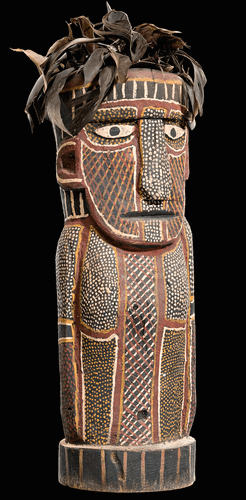
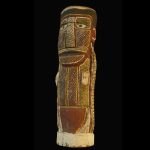
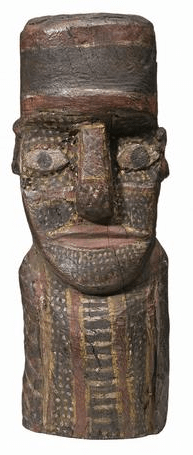
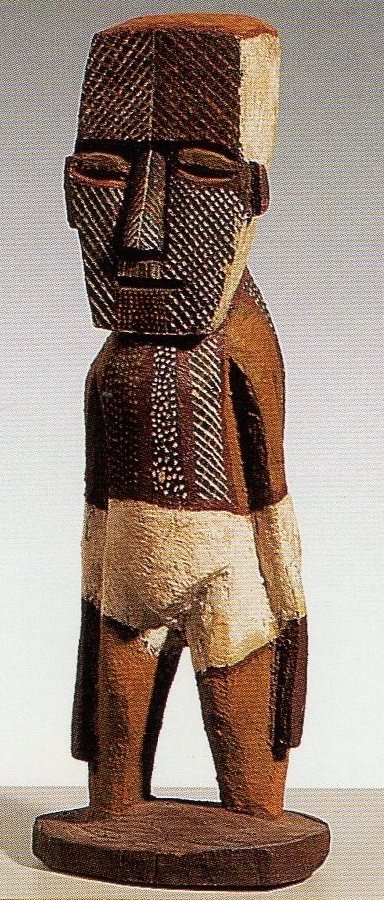
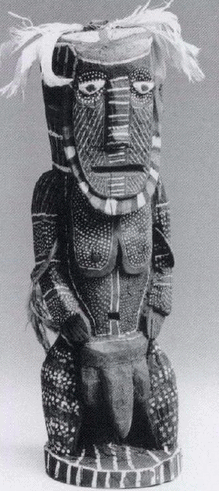
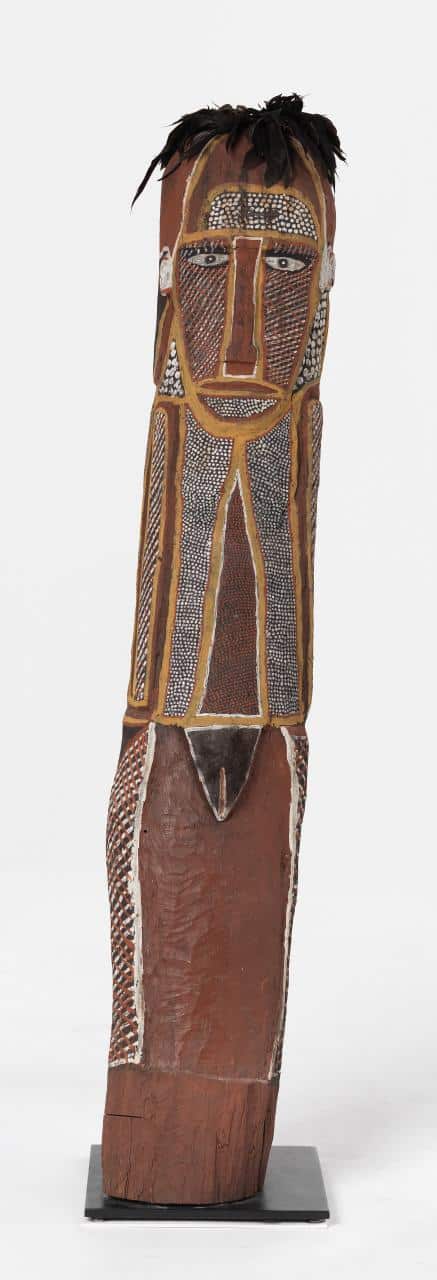
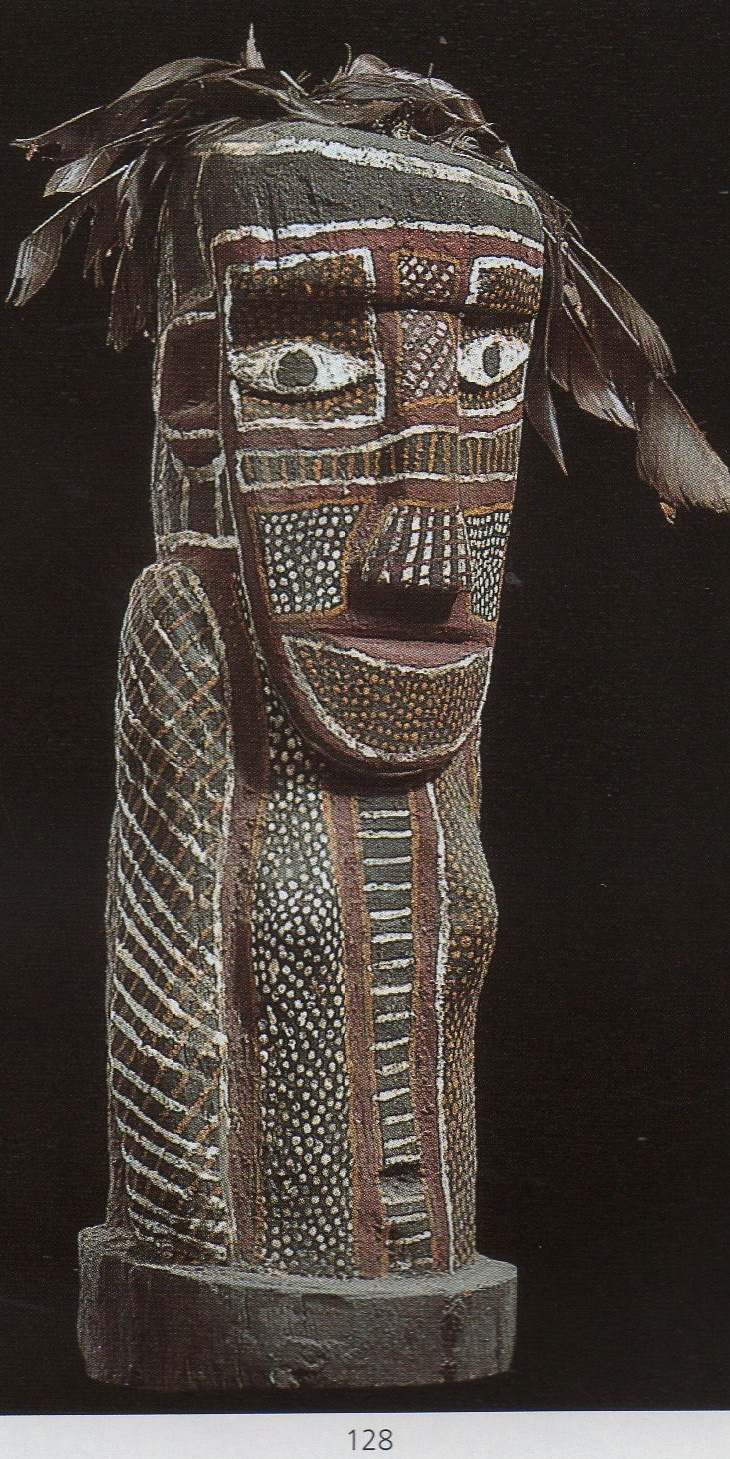
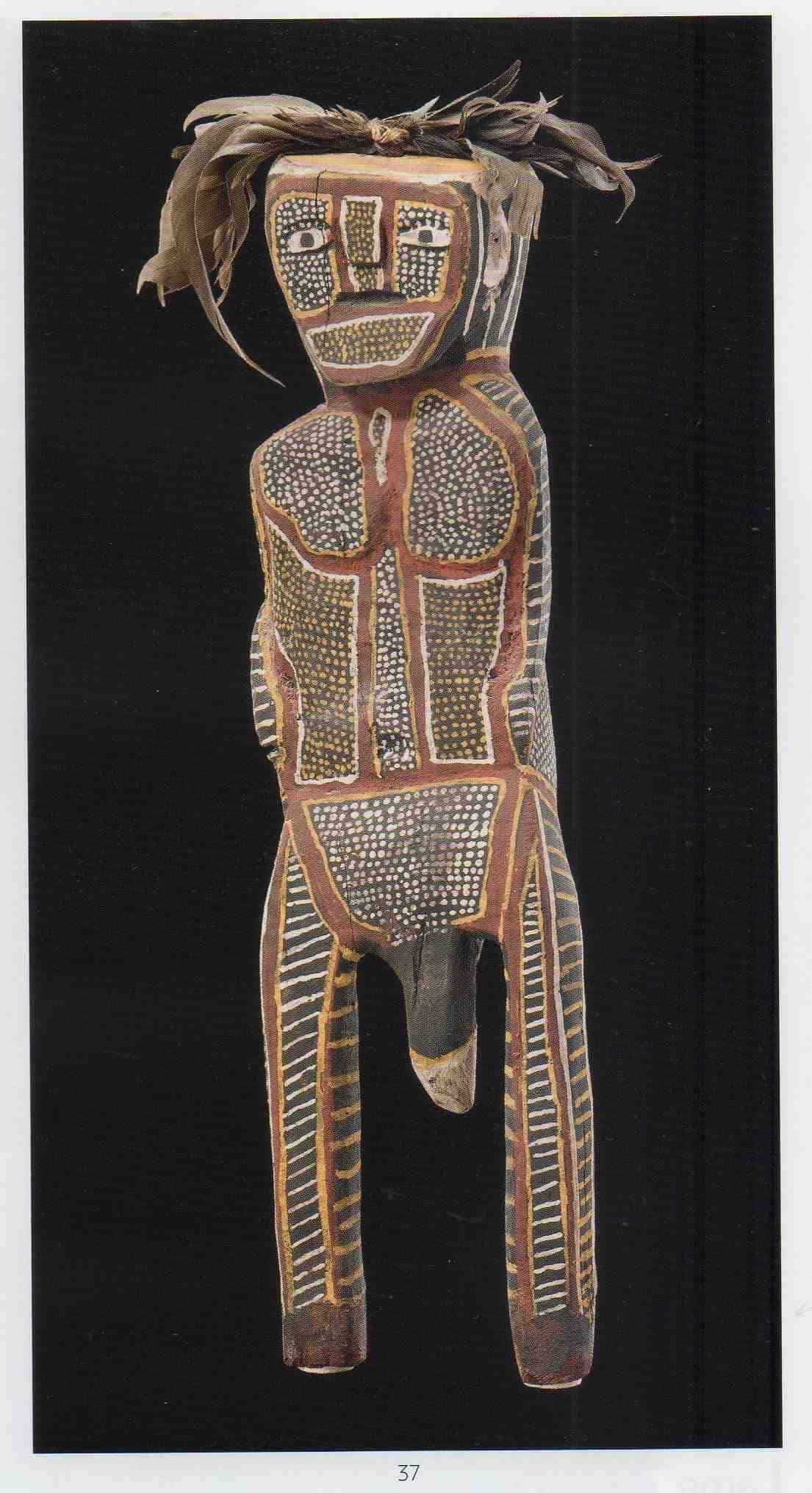
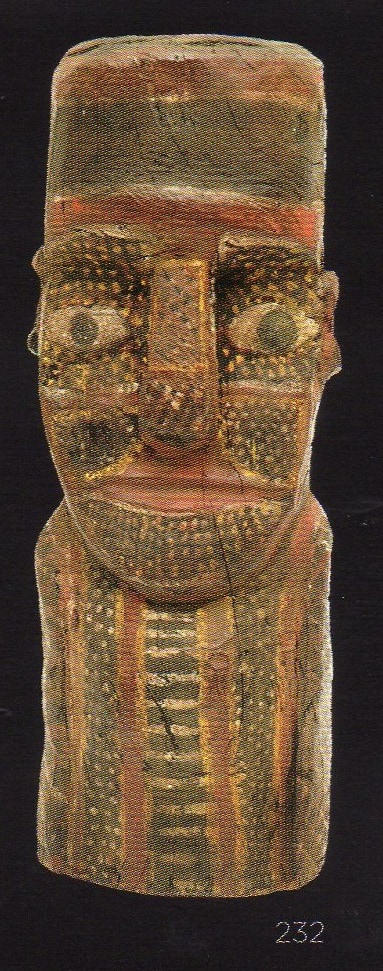
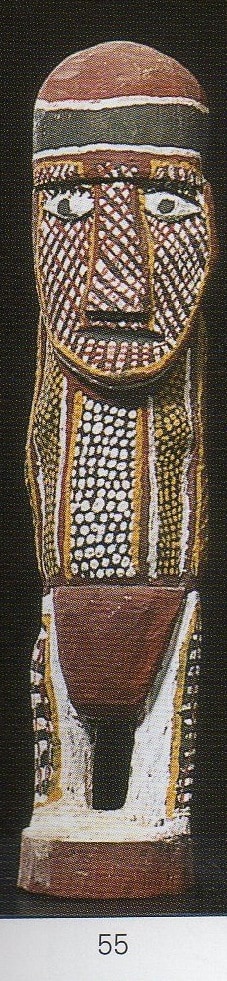
Ceremonial Tiwi sculpture by Declan Apuatimi with painted jilamara designs and feathered headdress
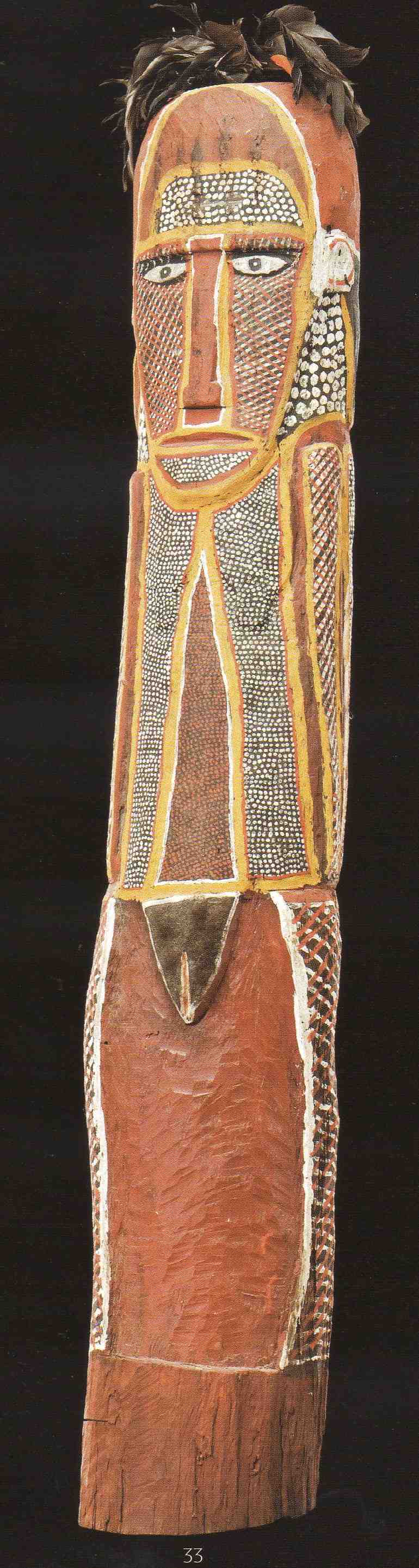
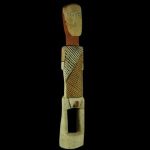
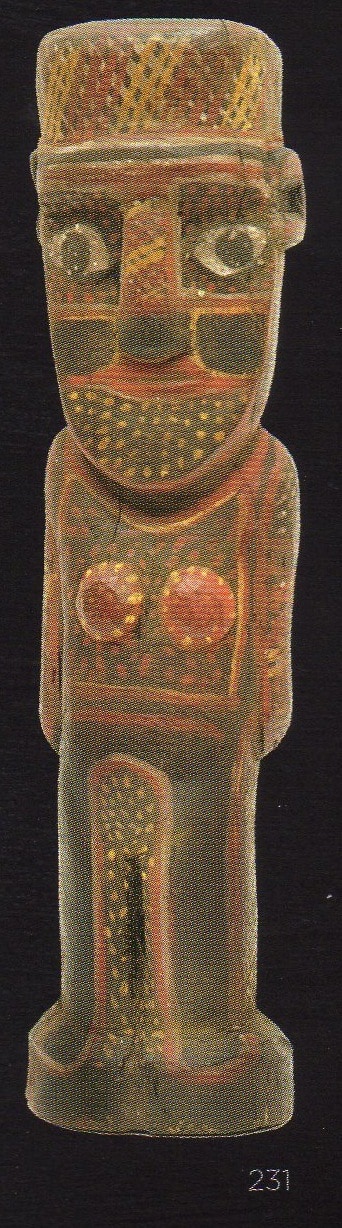
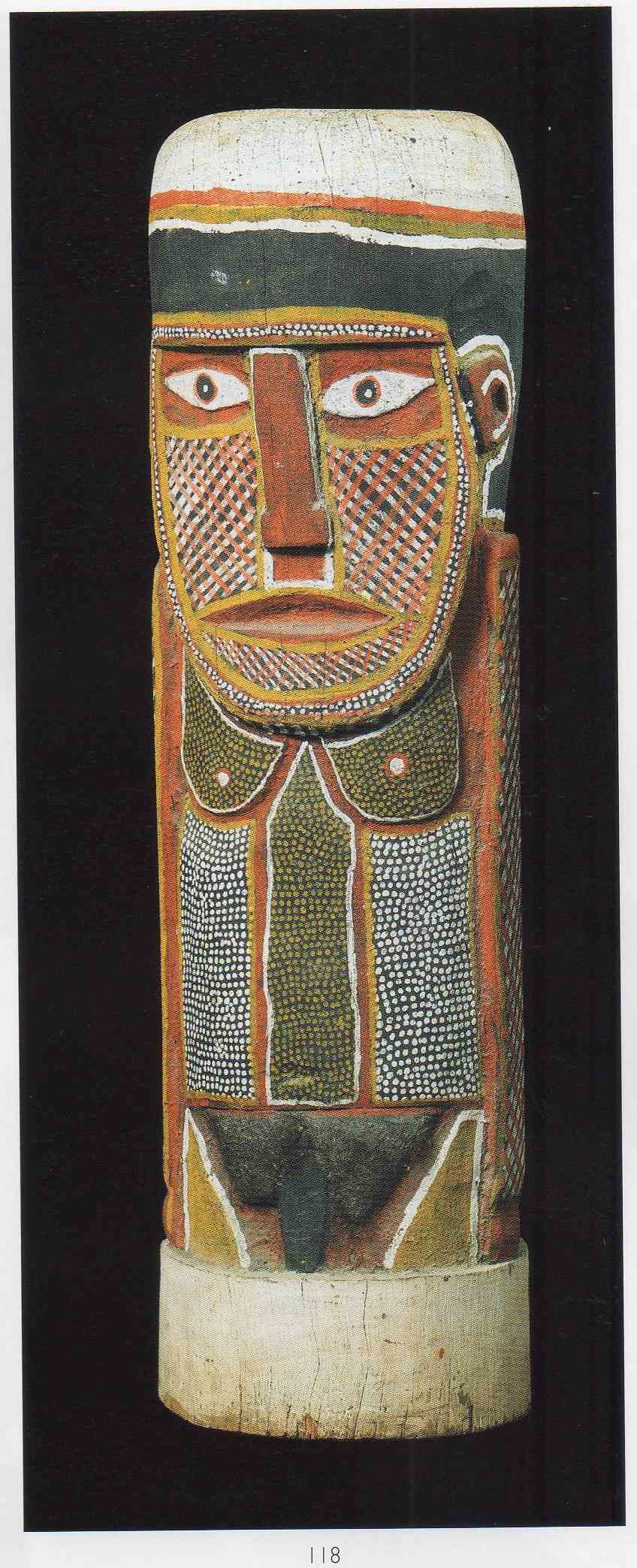
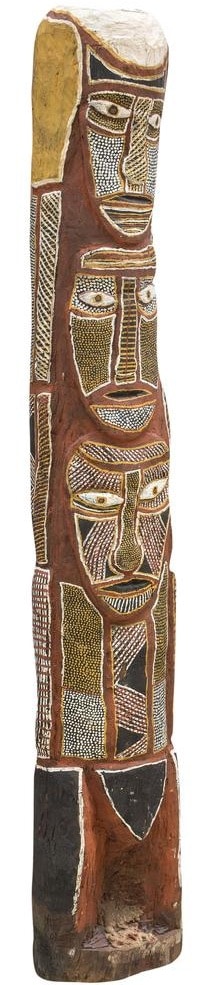
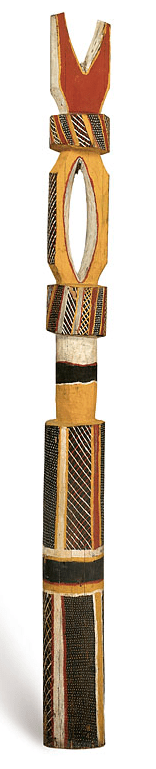
Tall ceremonial Tiwi sculpture by Declan Apuatimi featuring stacked ancestral faces and painted jilamara designs
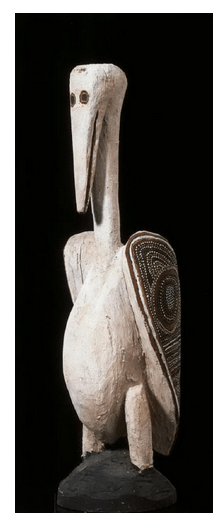
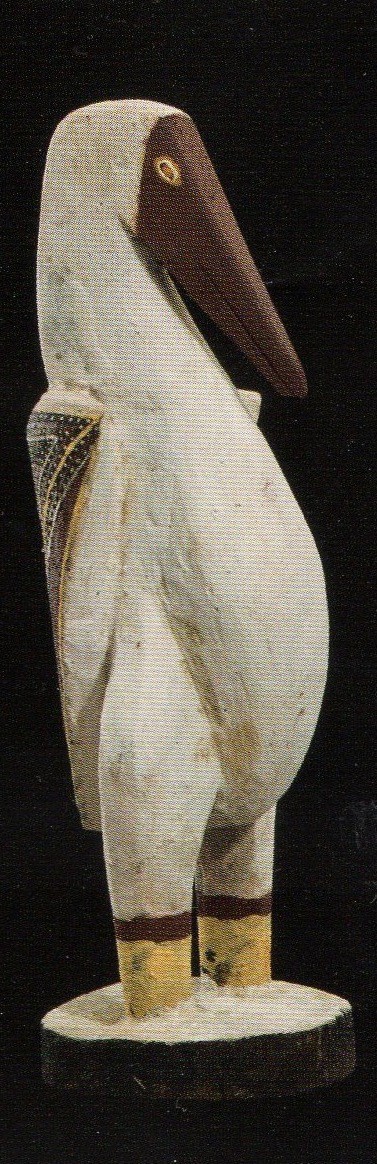
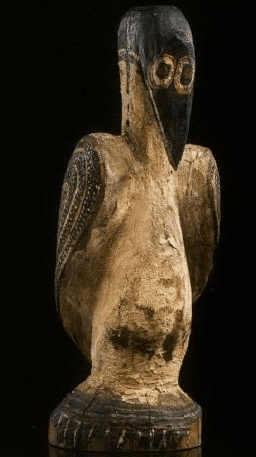
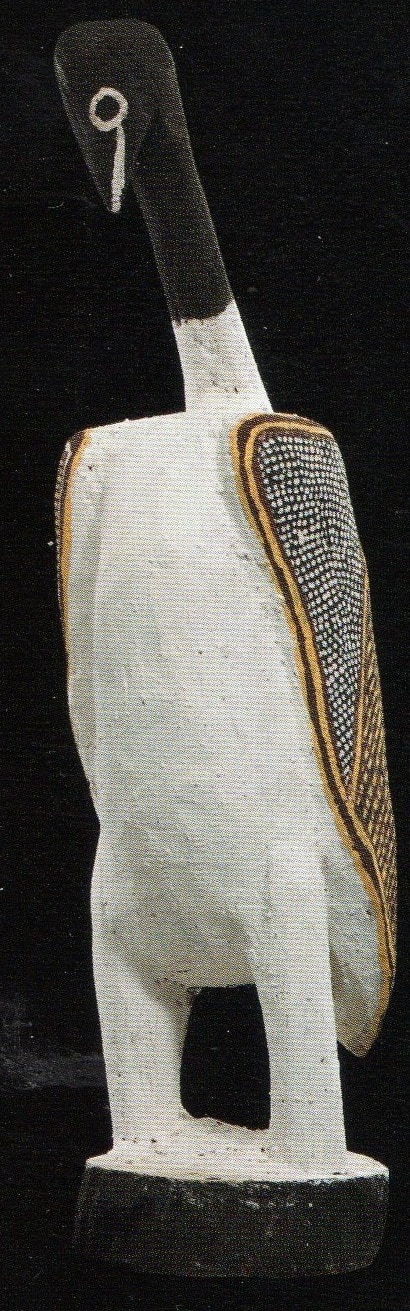
Declan Apuatimi carving of a pelican

Style

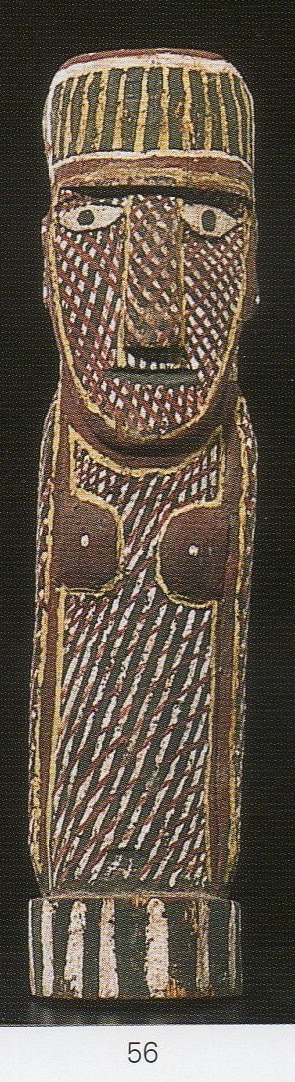
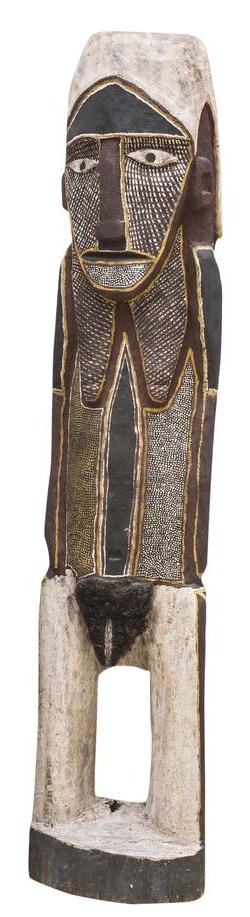
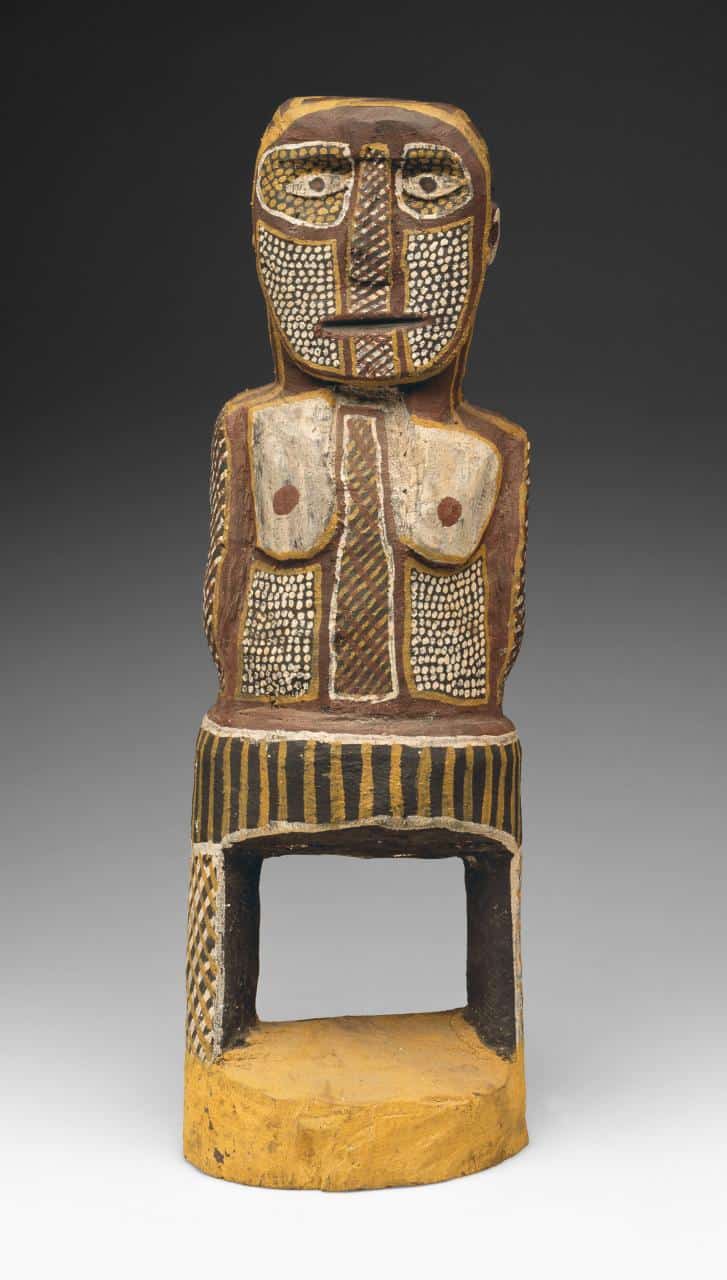
Declan Apuatimi is celebrated primarily for his monumental ironwood sculptures, which combine deep ceremonial authority with remarkable sculptural innovation. Working within the traditions of Tiwi Pukumani carving, Declan helped transform earlier funerary post forms into increasingly complex figurative sculptures that now stand among the most recognisable achievements of twentieth-century Tiwi art.

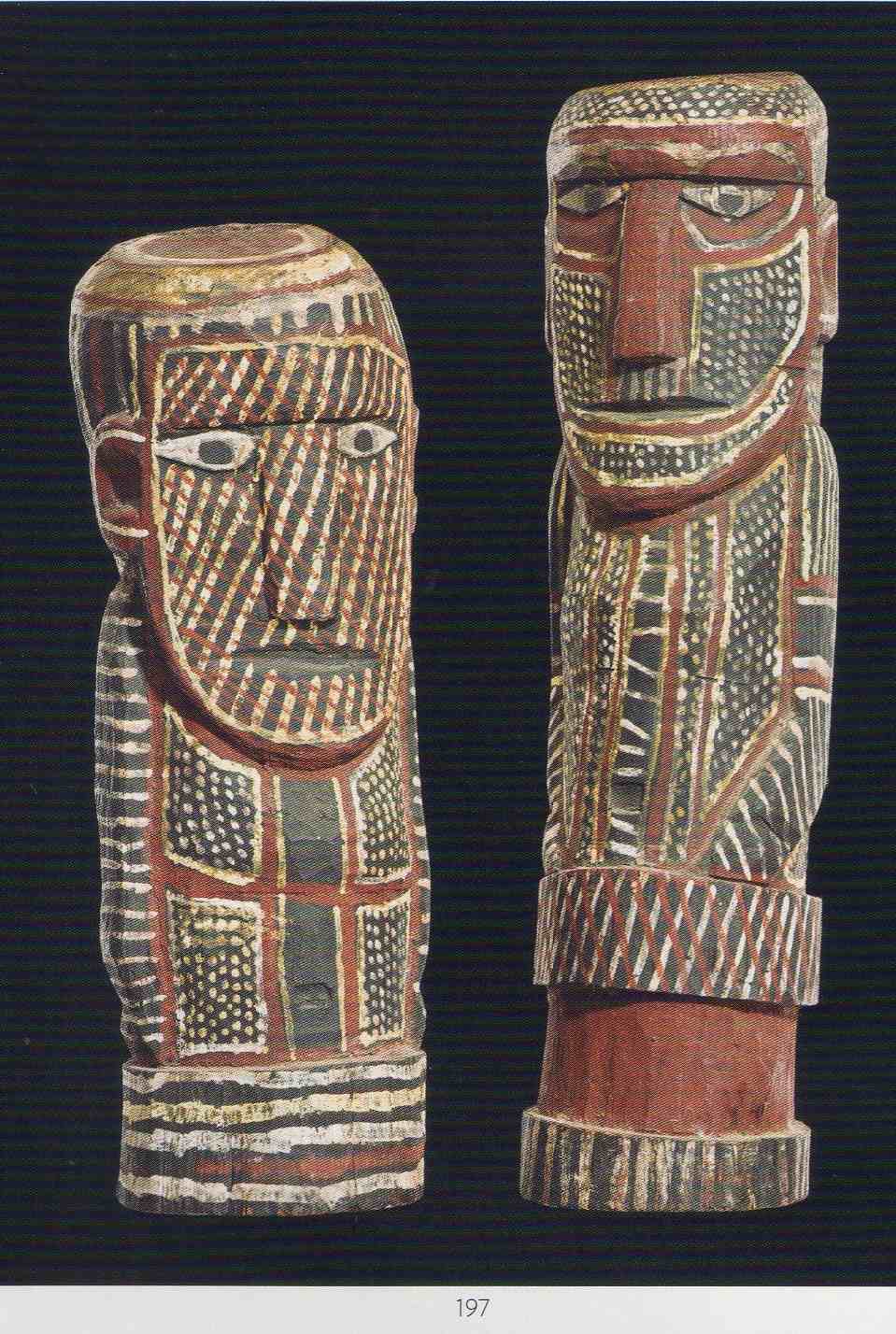
Earlier Tiwi burial poles were often shaped through selective burning and scraping with shell tools, producing relatively simple ceremonial forms. Under Declan Apuatimi’s hand these traditions evolved into highly individual sculptural compositions distinguished by stacked faces, geometric body divisions, and powerful architectural structure. He was among the first Tiwi sculptors to develop the striking motif of multiple three-tiered faces rising vertically upon a single post, a feature that became one of the defining characteristics of his mature work.

Declan’s figures possess a dense sculptural solidity rarely encountered in earlier Tiwi carving. Broad shoulders, muscular cylindrical bodies, and strongly geometric divisions give his sculptures extraordinary monumentality even at relatively modest scale. His almond-shaped eyes often appear detached from the physical world, creating an intense spiritual presence associated with ancestral Tiwi cosmology and ceremonial authority. In many works the head becomes almost equal in scale to the body itself, producing the powerful compressed anatomy characteristic of his sculpture.

The painted surfaces of Declan Apuatimi’s carvings are equally distinctive. Earlier works frequently employ restrained ochre palettes dominated by earth reds, whites, and blackened tones. By the 1970s, however, his sculptures increasingly incorporated brighter and more saturated pigments carefully separated into crisp geometric fields. The resulting clarity of surface design helped distinguish his later works from many earlier Tiwi carvings while preserving strong links to traditional jilamara body painting.

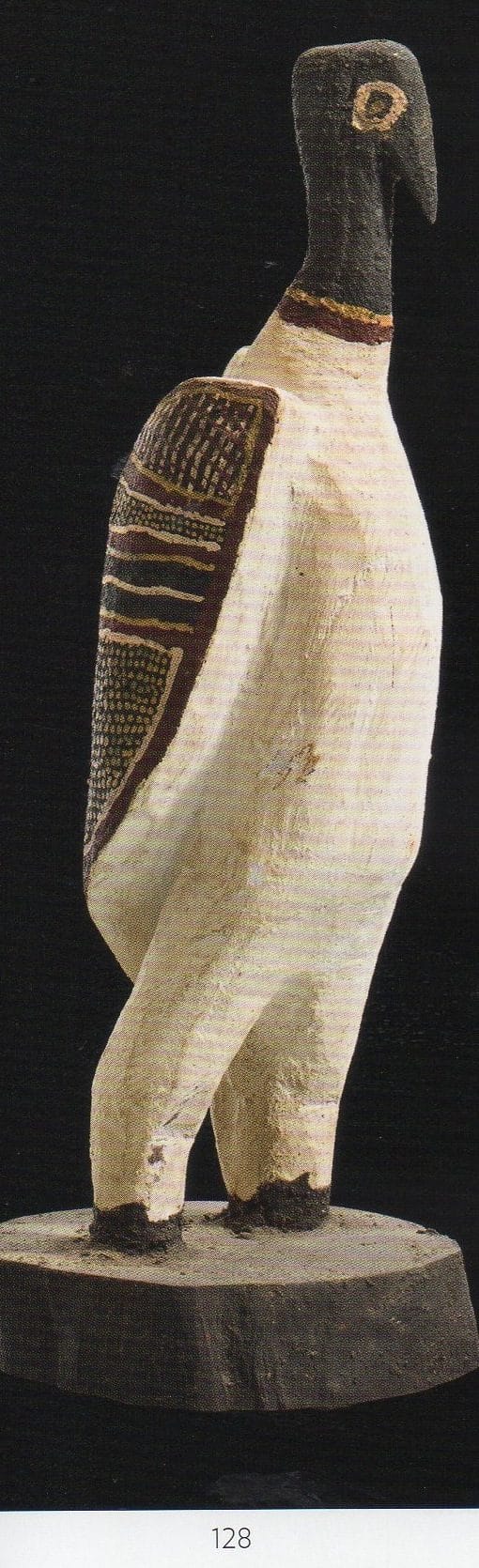
Declan also produced important carvings of birds, particularly owls and other ceremonial species. These sculptures are often more restrained in overall decoration, with relatively plain white or ochre bodies contrasted against highly elaborate wing designs derived from ceremonial skin painting motifs. These bird carvings reveal both his versatility and his sophisticated understanding of Tiwi ceremonial design systems.

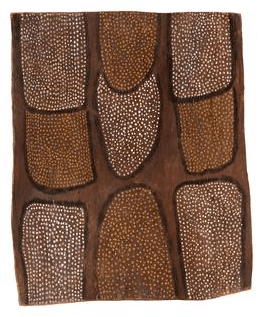
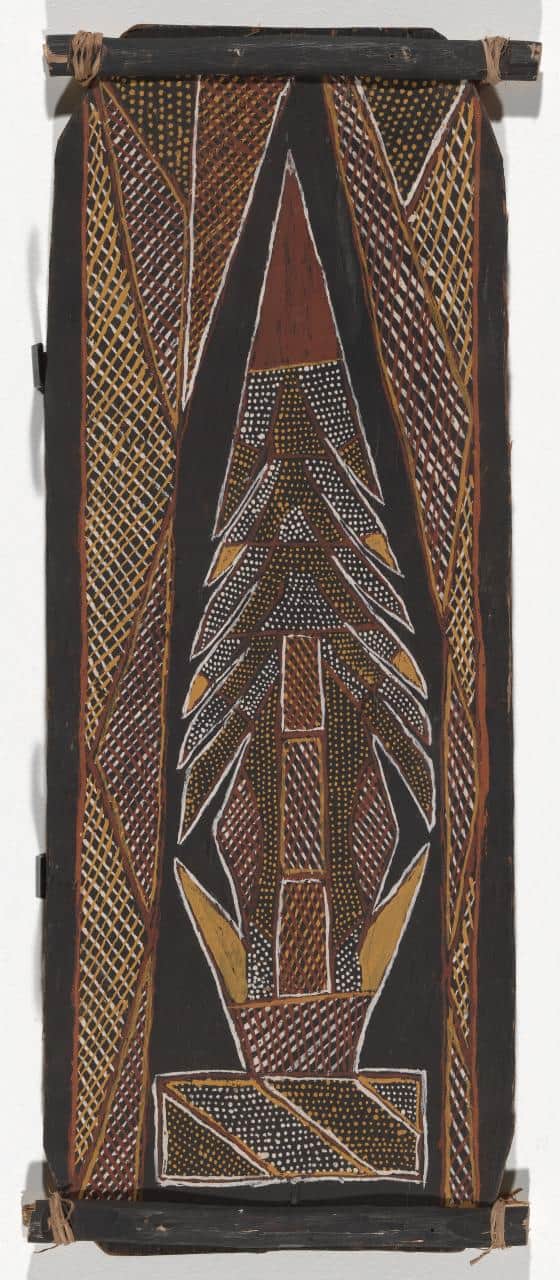
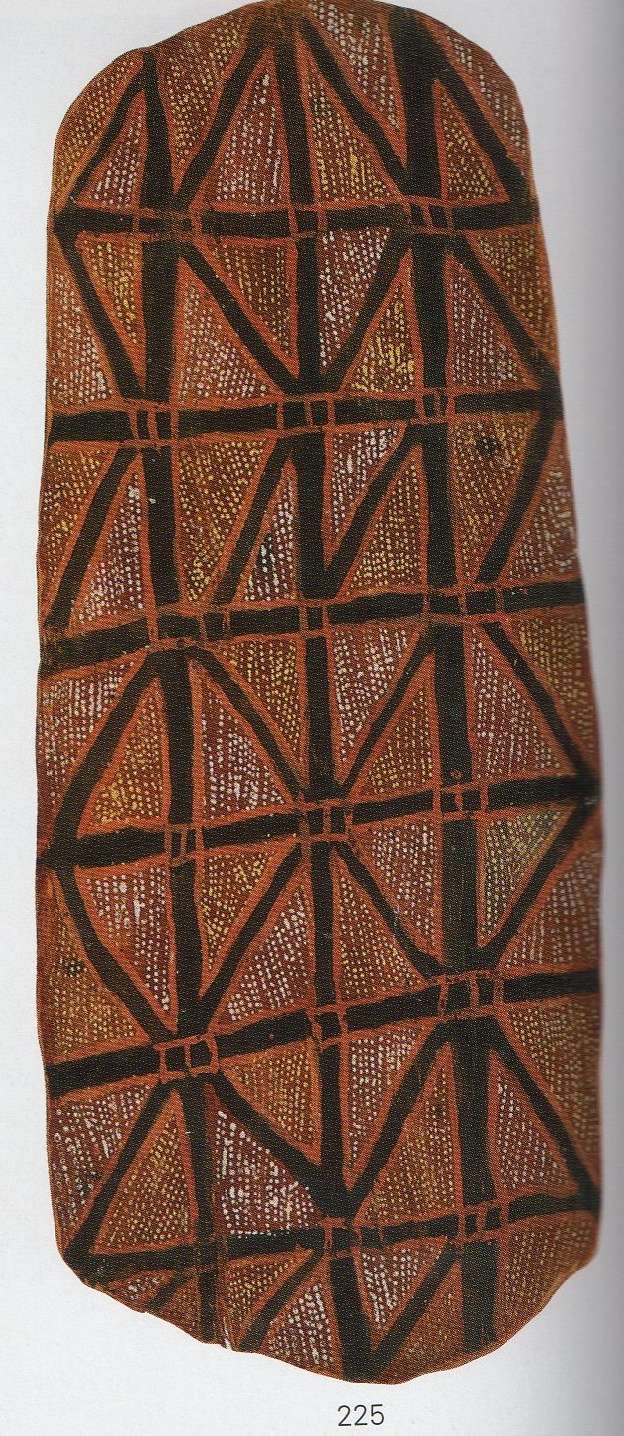
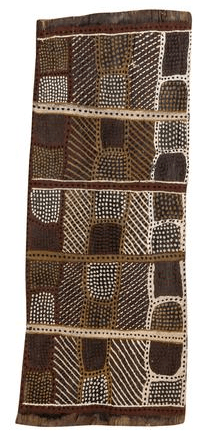
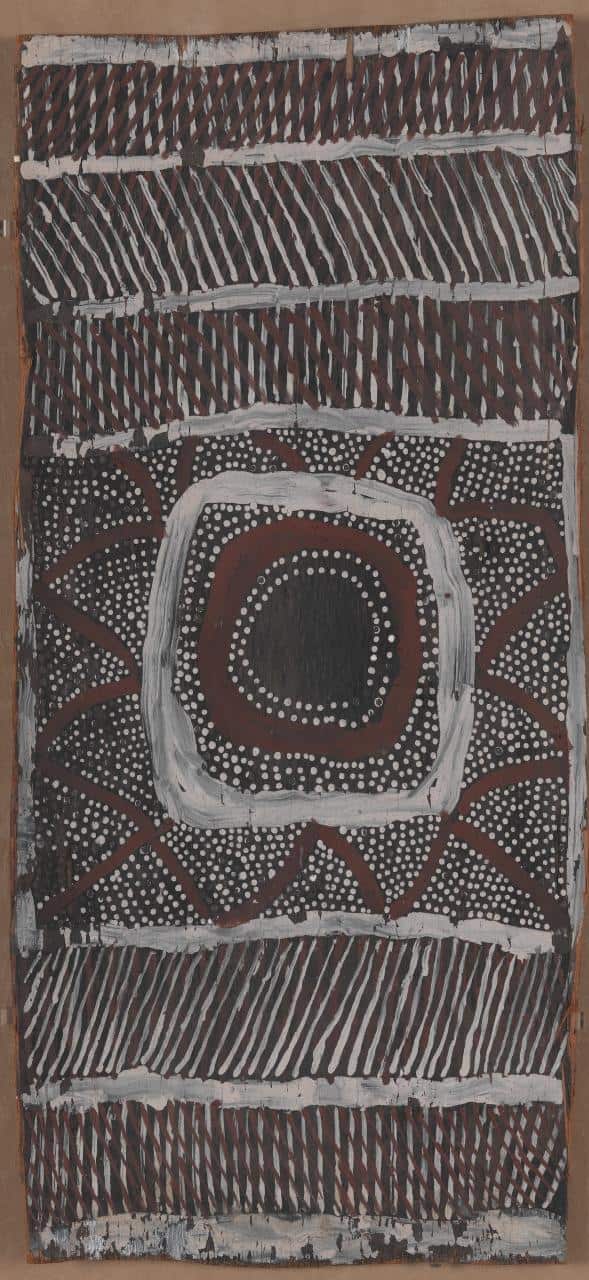
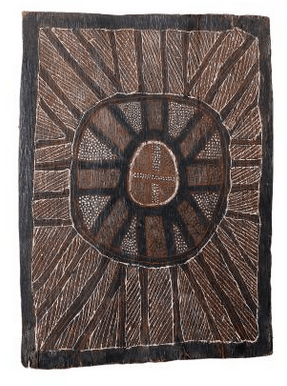
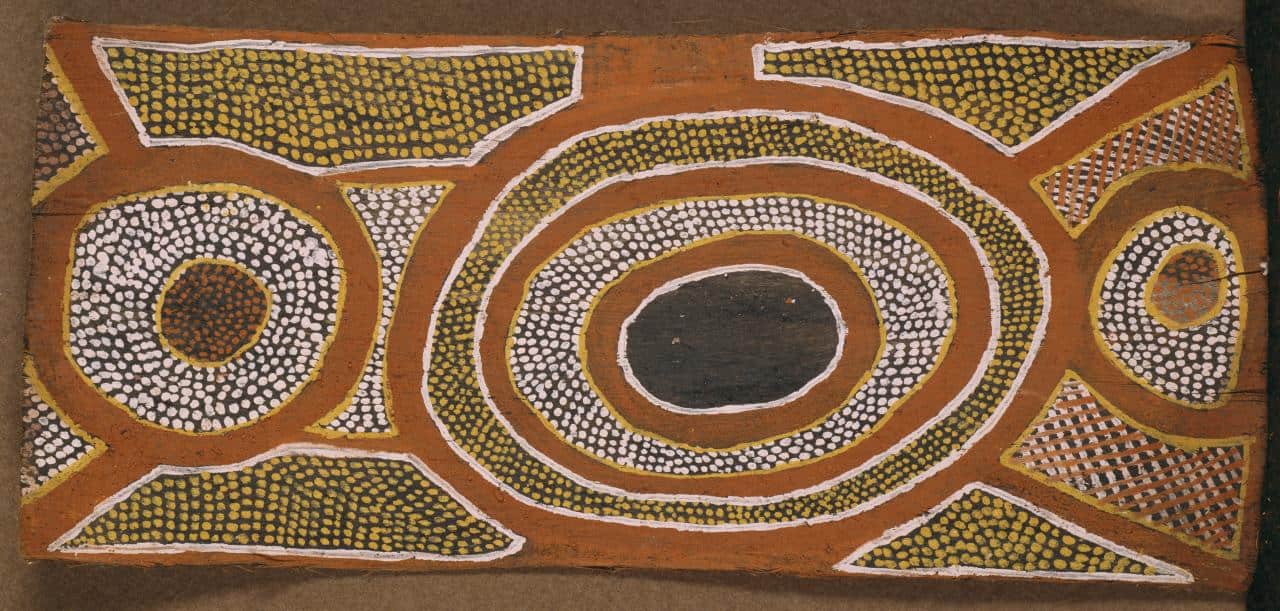
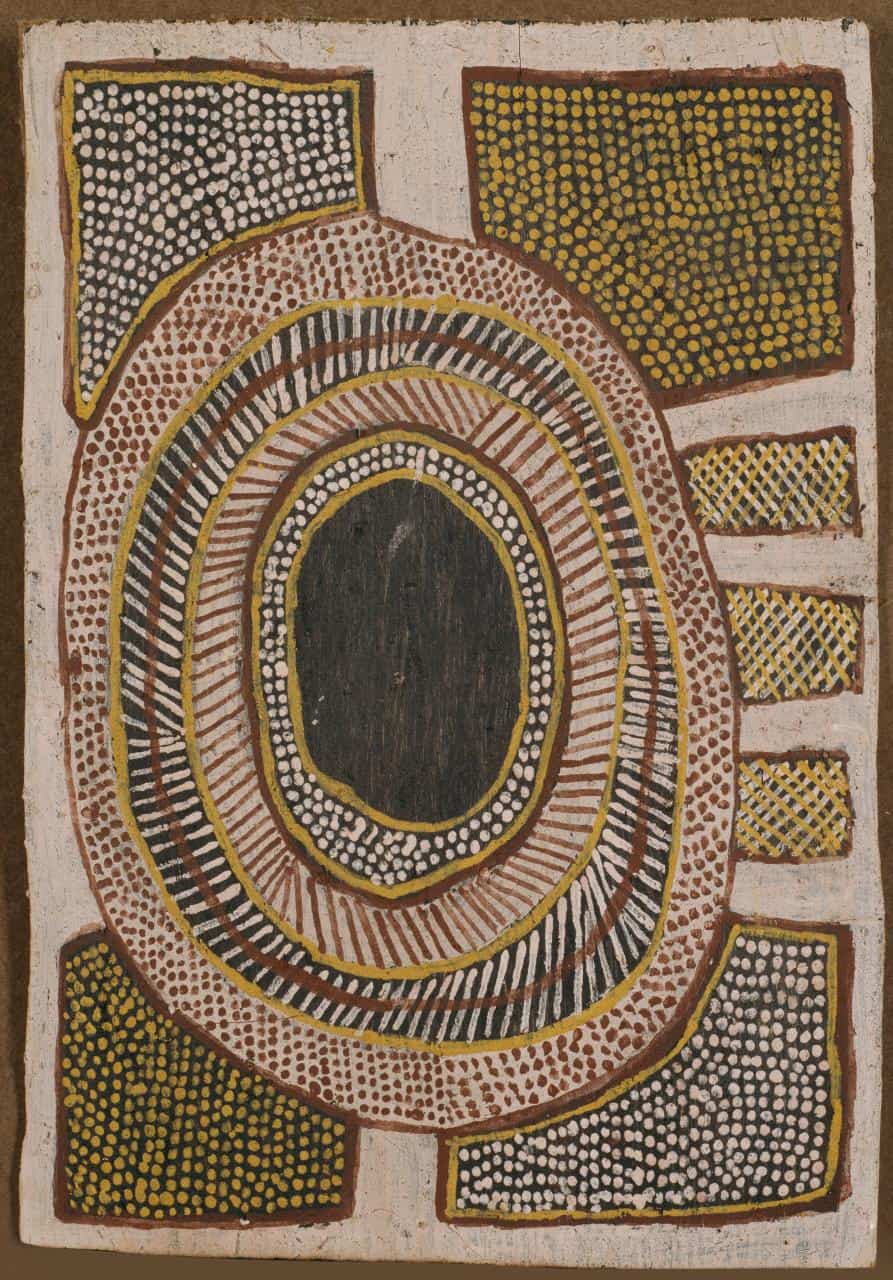
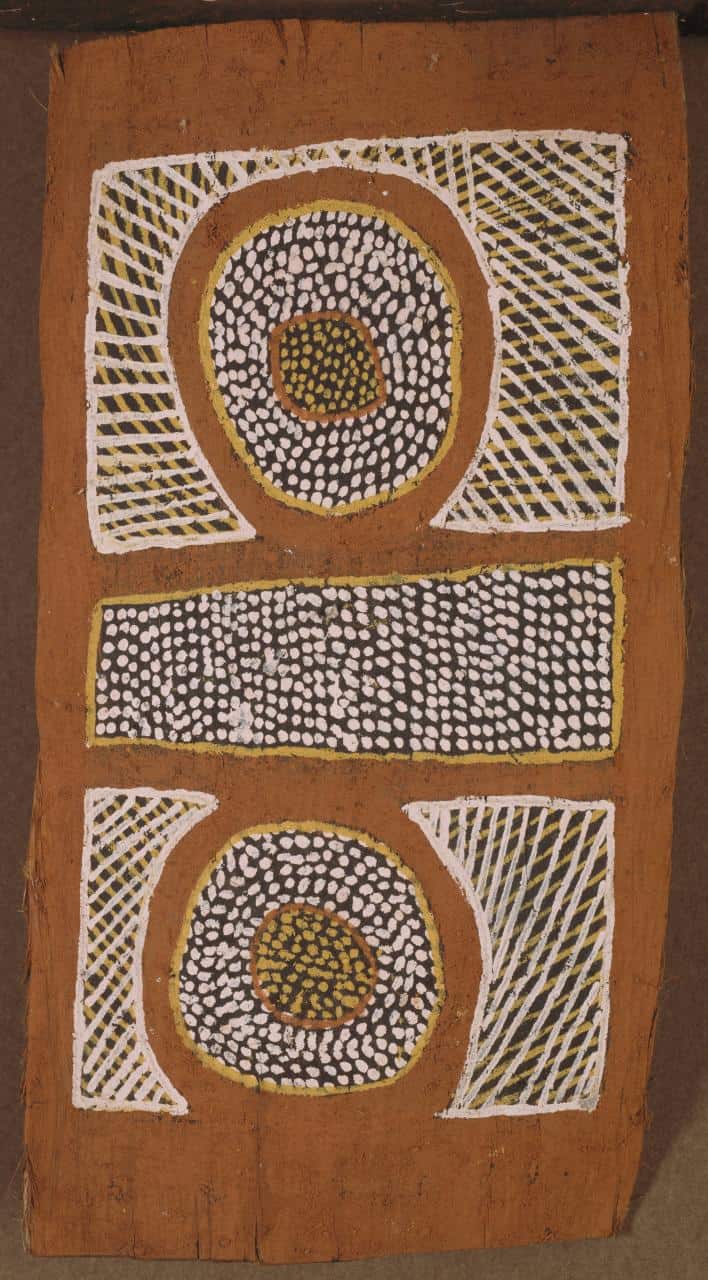
Although sculpture remained his primary medium, Declan Apuatimi also produced Tiwi bark paintings of considerable importance. His bark works translate ceremonial jilamara designs onto eucalyptus bark with the same disciplined structure and compositional control evident in his carvings. Smaller bark paintings often possess remarkable delicacy and refinement, while larger works demonstrate strong compositional authority and increasingly vibrant colour.

Today Declan Apuatimi’s sculptures remain among the most sought-after forms of early Tiwi art. His bark paintings are also highly collectible, although they remain comparatively rarer and somewhat less widely recognised among collectors than the bark works of early Tiwi painters such as Ali Mungatopi and Deaf Tommy Mungatopi.

Biography

Declan Apuatimi was born at Iminulapi in the north-west of Bathurst Island, although his ancestral country was Munupi on the north-west coast of Melville Island. From an early age he was immersed in the ceremonial and artistic traditions of the Tiwi people, learning the skills associated with carving, weaving, and ritual production long before the emergence of a commercial Aboriginal art market.

As a young man Declan learned to weave finely crafted ceremonial armlets and to carve barbed spears, fluted clubs, and Tutini burial posts used in the Pukumani ceremony. These ceremonial traditions formed the foundation of his later sculptural practice and remained central to his artistic vision throughout his life.

During the 1930s Declan worked aboard Japanese, Malay, and Filipino pearling vessels operating across northern Australian waters. Like many Tiwi men of his generation, his life intersected with the broader maritime economy of northern Australia prior to the Second World War. With the outbreak of war, the pearling industry abruptly collapsed and Declan later worked at a Royal Australian Air Force base in Darwin before eventually returning to Bathurst Island after the war ended.

Declan Apuatimi began carving works for sale during the late 1950s under the encouragement of Father John Cosgrove. At this early stage the principal audience for Tiwi sculpture consisted largely of anthropologists, missionaries, museums, and state gallery collections rather than private collectors. During the 1960s, however, demand for Tiwi carving expanded considerably as Aboriginal art began attracting wider national and international attention. While continuing to carve ceremonial burial posts, Declan increasingly developed the distinctive figurative sculptural forms for which he later became renowned.

The establishment of Tiwi Pima Art during the 1970s helped consolidate Declan’s artistic career and brought wider exposure to Tiwi carving traditions. Through this community-based art centre, Tiwi artists were able to market sculptures, bark paintings, and ceremonial works to a growing audience beyond Bathurst and Melville Islands. During this period Declan refined the highly recognisable sculptural style that now defines many of his major works.

In 1984, craft adviser Mick Reid organised the first major solo exhibition devoted to a Tiwi artist, presenting Declan Apuatimi’s work to a broader Australian audience. The entire exhibition was purchased by Lord Alistair McAlpine, reflecting the growing recognition of Declan’s importance within Aboriginal Australian art. Following his death in 1985, a major retrospective exhibition titled Declan – A Tiwi Artist toured Australia and was exhibited at the Araluen Arts Centre in Alice Springs, further cementing his reputation as one of the great sculptors of Tiwi art.

Declan Apuatimi’s surname is occasionally recorded as Napuatimi in older catalogues and publications.

Black and white portrait photograph of Tiwi sculptor and bark painter Declan Apuatimi
Monumental ceremonial Tiwi sculpture by Declan Apuatimi with painted jilamara designs and feathered headdress

Market Recognition and Exhibitions

Declan Apuatimi played a major role in establishing Tiwi Art within the Australian and international art market during the 1970s and early 1980s. At a time when Tiwi sculpture was still emerging from a primarily ceremonial context into broader museum and collector awareness, Declan’s works stood out for their sculptural sophistication, ceremonial authority, and highly individual visual language.

He became one of the most prolific and respected artists working through Tiwi Pima Art, the community-based art organisation established in 1972 to support and market traditional Tiwi carving, painting, and ceremonial art. Through Tiwi Pima Art, Declan’s sculptures began reaching a wider network of collectors, museums, and galleries both within Australia and overseas.

In 1984 craft adviser Mick Reid organised the first major solo exhibition devoted to a Tiwi artist, presenting Declan Apuatimi’s sculptures and bark paintings to a broader national audience. The exhibition was purchased in its entirety by Lord Alistair McAlpine, one of the most significant collectors of Aboriginal art during the twentieth century. This acquisition represented an important moment in the growing recognition of Tiwi sculpture as a major artistic tradition rather than simply ethnographic material.

Following Declan’s death in 1985, his reputation continued to expand. In 1987 the Araluen Arts Centre in Alice Springs curated the touring retrospective Declan – A Tiwi Artist, helping cement his position as one of the pioneering figures of modern Tiwi cultural expression.

Today Declan Apuatimi’s sculptures and bark paintings are represented in major institutional and private collections and are increasingly recognised among the finest achievements of twentieth-century Aboriginal sculpture. Collectors continue to value his works for their strong ceremonial presence, innovative sculptural forms, and profound connection to traditional Tiwi cosmology and Pukumani ceremony.

Auction Record and Collectibility

Declan Apuatimi’s sculptures and bark paintings are increasingly sought after on the secondary market, particularly among collectors specialising in early Tiwi Art and important Aboriginal sculpture. His works combine strong ceremonial authority with highly distinctive sculptural innovation, qualities that continue to attract both institutional and private collectors.

Large ceremonial figures, birds, and major sculptural forms by Declan have performed strongly at auction, particularly works with early provenance or connections to important collections. His sculptures are especially valued for their bold architectural structure, painted jilamara surfaces, and historical importance within the development of twentieth-century Tiwi carving traditions. Important examples have regularly exceeded auction estimates, reflecting the growing recognition of Declan Apuatimi as one of the great sculptors of Aboriginal Australian art.

Although his bark paintings appear less frequently than his sculptures, strong examples also attract considerable collector interest. Works featuring powerful ceremonial imagery, crocodiles, birds, and complex jilamara patterning are increasingly appreciated for both their rarity and their sophisticated handling of colour and design.

One of the key factors driving collectibility is rarity. Compared with many contemporary Aboriginal artists, relatively few important works by Declan Apuatimi appear publicly on the market each year. Strong sculptures with early collection history, exhibition provenance, or connections to Tiwi Pima Art are particularly desirable and can attract intense competition when offered for sale.

Collectors are increasingly recognising that Declan’s works occupy an important transitional moment within Aboriginal art history — preserving direct ceremonial Tiwi carving traditions while simultaneously helping establish Tiwi sculpture within the broader Australian and international art market. For this reason, important sculptures and bark paintings by Declan Apuatimi remain highly desirable additions to serious public and private collections.

Artistic Legacy

Declan Apuatimi’s work represents a bridge between traditional Tiwi ceremonial practice and the contemporary art market, demonstrating the enduring power of ancestral stories expressed through sculpture and bark painting. His contributions to the Tiwi art movement remain vital for understanding the evolution of Indigenous Australian art in the 20th century.

He was a master of form, line, and symbolic design, whose works convey the profound spiritual and cultural knowledge of the Tiwi people. Each sculpture and bark painting not only embodies ceremonial meaning but also stands as a testament to Declan’s innovative spirit, dedication, and technical mastery.

For collectors and connoisseurs of Aboriginal art, Declan Apuatimi’s works offer an exceptional opportunity to own a piece of Tiwi cultural heritage—each piece rare, historically significant, and executed with the artistic sophistication of a master carver and painter. As one of the most revered figures in Tiwi Pima Art, his legacy continues to shape contemporary understandings of Aboriginal art and remains central to both scholarly study and high-level collecting.


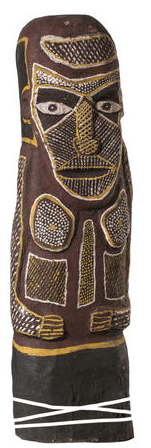
Declan Apuatimi bark painting

All images in this article are for educational purposes only.

This site may contain copyrighted material the use of which was not specified by the copyright owner. 

If this post has been informative please take the time and make the effort to share it on social media. By clicking any of the share buttons below you create a link from your social site to this article. Links are what google uses to calculate what information on the web is useful. By sharing this article you are letting google know you found my article / images of some value. Thanks!