Select Page

Enraeld Munkara Tipungaleralumi Djulabinyanna (1882–1968)

Born in 1882 on Bathurst Island, Enraeld Munkara Tipungaleralumi Djulabinyanna stands among the most important early sculptors in Tiwi Art. A senior ceremonial leader as well as a master carver, Munkara transformed the visual language of the Pukumani ceremony into a highly distinctive sculptural form whose influence can still be felt within later Tiwi carving traditions.

Working during the mid-twentieth century, Enraeld produced some of the earliest Tiwi sculptures to enter major Australian and international collections. His powerful carved figures of Purukapali and Bima possess an extraordinary ceremonial intensity and are now regarded as foundational works within the history of Aboriginal sculpture. His sculptures are notable for their elongated anatomy, raw emotional force, and deeply expressive painted surfaces derived from traditional jilamara designs.

Among the Tiwi people, Enraeld Munkara is often regarded as one of the greatest early sculptors, occupying a position comparable in importance to other Tiwi artists such as Cardo Kerinauia and important early bark painters including Tommy Mungatopi. His works retain a direct connection to ceremonial Tiwi culture and predate much of the later commercial Aboriginal art movement.

If you have an Enraeld Munkara Aboriginal sculpture to sell, please feel free to contact me. I am always interested in important early Tiwi sculpture and ceremonial carving traditions. If you simply wish to know what your Enraeld Munkara sculpture may be worth, feel free to send me a JPEG image. I would love to see it.

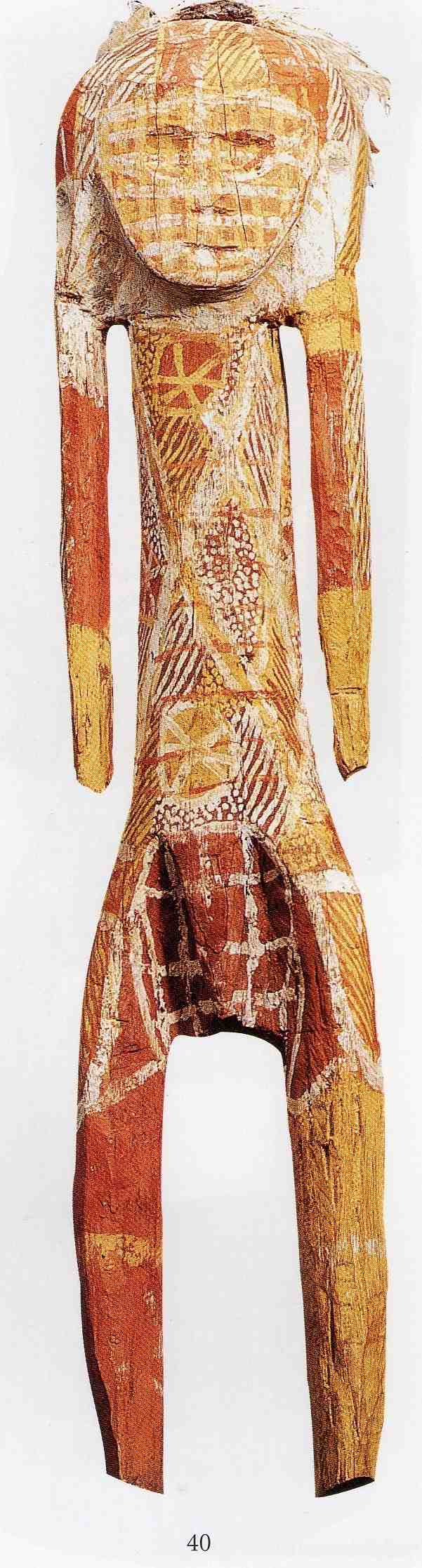
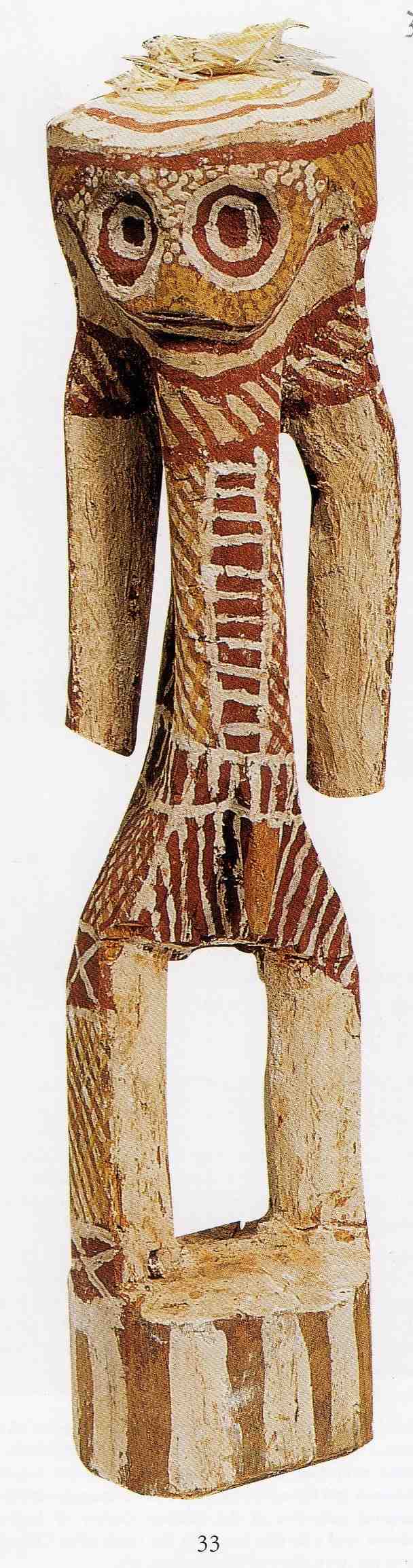
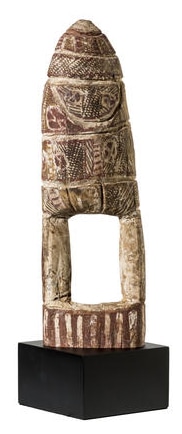
Early Tiwi sculpture by Enraeld Munkara depicting a ceremonial Pukumani figure with painted jilamara designs and feathered headdress
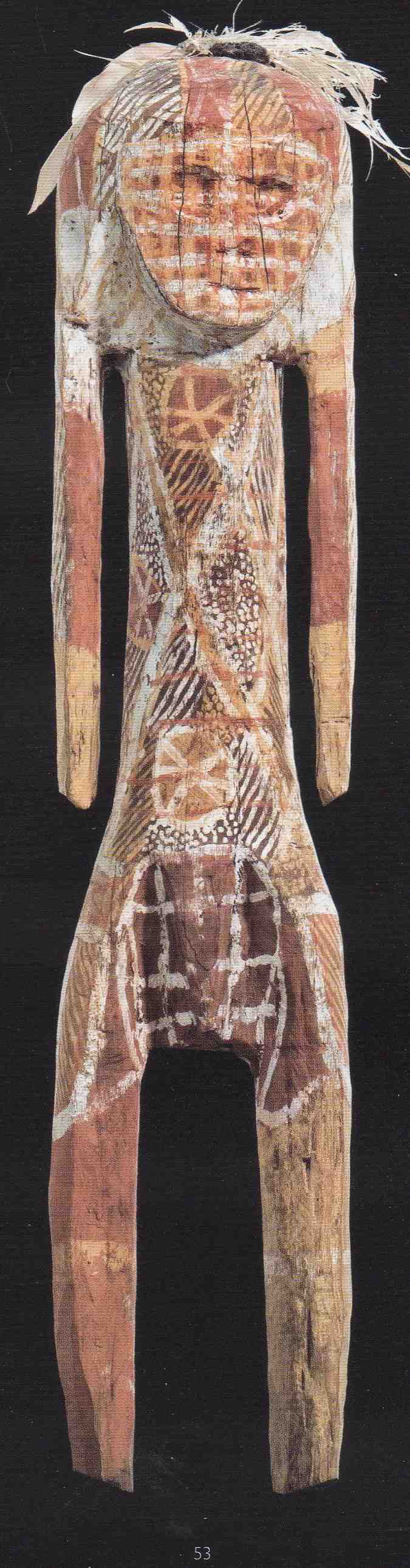
Pukumani Pole by Enraeld Munkara Tipungaleralumi Djulabinyanna from snake bay Tiwi Islands

Style

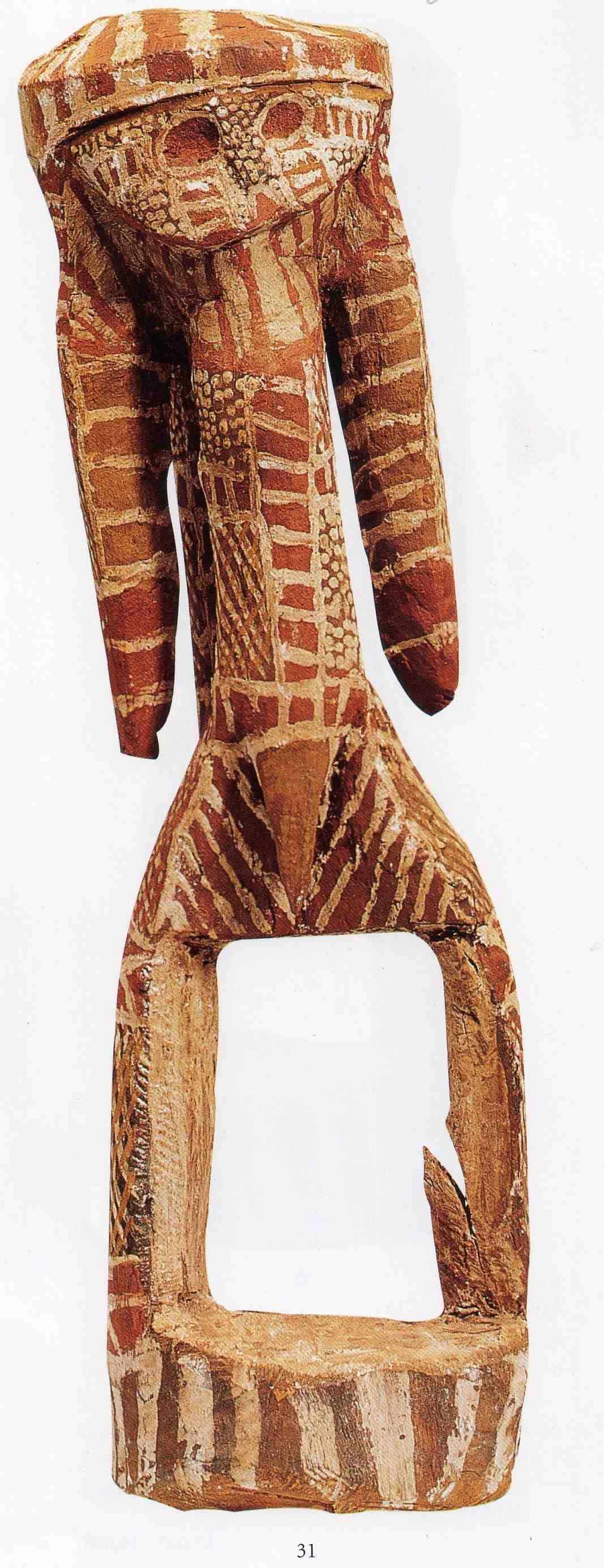
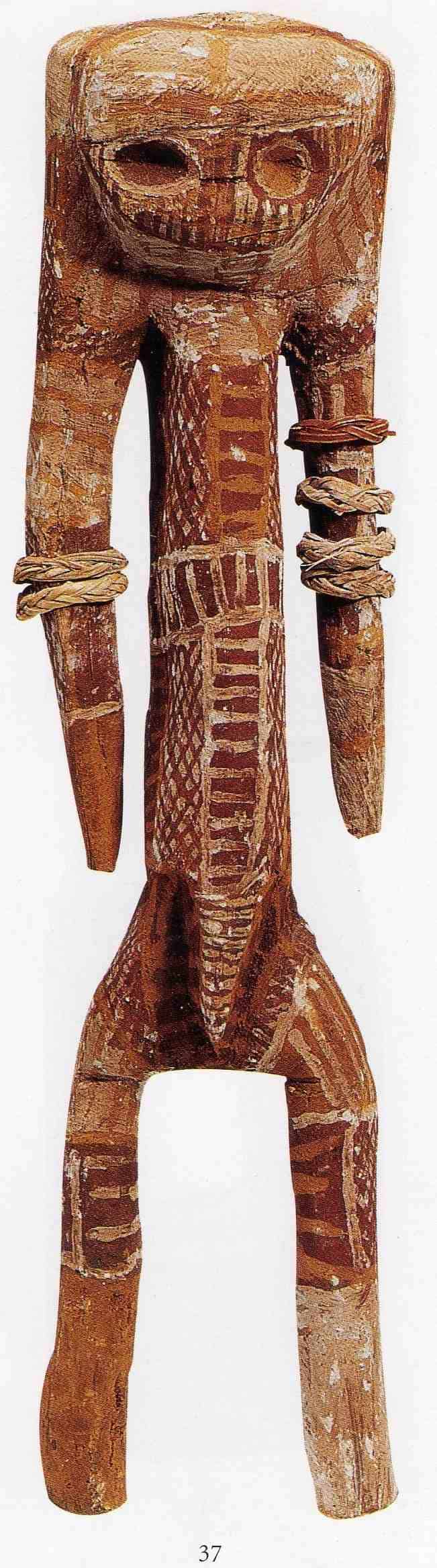
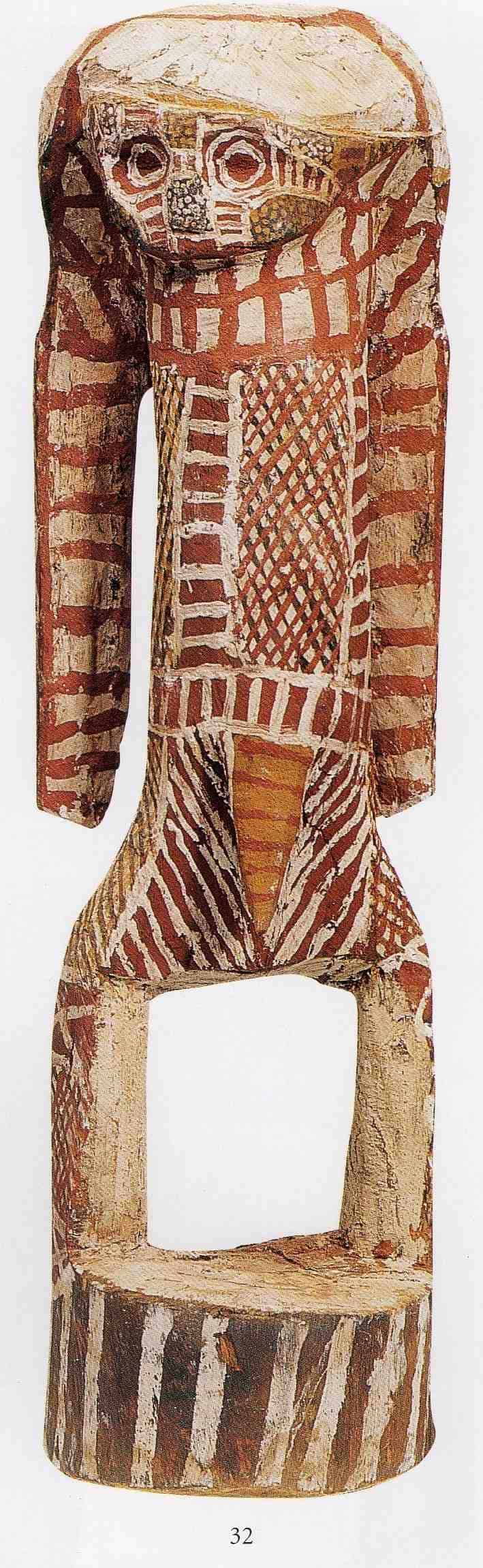
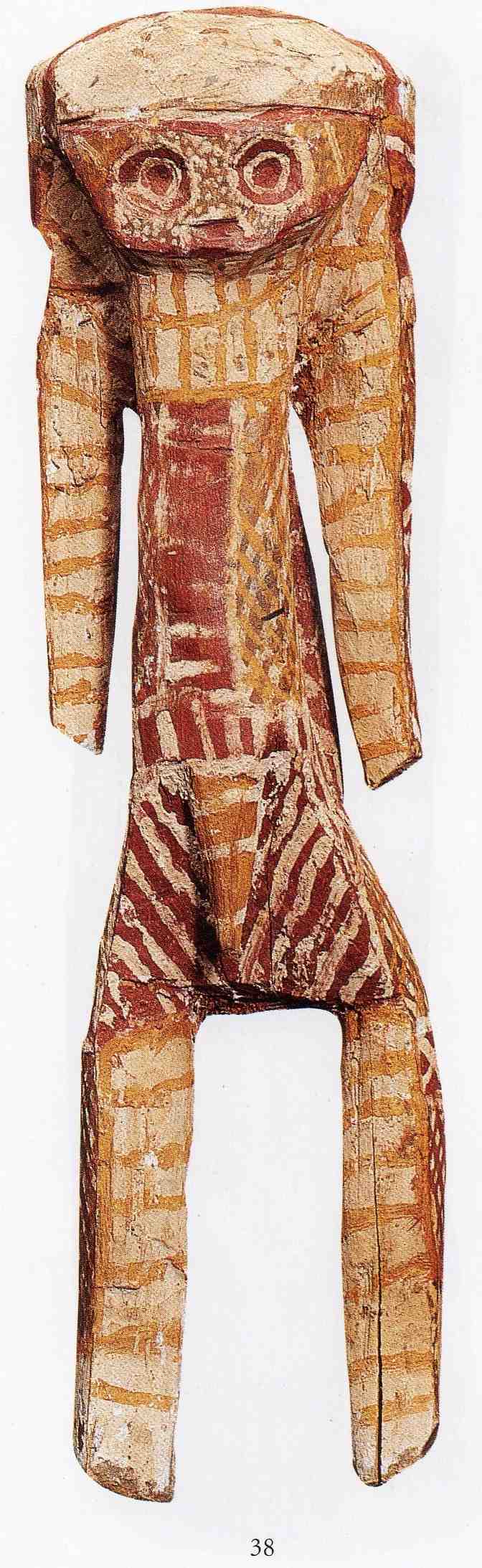
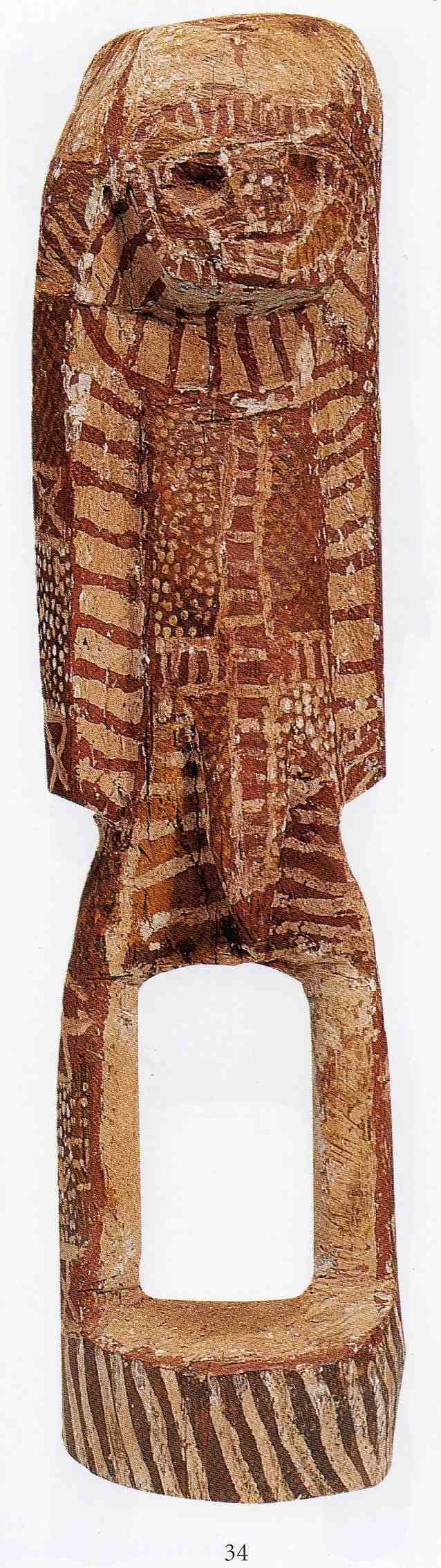
Enraeld Munkara’s sculptures are among the most distinctive works produced within early Tiwi carving traditions. His figures possess a raw ceremonial power and highly individual anatomy that immediately separates them from later mission-influenced Tiwi sculpture. The arms of his figures often emerge directly from a large bulbous head or upper torso, while the legs descend straight downward from broad flaring hips. Many carvings contain a strong negative space between the legs, visually echoing the vertical forms of Tiwi Tutini burial poles associated with the Pukumani ceremony.

The anatomy of Enraeld’s sculptures is intentionally stylised rather than naturalistic. Heads and torsos frequently merge into a single sculptural mass, while raised shoulders extend sharply outward from the sides of the head. Many figures lean forward in animated ceremonial postures with hunched shoulders, bent knees, or rigidly extended arms. These dynamic poses strongly evoke Tiwi ceremonial dance movements in which performers embody ancestral beings, birds, crocodiles, and spirit figures through rhythmic stamping, gesture, and body paint.

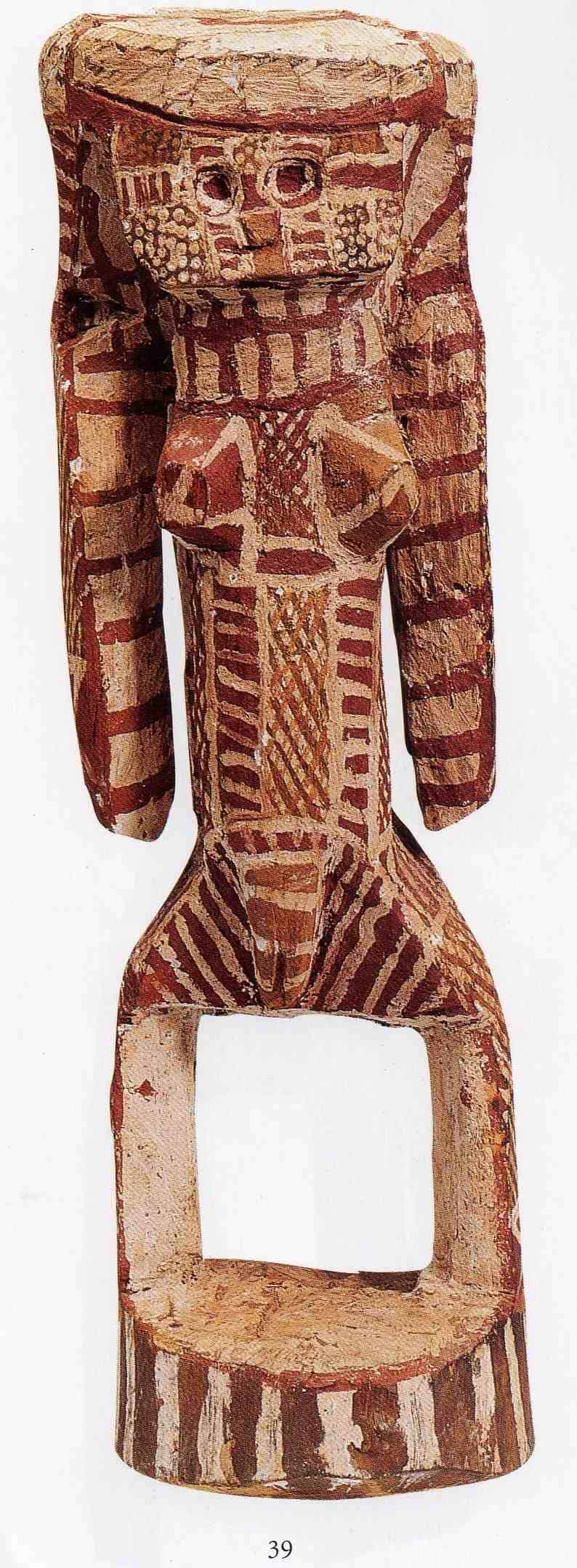
Unlike many later carvings produced under stronger missionary influence, Enraeld’s figures openly emphasise sexuality and human anatomy, reflecting the direct ceremonial authority of earlier Tiwi sculptural traditions. Despite their apparent simplicity, his sculptures possess remarkable clarity, emotional force, and psychological intensity.

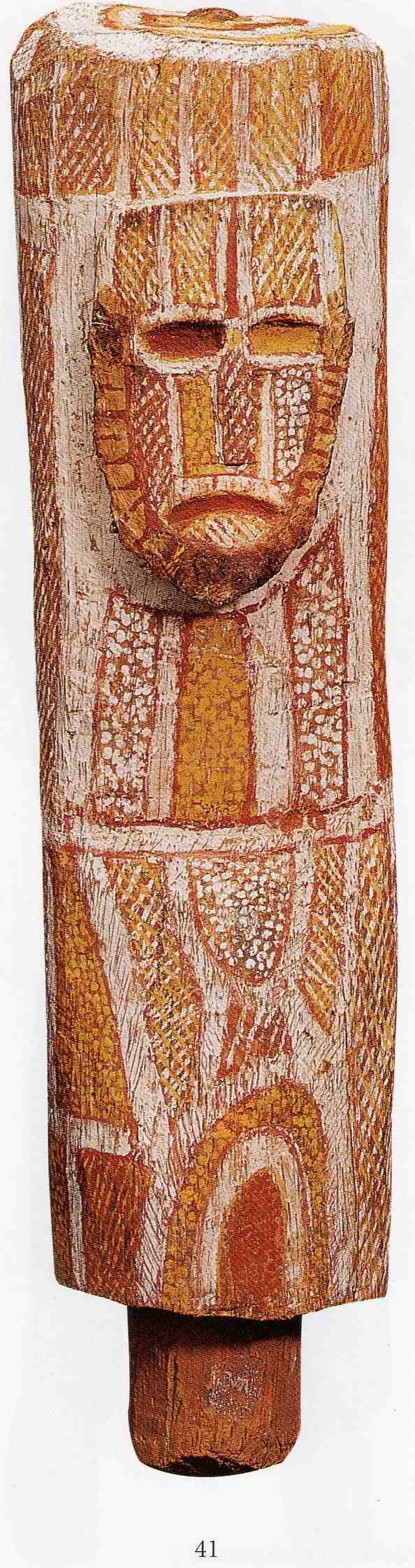
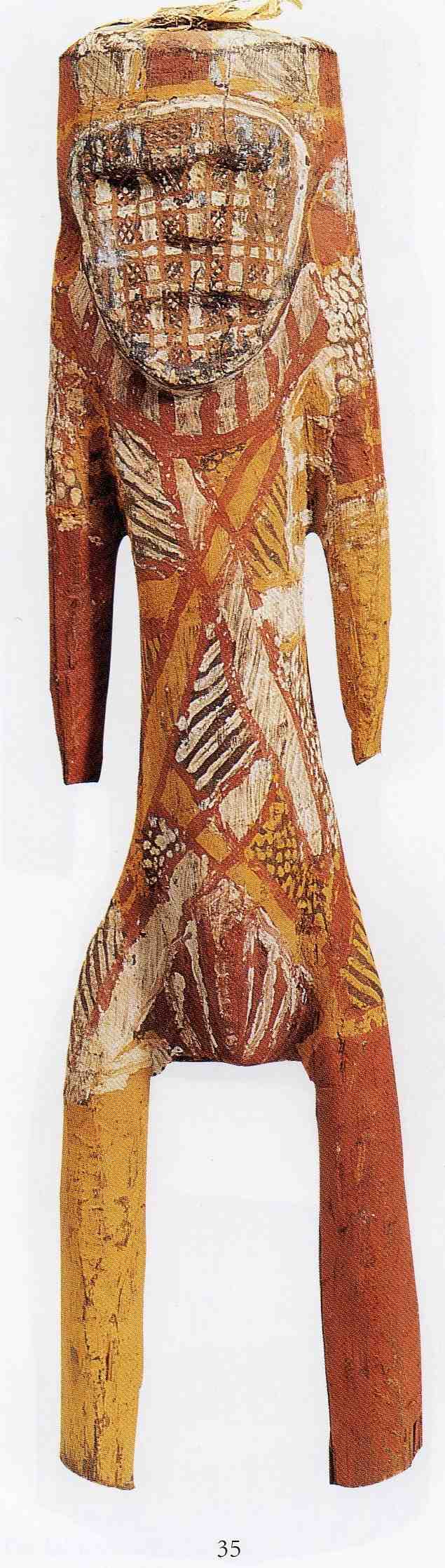
The painted surfaces of Enraeld’s carvings are equally important. Faces were delicately painted while bodies were covered in geometric jilamara designs derived from ceremonial skin painting traditions. Viewed closely, many of his sculptures possess an almost haunting emotional quality—deeply human, expressive, and at times mournful—capturing something of the atmosphere surrounding the great Pukumani mortuary ceremonies of the Tiwi people.

Although best known for his powerful ceremonial figures of Purukapali and Bima, Enraeld also occasionally produced striking carvings of  owls.

Pukumani Figures and Early Collectors

Enraeld Munkara’s sculptures attracted the attention of collectors relatively early, particularly Dorothy Bennett and her son Lance Bennett, who recognised the extraordinary ceremonial power and sculptural originality of his figures. At the time, these works were often described by collectors and anthropologists as small grave figures or funerary carvings closely associated with the Tiwi Pukumani mortuary ceremony.

Within Tiwi belief, these sculptures were connected to the spiritual world surrounding death and mourning. Some figures were understood to accompany or appease the spirit of the deceased—known as the Mopaditi—helping guide the spirit away from the living and preventing it from troubling surviving relatives. Their significance therefore extended far beyond decorative carving and remained deeply embedded within ceremonial Tiwi culture.

Enraeld Munkara belongs to the very first generation of Tiwi sculptors whose works entered Australian and international collections during the mid-twentieth century. His sculptures emerged at a pivotal moment when ceremonial Tiwi carving traditions first began to intersect with anthropological collecting and the developing Aboriginal art market.

The anthropologist Charles Mountford acquired examples of Tiwi sculpture at Snake Bay during his northern Australian expeditions, while the Czech collector and ethnographer Karol Kupka secured important Tiwi works for European museum collections during the 1950s. Enraeld’s sculptures now stand among the earliest and most culturally important examples of Tiwi art collected internationally.

What makes these early carvings particularly significant is the extent to which they still retain direct ceremonial authority. Unlike many later commercial Aboriginal sculptures produced primarily for the art market, Enraeld’s works preserve the raw immediacy, spiritual force, and sculptural language of Tiwi ceremonial tradition at a time when many aspects of older Tiwi culture were still being actively mai


Early Tiwi Pukumani figure sculpture by Enraeld Munkara painted with ceremonial jilamara designs

Collections and Legacy

Today, Enraeld Munkara’s sculptures are represented in important public and private collections both within Australia and internationally. The former Aboriginal Art Museum in the Netherlands assembled one of the largest known holdings of his work, including a substantial group of sculptures collected by Thomas Vroom. Other examples are held in major Australian state gallery collections, where Enraeld’s carvings are increasingly recognised as foundational works within the history of Tiwi art and early Aboriginal sculpture.

The importance of Enraeld’s work lies not only in its sculptural power, but also in its historical position at the intersection of ceremonial Tiwi culture and the emergence of the modern Aboriginal art movement. His carvings preserve an extraordinarily direct relationship with Pukumani ceremony and ceremonial Tiwi life at a period when many older traditions were still actively maintained on Bathurst Island.

As a senior ceremonial figure and leader of the Tikelarru group from southwest Bathurst Island, Enraeld also occupied an important position within Tiwi society beyond his role as an artist. His authority extended into ceremonial and community life, reinforcing the close relationship between artistic production and cultural leadership within traditional Tiwi culture.

The influence of the Munkara family continued into later generations. His younger brother Benedict Munkara was himself a respected carver, while members of the wider family later played significant roles within Tiwi governance and ceremonial life during the mid-twentieth century.

Today Enraeld Munkara is increasingly recognised as one of the great pioneer sculptors of Aboriginal Australian art. His works remain among the most powerful and historically important examples of early Tiwi sculpture ever produced.

Biography

Enraeld Munkara Tipungaleralumi Djulabinyanna lived at Milikapiti (Snake Bay) on Bathurst Island and belonged to an important generation of Tiwi artists working during the 1950s and 1960s whose art retained a particularly strong connection to older ceremonial traditions. Compared with some later mission-influenced Tiwi production, the works created by artists from Snake Bay and nearby communities during this period often preserve a more direct relationship with Pukumani ceremony, ceremonial dance, and traditional sculptural practice.

Munkara is now recognised as one of the pioneering sculptors of early Tiwi art. Before the emergence of a commercial market for Aboriginal sculpture, it is highly likely that artists such as Enraeld were already deeply involved in the carving and painting of ceremonial objects including Tutini burial poles, spears, and ritual forms associated with Tiwi mortuary ceremony. His younger brother Benedict Munkara was also an accomplished carver, reflecting the strong ceremonial and artistic traditions maintained within the family.

Enraeld endured the disfiguring effects of yaws, a tropical disease which severely damaged his nose. In later life he was often seen wearing a strip of cloth across his face in public. Despite these hardships he retained considerable authority and ceremonial standing within Tiwi society. At the time of his death in 1968, aged approximately eighty-six, he was regarded as the oldest living Tiwi man and one of the last surviving direct links to nineteenth-century Tiwi ceremonial traditions.

Other important pioneer Tiwi artists working around Snake Bay and Paru during the same period included Mick Aruni and Stanislaus Puruntatameri. Together these artists helped establish the foundations of modern Tiwi sculpture and painting while maintaining strong connections to ceremonial Tiwi culture.

Relatively little published information survives concerning the life of Enraeld Munkara. If anyone has additional historical information, provenance, or early photographs relating to Enraeld Munkara and early Tiwi sculpture, I would be very interested to hear from you and would be pleased to expand this article further.

Historic photograph of Tiwi artist Enraeld Munkara painting a ceremonial Pukumani sculpture on Bathurst Island

All images in this article are for educational purposes only.

This site may contain copyrighted material the use of which was not specified by the copyright owner.

Enraeld Munkara Tipungaleralumi Djulabinyanna sculpture with an owl like face

Purukupali and Bima

Munkara sculptures depict a Tiwi Dreamtime story about Purukupali and Bima.

Purukupali was the first man on earth and while he was away hunting his wife Bima was seduced by Purukapali’s younger brother Tapara. While making love to his brother she left her baby Jinani under a tree. The baby died when the hot sun shifted and the baby was no longer in the shade. When he returned Purukupali in his grief walked into the sea with his dead son and disappeared forever. Tapara, with his face slashed by a stick, became the moon. Bima became a curlew (bird). To the Tiwi people, Purukupali was the first death, This first death was the cause for the first Pukumani (burial) ceremony.

If this post has been informative please take the time and make the effort to share it on social media. By clicking any of the share buttons below you create a link from your social site to this article. Links are what google uses to calculate what information on the web is useful. By sharing this article you are letting google know you found my article / images of some value. Thanks!