Tiwi Sculpture
Tiwi Sculpture — Early Aboriginal Sculpture from the Tiwi Islands
For a broader overview of Tiwi Art, ceremonial culture, jilamara design traditions, and Tiwi artists, see Tiwi Art.
The Tiwi Islands produced some of the most important and distinctive traditions of Aboriginal Sculpture in Australia. While many forms of Aboriginal Art are primarily associated with painting, the Tiwi people developed a highly sophisticated sculptural culture centred around carved and painted Pukumani Poles, ceremonial objects, ironwood figures, Aboriginal Spears, and ritual carvings.
During the early 1960s, several Tiwi carvers adapted these older ceremonial carving traditions into figurative sculpture for the emerging Aboriginal art market. These early Tiwi Sculptures retained strong connections to ceremonial jilamara body-design systems and Pukumani mortuary traditions, giving them a sculptural authority and cultural depth rarely found elsewhere in Aboriginal Australian Art.
Today early Tiwi Sculpture is highly collectible, particularly works carved during the 1960s and 1970s by important pioneering artists such as Cardo Kerinauia, Enraeld Munkara, Declan Apuatimi and Paddy Henry Ripijingimpi. Early sculptures with strong provenance, old collection history, and finely painted ceremonial surfaces are especially sought after by collectors and museums.
The aim of this article is to help readers identify whether their Aboriginal Sculpture is a Tiwi Sculpture by examining stylistic features, carving traditions, important artists, ceremonial influences, and early sculptural forms from the Tiwi Islands.
If you have a Tiwi Sculpture to sell, I would love to see it. If you simply wish to know what your Tiwi sculpture may be worth, feel free to send me a JPEG image for appraisal or identification.
Traditional Tiwi Sculpture
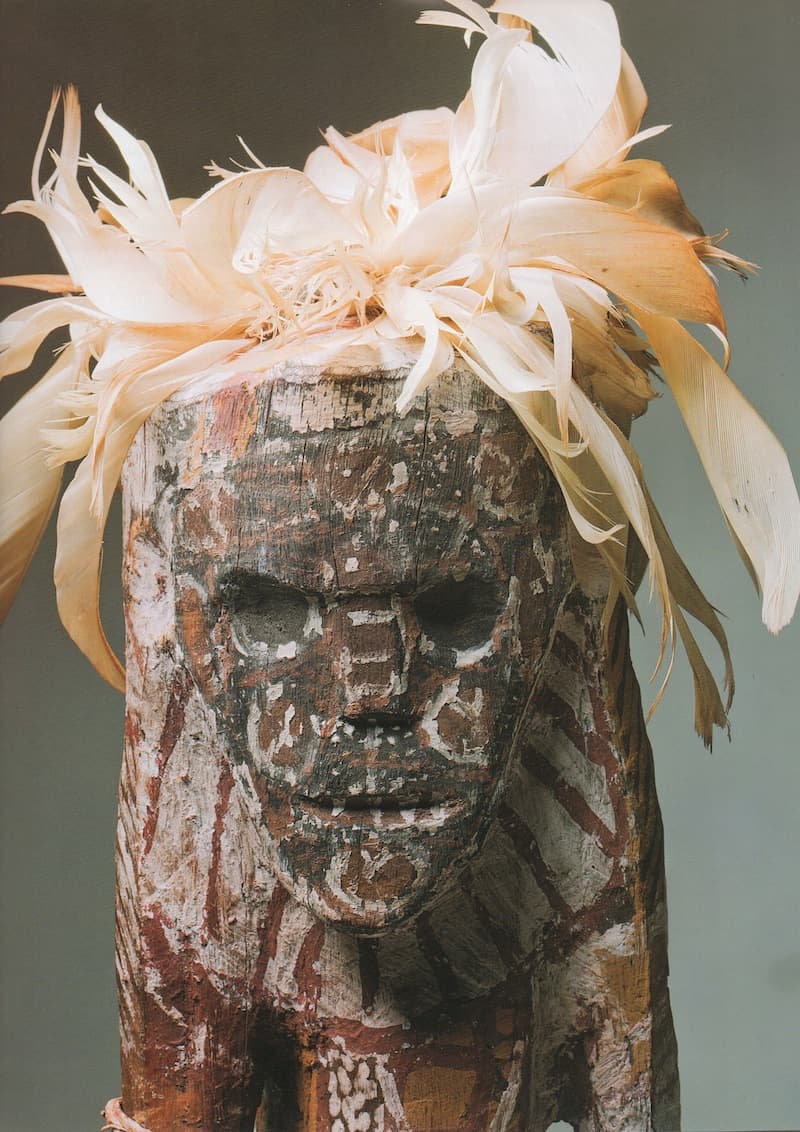
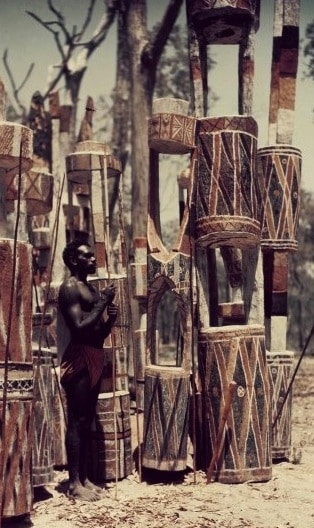
As early as the eighteenth century, the Tiwi Islanders produced several major forms of ceremonial Tiwi Sculpture, most importantly carved Pukumani Poles, Aboriginal Spears, and clubs associated with Pukumani Ceremony and mortuary ritual traditions.
Tutini, also known as Pukumani Poles, are carved burial posts created for Tiwi funeral ceremonies. Traditionally the in-laws of the deceased were responsible for carving and painting the poles. The form, surface decoration, and ceremonial jilamara designs often reflected family identity, skin-group traditions, and ancestral associations connected to the deceased. Early Tutini Poles are highly collectible in their own right and are regarded among the most important sculptural traditions in Aboriginal Australian Art.
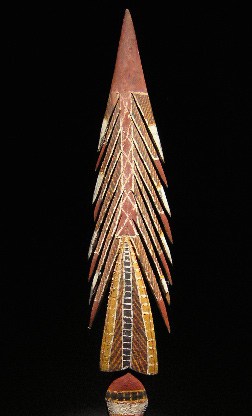
The Tiwi spear was both a ceremonial and functional object. During Pukumani Ceremony, spears were carried as dance adornments by important ritual participants. Double-barbed ceremonial spears are known as Arawunikiri, while single-barbed spears are called Tunkaringa. Early ceremonial Tiwi Spears with strong provenance and finely painted ochre decoration are increasingly sought after by collectors of early Aboriginal Artefacts and Tiwi Art.
Tiwi clubs functioned both as ceremonial dance objects and as weapons used in fighting. Many older examples display finely painted ochre designs closely related to ceremonial body painting traditions and the geometric visual language found throughout early Tiwi Sculpture.
Figurative Tiwi Sculpture
The tradition of figurative Tiwi Sculpture emerged at Paru on Melville Island during the early 1960s. Although geographically separated from the Catholic mission at Nguiu on Bathurst Island by only a narrow strait, Paru remained closely connected to older ceremonial carving traditions. The community regularly traded fish and customary objects with the mission, including painted mourning bags, ceremonial objects, carved Aboriginal Spears, and other forms of early Tiwi Art.
One of the principal family groups at Paru was the Mandimbula family, from which many of the pioneering Tiwi sculptors emerged. Cardo Kerinauia is generally regarded as one of the first Tiwi artists to sell a carved wooden figure to the Bathurst Island mission. The success of these early works quickly encouraged other Mandimbula artists to begin carving figurative sculpture, leading to the development of one of the most distinctive sculptural movements in Aboriginal Australian Art.
Although these early carvings were not strictly ceremonial objects in the same sense as Pukumani Poles, they retained strong connections to Tiwi ceremonial culture. The painted ochre surfaces and geometric jilamara designs applied to the figures derived directly from ceremonial body-paint traditions and carried important spiritual and ancestral associations. As anthropologists, collectors, and visitors to the mission encountered these sculptures, they became increasingly valued both as important ethnographic objects and as highly original examples of contemporary Indigenous sculpture.
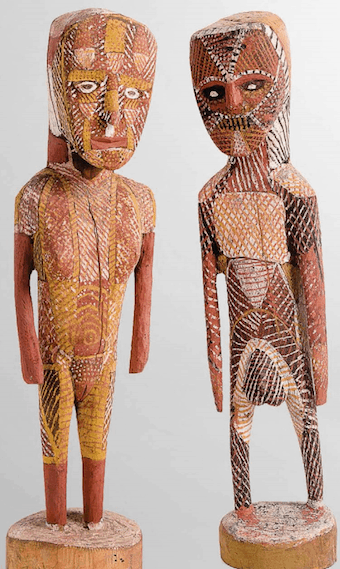
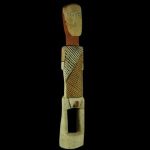
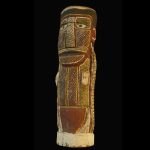
Many early Tiwi Sculptures possess remarkable sculptural simplicity, with elongated forms, broad shoulders, carved negative space, and highly stylised facial structures becoming defining characteristics of the movement. Individual artists gradually developed highly recognisable carving styles, allowing collectors today to identify important early sculptors through form, surface treatment, and painted ceremonial design.
Some researchers and collectors have suggested that small early Tiwi figures may have originally been placed near graves during mortuary rituals, possibly serving as spirit substitutes intended to divert the presence of the deceased away from living relatives. However, there is limited documented evidence supporting this theory, and its precise ceremonial role remains uncertain.
Pioneer Tiwi Sculpture Artists
Each early Tiwi artist developed a highly individual sculptural style. Although many belonged to the same extended families and lived within the same small communities, the differences in carving form, painted design, and sculptural structure vary remarkably between artists.
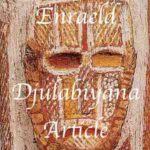
Enraeld Munkara
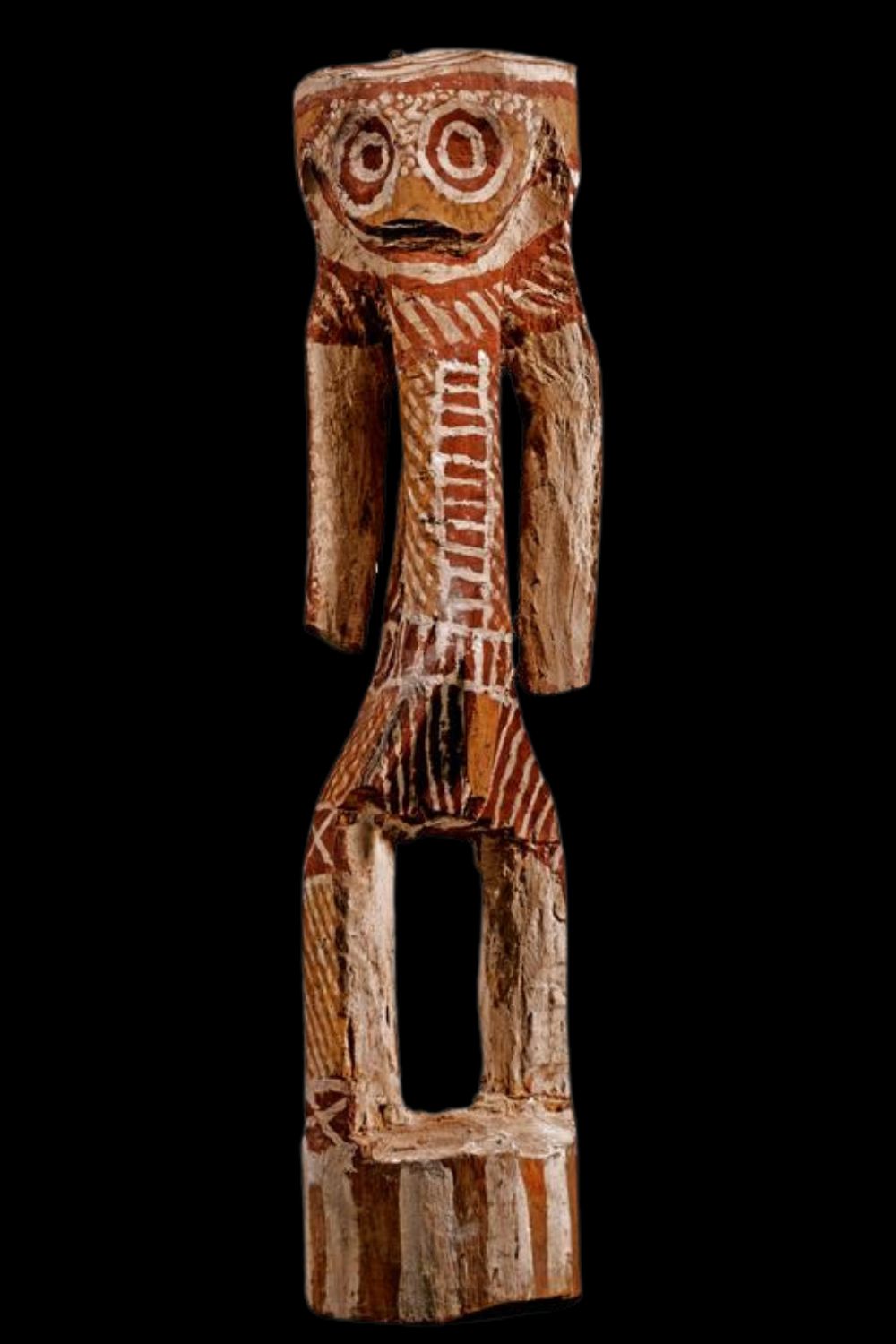
Enraeld Munkara sculptures are highly distinctive. He carved figures with arms emerging directly from a large bulbous head, while the legs descend vertically from broad flared hips. Many of his carvings retain a pronounced negative space between the legs that echoes the open forms of Pukumani Poles. His sculptures possess a powerful sculptural directness and are painted with ceremonial jilamara designs derived from traditional Tiwi body painting.
Paddy Henry Ripijingimpi
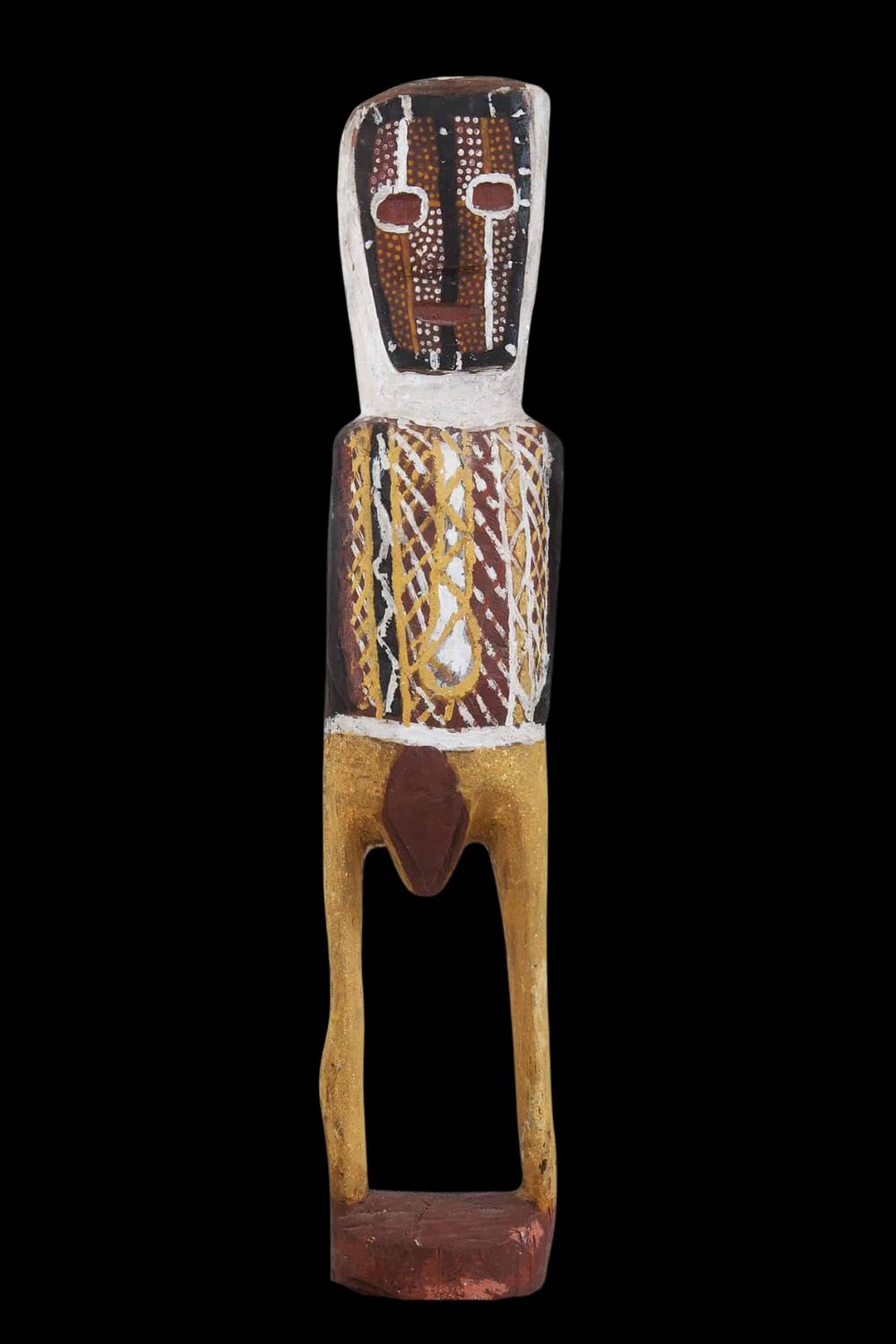
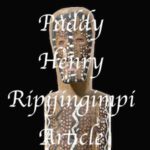
Paddy Henry Ripijingimpi sculptures possess powerful block-like forms and heavily simplified sculptural geometry. The faces typically feature incised eyes and mouths, while the painted ceremonial designs are often executed with remarkable precision and refinement. The sex of the figures is usually clearly defined, reflecting their connection to Tiwi ceremonial traditions. Paddy also carved important Pukumani poles, while his carved and painted seabirds remain highly distinctive. Although formally simplified, these birds are among the finest painted examples of early Tiwi sculpture.
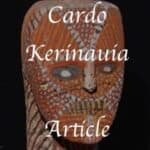
Cardo Kerinauia
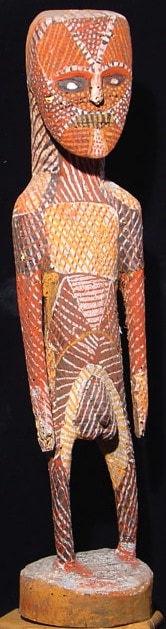
Cardo Kerinauia sculptures are distinguished by their strong figurative clarity and finely painted ceremonial surfaces. His figures typically have the arms carved free from the body and clearly defined male and female characteristics. Dense jilamara body-paint designs cover the entire sculptural surface, reinforcing their connection to Tiwi ceremonial traditions. Broad shoulders tapering to a narrow waist give the figures a powerful sculptural balance and strong formal presence.
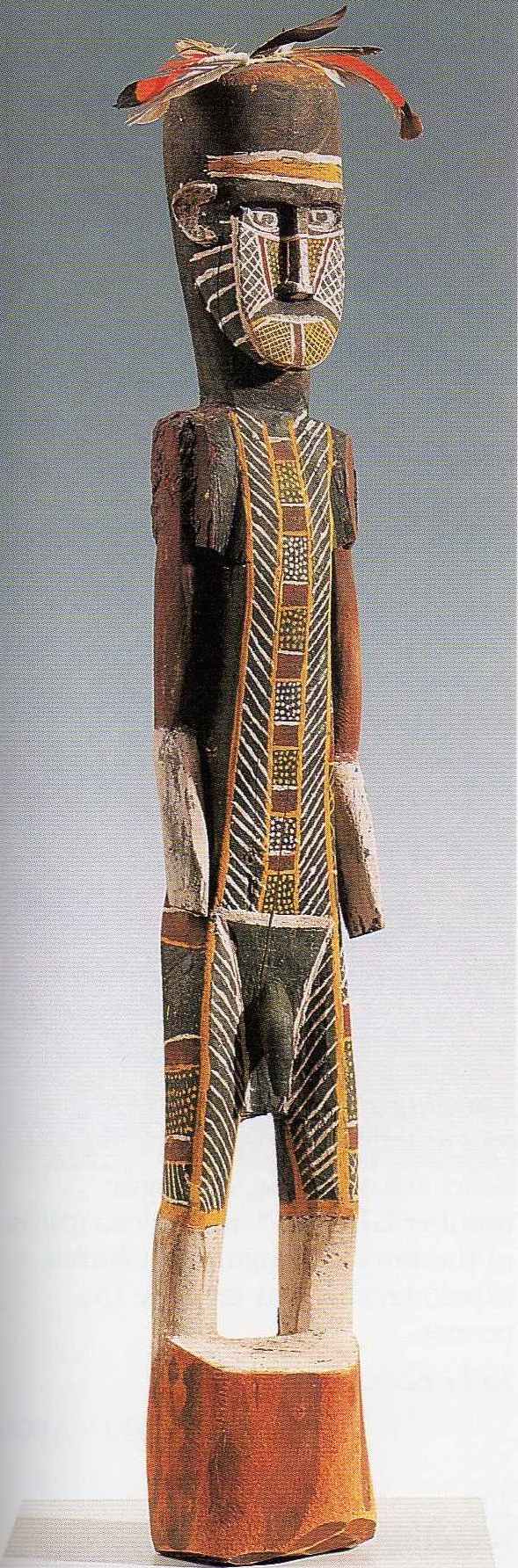
Mick Aruni
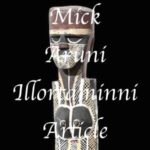
Mick Aruni carved and painted figurative sculptures and is also known to have produced at least one bark painting. His earlier sculptures typically display clearly defined male and female characteristics, while later figures appear more simplified, possibly reflecting mission influence or changing collector preferences. Early carvings often feature arms carved free from the body and finely painted ceremonial surfaces. Aruni also produced carved birds and unusual sculptural figures incorporating birds positioned above the head.
The Mungatopi Brothers
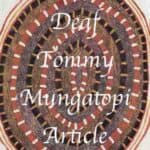
The Mungatopi brothers included Ali Mungatopi, Laurie Mungatopi, Tommy Mungatopi, and Lame Tobi. All were important ceremonial dancers as well as artists deeply connected to Tiwi ritual traditions. Although the Mungatopi brothers are best known for their highly significant bark paintings, they also produced important examples of early Tiwi sculpture decorated with ceremonial jilamara designs.
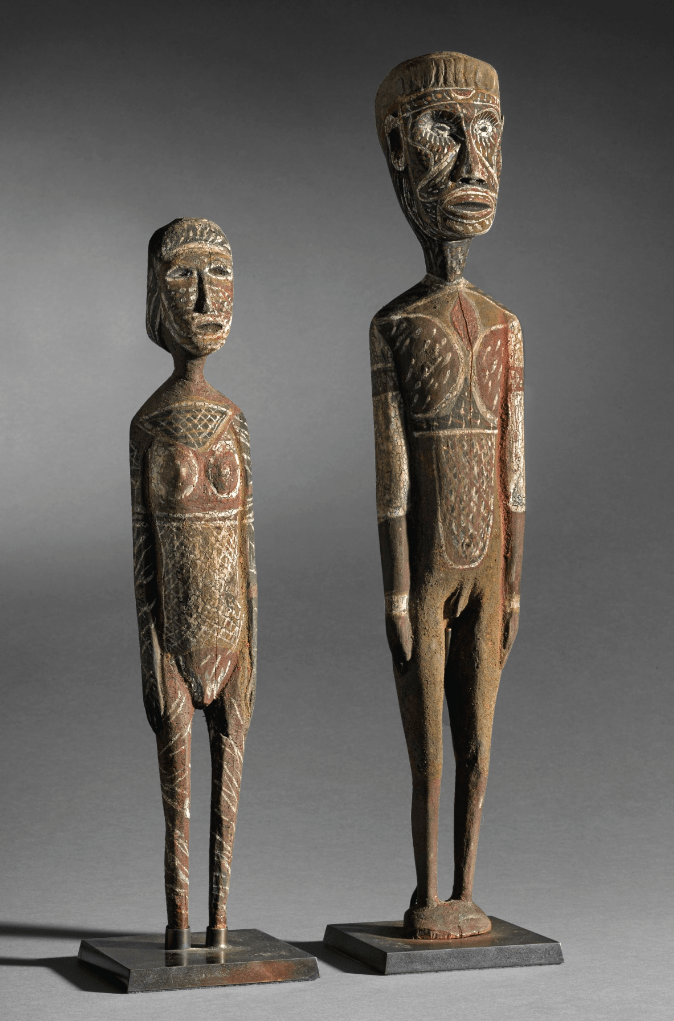
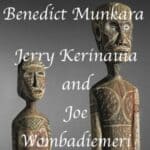
Benedict Munkara
Benedict Munkara sculptures are distinguished by their oversized heads set upon comparatively naturalistic bodies, creating a striking sculptural contrast unique within Tiwi art. Although he produced relatively few carvings, the known examples are notable for their refined execution, strong ceremonial surface designs, and highly individual sculptural presence.
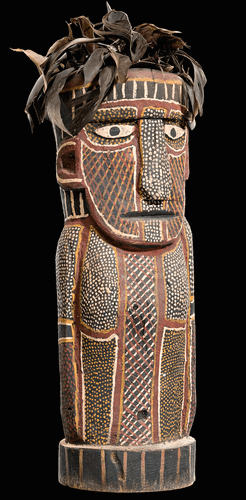
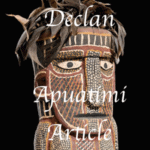
Declan Apuatimi
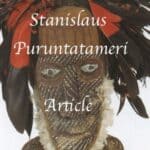
Declan Apuatimi sculptures are typically carved from dense ironwood and are distinguished by large heads often approaching the scale of the body itself. His figures are painted with jilamara designs associated with Pukumani ceremony and frequently feature distinctive almond-shaped white eyes with black pupils. In addition to human figures, Declan also carved birds, usually painted with restrained white bodies contrasted by elaborately decorated wings incorporating traditional Tiwi ceremonial motifs derived from body-paint designs.
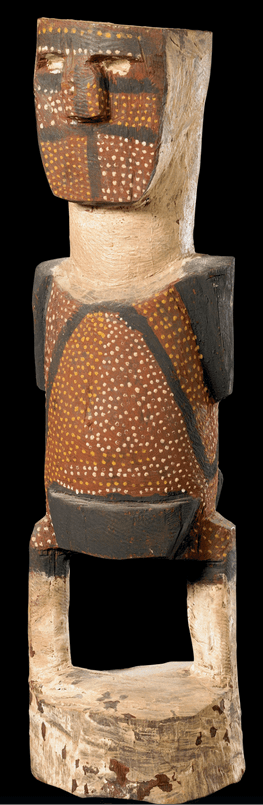
Kitty Kantilla
Kitty Kantilla sculptures are characterised by powerful block-like forms and a highly individual carving style. The faces often feature broad prominent noses, at times approaching a hexagonal shape, while the painted surfaces combine dense dotting with large areas of solid ochre colour. Her earlier figures typically display clearly defined male and female characteristics reflecting their connection to Tiwi ceremonial traditions. In addition to figurative sculpture, Kitty also produced important Pukumani poles and distinctive carved seabirds decorated with jilamara designs.
Black Joe Womadiemeri
Black Joe Womadiemeri was particularly renowned as a master carver of Tiwi ceremonial spears, producing some of the finest examples of carved and painted weapon sculpture from the Tiwi Islands. In addition to his carving practice, he also painted traditional jilamara designs on bark and was well known for his strong engagement
Jerry Kerinauia Wainyingabunga
Jerry Kerinauia Wainyingabunga was best known for his distinctive carvings of pelicans, which remain among the most recognisable bird sculptures produced within Tiwi art. In addition to these works, he also created human figures and unusual figurative bark paintings incorporating traditional jilamara ceremonial designs.
Benedict Munkara
Benedict Munkara appears to have produced relatively few sculptures, making surviving examples particularly important within early Tiwi art. The known carvings are distinguished by their refined execution and highly accomplished painted surfaces, with the quality of both carving and ceremonial design equal to, and at times surpassing, that of his more widely recognised contemporaries.
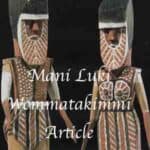
Mani Luki Wommatakimmi
Mani Luki was a prolific and highly skilled Tiwi carver whose sculptures are immediately recognisable for their distinctive formal style and strong sculptural presence. Nicknamed “Harry Carpenter” because of his woodworking ability, he developed a highly individual carving approach that distinguished his works from those of other early Tiwi sculptors.
References and further reading
More Tiwi
Artworks and Articles

All images in this article are for educational purposes only.
This site may contain copyrighted material the use of which was not specified by the copyright owner.