Paddy Compass Namatbara: Painter of Spirits and Sorcery
Aboriginal artist Paddy Compass Namatbara (also spelled Namadbara) stands among the earliest and most psychologically powerful bark painters from western Arnhem Land. Born on Croker Island and active at the Minjilang Mission by at least the early 1940s, Namatbara emerged directly from the ancient visual traditions of Arnhem Land Rock Art and helped shape the development of portable bark painting in northern Australia. Closely associated with the early traditions of Oenpelli Art, his paintings retain the primal force, spiritual danger, and expressive freedom of ancient escarpment imagery rather than the more formally ordered ceremonial compositions seen in many later Arnhem Land works.
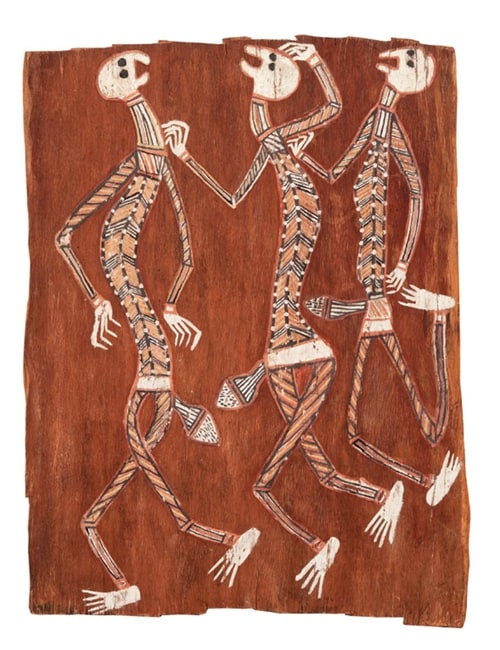
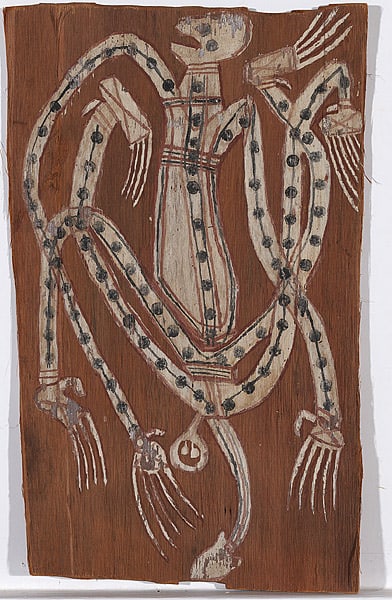
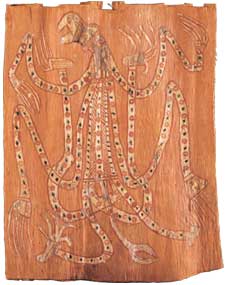
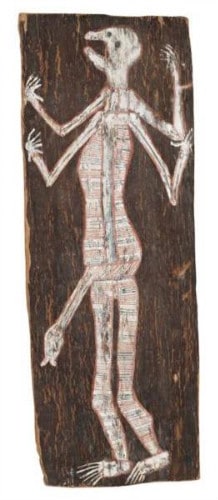
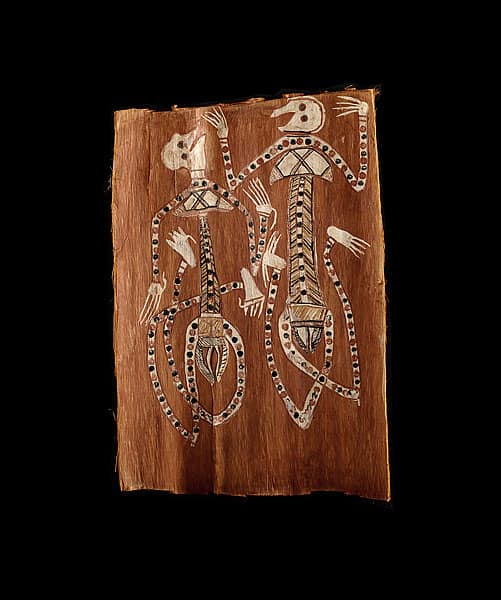
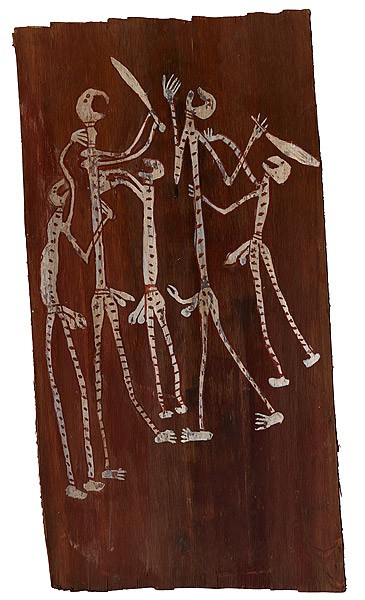
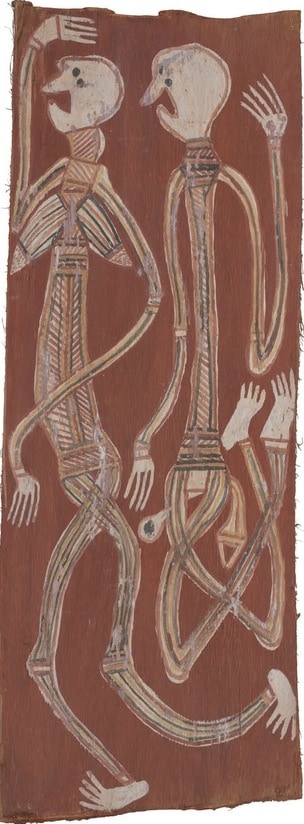
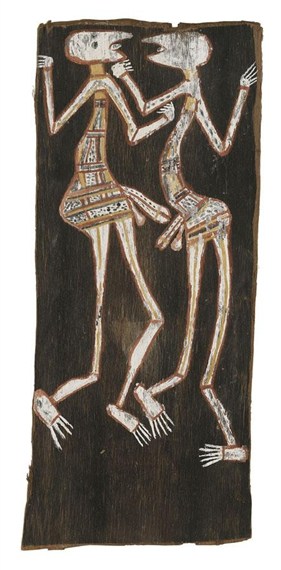
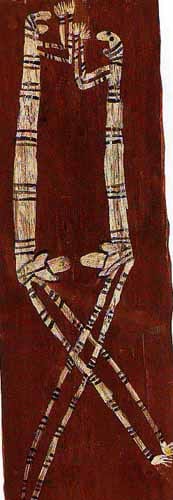
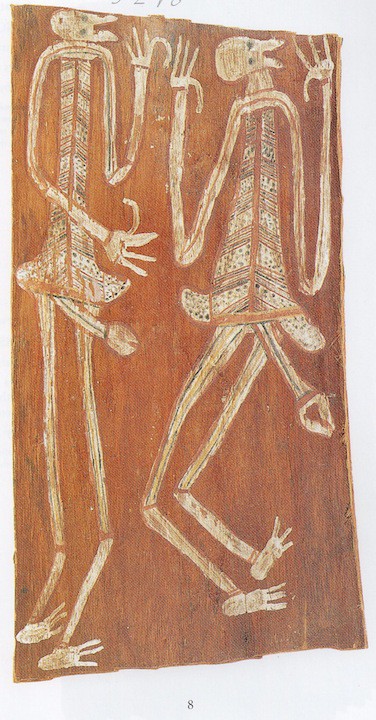
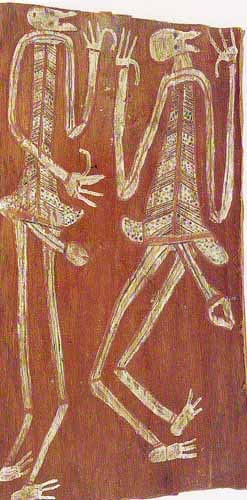
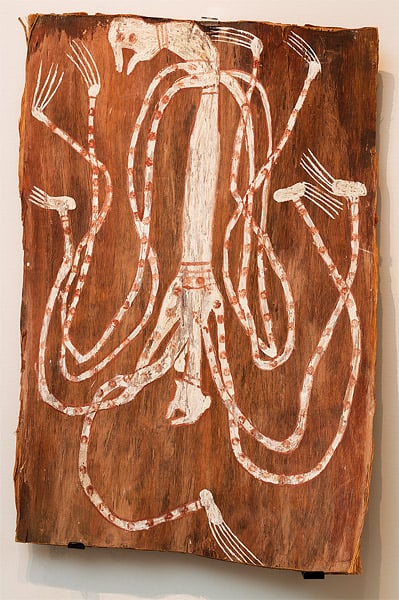
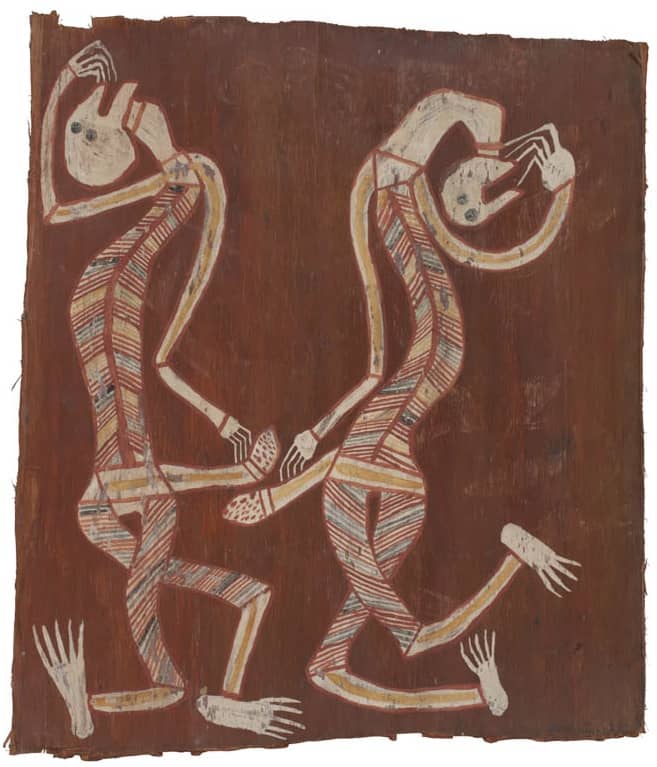
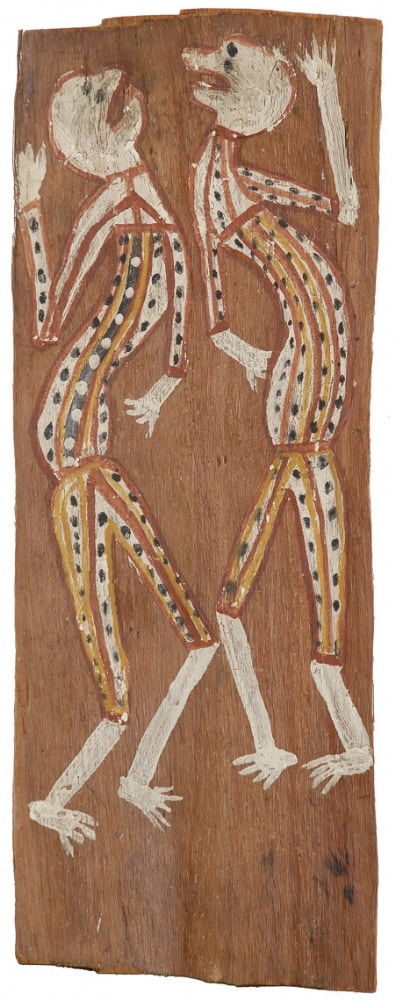
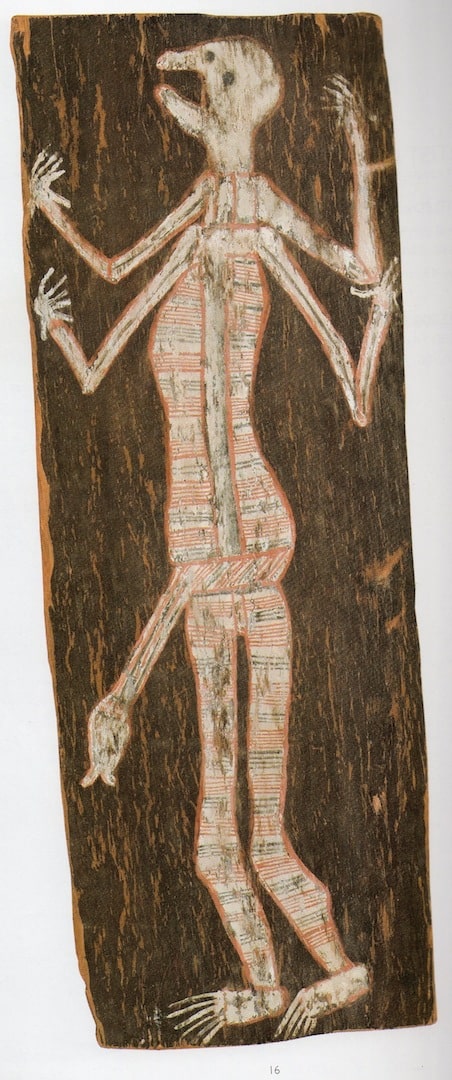
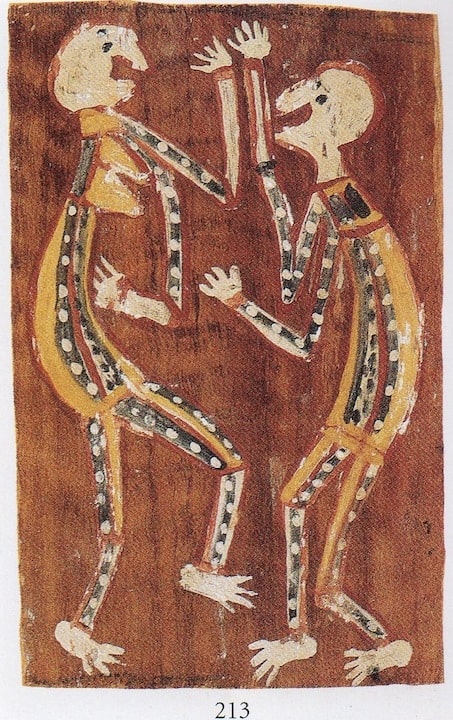
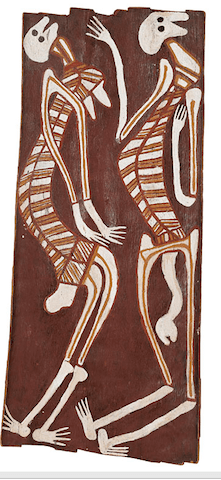
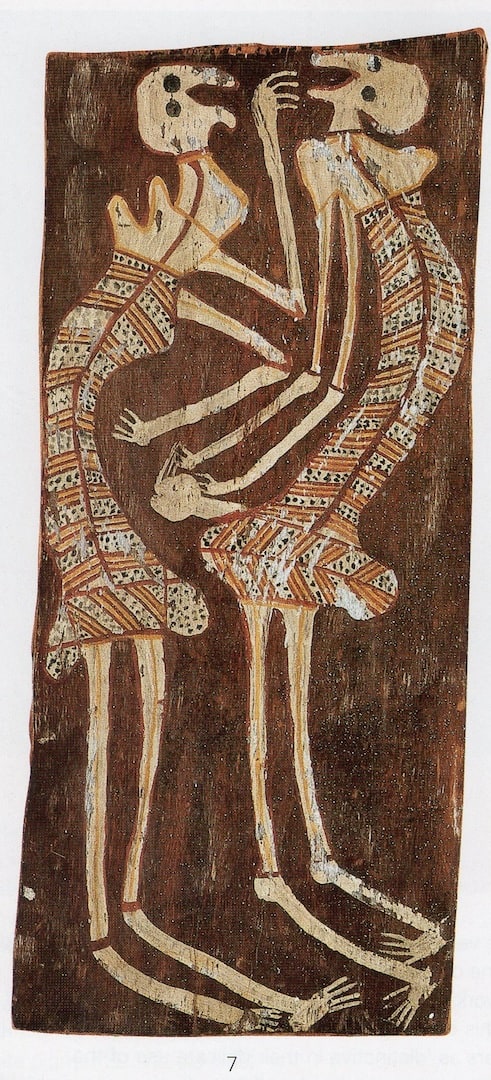
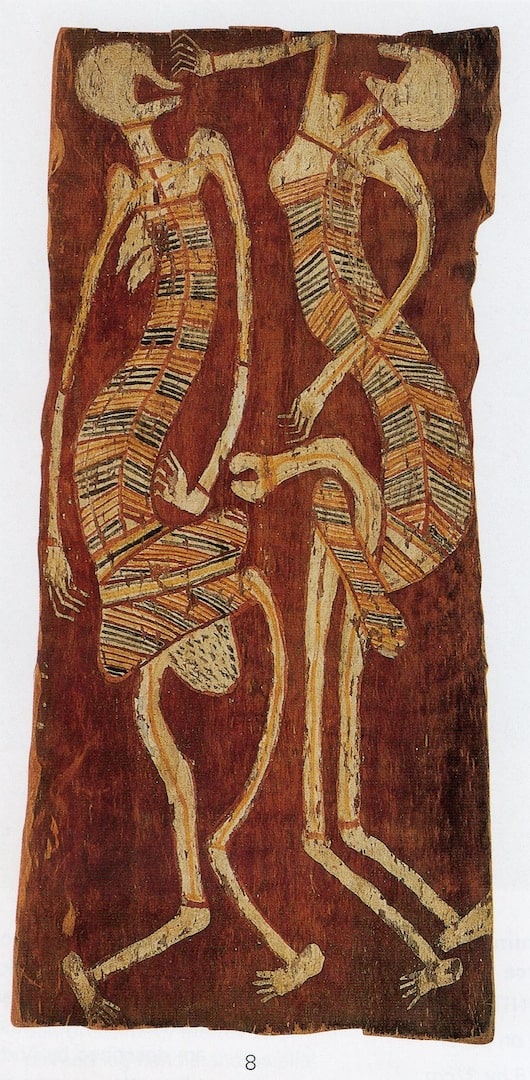
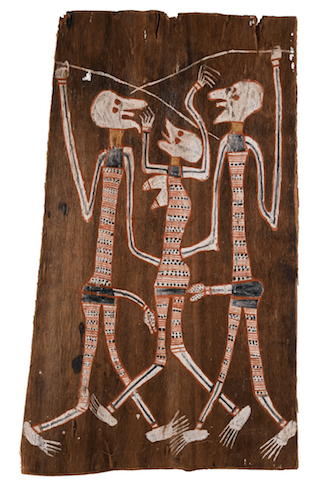
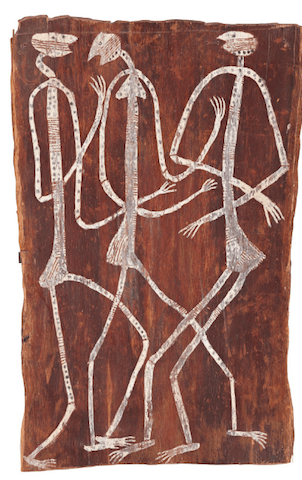
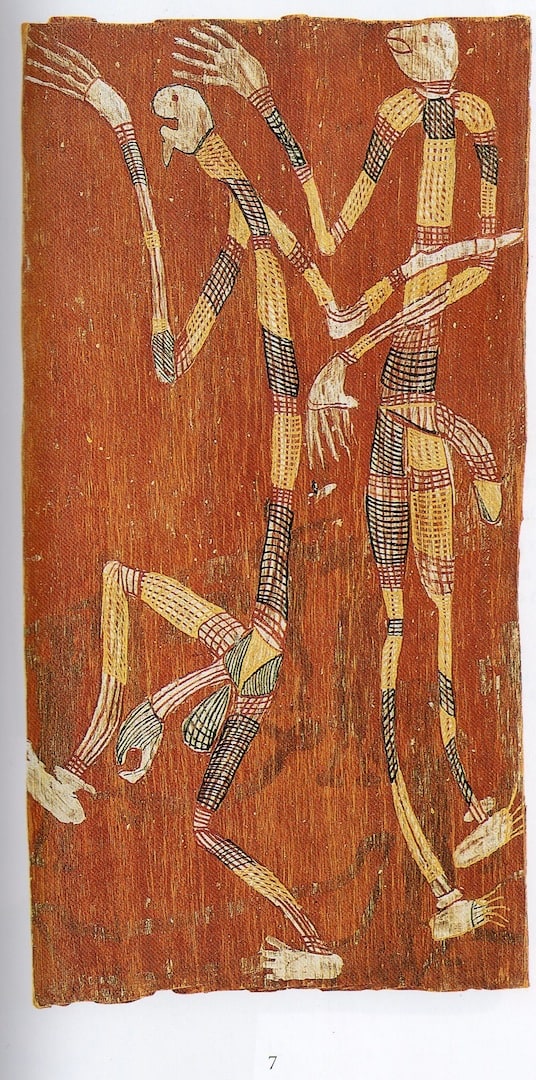
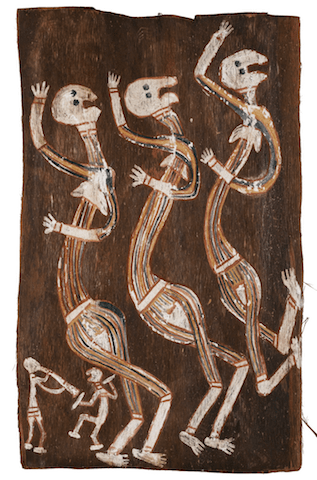
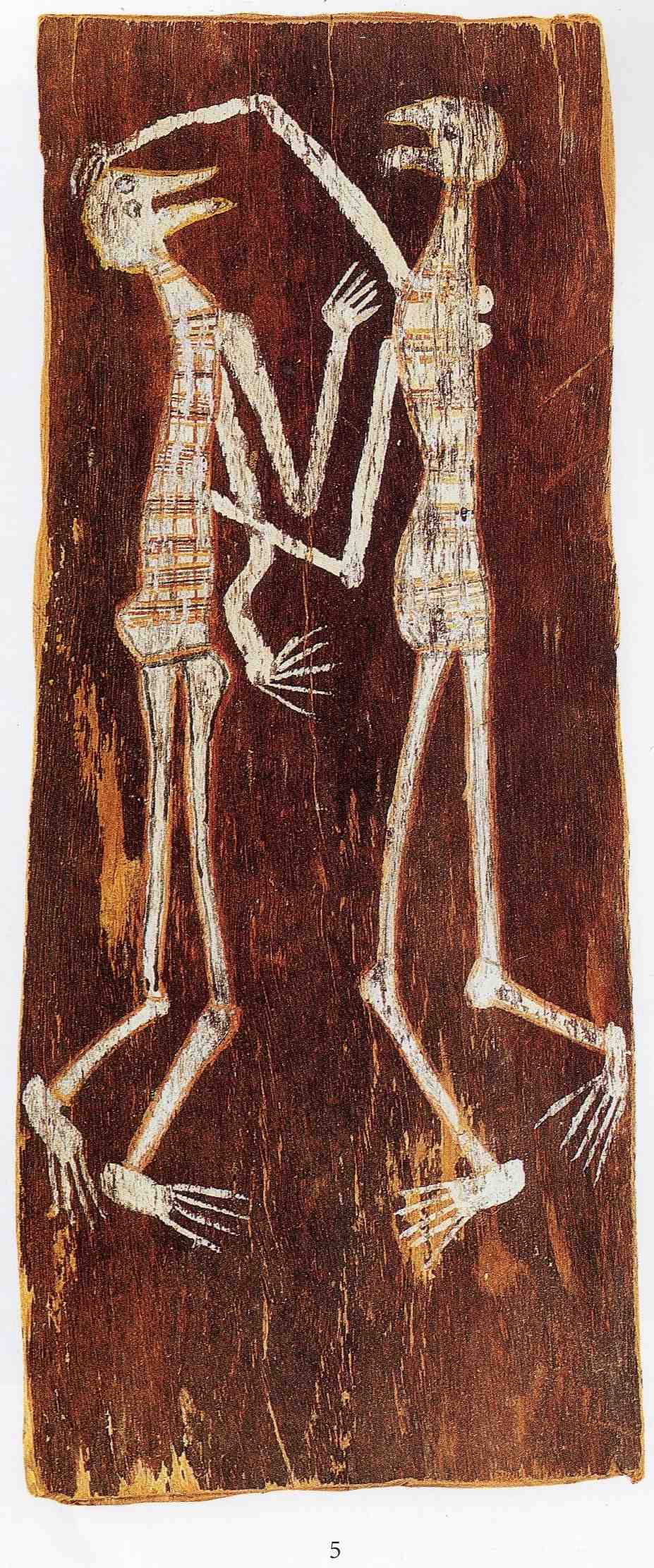
Namatbara’s bark paintings frequently depict Maam spirits, Mimih beings, sorcery figures, and transformed ancestral entities rendered with distorted anatomies, elongated limbs, multiple arms, and exaggerated sexual imagery. These confronting forms were not intended merely to decorate but to express profound Aboriginal beliefs concerning transformation, spiritual power, death, and the dangerous supernatural forces embedded within Country. As a respected “clever man” familiar with older ceremonial knowledge, Paddy Compass Namatbara belonged to a generation that believed certain images derived from Arnhem Land Rock Art possessed genuine spiritual potency capable of influencing the world around them.
Although sometimes associated with Aboriginal X-Ray Art traditions because of his transformed spirit anatomies and expressive internal structures, Namatbara’s paintings are far more psychological and supernatural in character than the highly refined anatomical studies associated with later Kunwinjku masters. Painted in natural ochres on eucalyptus bark, his works possess a raw ceremonial immediacy that continues to captivate collectors, museums, and scholars of early Aboriginal art.
If you own a bark painting by Paddy Compass Namatbara, I would be pleased to assess it. Please feel free to email clear images of the front and back of the bark together with dimensions and any known provenance or collection history.
The Distinctive Style of Paddy Compass Namatbara
Rooted in the expressive visual traditions of Croker Island and early Oenpelli Art, the bark paintings of Paddy Compass Namatbara are distinguished by their uncompromising depictions of Maam spirits, sorcery beings, and transformed ancestral figures. While not as prolific as his regional contemporary Yirawala, Namatbara’s paintings—much like those of Jimmy Midjaumidjau and Djambalula possess a raw ceremonial force and emotional immediacy that set them apart from the more formally ordered traditions of Arnhem Land bark painting. His art rejects Western ideas of anatomical realism and aesthetic balance, instead embracing an ancestral visual logic in which distortion, exaggeration, and psychological intensity communicate spiritual truth.
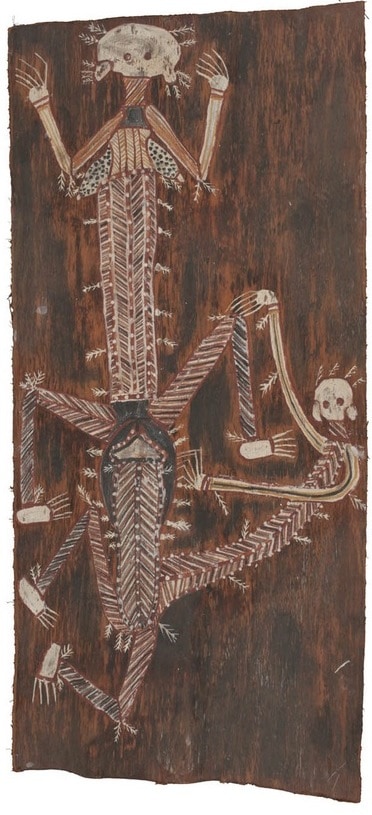
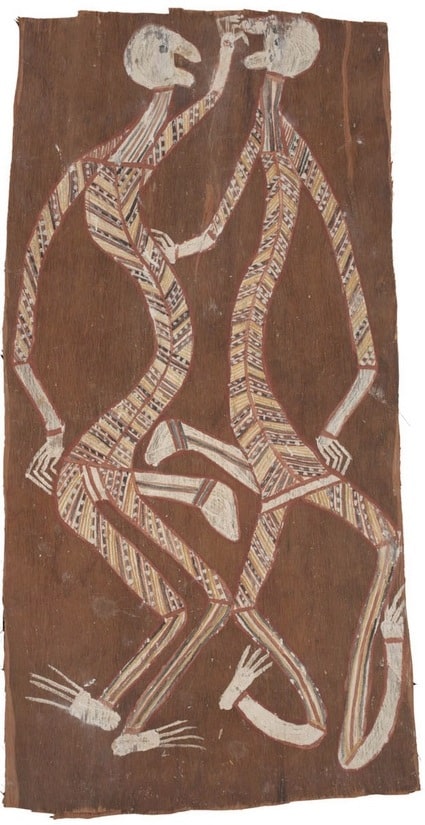
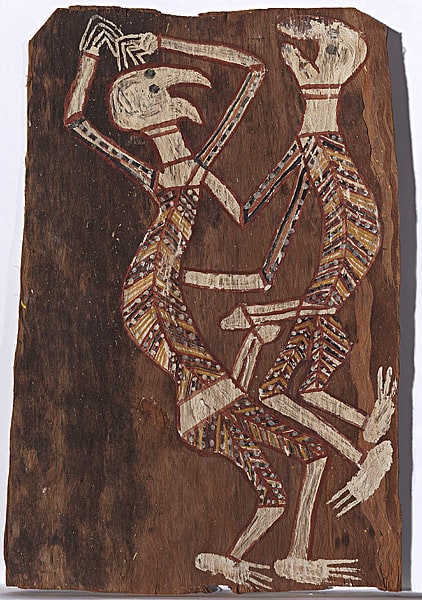
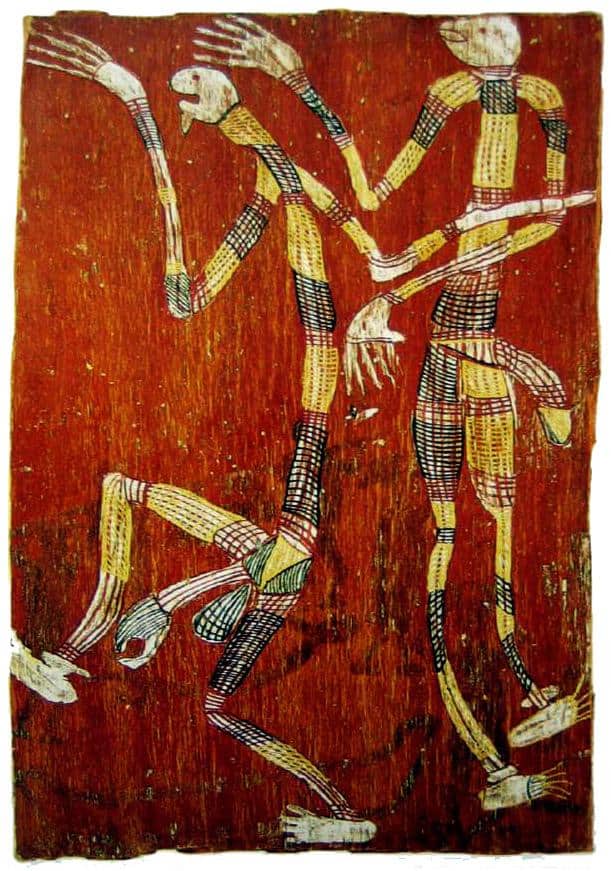
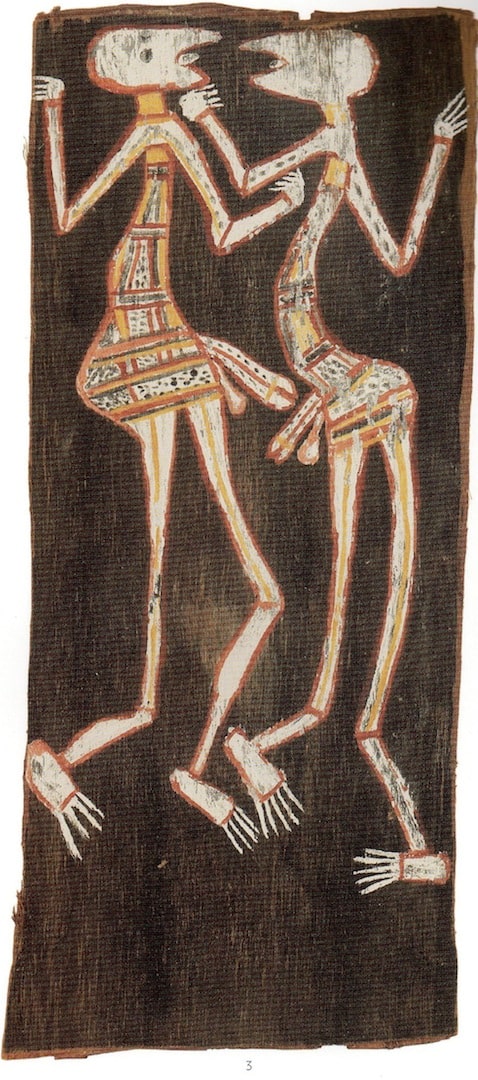
Namatbara’s strength lies not in technical refinement but in his extraordinary ability to evoke the supernatural presence of spirit beings. His early bark paintings frequently feature male and female figures with elongated torsos, exaggerated genitalia, multiple limbs, and sinuous claw-like arms—forms that appear simultaneously human and otherworldly. Namatbara’s paintings possess a dynamic energy: bodies twist, arms extend unnaturally, and figures appear caught mid-movement, mid-ritual, or mid-transformation. This sense of unstable motion gives his bark paintings a haunting vitality and distinguishes them within the broader field of western Arnhem Land art.
One of the most distinctive hallmarks of Namatbara’s style is found in his treatment of spirit faces. Typically painted in solid white pipeclay, the faces often possess mouths shaped like ant pincers, creating expressions that appear simultaneously aggressive and enigmatic. Even more distinctive is his use of vertically stacked eyes rendered as dense black dots rather than the more conventional horizontal arrangement seen in most Arnhem Land bark painting. While other Croker Island artists occasionally employed similar visual devices, this unusual facial configuration remains one of the strongest diagnostic features when attributing works to Namatbara.
Because of stylistic overlaps within the Croker Island school, Namatbara’s bark paintings are sometimes misattributed to artists such as January Nanganyari or Jimmy Midjaumidjau. More frequently, bark paintings by Samuel Wagbara and Spider Namirrki are mistakenly identified as works by Namatbara, underscoring the importance of careful comparative analysis and provenance research in attribution.
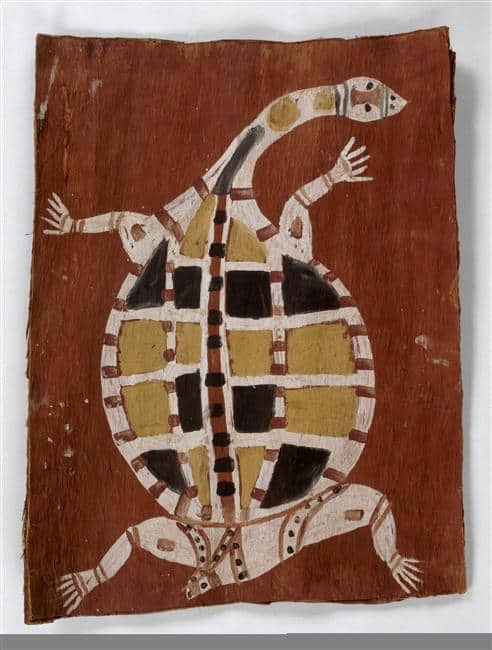
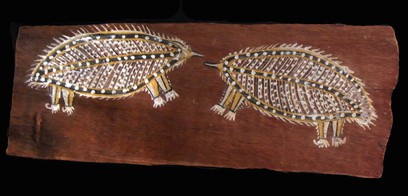
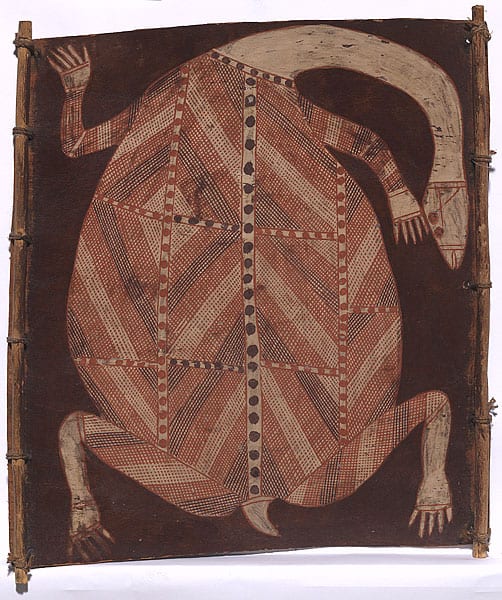
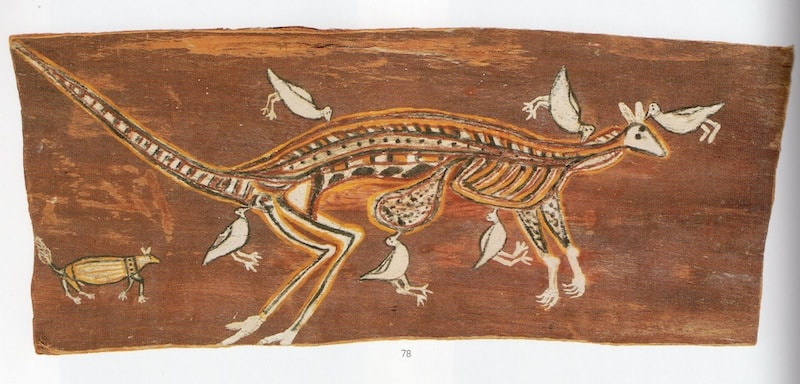
Paddy Compass Namatbara also painted animals including fish, echidnas, and turtles, though these subjects are generally less compelling than his powerful spirit imagery. Unlike the highly refined animal depictions associated with later Arnhem Land x-ray painting traditions, Namatbara’s animal paintings are often simplified, coarse, and deliberately sparse in detail.
Yet this apparent crudity becomes a strength when applied to supernatural subjects. In his depictions of Maam spirits and sorcery beings, the simplified anatomy, heavy outlines, and stark forms create an overwhelming sense of ceremonial power and psychological tension. When transferred to animal subjects, however, the same uncompromising style can appear comparatively rigid or austere. For collectors and scholars, it is Namatbara’s unsettling spirit figures—rather than his naturalistic animals—that remain the most distinctive and important expressions of his art.
Biography of Paddy Compass Namatbara
Paddy Compass Namatbara (also recorded as Namadbara, Nabadbara, or Nobadbara) was born on Croker Island in western Arnhem Land during the late nineteenth century and became one of the most important early bark painters and ceremonial leaders of the region. A member of the Alarrdju clan and an Iwaidja speaker of the Duwa moiety, Namatbara belonged to a generation raised before large-scale European settlement transformed Arnhem Land life.
Remembered as both a powerful marrkidjbu (clever man or spiritual healer) and an artist of extraordinary ceremonial authority, Namatbara held deep knowledge of sorcery, healing practices, sacred law, and spirit traditions associated with western Arnhem Land. Senior Aboriginal informants described him not simply as a painter, but as a cultural leader capable of mediating between the spiritual and physical worlds.
As a younger man, Namatbara worked with buffalo shooters, timber camps, and coastal industries around the Cobourg Peninsula and Croker Island region before later becoming closely associated with the Methodist mission at Minjilang. By 1912 he was already painting bark sheets for anthropologist Baldwin Spencer during the famous Spencer and Cahill expeditions at Oenpelli, making him one of the earliest identifiable Aboriginal bark painters in Australian art history. According to Namatbara’s later recollections, Spencer encouraged artists to paint on portable sheets of eucalyptus bark rather than directly onto bark shelters or rock surfaces—an important moment in the transition from Arnhem Land rock art to modern bark painting.
During the 1940s, 1950s, and 1960s Namatbara painted extensively at Minjilang on Croker Island alongside artists such as Yirawala, Jimmy Midjaumidjau, and January Nonganyari. This group of senior artists helped establish the foundations of modern western Arnhem Land bark painting and produced some of the most spiritually charged bark paintings of the twentieth century. Unlike the more controlled ceremonial imagery associated with later Oenpelli bark painting, many Minjilang works explored themes of sorcery, spirit beings, transformation, and sacred power that had previously been discouraged by missionaries.
Namatbara also worked closely with important anthropologists and collectors including Ronald and Catherine Berndt, Karel Kupka, Dorothy Bennett, and Lance Bennett, acting as both artist and cultural informant. His knowledge profoundly influenced how early researchers understood western Arnhem Land ceremony, spirit imagery, and bark painting traditions. In 1967 Lance Bennett interviewed Namatbara at Minjilang, during which Namatbara identified bark paintings reproduced in Baldwin Spencer’s 1914 publication Native Tribes of the Northern Territory of Australia as his own works painted more than fifty years earlier.
Throughout his life Namatbara remained a highly respected ceremonial figure whose influence extended beyond painting. He mentored younger artists including Thompson Yulidjirri and helped preserve older ceremonial traditions during a period of enormous cultural disruption across Arnhem Land. His bark paintings, with their distorted spirit anatomies, stacked eyes, skeletal forms, and dynamic supernatural imagery, remain among the most psychologically powerful works produced in early Aboriginal art. Today his paintings are held in major Australian and international collections including the National Gallery of Australia, Queensland Art Gallery, and the Pompidou Centre in Paris.
Paddy Compass Namadbara and the Origins of Modern Bark Painting
Paddy Compass Namadbara (c.1892–1978) occupies a unique place in the history of western Arnhem Land art because he personally witnessed—and participated in—the transition of ancient bark shelter imagery into portable bark paintings collected by museums and anthropologists during the early twentieth century.
Remembered throughout western Arnhem Land as a skilful artist, respected ceremonial leader, and “clever man,” Namadbara spent much of the 1950s and 1960s at Minjilang on Croker Island, where he often painted alongside artists such as Yirawala and Jimmy Midjaumidjau. His paintings retained a powerful connection to the older rock art traditions of western Arnhem Land, with boldly simplified imagery and strong ceremonial presence.
In 1967 researcher Lance Bennett visited Minjilang to collect bark paintings and record information about contemporary Aboriginal artists. During interviews, Namadbara casually identified several bark paintings reproduced in Baldwin Spencer’s 1914 publication Native Tribes of the Northern Territory of Australia as his own work. Among them was a historically important bark painting depicting a swamp hen, black bream, and decorated hand stencils, now held in Museums Victoria.
Bennett later asked Namadbara to recreate this same composition in 1967, producing one of the most remarkable comparisons in Aboriginal art history: the same motifs painted by the same artist more than fifty years apart. The later version is now held in the National Museum of Australia within the Bennett Collection.
Namadbara explained that during Spencer’s 1912 expedition, selected artists were asked to paint on small transportable bark sheets rather than directly onto bark shelters or rock surfaces. According to Namadbara, this was something unusual at the time and represented an important moment in the development of modern bark painting. He also recalled that some paintings were intentionally left only partially decorated so the motifs would reproduce more clearly in photographs.
These recollections provide rare first-hand insight into the beginnings of the Aboriginal bark painting movement in western Arnhem Land and the early interactions between Aboriginal artists, anthropologists, and museum collectors.
All images featured in this article are presented strictly for educational and informational purposes.
This website may include copyrighted material for which specific authorization has not been obtained from the copyright owner.
All such images are presumed to be the intellectual property of the respective artist or their estate, and are used in accordance with principles of fair dealing or fair use under applicable copyright law.
Meaning of Paddy Compass Namatbara artworks
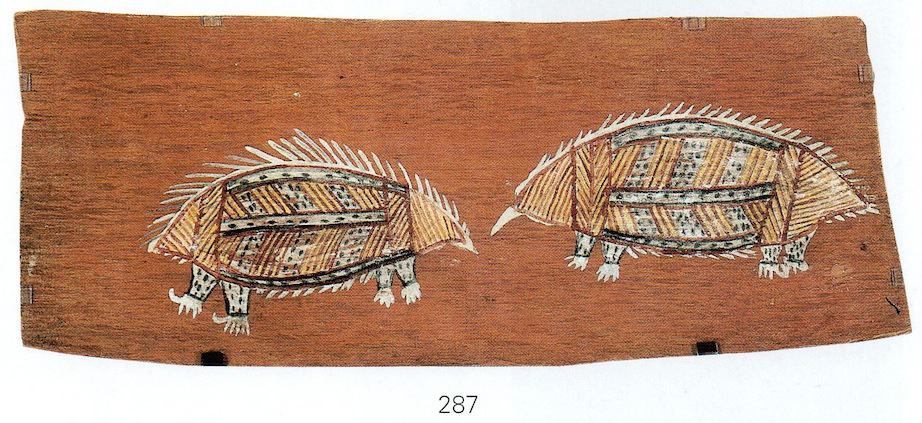
Mimih Hunting Echidna
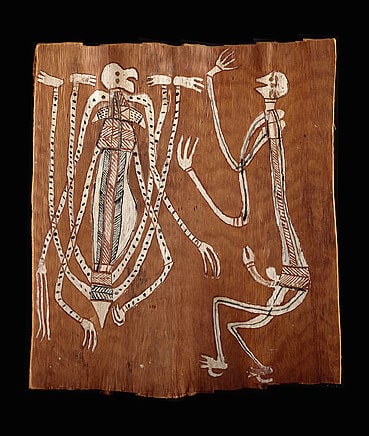
This bark painting captures a moment from a powerful Kuninjku ceremonial narrative involving the ancestral Echidna spirit, Ngarrbek, and the elusive Mimih spirits of Arnhem Land. These spirit figures are often portrayed in the dramatic ceremonial traditions of Western Arnhem Land, particularly within the Yabbadurruwa and Kunabibbi cycles—two interrelated ceremonies that maintain the cosmological and seasonal balance of the world.
Ngarrbek, the Echidna, is a central ancestral figure in the Yabbadurruwa ceremony. This rite is performed by the Kuninjku people, who maintain reciprocal ceremonial roles that express deep themes of Ancestral creation, fertility, and law. In one important Kuninjku Dreaming story, Ngarrbek confronts the fearsome ancestral being Ngalmangiyiafter the latter devours Ngarrbek’s baby—an act that breaches kinship law and ignites a mythical battle.
Ngalmangiyi, armed with many spears, wages war on Ngarrbek, who fights back using only a grindstone. As the spears pierce Ngarrbek’s body, they miraculously transform into the spines for which the echidna is now known. This act of transformation embeds Ngarrbek’s story into the very anatomy of the animal—linking myth with the natural world in classic Arnhem Land fashion.
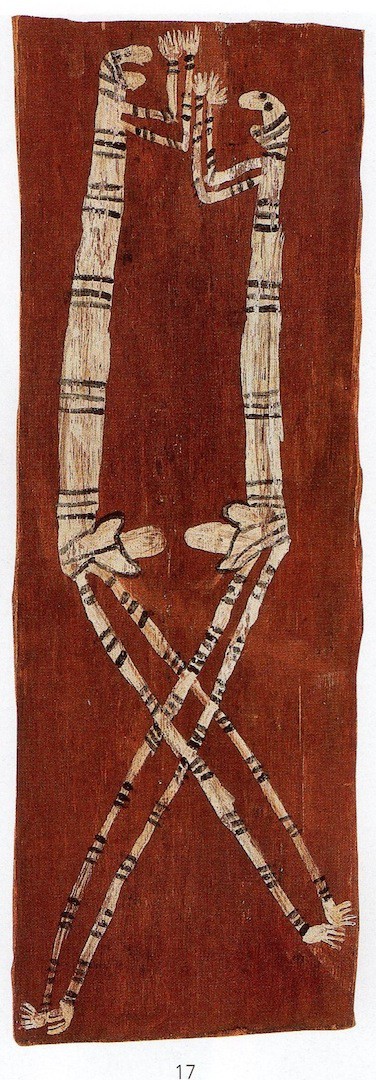
Ma’am Spirit
Ma’am spirits are central to mortuary ceremonies and are believed to inhabit the landscape, acting as custodians of sacred law (Rom) and as guides for the souls of the dead.
Often portrayed with elongated limbs, multiple arms, skeletal features, or exaggerated genitals, Ma’am spirits represent the complex interplay between life, death, and rebirth in Aboriginal cosmology. Their depiction is not merely decorative—it is didactic, ceremonial, and mnemonic.
In bark paintings, Ma’am spirits frequently appear in contorted poses, emphasizing their supernatural power and their role as liminal figures between the physical and spiritual worlds.
For artists like Namatbara, painting Ma’am spirits was a sacred act—an invocation of ancestral power. Today, these works stand as profound visual expressions of Indigenous spirituality and enduring custodianship of Country.
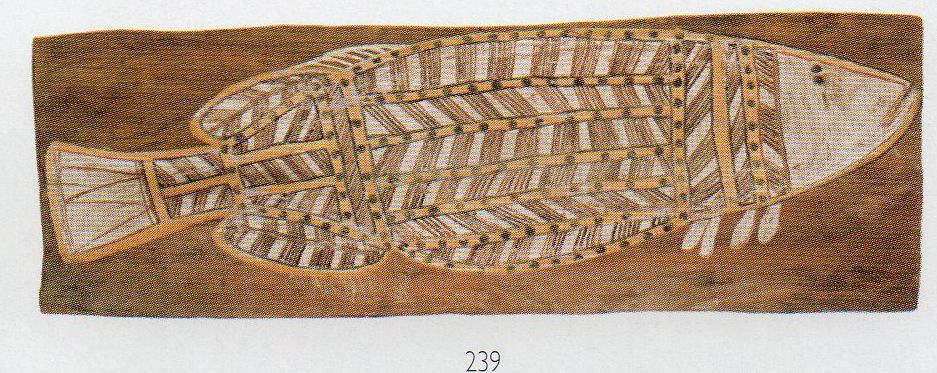
Spirit Barramundi
The barramundi relates to a much more fascinating dreamtime story about a barramundi which rises from the water and takes human form as Laindjung also spelled Lany’tjung, an ancestral lawgiver. Upon his death Laindjung returns to his original form as a barramundi
More about the Laindjung and the Barramundi dreamtime story
All images featured in this article are presented strictly for educational and informational purposes.
This website may include copyrighted material for which specific authorization has not been obtained from the copyright owner.
All such images are presumed to be the intellectual property of the respective artist or their estate, and are used in accordance with principles of fair dealing or fair use under applicable copyright law.
Frequently Asked Questions About Paddy Compass Namatbara
Who was Paddy Compass Namatbara?
Paddy Compass Namatbara (also spelled Namadbara) was one of the earliest and most important Aboriginal bark painters from Croker Island and Western Arnhem Land. Active at the Minjilang Mission by the early 1940s, he helped establish the foundations of modern Aboriginal bark painting at a time when very few Indigenous artists were known internationally. A senior ceremonial figure and spiritual healer, Namatbara produced deeply expressive paintings that explored spirit beings, sorcery, transformation, and ancestral power.
What is Paddy Compass Namatbara best known for?
Paddy Compass Namatbara is best known for his highly animated bark paintings of Maam spirits, Mimih beings, and supernatural figures associated with Aboriginal sorcery and spiritual danger. His works are immediately recognisable for their elongated limbs, distorted anatomy, and raw emotional intensity. Unlike the highly ordered ceremonial compositions of some Arnhem Land painters, Namatbara’s bark paintings often feel fluid, psychological, and deeply unsettling.
What do the spirit figures in Namatbara’s paintings represent?
The spirit beings in Namatbara’s paintings are connected to Kunwinjku beliefs surrounding ancestral forces, transformation, morality, death, and sorcery. Many of his elongated figures represent Maam spirits—dangerous supernatural entities associated with sacred law and spiritual power in Western Arnhem Land. These paintings were not created simply as decoration but as visual expressions of Aboriginal cosmology and ceremonial knowledge.
Why are Paddy Compass Namatbara’s bark paintings so unusual?
Namatbara’s bark paintings are unusual because of their extraordinary freedom and psychological intensity. His figures often possess:
- multiple limbs
- distorted anatomy
- exaggerated genitalia
- elongated fingers or claws
- surreal body forms
These elements reflect spiritual transformation and ceremonial meaning rather than naturalistic representation. The strange and sometimes confronting imagery is central to the power of his art and distinguishes him from many other early Arnhem Land painters.
Was Paddy Compass Namatbara one of the first bark painters?
Yes. Paddy Compass Namatbara is considered one of the foundational figures in the history of modern Aboriginal bark painting. He was producing paintings at Minjilang Mission by the early 1940s and may have created bark paintings collected from Croker Island as early as 1912 while still a younger man. His career predates many of the better-known Arnhem Land bark painters who emerged internationally during the mid twentieth century.
What materials did Paddy Compass Namatbara use?
Like other early Arnhem Land artists, Namatbara painted on sheets of eucalyptus bark using natural earth pigments. His palette typically consisted of:
- white pipeclay
- red ochre
- yellow ochre
- black charcoal pigments
The bark was carefully cut, flattened over fire, and prepared before painting. The aged surfaces and natural pigment textures are an important part of the visual power of his work.
Is Paddy Compass Namatbara’s art collectible?
Yes. Original bark paintings by Paddy Compass Namatbara are extremely rare and highly sought after by collectors of early Aboriginal art. His works are held in major museum collections and are regarded as historically important examples of early Arnhem Land bark painting. Paintings with strong provenance, early collection history, and powerful spirit imagery are especially desirable.
How can you identify a Paddy Compass Namatbara bark painting?
Paintings attributed to Paddy Compass Namatbara are often recognised through:
- elongated spirit figures
- animated multiple limbs
- expressive ceremonial imagery
- raw psychological intensity
- strong white pigment against red ochre grounds
- fluid compositional movement
Because many early bark paintings were unsigned, authentication usually depends upon provenance, stylistic analysis, and comparison with documented museum examples.
Why is his name sometimes spelled Namadbara?
Both “Namatbara” and “Namadbara” refer to the same artist. The spelling variation reflects different attempts by anthropologists, missionaries, collectors, and curators to transliterate Kunwinjku pronunciation into English. Both spellings appear in museum records, exhibition catalogues, and Aboriginal art literature.
Did Paddy Compass Namatbara influence other Aboriginal artists?
Yes. Namatbara had a major influence on the development of bark painting traditions in Western Arnhem Land. His expressive spirit imagery and fluid figurative style helped shape the broader Oenpelli bark painting movement and influenced later artists including Yirawala, Lofty Bardayal Nadjamerrek, and Thompson Yulidjirri. His paintings remain among the most visually powerful works produced in early Arnhem Land art.
Where can I buy or sell a Paddy Compass Namatbara bark painting?
Authentic bark paintings by Paddy Compass Namatbara occasionally appear through specialist Aboriginal art dealers and major auction houses. Because his works are rare and historically important, collectors should seek expert advice regarding attribution, provenance, and market value. If you own a painting attributed to Paddy Compass Namatbara or Paddy Compass Namadbara, I would be pleased to assess it from photographs and provide preliminary advice regarding authenticity and value.
Further Reading on Paddy Compass Namatbara and Western Arnhem Land Bark Painting
The following publications, exhibition catalogues, anthropological studies, and historical sources are among the most important resources on Paddy Compass Namatbara, Croker Island bark painting, western Arnhem Land ceremonial traditions, and the emergence of modern Aboriginal bark painting from earlier rock art traditions.
Major Publications on Paddy Compass Namatbara
White, Ian & Nayinggul, Jacob, Nurturing the Sacred in Western Arnhem Land: The Legacy of Shaman, Healer and Mentor Paddy Compass Namadbara
Kupka, Karel, Dawn of Art: Painting and Sculpture of Australian Aborigines, Hamlyn, London, 1965
Rothwell, Nicolas, “The Collector”, The Monthly, October 2007
Croker Island and Western Arnhem Land Bark Painting
Aboriginal Arts Board, Oenpelli Bark Painting, Ure Smith, Sydney, 1979
Brody, Annemarie, Kunwinjku Bim – Western Arnhem Land Paintings, National Gallery of Victoria, Melbourne, 1984
Isaacs, Jennifer, Oenpelli: Paintings on Bark, Aboriginal Arts Board of Australia, Sydney, 1976
Edwards, Robert & Guerin, Bernard, Aboriginal Bark Paintings, Rigby, Adelaide, 1969
Ryan, Judith, Spirit in Land: Bark Paintings from Arnhem Land, National Gallery of Victoria, Melbourne, 1990