Tommy McRae : Pioneer Aboriginal Artist
Tommy McRae stands among the earliest recorded Aboriginal artists in Australia, producing a remarkable body of pen-and-ink drawings in the mid to late 19th century that today are recognised as both cultural documents and highly collectible works of art. Unlike the bark painters of Arnhem Land, McRae worked on paper, creating finely detailed linear compositions that depict ceremony, daily life, and the profound cultural transitions experienced by Aboriginal people during the colonial period.
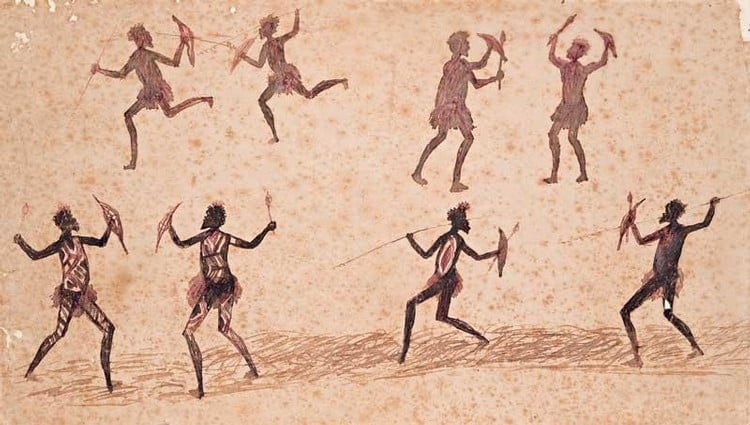
His works are instantly recognisable for their rhythmic linework and narrative clarity. Figures are often shown in procession—hunters, dancers, horsemen—rendered with a distinctive sense of movement that gives his drawings both vitality and historical immediacy. These are not merely illustrations; they are visual records created from within culture at a moment of extraordinary change.
From a collector’s perspective, Tommy McRae occupies a unique position in the history of Aboriginal art. His drawings predate the emergence of the Western Desert painting movement by nearly a century and are held in major institutional collections, including the National Gallery of Victoria and the National Museum of Australia. Works by McRae rarely appear on the market, and when they do, they are closely contested for their rarity, provenance, and historical significance.
If you hold a drawing attributed to Tommy McRae, it is important to understand that even modest examples can carry significant value depending on condition, subject matter, and documented history. As a specialist in early Aboriginal art, I actively acquire works of this calibre for private collections and can provide a confidential assessment based on current market demand.
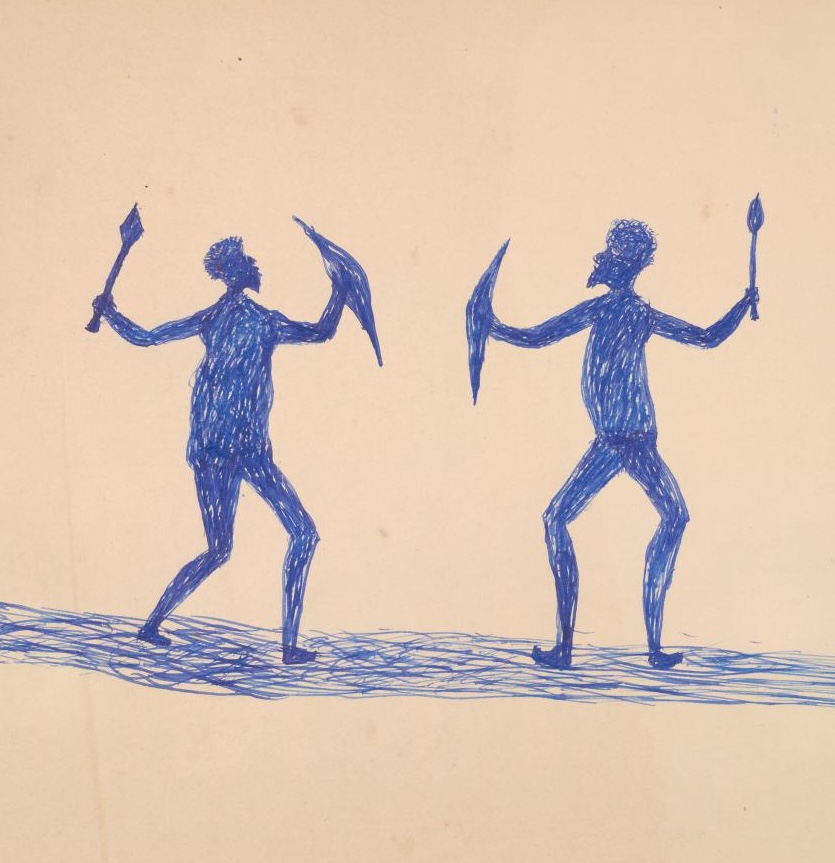
Who Was Tommy McRae?
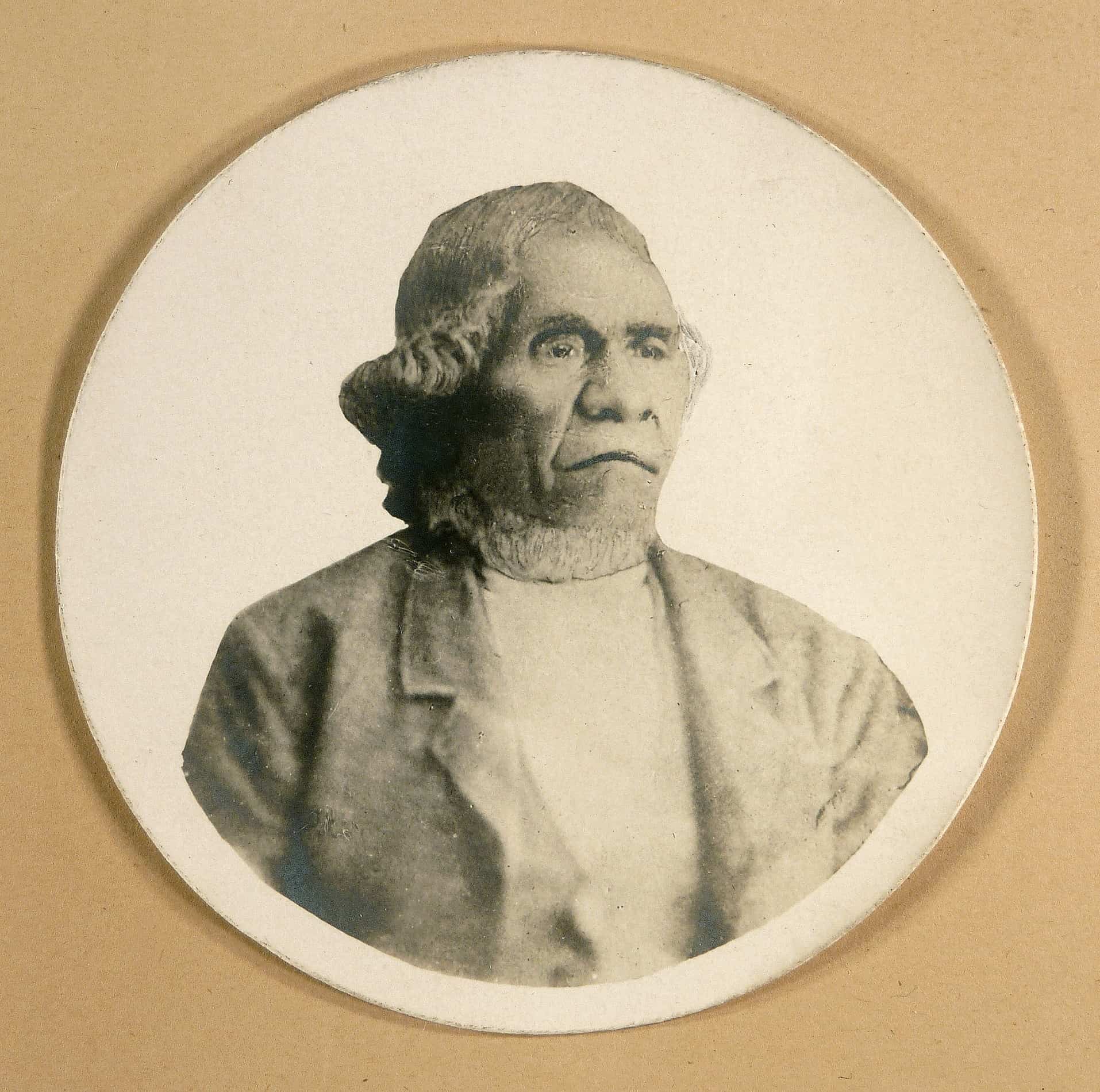
Tommy McRae (c.1835–1901), also recorded under the Aboriginal names Yackaduna or Warra-euea, was an artist of the Kwatkwat people whose Country lay along the Upper Murray River region of northern Victoria, near the junction of the Goulburn River. He spent his entire life within this landscape, becoming a well-known figure across a wide area stretching from Albury to Yarrawonga. His early years were lived within a largely traditional Aboriginal way of life, prior to the full impact of European settlement—an experience that would later inform the depth and authenticity of his drawings.
As pastoral expansion moved into his Country, McRae, like many Aboriginal men of his generation, adapted to the new colonial economy, working as a labourer and stockman on sheep stations. He is believed to have worked for Andrew Hume at Brocklesby Station and was later associated with properties along the Upper Murray, including those of David Reid. It was during this period, in the early 1860s, that his first drawings were collected at Barnawartha by sculptor Theresa Walker, marking the beginning of his documented artistic career.
A pivotal relationship emerged in the 1860s when McRae met Roderick Kilborn, a Canadian telegraph-master and vigneron based at Wahgunyah. Kilborn became both patron and protector, supporting McRae when he later settled with his family at Lake Moodemere in the early 1880s. Here, McRae developed a modest but independent livelihood—producing and selling books of drawings to travellers, fishing for Murray cod, raising poultry, and contributing to family production of possum-skin rugs. Contemporary accounts describe him as industrious and financially astute, qualities that enabled him to acquire a horse and buggy—an unusual achievement for an Aboriginal man in that period.
Despite this independence, McRae’s later life was marked by the harsh realities of government intervention. During the 1890s, all of his children were removed under colonial policies and sent to reserves across Victoria. His unsuccessful efforts to prevent this, including seeking assistance from Kilborn, reveal the personal toll of these policies. In 1897, he also pursued legal action against a photographer who failed to pay him for the right to take images—an episode that underscores his strong sense of agency and fairness.
McRae died on 15 October 1901 and was buried at Wahgunyah. Today, his drawings are held in major Australian institutions, including the National Museum of Australia, the National Gallery of Australia, the State Library of Victoria, and the Melbourne Museum, affirming his enduring place in the canon of early Aboriginal art.
What Makes His Art Important?
The significance of Tommy McRae’s art lies in its rare position at the intersection of cultural continuity and historical transformation. Working in pen and ink on paper—a medium introduced through colonial contact—McRae produced a body of work that documents traditional Aboriginal life while simultaneously recording the profound changes brought by European settlement.
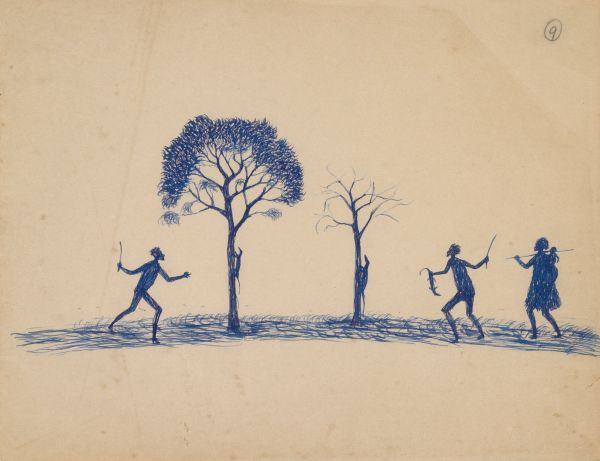
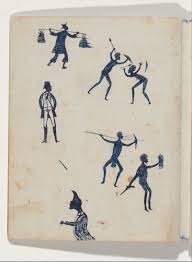
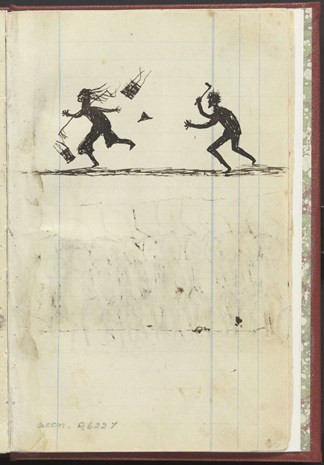
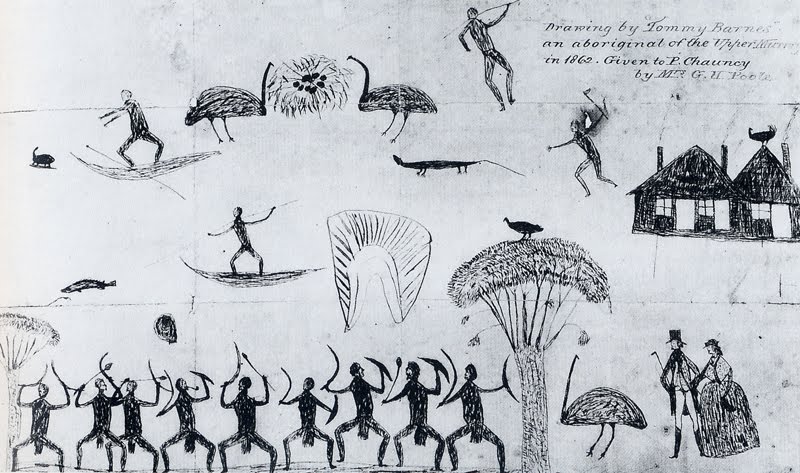
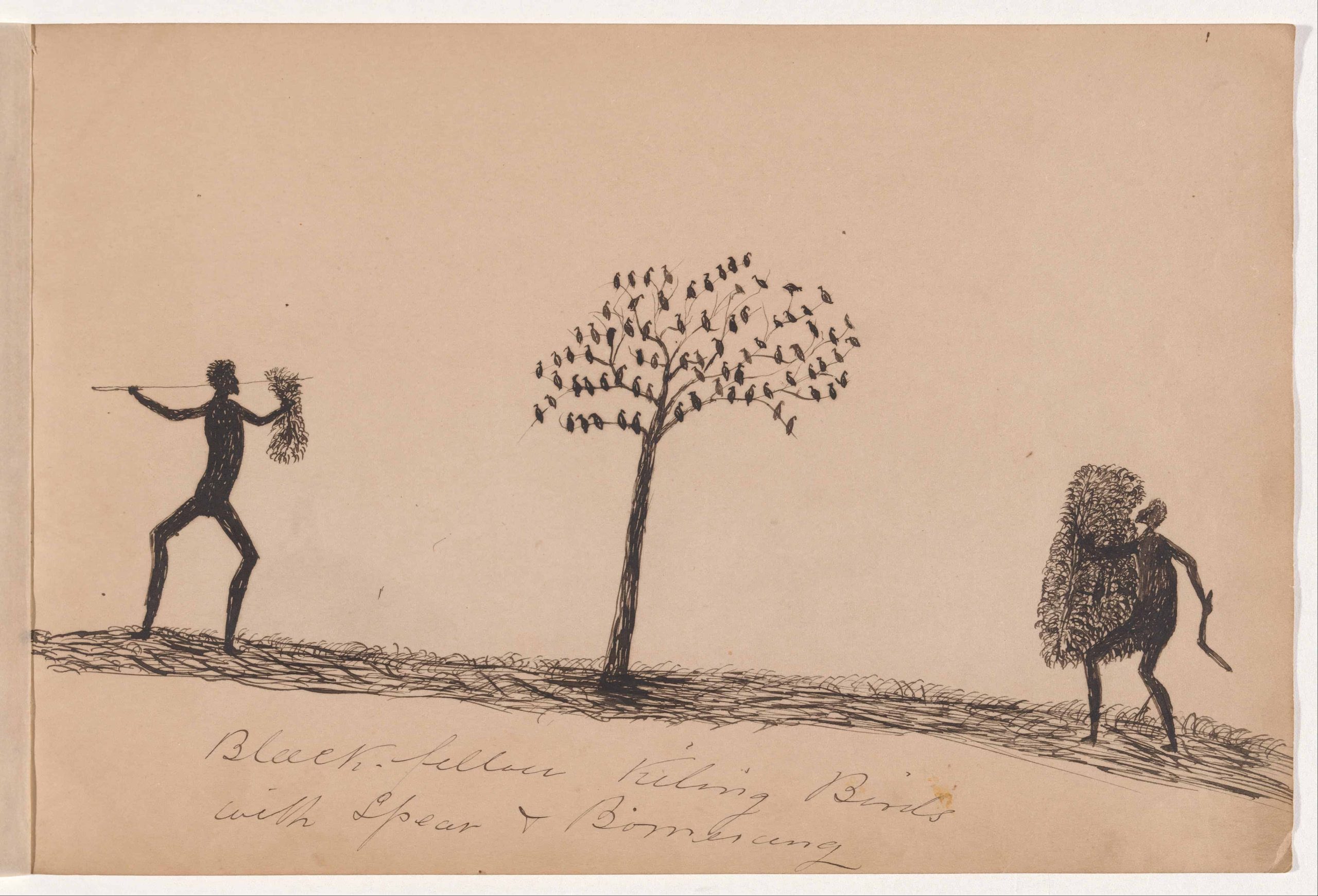
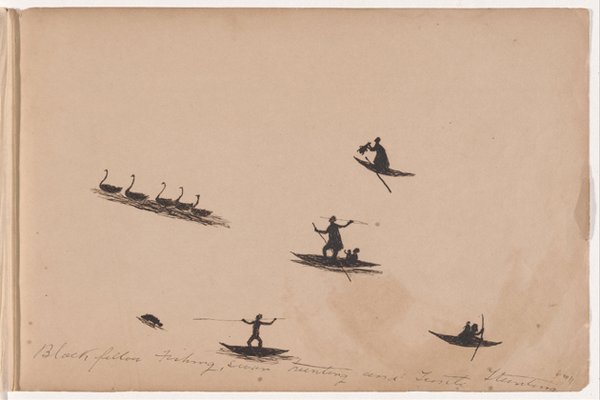
His drawings are distinguished by their clarity, economy of line, and narrative structure. Typically composed of silhouetted human and animal figures set within sparse, open landscapes, they depict ceremonies, hunting practices, and everyday activities with remarkable precision. Many works include handwritten annotations, offering further insight into the scenes represented. These qualities give his drawings a dual function: they are both works of art and primary historical records created from an Aboriginal perspective.
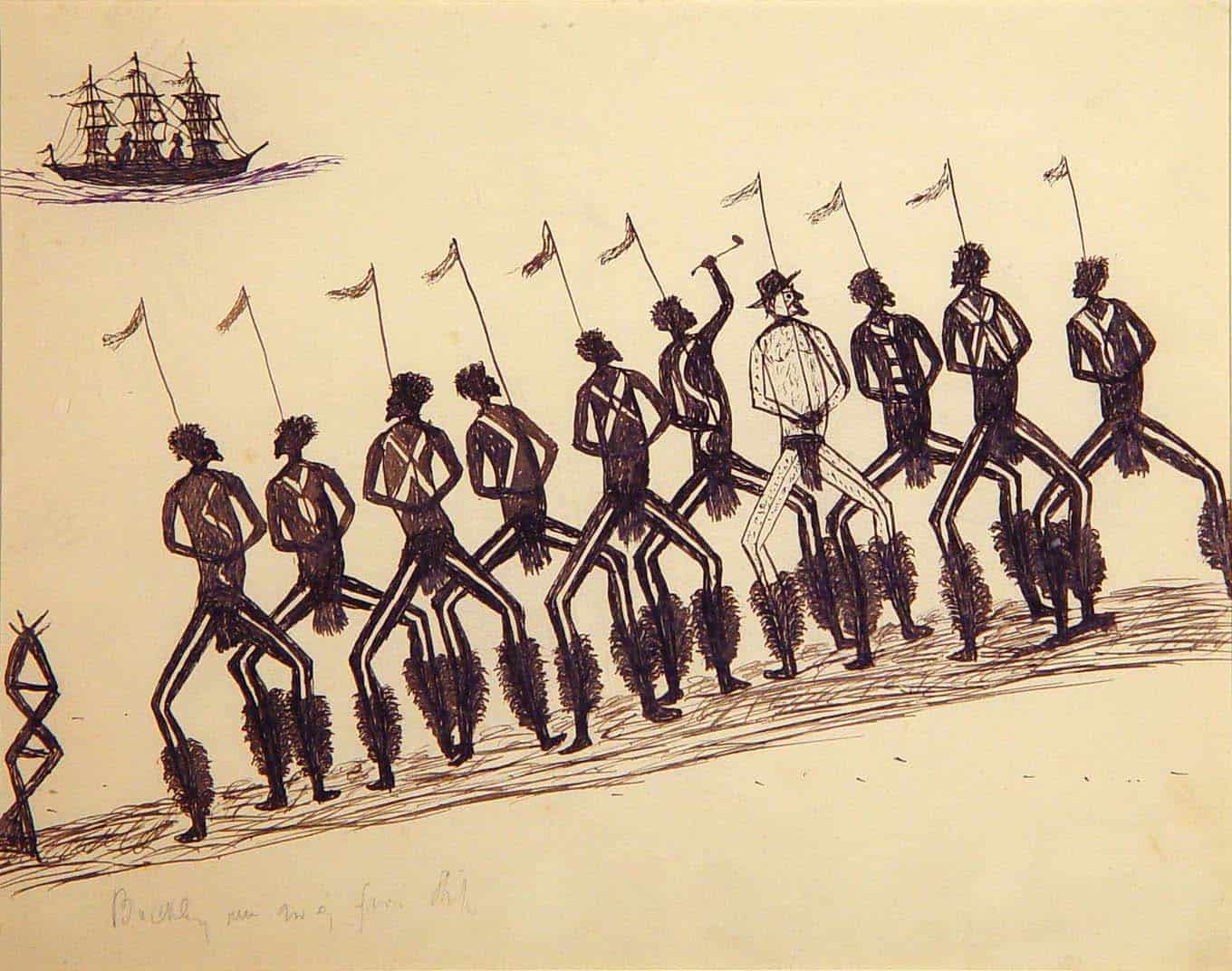
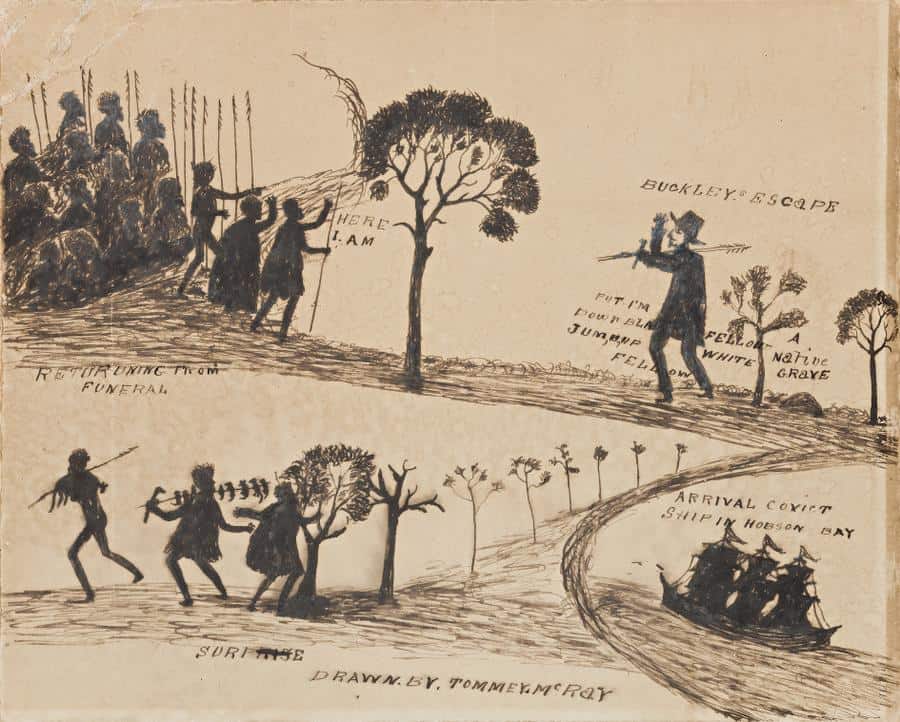
Importantly, McRae did not simply replicate European modes of representation. Instead, he adapted introduced materials to express Indigenous ways of seeing and storytelling. His focus remained firmly grounded in Aboriginal experience. Even when depicting cross-cultural encounters—such as squatters, Chinese workers, or the figure of William Buckley—McRae approached these subjects through an Indigenous lens. His interpretation of Buckley, for example, emphasises the man’s integration into Aboriginal society rather than the sensationalised narrative of his “return” to European life.
From an art historical perspective, McRae’s work predates the major Aboriginal art movements of the twentieth century by several decades. As such, it provides a crucial link between pre-contact cultural expression and the later emergence of recognised Aboriginal art markets. His drawings demonstrate that Aboriginal artists were actively producing, adapting, and engaging with new materials long before the establishment of mission art centres or the Western Desert painting movement.
For collectors and institutions, this early date, combined with the rarity of surviving works and their strong provenance, underpins their significance. McRae’s drawings are not only aesthetically compelling but are also among the earliest recorded examples of Aboriginal art created for exchange with a broader audience. Their presence in major public collections reflects both their cultural importance and their status as foundational works in the history of Australian art.
Tommy McRae was also known as Tommy Barnes
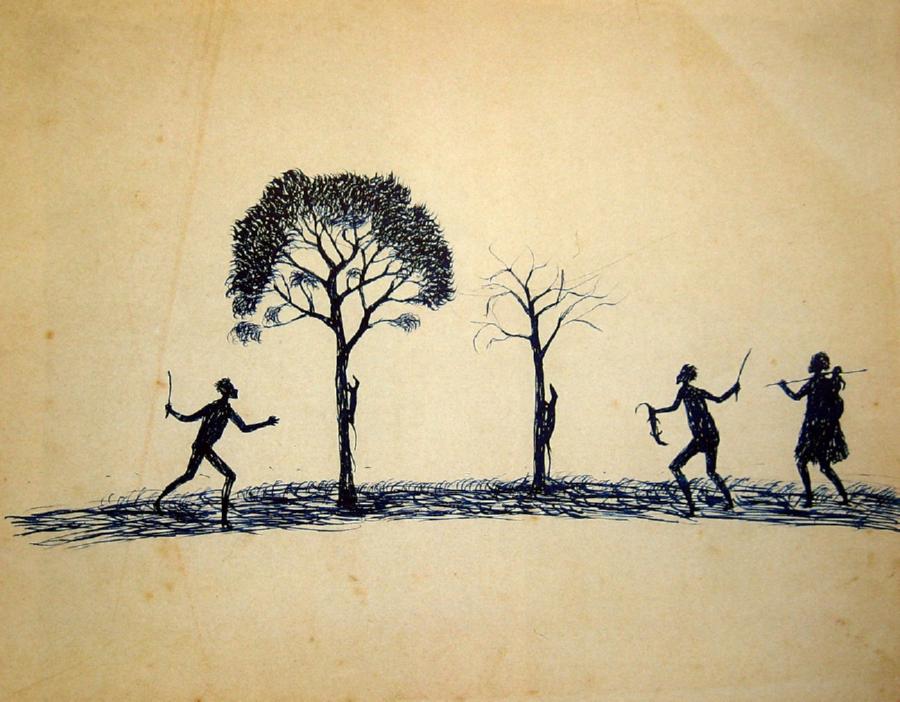
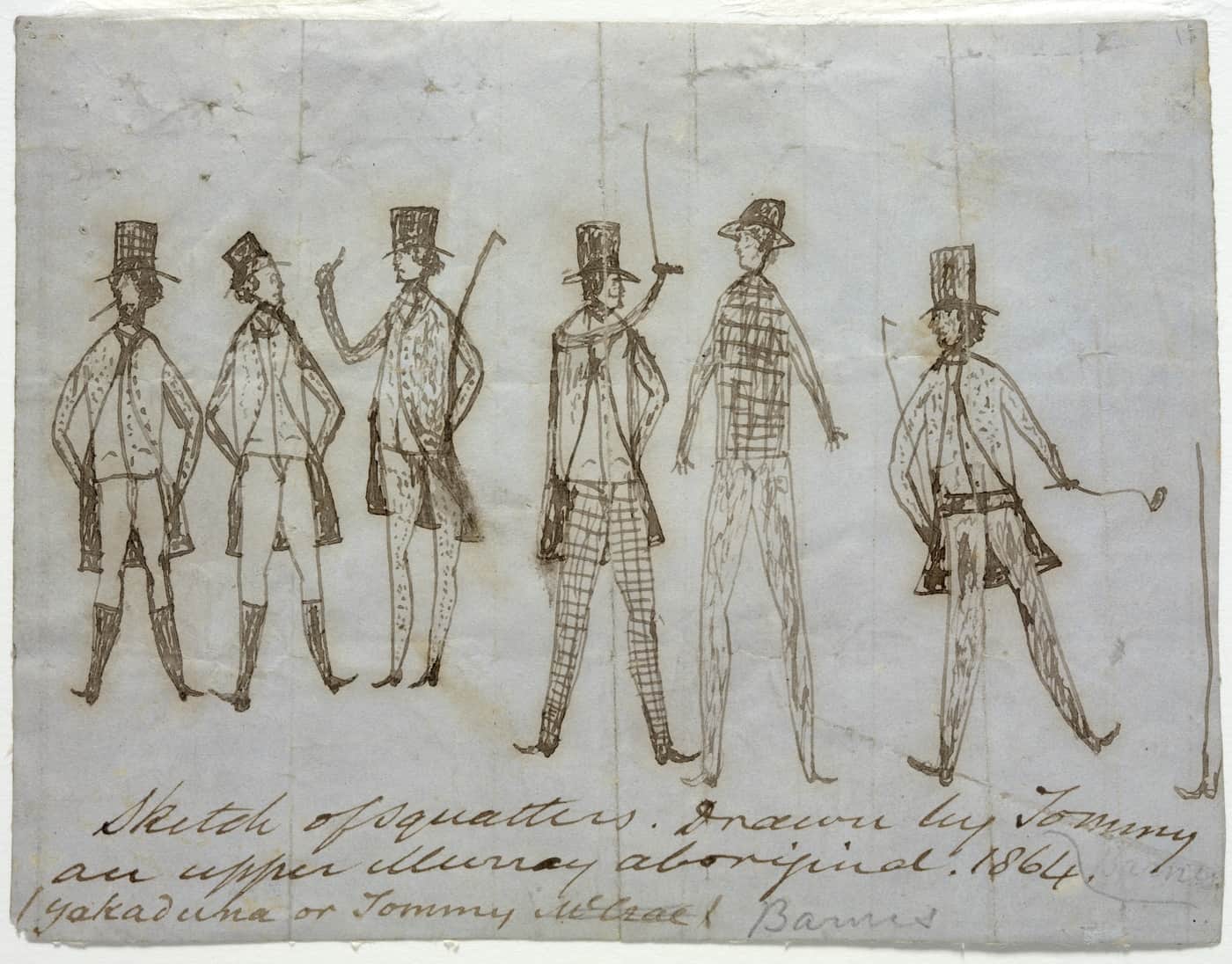
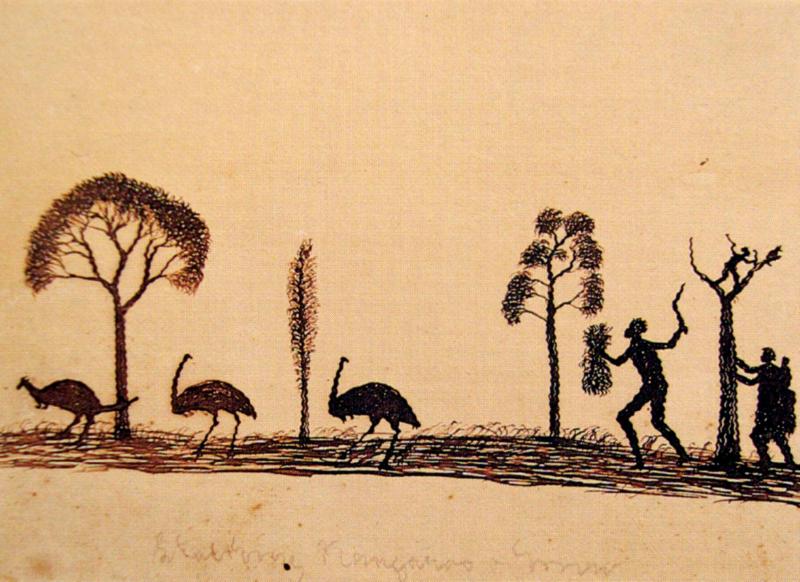
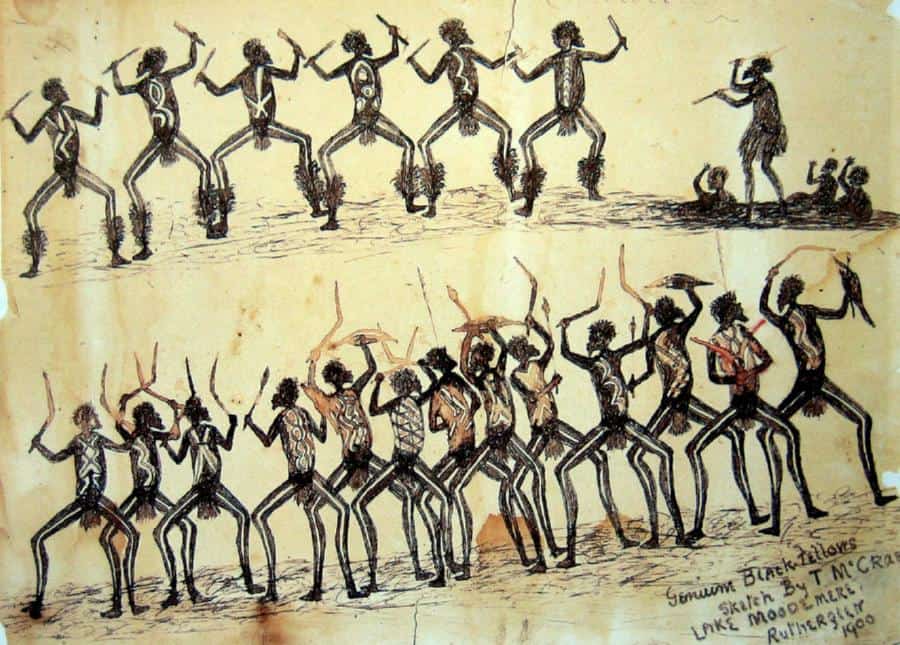
Tommy McRae Style and Subjects
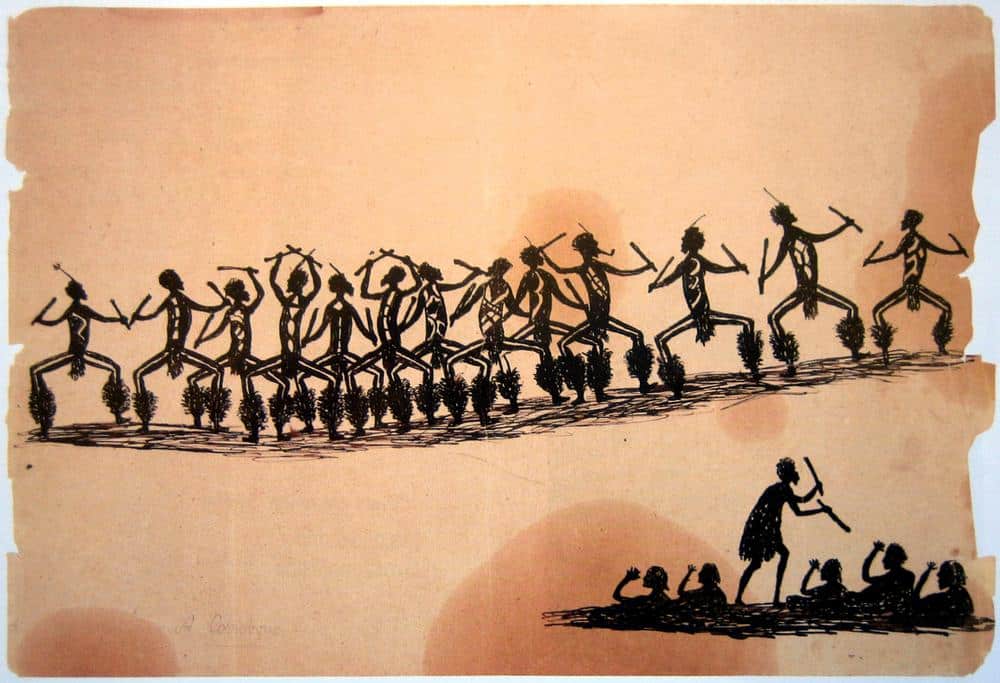
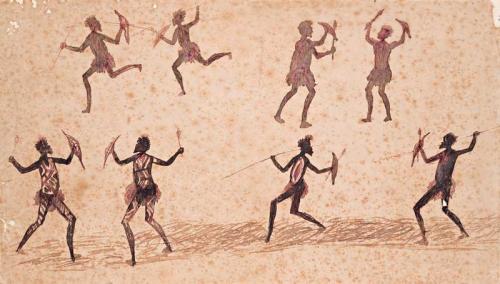
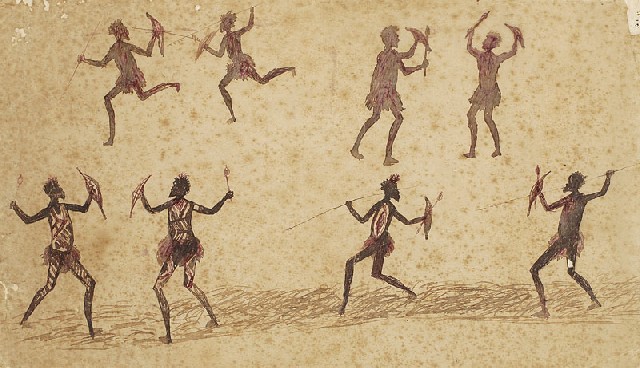
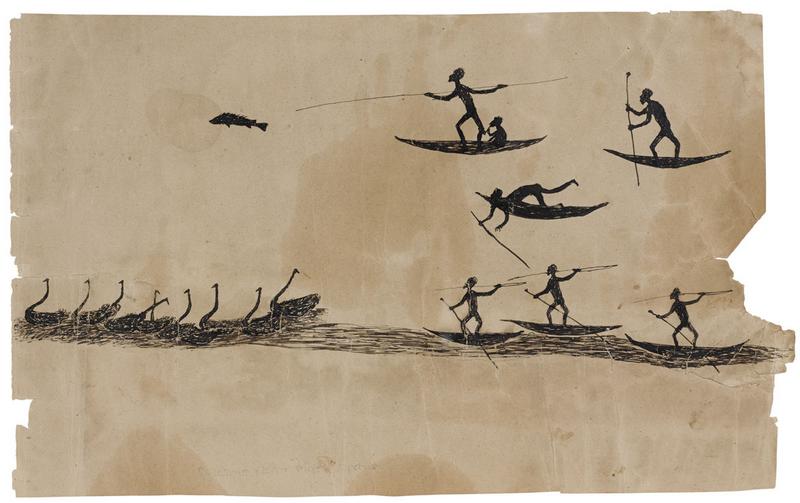
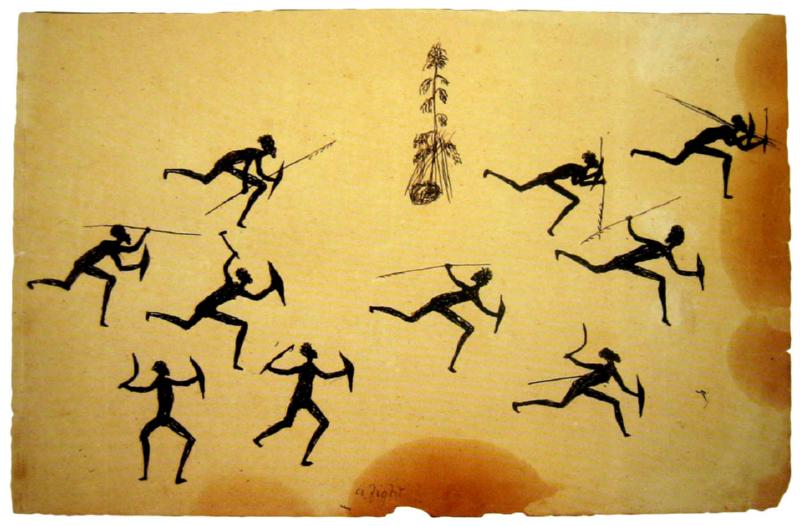
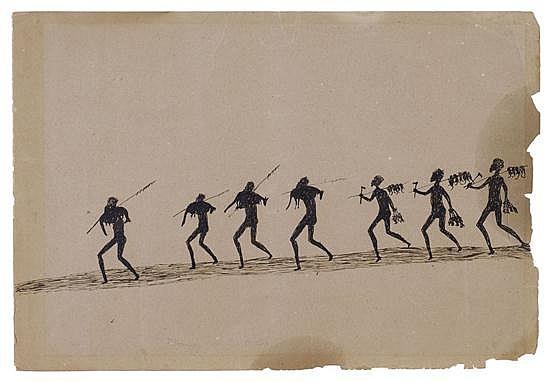
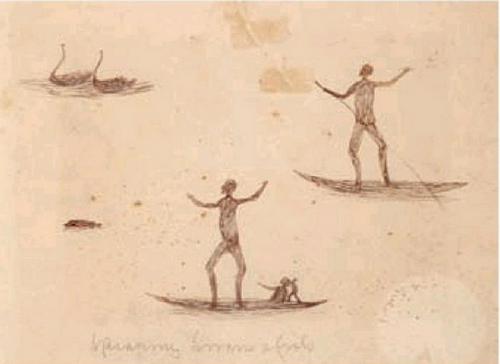
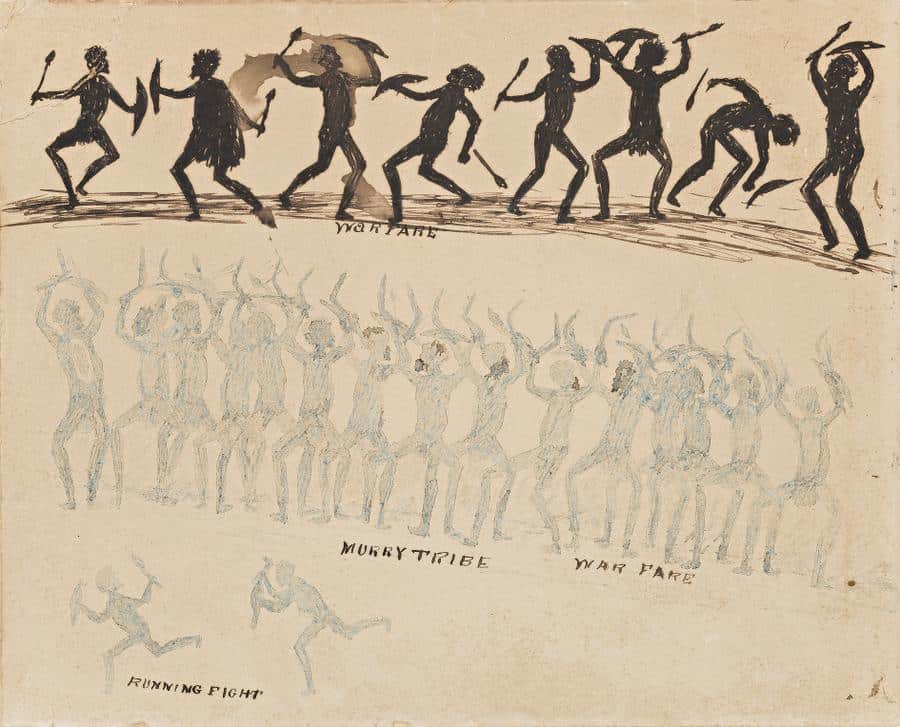
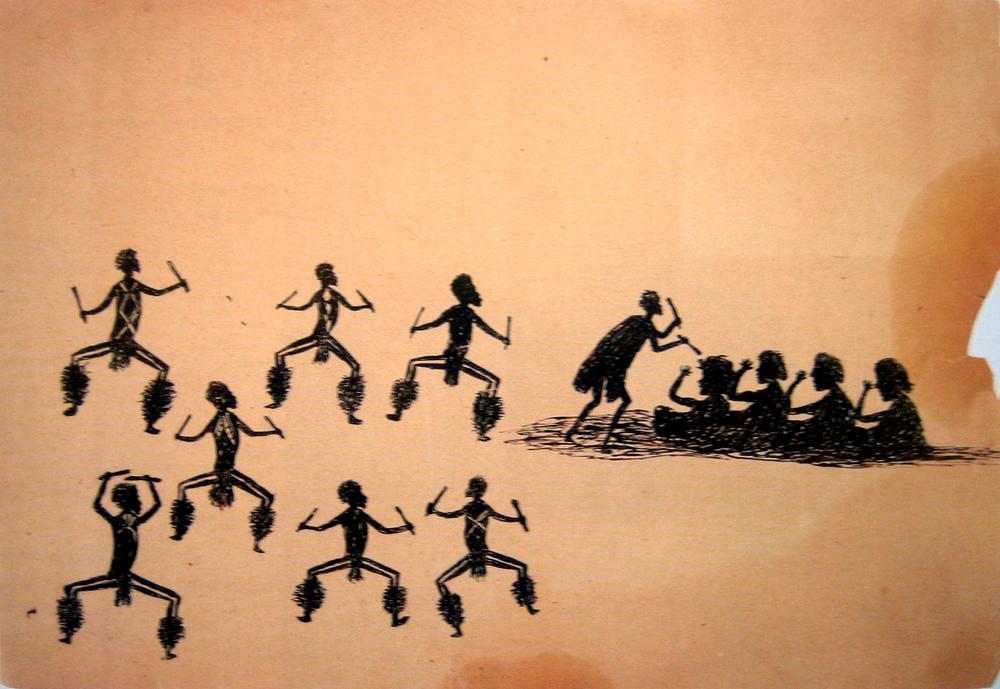
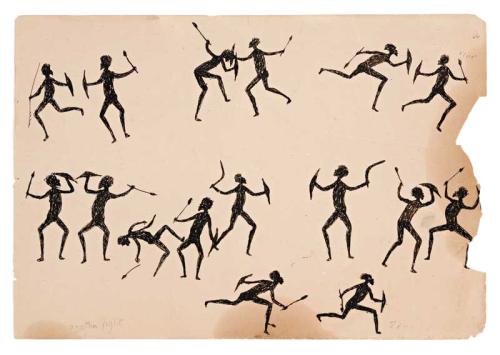
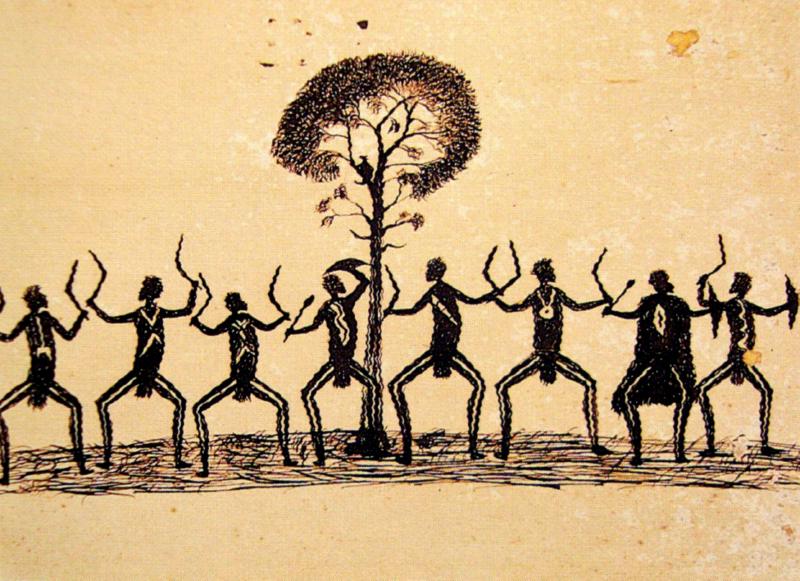
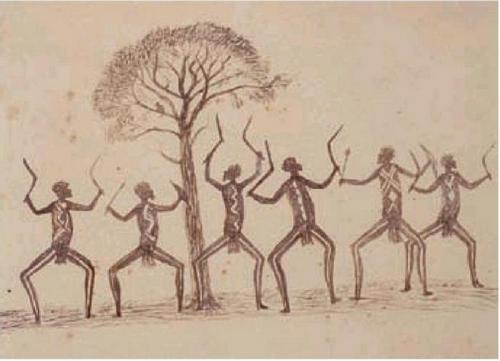
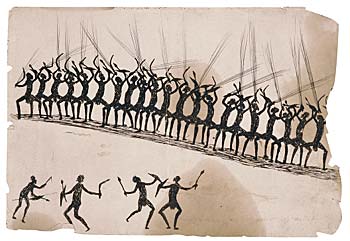
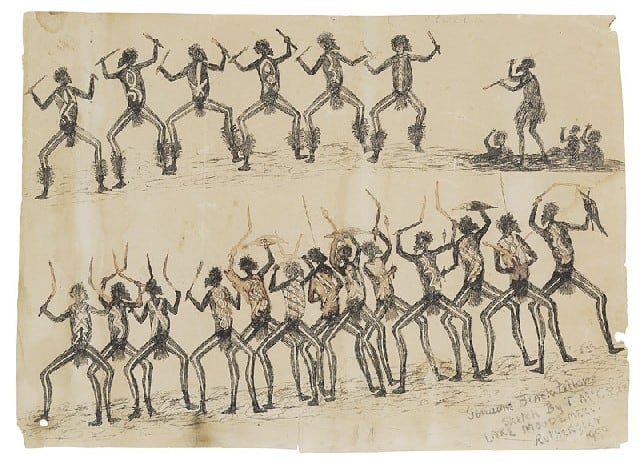
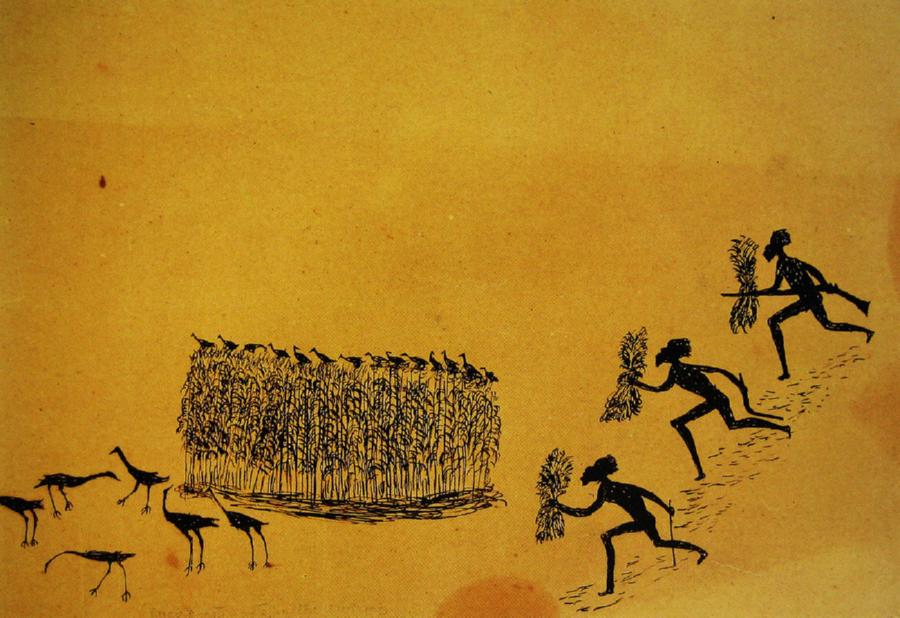
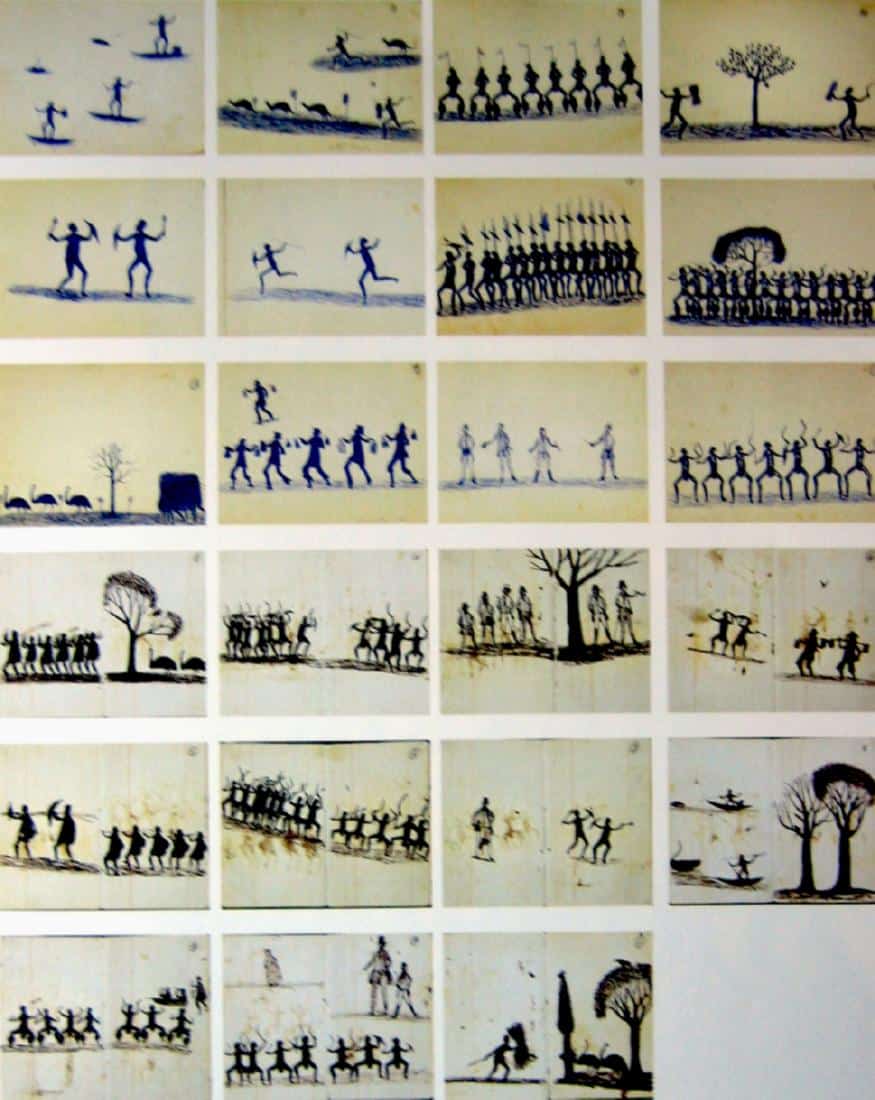
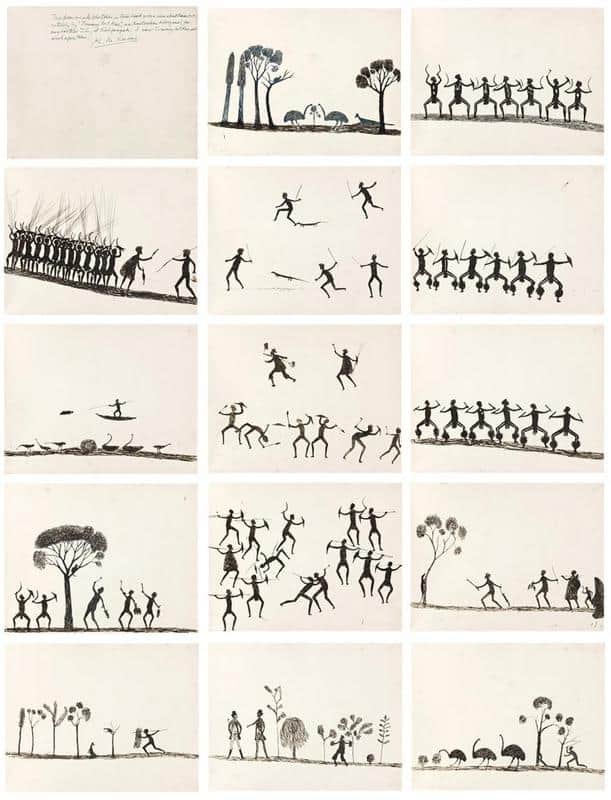
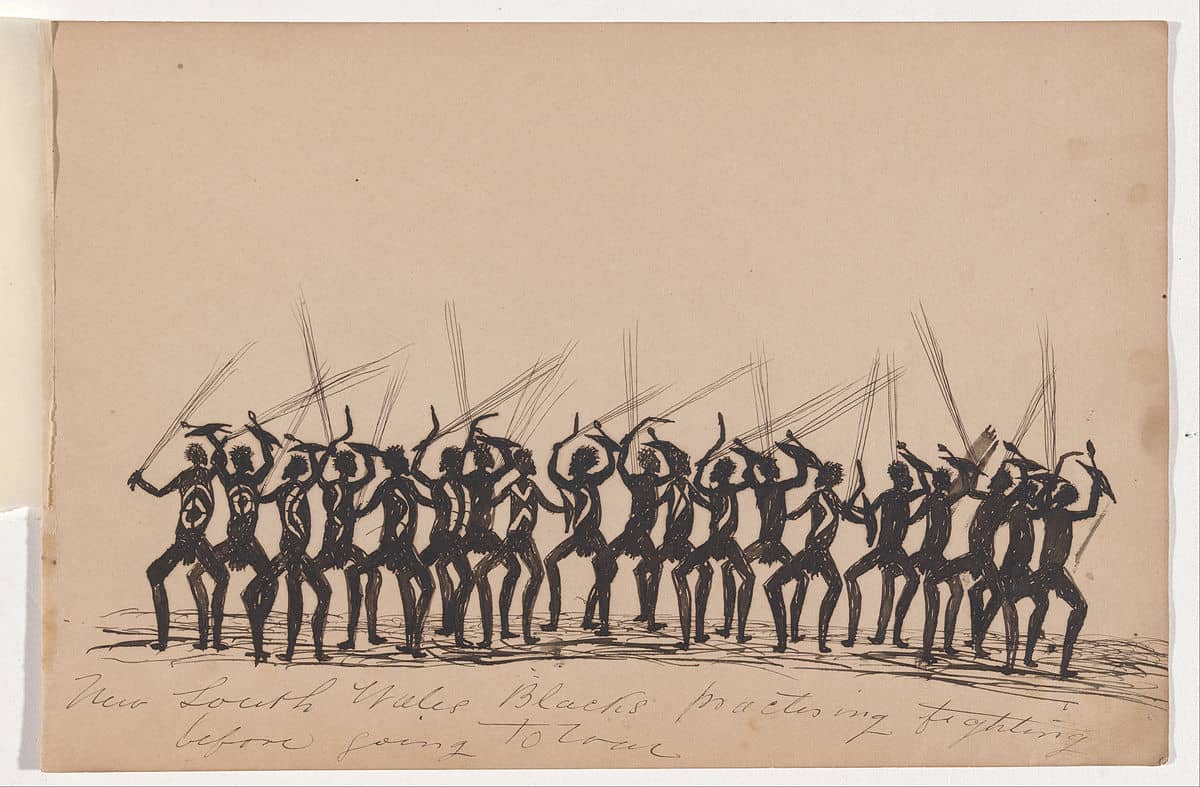
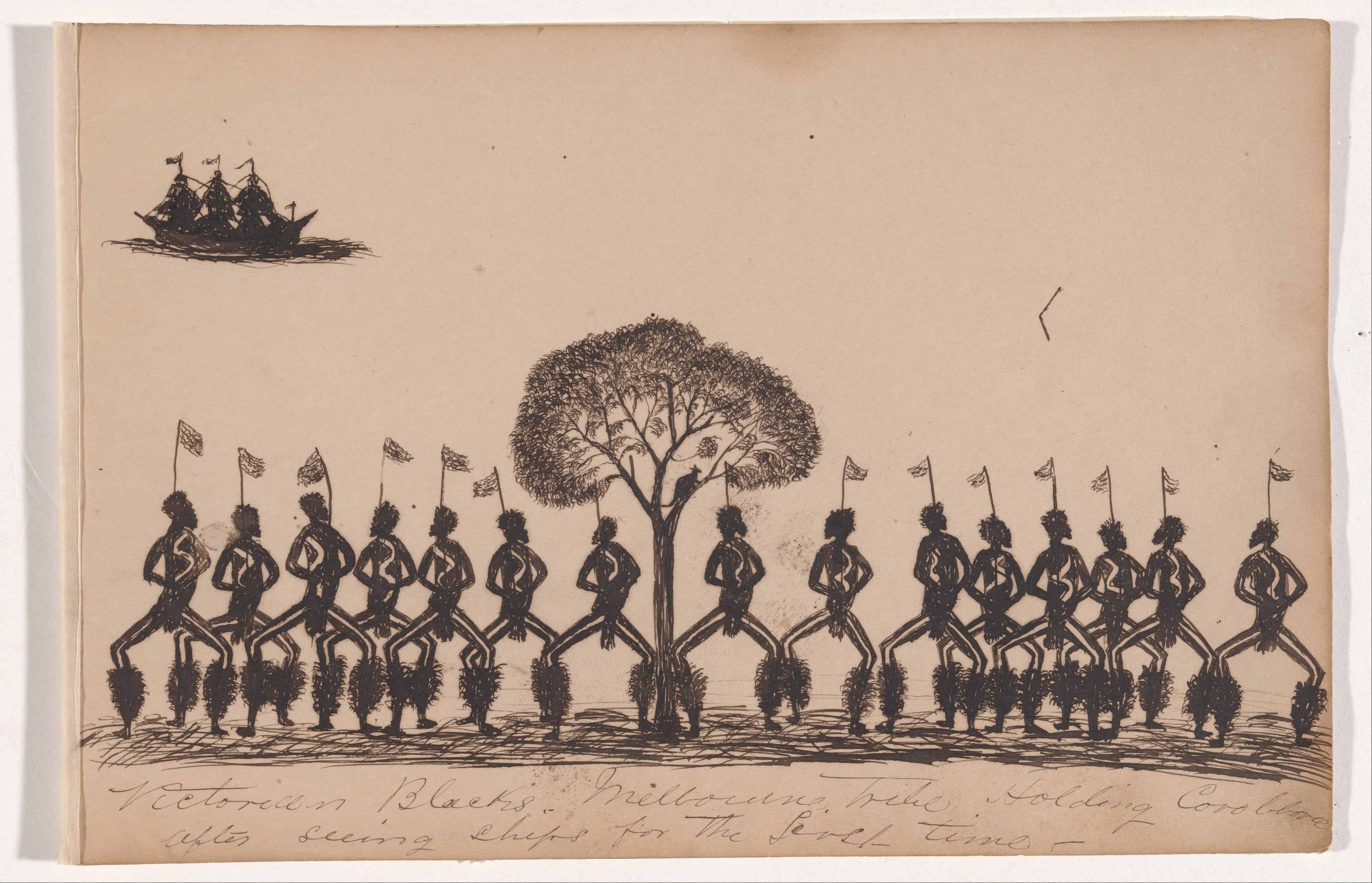
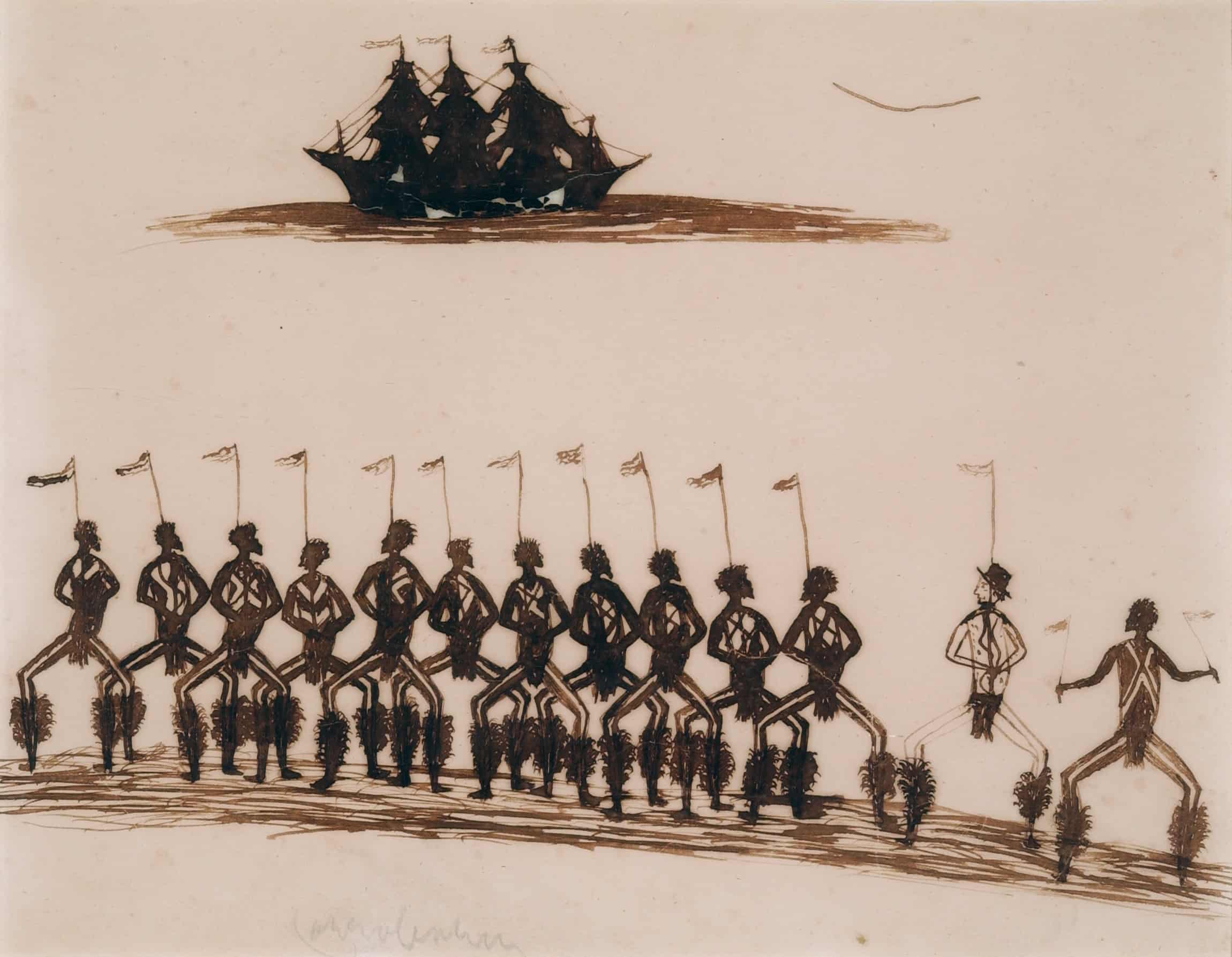
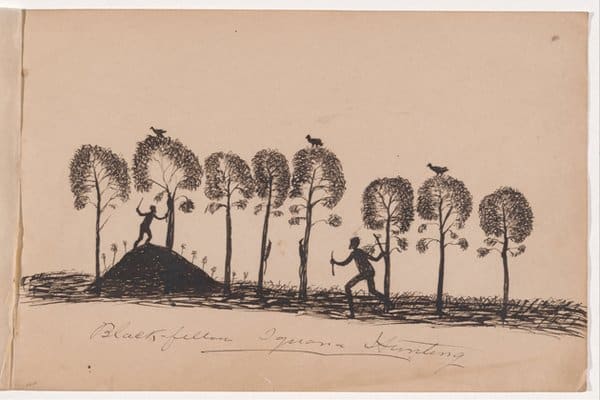
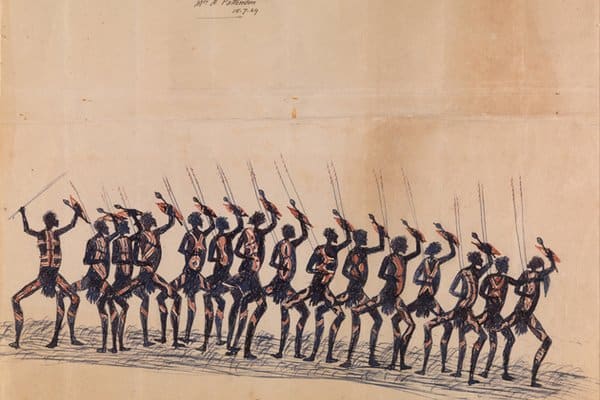
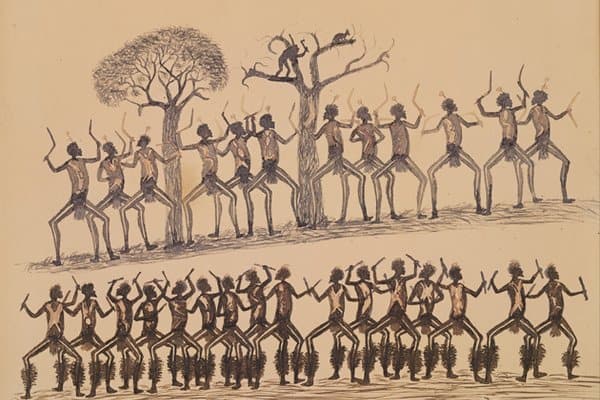
Tommy McRae’s drawings reveal a highly controlled and immediately recognisable visual language—one built on line, rhythm, and narrative clarity rather than detail or ornament. The examples above demonstrate the core subjects that recur throughout his work and the way he transforms lived experience into structured visual narrative.
Tommy McRae Style and Subjects
Tommy McRae’s drawings reveal a highly controlled and immediately recognisable visual language—one built on line, rhythm, and narrative clarity rather than detail or ornament. The examples above demonstrate the core subjects that recur throughout his work and the way he transforms lived experience into structured visual narrative.
A Language of Ceremony and Performance
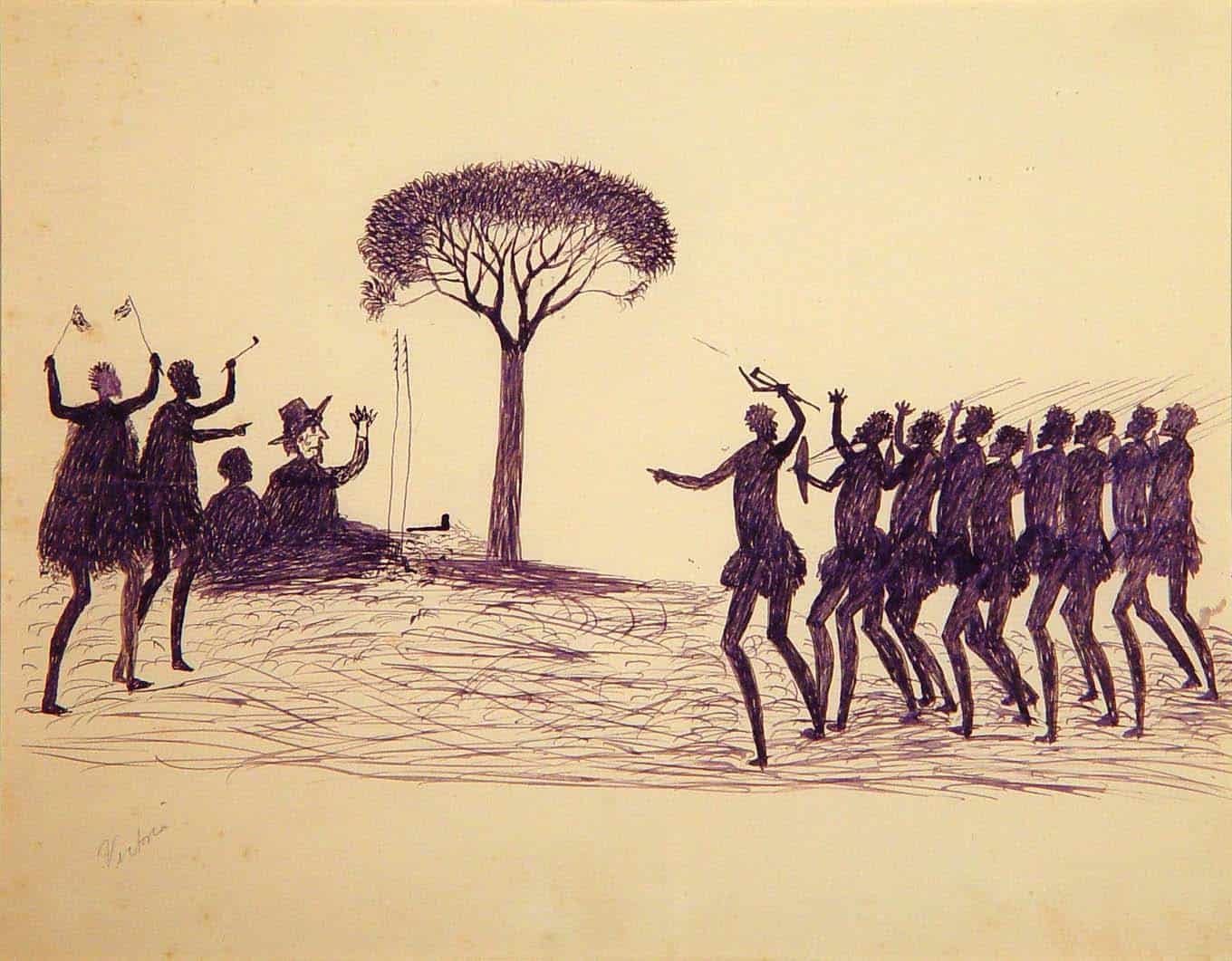
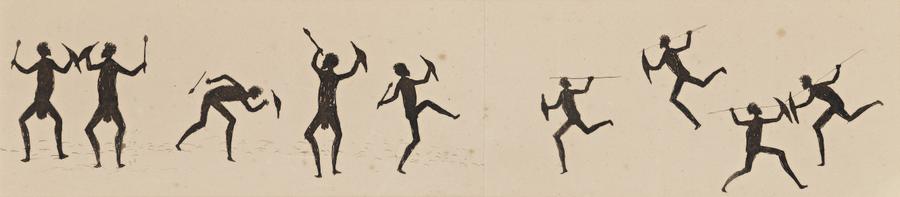
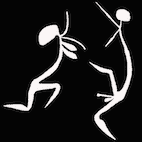
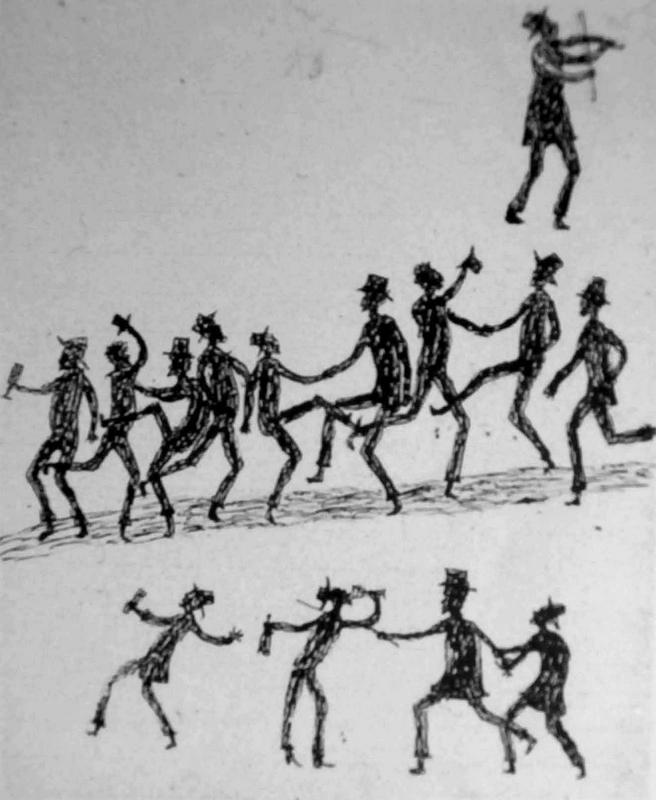
Ceremony lies at the heart of McRae’s subject matter. Many of his most compelling drawings depict corroboree scenes, where groups of figures move in unison, often linked arm-to-arm or arranged in rhythmic formation.
These are not casual gatherings—they are highly structured performances involving song, dance, and body movement. McRae captures this through repetition:
- Raised knees and extended limbs suggest dance steps
- Linked hands indicate coordinated group movement
- Head positions and body lean create a shared rhythm
The result is a visual translation of ceremony into line. Even without colour or body paint detail, the energy and collective unity of the event is unmistakable. His processional compositions strongly suggest that these scenes unfold over time, echoing the cyclical and performative nature of Aboriginal ceremonial life.
Hunting as Knowledge in Motion
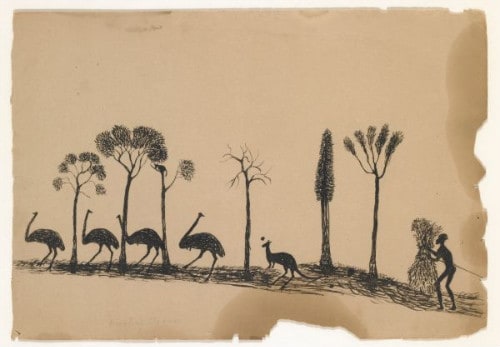
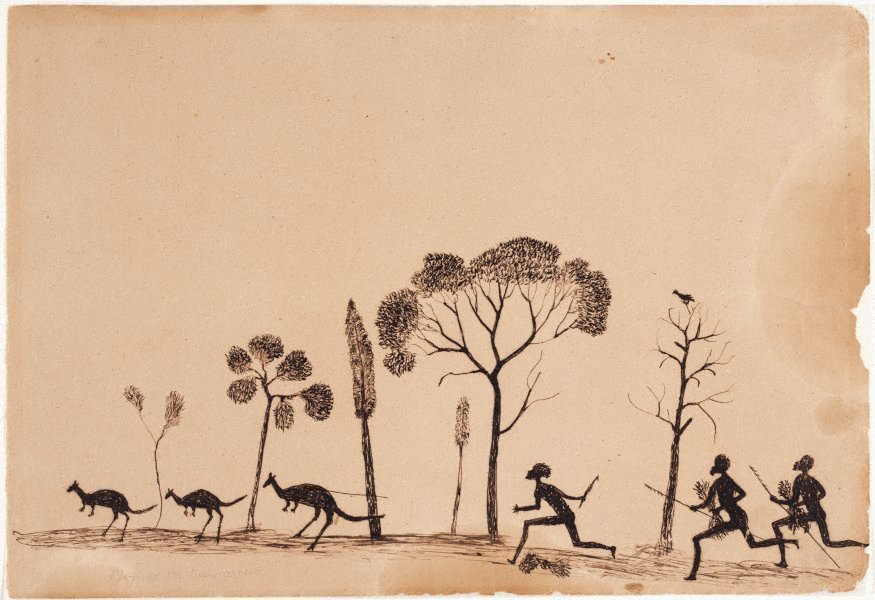
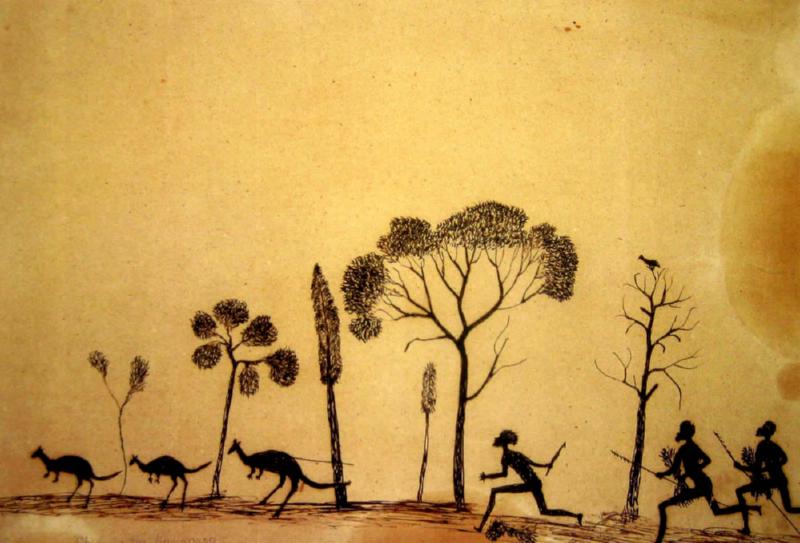
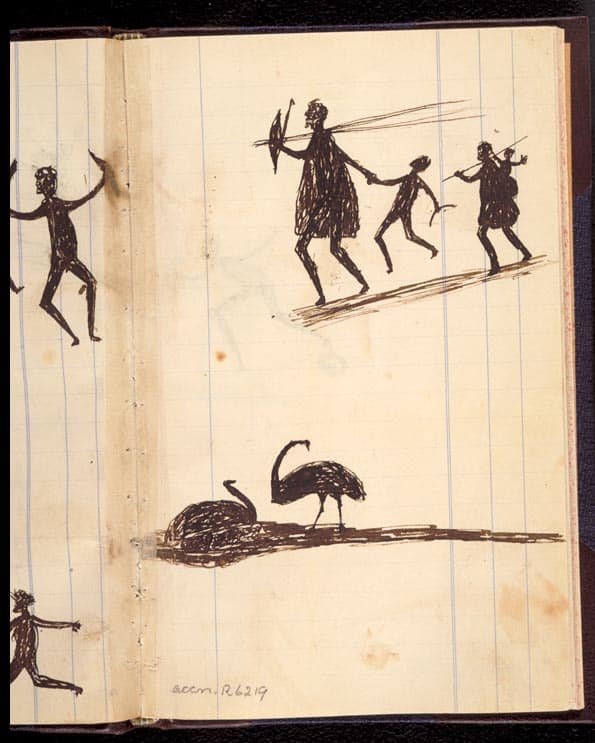
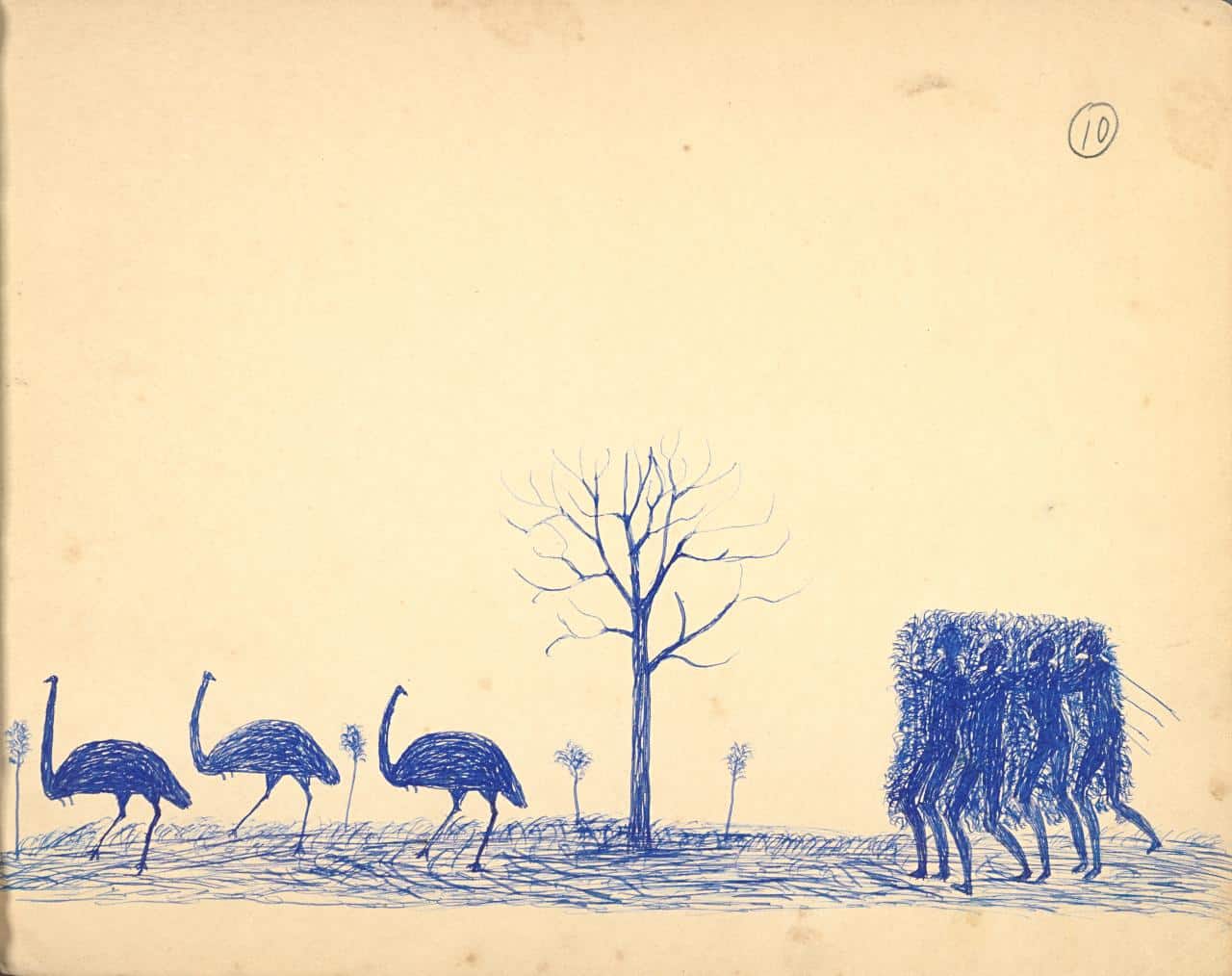
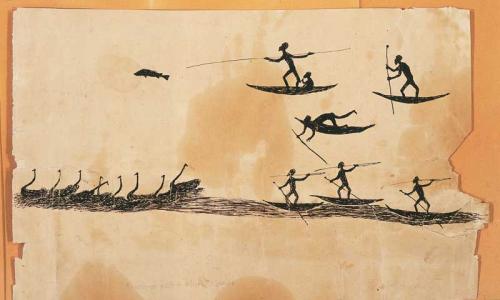
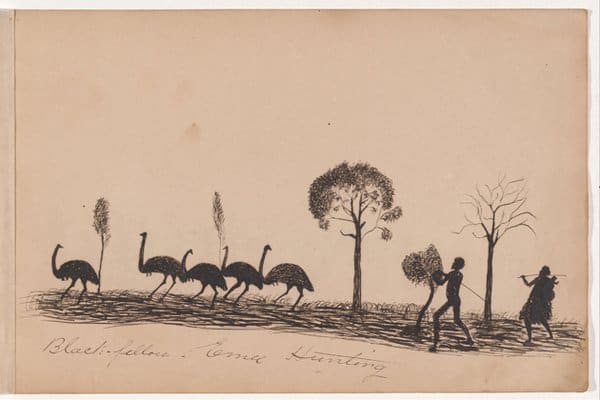
Hunting scenes form another major category in McRae’s work, particularly emu hunts, which appear repeatedly. These are not static depictions of animals but dynamic sequences showing pursuit, coordination, and technique.
Typical elements include:
- Hunters carrying clubs or throwing implements
- Animals positioned within the same horizontal flow as figures
- Movement conveyed through forward-leaning bodies and lifted limbs
In these works, hunting is presented as a system of knowledge in action—a coordinated effort embedded within Country. The relationship between people and animals is balanced; neither dominates the composition entirely. Instead, both are part of a shared narrative space.
Daily Life and Social Interaction
Beyond ceremony and hunting, McRae also records aspects of everyday Aboriginal life. Groups of figures walking together, interacting, or engaged in routine activities appear throughout his drawings.
These scenes often emphasise:
- Social cohesion
- Group movement
- Shared purpose
Rather than isolating individuals, McRae consistently portrays people as part of a collective. This reflects a worldview in which identity is relational—defined through kinship, community, and connection to Country.
Encounters with Colonial Society
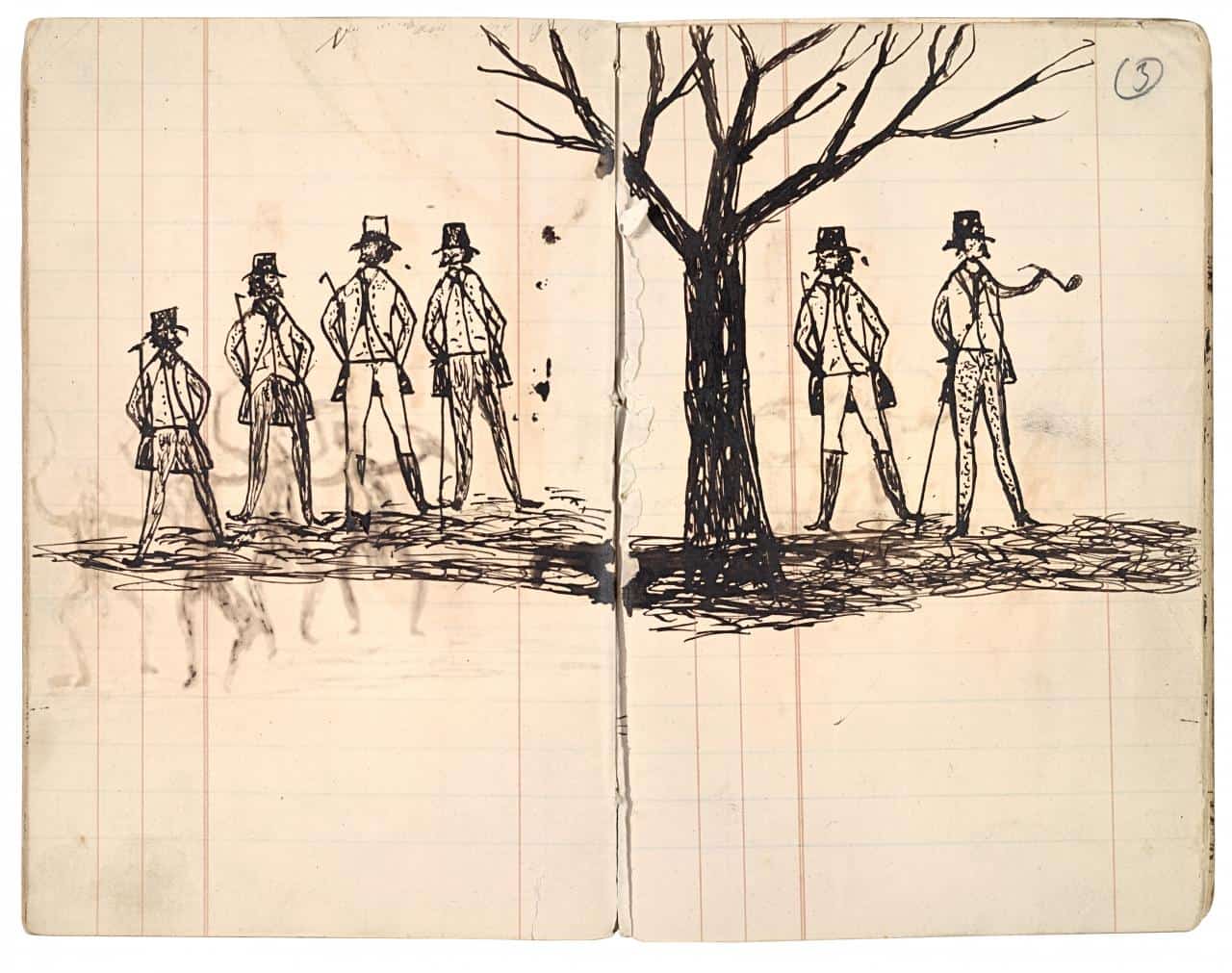
One of the most historically significant aspects of McRae’s work is his depiction of cross-cultural encounters. European settlers appear in several drawings, often distinguishable by:
- Tall hats or brimmed hats
- Coats or structured clothing
- Upright, sometimes rigid posture
These figures are sometimes shown alongside Aboriginal people, creating a visual contrast between two worlds occupying the same landscape. Horses—introduced animals—also appear, reinforcing the presence of colonial life.
Importantly, McRae does not present these encounters from a European perspective. Instead, they are integrated into his broader narrative of Country. The effect is subtle but powerful: colonial presence is acknowledged, but it does not dominate the composition.
The Landscape as Structure, Not Background
McRae’s landscapes are minimal but deliberate. A lightly sketched ground line anchors the figures, while trees—often more densely drawn—act as vertical markers within the composition.
These elements serve several purposes:
- They locate the scene within the Upper Murray environment
- They provide compositional balance
- They guide the viewer’s eye across the narrative
Unlike later landscape traditions, the environment is not the subject in itself. It is a framework within which human activity unfolds.
Annotation and Narrative Clarity
Some of McRae’s drawings include handwritten captions identifying figures or describing events. These annotations reinforce the documentary nature of his work and suggest that he was conscious of an external audience—particularly European travellers who collected his drawings.
This combination of image and text enhances interpretive clarity, making his work accessible while retaining its cultural authority.
A Coherent Artistic Vision
Across ceremony, hunting, daily life, and cross-cultural encounter, McRae maintains a consistent stylistic approach. His use of line, repetition, and horizontal narrative creates a unified body of work that is both visually distinctive and historically significant.
What sets McRae apart is not just what he depicts, but how he structures knowledge visually. Ceremony becomes rhythm, hunting becomes movement, and history becomes sequence.
For collectors and scholars, this synthesis places Tommy McRae at a pivotal point in the development of Aboriginal art—an artist who adapted new materials to record enduring cultural knowledge while documenting a world in transition.
What Are His Drawings Worth?
Tommy McRae’s drawings occupy a rare and highly sought-after position within the market for early Aboriginal art. As one of the earliest recorded Aboriginal artists working in a commercial context, his works are both historically significant and exceptionally scarce.
At the top end of the market, major drawings with strong provenance and compelling subject matter can achieve prices of up to $250,000 AUD. These are typically well-preserved works, often with clear historical lineage—such as early collection by known figures—or examples that feature complex ceremonial scenes or multiple interacting figures.
More commonly, Tommy McRae drawings sell in the range of $40,000 to $60,000 AUD, depending on quality and condition. Even within this range, there can be considerable variation based on several key factors:
- Provenance – Works with documented history, early collection dates, or institutional links are significantly more valuable
- Condition – As works on paper, issues such as foxing, staining, folds, or losses can materially affect value
- Subject matter – Ceremonial scenes, large processions, and narrative compositions tend to attract stronger demand than simpler studies
- Complexity and scale – Larger, more detailed drawings with multiple figures generally command higher prices
- Annotations – Works with original inscriptions can add both historical and commercial appeal
It is also important to recognise that McRae’s drawings rarely appear on the open market. Many are held in major public collections, including the National Gallery of Australia and the National Museum of Australia, which further contributes to their scarcity and desirability among collectors.
If you believe you may own a drawing by Tommy McRae, a careful assessment is essential. Subtle differences in quality, condition, and provenance can have a significant impact on value. As a specialist in early Aboriginal art, I actively acquire works of this calibre and can provide a confidential, market-based appraisal.
Frequently Asked Questions About Tommy McRae
Who was Tommy McRae?
Tommy McRae (c.1835–1901), also known as Yackaduna or Warra-euea, was an Aboriginal artist of the Kwatkwat people from the Upper Murray region of Victoria. He is recognised as one of the earliest Aboriginal artists to produce drawings for sale, working in pen and ink on paper during the 19th century.
What is Tommy McRae best known for?
He is best known for his pen-and-ink drawings of Aboriginal ceremony, hunting scenes, and daily life, often arranged in flowing, processional compositions. His works are distinctive for their silhouetted figures, rhythmic movement, and strong narrative clarity.
Are Tommy McRae’s works bark paintings?
No. Unlike artists from Arnhem Land, Tommy McRae did not paint on bark. His works are drawings on paper, created using pen and ink—an introduced medium that he adapted to express Aboriginal cultural knowledge.
Why is Tommy McRae important in Aboriginal art history?
McRae’s work predates the major Aboriginal art movements of the 20th century by several decades. His drawings provide a rare Aboriginal perspective on life during early colonial contact, making them both culturally significant and historically valuable.
What subjects did Tommy McRae depict?
His drawings commonly include:
- Ceremonial dances and corroborees
- Hunting scenes, especially emu hunts
- Fishing and daily activities
- Groups of figures in procession
- Encounters with European settlers and introduced animals
How can you identify a genuine Tommy McRae drawing?
Authentic works typically show:
- Fine pen-and-ink linework
- Silhouetted or lightly detailed figures
- Strong horizontal compositions
- Scenes of movement or group activity
- Occasionally handwritten annotations
Provenance is critical. Many genuine works can be traced back to early collectors or documented sources.
What are Tommy McRae drawings worth?
Values vary significantly depending on quality and provenance.
- Typical range: $40,000 – $60,000 AUD
- Exceptional works: up to $250,000 AUD or more
Condition, subject matter, and historical documentation all play a major role in determining value.
Where are Tommy McRae’s works held?
His drawings are held in major public collections, including the National Gallery of Australia and the National Museum of Australia, as well as state libraries and museums across Australia.
Did Tommy McRae sell his drawings during his lifetime?
Yes. He produced small books of drawings which he sold to travellers and visitors to the Upper Murray region. This makes him one of the earliest Aboriginal artists to engage directly with a commercial art market.
Why are his drawings so rare?
Many of McRae’s works were collected in the 19th century and are now held in institutional collections. As a result, very few examples remain in private hands, and those that do rarely come onto the market.
Can I sell a Tommy McRae drawing?
Yes, but due to the value and rarity, it is essential to obtain an expert assessment. Provenance, condition, and authenticity must be carefully evaluated before sale.
If you own or believe you may own a Tommy McRae drawing, you can arrange a confidential appraisal by providing clear images and any known history of the work.
Tommy McRae images
The following images are not the complete known work by this artist but give a good idea of his style.