Nym Bunduk Aboriginal Art
White Man Got no Dreamings
Nym Bunduk (also recorded as Nym Bandak) is recognised as one of the earliest known bark painters associated with the Port Keats Art movement of Wadeye in the Northern Territory. His paintings are historically important not only for their artistic sophistication but also for the rare insight they provide into the ceremonial and spiritual traditions of the Diminhin clan of the Fitzmaurice River region. As a senior Aboriginal elder and cultural custodian, Bunduk played an important role in preserving ceremonial knowledge during the formative years of the Port Keats bark painting movement.
Working alongside pioneering Wadeye artists including Charlie Mardigan and Bobyin Nongah, Nym Bunduk helped establish one of the earliest bark painting traditions outside Arnhem Land. His finest works retain the strong ceremonial abstraction characteristic of early Port Keats painting, featuring sacred geometric imagery, symbolic line work, and ancestral designs painted in natural ochres on elongated eucalyptus bark.
If you own or have encountered a bark painting by Nym Bunduk, I would be very interested in seeing it. Please feel free to send clear images for a confidential assessment. I actively research and collect early Port Keats bark paintings and am always interested in historically important works from this rare movement.
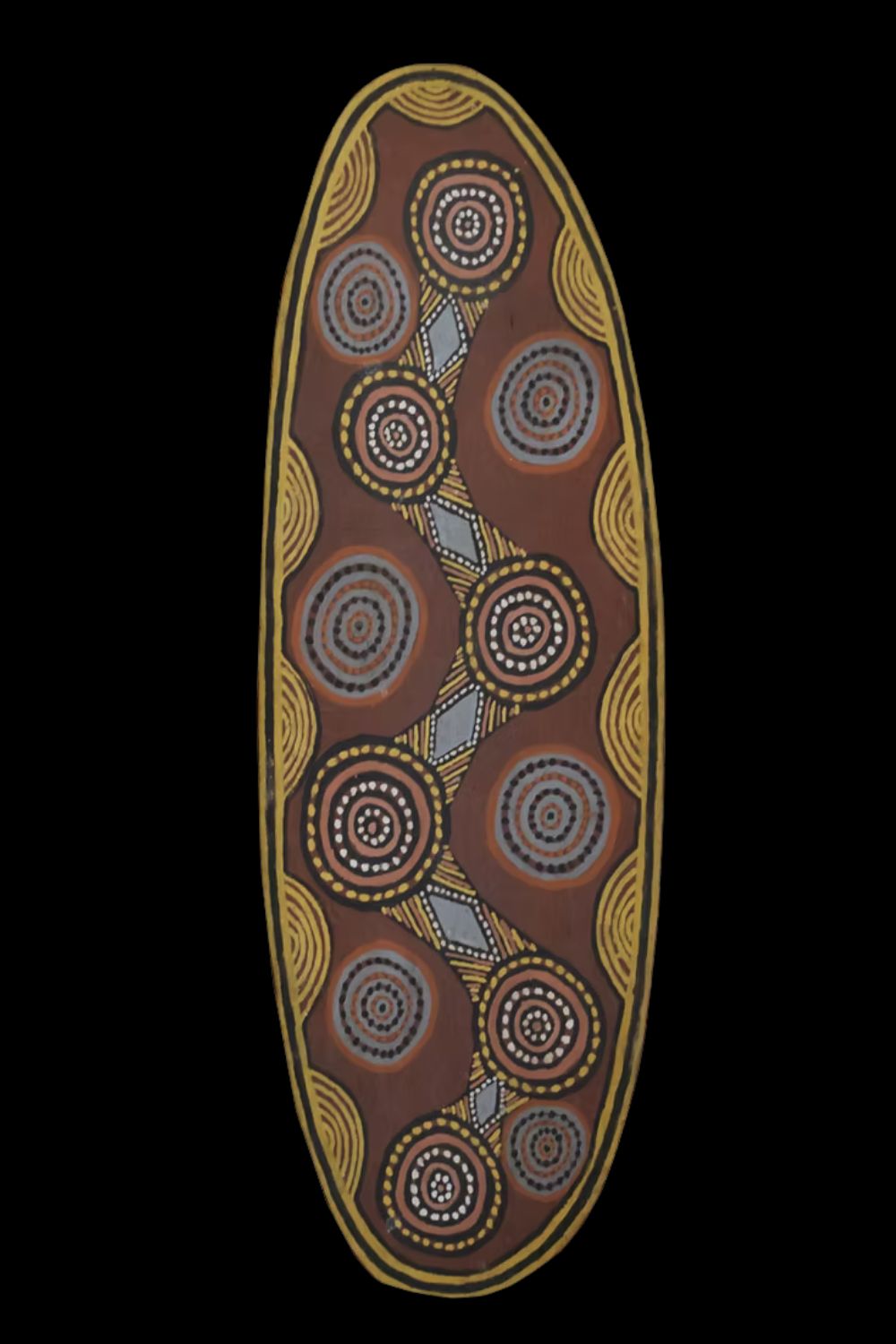
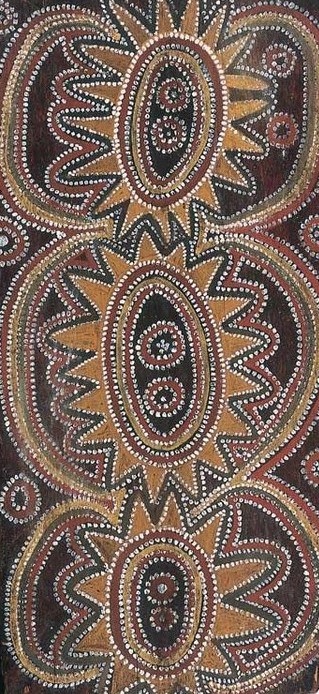
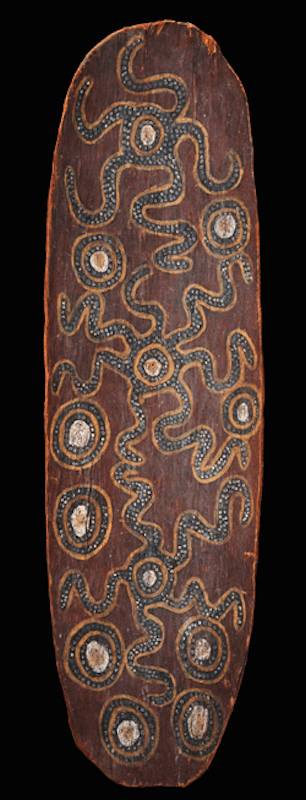
Indigenous Australian Artist Nym Bunduk is one of the few known painters of the Port Keats area. His early paintings are mainly of churinga-style designs painted on oval pieces of bark. These designs were secret sacred and have different levels of meaning depending on the level of initiation of the audience
Biography of Nym Bunduk: Diminhin Lawman and Anthropological Informant
Although little formal documentation exists on the early life of Nym Bunduk, it is understood that he was born in the remote bushlands near the Fitzmaurice River, southwest of Darwin. He grew up in a traditional hunter-gatherer lifestyle, speaking the Murrinhpatha language, and was initiated into Aboriginal law as a young man. As a recognised elder, Bunduk became a senior lawman of the Diminhin clan and a respected guardian of several sacred Dream time story narratives.
His cultural influence extended far beyond the art world, due in part to his long-standing collaboration with the renowned anthropologist W. E. H. Stanner, whom he met in 1935 during the establishment of the Catholic mission at Port Keats. Over several decades, Bunduk shared extensive traditional knowledge—on kinship structures, law, and spiritual philosophy—with Stanner. This unique relationship helped shape key components of Australia’s policy discourse on Aboriginal affairs in the mid-20th century.
Stanner would later refer to Bunduk as one of his most important informants, and their mutual respect reflected a rare cross-cultural partnership in a time when Aboriginal voices were seldom amplified in academia or public policy.
If you are aware of further biographical details on Nym Bunduk, or other artists from the Port Keats region such as Charlie Brinken, Indji Tharwul, Charlie Mardigan or Bobyin Noongah, please contact us. Preserving and sharing this knowledge is vital to documenting the rich legacy of this underrepresented artistic community.
The Artistic Legacy of Nym Bunduk: Port Keats Bark Paintings
Early Churinga-Inspired Bark Art
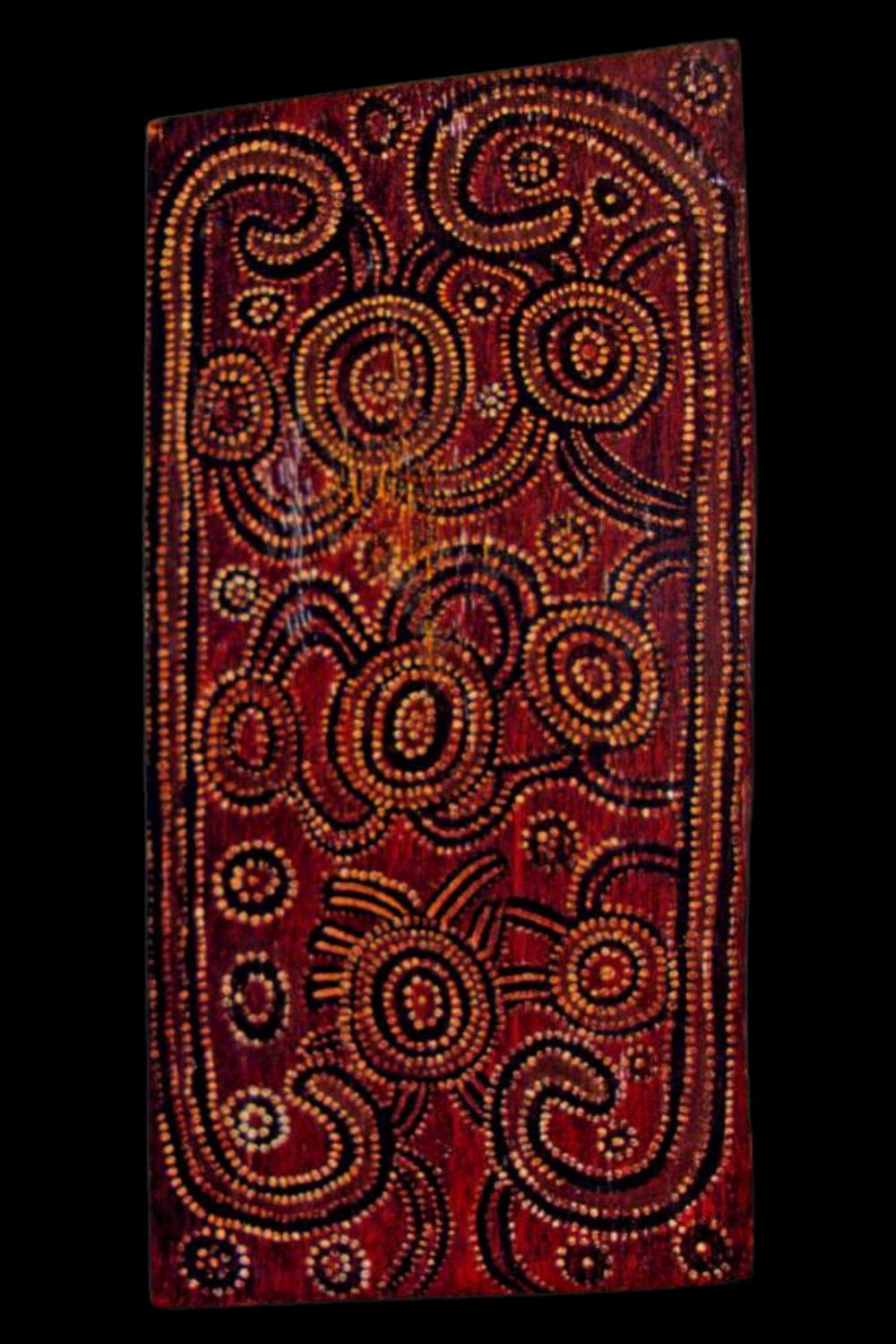
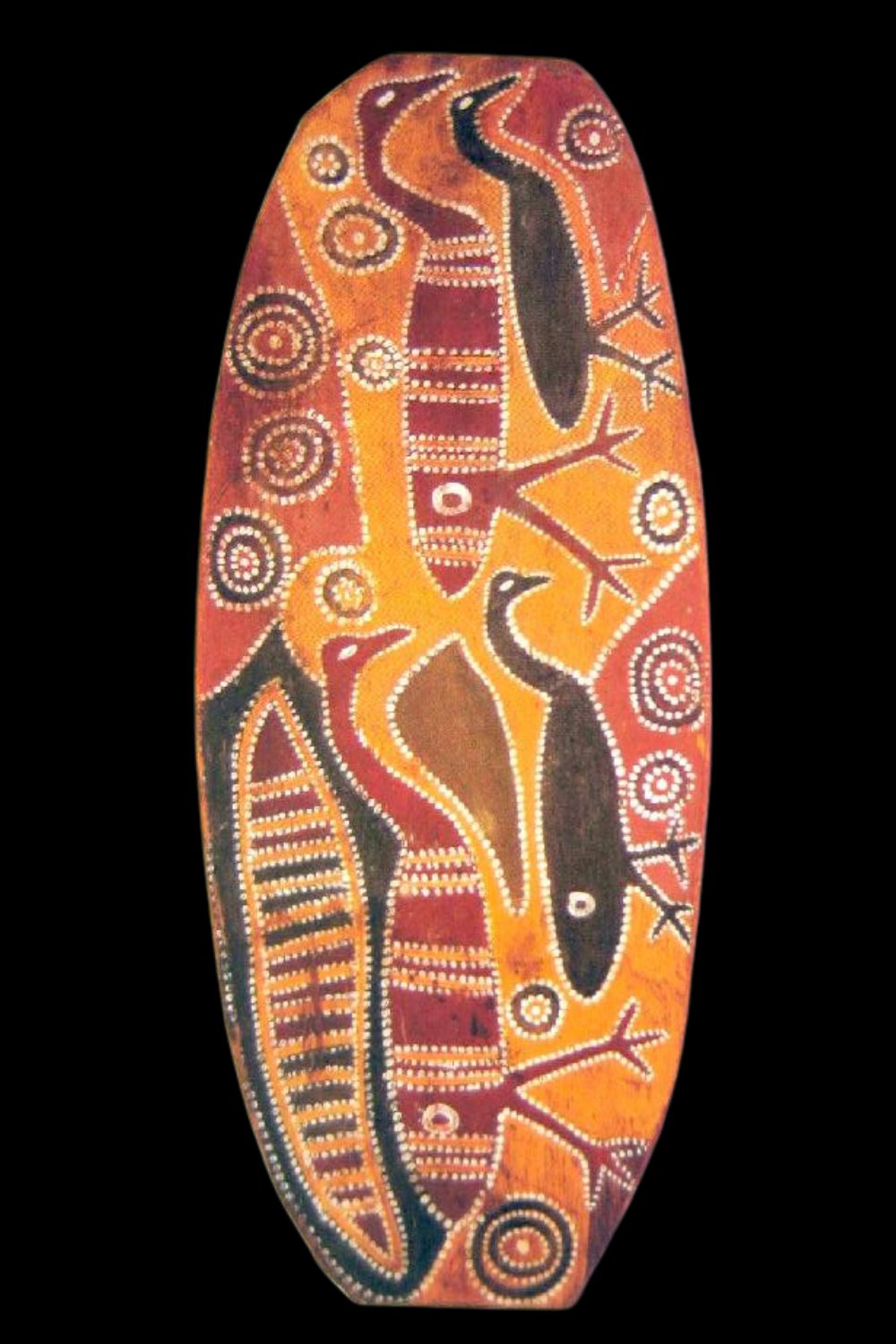
Bunduk’s earliest known works are bark paintings that closely resemble Tjuringa designs—sacred ceremonial objects used in initiation rites and deeply connected to ancestral Dreamings. These oval-shaped bark pieces, painted in natural ochres, feature repeating incised patterns, concentric circles, and flowing linear motifs. Each design holds multiple layers of meaning, which are accessible only according to the viewer’s level of ceremonial initiation.
This style shows striking affinities with Western Desert aboriginal art symbols, hinting at historical movements of people from inland to the coastal areas. According to oral tradition, Bunduk’s ancestors were displaced from desert lands and settled on the coast, bringing their spiritual narratives and visual language with them.
Though aesthetically and conceptually aligned with the early Papunya Tula paintings of artists like Shorty Lungkata and Johnny Warangkula Tjupurrula, Bunduk’s early Port Keats barks predate the aboriginal dot art movement by over a decade. Yet they remain undervalued in today’s art market, often overshadowed by the commercial and institutional recognition that followed the Papunya art explosion of the 1970s.
Nym Bunduk is sometimes spelled Nym Bandak
Transition to Figurative Bark Paintings
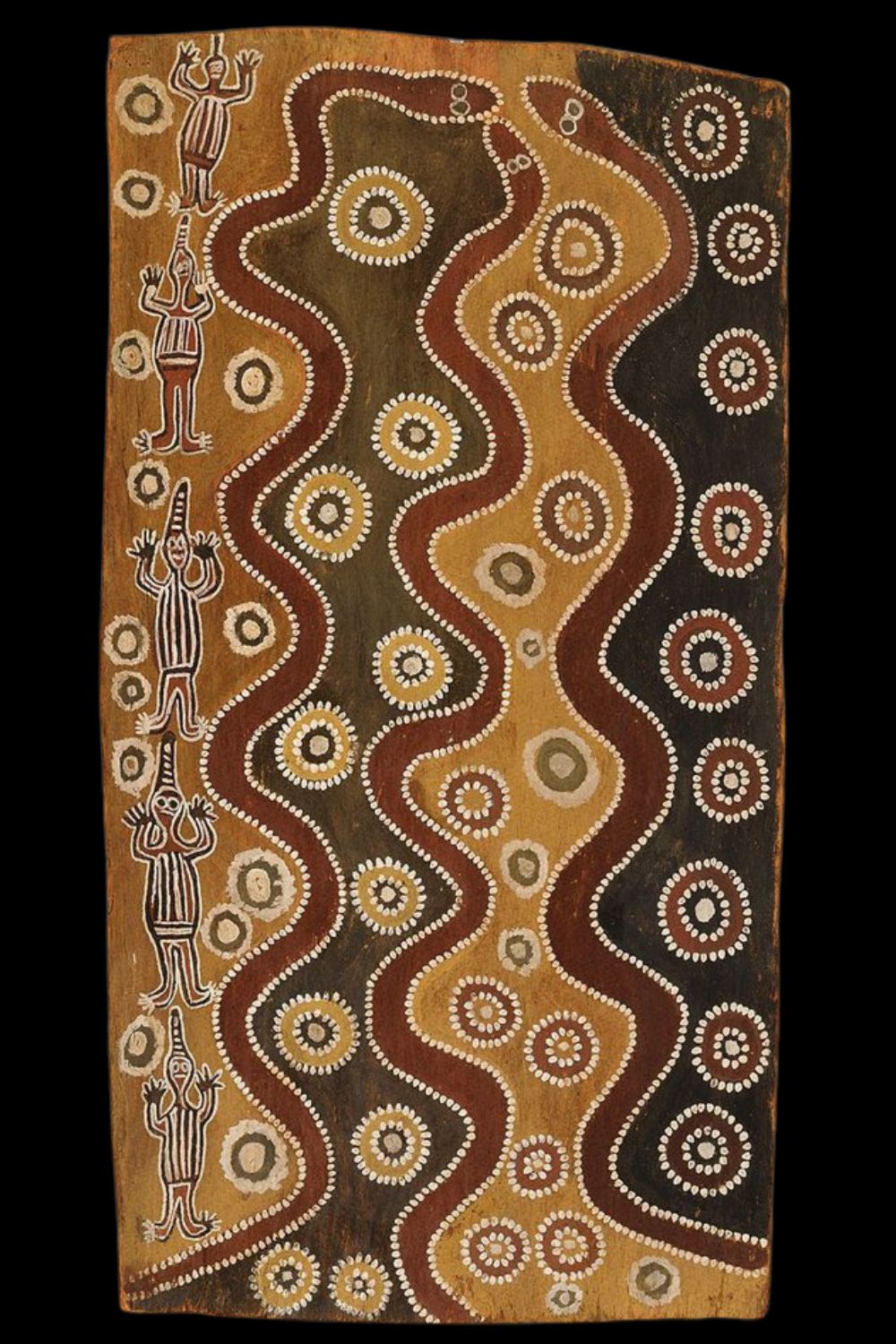
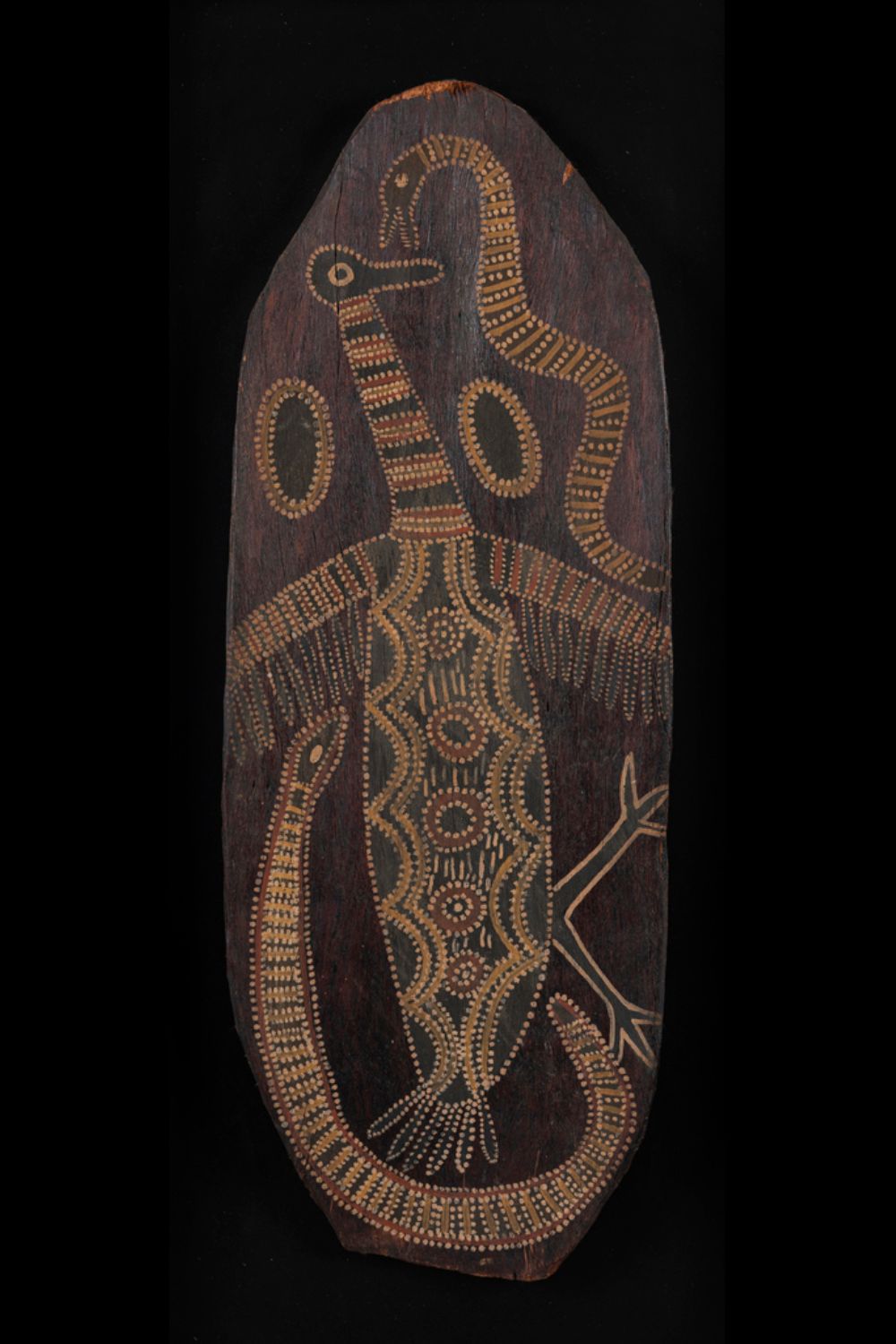
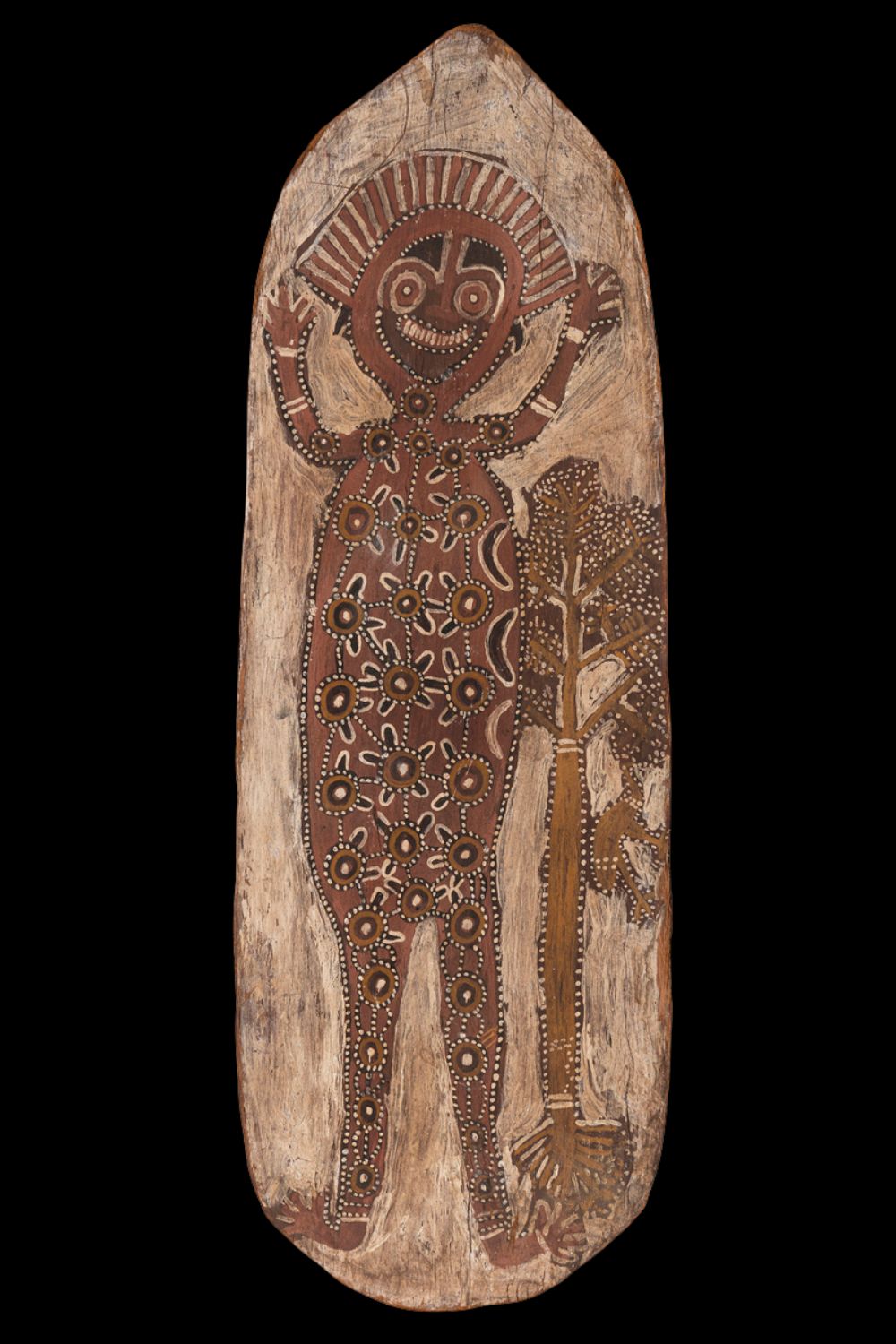
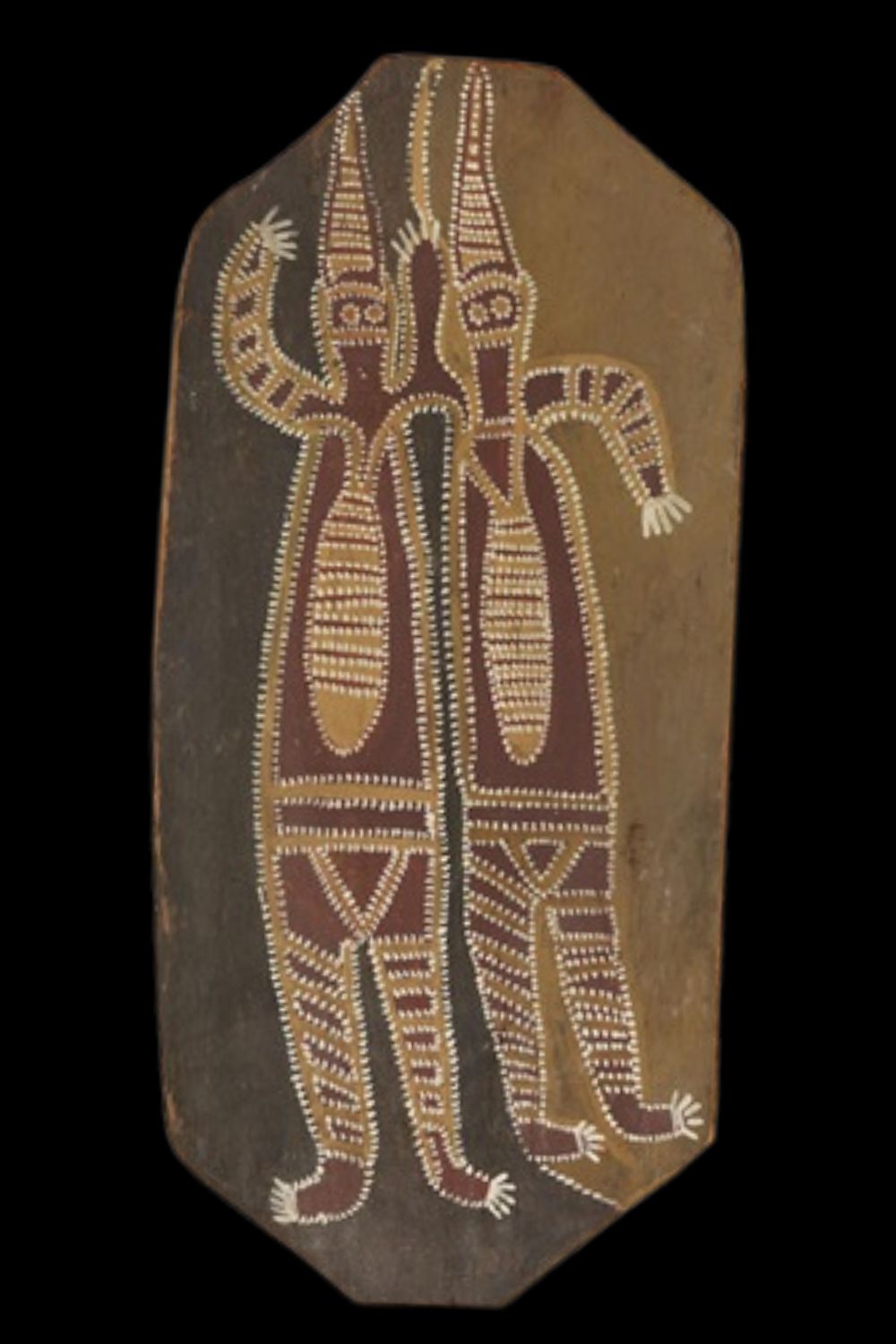
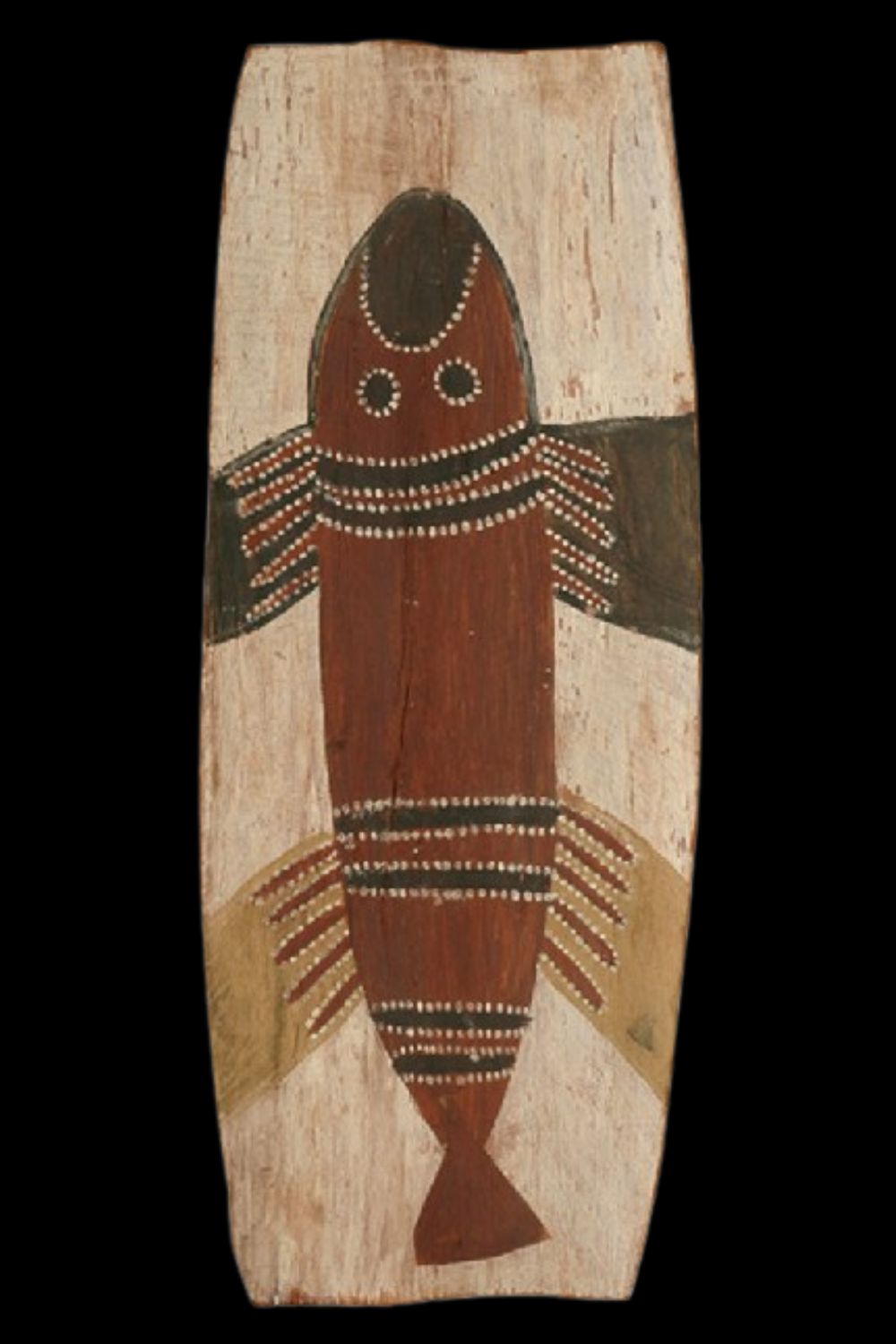
Unlike other Port Keats artist Bunduk shifted quite early from symbolic to figurative representations of Dreaming stories. This is in part likely due to his prolonged contact with anthropologists who would have shown a strong geniune interest in ceremony. These works, typically painted on rectangular or square barks with rounded corners, feature animal spirits, totemic beings (especially his own fish totem), and most importantly ceremonial gatherings instead of abstract sacred symbols. This evolution was likely in response to a combination of cultural restrictions and the increasing influence of anthropologists, who encouraged the depiction of secret/sacred cultural knowledge.
While these later barks are less collectible than the churinga-style early works, they are still valuable for their ethnographic context and artistic variation. They offer a rare glimpse into how cultural expression adapted during a period of rapid social and political change.
Rarity, Collectibility, and Historical Importance
Due to the scarcity of surviving works, paintings by Nym Bunduk are increasingly sought after by informed collectors and institutions with a focus on early Aboriginal art from Northern Australia. Despite their understated market profile, Bunduk’s bark paintings are of considerable cultural and historical importance. They are among the few surviving visual records from Port Keats artists working in the 1950s and 1960s—decades before the mainstream Aboriginal art movement gained national traction.
Unfortunately, the lack of commercial recognition and scholarly focus means that many works by Bunduk and his contemporaries remain undocumented, misattributed, or underappreciated. Yet with growing interest in early bark painters and the re-evaluation of regional art histories, collectors are beginning to understand the significance of these works in shaping the pan-Aboriginal visual identity of Australia.
If you are a collector, gallery, or community member in possession of an early Port Keats bark painting, especially by Nym Bunduk, I would be delighted to assist in evaluating its cultural and financial value.
Why Nym Bunduk Deserves Greater Recognition
The legacy of Nym Bunduk is twofold: as a visual artist whose bark paintings offer a rare glimpse into early ceremonial expression, and as a cultural authority whose influence shaped how anthropologists—and by extension, policymakers—understood Aboriginal Australia. His contribution remains largely uncelebrated outside specialist circles.
This site exists to raise awareness about underrepresented figures like Bunduk, and to invite those with knowledge, photographs, or artworks to contribute to the growing documentation of Port Keats art history. By doing so, we collectively honour the legacy of artists whose cultural intelligence and visual sophistication continue to resonate through time.
All images featured in this article are presented strictly for educational and informational purposes.
This website may include copyrighted material for which specific authorization has not been obtained from the copyright owner.
All such images are presumed to be the intellectual property of the respective artist or their estate, and are used in accordance with principles of fair dealing or fair use under applicable copyright law.
Nym Bunduk artwork Images
The following images are of the Artwork of Nym Bandak. It is not a complete list of his works. They do however give a good idea of the style and above all the variety of this Aboriginal Artist.