Warlpiri Art and the Western Desert Painting Movement
Draft
Warlpiri Art is one of the great traditions within Western Desert Art and contemporary Aboriginal Australian painting. Emerging from the Central Australian communities of Yuendumu, Lajamanu, Willowra, and Nyirripi, Warlpiri painting is renowned for its rhythmic movement, ceremonial symbolism, and sophisticated visual mapping of Jukurrpa — the ancestral law often translated as the Dreaming.
Although frequently associated with Aboriginal dot painting, Warlpiri Art encompasses far more than decorative pattern. Many paintings derive from older ceremonial traditions including body painting, sand mosaics, song, dance, and sacred ground designs used to transmit cultural knowledge across generations. Concentric circles may represent waterholes or ceremonial sites, while flowing lines and repeated forms can describe ancestral journeys moving across the desert landscape.
Warlpiri painting developed during the expansion of the Western Desert Art movement that began at Papunya in the early 1970s, yet quickly established its own highly distinctive visual identity. Compared with the dense ceremonial geometry often associated with early Papunya boards, many Warlpiri artists explored expansive compositions, sweeping linework, women’s Dreamings, and highly abstract depictions of Country shaped by movement, rhythm, and ceremony.
The rise of Warlukurlangu Artists at Yuendumu and the creation of the Yuendumu Doors in 1984 helped establish Warlpiri painting internationally. Artists including Dorothy Napangardi, Judy Watson Napangardi, Mitjili Napurrula, and Turkey Tolson Tjupurrula would later become central figures in the global rise of Aboriginal contemporary art.
Today Warlpiri Art is recognised not only for its visual power, but for its continuing connection to ceremony, language, ancestral geography, and one of the world’s oldest living cultural traditions.
Who Are the Warlpiri People?
The Warlpiri people are one of the largest Aboriginal cultural groups in Central Australia. Their traditional lands extend across large areas of the Tanami Desert and surrounding regions of the Northern Territory.
Warlpiri society is organised through complex systems of kinship, ceremony, sacred law, and Jukurrpa. These ancestral narratives connect people to sacred sites, songlines, plants, animals, and ceremonial responsibilities inherited across generations.
For thousands of years Warlpiri cultural knowledge was expressed through song, dance, body painting, sand drawing, and ceremony. Contemporary painting evolved directly from these traditions. Many visual forms seen in Warlpiri Art today — circles, pathways, repeated linework, and geometric movement — originate from ceremonial designs traditionally made on the body or on the ground during ritual performance.
The Warlpiri language also remains one of the strongest surviving Aboriginal languages in Australia. This continuity of language and ceremony helped preserve cultural traditions during the rise of the contemporary Aboriginal art movement.
How Warlpiri Art Emerged Within Western Desert Painting
The modern Western Desert painting movement began at Papunya in 1971 when senior Aboriginal men started transferring ceremonial imagery onto boards and canvas using acrylic paint. Artists such as Kaapa Tjampitjinpa and Clifford Possum Tjapaltjarri helped establish what would become one of the most influential movements in Australian art.
As painting spread across Central Australia, Warlpiri communities developed their own distinctive approaches. While early Papunya paintings were often densely layered and highly encoded, Warlpiri artists increasingly explored sweeping movement, repeated linework, women’s ceremonial forms, and expansive depictions of desert Country.
The rise of Warlukurlangu Artists at Yuendumu became especially important. The art centre helped support artists professionally while allowing cultural authority to remain within the community itself.
A major turning point came with the creation of the Yuendumu Doors in 1984. Painted by senior Warlpiri custodians on the doors of the local school, the project demonstrated how ceremonial designs could successfully move into large-scale contemporary painting while retaining cultural meaning.
By the late twentieth century, Warlpiri Art had become internationally recognised through exhibitions, museum collections, and the growing global interest in Aboriginal painting.
The Major Warlpiri Art Communities
Yuendumu
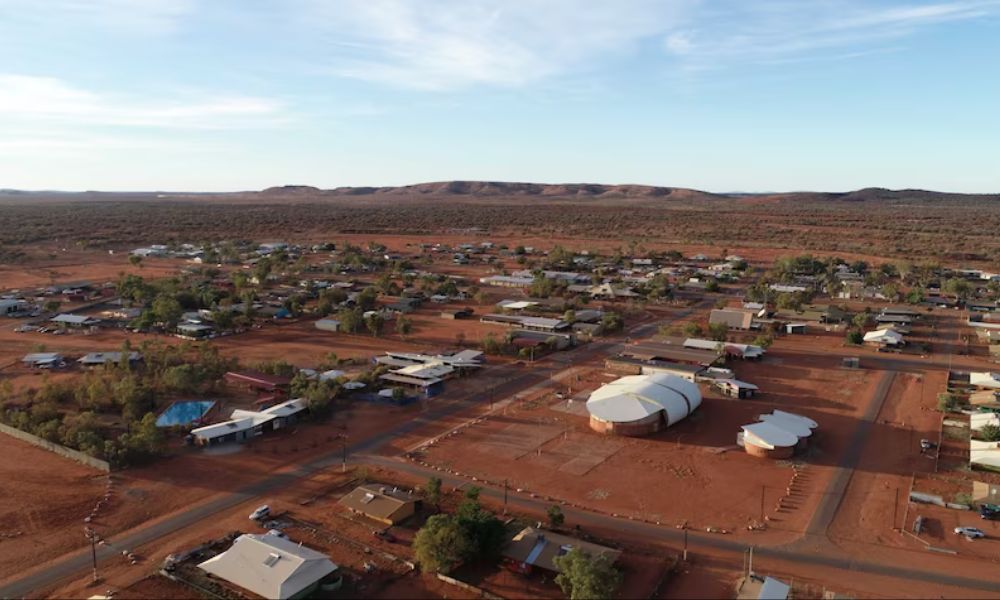
Yuendumu is the best-known Warlpiri art community and the centre most closely associated with Warlukurlangu Artists. Located north-west of Alice Springs, the community became internationally recognised through artists such as Dorothy Napangardi, Judy Watson Napangardi, and Paddy Japaljarri Sims.
Yuendumu painting traditions are especially associated with Mina Mina Dreamings, ceremonial movement, symbolic geography, and highly refined abstraction.
Lajamanu
Lajamanu developed as another major centre of Warlpiri painting. Artists from the community are often associated with strong ceremonial imagery and minimalist symbolic forms connected to ancestral movement across Country.
Turkey Tolson Tjupurrula became one of the most important painters associated with the region.
Willowra
Willowra artists maintain strong connections to older ceremonial traditions and inherited Jukurrpa narratives. Paintings from the region frequently depict food-gathering Dreamings, sacred water places, and travelling ancestors connected to desert Country.
Nyirripi
Nyirripi is one of the more remote Warlpiri communities and has become known for energetic compositions and strong linear movement. Many Nyirripi paintings combine ceremonial symbolism with highly contemporary forms of abstraction.
Warlpiri Dreaming Stories, Symbols, and Iconography
Jukurrpa forms the spiritual foundation of Warlpiri Art. More than mythology or folklore, Jukurrpa describes the ancestral creation period in which powerful beings travelled across the landscape creating sacred sites, waterholes, ceremony, kinship systems, and the laws governing relationships between people and Country.
Many Warlpiri paintings depict inherited Dreaming narratives connected to Kangaroo, Emu, Snake, Water, Fire, and women’s ceremonial Dreamings. Rather than illustrating these stories literally, artists often map them symbolically through complex systems of pattern, movement, and ceremonial design derived from body painting, sand mosaics, and sacred ground imagery.
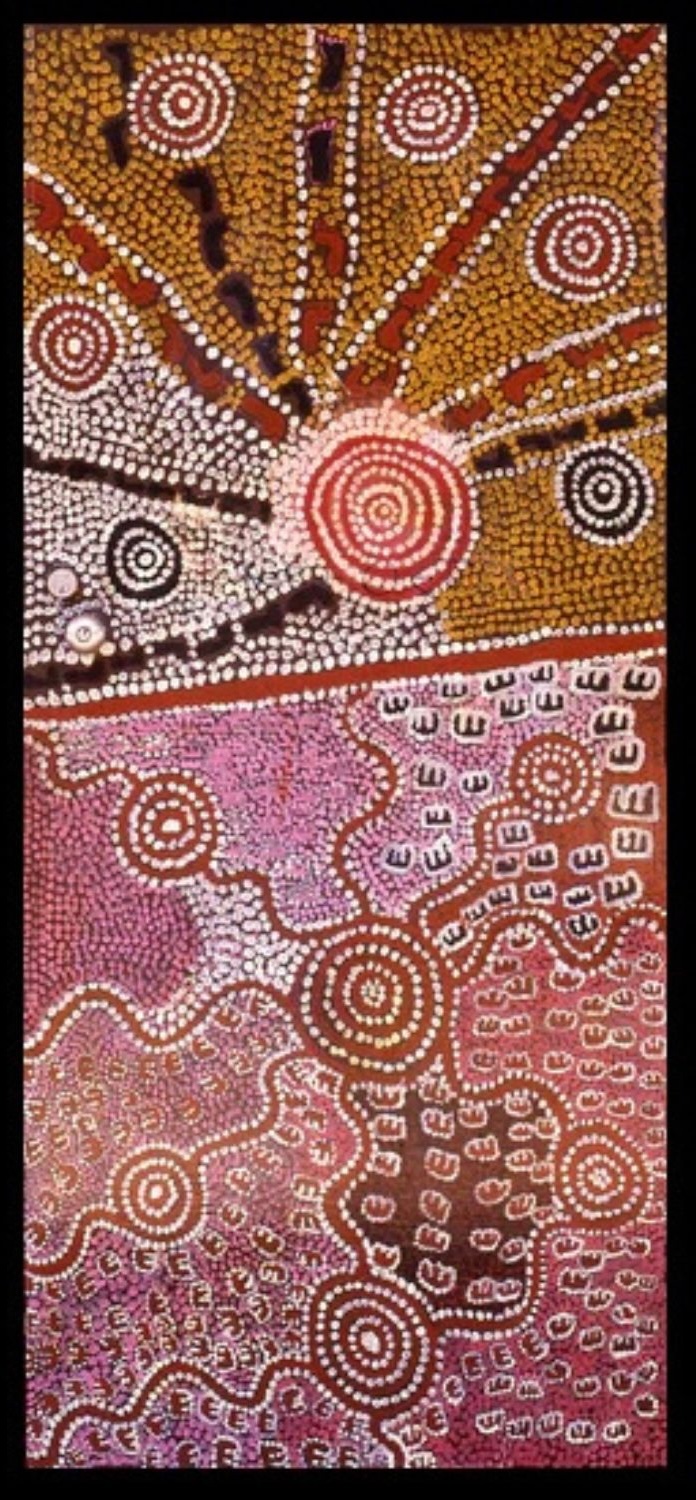
Warlpiri painting is built upon a highly sophisticated symbolic language. The most recognisable motif is the concentric circle, which commonly represents waterholes, campsites, ceremonial places, or sacred locations associated with ancestral events. Connecting lines may indicate travelling ancestors, ceremonial pathways, or songlines crossing the desert landscape.
Curving forms and repeated linear movement can describe sandhills, floodwaters, smoke, wind, rain, or topographic movement across Country. Animal tracks are also important symbolic forms and may refer to Kangaroo or Emu Dreamings and ancestral journeys tied to specific sites and ceremonies.
Many paintings use dense dotting and repeated patterning to create visual rhythm and layered meaning. These techniques evolved from older ceremonial traditions in which designs were painted onto the body or traced into the ground during ritual performance.
Importantly, symbols within Warlpiri Art rarely possess fixed meanings. A single motif may change according to context, Dreaming, ceremony, kinship, gender, or custodianship. Many paintings therefore contain multiple levels of interpretation, with public meanings visible to general viewers while deeper ceremonial knowledge remains culturally restricted.
Today Warlpiri painting is recognised as one of the most intellectually sophisticated symbolic traditions within contemporary Aboriginal Australian art, combining abstraction, ancestral mapping, ceremony, and spiritual geography into a living visual language connected to Country and Jukurrpa.
How Warlpiri Art Differs from Papunya Painting
Warlpiri Art and Papunya Tula painting belong to the broader Western Desert movement, but they developed through different communities and cultural traditions.
Papunya Tula painting emerged first during the early 1970s and is strongly associated with Pintupi, Luritja, and related desert artists. Early Papunya works often used tightly structured dotting, ceremonial geometry, and densely encoded imagery.
Warlpiri painting developed later around communities such as Yuendumu and Lajamanu. While connected to the same ceremonial foundations, Warlpiri artists frequently explored more expansive compositions, flowing movement, stronger colour relationships, and highly rhythmic patterning.
The institutional history also differs. Papunya Tula Artists became the major organisation associated with the original Papunya movement, while Warlukurlangu Artists became central to the rise of Warlpiri painting.
In simple terms, Papunya Tula explains the beginning of Western Desert acrylic painting, while Warlpiri Art represents one of the great regional traditions that evolved from that movement.
The Yuendumu Doors and Their Importance
The Yuendumu Doors are regarded as one of the defining achievements in the history of Aboriginal Australian art and a foundational moment in the emergence of Warlpiri painting within the wider Western Desert Art movement.
Created in 1984 at the Warlpiri community of Yuendumu in Central Australia, the project involved senior Warlpiri men and women painting Dreaming narratives directly onto the doors of the local school. The works transferred ceremonial iconography traditionally associated with body painting, sand mosaics, and sacred ground designs into large-scale permanent painted form.
The doors depict numerous ancestral narratives connected to Warlpiri and neighbouring Anmatyerre Country, including major ceremonial sites, travelling ancestors, waterholes, and important Jukurrpa pathways extending across the desert landscape. Many of the designs were painted by senior custodians responsible for those Dreamings, giving the project exceptional cultural authority.
Importantly, the Yuendumu Doors were not created as decorative murals for outsiders. They were intended as educational and cultural works for the community itself. At a time when younger generations were increasingly educated within Western schooling systems, the doors helped maintain the transmission of Warlpiri law, ceremony, geography, and cultural identity through visual form. In this sense, the project functioned simultaneously as art, cultural teaching, and ceremonial preservation.
The doors also marked an important transformation within Aboriginal painting traditions. For thousands of years many ceremonial designs had existed in temporary forms — painted onto the body, traced into sand, or created during ritual performance before disappearing again. The Yuendumu project demonstrated how these ceremonial systems could successfully move into permanent contemporary painting while retaining cultural integrity and meaning.
Visually, the Yuendumu Doors contain many of the artistic characteristics that would later become strongly associated with Warlpiri Art itself: rhythmic patterning, concentric circles, travelling lines, symbolic mapping, and highly abstract representations of ancestral movement across Country. The project therefore became both a cultural statement and an artistic blueprint for later generations of Warlpiri painters.
The success of the Yuendumu Doors also helped establish Yuendumu as one of the major centres of contemporary Aboriginal painting and laid important foundations for the later rise of Warlukurlangu Artists. Many senior artists associated with the project would influence the next generation of internationally recognised Warlpiri painters, including Dorothy Napangardi, Judy Watson Napangardi, and other artists connected to the Yuendumu painting movement.
Today the Yuendumu Doors are recognised not only as culturally significant ceremonial works, but as one of the great collaborative achievements of modern Australian art. They remain among the clearest demonstrations of how contemporary Aboriginal painting emerged directly from ancient ceremonial traditions while continuing to preserve living connections to Country, Jukurrpa, and community identity.
The Most Important Warlpiri Artists
Dorothy Napangardi
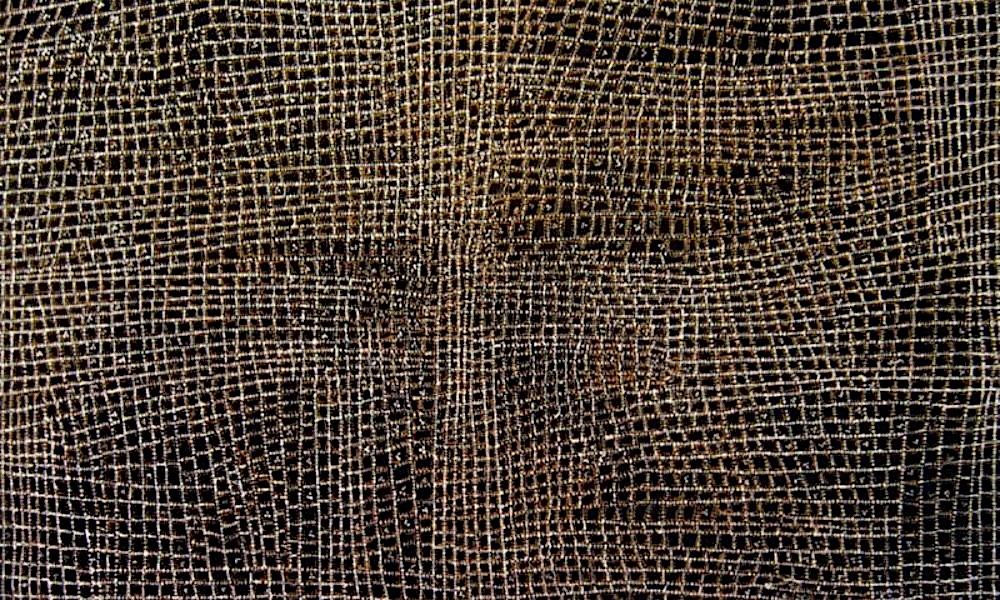
Dorothy Napangardi is widely regarded as one of the greatest Aboriginal painters of the modern era. Her celebrated Mina Mina paintings transformed ceremonial mapping into vast fields of movement and abstraction using intricate white-dot networks across dark surfaces.
Judy Watson Napangardi
Judy Watson Napangardi became known for vibrant colour, dragged-dot techniques, and complex depictions of women’s Dreamings associated with Mina Mina.
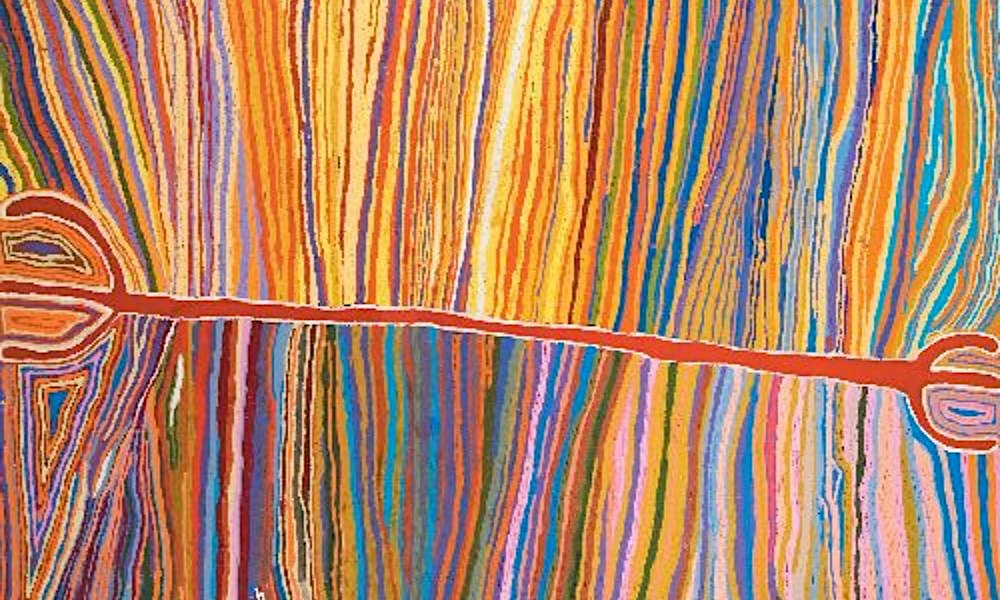
Maggie Watson Napangardi
Maggie Watson Napangardi helped establish many of the visual traditions later associated with Yuendumu painting, particularly women’s ceremonial imagery linked to Mina Mina Jukurrpa.
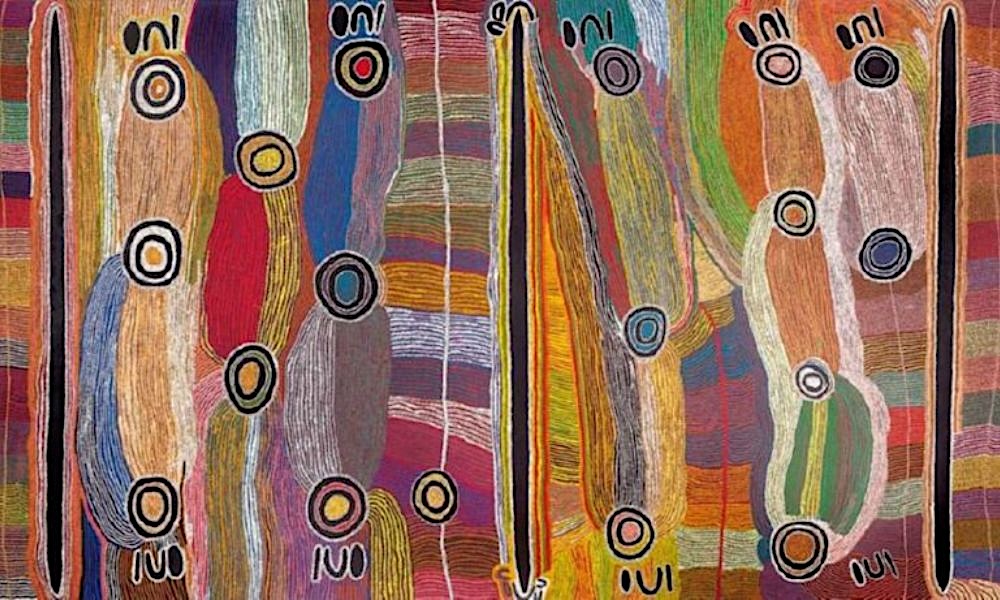
Women’s Ceremonial Painting Traditions in Warlpiri Art
Women’s ceremony played a central role in shaping the visual language of Warlpiri painting. Many contemporary works derive directly from body painting designs, sand mosaics, and ritual performances associated with women’s Dreamings.
One of the most important is Mina Mina Jukurrpa, a major women’s ancestral narrative associated with travelling ceremonial groups moving across desert Country.
Paintings linked to Mina Mina often use repeated linework, concentric circles, flowing movement, and dense fields of dots to represent dancing tracks, digging sticks, sacred sites, vegetation, and ancestral pathways.
The rise of senior women painters during the late twentieth century transformed international perceptions of Aboriginal painting. Artists such as Dorothy Napangardi demonstrated that ceremonial design traditions could operate simultaneously as ancestral mapping and major contemporary abstraction.
Warlukurlangu Artists and the Global Rise of Warlpiri Art
Warlukurlangu Artists at Yuendumu became one of the most influential Aboriginal-owned art centres in Australia.
Established during the 1980s, the organisation helped support artists professionally while preserving cultural authority over Dreaming stories and ceremonial imagery. Unlike many commercial galleries, Warlukurlangu remained community controlled.
As international interest in Aboriginal Art increased during the late twentieth century, Warlukurlangu Artists helped introduce Warlpiri painting to museums, collectors, and galleries across Europe, Asia, and the United States.
The success of artists such as Dorothy Napangardi and Mitjili Napurrula established Warlpiri painting as one of the most respected forms of contemporary Indigenous abstraction.
Collecting and Identifying Authentic Warlpiri Art
Warlpiri paintings are highly sought after by collectors because they combine cultural depth with visually powerful abstraction.
The strongest collector demand is usually focused on senior artists associated with Yuendumu, Lajamanu, and Warlukurlangu Artists. Early paintings from the 1980s and 1990s are increasingly valued, particularly works connected to major ceremonial custodians or historically significant exhibitions.
Authentic Warlpiri paintings are generally identifiable through provenance, community origin, artist attribution, and stylistic consistency with recognised ceremonial traditions.
Reliable works are usually acquired through established Aboriginal art centres or reputable galleries specialising in Aboriginal Art. Documentation may include certificates of authenticity, exhibition history, or catalogue references linking the work directly to the artist and community.
Collectors should also understand that genuine Warlpiri Art is not simply decorative dot painting. Many important works use linework, ceremonial geometry, dragged-dot techniques, or minimalist symbolic structures connected to specific Dreamings and ancestral narratives.
Why Warlpiri Art Became Internationally Important
Warlpiri Art became internationally important because it introduced global audiences to a unique form of abstraction rooted in living cultural traditions.
The visual power of Warlpiri painting — rhythmic movement, layered patterning, symbolic mapping, and vast spatial compositions — resonated strongly with contemporary art audiences already familiar with abstraction and minimalism.
At the same time, these works remained connected to ceremony, language, kinship systems, and ancestral law. International museums and collectors increasingly recognised that Aboriginal painting was not ethnographic craft, but a major contemporary art movement with intellectual and aesthetic depth.
The rise of Warlukurlangu Artists, together with the success of artists such as Dorothy Napangardi, helped transform global understanding of Aboriginal Art during the late twentieth century.
Today Warlpiri painting is regarded among the defining traditions of contemporary Australian art and one of the world’s most sophisticated forms of symbolic abstraction.
Warlpiri Art and Western Desert Art: What Is the Difference?
Western Desert Art is the broader movement that emerged across Central Australia during the 1970s. It includes many regional traditions connected through shared ceremonial origins and Dreaming-based symbolism.
Warlpiri Art is one important branch within this movement, specifically connected to Warlpiri communities such as Yuendumu, Lajamanu, Willowra, and Nyirripi.
All Warlpiri painting belongs to Western Desert Art, but not all Western Desert Art is Warlpiri.
Papunya Tula painting is often associated with Pintupi artists and early ceremonial imagery from Papunya. Utopia painting developed differently again through batik traditions and later acrylic painting movements associated with artists such as Emily Kame Kngwarreye.
Warlpiri Art is distinguished by its strong ceremonial movement, women’s Dreamings, symbolic geography, and close association with Warlukurlangu Artists.
Further Reading on Warlpiri Art and Culture
Books on Warlpiri Art and Western Desert Painting
- Icons of the Desert: Early Aboriginal Paintings from Papunya
- Yuendumu Doors: Paintings and Stories from the Central Australian Desert
- Warlpiri Women’s Voices
- Dreamings: The Art of Aboriginal Australia
- Papunya: A Place Made After the Story
- The Art of the Western Desert
Major Warlpiri Artists to Research
- Dorothy Napangardi
- Judy Watson Napangardi
- Mitjili Napurrula
- Turkey Tolson Tjupurrula
- Maggie Watson Napangardi
- Paddy Japaljarri Sims