Charlie Numbelmoore: Master of the Wandjina
Charlie Numbelmoore (also spelled Numbulmoore) stands among the most significant Aboriginal artists of the Kimberley region and is widely regarded as a foundational figure in the visual interpretation of the Wandjina ancestral spirits. His work—distinct, spiritual, and powerful—encapsulates the enduring cultural authority of Worrorra, Ngarinyin, and Wunambal peoples. Renowned for his bark paintings of Wandjina, Numbelmoore played a pivotal role in transitioning these ancient Dreaming figures from the sandstone caves of the north-west Kimberley onto portable surfaces—ensuring their preservation and proliferation beyond Country.
This article serves both as an expert resource and as a guide for collectors looking to identify a genuine Charlie Numbelmoore painting, with a focus on style, iconography, surfaces used, and his biographical legacy. If you possess a Charlie Numbelmoore Wandjina painting, or wish to know its value, you are encouraged to contact us or send a high-resolution JPEG for appraisal.
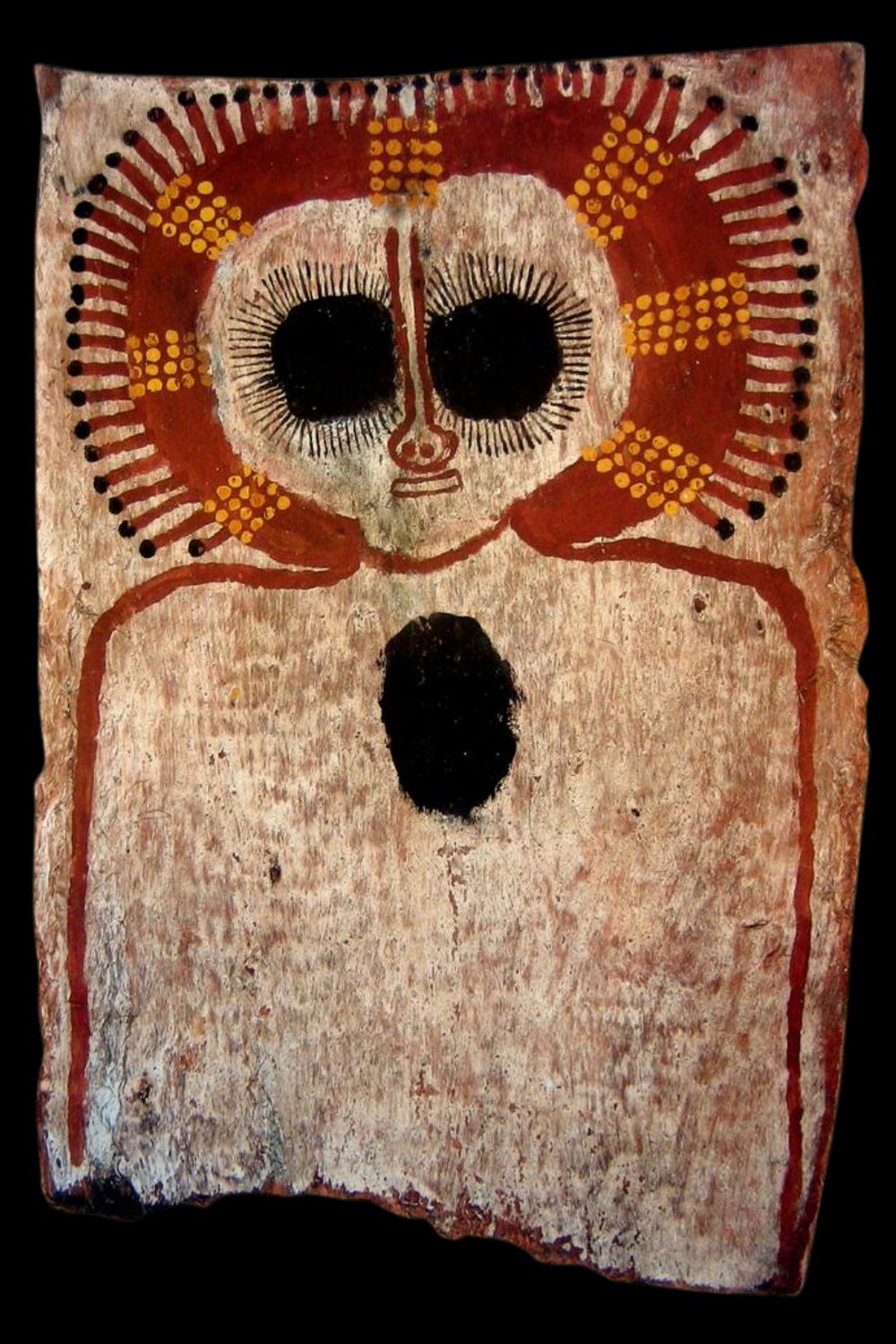
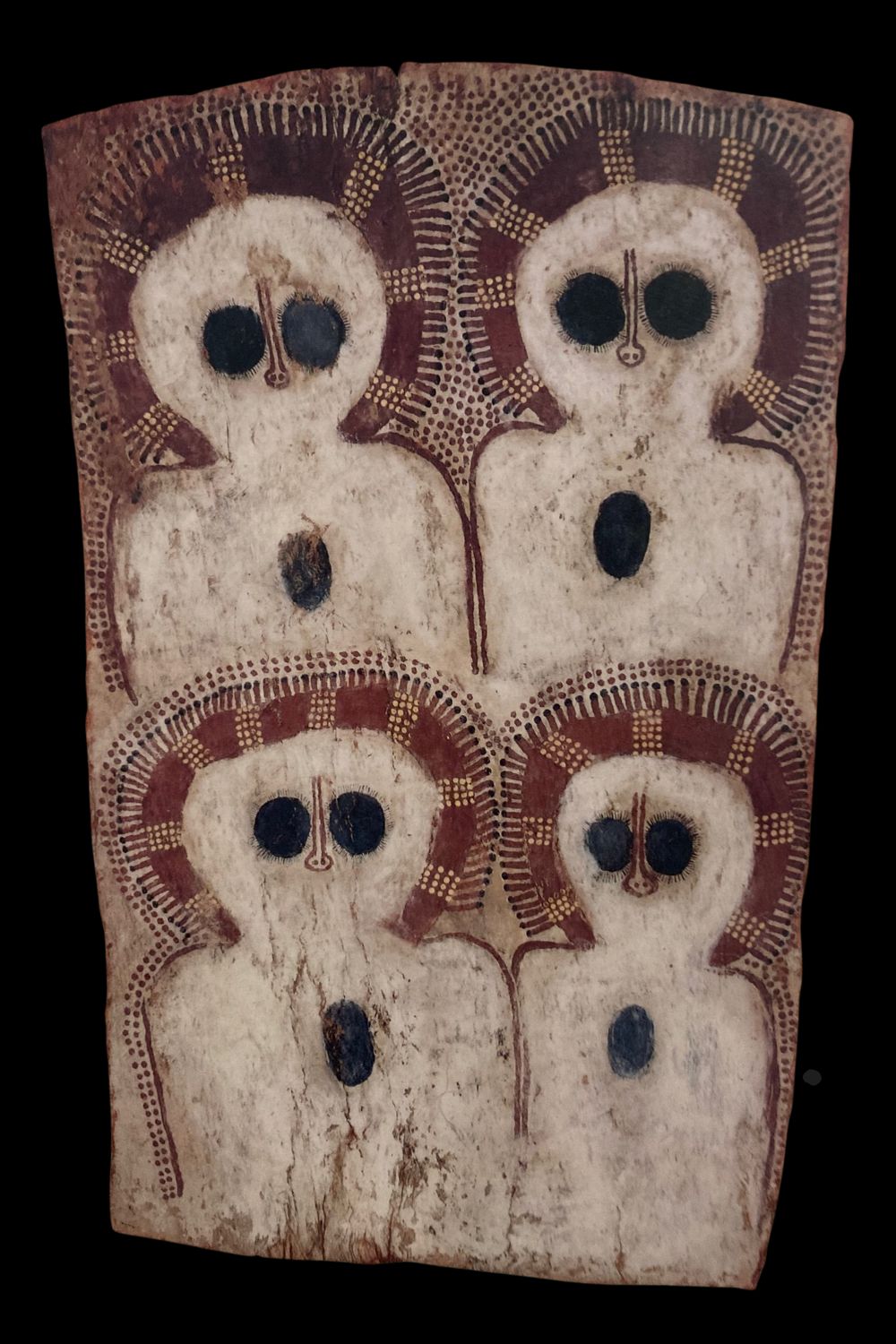
Wandjina Iconography: Numbelmoore’s Signature Style
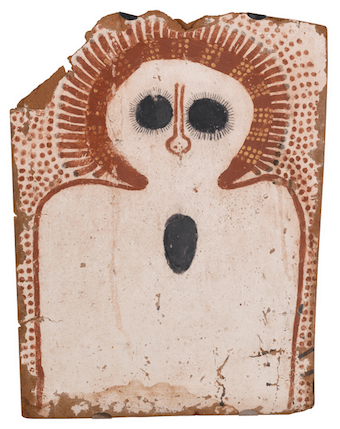
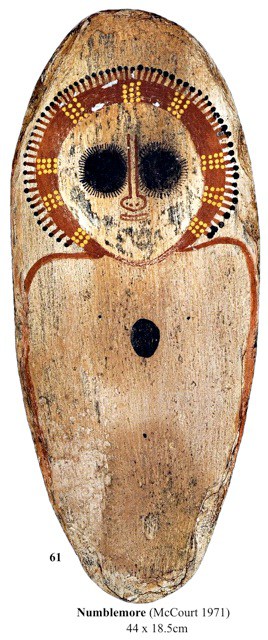
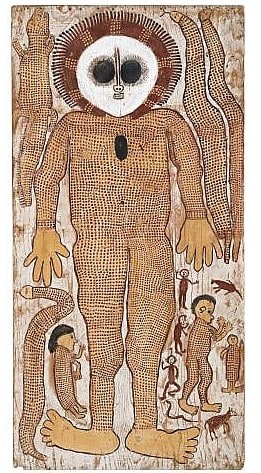
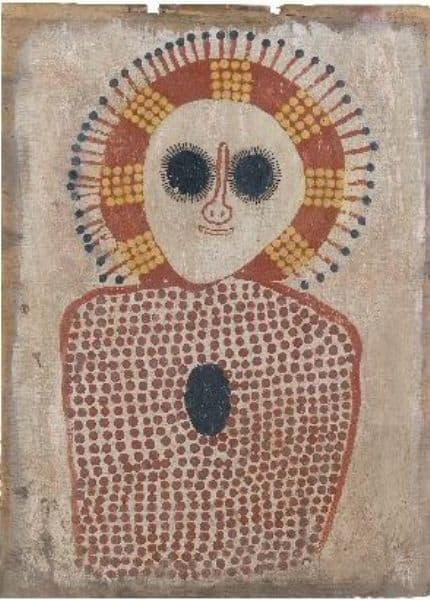
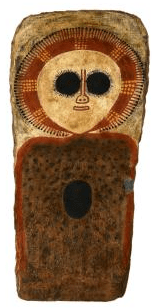
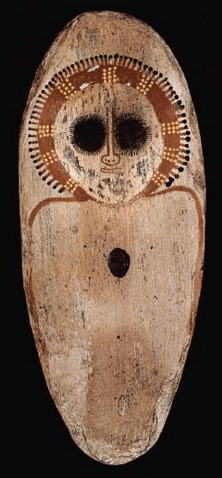
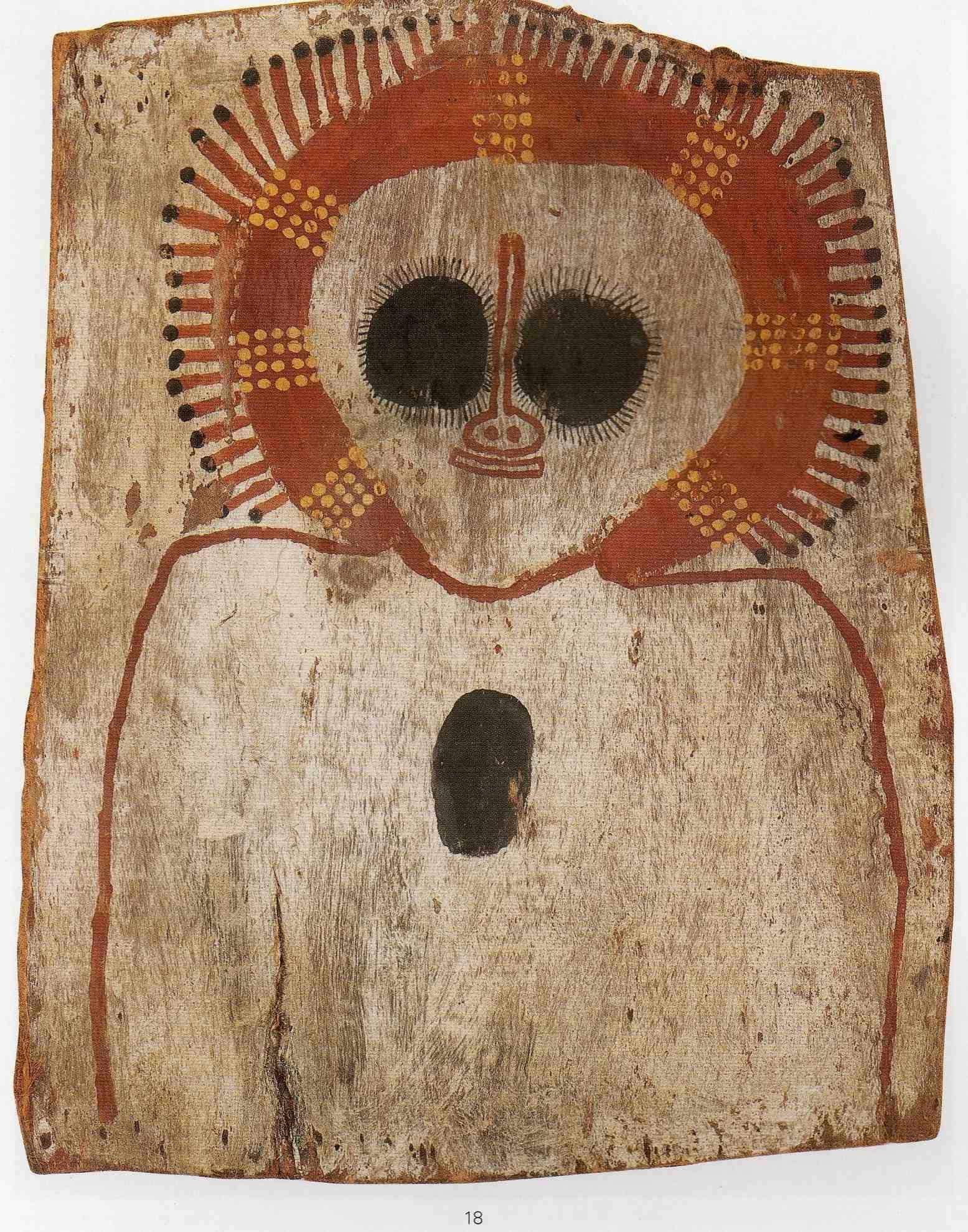
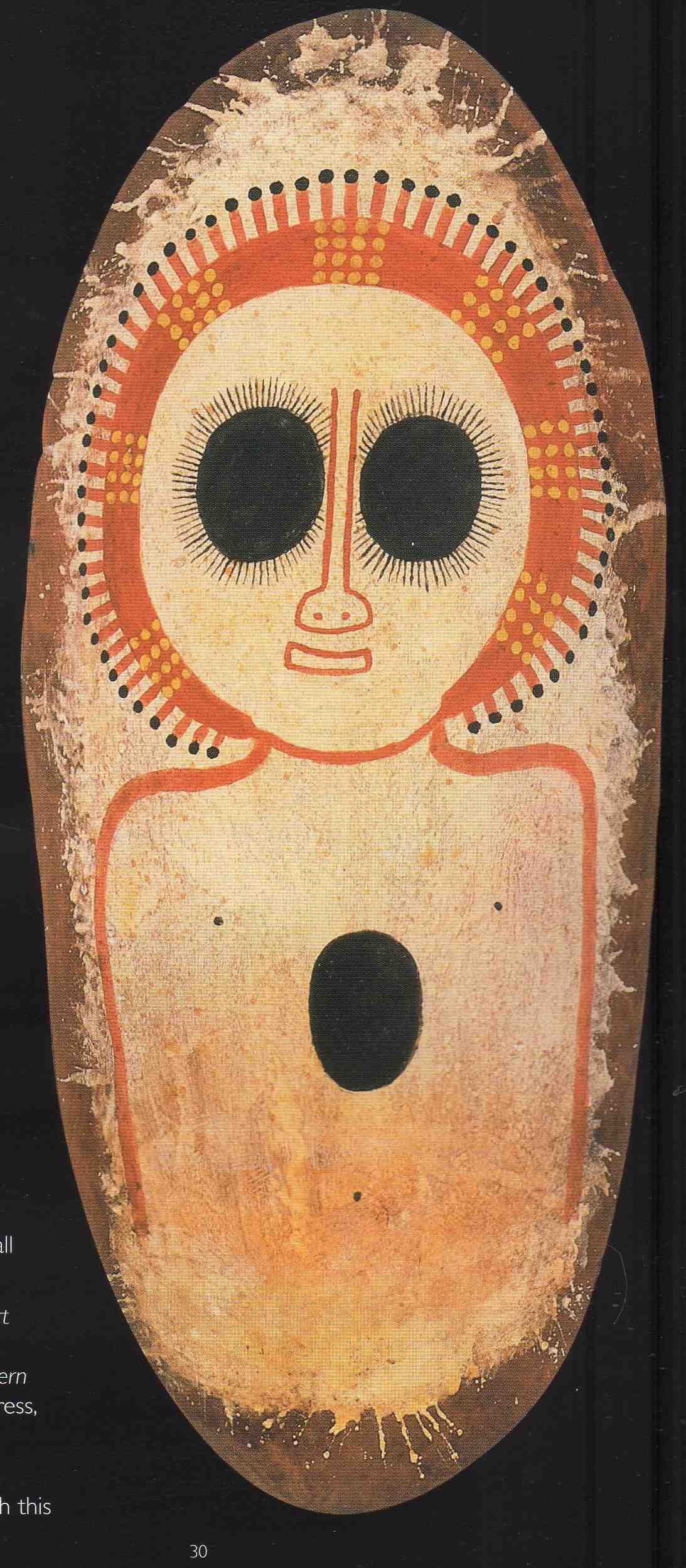
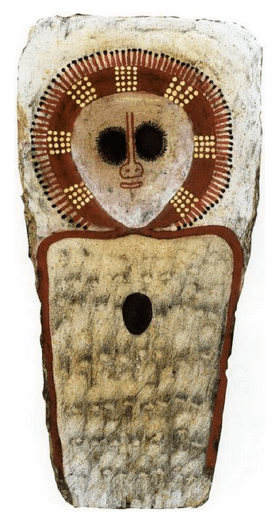
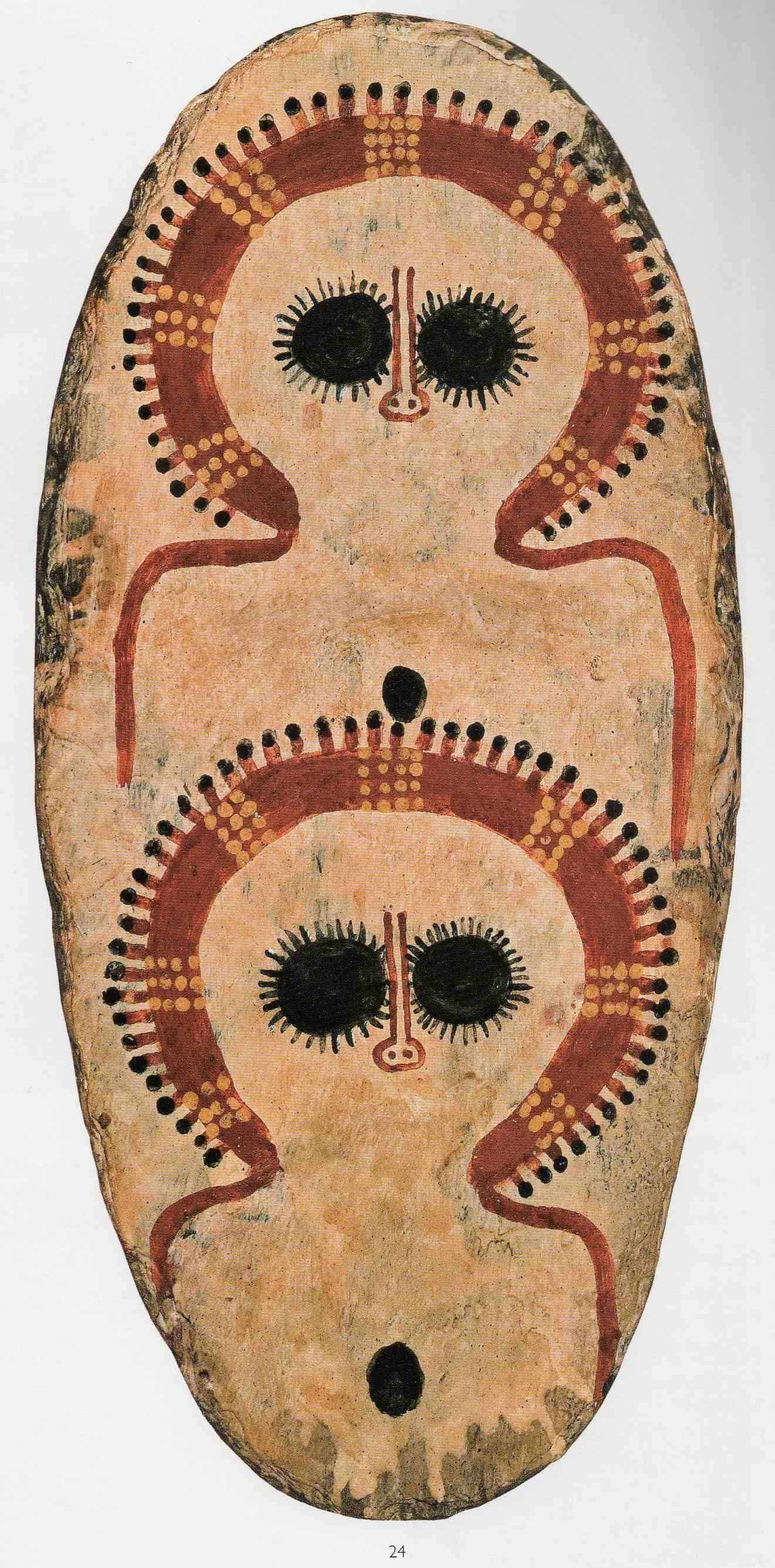
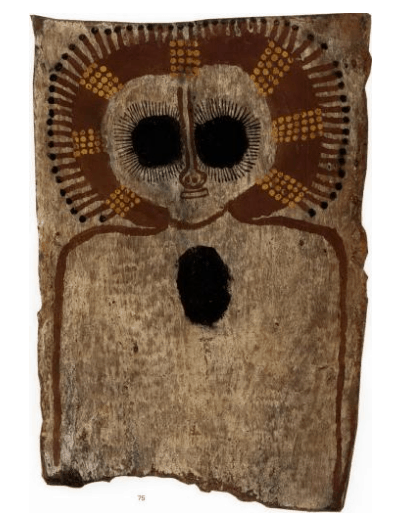
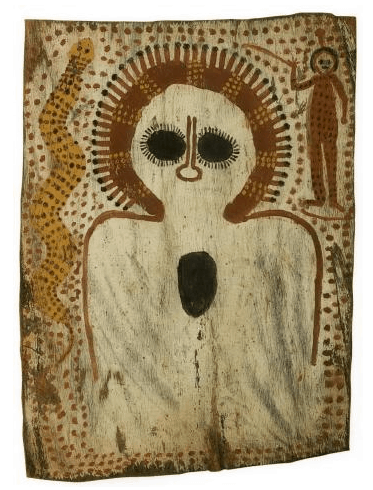
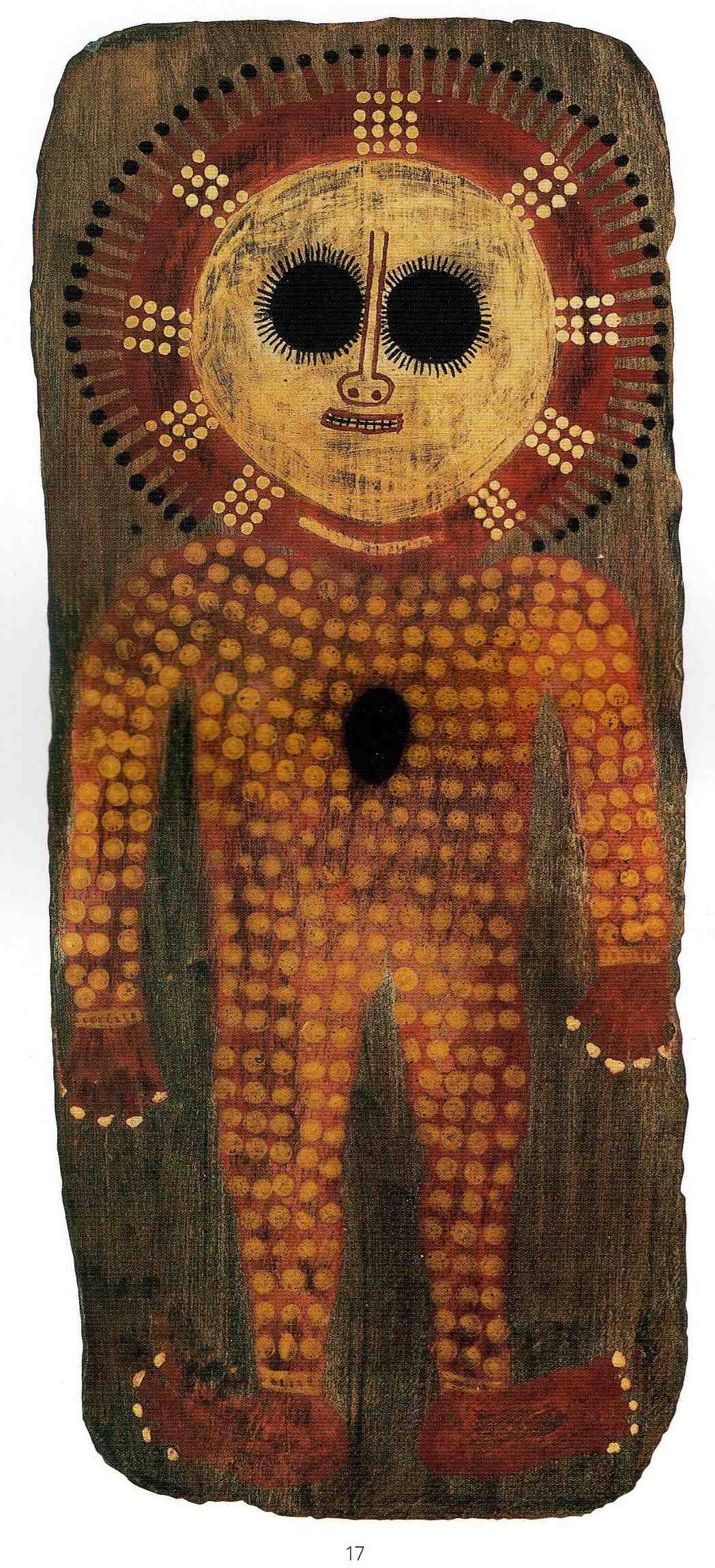
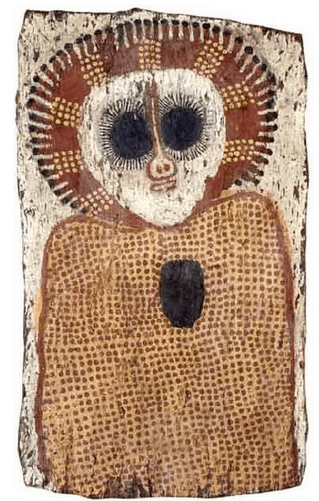
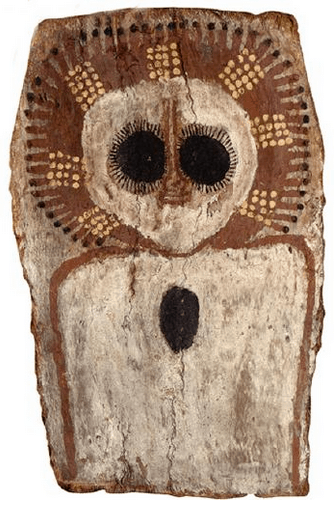
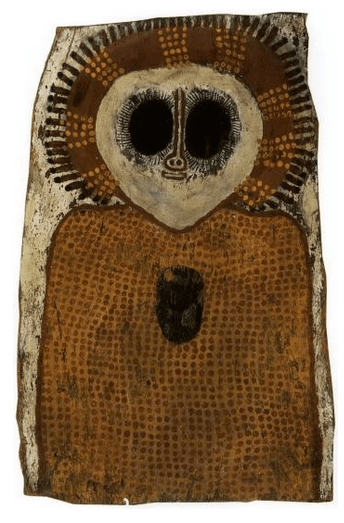
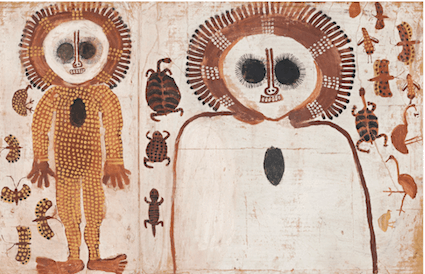
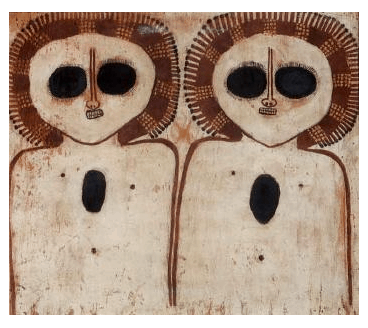
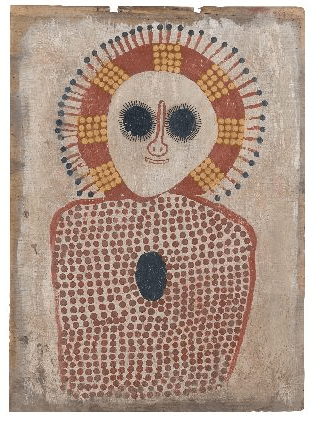
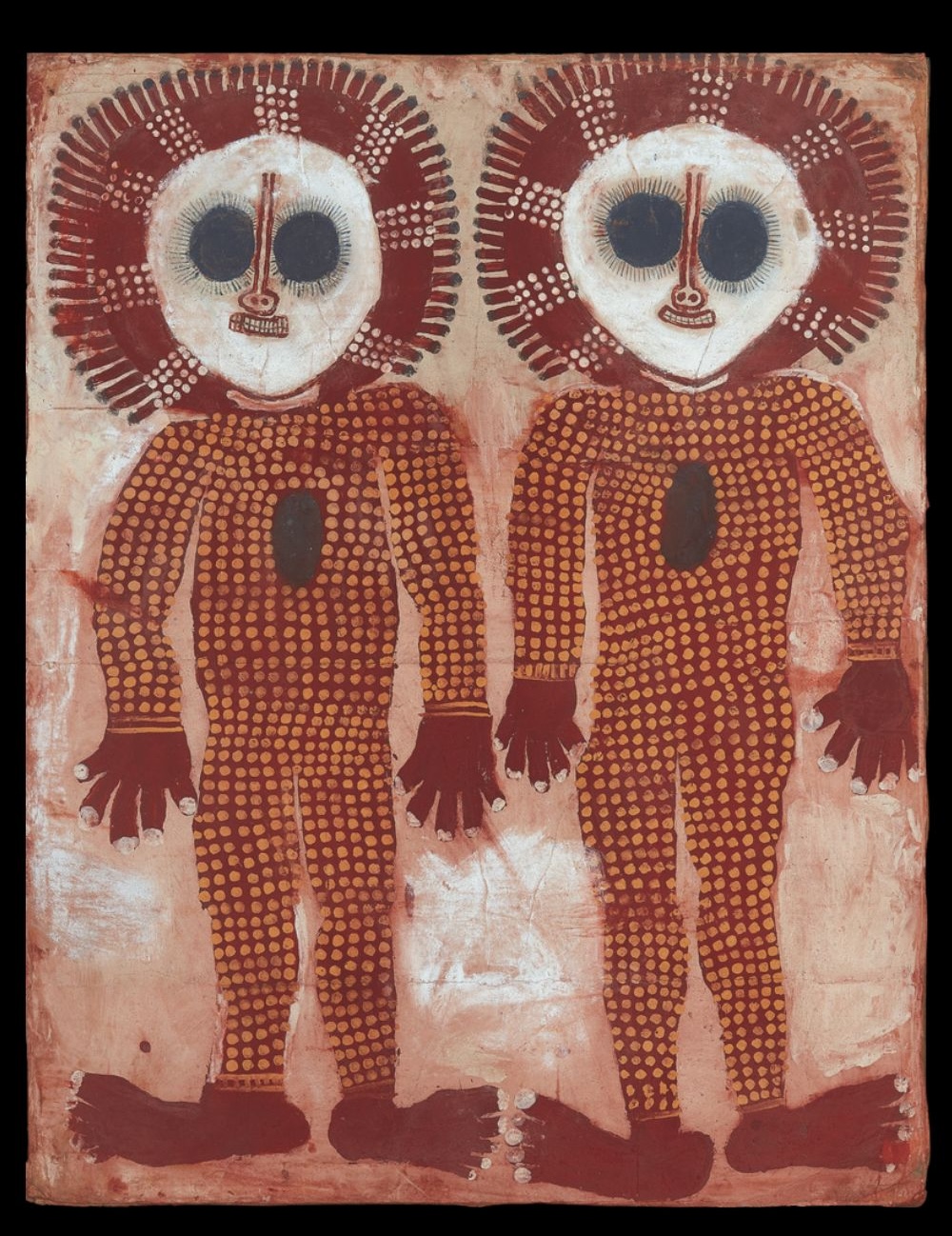
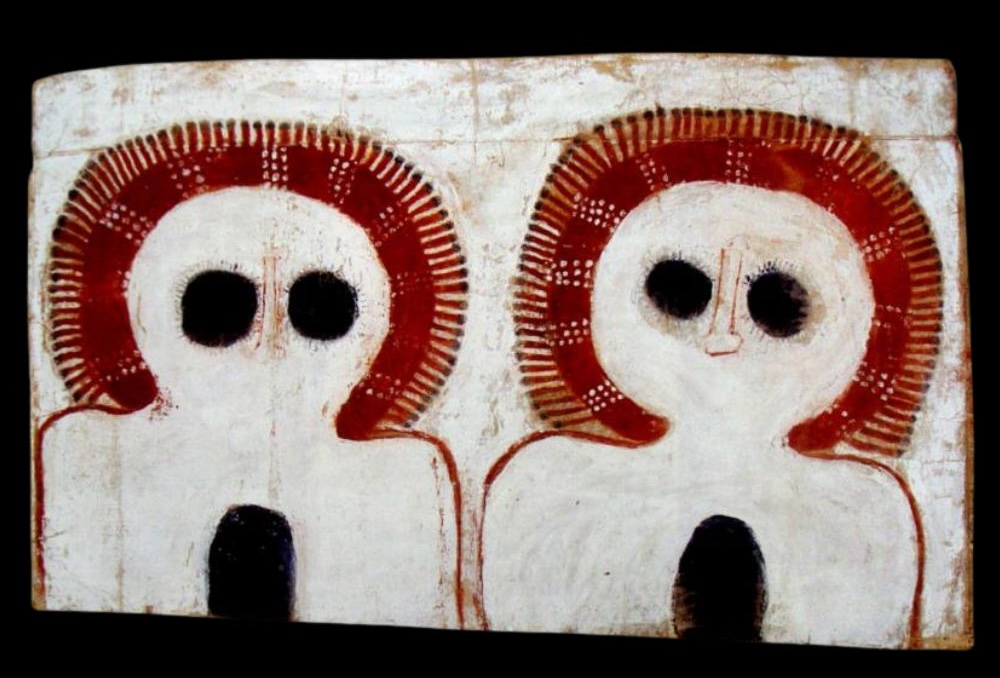
Charlie Numbelmoore’s paintings of Wandjina are instantly recognizable for their graphic clarity, bold spiritual intensity, and highly distinctive facial features.
Key Characteristics of Charlie Numbelmoore’s Wandjina Paintings:
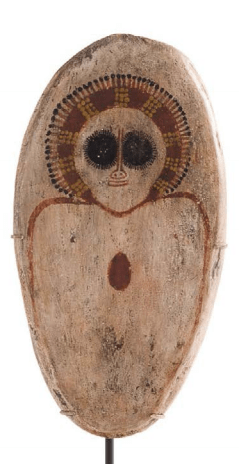
- Eyes: Large, black, circular eyes dominate the face, framed by a delicate fringe of eyelashes. These eyes convey power, watchfulness, and presence.
- Nose: A thin, parallel-sided nose flares dramatically at the tip—often in black or red—lending the face a commanding central axis.
- Mouth: Notably, many of Numbelmoore’s later Wandjina figures include a small mouth. This is highly unusual, as traditional Wandjina iconography often omits mouths to avoid invoking continuous rain. The inclusion of a mouth reflects influence from Western anthropologists or collectors.
- Headdress/Halo: The head is typically encircled with a tripartite halo—red, yellow, and white bands interpreted as clouds, lightning, and spiritual energy.
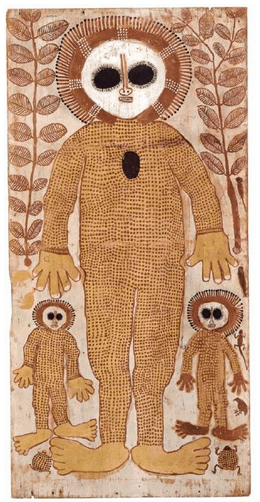
- Chest Marking: The sternum or “heart” of the Wandjina is depicted as an oval-shaped black or red form, symbolizing a pearl shell pendant (riji) or the seat of spiritual essence.
This distinctive combination of features helps to authenticate a Charlie Numbelmoore Wandjina painting, distinguishing it from the works of his contemporaries.
Comparison With Other Wandjina Artists
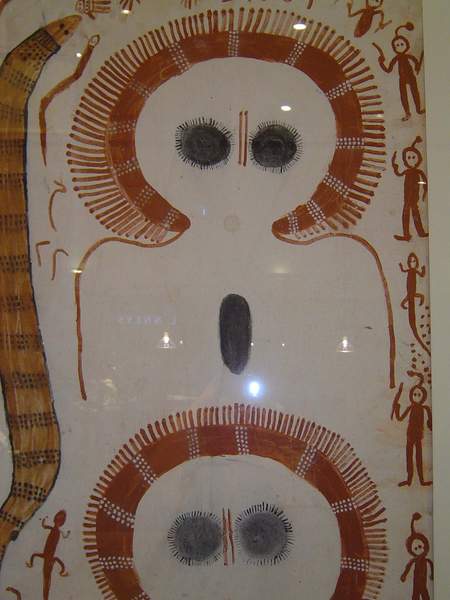
Despite Charlie Numbelmoore and Alec Mingelmanganu producing some of the most important and valuable Wandjina paintings from the Kimberley, their artistic approaches could hardly be more different. Charlie Numbelmoore placed enormous emphasis on the face of the Wandjina, typically depicting large round black eyes framed by delicate eyelashes and arranged within highly symmetrical compositions. By contrast, Alec Mingelmanganu’s Wandjina figures are generally more expansive and physically dominant across the surface of the bark or board. Alec often reduced the scale of the eyes, rendering them as two opposing arch-like forms separated by a thin vertical nose, creating a far more abstract and spiritually charged appearance.
Waigin Djanghara, who worked during the same period, also employed rounded Wandjina eyes, though these were usually smaller and less visually dominant than Charlie Numbelmoore’s. Waigin’s halo forms also tend to be simpler and less elaborately structured, lacking the highly formalised concentric treatment characteristic of Charlie’s major works.
Charlie Numbelmoore’s Wandjina can also be distinguished from those painted by Mickey Bungkuni and Wattie Karruwarra. While both artists frequently depicted pronounced halo forms surrounding the Wandjina head, their halos usually expand dramatically upward, resembling feathered headdresses with elongated upper sections. Charlie Numbelmoore’s halos, by comparison, are generally more even and uniform in length around the head, reinforcing the controlled symmetry and graphic clarity that distinguish his paintings.
Materials and Mediums
While most collectors associate Numbelmoore with bark paintings, his artistic practice extended well beyond this medium. He worked prolifically in the 1970s, at a time when the Wandjina was being translated from cave walls to mobile surfaces for the first time.
Surfaces Used by Charlie Numbelmoore:
- Eucalyptus Bark: His barks, while sometimes coarsely prepared, possess spiritual gravity. The rough surfaces are adorned with ochres and charcoal, without fixatives—typical of Kimberley technique.
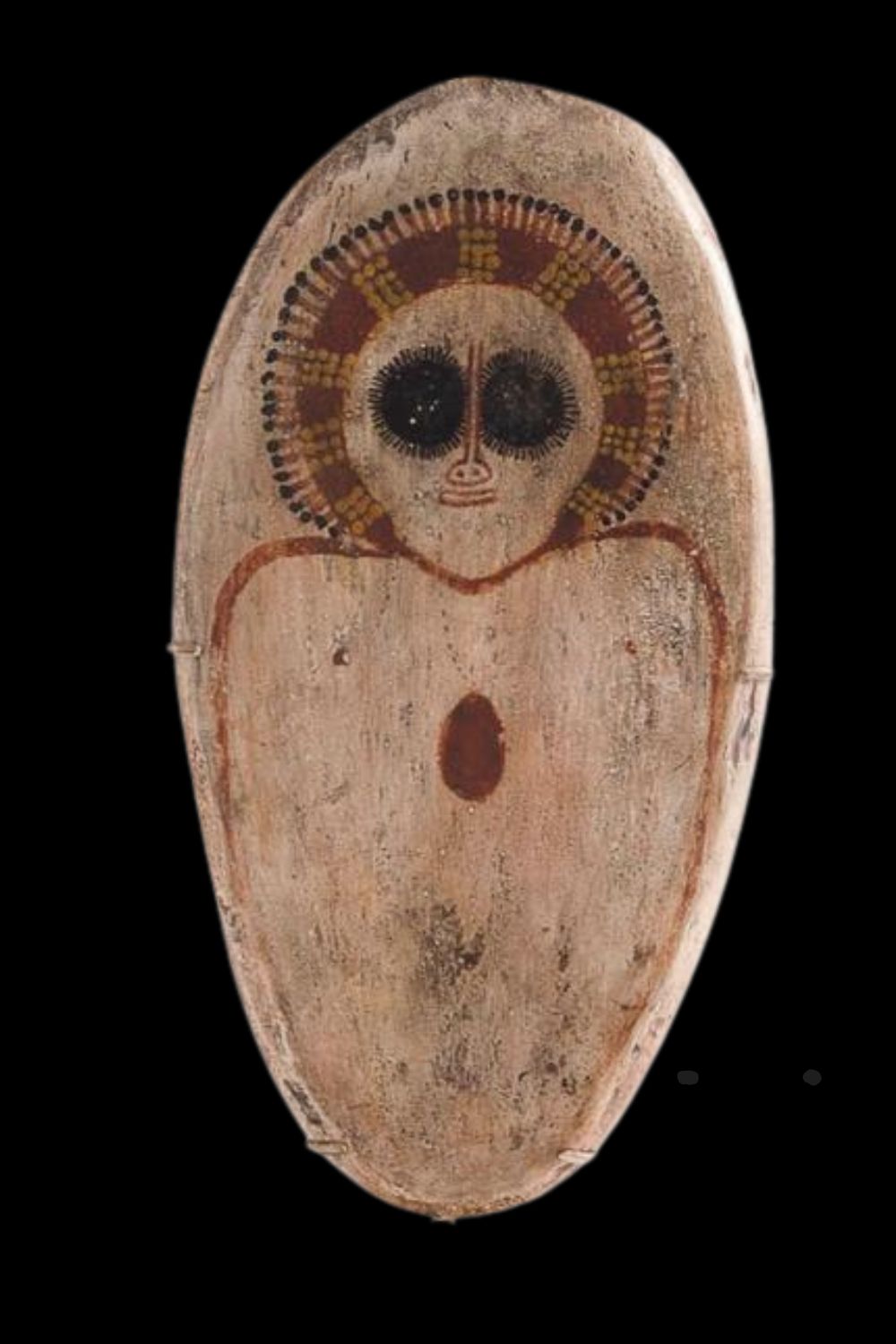
- Slate: A rare but durable medium, slate offered a canvas-like smoothness and longevity.
- Coolamons: Shallow wooden vessels, often used in ceremony or daily life, were also painted by Numbelmoore.
- Composite Board & Cardboard: These humble materials, often discarded or repurposed, reflect both the resourcefulness and adaptability of early Kimberley artists engaging in trade.
Despite these portable forms, Numbelmoore never saw these paintings as replacements for rock art. As Ryan (1993) states, artists like Charlie regarded these works as “reproductions” of the true Wandjina—those that reside permanently in sacred rock shelters.
Origins and Biography
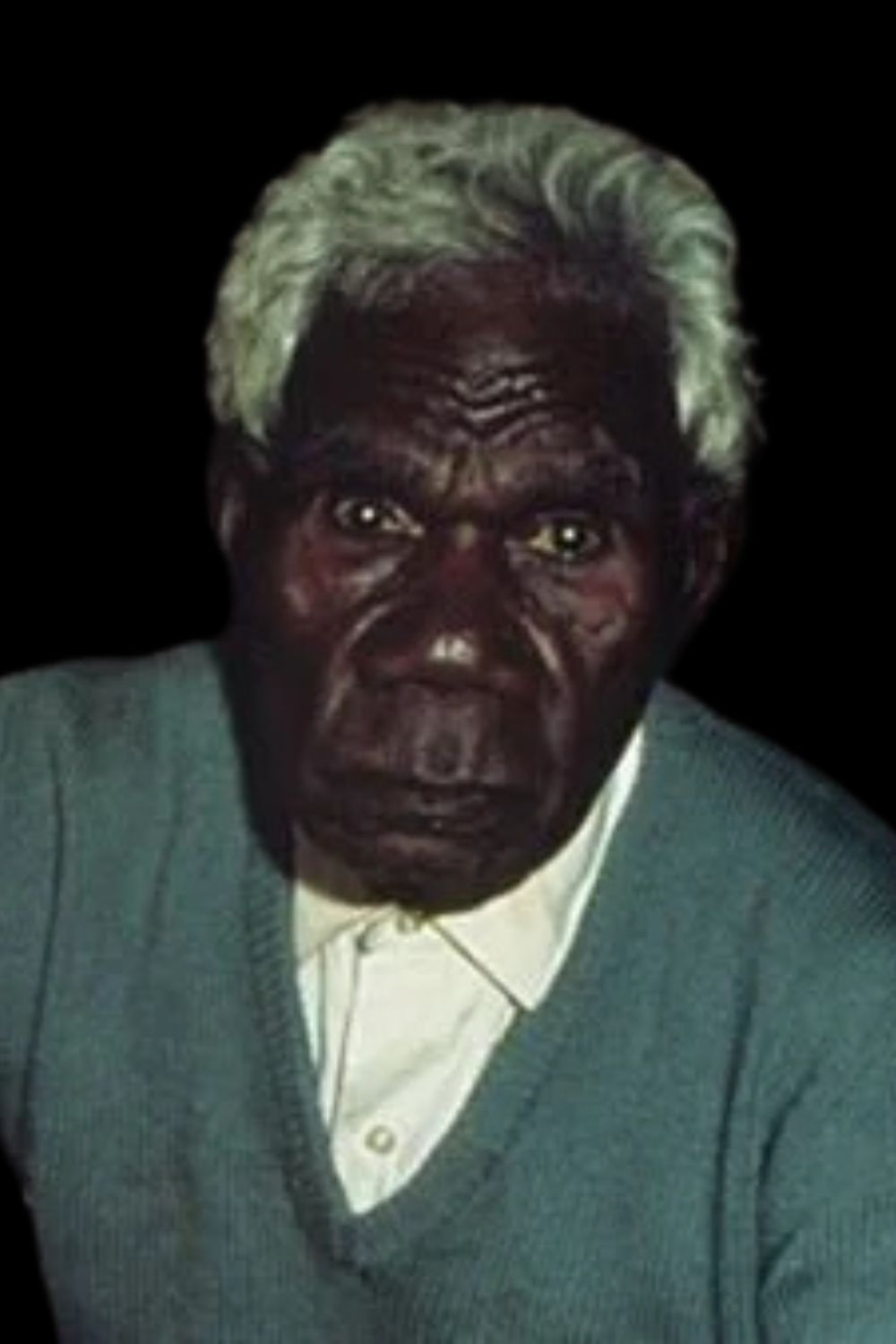
Charlie Numbelmoore was born near Gibb River Station in the Central Kimberley. Though formal biographical data is sparse—typical of early 20th-century Aboriginal artists—his presence is documented through the careful recordings of anthropologists and collectors. Ian Crawford first encountered Charlie in the 1960s, observing him retouching Wandjina figures in a Mamadai rock shelter. This act—quietly reverent, yet visually profound—was not merely artistic but spiritual: the repainting of Wandjina is a sacred responsibility, keeping the ancestral spirits “alive” within their Dreaming places.
Further documentation comes from Helen Groger-Wurm, who collected examples of Charlie’s bark paintings on behalf of the Australian Institute of Aboriginal Studies in 1970. The same year, Tom McCourt, a pastoralist and collector, visited Numbelmoore’s camp and acquired numerous paintings on bark, plywood, and cardboard. In his journal, McCourt reflected on the artist:
“The last of the old people here… who has that certain something that impresses you… when I was in Charlie’s camp, I bought several paintings he had in his hut… Although his work is childlike, it has the primitive look of paintings seen under the rock hangings out in the bush.”
(Sotheby’s, 2003)
Numbelmoore’s works are regarded as extensions of the rock art tradition, rather than deviations from it. His approach exemplifies the sacred, rather than the commercial, even as his art entered private and institutional collections.
If anyone reading this should have more biographical detail about Charlie numbelmoore I would love to hear from you. Please contact me through email.
The Power of Repainting: Cultural and Spiritual Meaning
The act of repainting Wandjina is at the heart of Numbelmoore’s practice. After one such retouching at a Mamadai cave, he is recorded as saying:
“I made you very good now… you must be very glad because I made yours eyes like new. That eye you know, like this my eye… I made them new for you people. My eye has life, and your eye has life too, because I made it new… don’t try bringing rain, my wife might drown with the rain.”
(Ryan, 1993)
This statement reveals much about his worldview: the interconnectedness of artist, spirit, and viewer. The Wandjina are not merely symbols; they are ancestral beings whose visual representation carries real consequence. Their eyes have life. Their presence invokes rain, law, and country. In painting them—whether on cave or cardboard—Charlie Numbelmoore was upholding the Law and fulfilling a sacred duty.
Context: Wandjina Art in the 1970s
Charlie Numbelmoore was among the first generation of Wandjina painters to transition these ancestral forms to non-sacred surfaces. Other Wandjina artists active in the 1970s include Alec Mingelmanganu, Jack Karedada, Djanghara, and Bungkuni. However, Numbelmoore’s style remains uniquely identifiable—his work being formalized, expressive, and deeply informed by his personal engagement with rock shelters.
Unlike the Arnhem Land bark painters—whose preparation techniques were refined and their materials curated—the Worrorra and Ngarinyin artists, including Charlie, often used what was available. Thus, many early Wandjina barks are irregular in surface, with pigments absorbed unevenly and european fixatives rarely used. This rawness, far from a flaw, is often cited as a mark of authenticity.
Collectability and Value
Today, original Charlie Numbelmoore Wandjina paintings are rare, especially those on bark or slate. His works have appeared in institutional collections and on the auction circuit—most notably through Sotheby’s Aboriginal Art sales in the early 2000s. When assessing a work’s value, provenance, condition, medium, and iconographic clarity are critical factors. His artworks vary from several thousand dollars for small examples on slate to tens of thousands of dollars for a large artwork on bark.
All images in this article are for educational purposes only.
This site may contain copyrighted material the use of which was not specified by the copyright owner.
Frequently Asked Questions About Charlie Numbelmoore
Why do some Charlie Numbelmoore Wandjina paintings include mouths?
Traditional Wandjina figures are usually depicted without mouths because, within Kimberley belief systems, mouths are associated with the power to bring continuous rain. Interestingly, some later Charlie Numbelmoore paintings include small mouths, making them unusual within Wandjina art.
While no definitive source confirms why Charlie introduced this feature, it may reflect outside influence associated with the growing anthropological and collector interest in portable Wandjina paintings during the late 1960s and 1970s. The inclusion of mouths therefore remains an unusual and important identifying characteristic within Charlie Numbelmoore’s body of work.
Did Charlie Numbelmoore repaint Wandjina caves?
Yes. Charlie Numbelmoore was documented repainting Wandjina figures within Kimberley rock shelters during the 1960s. Repainting Wandjina is not simply artistic restoration but a sacred act connected to maintaining the spiritual power and life-force of the ancestral beings associated with specific Country.
Are Charlie Numbelmoore paintings rare?
Yes. Genuine Charlie Numbelmoore paintings are now considered rare, particularly early bark and slate works with strong provenance. Many paintings were produced during the formative years of the Kimberley art movement and relatively few survive in excellent condition today.
Are Charlie Numbelmoore paintings valuable?
Charlie Numbelmoore’s paintings are highly sought after by collectors of early Aboriginal art. Value depends on factors such as medium, size, condition, provenance, subject quality, and exhibition history. Larger bark paintings and rare early slate works generally attract the strongest collector interest.
Charlie Numbelmoore Bark painting images
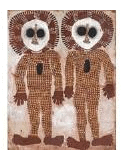
The following images are not a complete list of works by Charlie Numbelmoore. They do however give a good feel for the very distinctive style of this artist.