Munggurrawuy Yunupingu Yirrkala Bark Painter
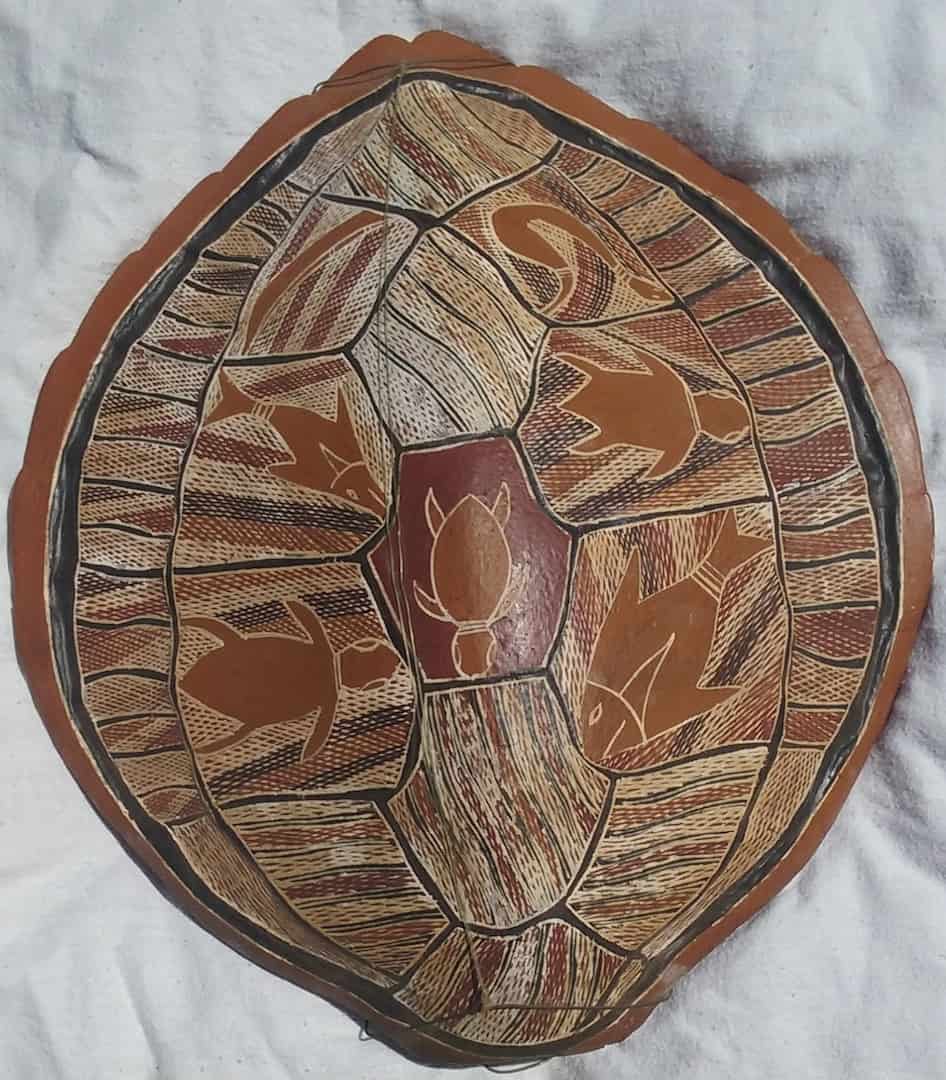
Munggurrawuy Yunupingu (c.1905–1979) was one of the pioneering figures in the development of Yirrkala Art and among the first Yolŋu artists to regularly produce bark paintings for sale to outside audiences. A senior leader of the Gumatj clan from north-east Arnhem Land, he was both a master bark painter and highly skilled sculptor whose work helped bring Yolŋu artistic traditions to national and international prominence during the mid twentieth century.
Based at Yirrkala and later Elcho Island, Munggurrawuy held important ceremonial authority over sacred ancestral narratives associated with the Djungguwan ceremony. Like Narritjin Maymuru, Mithinari Gurruwiwi and other major Yolŋu artists of his generation, he helped establish bark painting as one of the great artistic traditions of Aboriginal Australia while preserving and transmitting Yolŋu law through painting, carving, and ceremony.
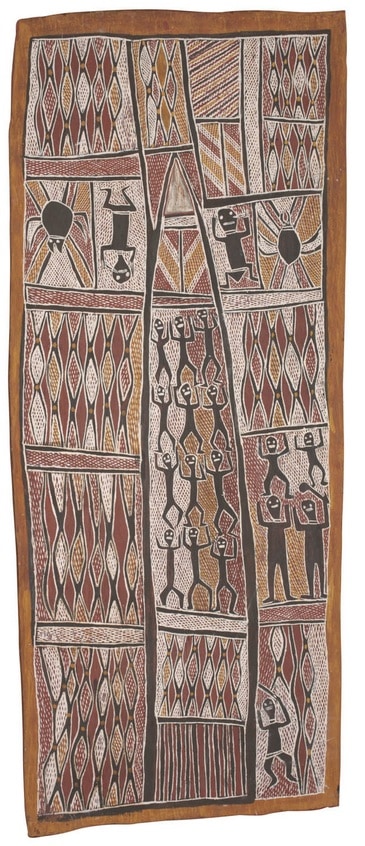
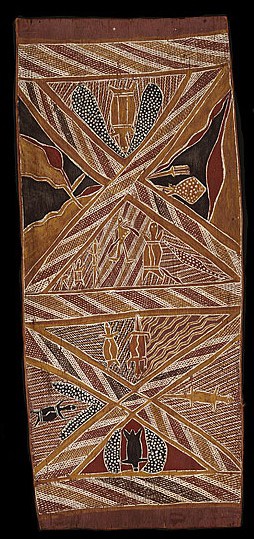
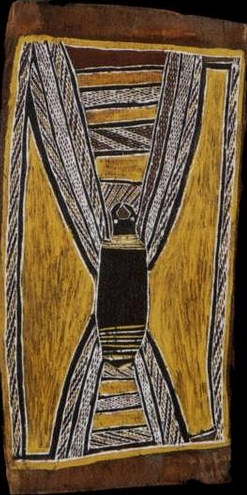
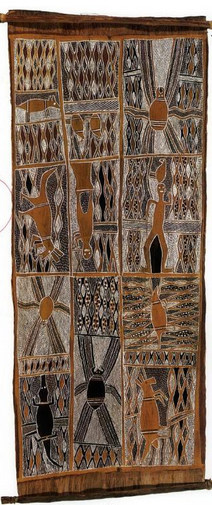
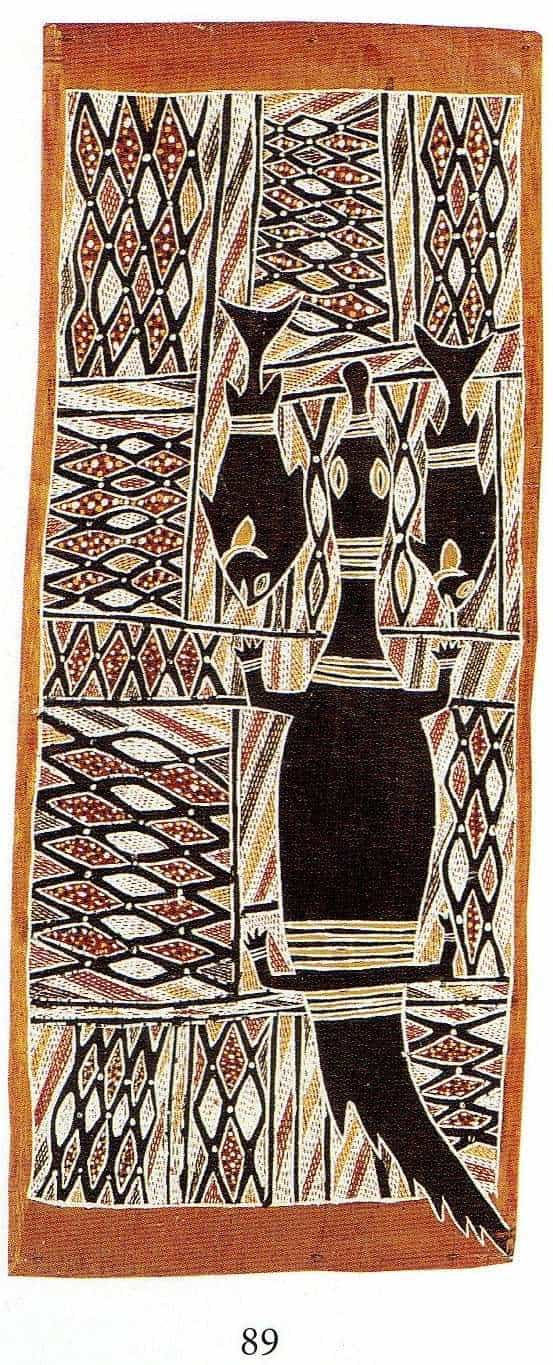
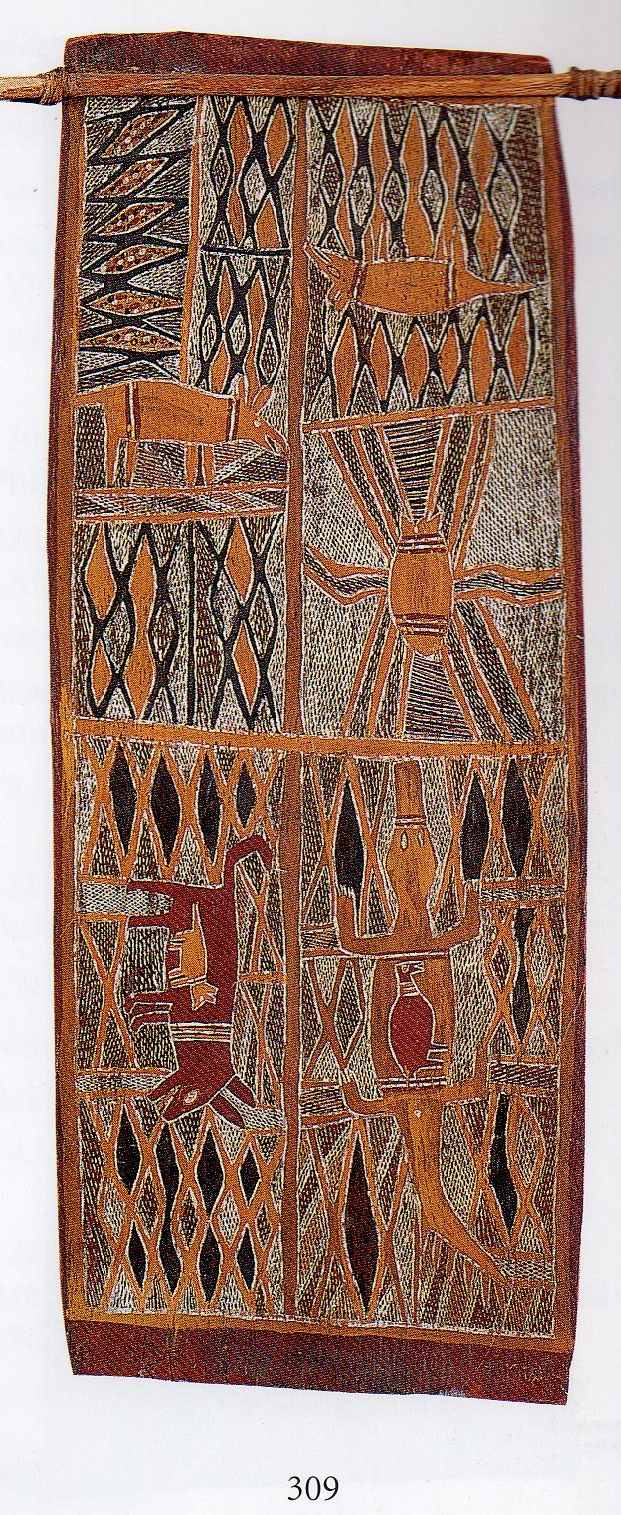
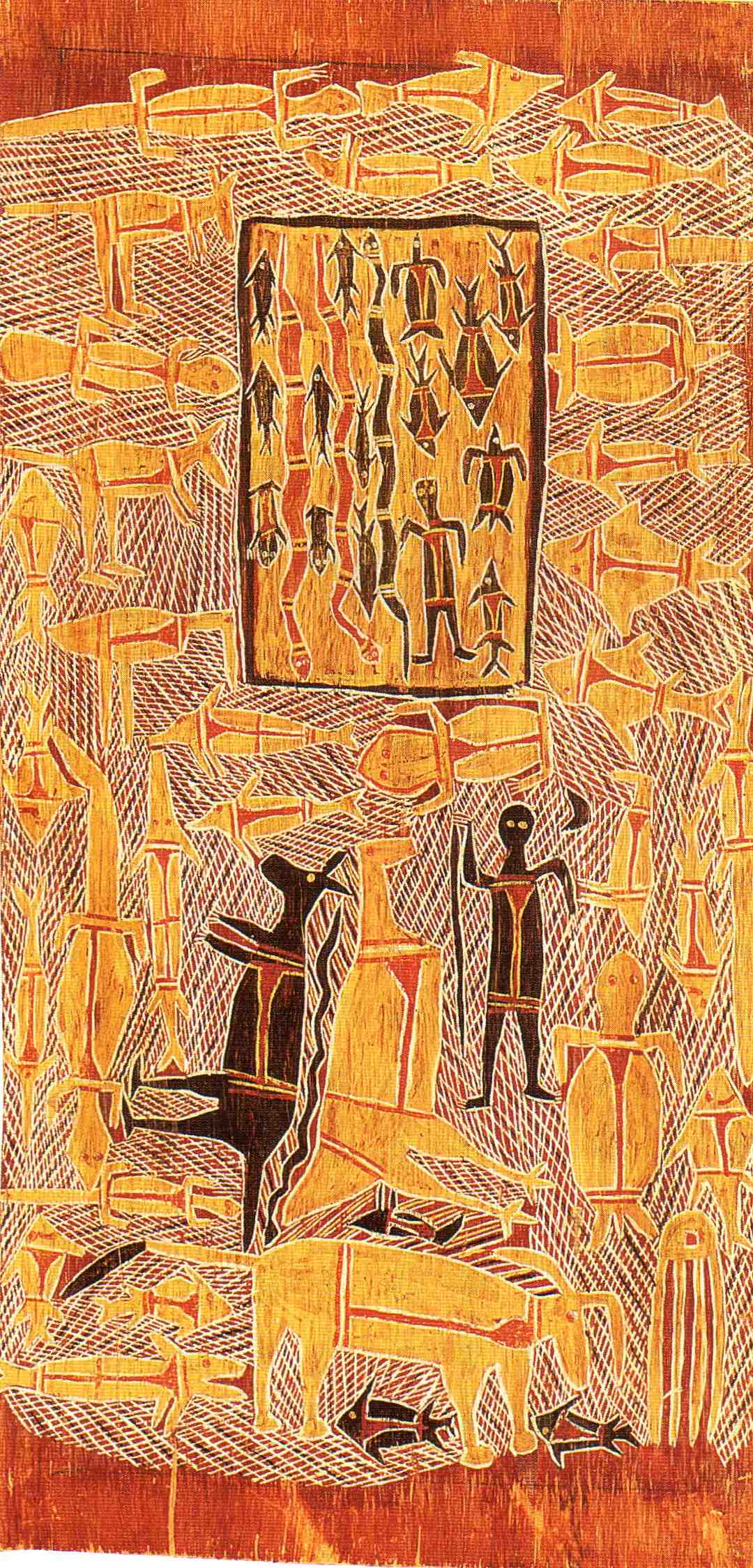
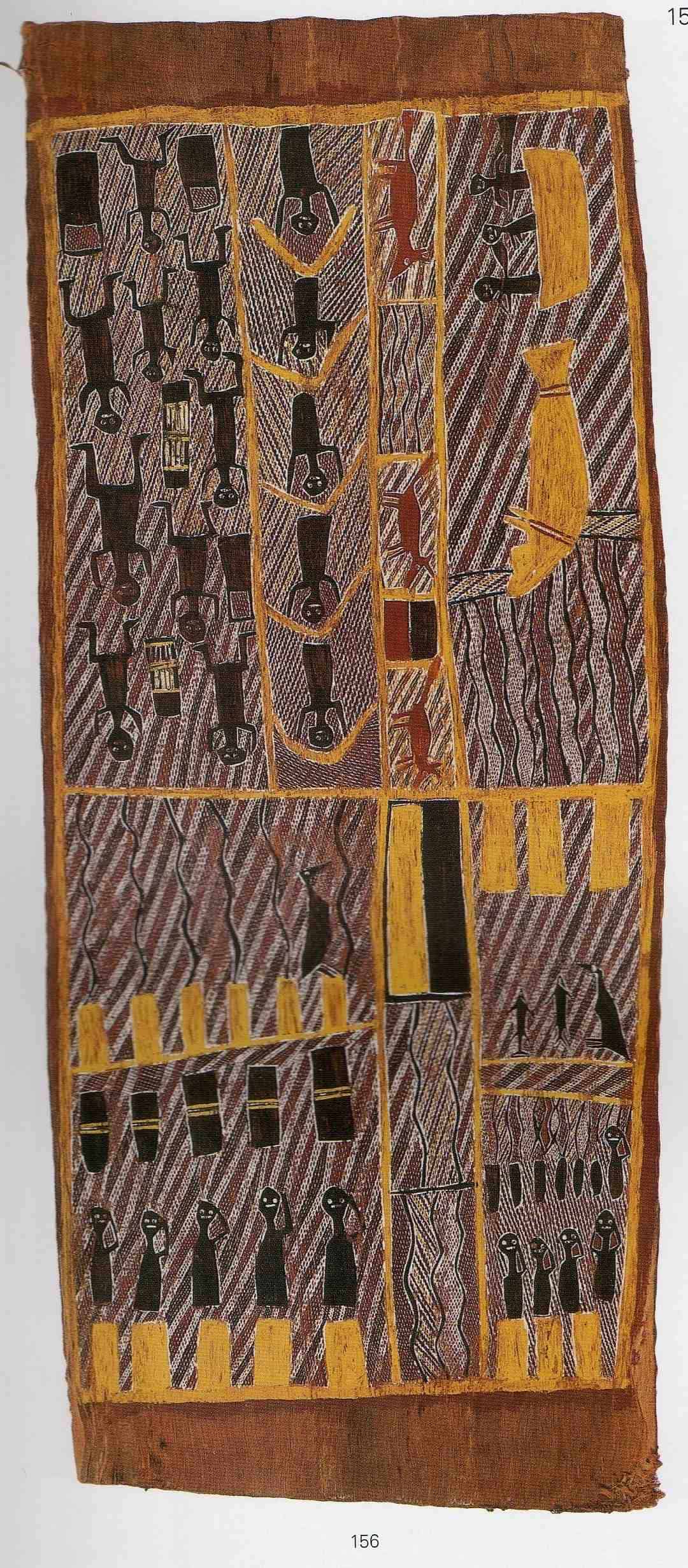
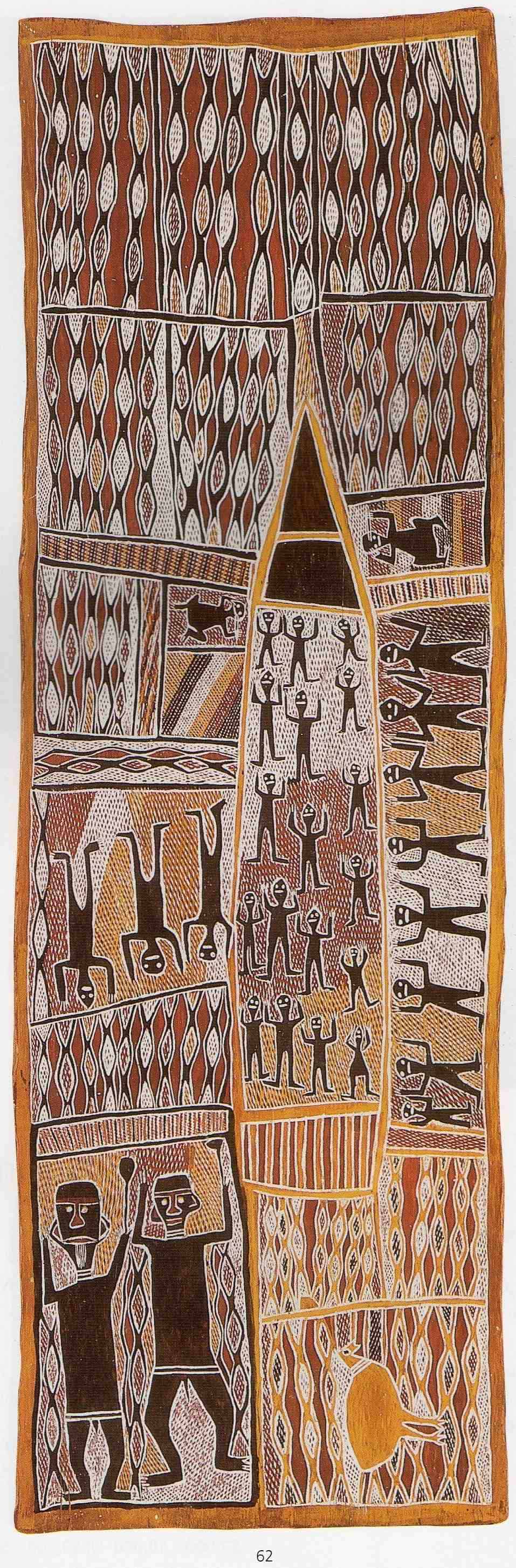
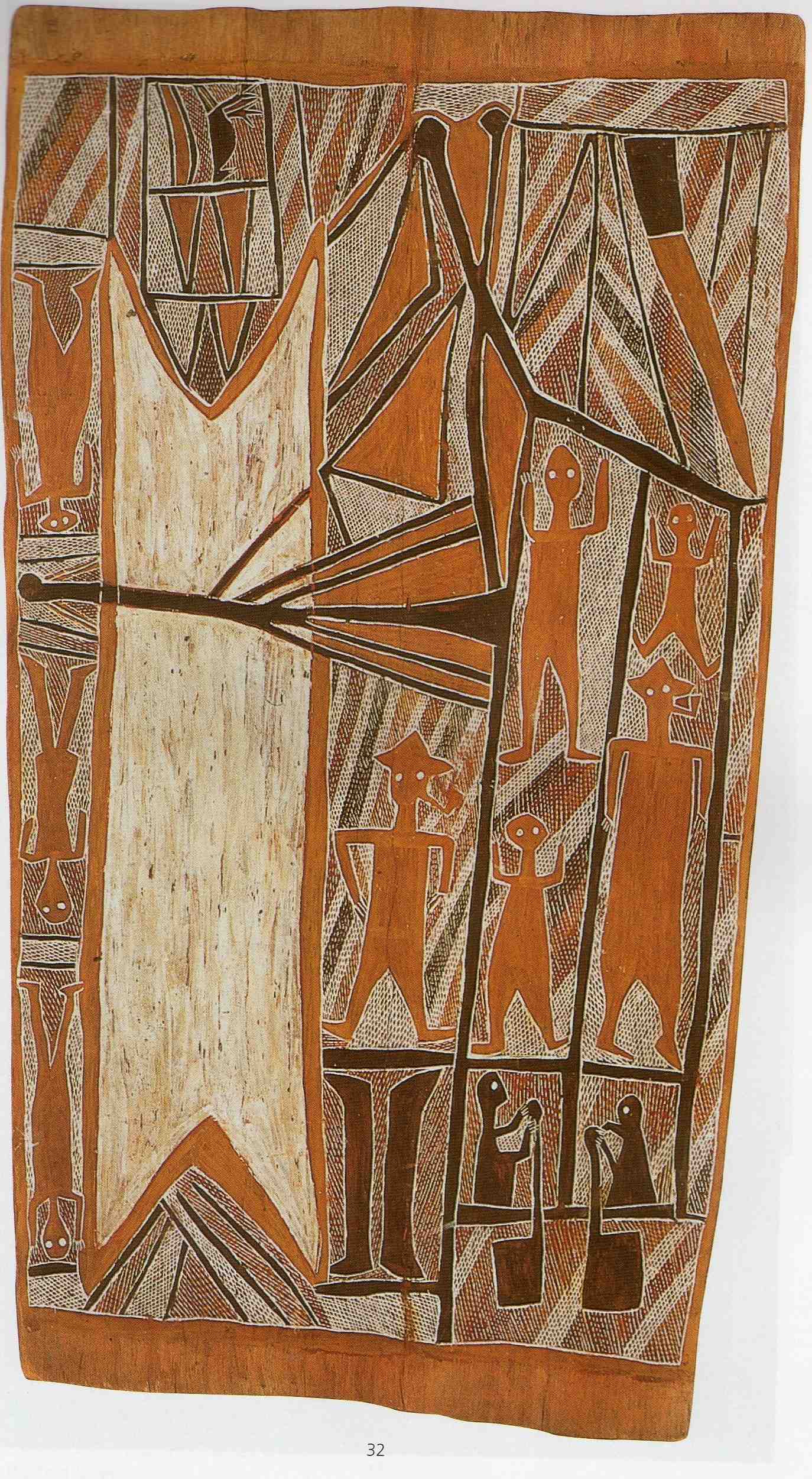
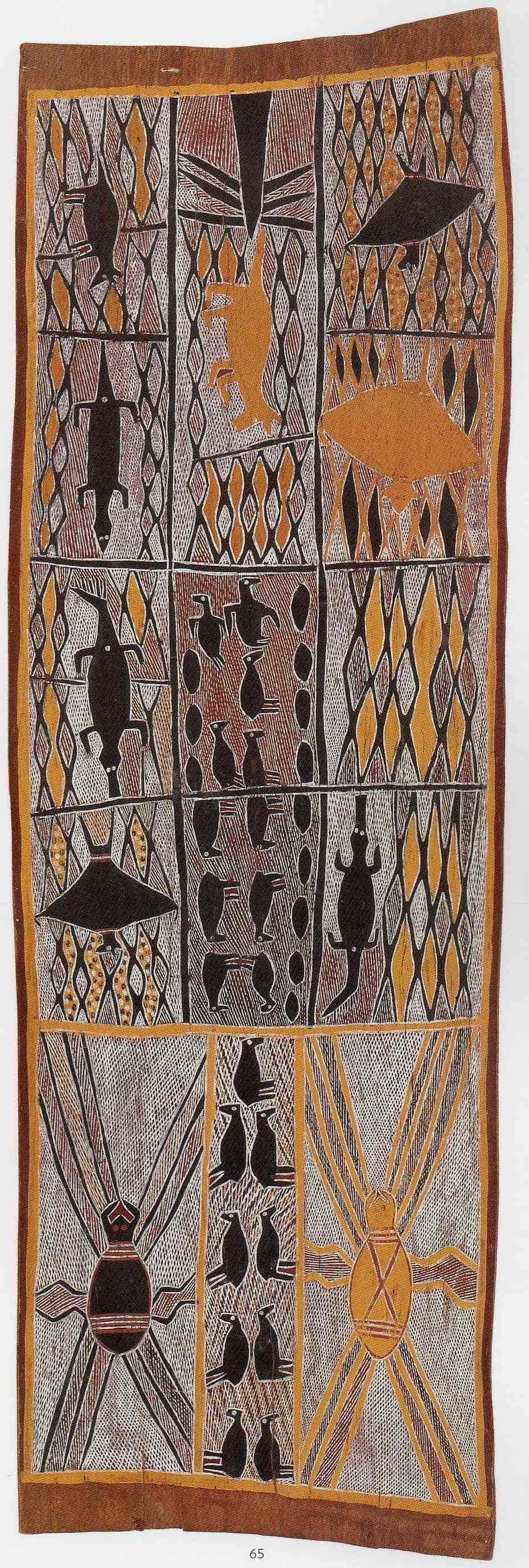
Munggurrawuy Yunupingu’s bark paintings are especially recognised for their intricate geometric clan designs, exceptionally refined rarrk crosshatching, and highly structured panel compositions. His works often combine ceremonial abstraction with figurative storytelling, reflecting both deep cultural authority and remarkable compositional control.
If you own a Munggurrawuy Yunupingu bark painting or sculpture and are considering selling, or would like to know its value, you are welcome to send a JPEG image together with dimensions for assessment.
Style
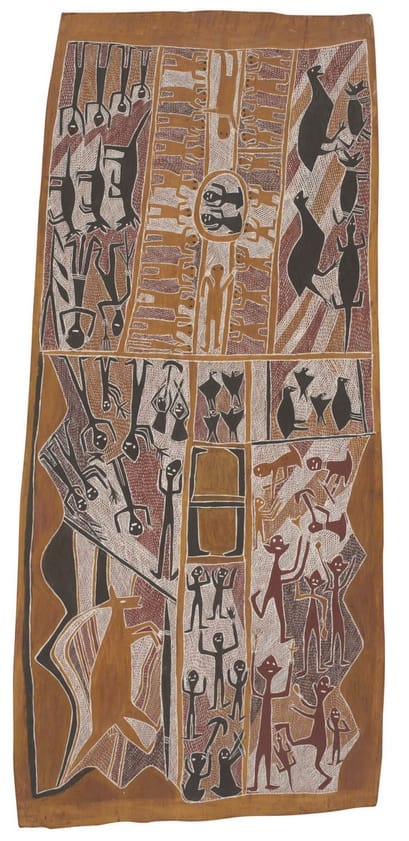
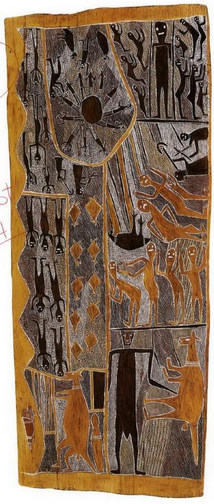
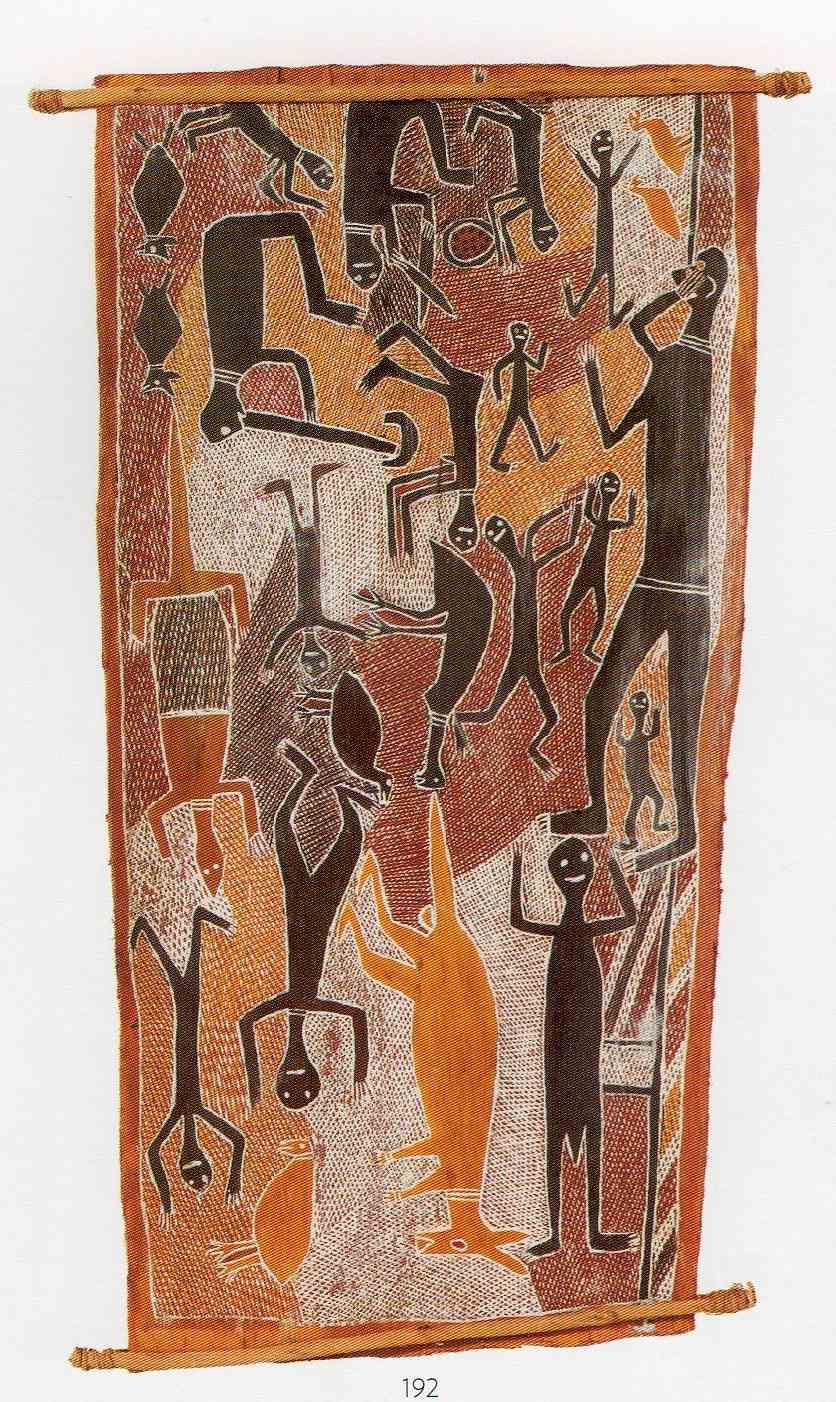
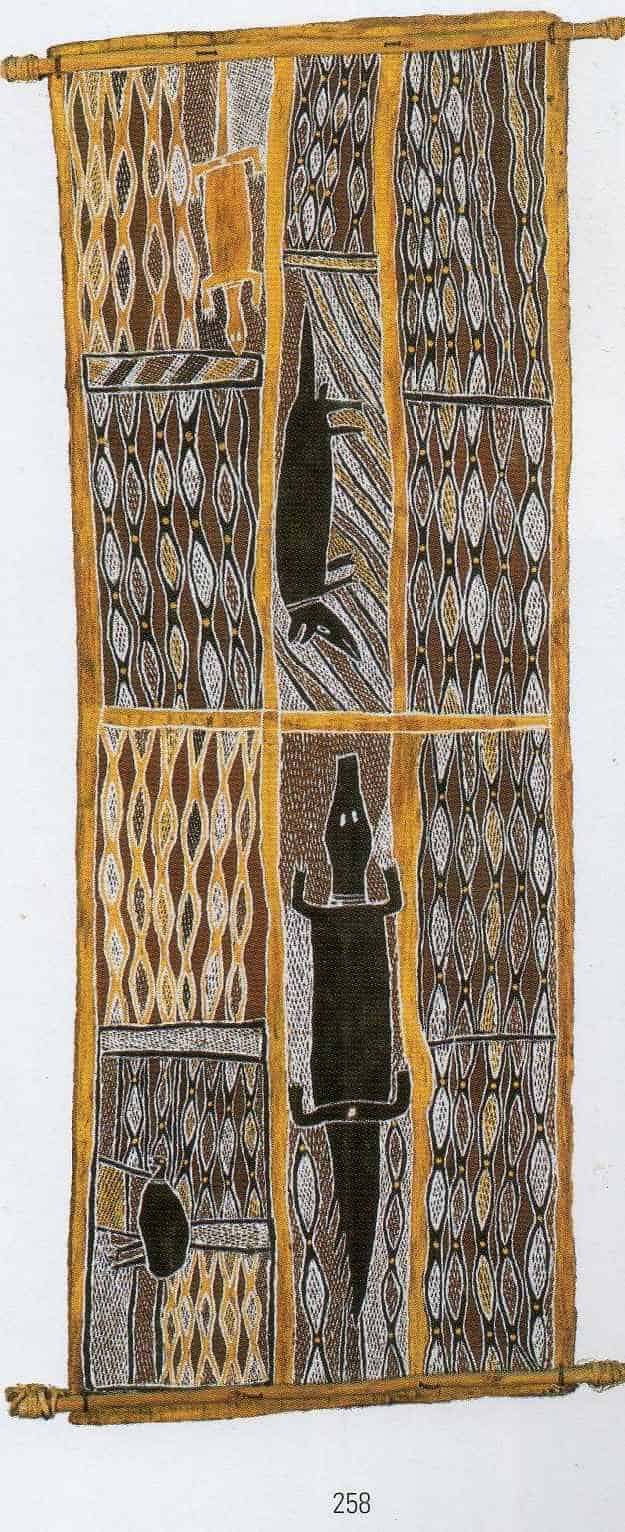
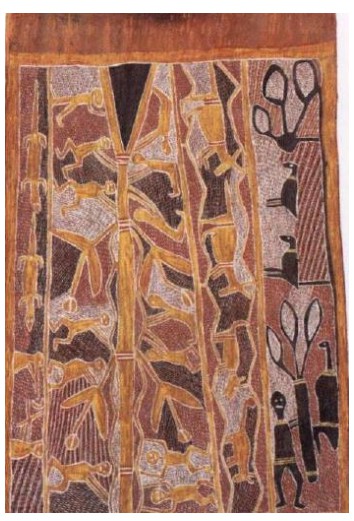
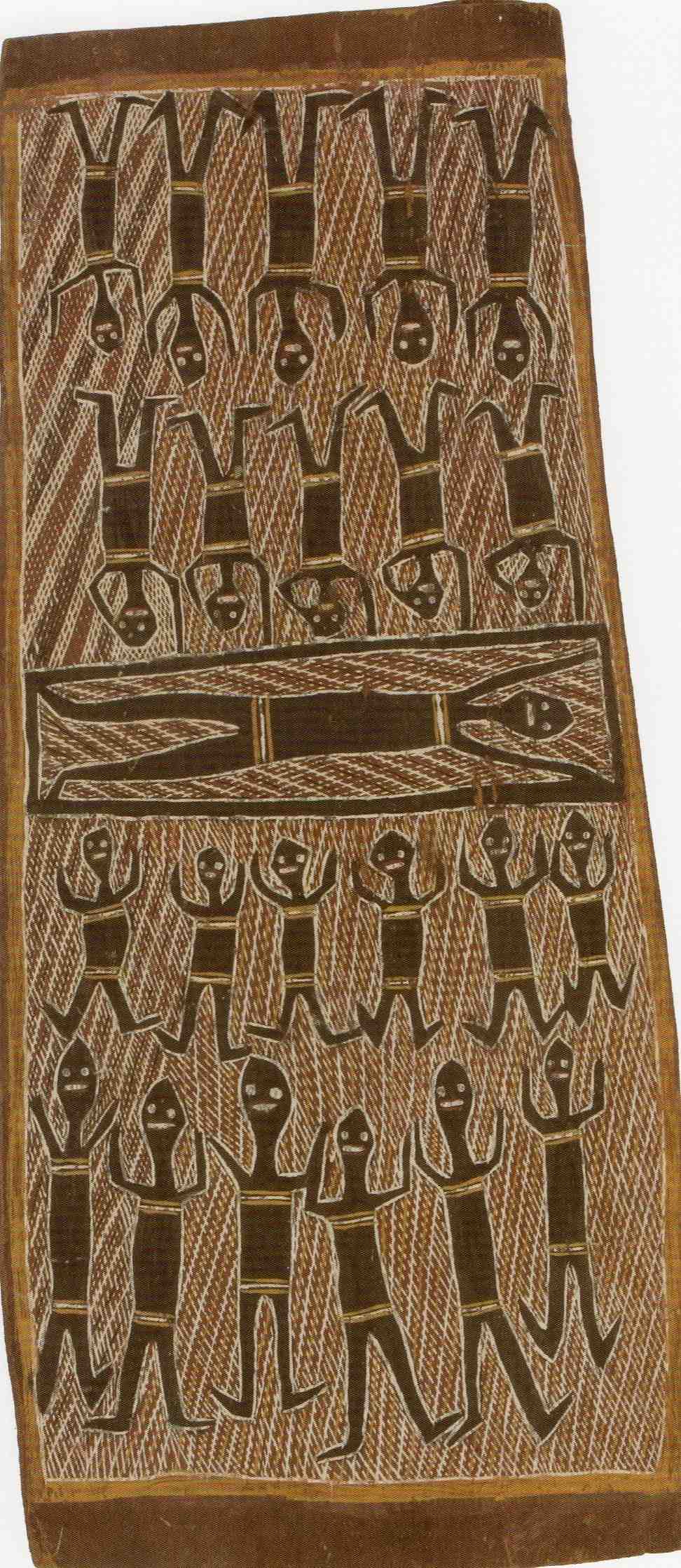
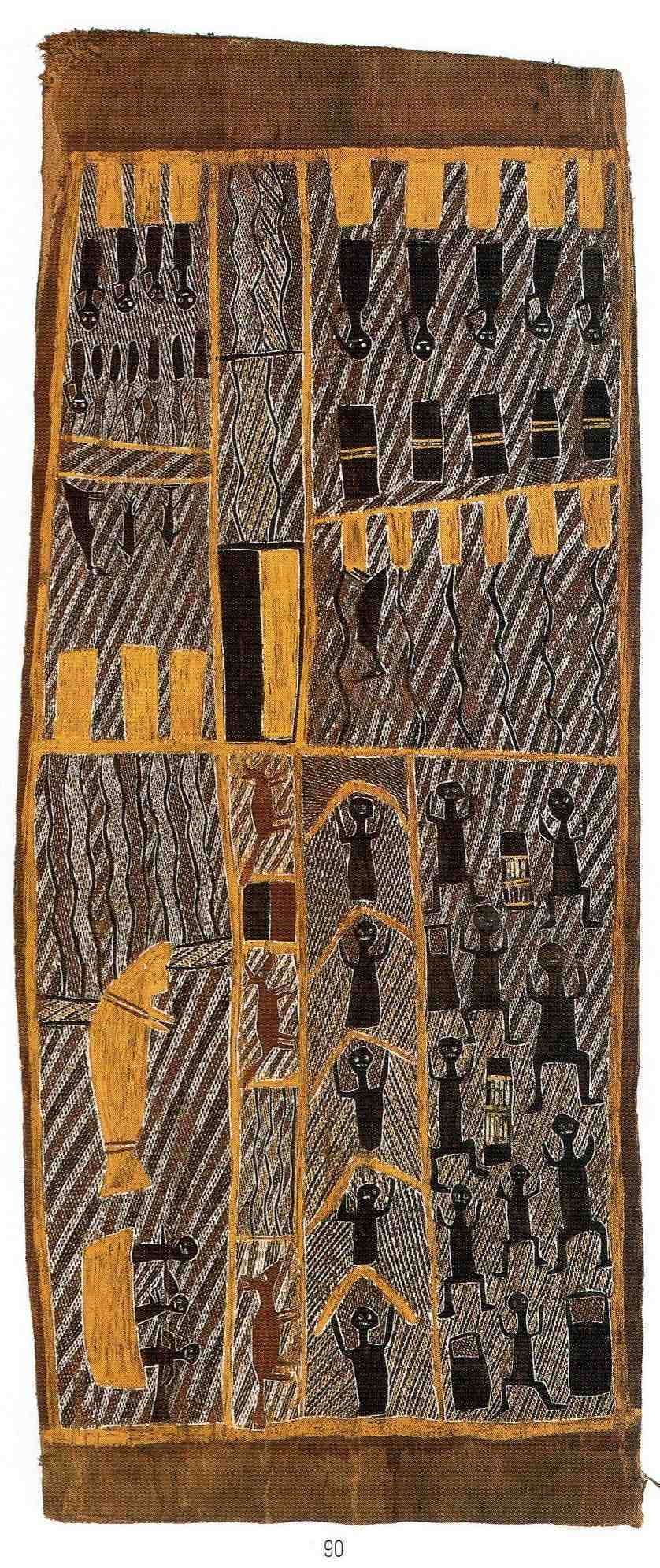
Munggurrawuy Yunupingu early works are very traditional. They consist of geometric schematic clan patterns. It is within these background schematic patterns, that his great skill and control of crosshatching is best demonstrated. He probably along with Mawalan Marika developed an episodic or panel style of bark paintings. These bark paintings consist of panels which each panel represent the same customary story, at different moments. As a result, his allows mythical sequences to unfold across time.
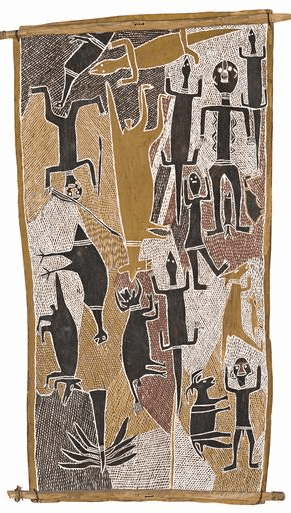
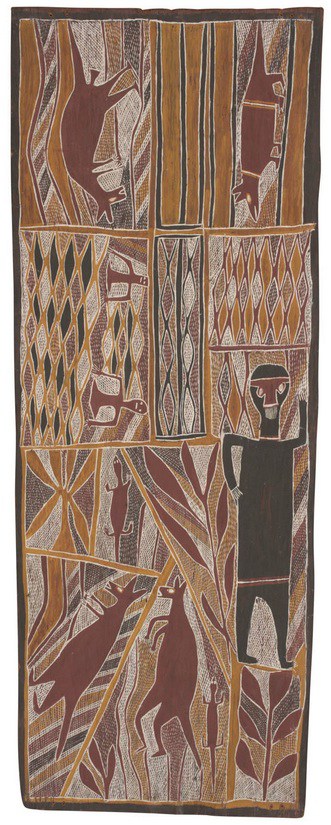
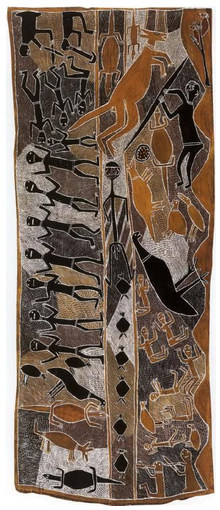
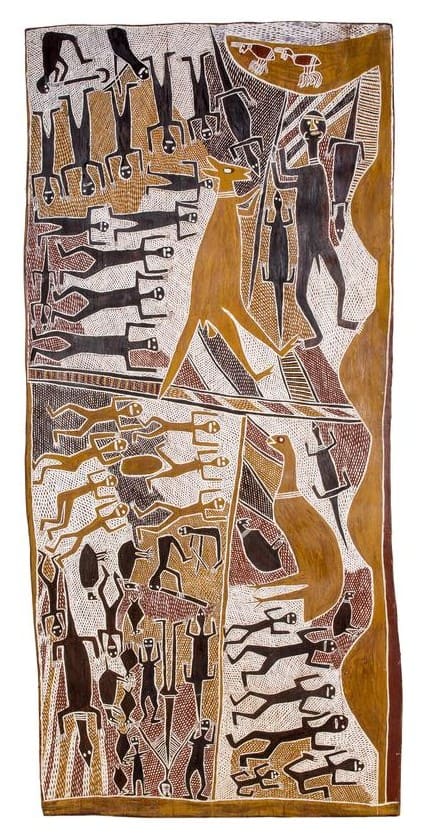
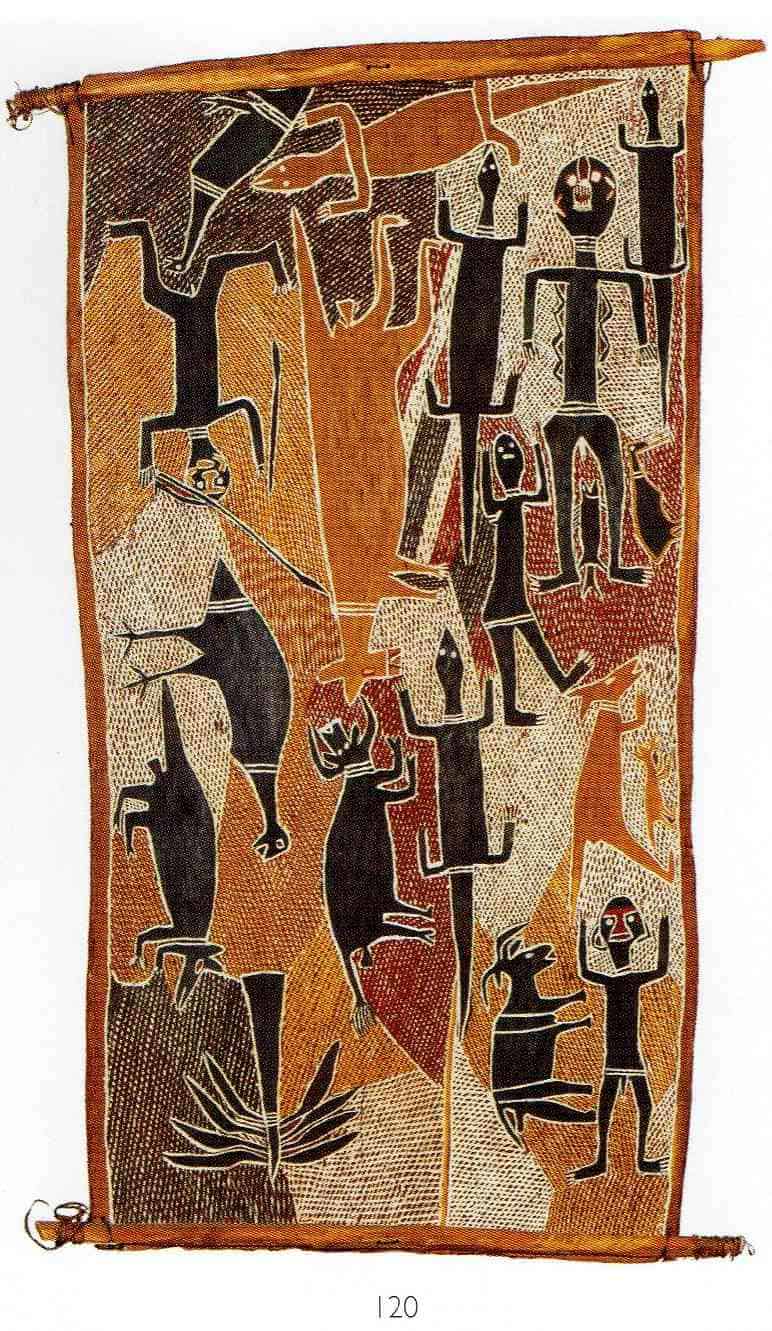
His figures tend to be simplistic with an almost childlike charm to them. This later figurative content expressed mythological themes. He introduced figurative elements because of external demand. He realized other artists received a higher price for figurative work. His best and probably most sort after works are geometric schematic clan patterns.
His works depict ancestral narratives including the Wagilag Sisters, the Djang’kawu Sisters, and the ancestral crocodile Baru, each tied to specific places within Gumatj clan territory.
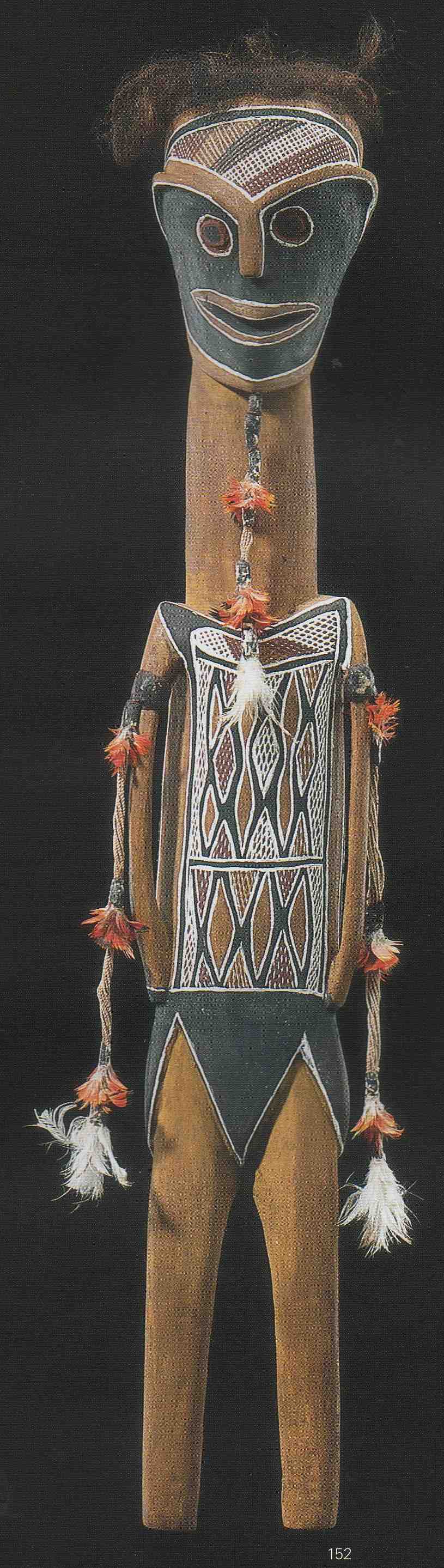
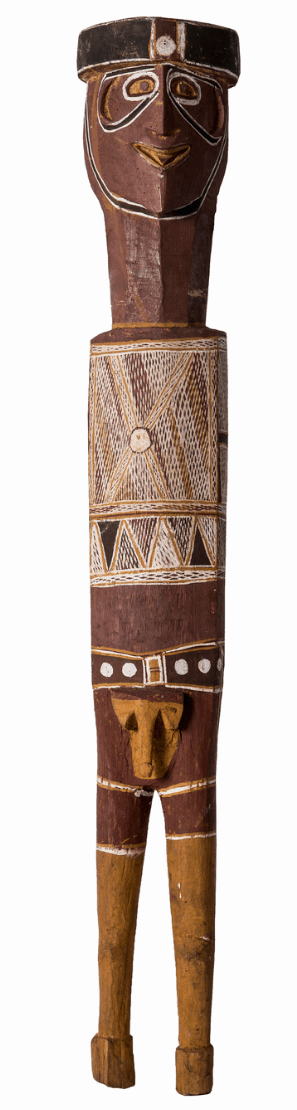
Munggurrawuy Yunupingu was also an outstanding sculpture artist. These sculptures are comparatively realistic and covered with painted totemic patterns. According to Roland and Catherine Berndt these sculpture were similar to earlier sacred examples. Sculptures played an important part in the religious life and sacred ceremonies of Yolngu peoples.
The painted patterns on the figures are representations of body painting. Particular designs reflect different ancestors. Figures were originally secret and sacred. The commercial production of these distinctive figures marked a change in artist attitude. They mark when the dominance of individual expression asserted itself over the confinement of traditional cultural values. They are an important step in the development of North-Eastern Arnhem Land art. These sculptures are collectible in their own right.
These figures often represent Laindjung an ancestral hero who bought custom and law to the people
Biography
Munggurrawuy Yunupingu was born around 1907. He was a senior elder of the Gumatj clan. In the 1960’s and 1970’s he was keeper of the law for the Yirritja moiety. This was an important period of aboriginal history. It is when the Yolngu of North East Arnhem Land gained artistic recognition. Art was also an integral part of a political campaign. This campaign sort recognition of traditional land rights.
Munggurrawuy along side other well respected artists like Mithinari and Narritjin helped paint the Yirrkala bark petitions in 1963. The bark petitions have become historic Australian documents. They are the first traditional documents prepared by Indigenous Australians recognized by the Australian Parliament. They became the first documentary recognition of Indigenous people in Australian law. Bark paintings acted as a form of land title.
He established an important relationship with Melbourne art dealer Jim Davidson. Jim saw that his work got into major museums both nationally and internationally.
Munggurrawuy Yunupingu’s art has gone on to inspired many other Arnhem Land artists. He also taught his daughter Nyapanyapa Yunupingu to paint. She is a collectible artist in her own right. His works have been in a large number of major exhibitions.
He had twelve wives and numerous children. The most famous of his children was Manawuy who was a talented artist in his own right
Yunupingu can also be spelled Yunipingu Yunapingu, Yunapinju or Munggurrawuy Yunupinju
All images in this article are for educational purposes only.
This site may contain copyrighted material the use of which was not specified by the copyright owner.
Yirrkala Artworks and Articles
Meaning of Munggurrawuy Yunupingu Bark Paintings
The Ancestral Crocodile Baru
Within the cosmology of north-east Arnhem Land, the ancestral crocodile Baru is one of the most commanding figures. His story belongs to the Gumatj clan of the Yolŋu people, where he is remembered as the bearer of fire and the embodiment of ferocity, authority, and transformation.
According to Yolŋu tradition, Baru carried fire from the saltwater and delivered it to the Gumatj people. This elemental gift became a defining mark of their identity, binding clan members to fire as both a practical necessity and a sacred symbol of renewal and strength. Fire remains central to ceremonial life, as it was first brought to the people through Baru’s journey.
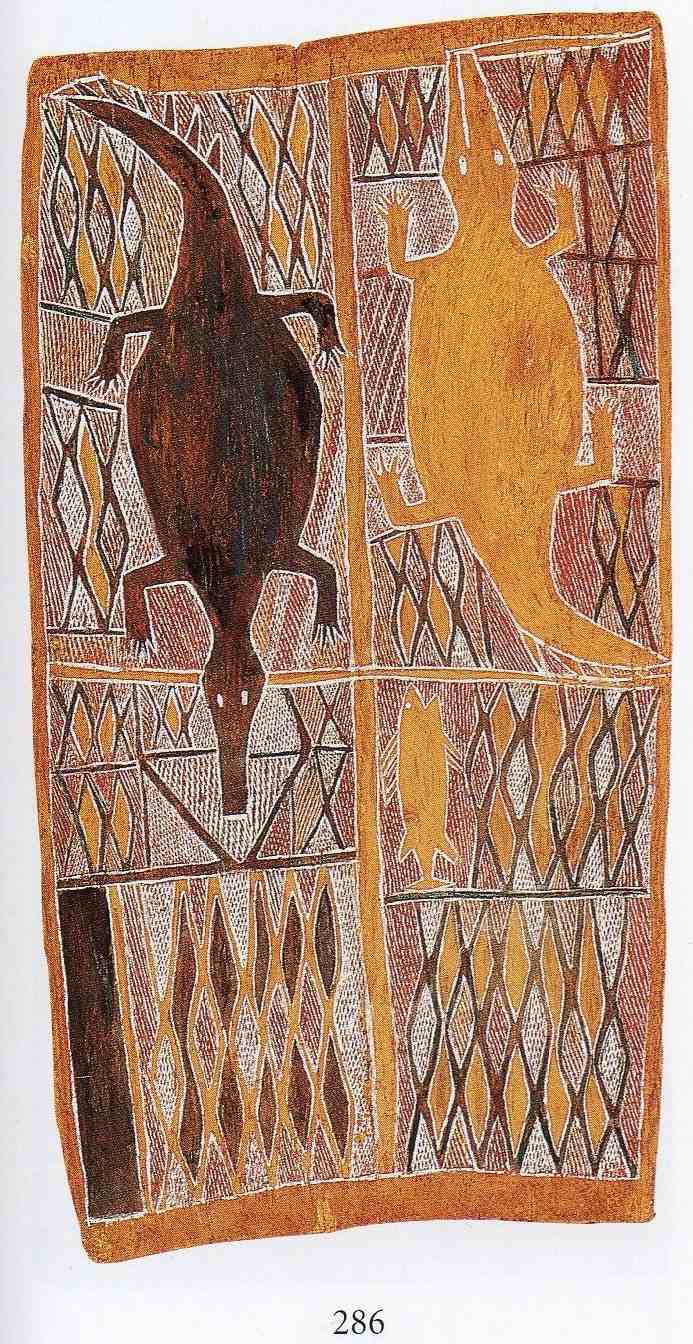
In bark painting, Baru is typically represented as an elongated crocodile form, his body filled with fine rarrk (cross-hatching) that evokes both his scales and the flickering movement of fire.
Baru is also associated with territorial sovereignty. His presence in bark paintings signals Gumatj custodianship of particular lands and waters, while his fiery gift is a reminder of the responsibilities of leadership and ceremony.
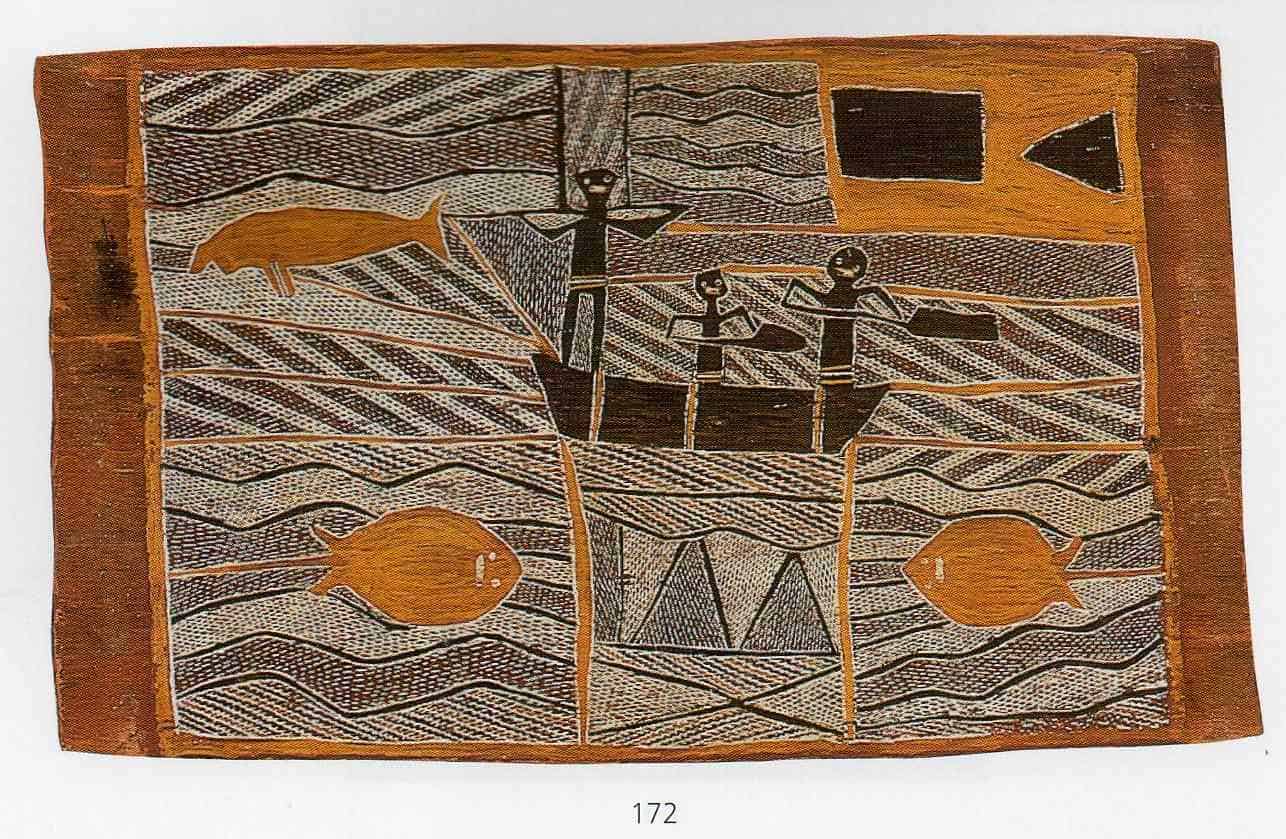
Macassan Prau
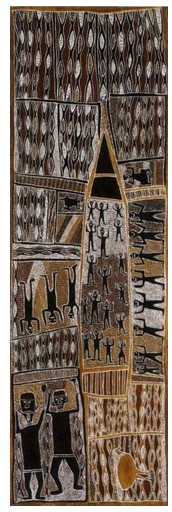
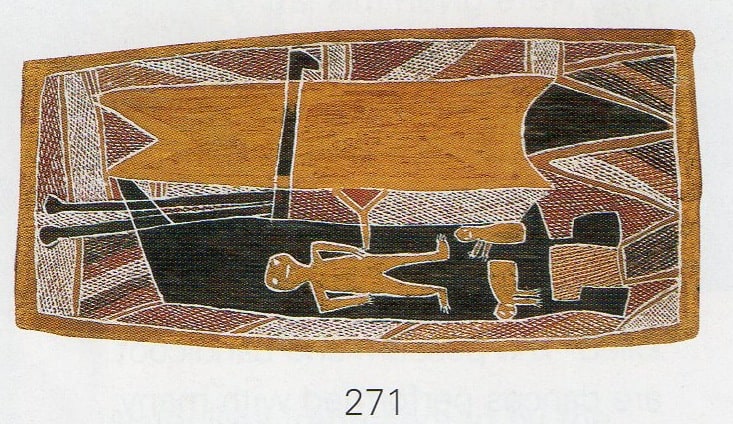
Among the most distinctive subjects in Yolŋu bark painting is the Macassan prau (also spelled perahu), the elegant sailing vessel that carried trepang (sea cucumber) traders from Sulawesi to the northern Australian coast. From the early 1700s until the beginning of the 20th century, these voyages brought the Yolŋu of north-east Arnhem Land into sustained contact with the wider maritime world of Southeast Asia.
For the Yolŋu, the prau represents more than a foreign ship—it symbolises a period of profound exchange. Through the Macassan visitors came iron tools, cloth, tobacco, and canoes, woven into the rhythms of Yolŋu ceremonial and economic life. This cross-cultural relationship is unique in Australian history, one of the earliest sustained encounters between Indigenous Australians and outsiders, and it left a lasting imprint on Yolŋu law, song, and art.
Laindjung dreaming
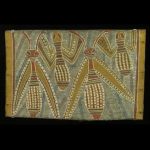
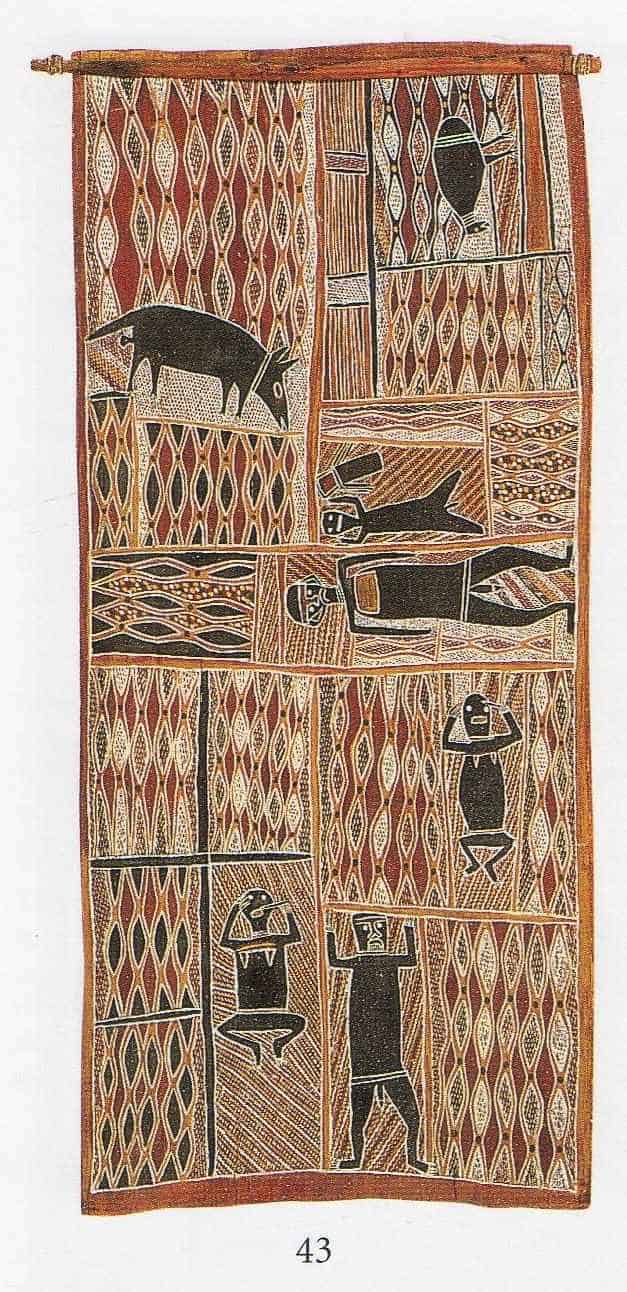
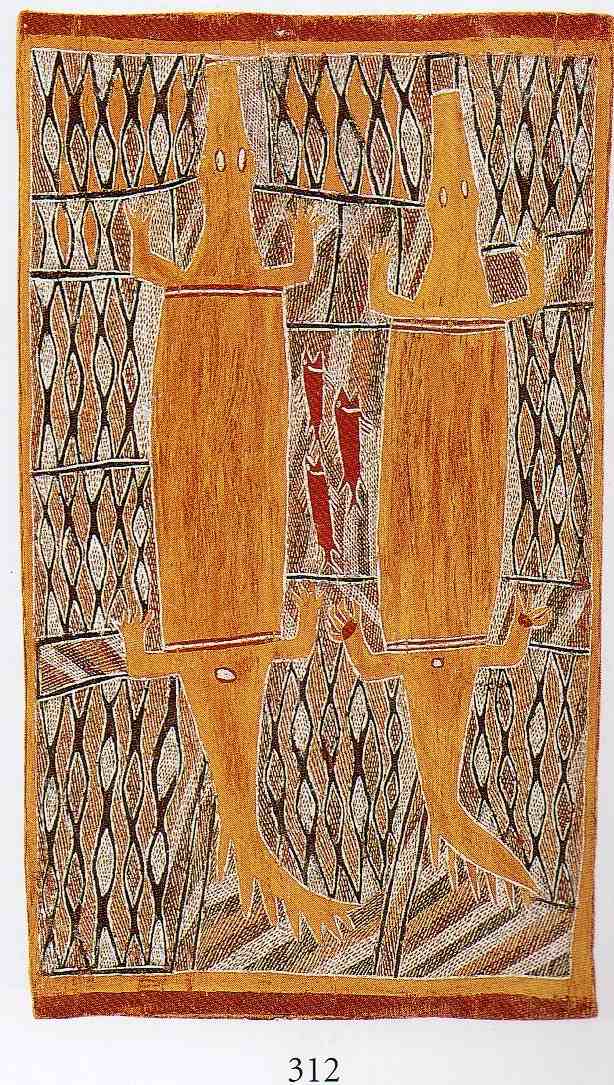
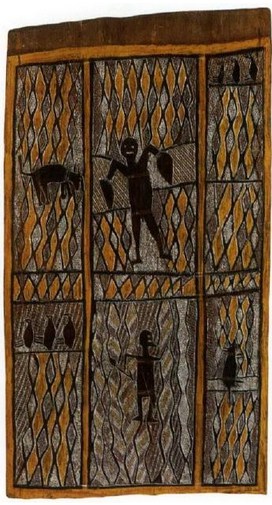
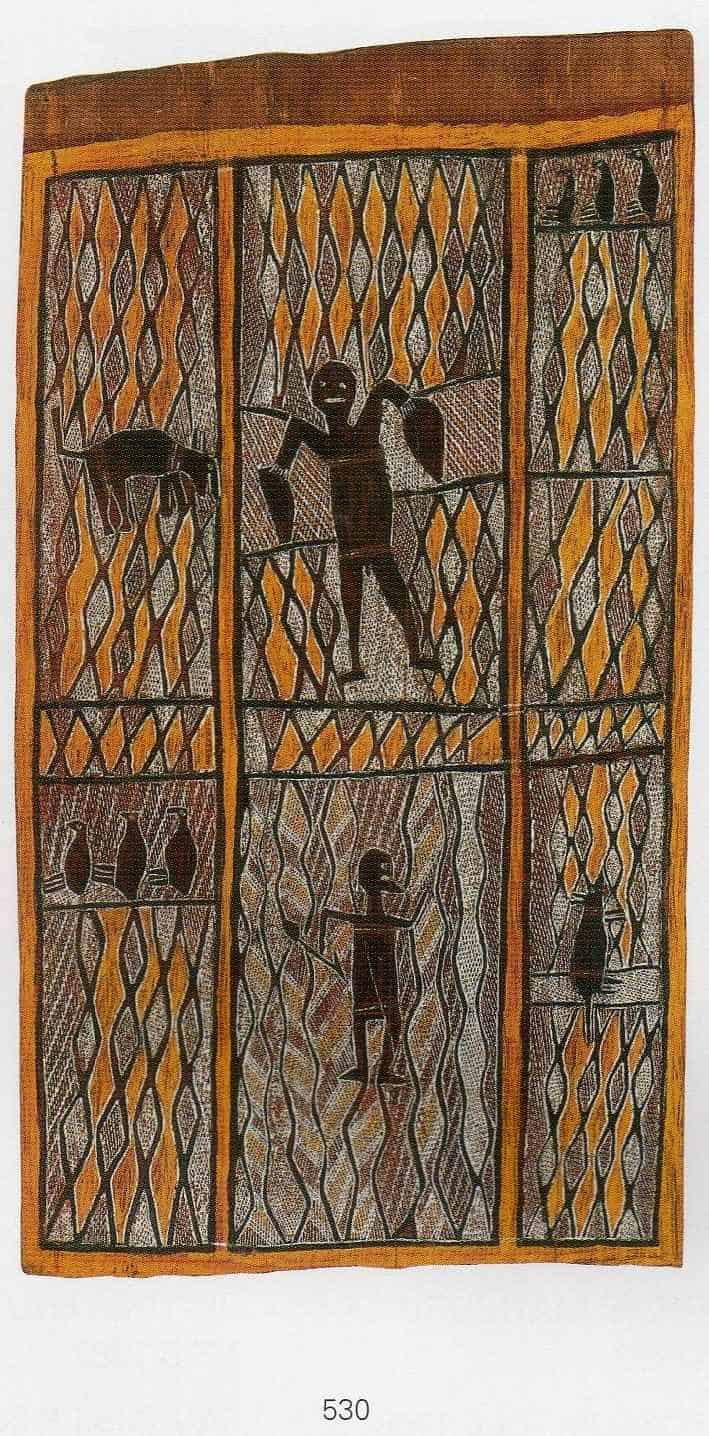
This painting is best understood as a coded expression of Gumatj Law and Country
t its core, the composition maps Biranybirany in Caledon Bay, the Ancestral homeland of the Gumatj clan, and the site from which the great Ancestral fire—Gurtha—spread across the eastern Arnhem Land coastline. The painting is divided into distinct yet interrelated fields, each operating as a layer of meaning rather than a simple narrative sequence.
The left panel, articulated through tight, rhythmic diamond matrices, is a canonical expression of Gumatj miny’tji. These designs are not decorative; they are intellectual property, carrying authority, identity, and custodianship. Here, the diamonds may be read as multiple states of fire—flame, ember, ash—while simultaneously evoking coastal elements: sandbanks, tidal flows, and the shimmer of heat across Country. This compression of meanings is typical of high ceremonial painting, where a single design can hold ecological, spiritual, and historical knowledge.
The right panel introduces a more figurative register. The elongated animal forms—most likely referencing Baru, the saltwater crocodile, and possibly the bandicoot—anchor the work in the Lany’tjung (Crocodile and Bandicoot) narrative. In this account, the uncontrolled ceremonial fire moves across the land, and the animals respond within that transformed environment. The crocodile, as a major Gumatj totem, is not merely depicted but invoked; its presence signals both the destructive and regenerative force of fire, and its enduring mark upon the land and body—recalling the ancestral origin of the crocodile’s patterned skin.
The flowing linear fields surrounding these figures—rendered in fine cross-hatched infill—suggest water, rain, and tidal movement, elements that follow the fire and restore balance. This interplay between fire and water is central to Gumatj cosmology: destruction is never final, but part of a cyclical system governed by ancestral precedent.
Fuller version of Lany’tjung dream time story