Charlie Mardigan: Port Keats bark painter
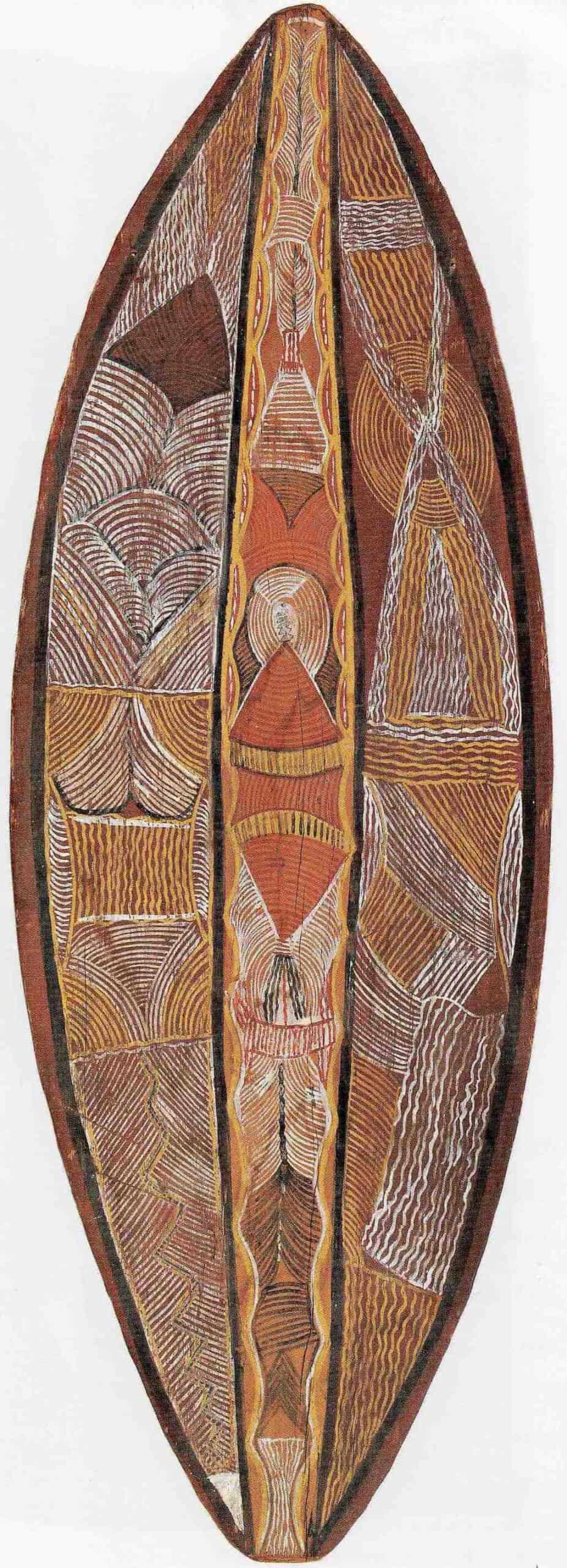
Charlie Mardigan, also known as Charles Mardigan, was one of the pioneering artists of Port Keats Art and among the few Aboriginal painters working extensively on bark during the mid twentieth century, well before the commercial expansion of Aboriginal painting associated with the Papunya movement of the 1970s. Working alongside early Wadeye artists such as Nym Bunduk and Indji Tharwal, Mardigan helped establish one of the earliest bark painting movements outside Arnhem Land.
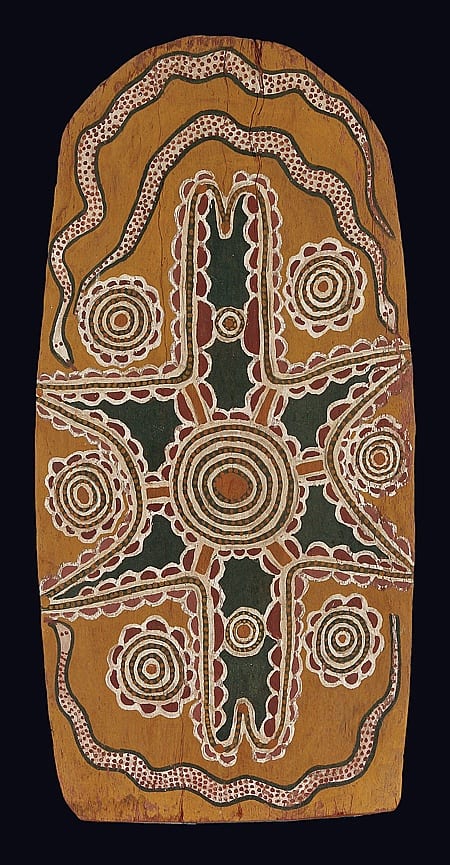
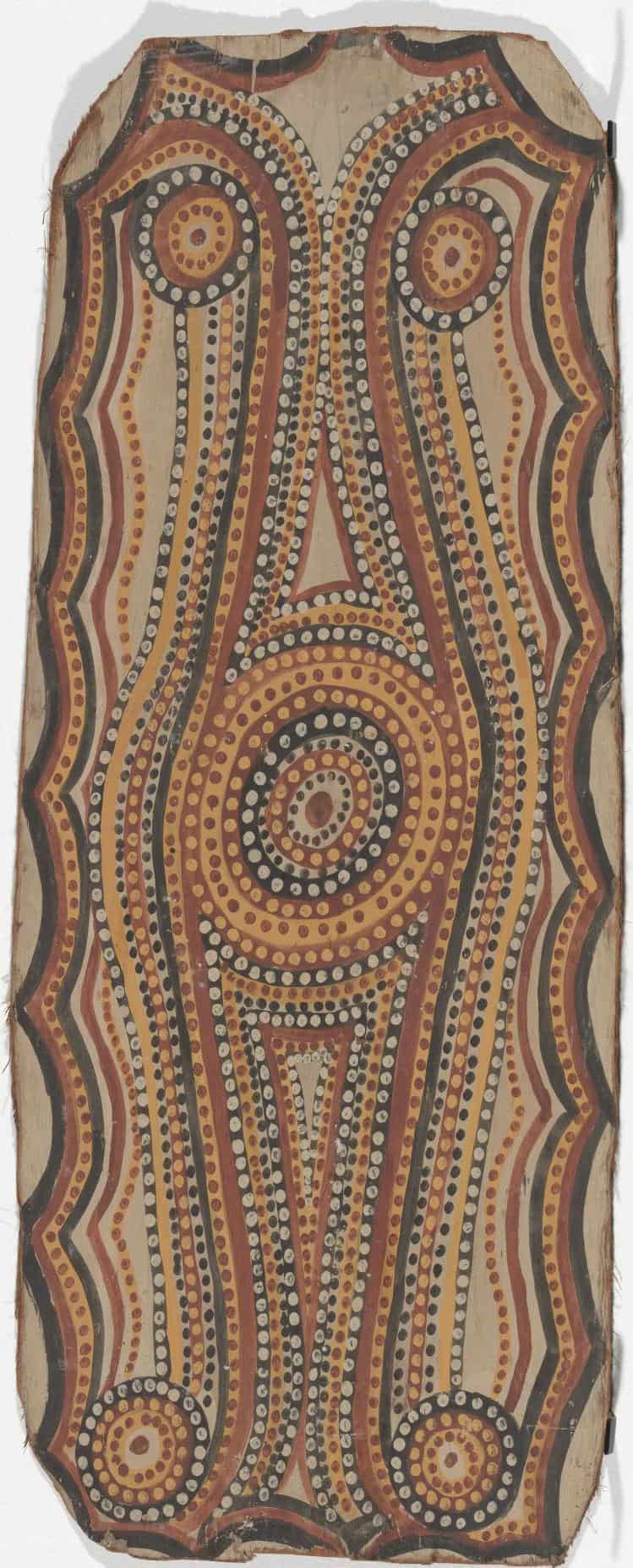
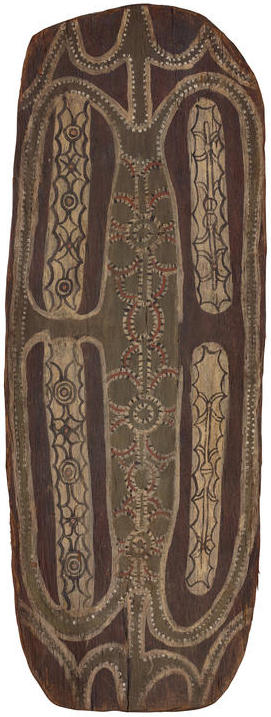
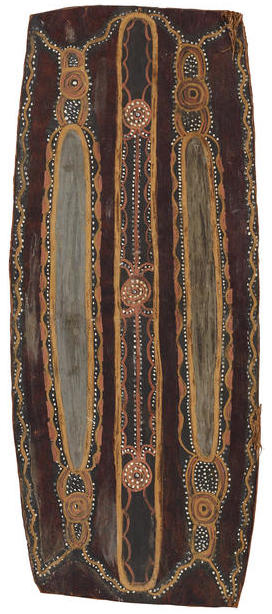
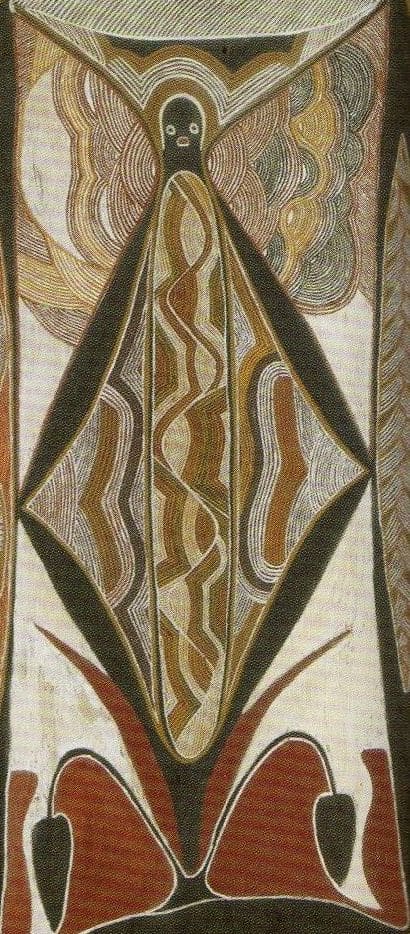
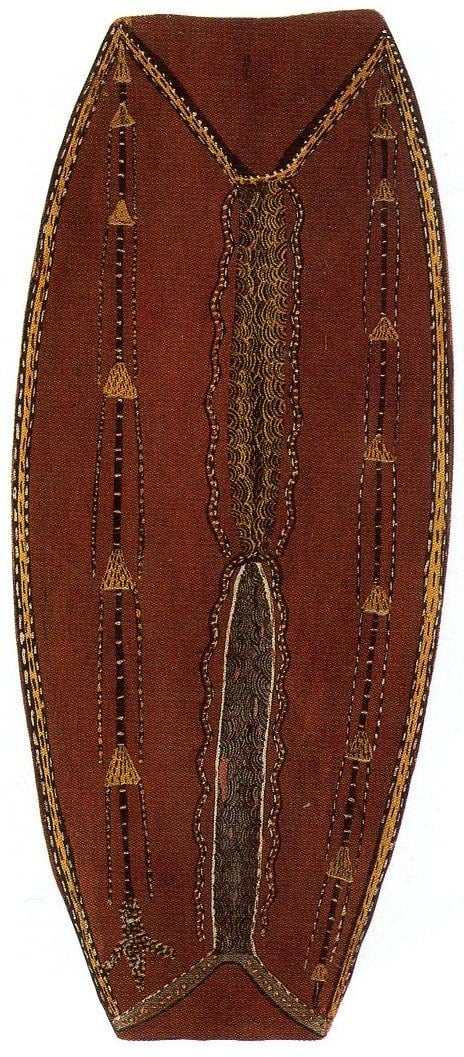
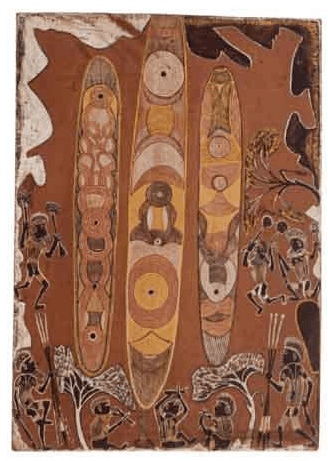
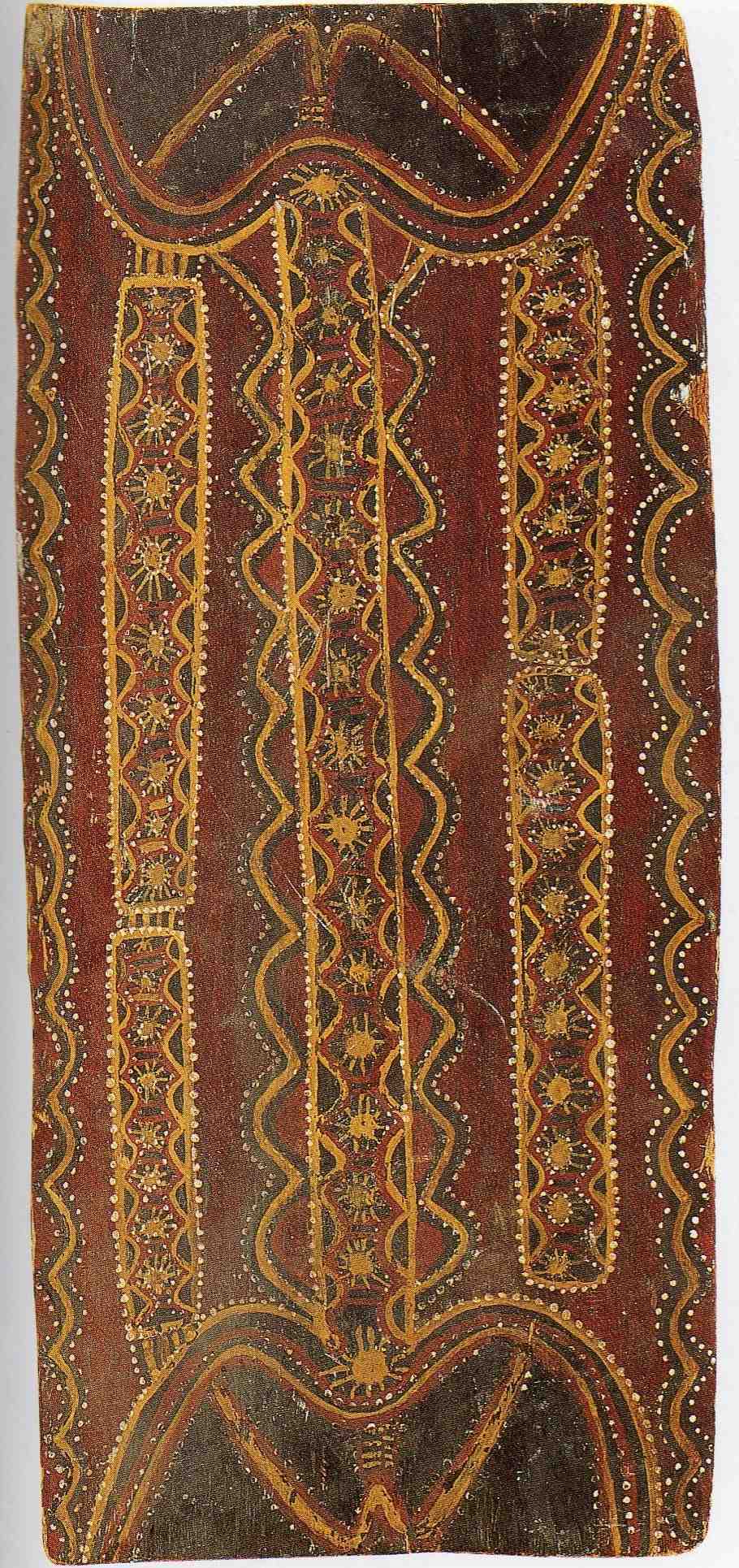
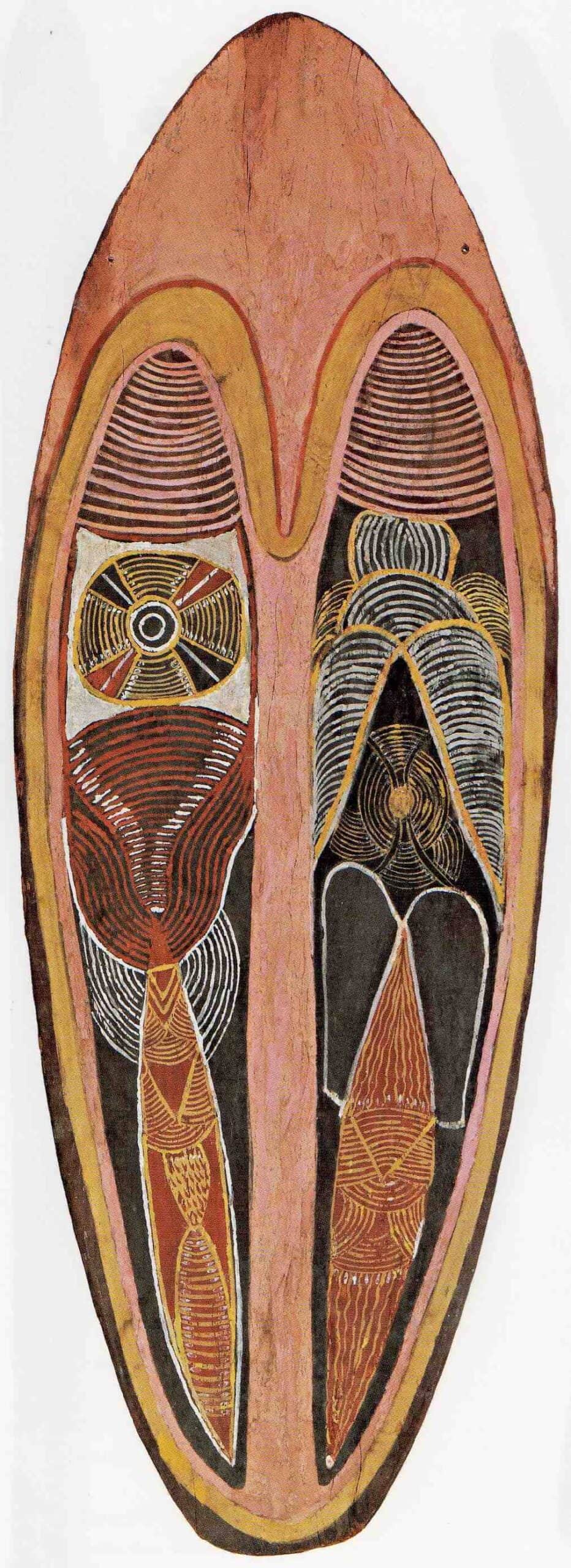
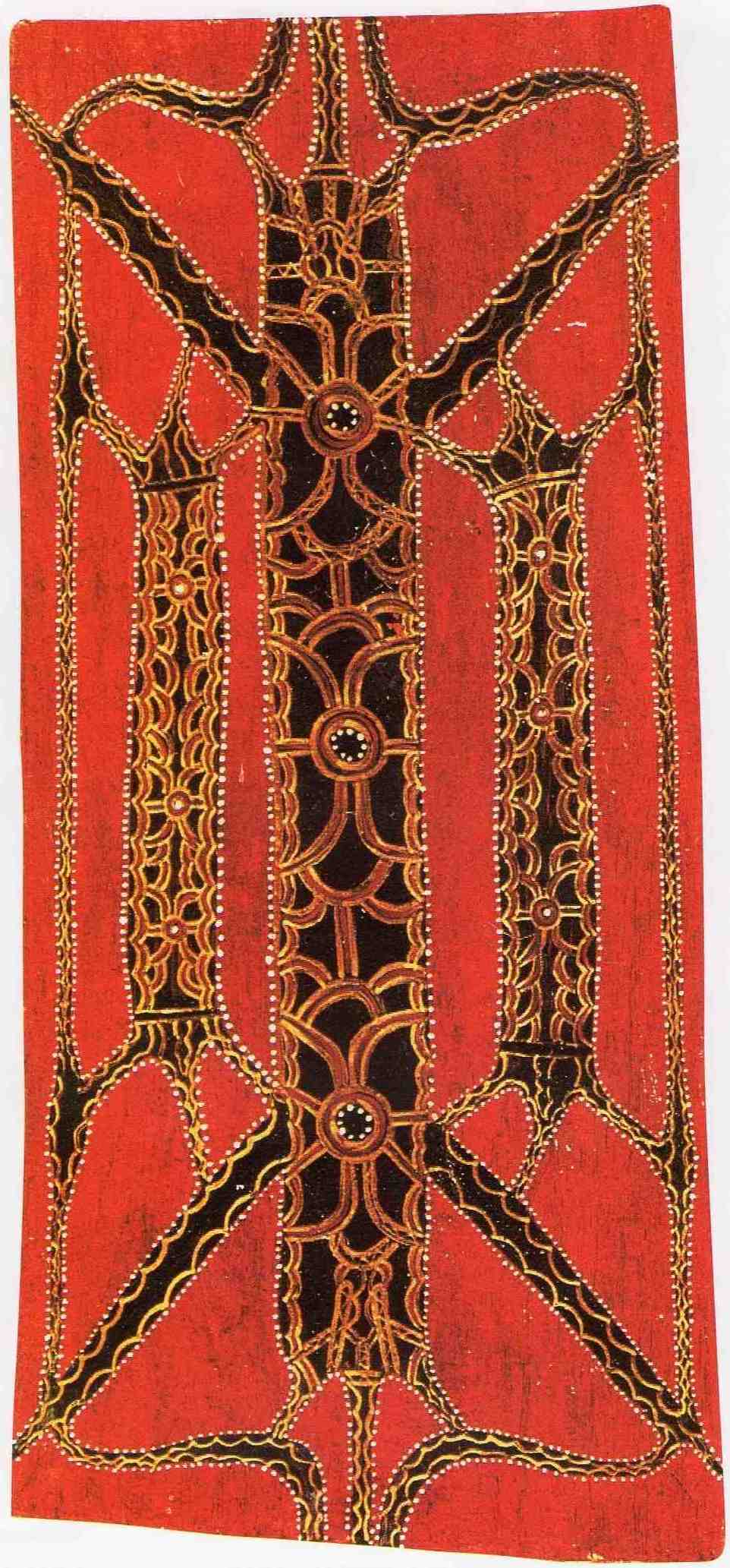
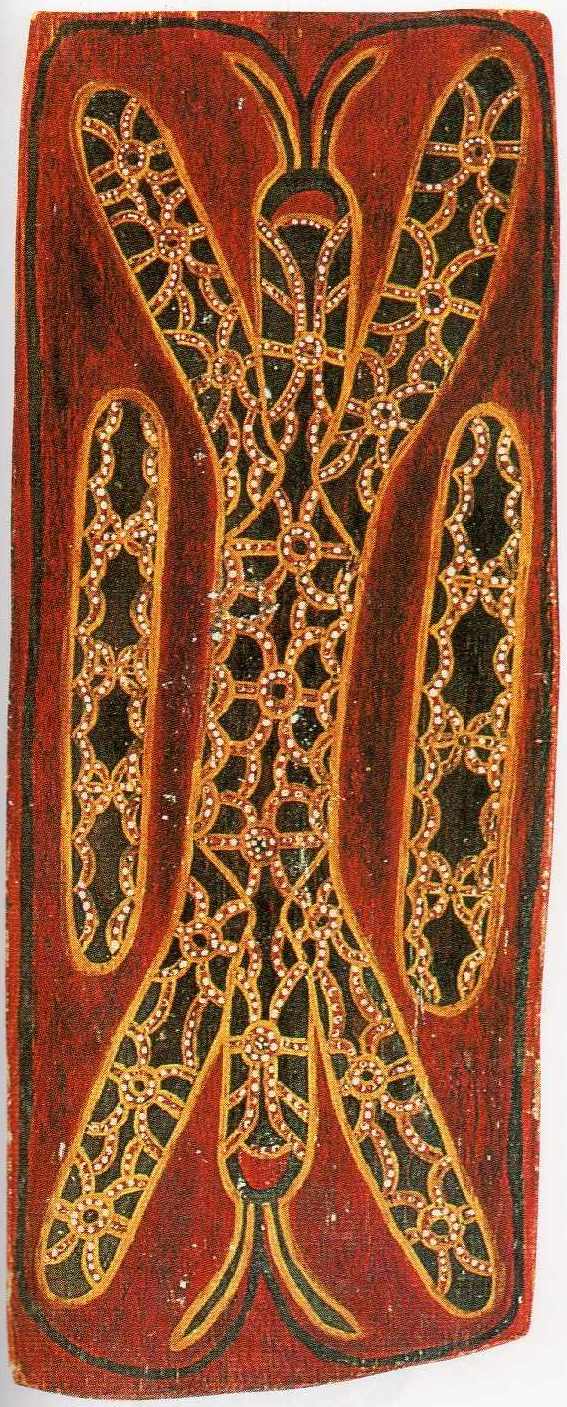
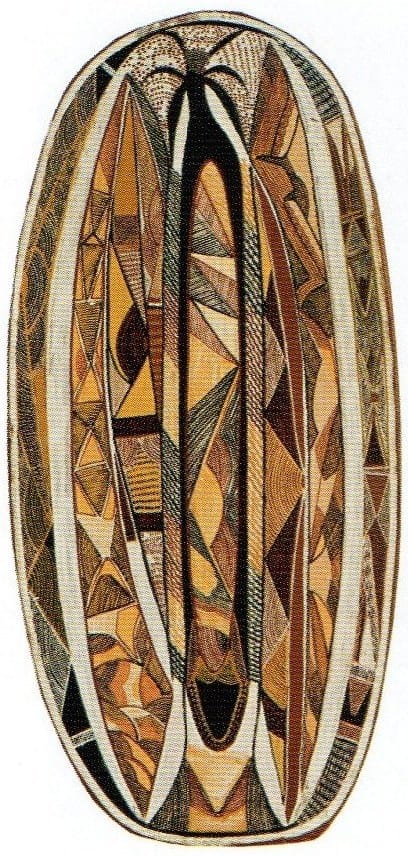
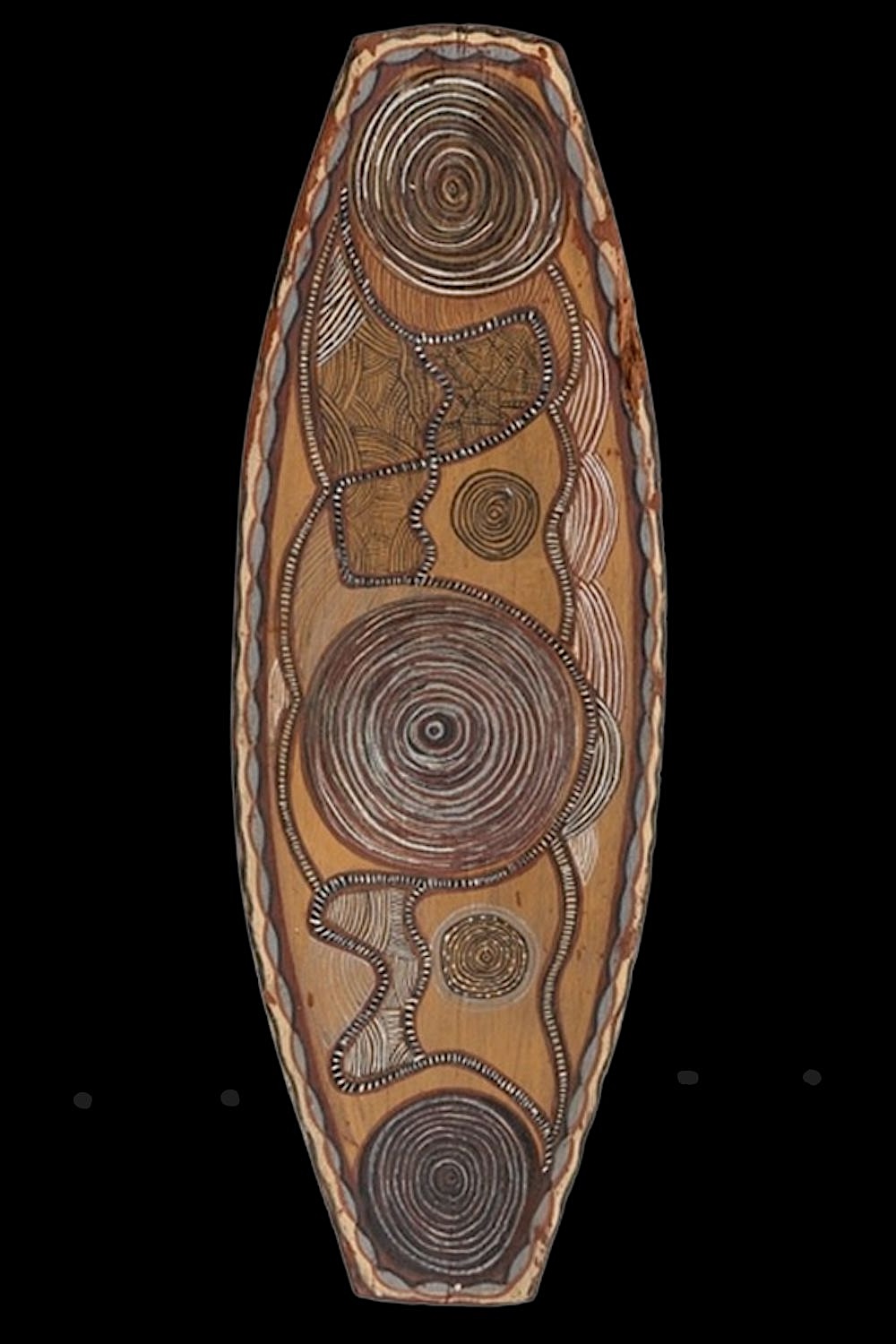
His rare and culturally important paintings preserve ceremonial knowledge, ancestral Dreaming narratives, and symbolic traditions connected to the Fitzmaurice River region and surrounding coastal Country. Strongly grounded in ceremonial abstraction, many of his finest works combine concentric forms, journey lines, and sacred geometric imagery associated with the early Port Keats painting tradition.
Although comparatively few works survive today, those that do are of major historical and aesthetic importance. Mardigan’s bark paintings represent some of the earliest visual records of Wadeye ceremonial traditions and occupy an important place in the broader history of Aboriginal Australian art.
If you have a bark painting by Charlie Mardigan or know more about this artist, I would love to hear from you. Please send me an image or get in touch. I buy early Port Keats paintings and also offer free valuations and authentication advice.
Biography of Charlie Mardigan
Very little biographical information exists on Charlie Mardigan, whose name is occasionally recorded as Charles Mardigan in older collection notes. What is known is that he was active as a senior ceremonial man in the Port Keats region (now Wadeye) in the 1950s and 1960s. He likely belonged to one of the local Murrinhpatha-speaking clans, and his role in ceremonial life would have included custodianship of significant Dreaming narratives and initiation rites.
Like his contemporaries Nym Bunduk, Charlie Brinken, and Indji Tharwul, Mardigan lived and worked at a time when few Aboriginal artists had access to materials, markets, or documentation. Yet his paintings—primarily executed on bark using natural ochres—demonstrate a highly developed symbolic visual language rooted in sacred designs and clan totems.
These works are not decorative; they are ritual maps of meaning, often reserved for initiated viewers. It is likely that Charlie Mardigan was also a carver of Tjuringa and that many of the designs known on bark were a reflection of these engraved sacred wooden tablets. The fact that any of these paintings survive today—despite missionary suppression of ceremonial practice—is a testament to Mardigan’s determination to preserve culture through visual form.
Early Port Keats Bark Painting
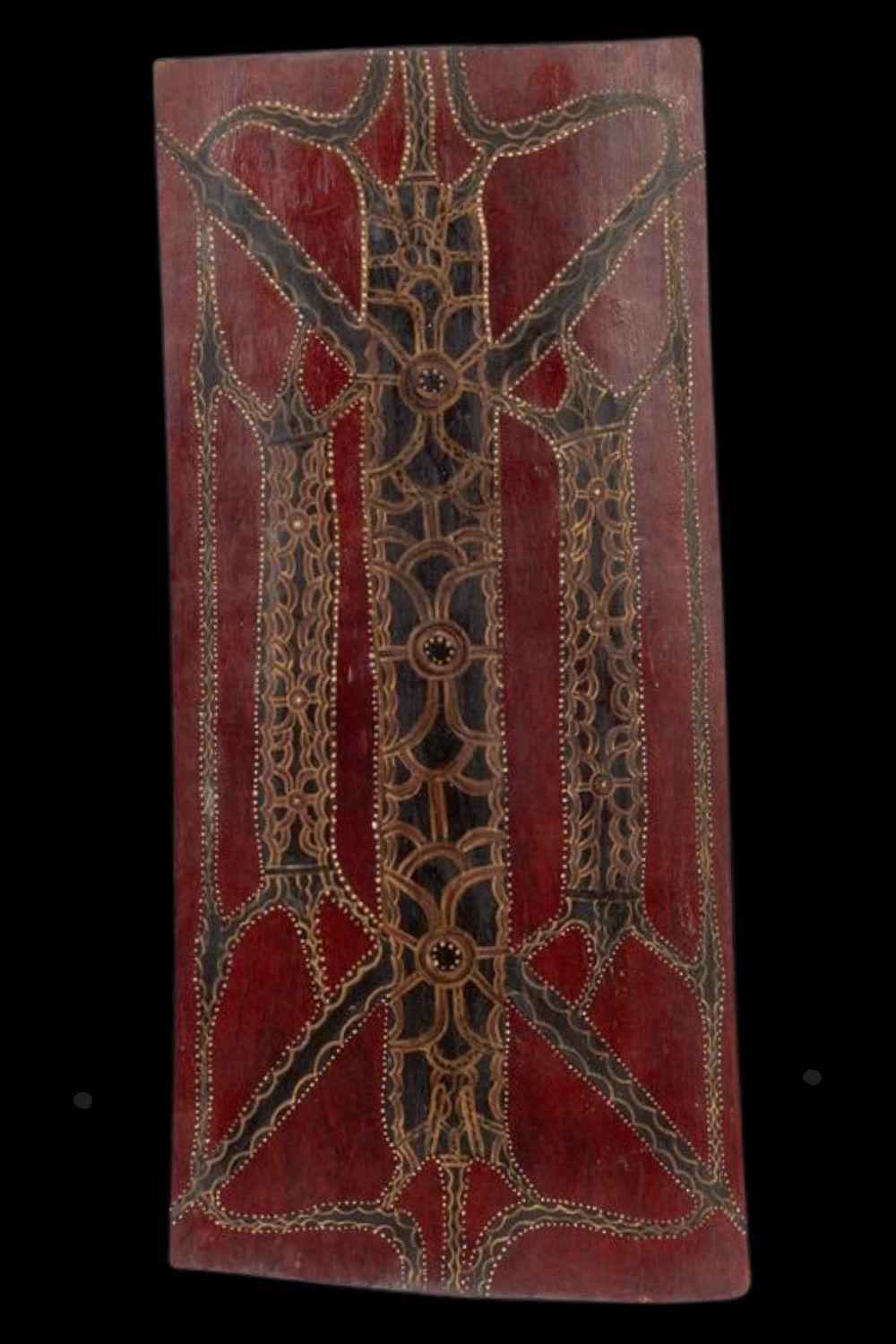
Mardigan’s works follow the Port Keats tradition of painting on bark panels—either oval or rectangular in shape—with natural pigments including red and yellow ochre, white clay, and black charcoal. His iconography reflects sacred churinga-style designs: concentric circles, elongated U-shapes, and linear motifs that mark ancestral sites, waterholes, and spiritual forces.
These elements closely resemble early Aboriginal Art Symbols, though filtered through the unique ceremonial context of Murrinhpatha-speaking communities. There is visual and thematic overlap with aboriginal dot art from Papunya, yet Mardigan’s paintings often pre-date that movement by decades.
Unfortunately, Port Keats paintings did not evolve into a continuous art movement. As a result, collectors and galleries have historically undervalued these works, despite their pioneering status and deep cultural grounding.
Much of Mardigan’s subject matter was sacred in nature, and some paintings may include restricted imagery. This imagery was often painted in such a way that sacred designs became secular in nature.
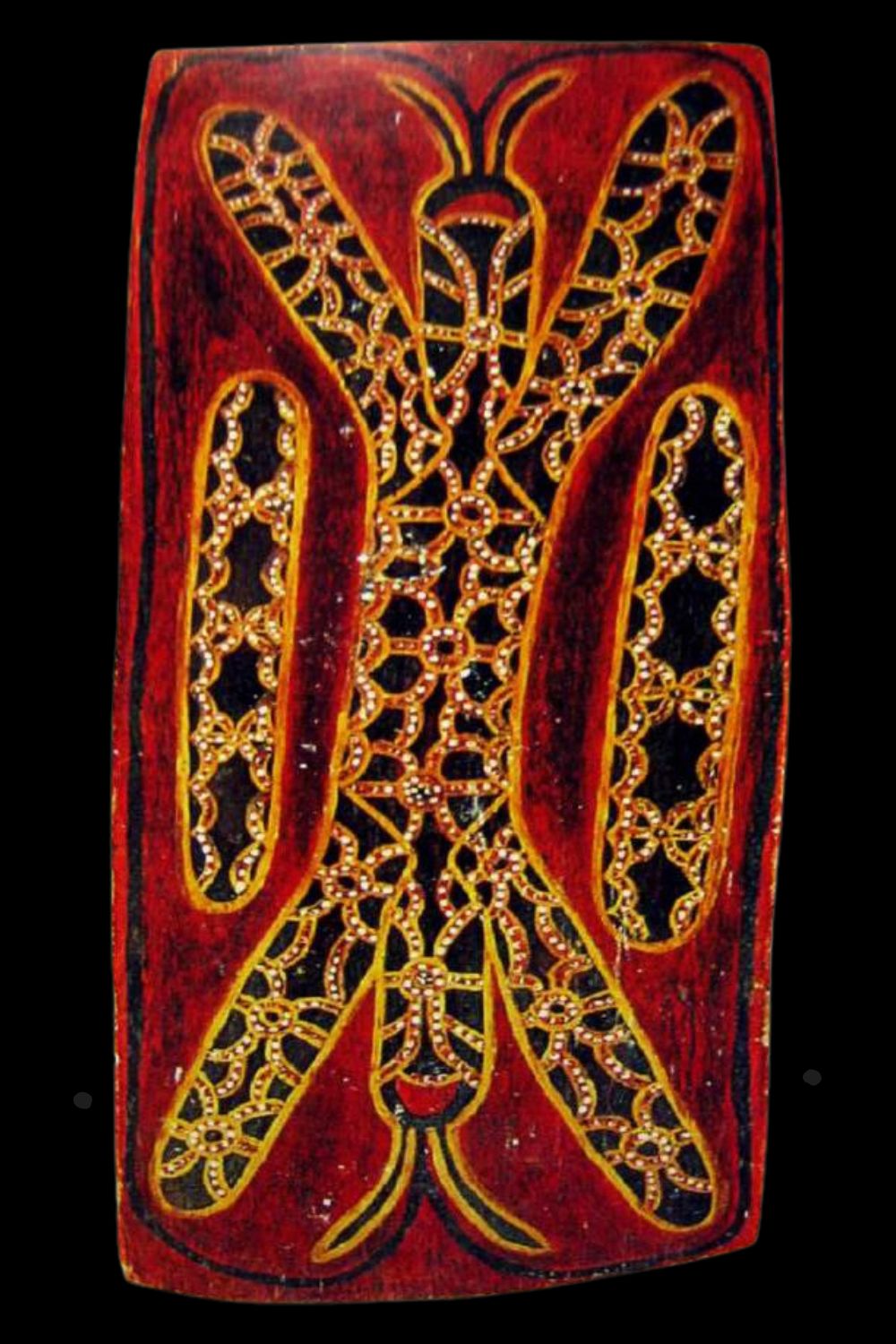
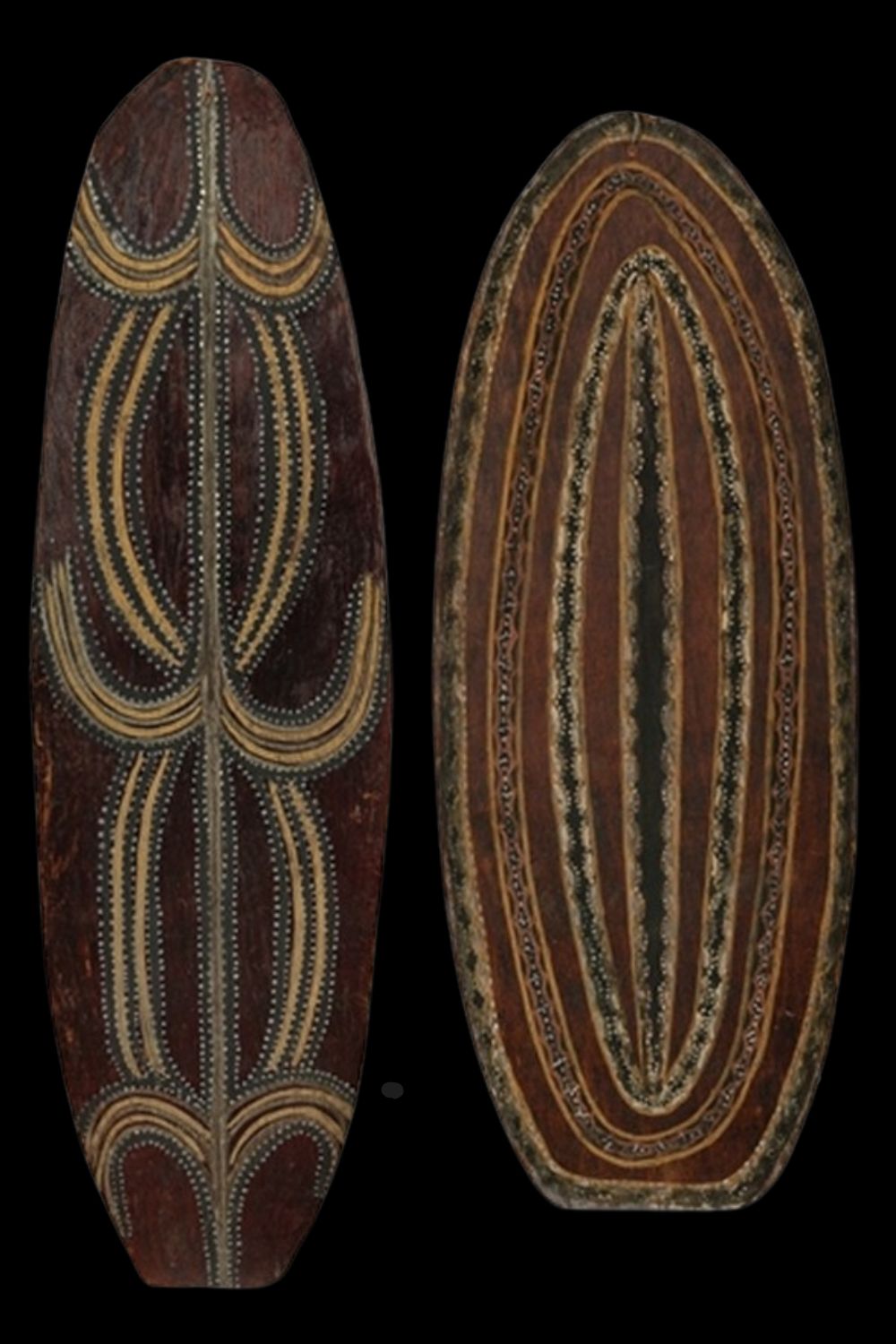
Charlie Mardigan Legacy and Collectibility
Because so little is documented about Charlie Mardigan, his paintings are often overlooked by galleries and underrepresented in exhibitions. However, interest in early Northern Territory bark painters—particularly those from lesser-known regions like Port Keats and Wadeye—is growing.
Today, Mardigan’s works are increasingly recognised by scholars, collectors, and institutions for their originality, rarity, and ceremonial depth. They are an essential part of any serious collection of early Aboriginal bark painting, particularly those focused on Papunya like visual traditions in Arnhem Land and the Top End.
If a confirmed work by Mardigan were to appear on the market today, it would likely be largely overlooked even though it is an ethnographic treasure and a foundational piece of Australian art history.
Do You Own a Bark Painting by Charlie Mardigan?
If you think you may have a painting by Charlie Mardigan—or “Charles Mardigan”—please don’t hesitate to get in touch. Even a photograph can help with identification and historical documentation. I’m always looking to buy early Port Keats bark paintings, and I’m happy to offer free assessments for families, collectors, or institutions looking to understand more about their works.
I’m also seeking further information about other Port Keats artists, including Nym Bunduk, Charlie Brinken, Indji Tharwul, and Bobyin Noongah. Any details—photographs, memories, missionary records—would be deeply appreciated in helping reconstruct this underdocumented chapter of Aboriginal art history.
Article on Port Keats paintings
Further reading
All images featured in this article are presented strictly for educational and informational purposes.
This website may include copyrighted material for which specific authorization has not been obtained from the copyright owner.
All such images are presumed to be the intellectual property of the respective artist or their estate, and are used in accordance with principles of fair dealing or fair use under applicable copyright law.
Charlie Mardigan artwork Images
The following images are of the Artwork of Charlie Mardigan. It is not a complete list of his works. They do however give a good idea of the style and above all the variety of this Aboriginal Artist.