Select Page

Alec Mingelmanganu : Master of the Wandjina

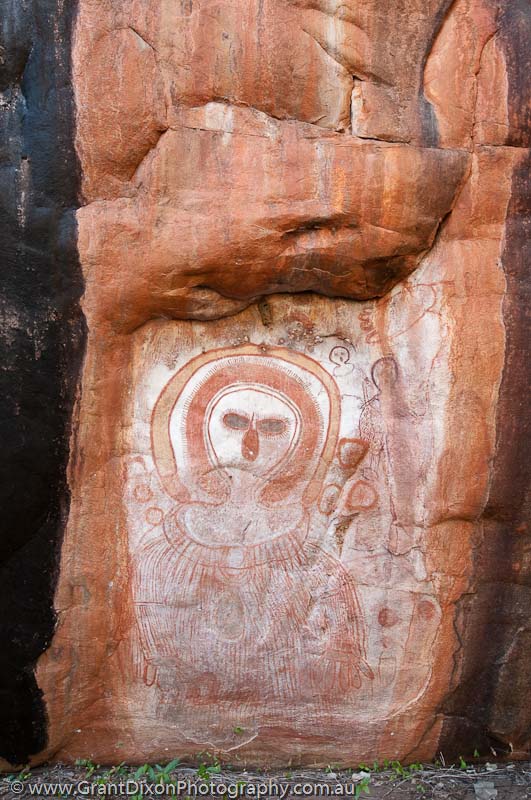
Alec Mingelmanganu was one of the most important early painters within the Wandjina tradition of Kimberley Rock Art. Working primarily around Kalumburu in north-west Western Australia, he helped transform sacred Wandjina imagery from ancestral rock shelters onto Aboriginal bark paintings and later canvas, becoming a foundational figure in the emergence of commercial Kimberley bark painting. His bark paintings and early canvases remain among the most enigmatic and visually arresting works produced for the Aboriginal art market, capturing the presence of these ancestral rain and cloud spirits with remarkable clarity, scale, and spiritual force.

Mingelmanganu’s practice developed directly from the traditional repainting of Wandjina rock art during the 1960s before transitioning to bark painting and later to large-scale canvases for gallery audiences in the early 1980s. This progression from sacred ceremonial sites to portable media gives his work a particular intensity, maintaining a close connection to Country and cultural authority while adapting to new artistic contexts.

This page provides expert guidance on identifying paintings by Alec Mingelmanganu, including direct comparisons with other major Wandjina painters and detailed analysis of the stylistic features that distinguish his work from that of other Kimberley artists.

If you own a painting that you believe may be by Alec Mingelmanganu, you are welcome to send images for a confidential assessment. I am always interested in viewing works by this artist and can provide guidance on attribution, authenticity, and market value

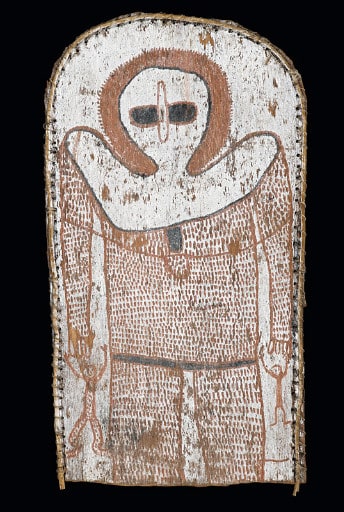
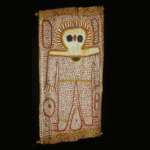
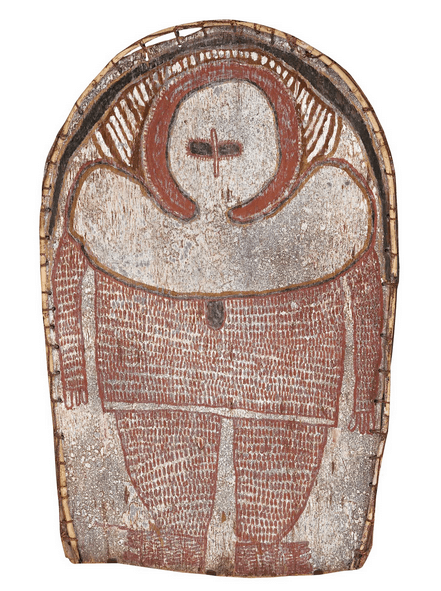
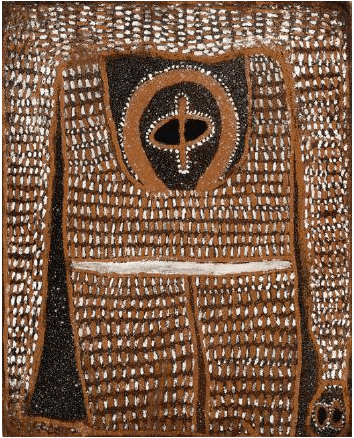
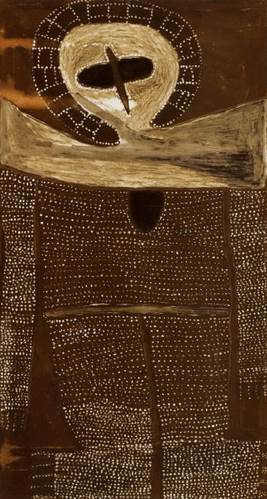
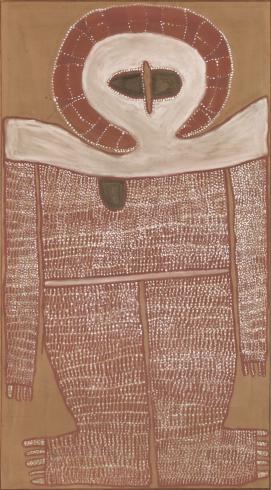
Large Wandjina bark painting by Alec Mingelmanganu showing arch-shaped eyes, upward sweeping shoulders, and dense ochre infill characteristic of early Kimberley Wandjina art
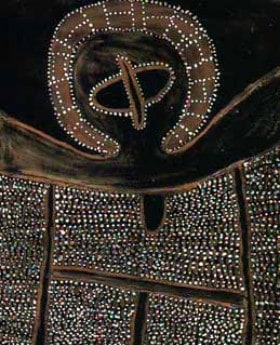
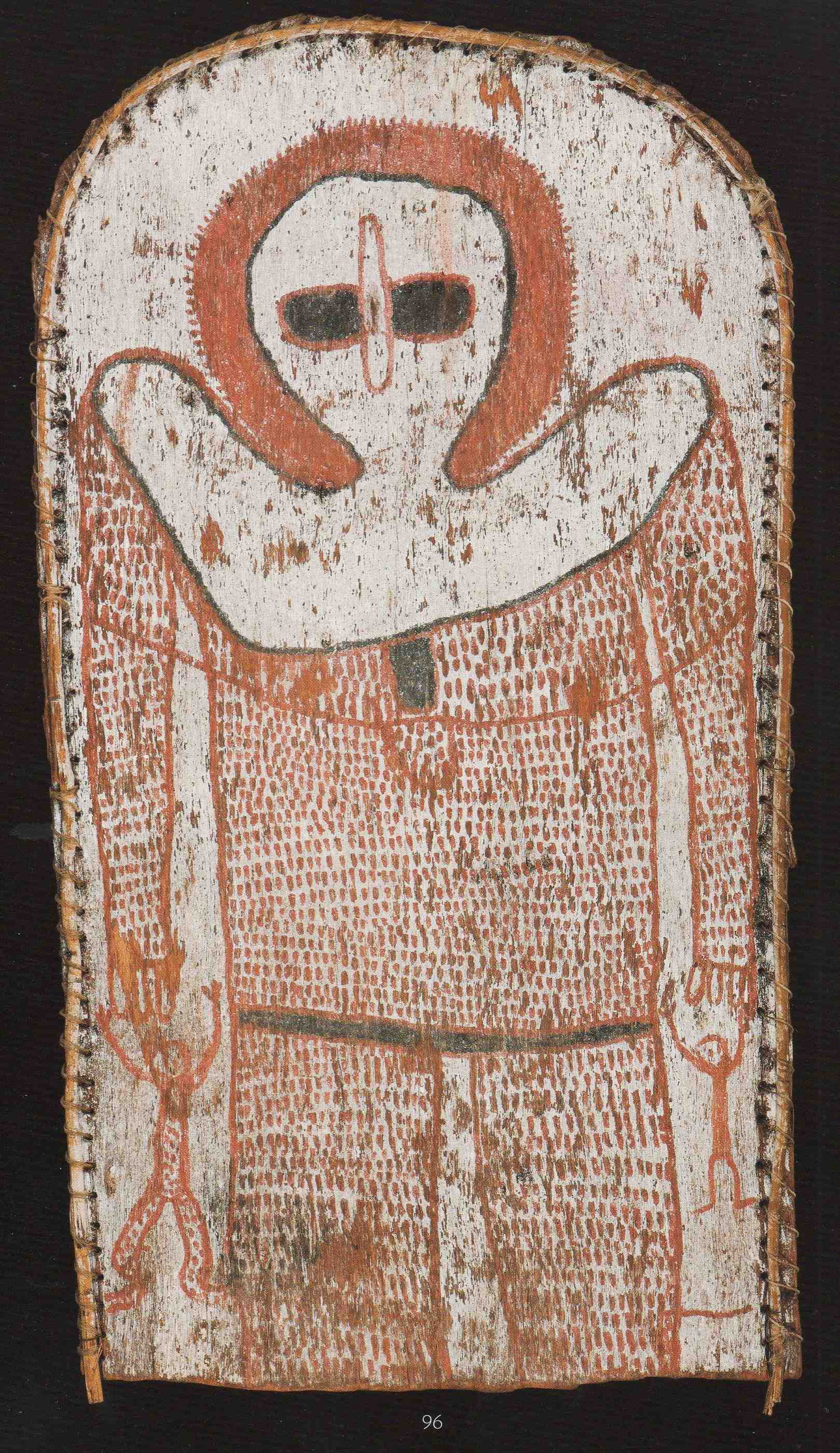
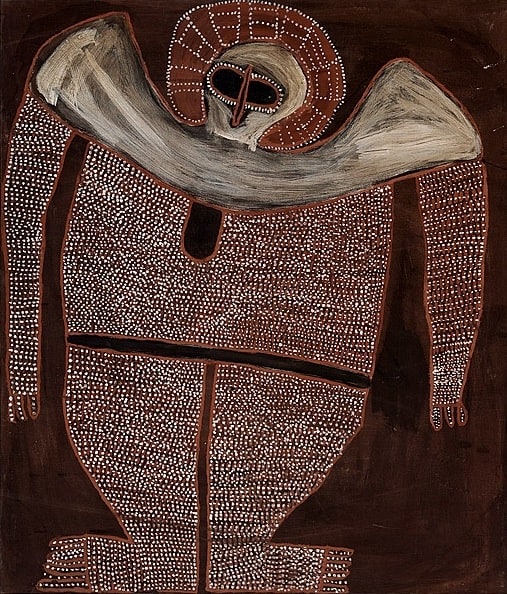
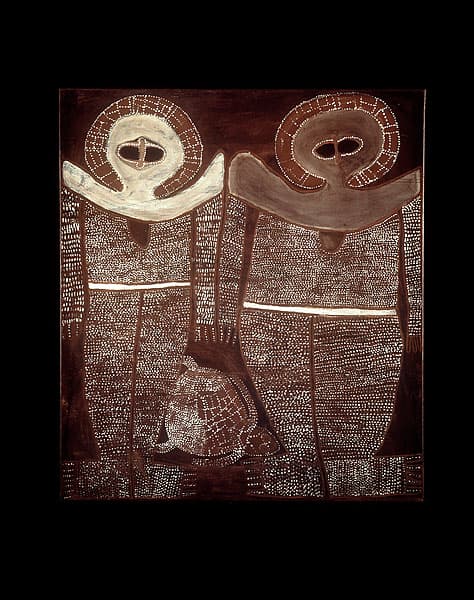
Large Wandjina canvas painting by Alec Mingelmanganu showing arch-shaped eyes, sweeping shoulders, and dense white ochre dot infill characteristic of early Kimberley canvas paintings

Style

Alec Mingelmanganu’s Wandjina paintings are among the most distinctive produced during the early development of commercial Kimberley Aboriginal art. His figures are usually monumental in scale, often filling almost the entire bark or canvas surface and creating the impression that the ancestral being is too large to be contained within the composition.

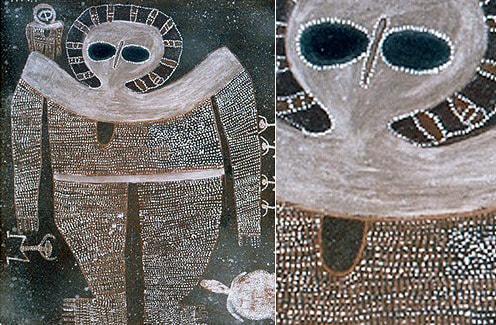
One of Alec’s most recognisable stylistic features is the treatment of the eyes. In many works he depicts the eyes as two opposing arch forms separated by a thin vertical nose. In earlier paintings the eyes are often closer together and more oval in shape. His Wandjina also commonly feature dramatic upward sweeping shoulder forms that rise sharply beside the head, sometimes extending almost level with the bottom of the nose itself. These shoulders appear related to Wandjina figures Alec encountered during visits to the Lawley River area with anthropologist Ian Crawford.

Alec usually painted full frontal Wandjina figures on either arch-shaped bark or rectangular compositions. Dense dotted infill, compressed composition, and the close relationship between the figure and the edge of the bark all contribute to the extraordinary spiritual intensity of his finest works.

Alec Mingelmanganu Compared With Other Wandjina Artists

The closest stylistic comparison to Alec Mingelmanganu is Jack Karedada. Like Alec, Jack frequently used the entire bark surface and painted slightly upward curving shoulder forms rising beside the head. Both artists used opposing arch-shaped eyes separated by a narrow nose. However, Jack Karedada’s eyes are usually considerably smaller and more restrained, while Alec’s shoulders are generally more exaggerated and dramatic.

Charlie Numbelmoore developed a different Wandjina style characterised by large round eyes with very fine eye lashes and a more solemn facial presence. Charlie’s paintings often derive their power from the haunting expression of the eyes whereas Alec’s works are usually more imposing compositionally, with the entire figure dominating the bark surface.

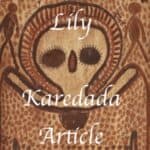
Lily Karedada generally painted softer and more decorative Wandjina figures, often with rounded eyes and a slightly more approachable appearance. Some early Lily Karedada paintings, however, show arch-shaped eyes influenced by the Alec and Jack Karedada style.

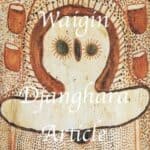
Waigin Djanghara also commonly used round eyes, though these are usually smaller than Charlie Numbelmoore’s and positioned lower on the face. Compared with Alec Mingelmanganu’s compressed and monumental compositions, Waigin’s figures generally possess a calmer and more balanced presence.

For collectors and researchers, differences in eye structure, shoulder form, scale, and compositional compression are often critical when attempting to identify early unsigned Wandjina bark paintings.

Biography

Alec Mingelmanganu lived mainly in and around Kalumburu in the Kimberleys in Western Australia. He began painting in the late 1960s or early 1970s.

Anthropologist Kim Akerman first noticed Alec’s work during a visit to Kalumburu in 1974. Kim discovered a discarded Wandjina painting used during a ceremony. This Wandjina was later shown during the 1975 Derby Boab Week Art Show under the title ‘Australian Gothic’.

Photograph of Kimberley Wandjina artist Alec Mingelmanganu with gallerist and author Mary Macha during the early development of Kimberley canvas painting
MingelmanganuAlec 012011189181
Left: Mary Macha and Alec Mingelmanganu


Large Wandjina painting on canvas by Alec Mingelmanganu with exaggerated upward sweeping shoulders, arch-shaped eyes, and dense white ochre dot infill

In 1979 Mary Macha began investigating whether traditional ochres worked on canvas. The resulting artworks were the first canvases from the Kimberley region. Mingelmanganu participated in the ochre canvas experiment. Mingelmanganu wanted to replicate the life-size of Wandjina cave paintings. Canvas being larger than bark slabs allowed him to achieve this. His artworks on this larger scale drew immediate attention to his genius.

In September of the following year, Alec had a solo show at the government marketing company’s Aboriginal Traditional Arts in Perth. The four canvases produced for this exhibition are amongst the finest depictions of Wandjina ever made for sale.


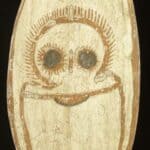
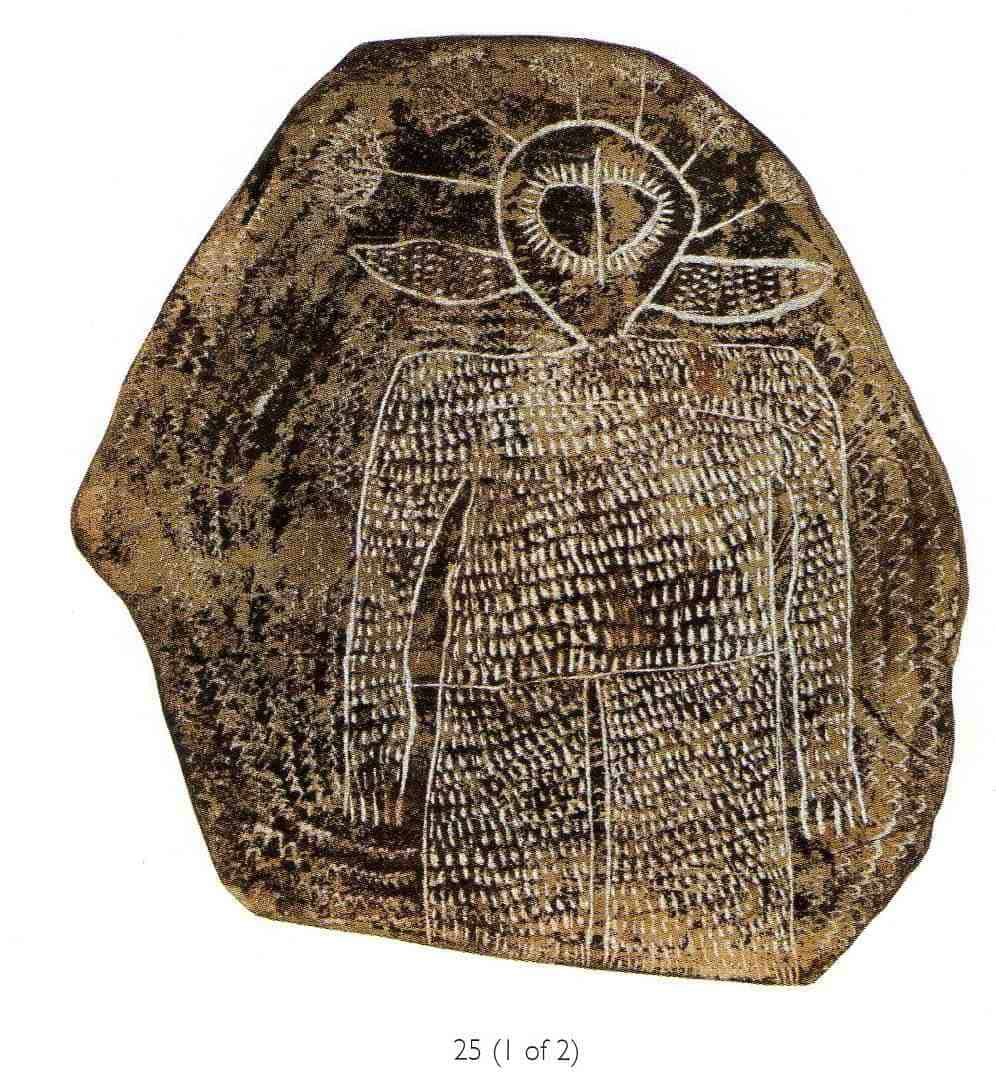
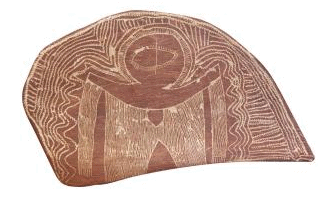
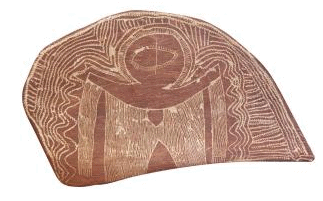
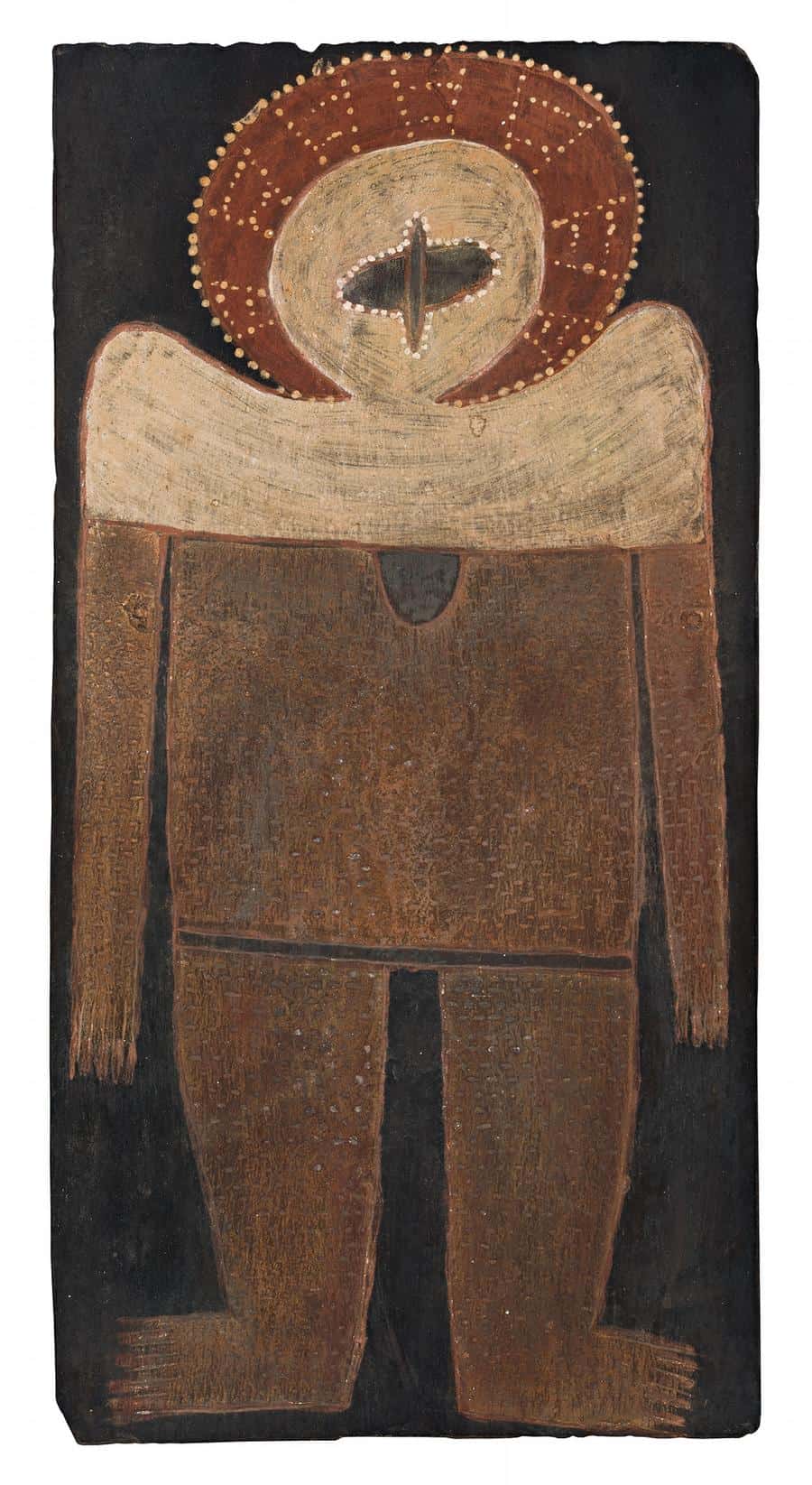
Wandjina figure engraved on slate by Alec Mingelmanganu with arch-shaped eyes, radiating halo, and dense engraved infill patterns

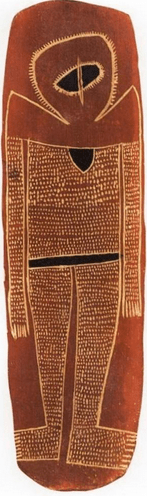
Alec Mingelmanganu on Slate and engraved Board

Alec Mingelmanganu also incised a few smaller Wandjina on slate and on softwood planks.  These are still collectible but not as desirable as his paintings. Many of these works on slate do not carry the presence of his paintings.

Alec’s motivation to do Wandjina paintings was to encourage the continuation of cultural practices and religious beliefs. His works have a strong spiritual presence. Wandjina are still painted today, but as a pioneer painter Alec’s works hold an important place in Australian Aboriginal art history.

Alec died in 1982.

Mingelmanganu is sometimes spelled Alec Mintjilmanganu or Alec Mijelmarngu

Why Are Alec Mingelmanganu Paintings Important?

Alec Mingelmanganu was one of the pioneering artists who helped transform Wandjina imagery from sacred rock shelters onto bark and later canvas during the early development of commercial Kimberley Aboriginal art. His paintings are important not only for their remarkable visual power, but also because they retain a strong connection to ceremonial tradition and the early history of contemporary Aboriginal art in the Kimberley.

All images in this article are for educational purposes only.

This site may contain copyrighted material the use of which was not specified by the copyright owner. 

Are Alec Mingelmanganu Paintings Valuable?

Yes. Paintings by Alec Mingelmanganu are highly collectible, particularly early bark paintings and the large ochre canvases produced around 1979–1981. Value is influenced by condition, provenance, size, period, and the strength of the composition. His finest works are regarded among the most important early Wandjina paintings and can sell for $50,000+ AUD with small slates selling for as little as $1000AUD 

Did Alec Mingelmanganu Paint on Canvas?

Yes. Alec Mingelmanganu was among the first Kimberley artists to experiment with natural ochres on canvas during the late 1970s. These large-scale works were important in the development of contemporary Kimberley Aboriginal art because they allowed Wandjina imagery to be painted on a scale much closer to the original rock paintings.

Can I Sell an Alec Mingelmanganu Painting?

Yes. If you own a painting that you believe may be by Alec Mingelmanganu, clear photographs of the front and back, dimensions, and any known provenance can assist in assessing authenticity and market value. Early bark paintings and major canvases are particularly sought after by collectors.

Alec Mingelmanganu Bark painting images

The following bark painting are not a complete list of works but give a good feel for the variety and style of this artist.

If this post has been informative please take the time and make the effort to share it on social media. By clicking any of the share buttons below you create a link from your social site to this article. Links are what google uses to calculate what information on the web is useful. By sharing this article you are letting google know you found my article / images of some value. Thanks!