Select Page

Lofty Bardayal Nadjamerrek (c.1926–2009): Master of Western Arnhem Land

Lofty Bardayal Nadjamerrek stands among the great masters of Oenpelli Art and the ancient painting traditions of Arnhem Land Rock Art. A senior Kunwinjku lawman from the Stone Country escarpments, Nadjamerrek developed a highly refined visual language that bridged ancestral rock painting with contemporary bark painting. His works are immediately recognisable for their precision, restraint, and luminous surface quality, qualities that place him among the most technically accomplished Aboriginal painters of the twentieth century.

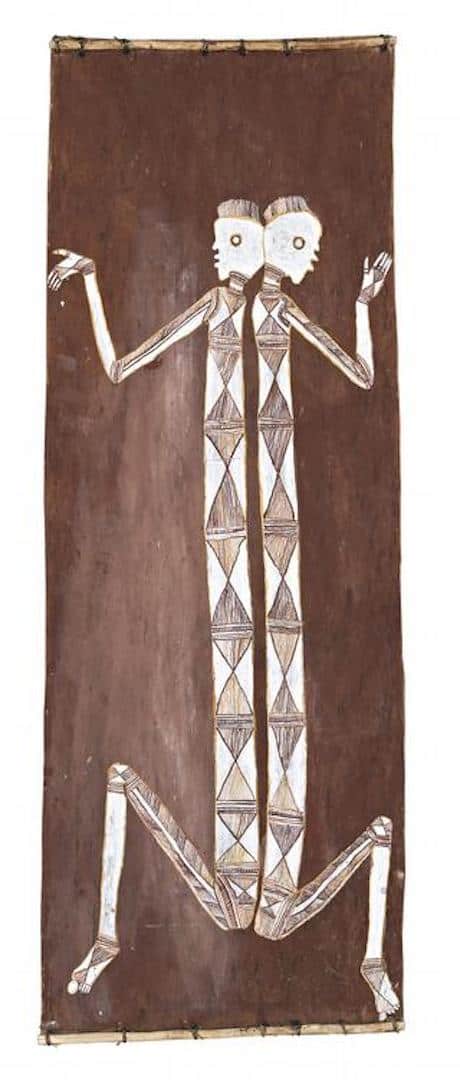
His paintings are distinguished by finely controlled parallel-line rarrk rather than the dense cross-hatching often associated with Aboriginal X-Ray Art. Painted on eucalyptus bark against deep red ochre or charcoal-black grounds, his compositions typically focus upon a single subject rendered with exceptional clarity and balance. Elongated Mimih Spirits,  Namarrkon the Lightning Spirit, ceremonial figures, kangaroos, fish, reptiles, and other ancestral beings recur throughout his work, often depicted with elegant anatomical detail derived from the ancient rock shelters of the Arnhem Land plateau. He also painted important examples of Animals in Aboriginal Art and powerful depictions of the Rainbow Serpent within Kunwinjku ceremonial tradition.

Unlike many artists whose styles changed dramatically over time, Nadjamerrek refined a remarkably consistent artistic vision throughout his career. The measured stillness, compositional discipline, and spiritual authority of his paintings give his finest works a timeless quality that continues to distinguish them within Australian Aboriginal art.

His paintings are now held in major Australian and international collections including the National Gallery of Australia, the National Gallery of Victoria, and important museum and private collections in Europe and the United States.

As a dedicated specialist in the works of Bardayal “Lofty” Nadjamerrek AO, I actively acquire important examples for placement in major collections. If you believe you may own an original work by this important artist, you are welcome to send images for a confidential assessment of authenticity and current market value.

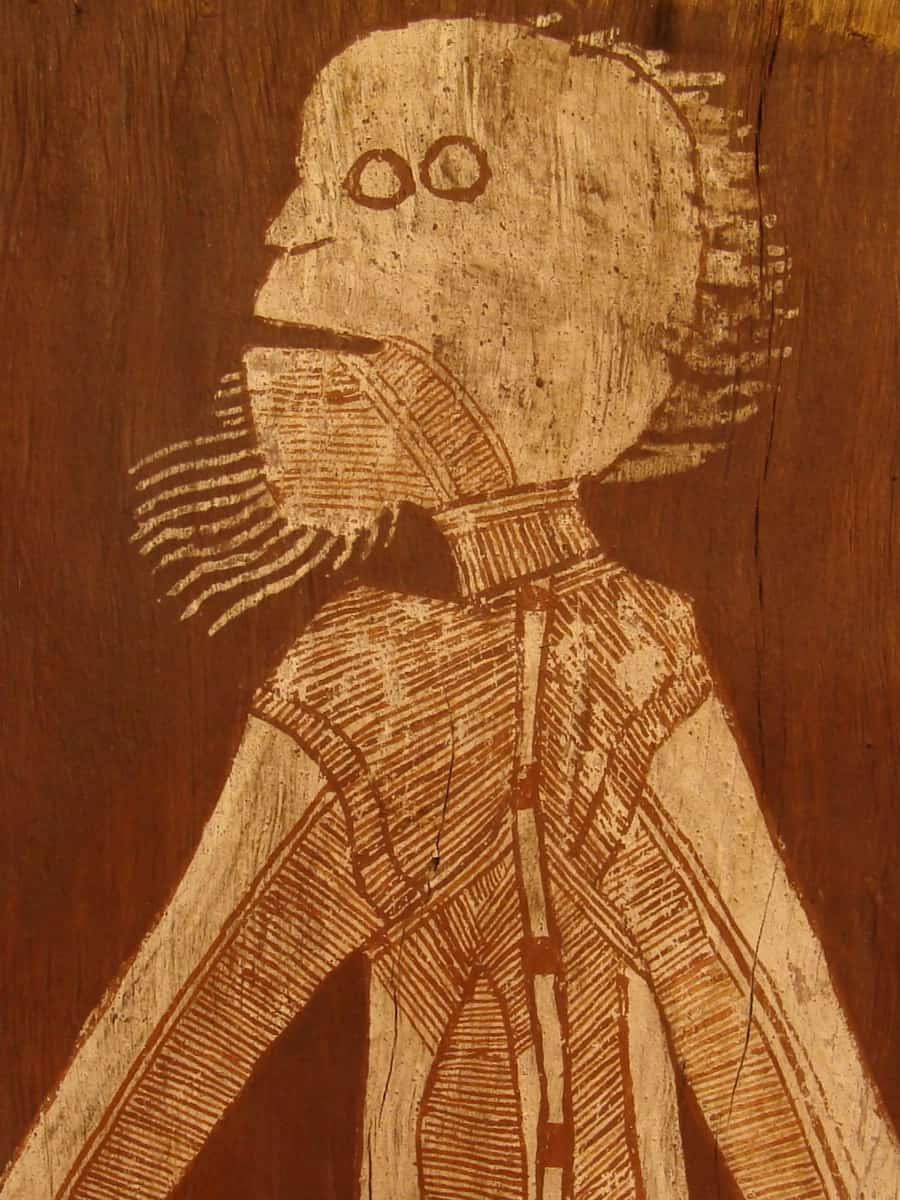
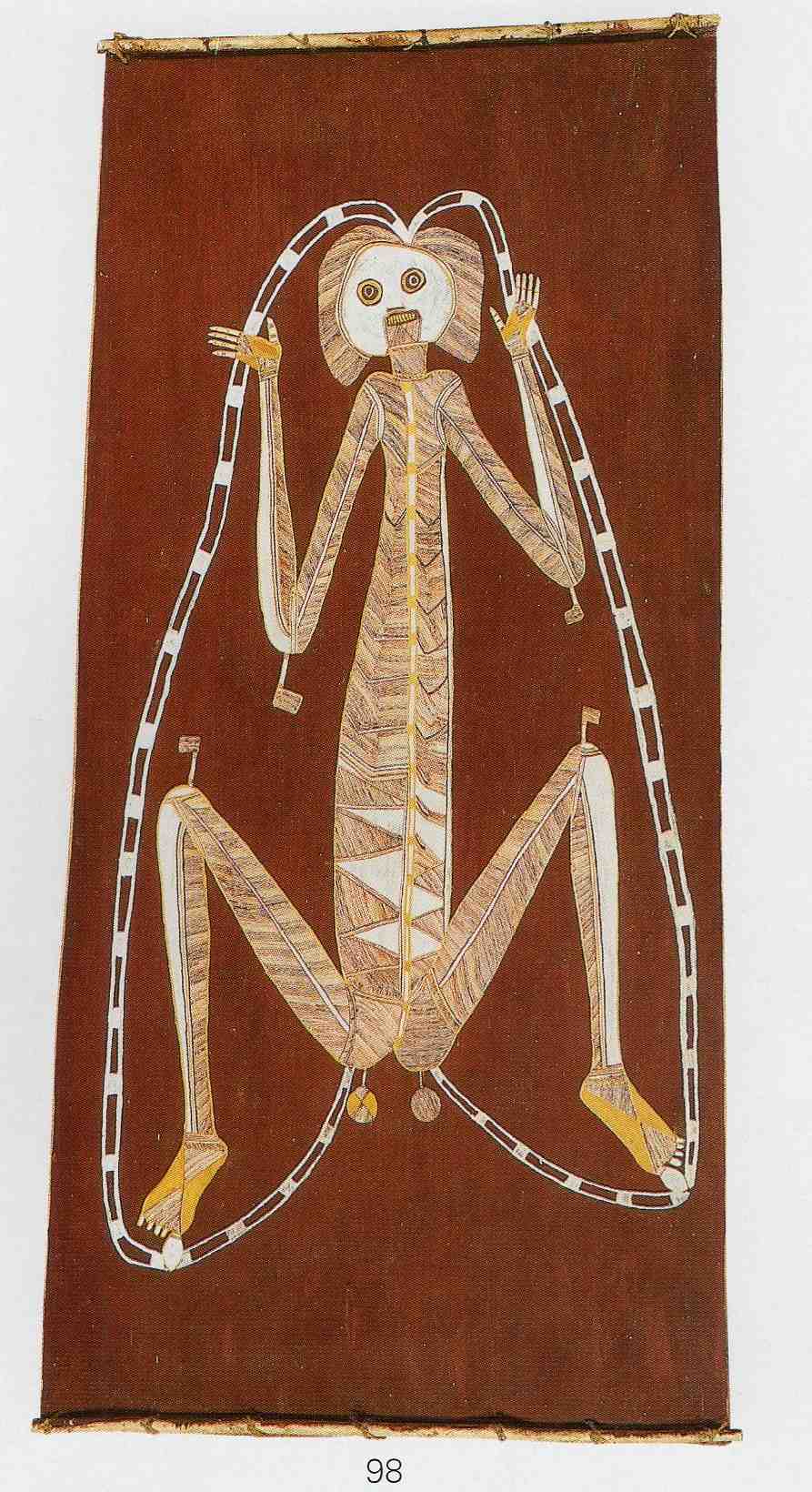
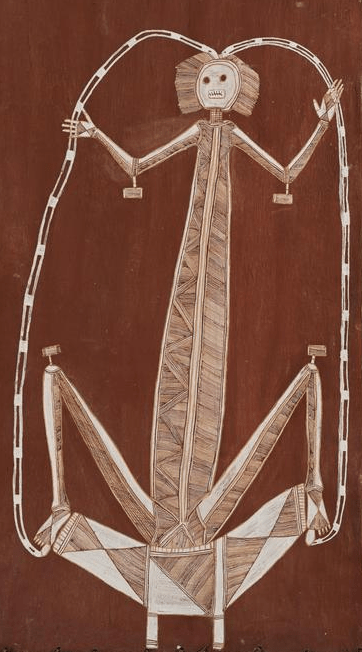
Lofty Bardayal Nadjamerrek bark painting of Namarrkon, the Lightning Spirit, featuring bold ochre tones, ceremonial rarrk crosshatching, and arcing lightning motifs, representing Kuninjku spiritual iconography from Western Arnhem Land Aboriginal art

Namarrkon By Lofty Nadjamerrek

Lofty Nadjamerrek Style and Identifying Features

Unlike many of his contemporaries, Lofty Bardayal Nadjamerrek favoured the single-directional hatching associated with earlier Western Arnhem Land masters such as Dick Murramurra. His paintings are distinguished by meticulously controlled parallel-line rarrk composed of extremely fine, closely spaced strokes that create a restrained and luminous surface quality. Rather than relying upon dense decorative infill, Nadjamerrek achieved power through clarity, balance, and precision.

A defining characteristic of Lofty’s bark paintings is their compositional discipline. He typically painted individual subjects against a single-colour ochre or charcoal ground, allowing the figure to dominate the surface with remarkable elegance and authority. Unlike many Arnhem Land painters who combined multiple themes within a single composition, Nadjamerrek generally focused each bark upon a single ceremonial subject—either an ancestral spirit figure, an animal, or a ceremonial scene. This restraint gives his finest works an almost monumental stillness and clarity.

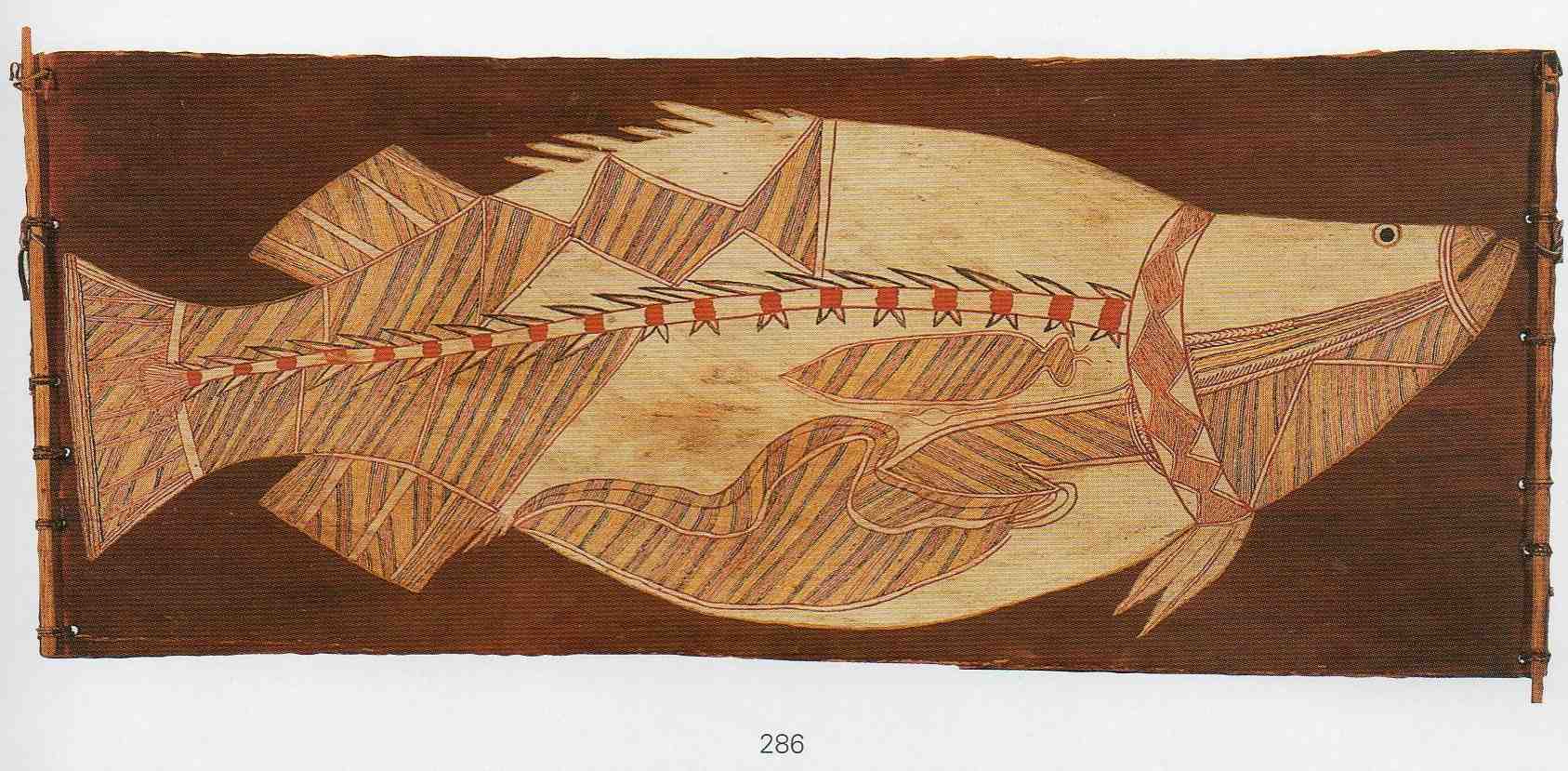
His paintings frequently reveal the internal anatomy of animals and spirit beings—spines, organs, ribs, and skeletal structures—affirming the spiritual essence and ancestral reality of the subject in accordance with Kunwinjku ceremonial tradition. Kangaroos, barramundi, turtles, crocodiles, echidnas, Mimih spirits, Namarrkon, and Rainbow Serpent beings were among his most important recurring subjects.

Importantly, Nadjamerrek did not radically alter his style throughout his long career. Instead, his paintings became progressively more refined and controlled over time. Early works already display the essential characteristics for which he became famous, while later paintings demonstrate an extraordinary confidence, subtlety, and technical precision that place him among the greatest masters of Arnhem Land bark painting.

Collecting Lofty Nadjamerrek Bark Paintings

Lofty Bardayal Nadjamerrek remains one of the most sought-after masters of western Arnhem Land bark painting. His finest works combine exceptional technical refinement with direct links to the ancient rock painting traditions of the Arnhem Land escarpment, qualities that continue to distinguish his paintings within the Aboriginal art market.

Large bark paintings generally achieve stronger prices than smaller works from the same period, particularly monumental depictions of Mimih spirits, Namarrkon, Rainbow Serpents, and ceremonial figures. However, even small early bark paintings remain highly collectible due to their historical importance and the consistency of Nadjamerrek’s artistic quality throughout his career.

Traditional eucalyptus bark paintings are considerably more valuable than his later works on paper or card. Collectors particularly prize bark paintings from the 1960s through to the 1980s, when the connection to the classical Oenpelli bark painting tradition remained strongest.

Subject matter also strongly affects value. Paintings depicting creator spirits, ceremonial beings, Mimih spirits, and important Dreaming subjects are generally more desirable than straightforward animal studies. Animal paintings linked to known ceremonial narratives or ancestral stories tend to command stronger collector interest than depictions of common food animals alone.

Condition is critically important. Works with stable bark, minimal pigment loss, and strong ochre preservation are significantly more desirable, as professional restoration of bark paintings can be difficult and expensive. Flat barks are also generally preferred over heavily bent or warped examples.

Because Nadjamerrek maintained a remarkably consistent artistic standard throughout his life, provenance, condition, subject matter, and scale often become the key factors determining value and collectability.

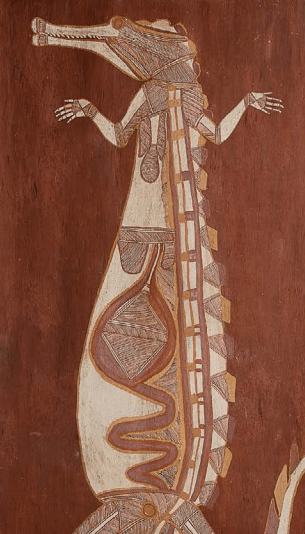
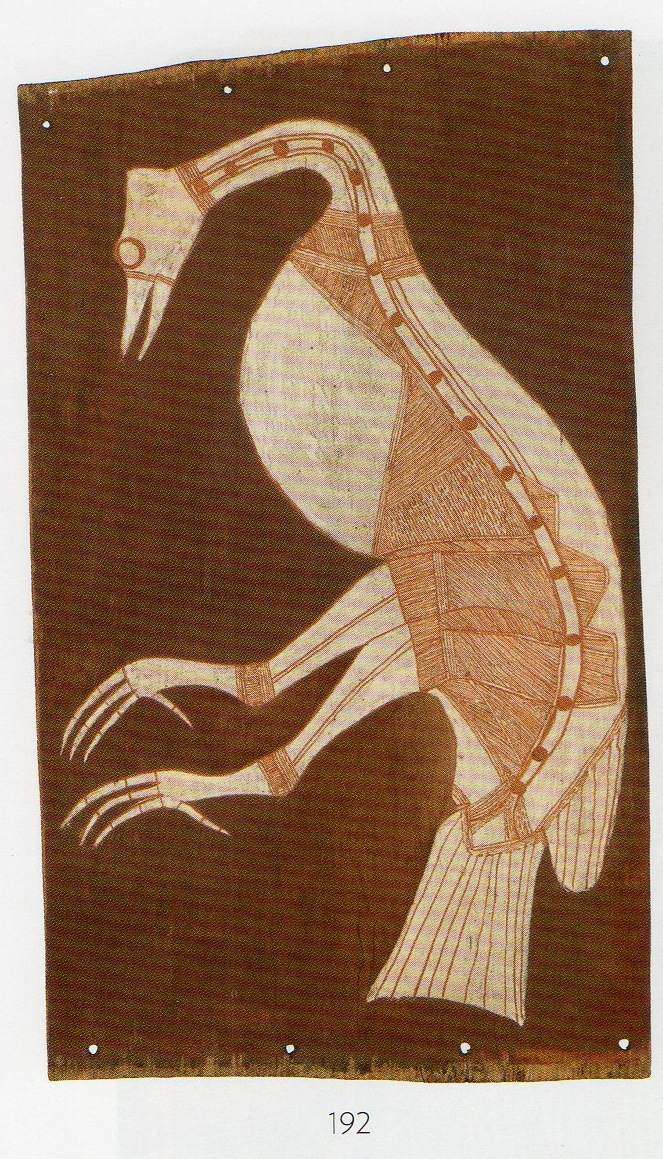
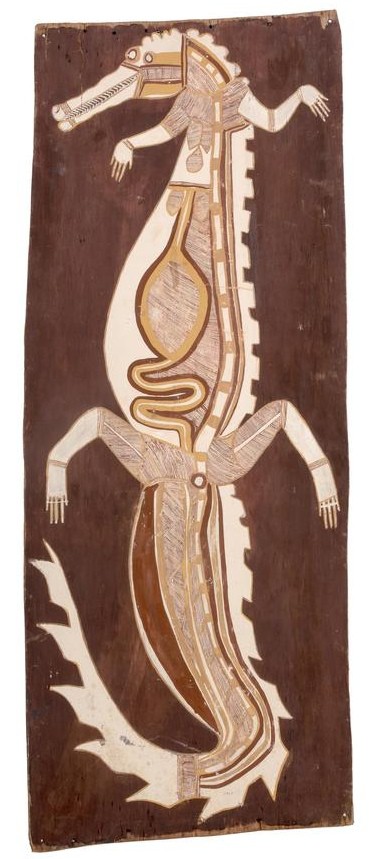
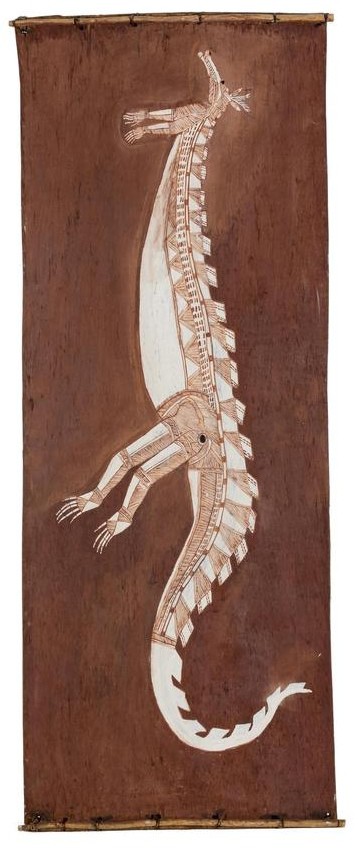
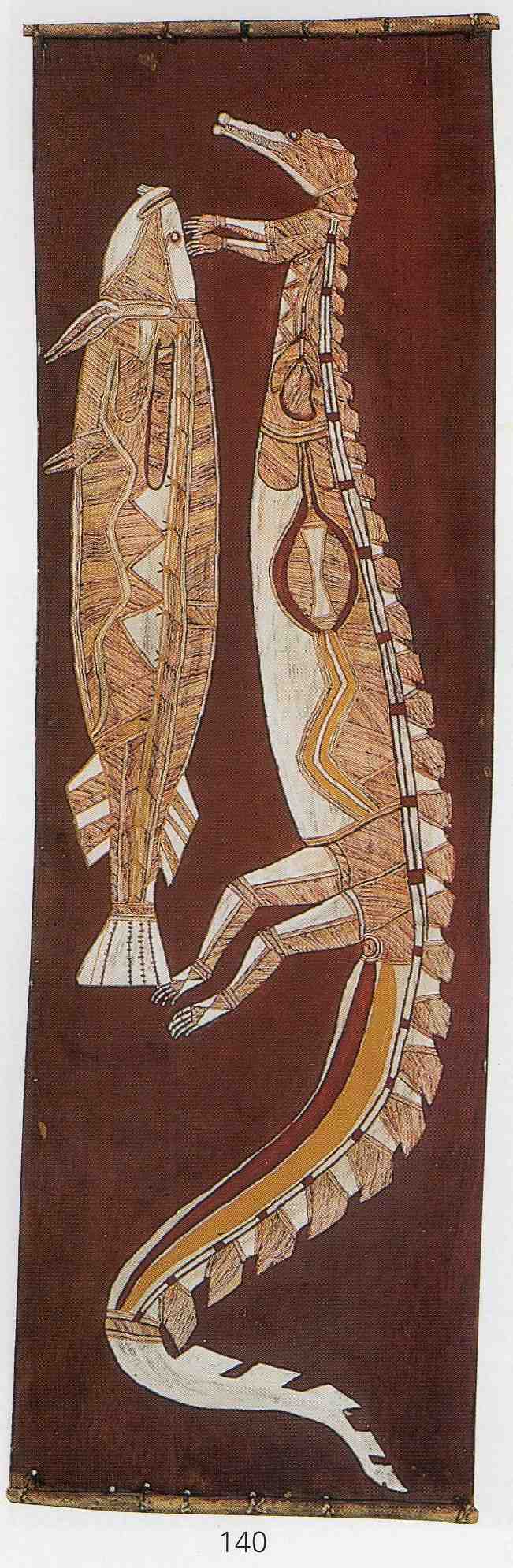
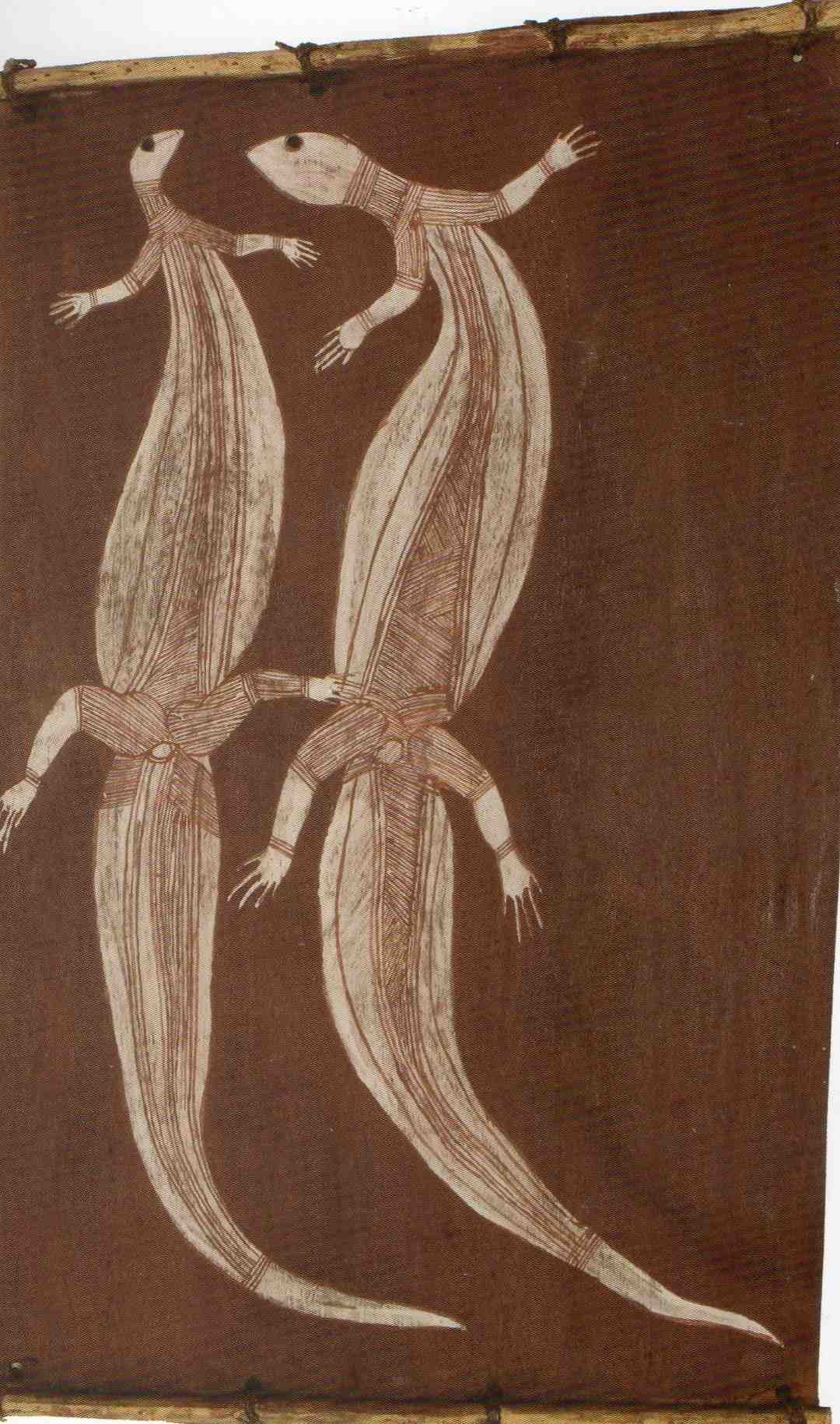
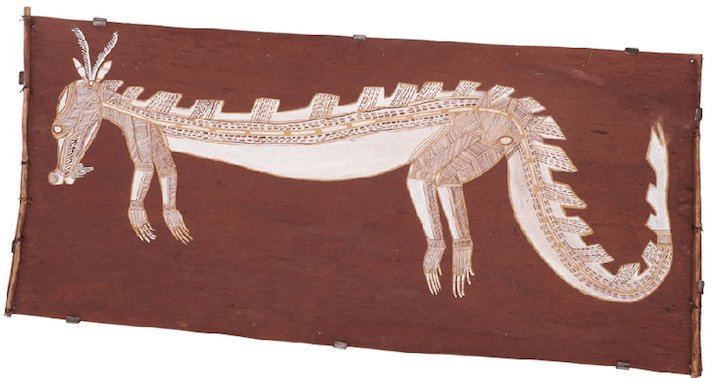
Lofty nabardayal nadjamerrek crocodile

Lofty Nadjamerrek Compared With Other Arnhem Land Artists

Lofty Bardayal Nadjamerrek is often compared with major western Arnhem Land painters such as David Yirawala, Dick Murramurra, and Wally Mandarrk, though his work possesses a distinctly restrained and highly refined character.

Like Yirawala, Nadjamerrek painted major ancestral subjects including Namarrkon, Mimih spirits, fish, and Rainbow Serpent beings. However, Yirawala often relied upon dense decorative cross-hatching, while Nadjamerrek remained closer to the clarity and anatomical structure of Arnhem Land rock painting traditions. Lofty’s use of parallel-line rarrk and negative space gives his paintings a calmer and more contemplative quality.

Dick Murramurra painted similar spirit subjects using related parallel-line techniques, although his line work is generally broader and less tightly controlled. While Nadjamerrek’s paintings display greater refinement and compositional balance, Murramurra’s creator beings and spirit figures often possess a more primal force. One notable exception is Nadjamerrek’s Rainbow Serpent paintings, which combine both spiritual intensity and technical precision.

Compared with Wally Mandarrk, Nadjamerrek used far more internal negative space within his figures. Mandarrk frequently filled entire subjects with dense rarrk, whereas Nadjamerrek allowed the anatomy and ceremonial form of the figure to remain visually clearer and easier to read.

From Rock Painter to Internationally Collected Artist

Lofty Bardayal Nadjamerrek was born around 1926 in the Mann River region of western Arnhem Land and belonged to the Mok clan of the Kunwinjku people. Raised in the Stone Country, he learned ceremonial law, sacred geography, and rock painting traditions directly from senior elders, including his father Yanjorluk, an important rock painter and cultural leader.

Before becoming known as an artist, Nadjamerrek worked as a buffalo shooter, miner, timber cutter, gardener, and stockman. He began painting commercially at Oenpelli (Gunbalanya) in 1969, translating the ancient visual traditions of Arnhem Land rock shelters onto bark for a wider audience. His paintings quickly became recognised for their restrained elegance, finely controlled parallel-line rarrk, and spiritually charged depictions of Mimih spirits, Namarrkon, Rainbow Serpents, and x-ray animals.

Unlike many artists whose styles changed dramatically over time, Nadjamerrek refined a highly consistent visual language rooted in ancestral tradition. By the 1970s and 1980s he had become one of Arnhem Land’s most respected cultural leaders and artists. He later helped establish the Kabulwarnamyo homeland community on his ancestral country and worked closely with anthropologists, ecologists, and art historians documenting rock art and ceremonial knowledge.

Nadjamerrek was notably the only Aboriginal bark painter to be awarded the Order of Australia, one of the nation’s highest civilian honours, recognising not only his artistic brilliance but also his importance as a cultural leader and custodian. His death in 2009 marked the symbolic end of a foundational generation of Oenpelli artists who bridged ancient rock painting traditions with the modern bark painting movement.

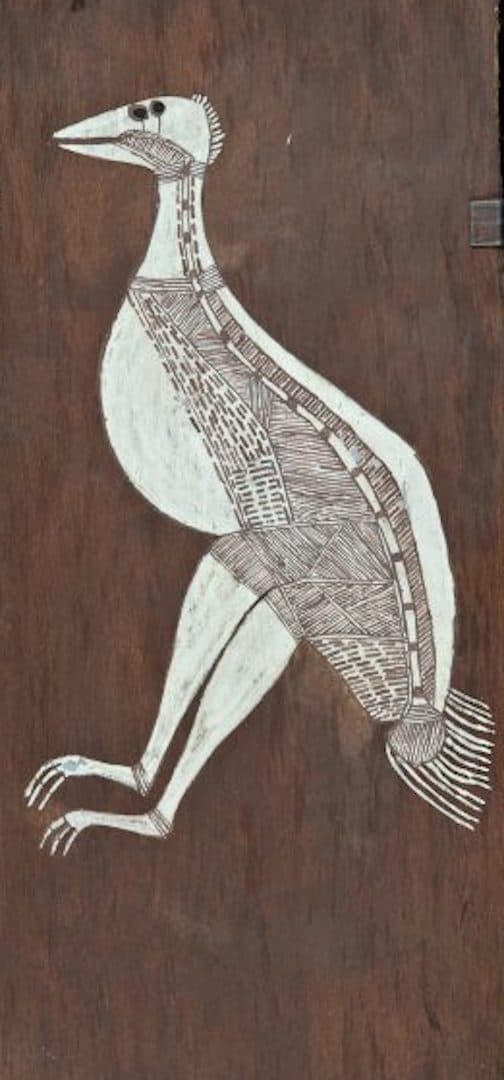
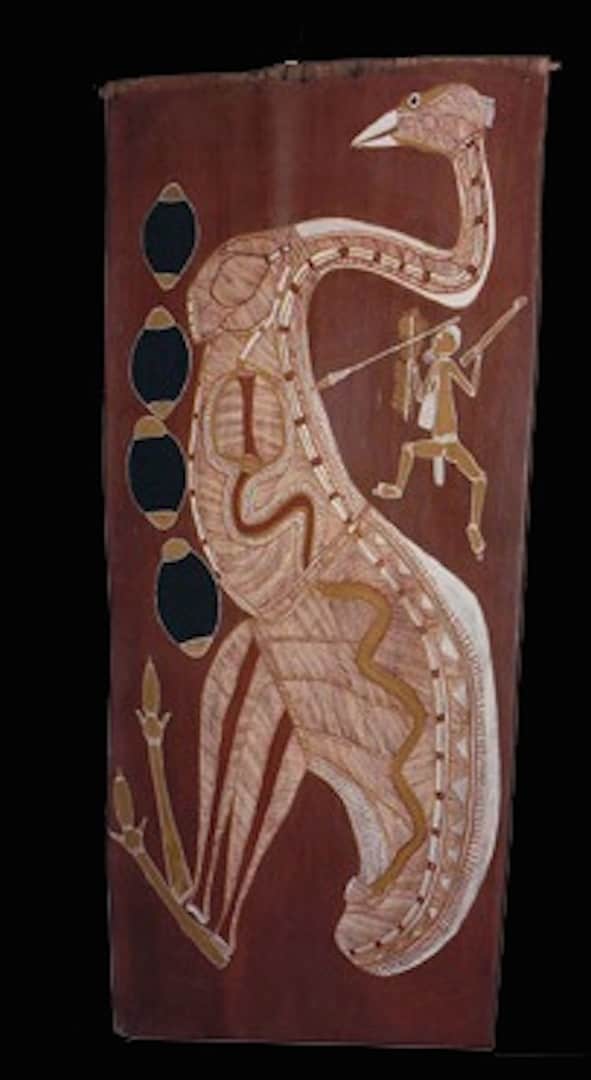
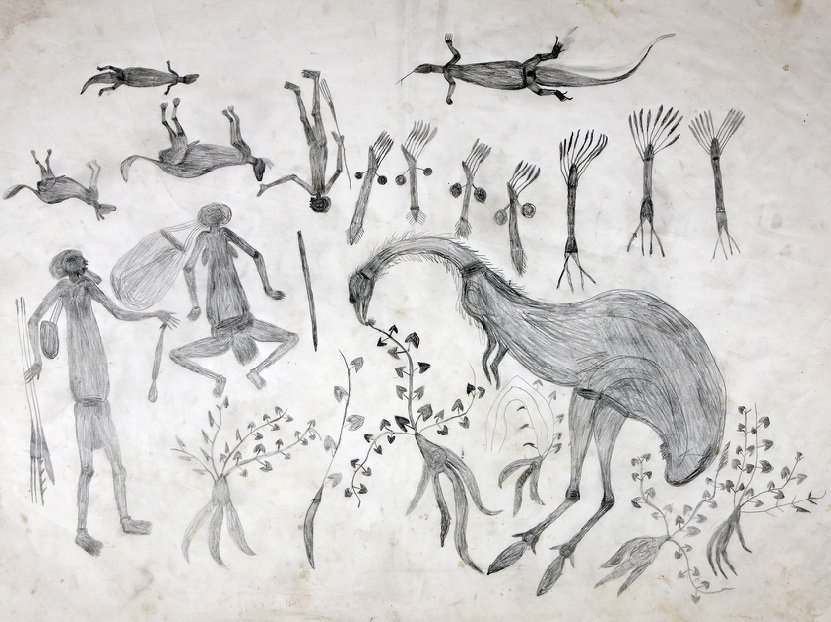
Despite failing eyesight in his later years due to trachoma, Nadjamerrek continued to paint slowly and meticulously until the end of his life, producing powerful works on paper and card, though collectors continue to particularly prize his earlier bark paintings. A father of eight, his artistic legacy remains singular. Although none of his children became painters, his works endure as a vital link to Arnhem Land rock art traditions, some of which he personally contributed to through rock paintings at Kodwalehwaleh depicting kangaroos, emus, goats, and even a horse and rider.

Today Lofty Bardayal Nadjamerrek remains one of the most collected, respected, and studied Aboriginal artists in Australian art history, his paintings standing as enduring expressions of Indigenous knowledge, cultural continuity, and artistic refinement.

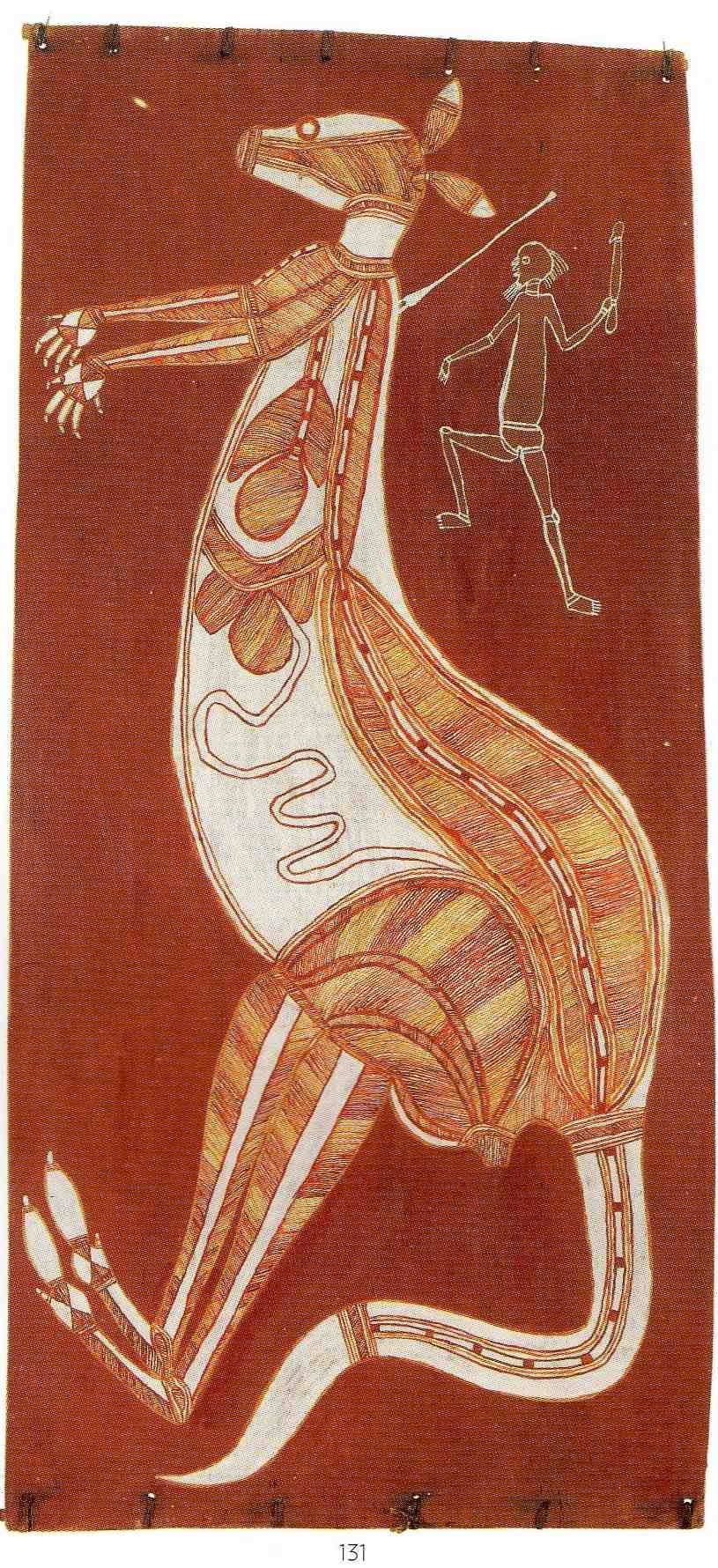
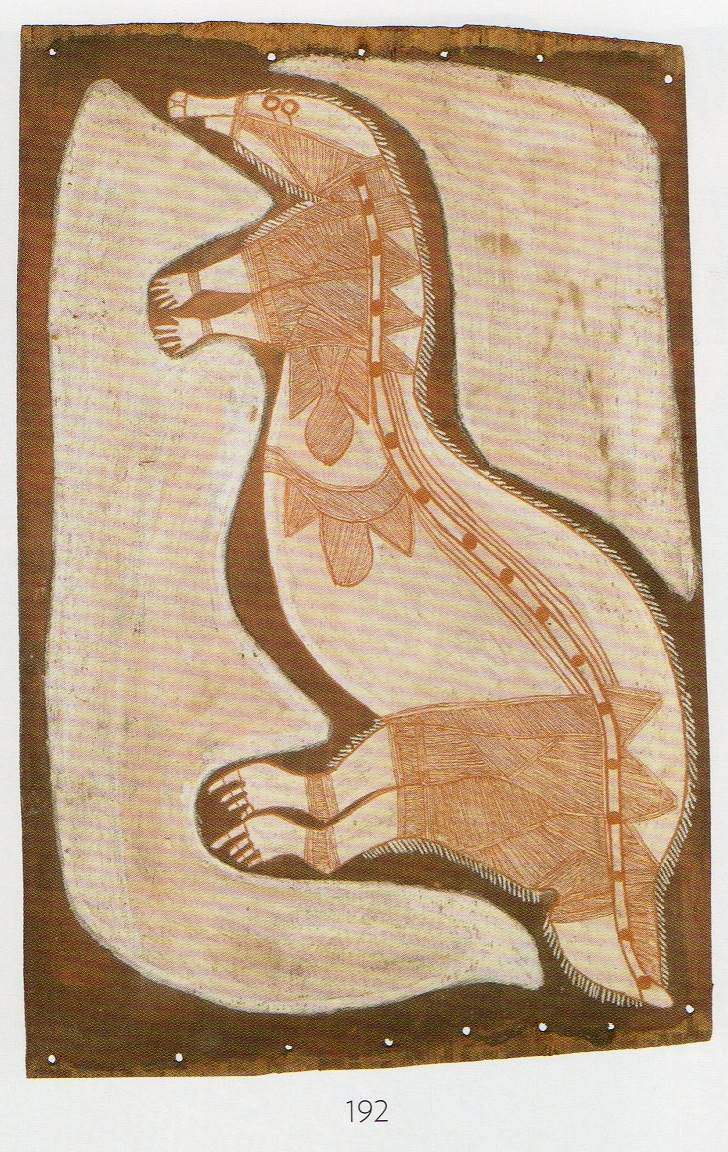
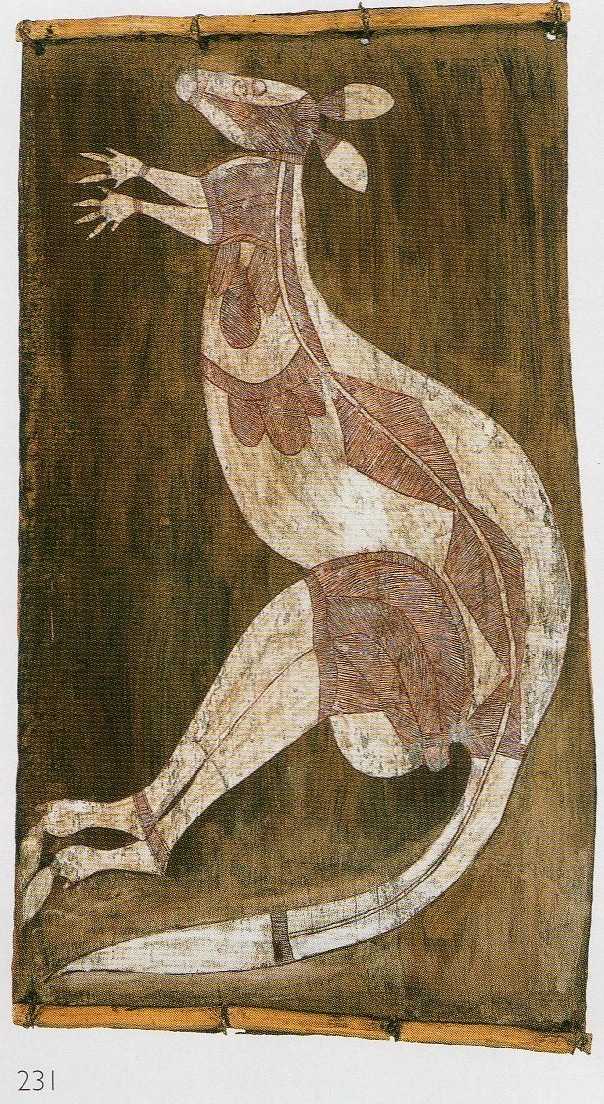
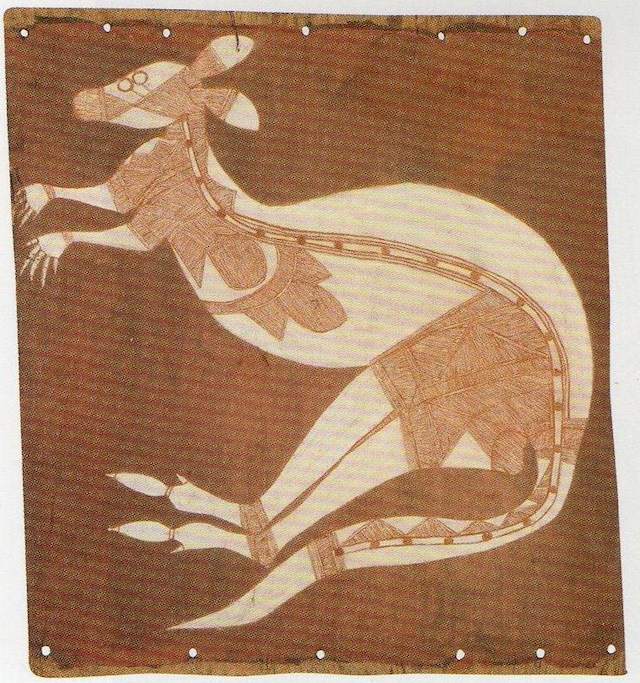
Lofty Bardayal Nadjamerrek kangaroo bark painting featuring traditional Arnhem Land x-ray style, ochre pigments on eucalyptus bark, 84 x 51 cm, depicting a dynamic kangaroo with intricate rarrk crosshatching and anatomical detail, example of Aboriginal Kuninjku art from Western Arnhem Land.
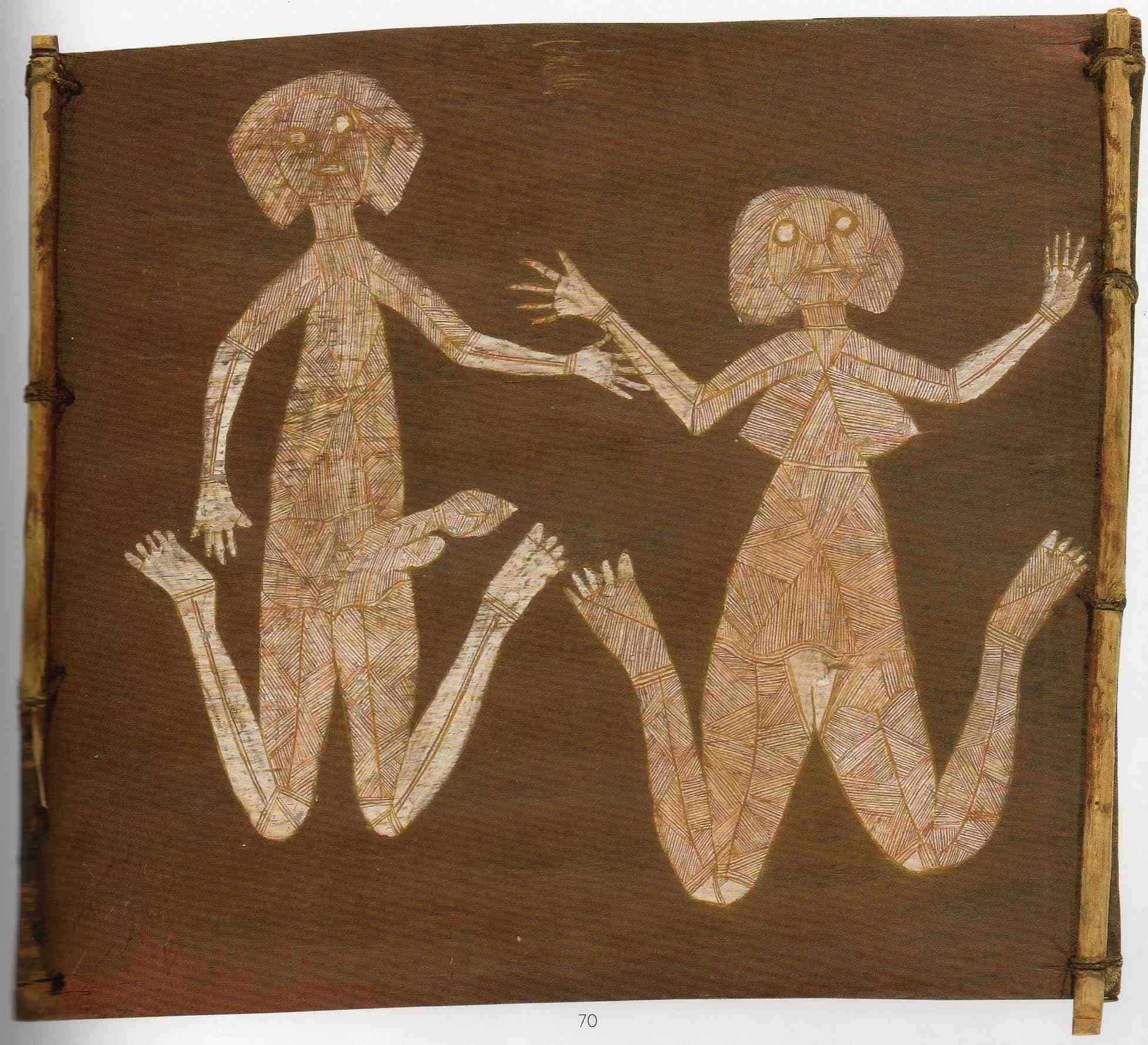
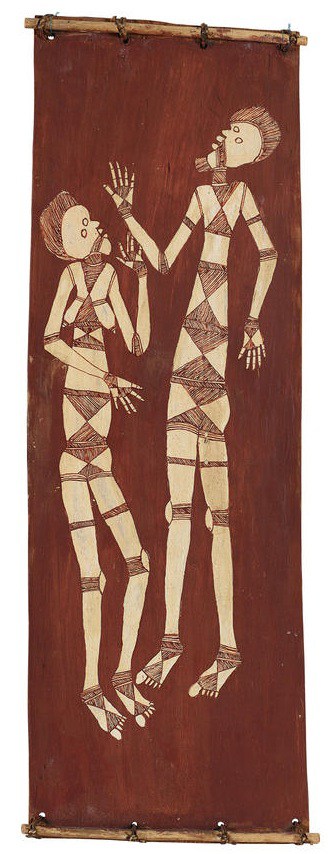
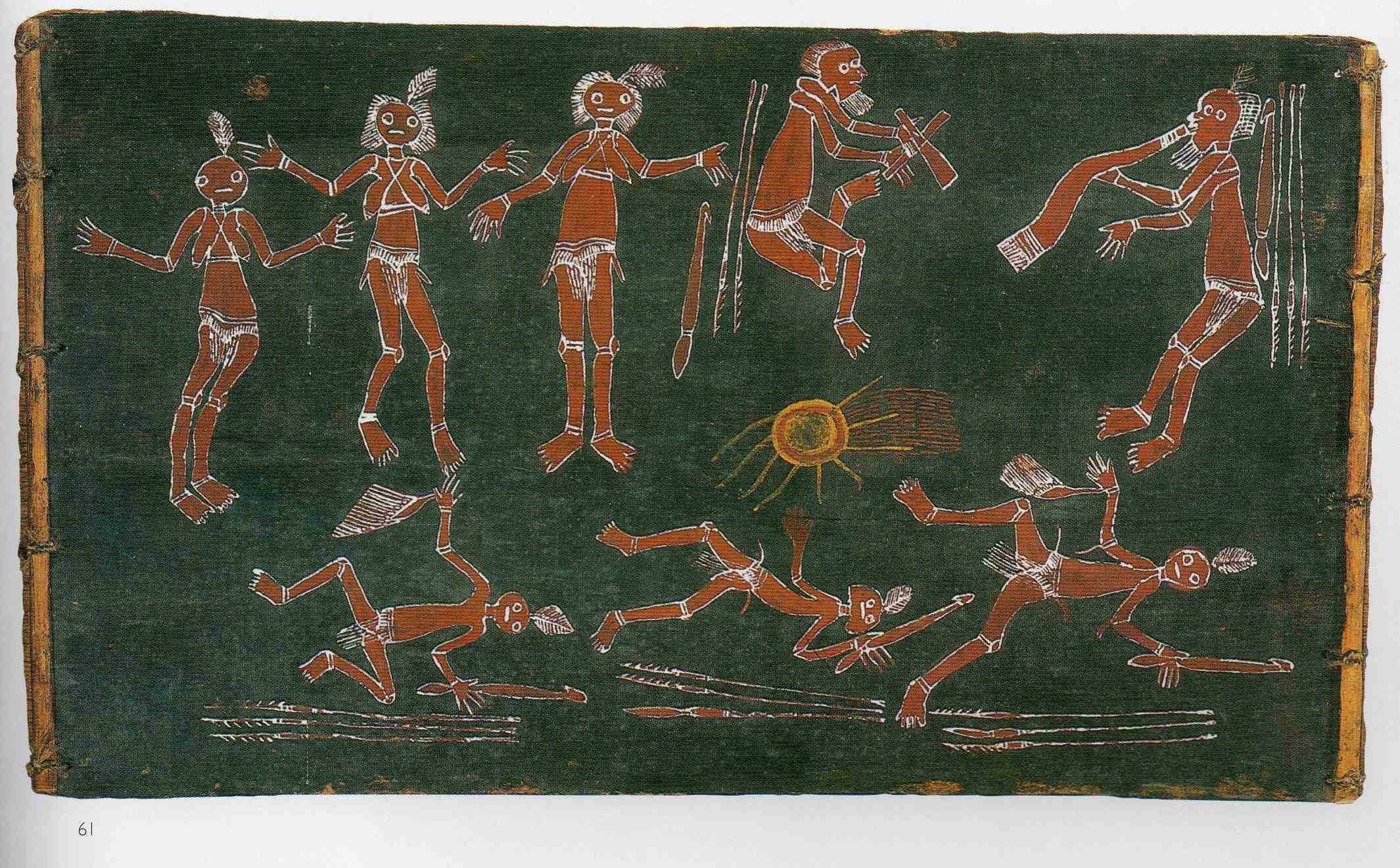
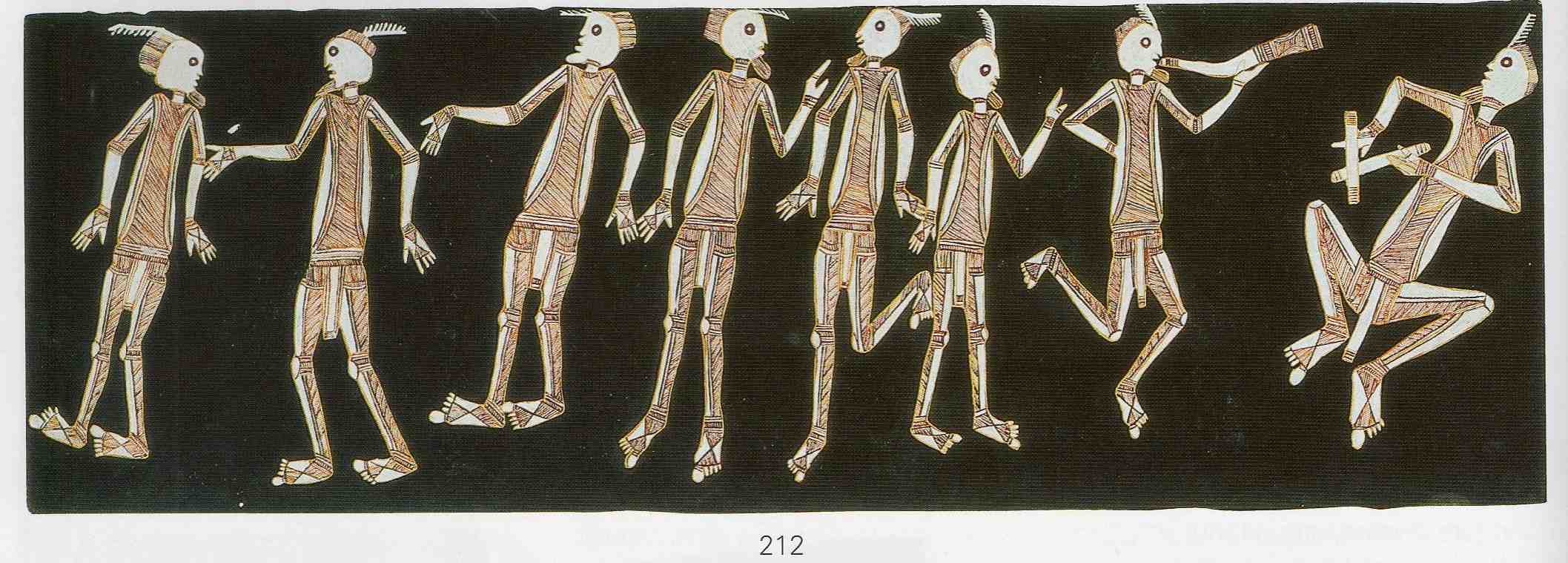
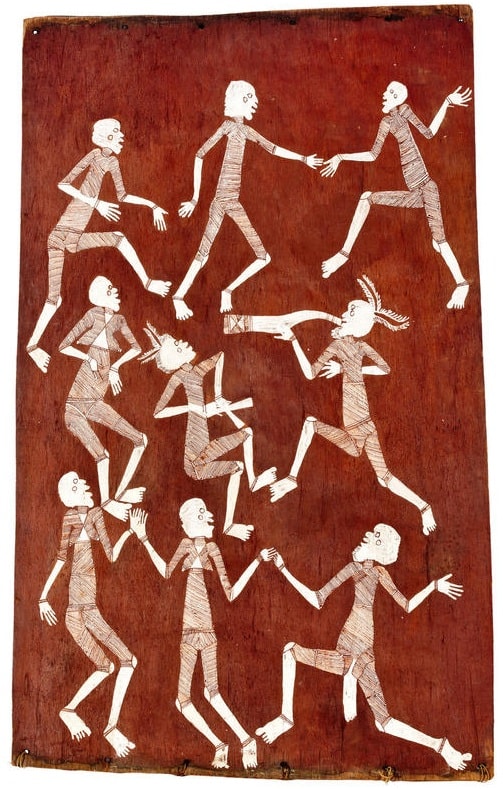
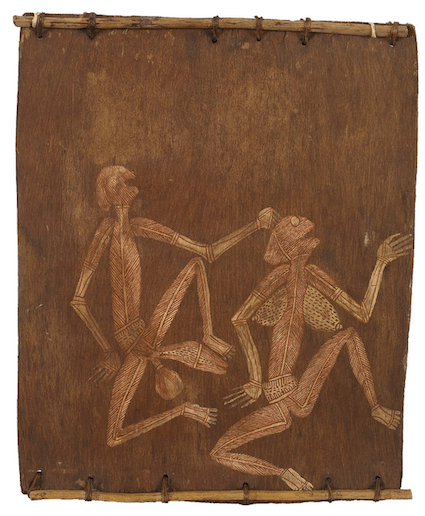
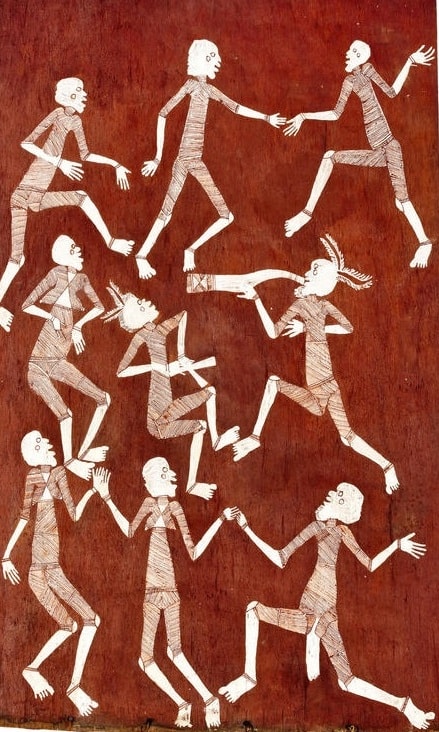
Lofty Bardayal Nadjamerrek bark painting depicting ceremonial dance, featuring multiple white ochre figures with rarrk body designs on red earth background, capturing dynamic movement, ancestral tradition, and Kuninjku cultural storytelling from Western Arnhem Land

References and Extra Reading

Keepers of the secrets: Aboriginal Art from Arnhemland

Crossing Country: The Alchemy of Western Arnhemland Art

Lofty Nadjamerrek  Artworks meanings explained

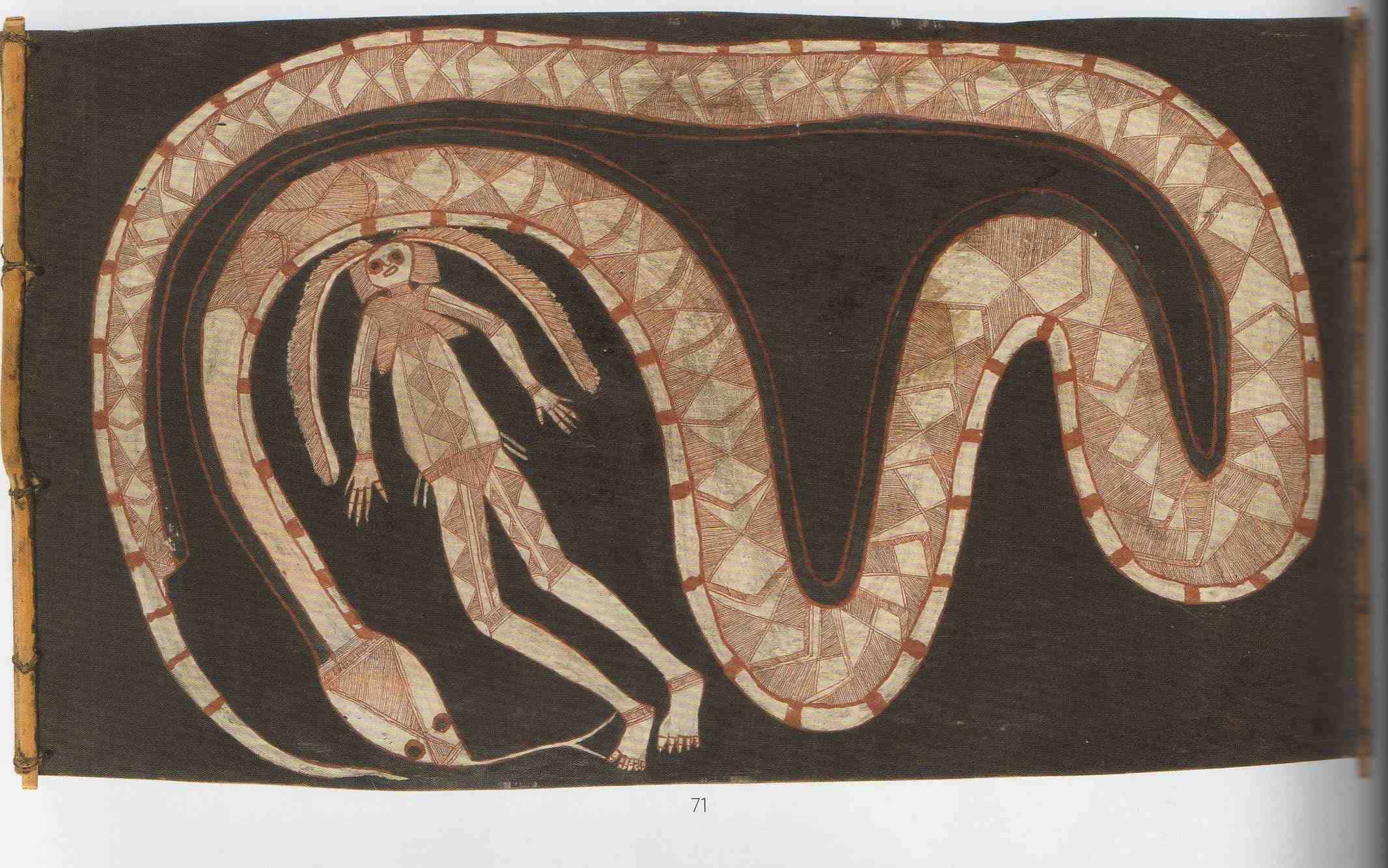
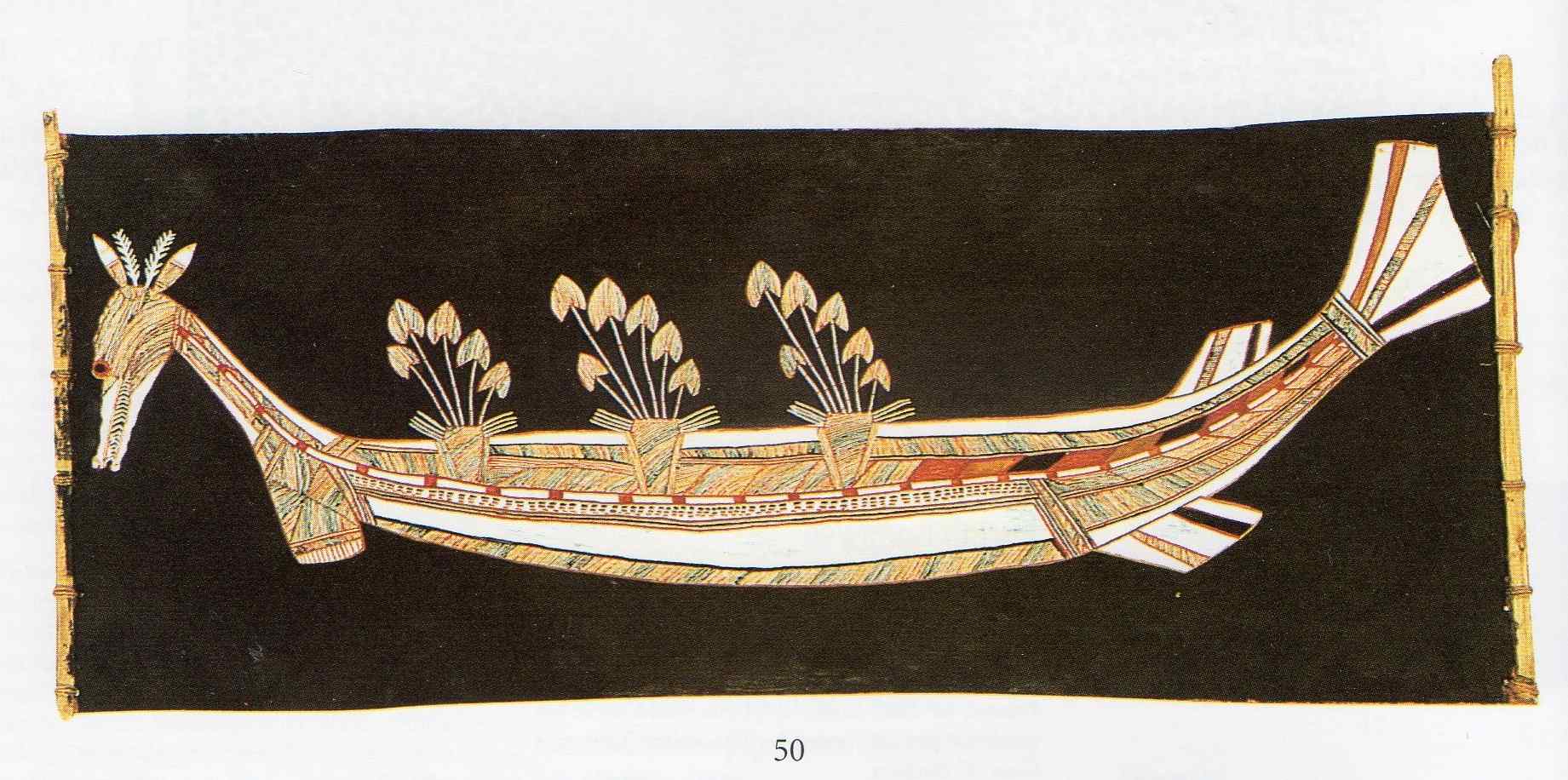
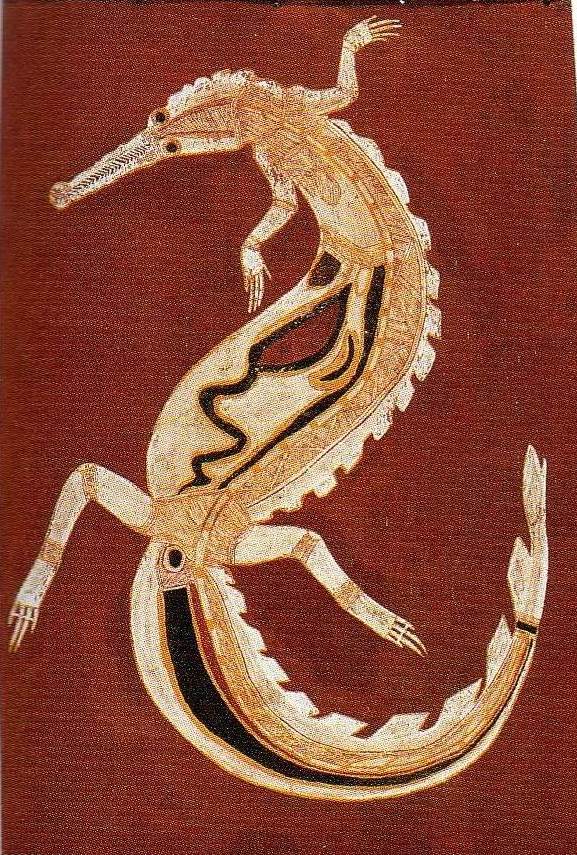
Rainbow serpent by Lofty nadjamerrek

Lofty Bardayal Nadjamerrek and the Rainbow Serpent: Mythic Power in Bark

Among the most arresting subjects in the oeuvre of Lofty Bardayal Nadjamerrek are his depictions of the Rainbow Serpent, particularly Ngalyod and Namarrkon, the Lightning Spirit. Through his distinctive parallel line hatching and finely modulated figuration, Lofty imbued these mythic beings with both ceremonial gravity and dynamic presence. His bark paintings do more than depict—they evoke transformation, embodying the sacred forces that animate the landscape and law of Western Arnhem Land.

In the cosmology of the Kunwinjku people, there are three known Rainbow Serpents. The most ancient and powerful is Jingana, the Mother Serpent, who dwells in subterranean chambers and lily-covered billabongs, guarding the primordial balance of nature. Dissatisfied with the early hybrid creatures—part human, part animal—Jingana once swallowed the world and remade it. From her belly, she birthed two sacred offspring: her son Ngalyod, with a crocodilian head and sinuous serpent body; and her daughter Ngalgunburijaimi, whose form combined serpent, crocodile, and fish. Both inherited bony chests and ceremonial spurs, symbols of ancestral potency and spiritual danger.

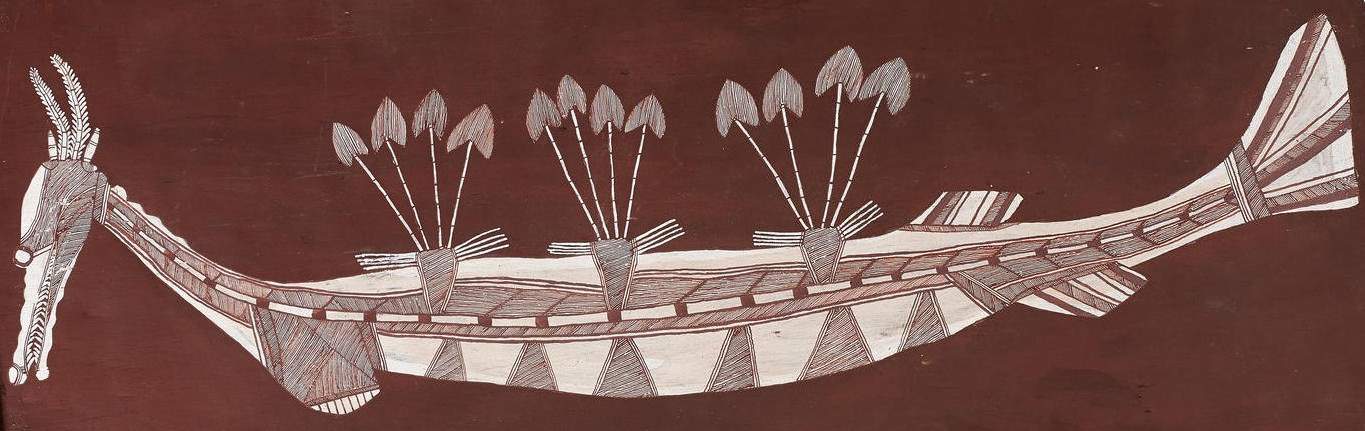
It is Ngalgunburijaimi, the lesser-known female Rainbow Serpent, who features in this particular bark painting by Nadjamerrek. Rarely depicted in Arnhem Land iconography, her inclusion here signals not only Lofty’s deep ceremonial knowledge but his willingness to render esoteric beings with precision and reverence. Her appearance, like that of her brother and mother, is both beautiful and fearsome—a reminder of the serpents’ dual nature as creators and destroyers.

During the wet season, these serpents ascend into the stormclouds, their tongues stirring thunder, lightning, and monsoonal rains. But if offended—if laws are broken, if sacred waterlily habitats are disturbed—they may unleash unseasonal storms, destroy vital ecosystems, or swallow transgressors whole. Aboriginal custodians of the land, including Nadjamerrek, honour these serpents through ritual and imagery, maintaining harmony between people and ancestral powers.

By capturing these sacred narratives on bark, Lofty Bardayal Nadjamerrek ensured that ancestral law (mardayin) was not only remembered but also visually preserved for future generations. His Rainbow Serpent paintings stand among the most spiritually charged and compositionally refined works in the canon of Australian Aboriginal art.

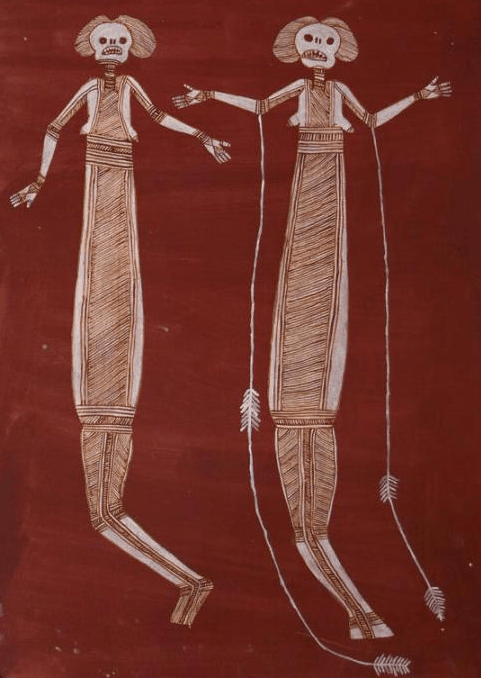
Mimih Hunter Dreaming: Ancestral Encounter in the Stone Country

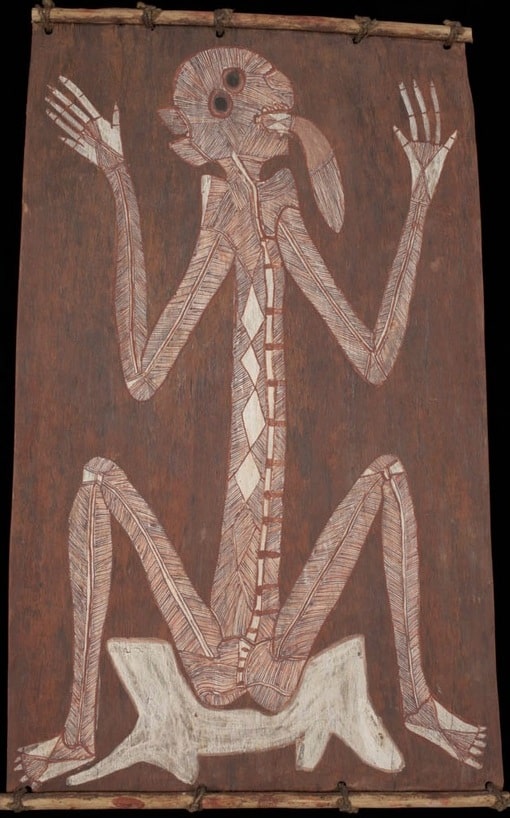
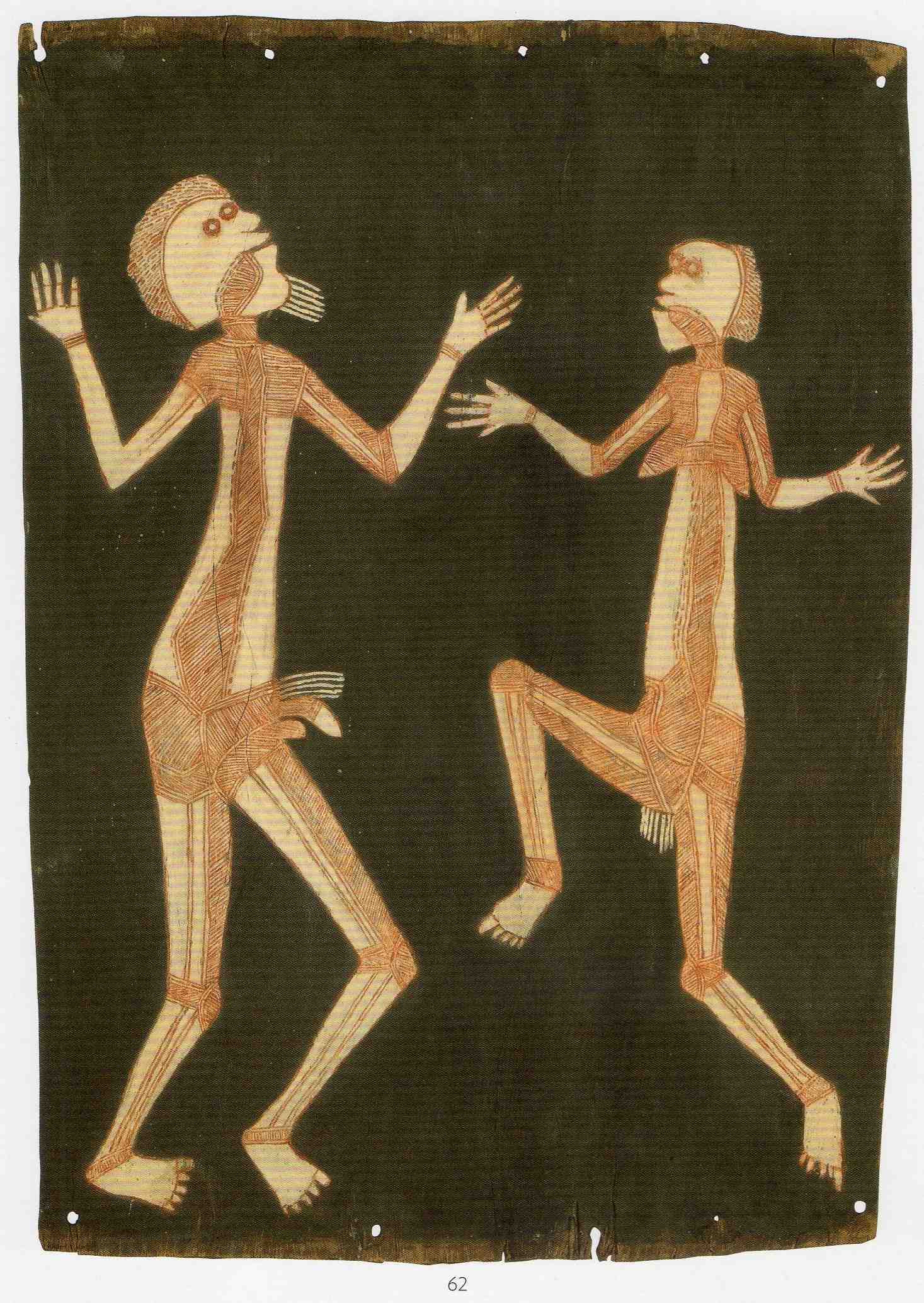
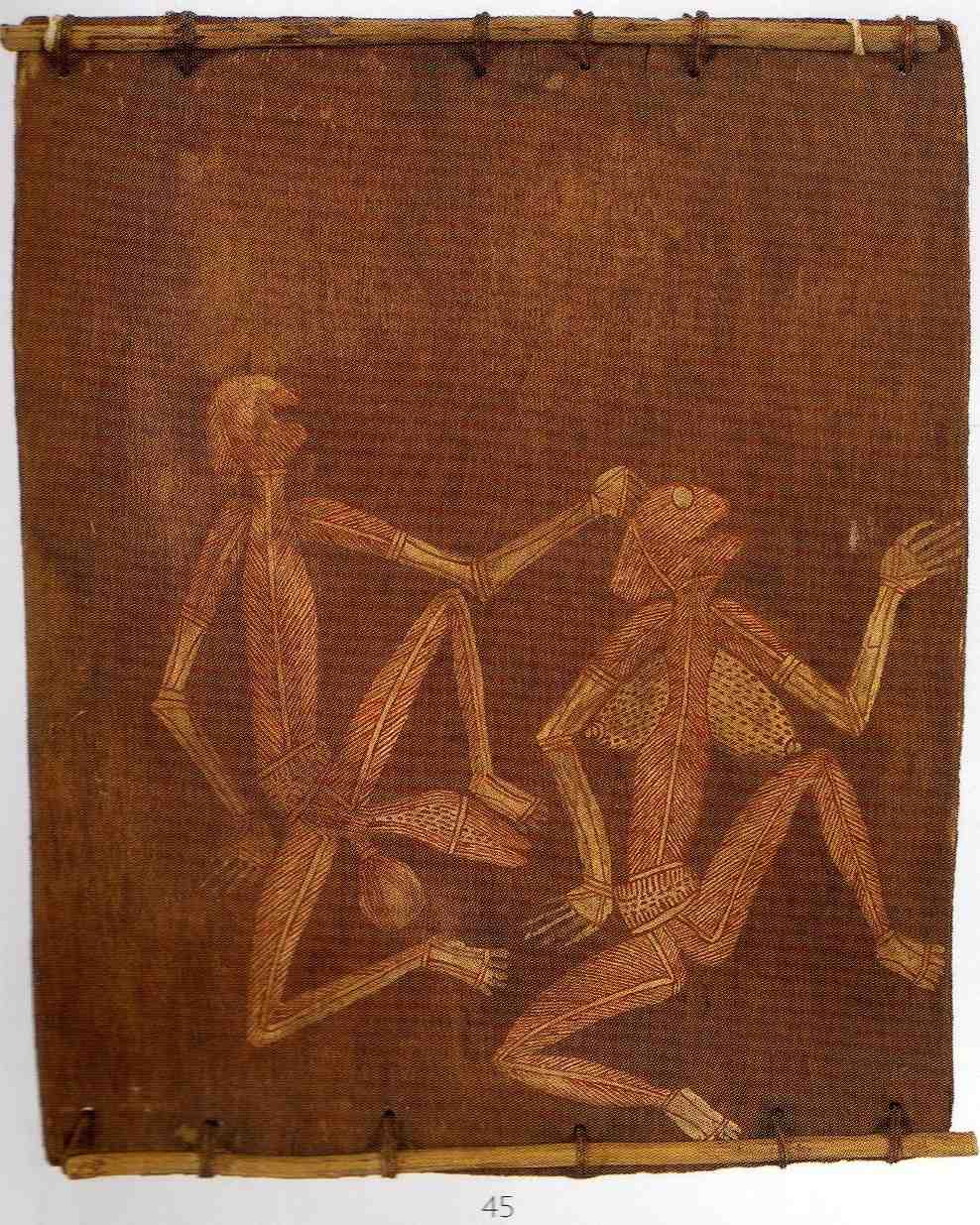
In this exceptional bark painting, Lofty Bardayal Nadjamerrek renders the dramatic ancestral tale of Djala, a hunter, and his fateful encounter with the enigmatic Mimih spirits—slender, elusive beings said to dwell deep within the rocky escarpments of Western Arnhem Land. This narrative, part of the Mimih Dreaming, carries powerful lessons about respect, reciprocity, and the hidden dangers of the spiritual realm.

According to Kunwinjku oral tradition, Djala and his heavily pregnant wife lived in close proximity to a towering sandstone ridge known to be a Mimih domain. One day, while tracking a large kangaroo into the setting sun, Djala witnessed a Mimih spirit—Kaman—dispatch the animal with supernatural precision. Rather than challenge the being, Djala offered respectful praise, recognising the Mimih’s skill with the spear.

In response, Kaman invited Djala to share in the kangaroo meat. Aware of the dangerous magic associated with the Mimih—especially the power they could wield through possession of human hair or bodily fluids—Djala hesitated. But curiosity and hunger led him to follow.

Lofty nadjamerrek Mimih story


Kaman blew upon a sheer rock face, which split open to reveal a hidden passage. Beyond lay a lush, secret glade where kangaroos grazed unafraid—a place untouched by the ordinary laws of nature. At the far end stood a cave lit by ancestral song and firelight, where Mimih women danced in welcome.

Realizing if he ate the magical food he would never leave the camp and see his wife again Djala tried to leave. He asked politely if he could take a section of the kangaroo and walk back to his camp. Kaman put him off and insisted he stays the night. With Mimih women singing he fell to sleep into a deep sleep in the cave. He awoke feeling the fingers of Kaman’s wives stroking him all over. He faked sleep knowing that if they knew he was awake he would be seduced and become one of them.

In the early morning by the light of the stars, Djala crept out of the Mimih cave and glade and returned home to his wife.

In Nadjamerrek’s masterful composition, the Mimih spearing the kangaroo is captured with measured grace. His use of parallel line hatching lends ethereal tension to the scene, while the delicate rendering of Mimih forms—tall, wispy, otherworldly—evokes their fragility and power. The scene is not merely a myth but a cultural instruction, a reminder of the thin veil between the physical and ancestral realms.

Lofty Bardayal Nadjamerrek’s “Mimih Hunter Dreaming” is an insight into the esoteric ceremonial knowledge of the Stone Country and the sacred responsibility of those who carry its stories. As both image and archive, it reflects Lofty’s lifelong commitment to ensuring the survival of Arnhem Land’s spiritual legacy, one bark at a time.

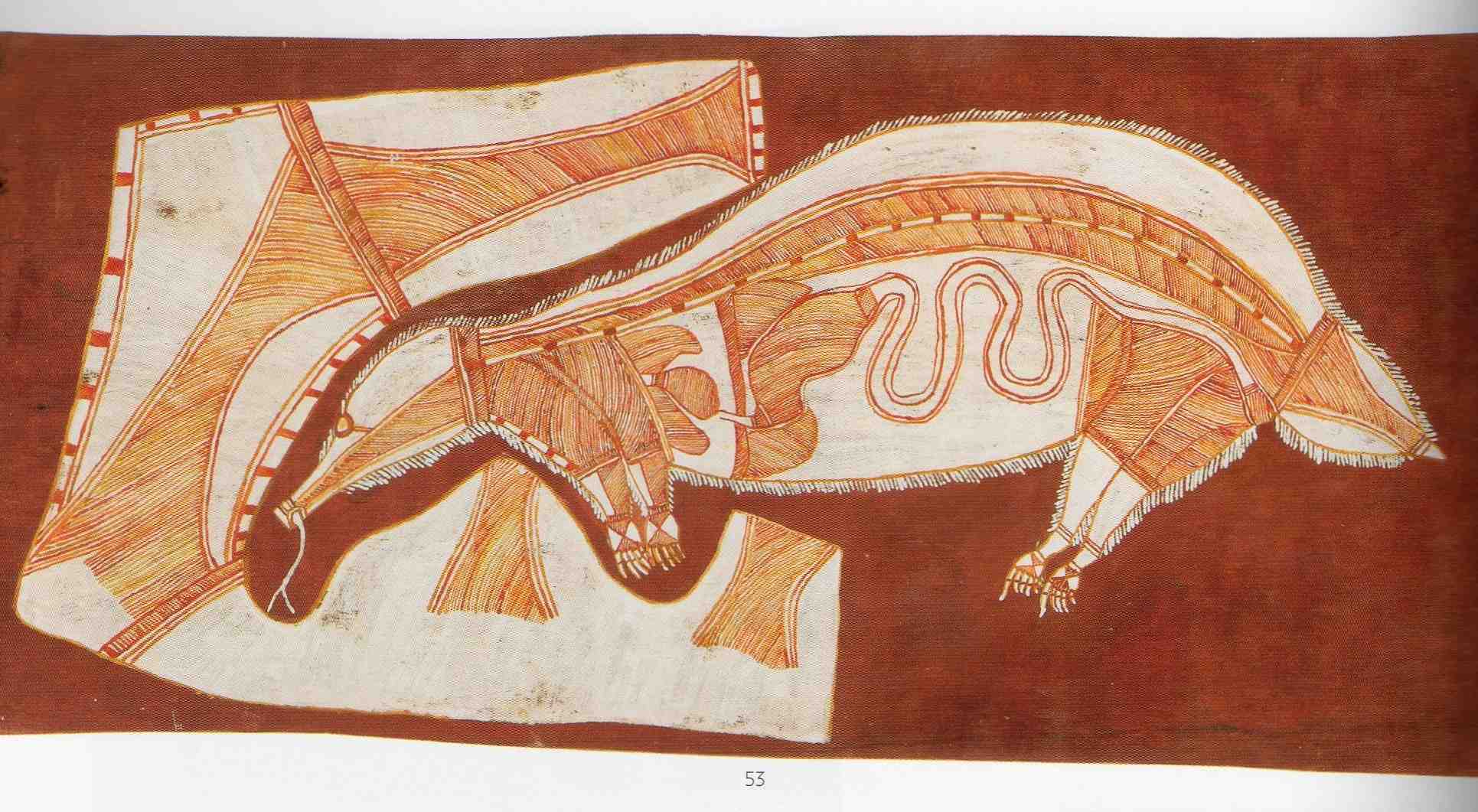
Lofty nadjamerrek Echidna

Ngarrbek, the Echidna: Ancestral Conflict and Ceremonial Power

In the rich ceremonial life of the Kuninjku people of Western Arnhem Land, few creatures hold greater symbolic significance than Ngarrbek, the Echidna. Frequently depicted in the bark paintings of artists such as Lofty Bardayal Nadjamerrek, Yirawala and Marralwanga Ngarrbek appears not merely as an animal, but as a key ancestral actor within the sacred Yabbadurruwa ceremony—one of two major ceremonial cycles practiced by the Kuninjku, alongside Kunabibbi.

These paired ceremonies are not merely performative; they are believed essential to the spiritual maintenance of the land, marking the seasonal renewal brought about by the onset of the wet season. Each ceremony carries reciprocal roles for different social groups and reaffirms the principles of Ancestral creation and interconnection between beings, people, and place.


Central to this spiritual drama is the creation story of the battle between Ngarrbek and the cannibal spirit being Ngalmangiyi. The myth recounts how Ngalmangiyi consumed a child of the Kodjok subsection, provoking Ngarrbek to seek vengeance. In the ensuing battle, Ngalmangiyi hurled many spears at Ngarrbek—spears that did not kill, but instead transformed into the echidna’s characteristic spines. Ngarrbek survived the attack, and his transformation stands as a symbol of resilience, transformation, and sacred memory.

In the hands of master painters like Nadjamerrek, the form of Ngarrbek is rendered with subtlety and strength, its quills suggested by sharp, deliberate strokes that reference both spear and spine. These visual metaphors echo through ceremonial performance and song, embedding ancestral law into every gesture of paint.

All images featured in this article are presented strictly for educational and informational purposes.

This website may include copyrighted material for which specific authorization has not been obtained from the copyright owner.

All such images are presumed to be the intellectual property of the respective artist or their estate, and are used in accordance with principles of fair dealing or fair use under applicable copyright law.

Oenpelli Art and Artist Articles

Frequently asked questions about Lofty Nadjamerrek

Who was Lofty Nadjamerrek?
Lofty Bardayal Nadjamerrek AO (c.1926–2009) was one of the most celebrated Aboriginal artists of Arnhem Land and the last practicing rock painter to transition to bark painting in the Western art market. A senior figure of the Mok clan from the Kubalwarnamyo region in the Stone Country of Western Arnhem Land, his works are deeply rooted in Ancestral Law (Djang) and reflect a direct lineage to rock art traditions dating back tens of thousands of years.

What is Lofty Nadjamerrek known for?
Lofty Nadjamerrek is best known for his refined bark paintings and rock art murals that depict ancestral beings such as Namarrkon (the Lightning Spirit), Yawkyawk water spirits, kangaroos, wallabies, and spirit men, rendered with an unparalleled command of rarrk (cross-hatching) and anatomical stylisation. His figures often feature a distinctive three-quarter profile with frontal feet, a hallmark of his hand and a direct reference to his rock art heritage.

Is Lofty Nadjamerrek’s art valuable or collectible?
Absolutely. Nadjamerrek’s works are highly sought after by museums, collectors, and institutions worldwide. His bark paintings, prints, and rare rock art photographs are represented in major collections including the National Gallery of Australia, Art Gallery of New South Wales, Berndt Museum, and the Kluge-Ruhe Aboriginal Art Collection in the U.S. As a recipient of the Order of Australia (AO) in 2004 and subject of multiple museum retrospectives, his legacy is assured—and his works continue to appreciate in both cultural and market value.

What distinguishes Lofty Nadjamerrek’s painting style?
Nadjamerrek’s artistry is characterised by:

  • Precise, hairline rarrk cross-hatching, often in black, white, and red ochre

  • Spiritual anatomy, where internal organs are depicted as part of the ancestral form

  • Fine profile figuration, echoing the formal conventions of prehistoric rock art

  • Minimalist earth tones, reflecting his deep connection to stone escarpment country

What is the cultural significance of his work?
Nadjamerrek’s paintings are not merely visual artworks—they are codified expressions of Aboriginal Law, territory, and cosmology. As a senior knowledge-holder, he used painting to pass on restricted ceremonial stories, encode geographic knowledge, and assert his custodianship over the Karnbambarnja plateau and surrounding sites. His work serves as an unbroken link between ancient rock art and contemporary Indigenous art practice.

Where can I buy a Lofty Nadjamerrek painting?
His works appear at auction through Sotheby’s, Bonhams, and Deutscher and Hackett, and can also be sourced through reputable Indigenous art dealers and galleries adhering to the Indigenous Art Code. Due to their rarity, strong provenance and early works from the 1960s–1980s can command premium prices.

Did he sign his works?
Many of Nadjamerrek’s works are unsigned in the Western sense but are instantly recognisable to experts. Later in his career, he sometimes signed with “Lofty” or “Bardayal” on the reverse, particularly for commissioned works. His stylistic fingerprint—the unique figural structure and signature cross-hatching—is widely acknowledged in curatorial circles.

How did Nadjamerrek influence other Aboriginal artists?
Lofty Nadjamerrek was not only an artist but a mentor and community leader. In 2001, he co-founded the Warddeken Land Management project at Kubalwarnamyo, where he trained younger rangers and artists in both ecological and cultural practices. His influence extends through the work of his descendants and disciples, including artists such as Gabriel Maralngurra, Jimmy Njiminjuma, and Wesley Nganjmirra, who continue to carry forward his visual language.

What is the connection between his bark paintings and rock art?
Lofty Nadjamerrek is often described as “the last great rock painter” because he was one of the few artists who actively painted on rock surfaces well into the late 20th century before transitioning to bark. His bark paintings retain the formal discipline, spiritual charge, and anatomical stylisation of traditional rock art, making his oeuvre one of the most important bridges between ancient and modern Aboriginal visual traditions.

Why is his work important to Australian art history?
Nadjamerrek’s career spans the entire history of modern Aboriginal art—from early mission-era bark paintings through to the international acclaim of the contemporary Indigenous art movement. He is recognised as a national cultural icon, a custodian of endangered knowledge systems, and a master technician whose work embodies both ancient continuity and modern resilience.

Further Reading on Lofty Bardayal Nadjamerrek and Western Arnhem Land Bark Painting

The following publications, exhibition catalogues, and scholarly studies are among the most important resources on Lofty Bardayal Nadjamerrek, Oenpelli Art, Arnhem Land rock art, Kunwinjku culture, and the development of western Arnhem Land bark painting traditions.

Major Publications on Lofty Nadjamerrek

McKenzie, Robin, The Life and Art of Western Arnhem Land Artist Bardayal “Lofty” Nadjamerrek AO, Australian National University, 2024

Museum of Contemporary Art Australia, Bardayal “Lofty” Nadjamerrek AO: Wamud Namok, MCA Australia, Sydney, 2020

AIATSIS, Lofty Bardayal Nadjamerrek AO: Late Works, Aboriginal Studies Press, Canberra

Skerritt, Henry, “Bardayal ‘Lofty’ Nadjamerrek”, Art Guide Australia, 2010

Oenpelli Art and Western Arnhem Land Bark Painting

Aboriginal Arts Board, Oenpelli Bark Painting, Ure Smith, 1979

Brody, Annemarie, Kunwinjku Bim – Western Arnhem Land Paintings, National Gallery of Victoria, 1984

Edwards, R. & Guerin, B., Aboriginal Bark Paintings, Rigby, 1969

Isaacs, Jennifer, Oenpelli: Paintings On Bark, The Aboriginal Arts Board of Australia, 1976

Ryan, Judith, Spirit in Land – Bark Paintings from Arnhem Land, National Gallery of Victoria, 1990

Wright, Felicity, Contemporary Paintings From Western Arnhem Land, Flinders Art Museum, Adelaide, 1999

Arnhem Land Rock Art and Ceremonial Traditions

Carrol, P.J., “Mimi from Western Arnhem Land”, in Form in Indigenous Art: Schematization in the Art of Aboriginal Australia and Prehistoric Europe, Australian Institute of Aboriginal Studies, 1977

Edwards, R., The Art of Alligator Rivers Region, Alligator Rivers Region Environmental Fact Finding Study, Canberra, 1974

Taylor, Luke, “Flesh, Bone and Spirit”, in Art From Land: Dialogues with the Kluge-Ruhe Collection of Australian Aboriginal Art, University of Virginia, 1999

Taçon, Paul S.C., From Rainbow Snakes to X-Ray Fish: The Nature of the Recent Rock Painting Tradition of Western Arnhem Land, Australian National University, 1989

Foundational Studies on Aboriginal Art and Culture

Berndt, R.M., Australian Aboriginal Art, Ure Smith, 1964

Berndt, R.M., The Australian Aboriginal Heritage: An Introduction through the Arts, Ure Smith, 1974

Berndt, R.M. & Berndt, C.H., Man, Land and Myth in North Australia, Ure Smith, 1970

Elkin, A.P., Berndt, R.M. & Berndt, C.H., Art In Arnhem Land, Cheshire, 1950

Kleinert, Sylvia & Neale, Margo (eds.), The Oxford Companion to Aboriginal Art and Culture, Oxford University Press, 2000

If this post has been informative please take the time and make the effort to share it on social media. By clicking any of the share buttons below you create a link from your social site to this article. Links are what google uses to calculate what information on the web is useful. By sharing this article you are letting google know you found my article / images of some value. Thanks!