Wattie Karruwara Wandjina paintings
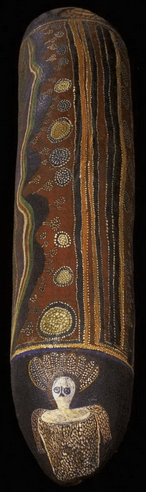
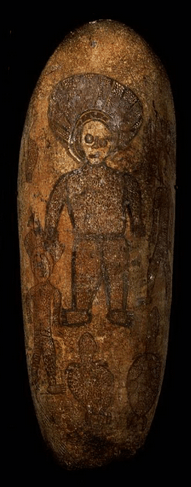
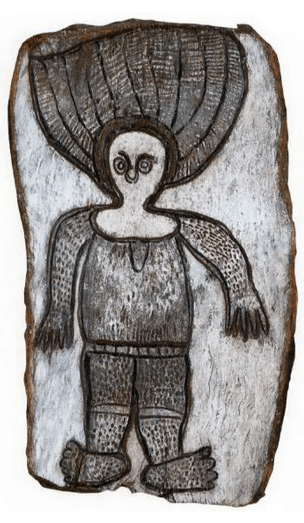
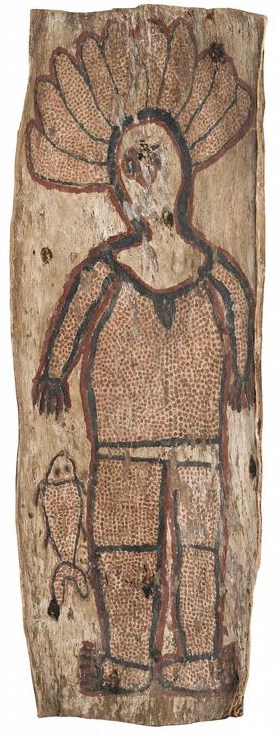
Wattie Karruwara (also spelt Karrawara, Kaduwara, and Karawara) was one of the most important early Wandjina artists from the Kimberley region of Western Australia and played a significant role in the transition of sacred Wandjina imagery from rock shelters onto portable bark paintings, slate, coolamons, and paper. Working from the Mowanjum community during the formative years of the contemporary Aboriginal art movement, Karruwara developed a highly distinctive style characterised by full-bodied Wandjina figures, dramatic fan-shaped headdresses, delicate facial features, and rich red ochre bodies associated with the inland Wunambal tradition.
Unlike many later Wandjina painters whose works became increasingly commercialised, Wattie Karruwara’s paintings retain a strong relationship to the ceremonial traditions and ancestral power of Kimberley rock art. His artworks reflect the spiritual traditions of the Hunter River region and preserve important stylistic variations found within north-west Kimberley Wandjina imagery.
Karruwara is also notable for an extraordinary group of watercolour paintings created during the 1960s in collaboration with anthropologist John McCaffrey. These rare works depicting Kimberley plants and animals are among the most unusual and historically important paintings produced by any early Wandjina artist.
Today genuine Wattie Karruwara bark paintings and watercolours are highly sought after by collectors and institutions. If you are interested in buying, identifying, valuing, or selling a Wattie Karruwara artwork, feel free to contact me with clear images and any known provenance.
The Distinctive Style of Wattie Karruwara
Wattie Karruwara (c.1910–1980s) stands among the most important early interpreters of Wandjina iconography in the Kimberley region. A pioneering figure in the development of portable Wandjina painting, Karruwara helped bridge the sacred traditions of Kimberley rock art with the emerging world of contemporary Aboriginal painting.
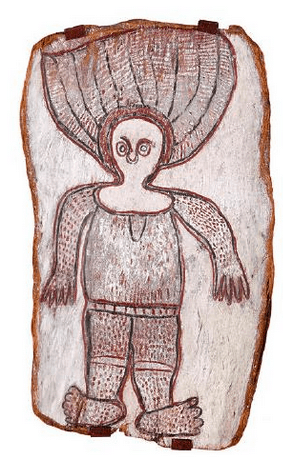
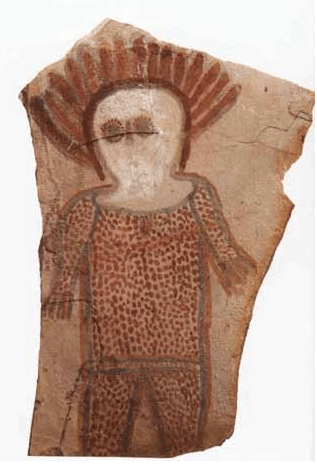
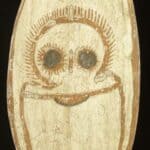
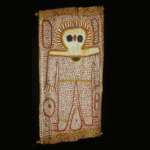
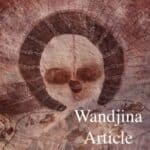
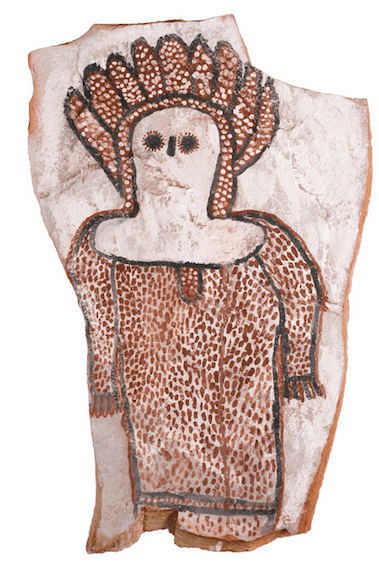
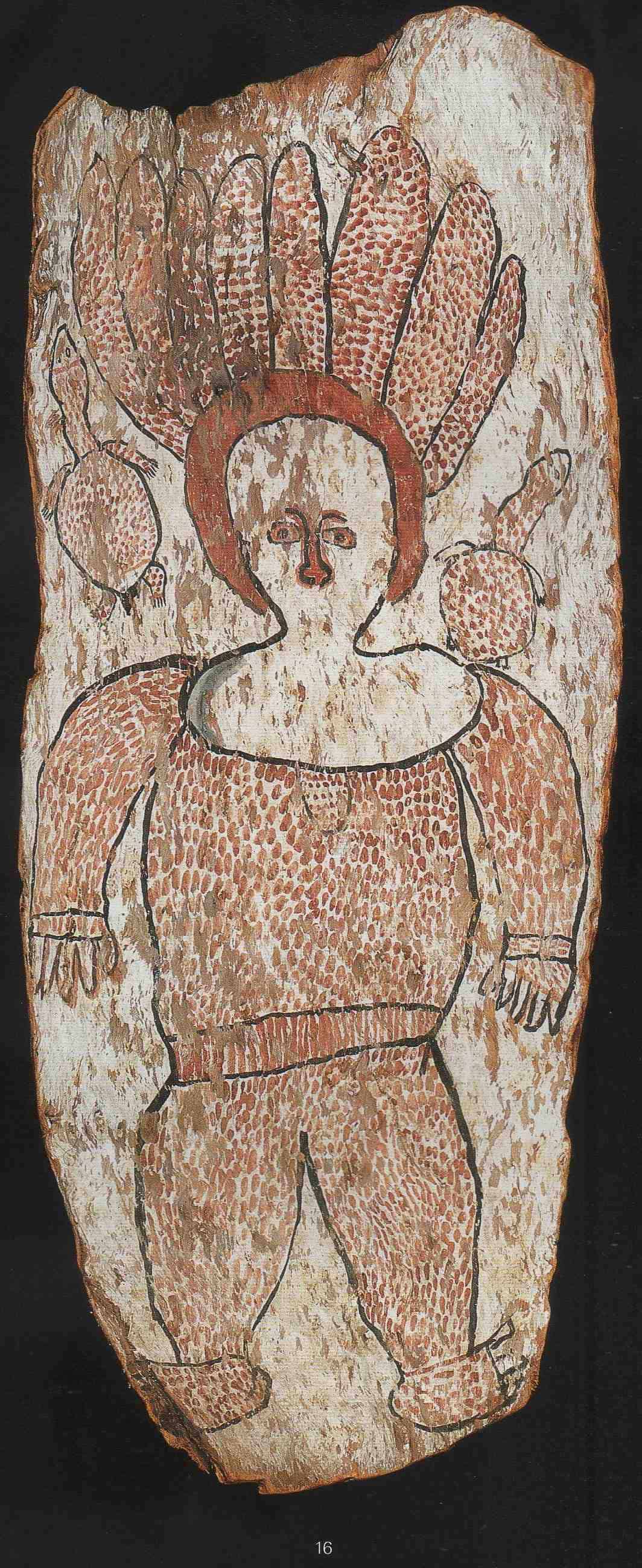
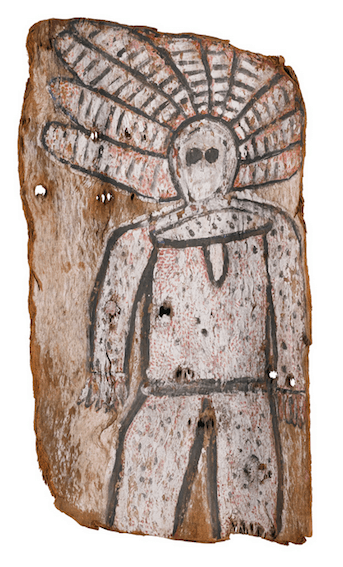
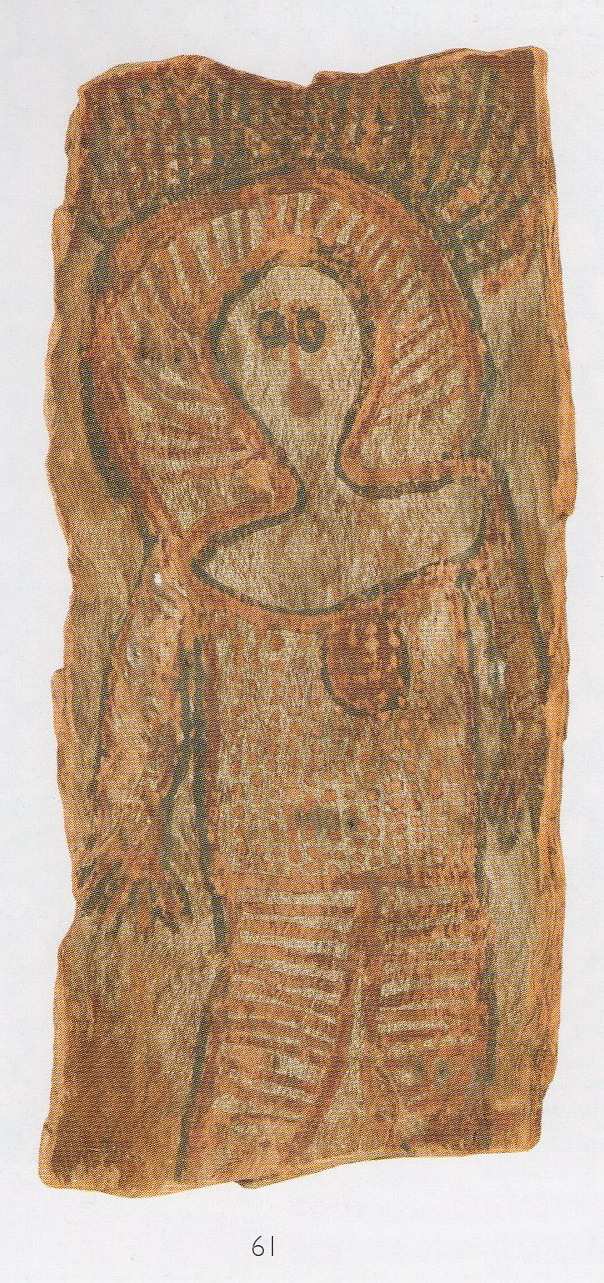
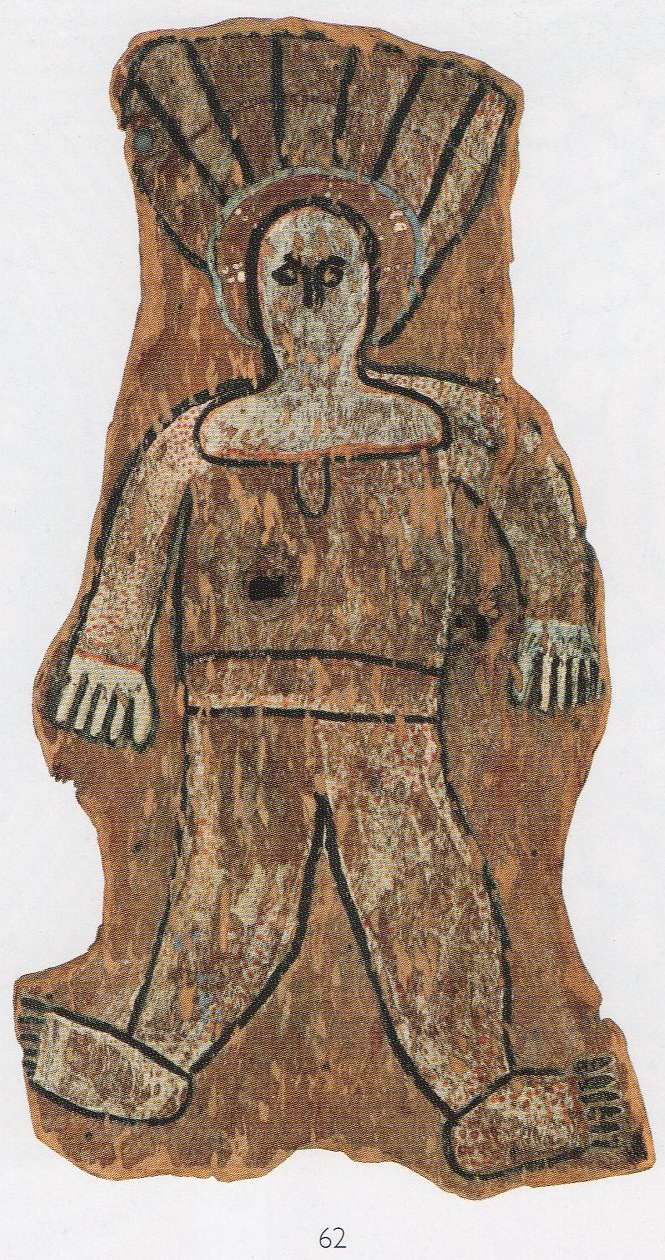
Karruwara’s Wandjina figures are instantly recognisable for their finely rendered, full-bodied forms. Painted predominantly in the inland Wunambal tradition, his Wandjinas feature large fan-shaped headdresses with vertical rays rather than the circular halo forms more commonly associated with coastal Wandjina imagery. These headdresses signify spiritual radiance and ancestral power connected to the Hunter River region and surrounding Wunambal Country.
The figures themselves are rendered with delicate precision: small eyes, noses, and finely drawn hands and feet. Bodies are often painted in rich red ochre, evoking both ceremonial significance and the earth itself. Karruwara’s faces also frequently omit the traditional eyelashes and sometimes include softly arched eyebrows, lending a quiet solemnity and individuality to his Wandjina figures.
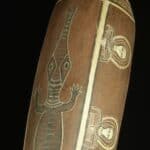
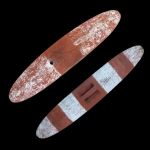
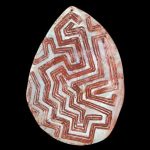
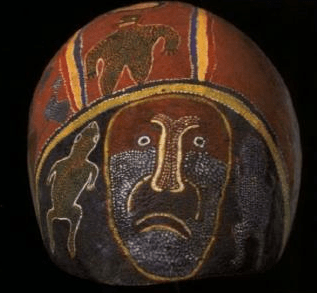
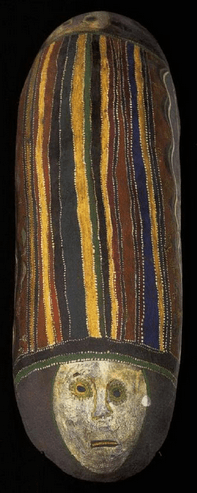
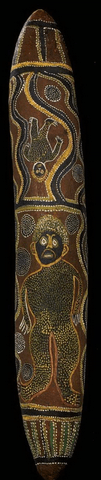
According to Wunambal belief, Wandjinas are ancestral beings who shaped the land and later became part of the rock shelters and caves associated with their Dreaming journeys. Karruwara’s paintings honour this tradition by translating the sacred permanence of Kimberley rock art into portable works on bark, coolamons, slate, paper, and carved boab nuts.
Comparison With Other Wandjina Artists
Mickey Bungkuni was Wattie Karruwara’s father’s brother and, under Wunambal kinship systems, would have been regarded socially and culturally as a “father” rather than simply an uncle. As a result, the paintings of Wattie Karruwara and Mickey Bungkuni can sometimes be difficult to distinguish. Both artists share the distinctive inland Wunambal tradition of depicting Wandjina with large fan-shaped feather headdresses rather than the circular halo forms more commonly associated with coastal Wandjina imagery. However, Mickey Bungkuni’s bark paintings are often older and frequently display weaker pigment binders and more pronounced surface deterioration.
This inland fan-shaped headdress tradition makes Wattie Karruwara’s paintings easily distinguishable from artists such as George Jomeri, Jack Karedada, and Charlie Numbelmoore, whose Wandjina figures typically possess evenly balanced halo forms extending as far from the sides of the head as the top. Wattie Karruwara’s elongated radiating headdresses instead create a more vertical and feather-like appearance strongly associated with inland Wunambal Wandjina traditions and the Hunter River region.
Biography of Wattie Karruwara
Wattie Karruwara (c.1910–1980s), a pioneering Wunambal artist of the Kimberley region, was born in the remote Hunter River basin (Mariawala), in the area known to his people as Elalemerri. His clan, the Landar, took their name from the Emu-flower (Bossiaea bossiaeoides), with the Brolga (karangkuli) as their primary totem. From these roots, deeply tied to land and spirit, emerged a singular artistic voice that helped shape the early contours of contemporary Aboriginal art.
As a child, Wattie’s life took a dramatic turn after a tragic incident involving shipwrecked sailors and a retaliatory spear led to his detainment and eventual release in Perth as a minor. Displaced for decades, he worked as a police tracker in Western Australia’s goldfields before finally returning to Mowanjum, where he lived with his uncle, the revered Wunambal elder and occasional painter, Mickey Bungkuni. It was under Bungkuni’s tutelage that Wattie began painting, preserving the sacred Wandjina traditions of his ancestors.
Wattie’s earliest known painting, Wandjina Man with Long Neck, was collected by anthropologist Norman Tindale in 1953. Through the 1960s and 70s, his works were collected by notable researchers including Peter Lucich and Helen Groger-Wurm, and now reside in esteemed institutions such as the National Museum of Australia and the University of Western Australia.
While best known for his Aboriginal Bark Paintings, Wattie also painted on coolamons, slate, and carved boab nuts—evidence of his stylistic versatility. Alongside Charlie Numbulmoore, he was among the first Aboriginal artists in the Kimberley to be recognised as an individual artistic identity prior to the 1970s.
Alternate spellings include Wattie Karrawara, Kaduwara, and Karawara.
Wattie Karruwara’s Watercolours
Though widely celebrated for his Wandjina paintings, Wattie Karruwara is perhaps most uniquely distinguished by a remarkable series of watercolours—vivid, semi-naturalistic works that stand apart within the Kimberley art canon. These pieces, created under extraordinary circumstances, reveal another dimension of his genius: a delicate yet spirited portrayal of the natural world, rich with both cultural memory and personal reflection.
This exceptional body of work emerged through a collaboration in the early 1960s between Karruwara and American anthropologist John McCaffrey. Recognising the artist’s rare talent, McCaffrey initially provided bark as a painting surface, flown in from Arnhem Land through Professor Ronald Berndt. However, as bark was not traditionally used in the Kimberley and proved difficult to source, McCaffrey eventually turned to fine paper and professional-grade Winsor & Newton watercolours sourced in Perth.
The results were nothing short of extraordinary. McCaffrey recalled Karruwara painting “sometimes up to eight hours straight, in a trance-like state with eyes open” (Flynn 2003:10). These works—more than 38 in total—were completed at the Derby Leprosarium after Karruwara was diagnosed with leprosy. They depict the flora and fauna of his ancestral lands with an innocence and immediacy that speaks to both deep cultural knowledge and individual artistic freedom.
Far from the symbolic abstraction of his Wandjina paintings, Karruwara’s watercolours convey a charming simplicity—bright, intimate, and emotionally resonant. They remain a rare and poignant testament to his resilience, creativity, and capacity to adapt traditional Kimberley visual language into new and unfamiliar media.
Together, these watercolours form one of the most significant yet lesser-known chapters of Wattie Karruwara’s artistic legacy—one that continues to captivate scholars and collectors alike.
All images in this article are for educational purposes only.
This site may contain copyrighted material the use of which was not specified by the copyright owner.
Recommended reading
Frequently Asked Questions About Wattie Karruwara
Why do Wattie Karruwara’s Wandjina have fan-shaped headdresses?
Wattie Karruwara’s Wandjina figures are associated with the inland Wunambal tradition of the Hunter River region, where Wandjina are often depicted with elongated feather-like headdresses rather than the circular halo forms more commonly associated with coastal Kimberley Wandjina imagery. These radiating headdresses are linked to spiritual power, ancestral presence, and regional ceremonial traditions.
Did Wattie Karruwara work with anthropologists?
Yes. During the 1960s Wattie Karruwara worked closely with anthropologists and researchers including John McCaffrey, Norman Tindale, Peter Lucich, and Helen Groger-Wurm. These collaborations played an important role in documenting early Kimberley Aboriginal art and preserving some of the earliest portable Wandjina paintings.
Are Wattie Karruwara paintings rare?
Yes. Genuine Wattie Karruwara paintings are now considered rare, particularly early bark paintings, slate works, and watercolours with strong provenance. Works connected to early Mowanjum collections or anthropological field research are especially sought after by collectors and institutions.
What materials did Wattie Karruwara use?
Wattie Karruwara painted on a wide range of surfaces including bark, slate, coolamons, paper, and carved boab nuts. His watercolour paintings created during the 1960s are particularly unusual within Kimberley Aboriginal art and remain among the rarest aspects of his artistic legacy.
Why are Wattie Karruwara’s watercolours important?
Karruwara’s watercolours are important because they represent one of the earliest and most unusual attempts by a Wandjina artist to adapt Kimberley visual traditions into a completely different medium. Depicting Kimberley birds, animals, and plants with remarkable immediacy and cultural knowledge, these works provide an important record of both personal expression and Country during a formative period in contemporary Aboriginal art history.
Wattie Karruwara Wandjina Images
The following is not a complete list of works but gives a very good idea of this artists style when painting Wandjina.